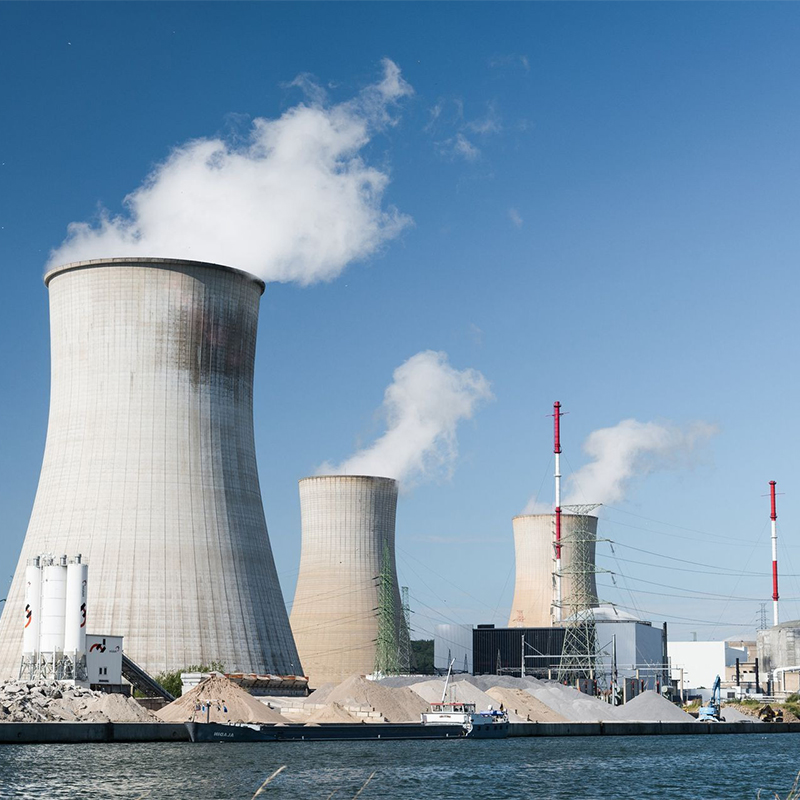
We Provide Cooling Tower Solution

Views: 0 Author: Cindy Publish Time: 2026-10-07 Origin: Site


When you are searching for the right fiberglass cooling tower manufacturers, it can be difficult to know where to start. A cooling tower may look like a relatively simple piece of industrial equipment, but its performance depends on dozens of details, from the FRP material and fill design to fan efficiency, water distribution, thermal performance, and long-term maintenance.
For industrial plants, HVAC systems, chemical facilities, power stations, food processing plants, and other applications, fiberglass cooling towers have become an attractive option. Why? Fiberglass-reinforced plastic, commonly known as FRP, offers a useful combination of corrosion resistance, lightweight construction, structural strength, and design flexibility.
In this guide, we take a closer look at six notable fiberglass cooling tower manufacturers in the world:
SPX Cooling Technologies
EVAPCO
Baltimore Aircoil Company (BAC)
Paharpur Cooling Towers
John Cockerill Hamon
Mach Industry (Zhejiang) Co., Ltd.
This is an editorial selection rather than an official ranking based on market share. Instead, the list is designed to help buyers compare manufacturers, technologies, applications, and purchasing considerations before selecting a fiberglass cooling tower supplier.
A fiberglass cooling tower is an evaporative heat-rejection system that uses fiberglass-reinforced plastic, or FRP, in important structural or casing components.
The basic cooling process is fairly simple. Hot process water enters the cooling tower and is distributed over the fill media. At the same time, air moves through the tower. As the water comes into contact with the air, a small portion of the water evaporates.
That evaporation removes heat from the circulating water.
You can think of it as the industrial version of sweating. When water evaporates from your skin, it carries heat away. A cooling tower uses the same basic principle on a much larger scale.
The difference is that a fiberglass cooling tower uses FRP materials to provide corrosion resistance and structural performance in a wet and often demanding environment.
Depending on the design, FRP may be used for the tower casing, structural members, basin, panels, supports, or other components. Not every fiberglass cooling tower uses fiberglass for every part, so buyers should always check the manufacturer's exact material-of-construction specifications.
The operating principle of an FRP cooling tower is similar to other evaporative cooling towers.
Hot water enters the distribution system and flows downward through the tower. The water spreads over the fill, creating a large surface area for contact between water and air.
Meanwhile, fans move air through the tower.
As the warm water and air interact, heat transfers from the water into the air. A small amount of water evaporates, removing additional heat. The cooled water then collects in the basin and returns to the industrial process or HVAC system.
But here's something important.
The fiberglass material itself does not determine the cooling capacity of the tower.
Tower performance depends on several factors, including:
Water flow rate
Entering-water temperature
Leaving-water temperature
Design wet-bulb temperature
Airflow
Fill design
Water distribution
Fan efficiency
Tower geometry
Water quality
Site elevation
This is why choosing a manufacturer should never be based only on whether the tower is made from fiberglass.
FRP combines a polymer resin with reinforcing glass fibers. The resulting composite material offers a useful balance of strength, weight, and corrosion resistance.
This combination is particularly useful in cooling tower applications because the equipment is constantly exposed to:
Water
Humidity
Chemicals
Temperature changes
UV radiation
Weather
Mechanical vibration
Traditional steel structures can also perform very well, but they normally require an appropriate corrosion-protection system.
FRP does not rust like carbon steel, making it particularly attractive for applications where corrosion is a major concern.
So, why should an industrial buyer consider fiberglass instead of a conventional steel cooling tower?
The answer usually comes down to the operating environment.
Cooling towers live in a harsh world. Water is constantly circulating, air brings moisture into the structure, and water treatment chemicals can affect exposed materials.
FRP can help address some of these challenges.
Corrosion resistance is one of the biggest reasons buyers choose fiberglass cooling towers.
A conventional carbon-steel structure may require galvanizing, coatings, or other protective systems to prevent corrosion. FRP itself does not rust like carbon steel.
This can make fiberglass particularly attractive for:
Chemical plants
Petrochemical facilities
Coastal installations
Wastewater applications
Industrial plants
Facilities with aggressive water chemistry
However, it is important not to interpret “corrosion resistant” as “immune to every chemical.”
Resin selection still matters.
A reputable manufacturer should be able to explain the resin system, reinforcement, surface finish, and material compatibility of the proposed FRP components.
FRP generally provides a favorable strength-to-weight ratio.
That can make transportation, handling, and installation easier. It may also be useful when the cooling tower needs to be installed on an existing structure where weight is an important consideration.
For factory-assembled cooling towers, lightweight FRP components can also simplify installation at the project site.
A cooling tower is not something you want to replace every few years.
When evaluating an FRP cooling tower, buyers should consider the expected operating environment, wind loads, UV exposure, water chemistry, operating temperature, maintenance practices, and structural requirements.
A high-quality fiberglass tower can provide long-term service, but material quality alone does not guarantee a long service life.
Water treatment and regular maintenance still matter.
Even the best fiberglass cooling tower can lose performance if its fill becomes clogged, its nozzles become blocked, or its fan and motor system are poorly maintained.
The following manufacturers represent a cross-section of the international fiberglass and FRP cooling tower market.
Some specialize in large industrial projects. Others offer packaged cooling towers for HVAC and process applications.
The right manufacturer for your project depends on your specific requirements, so consider this list a starting point rather than an absolute ranking.
SPX Cooling Technologies is one of the most recognizable names in the global cooling tower industry through its Marley brand.
The company offers a wide range of cooling tower technologies for HVAC, industrial, power generation, and process cooling applications.
One notable fiberglass product is the Marley NX cooling tower, which uses non-corrosive fiberglass construction with a galvanized steel substructure.
The tower is designed for HVAC, refrigeration, and light-to-medium industrial process applications.
SPX has built a strong reputation around cooling tower engineering, thermal performance, replacement components, and lifecycle support.
For buyers who want an established international cooling tower brand with a broad technology portfolio, SPX is a manufacturer worth considering.
The Marley NX is an interesting example of how FRP can be integrated into a modern cooling tower.
The tower uses fiberglass panels for corrosion resistance and combines them with other engineered components, including PVC film fill, polypropylene nozzles, and an air movement system.
That illustrates an important point.
A cooling tower is a complete system.
The casing material is important, but it is only one part of the equation. Fill efficiency, fan performance, water distribution, drift control, and structural design all influence the final result.
EVAPCO is another major international manufacturer of evaporative cooling equipment.
The company serves markets including:
Commercial HVAC
Industrial process cooling
Data centers
Industrial refrigeration
Power generation
Manufacturing
EVAPCO has extensive experience with fiberglass and FRP cooling tower construction.
Its ES and ESP series, for example, use fire-retardant fiberglass pultrusions and are designed for demanding industrial and power-generation environments.
The company also focuses heavily on system reliability, structural integrity, airflow, water distribution, and maintenance.
One of the interesting advantages of EVAPCO's fiberglass cooling tower technology is the ability to combine corrosion-resistant FRP construction with engineered thermal and structural systems.
This is particularly useful for projects where environmental conditions are severe.
Buyers should still review the complete specification, including the type of fiberglass construction, resin system, fill material, fan system, water distribution system, and available certifications.
For large or mission-critical applications, those details can make a significant difference.
Baltimore Aircoil Company, usually known as BAC, is another major name in evaporative cooling equipment.
BAC serves commercial HVAC and industrial markets and offers cooling towers incorporating FRP components and corrosion-resistant construction options.
Its product portfolio covers a wide range of cooling requirements.
One advantage of working with an established manufacturer such as BAC is that the company approaches cooling as an integrated system rather than simply selling a tower shell.
That means buyers can evaluate:
Heat transfer
Water distribution
Air movement
Structural construction
Maintenance
Corrosion resistance
Replacement components
BAC's approach also demonstrates an important principle in cooling tower design.
A tower does not necessarily need to be made entirely from fiberglass.
In many designs, manufacturers combine different materials strategically.
For example, an industrial tower could use FRP casing panels together with galvanized steel, stainless steel, PVC fill, polypropylene components, or other materials.
Why?
Because every component has a different job.
The best material combination depends on the environment, operating conditions, budget, and expected service life.
Paharpur Cooling Towers is a major cooling tower manufacturer based in India with a broad portfolio of FRP and industrial cooling tower solutions.
The company's product range includes factory-assembled and industrial cooling towers.
Its FRP portfolio includes products designed around corrosion resistance and industrial reliability.
Paharpur's cooling tower solutions are used across applications such as:
HVAC
Power generation
Chemical processing
Oil and gas
Pharmaceutical manufacturing
Food processing
Industrial manufacturing
One of the company's strengths is the breadth of its product portfolio.
Paharpur offers FRP solutions for both packaged cooling and larger industrial requirements.
Its fiberglass tower designs can be suitable when buyers need corrosion resistance combined with factory-assembled construction.
For large projects, the company also has experience with engineered cooling systems.
This makes Paharpur an interesting choice for buyers who want to compare a large Indian cooling tower manufacturer with multinational suppliers.
As always, the exact tower should be evaluated according to the project's thermal conditions, water chemistry, structural requirements, and installation environment.
John Cockerill Hamon is another important name in industrial cooling technology.
The Hamon business has extensive experience in cooling towers for industrial and power-generation projects.
One particularly interesting example is the company's FRP cooling tower work for a combined-cycle power plant in Brazil.
The project demonstrates how fiber-reinforced plastic can be used for large industrial cooling applications where thermal performance and environmental durability are both important.
Large industrial cooling projects are very different from buying a small packaged HVAC tower.
The manufacturer needs to consider:
Thermal design
Structural loads
Wind conditions
Water chemistry
Airflow
Plant integration
Maintenance access
Long-term reliability
This is why experienced engineering capability matters.
A large cooling tower is not simply a large box with a fan on top. It is a carefully engineered heat-rejection system that must work reliably under changing operating conditions.
For EPC contractors, utilities, and major process industries, this engineering capability can be just as important as the initial equipment price.
Mach Industry (Zhejiang) Co., Ltd. is a Chinese cooling tower manufacturer focused on cooling tower equipment and components, including FRP cooling tower solutions.
Mach's fiberglass cooling tower portfolio includes round counterflow cooling towers designed for industrial, HVAC, power-generation, food-processing, and other applications.
The company focuses on FRP construction because of its useful combination of corrosion resistance, lightweight structure, and durability.
For buyers sourcing cooling towers from China, Mach provides an option for direct manufacturer communication rather than relying entirely on a trading company.
This can be particularly useful when the project requires customization.
Mach's FRP cooling tower solutions can be configured according to project requirements such as water flow, cooling capacity, installation conditions, tower dimensions, fan configuration, fill media, and water distribution.
For an industrial buyer, this flexibility matters.
Why buy a standard tower and try to make it fit your project when you can discuss the actual operating conditions with the manufacturer?
Mach can also support buyers who are looking for cooling tower equipment for industrial plants, HVAC systems, power-related applications, and other process cooling requirements.
For international buyers comparing fiberglass cooling tower manufacturers in China, Mach Industry is worth including in the supplier evaluation process.
This is one of the most common questions buyers ask.
And the honest answer is: there is no universal winner.
Steel cooling towers can provide excellent structural performance and can be highly cost-effective when the appropriate corrosion protection is used.
Fiberglass, on the other hand, offers strong corrosion resistance and relatively low weight.
Consider a chemical processing facility.
If the surrounding environment is highly corrosive, corrosion protection may become a major part of the tower's lifecycle cost.
In that situation, FRP may provide an attractive solution.
But consider a different project where the environment is less aggressive and structural requirements are the main concern.
A properly protected steel cooling tower may be a very practical choice.
The best material depends on the project.
Choosing the manufacturer is more important than choosing the best-looking product photograph.
Two cooling towers can look almost identical from the outside while having very different thermal performance, materials, structural design, and lifecycle costs.
Here are several factors you should evaluate.
First, determine whether the company actually manufactures the cooling tower.
Is it a manufacturer or primarily a trading company?
A genuine manufacturer should be able to explain its FRP production process, material selection, quality-control procedures, assembly methods, and testing capabilities.
For large orders, you may also want to request a factory inspection or production audit.
Never purchase a cooling tower based only on nominal tons or water flow.
Ask for the complete design conditions.
These should include:
Entering-water temperature
Leaving-water temperature
Water flow rate
Design wet-bulb temperature
Site elevation
Air conditions
Required cooling range
Approach temperature
Why does this matter?
Because a cooling tower that looks cheap on paper can become expensive if it cannot achieve the required leaving-water temperature.
Not all fiberglass materials are the same.
Ask the manufacturer about:
Resin type
Fiberglass reinforcement
FRP manufacturing method
Surface finish
UV resistance
Chemical compatibility
Structural design
For aggressive environments, material compatibility should be reviewed before the purchase order is finalized.
A few minutes spent discussing material selection can prevent years of maintenance problems.
Industrial cooling rarely follows a one-size-fits-all formula.
Depending on the manufacturer, customization may include:
Tower dimensions
Water connections
Fan configuration
Motor selection
Fill type
Drift eliminators
Nozzles
Water distribution
Electrical components
Sound requirements
Structural requirements
If your site has unusual limitations, discuss them with the manufacturer early.
Here's a question many buyers forget:
What happens five years after installation?
Cooling tower components eventually need maintenance or replacement.
Ask about the availability of:
Fill media
Fan blades
Motors
Bearings
Belts
Gearboxes
Nozzles
Drift eliminators
FRP panels
Water distribution components
A manufacturer with a practical spare-parts strategy can save you significant downtime later.
Fiberglass cooling towers can be used in many industries because of their corrosion resistance and lightweight construction.
However, the tower still needs to be designed around the actual application.
Chemical and petrochemical facilities can expose cooling equipment to aggressive water chemistry and corrosive atmospheres.
FRP can be particularly attractive in these environments, provided that the selected resin and other materials are chemically compatible with the process.
Fiberglass cooling towers can also be used for HVAC systems.
In these applications, buyers may prioritize:
Compact dimensions
Low weight
Corrosion resistance
Low noise
Easy maintenance
Efficient operation
Packaged FRP towers can be useful when installation space is limited.
Power plants require dependable heat rejection because cooling performance can directly influence plant operation.
For large power-generation projects, cooling tower design becomes highly specialized.
Thermal performance, structural design, water chemistry, airflow, fan reliability, and maintenance all have to work together.
FRP can be considered when corrosion resistance and long-term structural durability are important design objectives.
Food and pharmaceutical facilities often place a strong emphasis on cleanliness, reliability, corrosion resistance, and controlled operating conditions.
The cooling tower should be designed as part of the complete process cooling system rather than treated as an isolated piece of equipment.
Water treatment, maintenance access, material compatibility, and hygiene requirements should all be considered.
Before contacting a fiberglass cooling tower manufacturer, prepare a technical specification.
At minimum, provide:
Required water flow
Entering-water temperature
Required leaving-water temperature
Design wet-bulb temperature
Site location
Site elevation
Operating hours
Water chemistry
Installation space
Sound restrictions
Electrical requirements
Preferred tower configuration
Then ask each manufacturer to quote against the same conditions.
This makes supplier comparison much easier.
And don't compare only the equipment price.
Compare the complete package, including:
Tower + fan + motor + fill + drift eliminators + water distribution + controls + transportation + spare parts + installation requirements.
The cheapest quotation is not necessarily the lowest-cost solution.
The global market for fiberglass cooling towers includes major multinational manufacturers as well as specialized regional producers.
SPX Cooling Technologies, EVAPCO, Baltimore Aircoil Company, Paharpur Cooling Towers, John Cockerill Hamon, and Mach Industry each offer different strengths and product strategies.
But here's the most important takeaway:
Don't choose a fiberglass cooling tower simply because it is made from fiberglass.
Choose it because the entire system is engineered for your actual operating conditions.
Look carefully at thermal performance, FRP construction, corrosion resistance, fan efficiency, fill design, water distribution, maintenance access, spare parts, and manufacturer support.
For buyers comparing international suppliers with Chinese manufacturers, Mach Industry (Zhejiang) Co., Ltd. is a manufacturer worth considering for FRP cooling tower solutions, including round counterflow cooling tower designs and industrial applications.
The right cooling tower should not simply work on the day it is installed.
It should continue doing its job efficiently and reliably year after year.
Not automatically.
Fiberglass offers excellent corrosion resistance and relatively low weight, while steel can provide high structural strength and competitive pricing.
The better option depends on the site environment, water chemistry, structural requirements, budget, and maintenance strategy.
Service life varies depending on FRP quality, design, UV exposure, water chemistry, operating temperature, mechanical loading, and maintenance.
A well-designed tower with appropriate materials and regular maintenance can provide long-term service.
However, buyers should ask manufacturers for project-specific design expectations rather than relying on a generic lifespan number.
FRP means fiberglass-reinforced plastic.
Fiberglass provides the reinforcement, while the polymer resin forms the matrix around the glass fibers.
In everyday cooling tower terminology, “FRP cooling tower” and “fiberglass cooling tower” are often used to describe the same general family of composite construction.
Thermal performance should be near the top of the list.
A corrosion-resistant cooling tower that cannot achieve the required cold-water temperature is not a successful investment.
After thermal performance, evaluate material quality, structural design, manufacturing capability, customization, spare parts, maintenance support, and total lifecycle cost.
Yes.
Depending on the manufacturer and project, customization can include tower capacity, water flow, dimensions, fan configuration, fill type, drift eliminators, water distribution, materials, connections, electrical components, noise-control measures, and structural requirements.
Always provide detailed operating conditions before requesting a final quotation.
Choosing among the world's top fiberglass cooling tower manufacturers requires more than comparing company names and prices.
The best manufacturer is the one that can match the cooling tower to your actual process conditions, environment, water chemistry, thermal requirements, and long-term maintenance strategy.
Whether you are evaluating a global brand or a specialized Chinese manufacturer such as Mach Industry (Zhejiang) Co., Ltd., focus on the complete cooling solution rather than a single specification.
After all, a cooling tower is not just a box filled with water and air.
It is the heat-rejection heart of an industrial cooling system.