We Provide Cooling Tower Solution

Views: 0 Author: Cindy Publish Time: 2026-11-18 Origin: Site


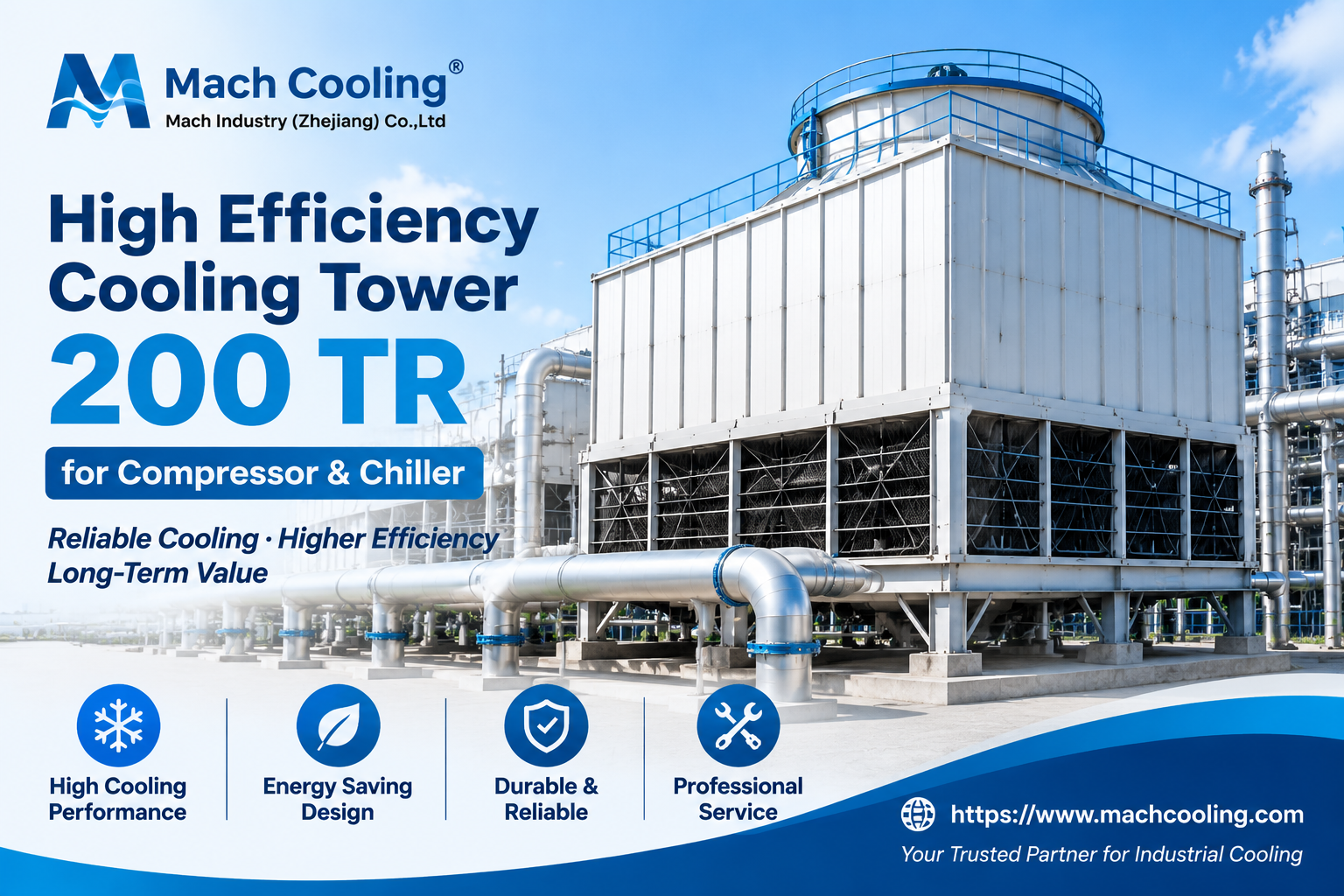
In modern industrial facilities, stable cooling is essential for keeping production equipment operating safely and efficiently. Air compressors, water-cooled chillers, manufacturing machinery, and process cooling systems all generate heat that must be removed continuously. When heat is not rejected effectively, equipment temperatures rise, operating efficiency drops, and unexpected shutdowns can interrupt production.
A high-efficiency cooling tower is an important part of this process. For facilities with medium-sized cooling requirements, a 200 TR cooling tower for compressors and chillers can provide a practical solution when its capacity is correctly matched to the actual heat load and operating conditions.
However, choosing a cooling tower is not simply a matter of selecting a model with the right tonnage. Water flow, temperature range, ambient wet-bulb temperature, equipment arrangement, and energy consumption all influence performance.
So, what should you consider before purchasing a 200 TR industrial cooling tower? Let's look at the working principle, main components, selection criteria, and maintenance requirements.
A 200 TR cooling tower is an industrial heat-rejection unit designed around a nominal cooling capacity of 200 cooling tower tons under specified design conditions. It removes heat from circulating water by bringing the water into contact with moving air. A portion of the water evaporates, carrying heat away and lowering the temperature of the remaining water.
Cooling towers are widely used with water-cooled chillers, air compressors, injection molding machines, power equipment, and industrial process systems.
The term TR means refrigeration ton, but the definition used for cooling tower heat rejection needs careful attention.
A conventional refrigeration ton represents approximately 12,000 Btu/h of cooling capacity. In many cooling tower applications, one cooling tower ton is based on approximately 15,000 Btu/h of heat rejection under a traditional rating convention.
Using that convention, a nominal 200 cooling tower tons represents approximately:
3,000,000 Btu/h of heat rejection
879 kW of heat rejection
0.879 MW of thermal load
These figures are reference conversions, not a guarantee of actual site performance. Always check the manufacturer's rating conditions and the project's required heat-rejection duty.
A common purchasing mistake is assuming that a 200 TR chiller always needs a 200 TR cooling tower.
A water-cooled chiller rejects more heat through its condenser than it removes from the chilled-water circuit. The additional heat comes mainly from compressor power input. Therefore, the cooling tower normally needs a heat-rejection capacity greater than the chiller's refrigeration capacity.
For preliminary planning, engineers sometimes use a heat-rejection factor above the chiller's nominal TR rating. The actual factor depends on chiller efficiency, operating conditions, and manufacturer data.
For example, a 200 TR chiller may require a cooling tower rated above 200 cooling tower tons. The final selection should use the chiller manufacturer's condenser heat-rejection data rather than a simple ton-for-ton assumption.
This distinction is especially important when a cooling tower serves both compressors and chillers. The combined heat load must be calculated before equipment is selected.
A cooling tower works through heat and mass transfer. Warm water enters the tower and flows over fill media, creating a large contact area between water and air. A fan moves air through the tower, helping a small portion of the water evaporate. This evaporation removes heat from the circulating water.
The cooled water collects in the basin and returns to the compressor, chiller, or process cooling circuit. The cycle continues while the equipment is operating.
The basic operating process includes four steps:
Warm water enters the tower: Water heated by the compressor or chiller condenser flows into the distribution system.
Water spreads over the fill: Nozzles distribute the water across the fill media to increase contact with air.
Air passes through the tower: A fan or natural draft moves air through the fill. Evaporation removes heat from the water.
Cooled water returns to the system: The basin collects the cooled water, which is pumped back to the equipment.
The tower's cooling performance depends on the interaction between water flow, airflow, fill performance, and ambient conditions.
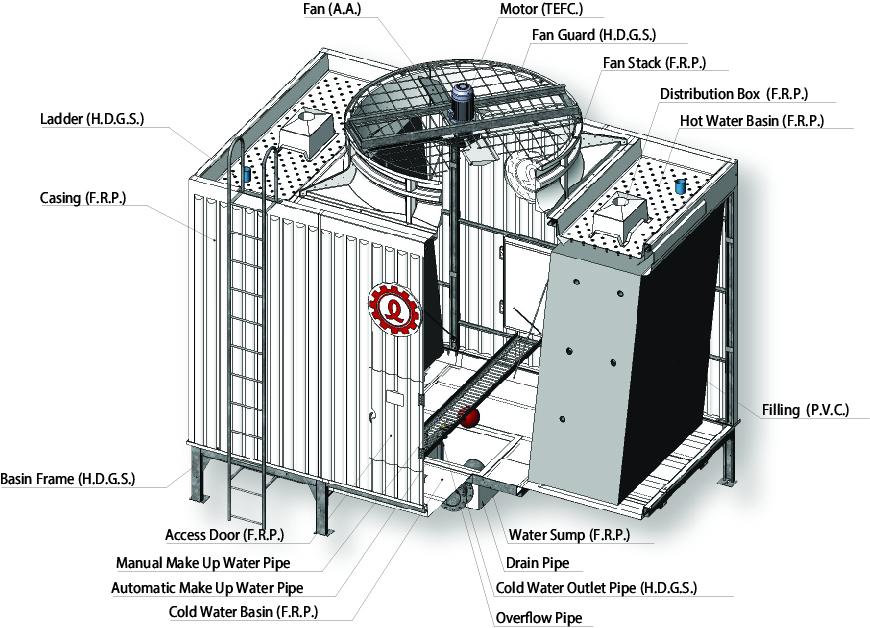
A typical mechanical-draft 200 TR cooling tower includes several important components:
Fan: Moves air through the tower to support heat and mass transfer.
Motor and drive system: Supplies mechanical power to the fan.
Fill media: Increases the contact area between water and air.
Water distribution system: Uses pipes and nozzles to spread water evenly.
Drift eliminators: Reduce the amount of water droplets carried out with exhaust air.
Cold-water basin: Collects cooled water before it returns to the system.
Tower structure and casing: Support the equipment and protect internal components.
Each component contributes to overall performance. A high-efficiency tower needs the right combination of design, materials, and operating conditions.
Compressors and chillers perform different jobs, but both depend on effective heat removal. If cooling water becomes too warm, the equipment may consume more energy, operate outside its preferred temperature range, or trigger protective alarms.
Industrial air compressors generate heat during compression. Depending on the compressor design, cooling water may be used for oil cooling, intercooling, aftercooling, or other heat-removal duties.
A stable cooling-water supply helps maintain suitable operating temperatures. This can support reliable lubrication, reduce thermal stress, and help prevent high-temperature shutdowns.
For compressor applications, engineers should check the compressor manufacturer's required cooling-water flow rate, inlet temperature, outlet temperature, and water-quality limits.
A cooling tower should not be selected based only on the compressor's motor power. The actual heat transferred to the cooling-water circuit is the more useful design value.
Water-cooled chillers use a condenser to transfer heat from the refrigerant to circulating condenser water. The warm water then travels to the cooling tower, where the heat is released into the atmosphere.
When condenser water is too warm, the chiller may experience higher condensing pressure and increased compressor energy consumption. A properly selected cooling tower helps maintain the condenser-water temperature within the chiller manufacturer's recommended operating range.
For this reason, cooling tower performance has a direct relationship with chiller efficiency.
A high-efficiency cooling tower is not defined by one component alone. Its performance comes from the coordinated operation of the fill, fan, water distribution system, structure, and controls.
Fill media is one of the most important parts of a cooling tower. It slows the falling water and spreads it into thin films or droplets, increasing the contact area between water and air.
Good fill design can improve heat transfer while maintaining suitable airflow resistance.
When selecting fill, consider:
Material compatibility with circulating water
Operating temperature
Resistance to chemical exposure
Resistance to deformation and aging
Fouling and cleaning requirements
Compatibility with the tower's airflow design
PVC and PP are common fill materials, but the right choice depends on water temperature, water chemistry, and operating conditions. For higher-temperature or chemically demanding applications, the material should be evaluated carefully before selection.
The fan system is a major contributor to cooling tower electricity consumption. Fan diameter, blade geometry, rotational speed, motor efficiency, and system resistance all influence power demand.
An appropriately designed axial fan can move the required air volume without unnecessary energy use. Correct fan installation and balancing also help reduce vibration and mechanical stress.
The objective is not simply to install the largest fan. It is to provide the airflow required by the thermal design at an efficient operating point.
Uneven water distribution can leave some areas of the fill underused. Dry areas reduce the effective heat-transfer surface, while excessive water concentration in other areas can increase local resistance and affect performance.
A well-designed distribution system uses correctly sized pipes and nozzles to spread water across the fill. During operation, nozzles should be checked for blockages, damage, and uneven spray patterns.
Industrial cooling towers often operate in humid environments and remain exposed to water treatment chemicals and outdoor weather.
The structure should be selected according to the installation environment, water chemistry, expected service life, and maintenance requirements. FRP, galvanized steel, stainless steel, and other materials may be used depending on the design.
Material selection should consider the entire operating environment rather than initial purchase price alone.
Before purchasing a cooling tower, collect the operating data for the equipment it will serve. A model number or nominal tonnage is not enough to confirm suitability.
Start by identifying the total heat that must be rejected.
For a water circuit, a useful preliminary formula is:
Heat load (kW) ≈ 4.186 × water flow (kg/s) × temperature difference (°C)
The temperature difference is the difference between the hot-water inlet temperature and the cold-water outlet temperature.
For example, if the circulating water flow is 50 kg/s and the required temperature range is 5°C:
Heat load ≈ 4.186 × 50 × 5 = 1,046.5 kW
This is only an illustrative calculation. Actual design should account for the project specification, water properties, equipment heat balance, and operating conditions.
For compressors and chillers operating on separate circuits, calculate each heat load and determine whether the tower will serve them independently or together.
Cooling tower selection depends on three important water temperatures:
Hot-water temperature: The temperature of water entering the tower.
Cold-water temperature: The required temperature of water leaving the tower.
Range: The difference between hot-water and cold-water temperatures.
The range describes how much the water temperature changes as it passes through the tower.
The approach is the difference between the cold-water temperature and the ambient wet-bulb temperature. A smaller approach generally requires a larger or more demanding cooling tower design.
Both range and approach must be considered when comparing tower models.
Ambient wet-bulb temperature is a key factor in evaporative cooling tower performance. It reflects the combined influence of air temperature and humidity.
A tower selected for a relatively low wet-bulb temperature may not achieve the same cold-water temperature at a hotter or more humid site.
Before ordering, confirm:
Local design wet-bulb temperature
Seasonal temperature variations
Installation altitude
Available airflow around the tower
Nearby walls, buildings, and exhaust outlets
Space for maintenance and equipment access
The tower should be rated for the actual installation location, not just a general catalogue condition.
Water quality affects the long-term reliability of the cooling tower. Suspended solids can block nozzles and collect on fill media. Hardness can contribute to scale formation, while unsuitable water chemistry can accelerate corrosion.
If the tower serves a compressor or chiller system, coordinate water treatment requirements with the equipment manufacturer and water-treatment specialist.
A good selection process considers both thermal performance and the quality of the circulating water.
Cooling tower energy consumption is influenced by the fan, circulating-water pumps, water treatment system, and operating controls. Improving one part of the system may help, but the best results usually come from optimizing the complete cooling circuit.
Fan power depends on airflow requirements, fan efficiency, speed, and system resistance.
A well-matched fan can deliver the required airflow without excessive motor loading. Regular cleaning and inspection also help maintain performance.
Damaged blades, incorrect blade angles, poor alignment, or excessive vibration can reduce efficiency and increase maintenance costs.
Too little water flow can reduce heat-transfer performance. Excessive flow may increase pumping energy without delivering a meaningful improvement in cooling.
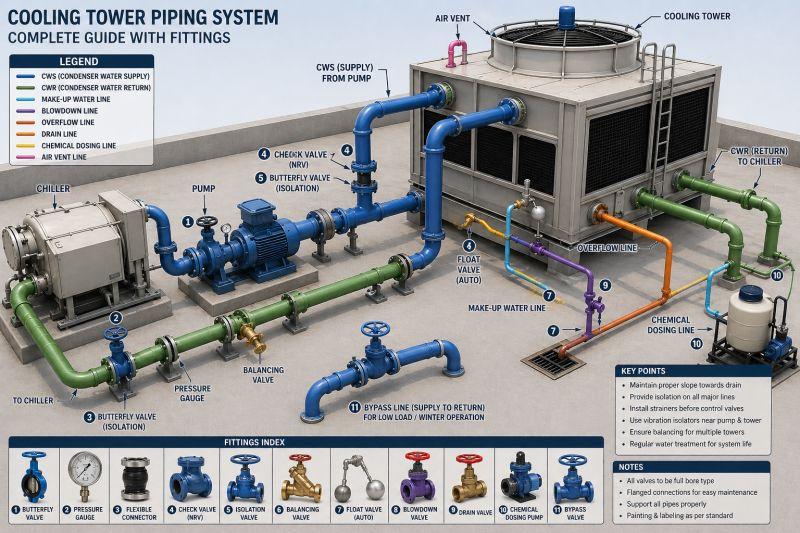
The pump, piping, valves, and distribution system should be selected as one coordinated arrangement. Proper balancing helps ensure that the required water flow reaches the tower and connected equipment.
A variable-frequency drive (VFD) can adjust fan speed according to cooling demand. During periods of lower heat load or favorable ambient conditions, the fan may operate at a reduced speed.
This can lower electricity consumption and help maintain more stable cold-water temperatures.
However, VFD control must be configured according to the tower's mechanical limits, motor characteristics, minimum airflow requirements, and the process control strategy.
Correct installation is essential for achieving the cooling performance specified in the design.
First, choose a location with sufficient airflow. Avoid placing the tower too close to walls or other obstructions that may restrict air intake or cause hot, humid exhaust air to recirculate into the inlet.
Second, prepare a level and structurally suitable foundation. The foundation must support the operating weight of the tower, including water and connected components.
Third, check the piping arrangement. Hot-water and cold-water lines should be sized to limit unnecessary pressure loss. Isolation valves, strainers, drains, and access points should be included where appropriate.
Electrical work should follow applicable local codes and the motor manufacturer's requirements. Fan rotation, motor protection, grounding, vibration, and control settings should be checked before normal operation.
Before commissioning, verify water flow, spray distribution, fan direction, vibration, leakage, and control operation. Record the initial operating conditions so they can be used as a reference during future maintenance.
Even a well-designed cooling tower needs regular inspection. Dust, scale, algae, corrosion, and mechanical wear can gradually reduce performance.
A planned maintenance program helps identify small problems before they become expensive failures.
Inspect fill media for scale, sludge, biological growth, cracks, and deformation. Blocked or damaged fill can reduce effective heat-transfer area and restrict airflow.
Check spray nozzles for blockage and uneven water distribution. Clean or replace components according to the manufacturer's recommendations.
Drift eliminators should also be inspected for damage, incorrect installation, and excessive deposits. Their condition affects water carryover and tower operation.
Inspect fan blades for cracks, corrosion, loose fasteners, and accumulated dirt. Check the fan hub, shaft, bearings, motor mounting, and drive components.
Monitor vibration and unusual noise. These can indicate imbalance, misalignment, bearing wear, or mechanical looseness.
For belt-driven systems, inspect belt condition and tension. For gear-driven systems, follow the gearbox manufacturer's lubrication and inspection schedule.
Always isolate electrical power and follow lockout procedures before carrying out maintenance.
Cooling tower water is exposed to air and evaporation, which concentrates dissolved minerals over time. Without suitable water treatment, scale, corrosion, and biological growth may develop.
A water-treatment program may include filtration, controlled blowdown, chemical treatment, and routine water testing.
The exact program should be based on water analysis, operating conditions, local regulations, and professional water-treatment advice.
Several operating problems can affect a 200 TR cooling tower and the equipment connected to it.
Problem: Cooling water temperature is too high.
Possible causes include excessive heat load, insufficient airflow, blocked fill, poor water distribution, high wet-bulb temperature, or inadequate water flow.
Check the operating conditions first. Compare actual heat load and water flow with the original design values before changing equipment settings.
Problem: Fan vibration or unusual noise.
Possible causes include fan imbalance, loose fasteners, damaged blades, bearing problems, or shaft misalignment.
Stop the equipment when necessary and inspect the fan assembly using the manufacturer's safety procedures.
Problem: Water distribution is uneven.
Blocked nozzles, damaged pipes, or incorrect operating pressure may cause uneven spraying.
Inspect the distribution system and clean or replace defective components.
Problem: Excessive water consumption.
Potential causes include high evaporation demand, excessive drift, leakage, or unsuitable blowdown settings.
Inspect drift eliminators, piping connections, basin condition, and water-treatment controls.
Problem: Chiller or compressor high-temperature alarms.
The cooling tower may be one possible cause, but the issue could also involve condenser fouling, insufficient pump flow, control faults, or equipment-side problems.
Check the entire cooling circuit rather than assuming that replacing the cooling tower will solve every temperature-related alarm.
Selecting a cooling tower supplier involves more than comparing catalogue prices. You need a manufacturer that understands the relationship between heat load, water flow, airflow, installation conditions, and long-term maintenance.
Mach Industry (Zhejiang) Co.,Ltd, operating under the Mach Cooling brand, provides industrial cooling tower solutions for customers seeking equipment for manufacturing and process cooling applications.
When evaluating a 200 TR cooling tower project, customers should discuss the following technical details with the manufacturer:
Required heat-rejection capacity
Compressor or chiller application
Hot-water and cold-water temperatures
Circulating-water flow rate
Local design wet-bulb temperature
Tower configuration and installation space
Fan and motor requirements
Structural and material preferences
Water-quality conditions
Maintenance and spare-parts requirements
Providing these details allows the manufacturer to evaluate the application more accurately and recommend a suitable configuration.
For product information and technical discussions, visit the official website:
The final equipment selection should always be confirmed against the project's operating data and the manufacturer's technical proposal.
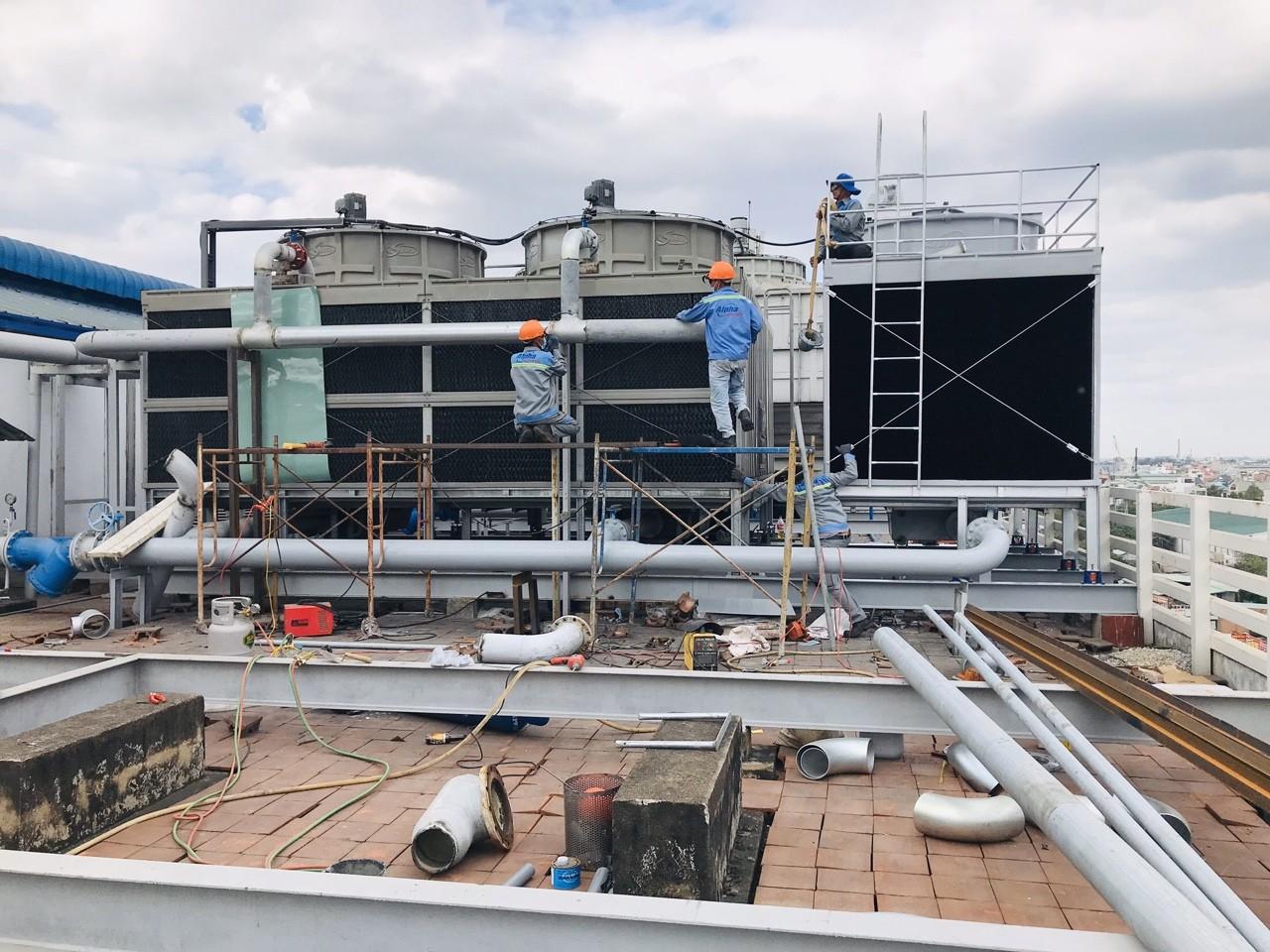
A 200 TR industrial cooling tower may be suitable for various applications when its rated heat-rejection capacity matches the actual duty.
Typical applications include:
Air compressor stations: Removing heat from compressor cooling-water circuits.
Water-cooled chiller systems: Rejecting condenser heat in commercial and industrial facilities.
Plastic manufacturing: Supporting process cooling for injection molding and extrusion equipment.
Chemical production: Cooling compatible industrial process-water circuits.
Metal processing: Supporting heat removal from production equipment.
Food and beverage facilities: Serving suitable industrial cooling-water systems.
General manufacturing: Providing heat rejection for machinery and auxiliary equipment.
The suitability of a 200 TR model depends on the required temperatures, flow rate, heat load, and site conditions. Some facilities may need multiple towers or a different capacity arrangement.
A 200 TR cooling tower is used to reject heat from industrial water circuits. Common applications include water-cooled chillers, air compressors, manufacturing equipment, and process cooling systems. Its suitability depends on the actual heat load and design conditions.
Not automatically. A chiller rejects more heat at its condenser than the refrigeration load it removes from the chilled-water circuit. The cooling tower must be selected using the chiller manufacturer's condenser heat-rejection data and the site's design wet-bulb temperature.
Start with the equipment's heat-rejection load. For a water circuit, use the water flow rate and temperature difference to estimate the heat load. Then account for the design wet-bulb temperature, required approach, operating conditions, and any applicable design margin.
It can. An appropriately selected fan, efficient motor, suitable fill, optimized water distribution, and variable-speed control can help reduce energy consumption. Actual savings depend on the original system, operating hours, control strategy, and site conditions.
Inspection frequency depends on operating hours, water quality, environmental conditions, and manufacturer recommendations. Operators should regularly check water distribution, fill condition, drift eliminators, fan assemblies, motors, and basin cleanliness. Water quality should be monitored as part of an ongoing treatment program.
Provide the required heat load, water flow rate, hot-water and cold-water temperatures, site wet-bulb temperature, installation dimensions, application, power supply, and water-quality information. If the tower will serve a compressor or chiller, include the equipment manufacturer's cooling-water requirements.
Potentially, yes. However, the combined heat load, operating schedules, water-temperature requirements, hydraulic arrangement, and control strategy must be evaluated. Separate cooling circuits or multiple towers may be more suitable for some facilities.
A high-efficiency 200 TR cooling tower can be an important part of a reliable compressor and chiller cooling system. It helps remove unwanted heat, supports stable equipment operation, and can contribute to lower overall energy consumption when properly designed and operated.
The key is to select the tower based on actual heat rejection rather than nominal tonnage alone. Water flow, temperature range, wet-bulb temperature, fill performance, fan efficiency, water quality, and installation conditions all matter.
For industrial buyers, working with an experienced manufacturer can make the selection process more straightforward. Mach Industry (Zhejiang) Co.,Ltd, under the Mach Cooling brand, offers a point of contact for discussing industrial cooling tower requirements.
Visit https://www.machcooling.com to learn more about Mach Cooling and discuss a suitable cooling tower solution for your compressor, chiller, or industrial process application.