We Provide Cooling Tower Solution

Views: 0 Author: Cindy Publish Time: 2026-11-16 Origin: Site


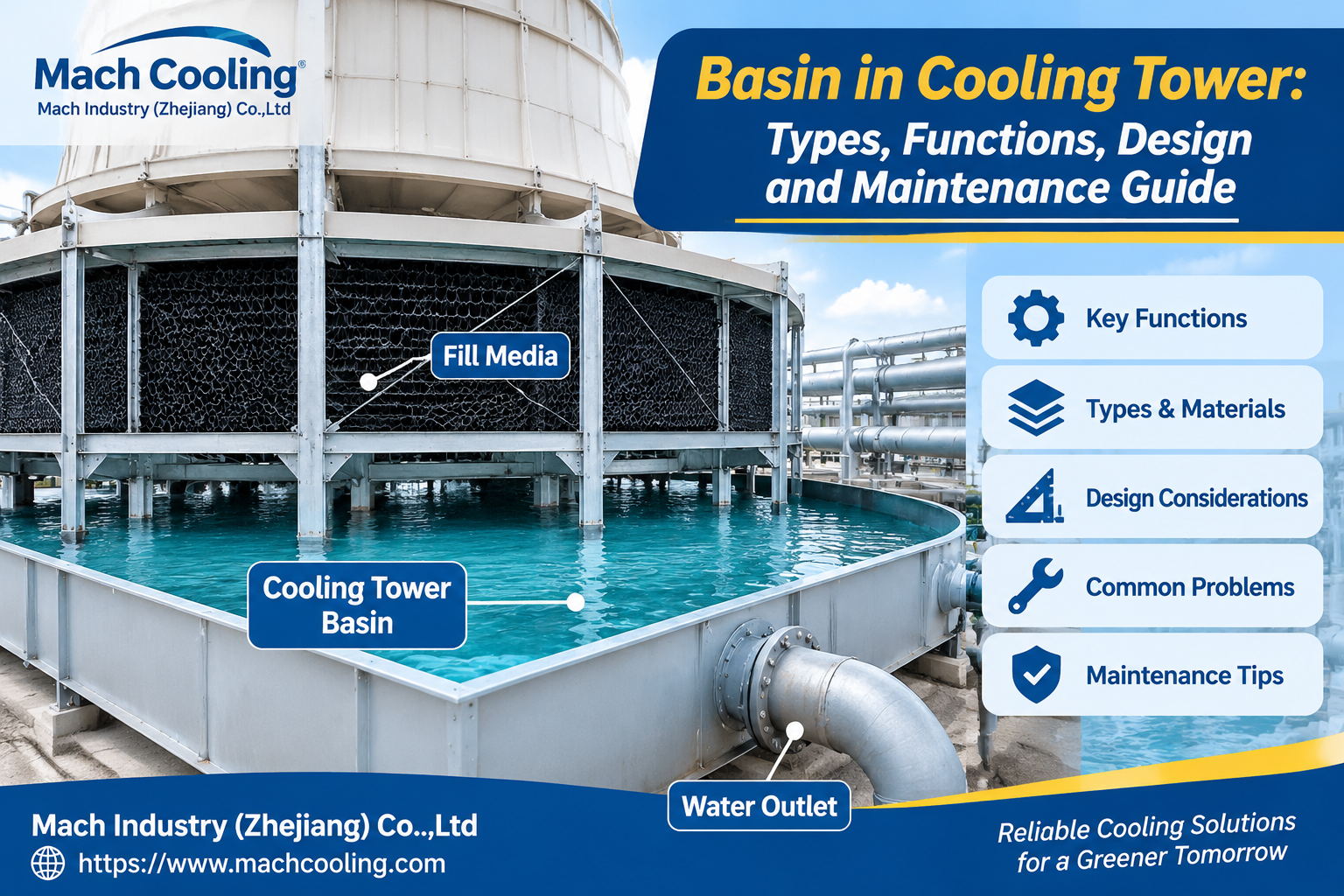
A cooling tower is made up of many components, and each one plays an important role in heat rejection. Fans move air through the tower, fill media increases the contact area between air and water, and the water distribution system spreads hot water across the cooling section. But what happens after the water has been cooled?
It collects in the cooling tower basin.
The basin may look like a simple water container, but its role is much more important than that. It stores cooled water, provides a stable water supply for circulating pumps, and supports continuous water circulation throughout the cooling system. Poor basin design or neglected maintenance can lead to leakage, sediment buildup, pump problems, and unexpected equipment downtime.
Whether you are selecting a new cooling tower, maintaining an existing system, or planning a replacement project, understanding the basin is essential.
In this guide, we will explain what a basin in a cooling tower is, how it works, the different types and materials available, and how to design, select, and maintain one for reliable industrial cooling.
A basin in a cooling tower is a water-collecting structure, usually located at the bottom of the tower. Its main purpose is to collect cooled water after it passes through the fill or heat transfer section.
Once the water reaches the basin, it flows toward the outlet and is pumped back to the industrial process. The water then absorbs heat again and returns to the cooling tower. This cycle continues during normal operation.
A cooling tower basin is therefore an important part of the system's water circulation arrangement. Its size, depth, material, and outlet design can all affect the reliability of the cooling tower.
In many conventional induced-draft cooling towers, the cold water basin is positioned at the lowest part of the tower, beneath the fill section.
In a counterflow cooling tower, hot water flows downward through the fill while air moves upward. The cooled water falls into the basin below.
In a crossflow cooling tower, water also flows downward through the fill, but air moves horizontally across it. The cooled water is collected in the basin at the bottom.
Although the internal arrangements are different, both designs use a collection area to receive cooled circulating water.
The working process is relatively simple:
Hot water enters the cooling tower.
The water distribution system spreads it over the fill media.
Air passes through the tower and contacts the water.
Heat transfers from the water to the air, and some water evaporates.
The cooled water falls into the cold water basin.
Circulating pumps draw water from the basin and return it to the process.
As water is lost through evaporation, drift, and blowdown, a make-up water system replenishes the circulating water inventory.
The basin helps keep this process continuous by providing a suitable water storage volume for pump operation.
A cooling tower basin does much more than collect water. It supports several important operating functions.
The primary function is to collect water after it passes through the cooling tower's heat transfer section.
A properly designed basin provides enough collection space for the water returning from the fill. It also directs water toward the outlet without creating unnecessary restrictions.
If the collection arrangement is poorly designed, water may accumulate unevenly or fail to reach the pump suction area efficiently.
Cooling water pumps need a reliable supply of water to operate properly.
The basin provides a working water inventory that helps accommodate short-term changes in water flow. Adequate water depth also helps maintain sufficient pump suction submergence.
If the water level becomes too low, pumps may draw in air or experience unstable suction conditions. This can lead to vibration, reduced flow, or other operating problems.
The basin connects the cooling tower to the circulating water system.
Its outlet size, position, floor arrangement, and internal flow conditions influence how effectively water reaches the pumps.
A suitable design helps reduce excessive turbulence, air entrainment, and unnecessary pressure losses around the suction connection.
Cooling tower water needs proper treatment to control scale, corrosion, and biological growth.
The basin forms part of the circulating water inventory and may accommodate certain monitoring or treatment arrangements.
However, the basin itself does not control water quality. A suitable water treatment program, regular testing, and proper blowdown management are still necessary.
Cooling tower basins can be classified according to their function, construction material, and installation arrangement.
Understanding these differences helps buyers and engineers select a suitable design for their applications.
The cold water basin is the most common type of cooling tower basin.
It collects water after the water has passed through the cooling section. The basin is usually located at the bottom of the tower and connected to the circulating water pump system.
Its design should consider:
Required water storage volume
Normal and minimum operating levels
Pump suction requirements
Drainage and cleaning arrangements
Structural loads
Water treatment conditions
A suitable cold water basin helps maintain stable water circulation and makes routine maintenance easier.
The term hot water basin may refer to a collection or storage arrangement on the hot-water side of certain cooling tower designs.
However, many conventional cooling towers do not use a separate hot water basin. Instead, they use distribution pipes, headers, or distribution pans to spread hot water over the fill.
This distinction is important when discussing a cooling tower project. Always confirm whether the design requires a separate hot water collection structure or simply a hot water distribution system.
Concrete basins are commonly used in large industrial cooling towers and permanent installations.
Concrete provides high structural strength and can accommodate substantial water volumes. It can also be integrated into the tower foundation or constructed as a separate structure.
However, concrete basins need proper waterproofing, reinforcement, and joint detailing.
Cracks, construction joints, and chemical exposure can create leakage risks. Regular inspection is necessary to identify deterioration before it develops into a major structural problem.
FRP stands for fiber-reinforced plastic. This material combines a resin matrix with reinforcing fibers to create a lightweight and corrosion-resistant structure.
FRP is used in cooling tower construction because it offers several practical advantages:
Relatively low weight
Good corrosion resistance
Flexibility in manufacturing and design
Convenient transportation and installation
Reduced risk of conventional metal corrosion
However, FRP performance depends on resin selection, fiber reinforcement, manufacturing quality, support spacing, and operating conditions.
The material must be suitable for the water chemistry, temperature, UV exposure, and mechanical loads of the application.
Steel basins may be used in certain industrial cooling tower designs, particularly where fabricated metal structures are preferred.
Steel can provide good mechanical strength, but corrosion protection is essential.
The material grade, surface preparation, coating system, weld quality, and inspection procedures all influence service life.
A steel basin should be selected according to the site's water chemistry and environmental conditions rather than initial cost alone.
There is no single material that is best for every cooling tower.
Concrete, FRP, and steel can all be suitable, depending on the application.
Concrete is often selected for large permanent installations where a substantial civil structure is required. FRP can be attractive where corrosion resistance, relatively low weight, and modular construction are priorities. Steel may be appropriate for specific fabricated designs when a suitable corrosion protection system is provided.
Before choosing a material, consider the following factors:
Operating environment: Is the cooling tower installed indoors or outdoors? Will the basin be exposed to sunlight, rain, chemicals, or temperature changes?
Water chemistry: Does the circulating water contain chemicals or contaminants that could affect the material?
Structural requirements: How much water will the basin hold? What support conditions and additional loads must it withstand?
Maintenance requirements: Can the basin be inspected and repaired easily?
Total lifecycle cost: What are the expected installation, maintenance, repair, and replacement costs?
The best material is the one that meets the project's actual operating requirements and provides reliable long-term performance.
A basin is not simply an empty tank. Several structural and hydraulic components help it operate properly.
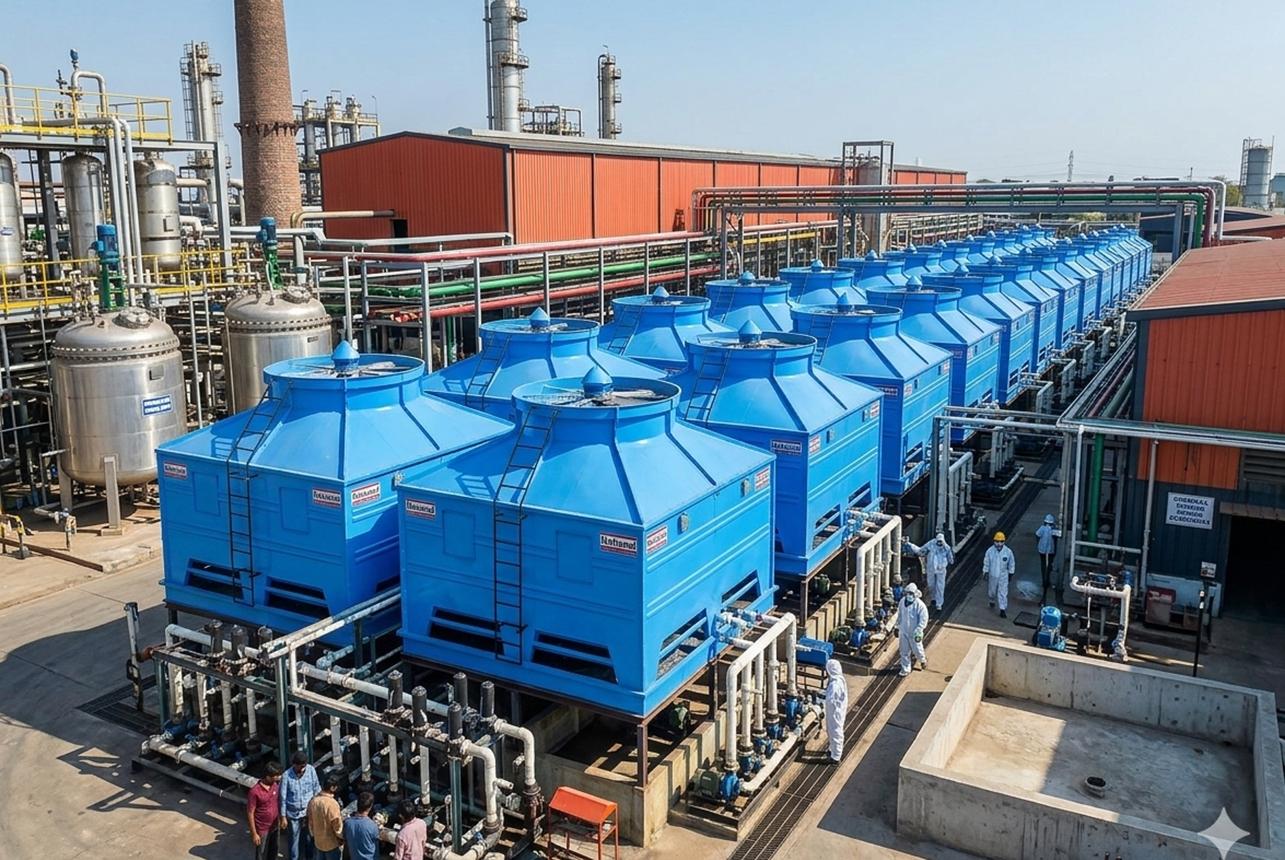
The floor and sidewalls form the main water-retaining structure.
They must withstand the water load and other applicable structural forces. The floor may include a slope toward a drain or collection point to make cleaning easier.
Sidewall height should accommodate the normal operating water level and provide suitable freeboard to reduce the risk of overflow.
The outlet connects the basin to the circulating water system.
Its size and location should match the pump flow requirements and piping arrangement.
Poorly designed suction connections can create excessive velocity, turbulence, or air entrainment. These conditions may contribute to pump vibration, cavitation, or unstable operation.
Cooling towers lose water through evaporation, drift, and blowdown.
A make-up water connection replenishes these losses and helps maintain the required operating level.
It may be connected to a float valve or an automatic level control system. The control arrangement should respond reliably to changing water levels and remain accessible for inspection.
An overflow connection helps prevent the basin from filling beyond its intended level.
A drain connection allows water to be removed during cleaning, inspection, and maintenance.
Both should be considered during the design stage. Drainage arrangements must also meet applicable site wastewater and environmental requirements.
A strainer helps prevent leaves, debris, and other unwanted materials from entering the circulating water pump.
Anti-vortex devices may be installed near pump suction connections to reduce swirling and air entrainment.
These components need regular inspection. A blocked strainer can restrict water flow and affect pump performance.
Basin design affects the reliability of the entire cooling system. Engineers should evaluate hydraulic, structural, environmental, and maintenance requirements before finalizing a design.
Basin capacity should be determined according to the cooling tower's operating flow, system water inventory, pump requirements, and control strategy.
The basin needs sufficient water volume for stable pump operation without creating unnecessary storage.
Designers should review:
Circulating water flow rate
Required operating water inventory
Pump suction requirements
Normal and minimum water levels
Make-up water capacity
Drainage and overflow arrangements
Do not determine basin size based only on the cooling tower's nominal capacity. The complete hydraulic design must be considered.
Water depth is particularly important for pump operation.
If the water level is too low, the pump may draw in air or develop a vortex. If the level is too high, water may overflow or interfere with other components.
A proper design should define normal, minimum, and maximum operating levels. Suitable level controls should be installed and tested.
A basin must support the weight of stored water and other relevant structural loads.
For FRP or steel basins, support spacing, reinforcement, and connection details are important. For concrete basins, engineers must consider reinforcement, foundation conditions, joints, and waterproofing.
Structural design should be completed or verified by qualified engineers.
Cooling towers often operate outdoors. Their basins may be exposed to sunlight, rain, temperature changes, treatment chemicals, and continuous water contact.
Material selection should account for these conditions.
Suitable resin systems, protective coatings, and construction details can help reduce deterioration and extend service life.
A basin that is difficult to inspect will also be difficult to maintain.
Provide safe access for cleaning, inspection, and component replacement. Consider drain locations, removable covers where appropriate, and enough clearance around valves and connections.
Good maintenance access can reduce downtime and make routine work more efficient.
Even a well-designed basin can develop problems over time. Regular inspection helps identify early warning signs before they affect the cooling system.
Leakage may result from cracks, damaged joints, failed sealants, corrosion, or mechanical damage.
For concrete basins, inspect cracks and construction joints. For FRP basins, look for surface damage, delamination, or damaged connections. For steel basins, check for corrosion and coating failure.
The repair method should match the basin material and the actual cause of leakage.
Dirt, scale, corrosion products, and airborne debris can collect at the bottom of the basin.
Excessive sediment may block strainers, affect water quality, and reduce the effective water volume.
A cleaning schedule based on site conditions helps prevent buildup.
Metal components may corrode when protective coatings deteriorate or water chemistry is poorly controlled.
FRP components can also age or become damaged through unsuitable chemical exposure, UV exposure, or mechanical stress.
Inspect materials regularly and address deterioration before it becomes a structural problem.
Fluctuating water levels may be caused by faulty float valves, incorrect level settings, blocked make-up lines, leakage, or changes in system flow.
Check the level control device and confirm that make-up water can enter the basin at the required rate.
Do not simply adjust the control setting without identifying the underlying cause.
Warm water, sunlight, and nutrients can encourage biological growth.
Algae may accumulate on basin surfaces and contribute to debris or strainer blockage.
A suitable water treatment program, regular cleaning, and proper control of sunlight exposure where practical can help manage this issue.
Cooling tower water treatment must also follow applicable health and safety requirements.
Routine maintenance protects the basin and helps keep the cooling system operating reliably.
A simple inspection program is often more effective than waiting until a major problem appears.
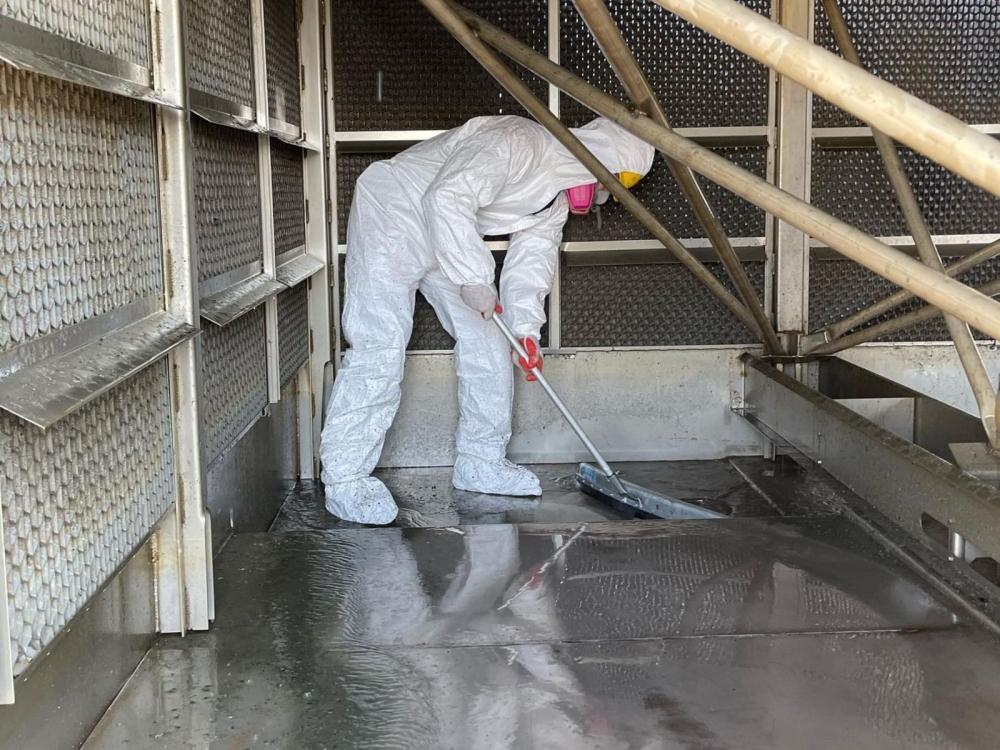
Inspect the basin for:
Leakage and cracks
Corrosion or surface damage
Loose connections
Unusual water levels
Sediment and debris
Damaged valves and fittings
Pay particular attention to corners, joints, outlet areas, and locations where debris tends to collect.
Record inspection findings so that changes can be tracked over time.
Remove leaves, sludge, and other accumulated materials according to the site's maintenance plan.
Before cleaning, follow the correct shutdown, isolation, and safety procedures.
Never enter a basin or confined space without an approved risk assessment and the required safety controls.
After cleaning, inspect the basin surface and drainage points before returning the system to service.
Test float valves, level sensors, control switches, and make-up water lines.
Confirm that the system maintains the required operating level during normal operation.
If the water level changes unexpectedly, investigate the cause instead of simply adjusting the control setting.
Check the outlet, drain, overflow, valves, and pipe connections for blockages or leakage.
Make sure strainers are clean and suction connections are secure.
Any signs of air entrainment or unusual pump noise should be investigated as part of the wider hydraulic system inspection.
Water quality has a direct impact on basin condition and cooling tower performance.
Follow a suitable water treatment program to manage scaling, corrosion, and biological growth.
Monitor important water chemistry indicators according to the treatment supplier's recommendations and the site's operating requirements.
Not every basin problem requires complete replacement.
Repair may be appropriate when damage is localized and the overall structure remains sound. Examples include a small repairable leak, a replaceable valve, or a damaged connection.
Replacement may be more suitable when there is:
Extensive corrosion
Repeated or widespread leakage
Major structural damage
Severe material deterioration
Repeated repair failures
Incompatibility with the current cooling tower arrangement
Before making a decision, assess the basin's material, age, condition, repair history, and compatibility with the existing cooling tower.
For an older tower, it may also be worth reviewing whether the basin arrangement still meets current operating requirements.
Selecting a cooling tower basin requires more than comparing dimensions or prices.
Start by identifying the cooling tower type, model, circulating water flow, and installation conditions.
Then evaluate the following points:
1. Cooling tower configuration: Confirm whether the tower is counterflow, crossflow, open circuit, or closed circuit.
2. Required basin capacity: Determine the necessary water volume and operating level according to the hydraulic design.
3. Material selection: Compare concrete, FRP, and steel based on water chemistry, environmental exposure, structural requirements, and maintenance expectations.
4. Outlet arrangement: Confirm the connection size, location, pump suction requirements, and piping compatibility.
5. Structural support: Check the basin's weight, water load, foundation, and support arrangement.
6. Maintenance access: Make sure the basin can be inspected, drained, and cleaned safely.
7. Replacement compatibility: If replacing an existing basin, measure the installation space and confirm all connection dimensions.
Do not select a replacement based on external dimensions alone. Pump suction requirements, operating water level, structural compatibility, and drainage arrangements are equally important.
Ask the supplier for drawings, material details, and relevant technical specifications before confirming the order.
A cooling tower basin is closely connected to the tower's structure and water circulation system.
Selecting it without considering the complete equipment arrangement can create installation and operating problems.
An experienced cooling tower manufacturer can help review the tower configuration, operating conditions, material requirements, and connection details.
This is particularly important for customized projects, replacement work, and industrial applications where equipment downtime can be costly.
A reliable supplier should communicate clearly, provide suitable technical information, and help confirm compatibility before production or installation.
Mach Industry (Zhejiang) Co.,Ltd, operating under the Mach Cooling brand, specializes in cooling tower manufacturing and related cooling equipment.
For a new cooling tower project or an existing system upgrade, customers should consider the basin as part of the complete cooling tower design rather than as an isolated water container.
The basin must work together with the tower structure, water distribution system, fill media, fan arrangement, piping, and circulating water pumps.
Mach Cooling offers cooling tower solutions for different industrial and commercial applications. When discussing a project, customers can provide the required cooling capacity, water flow, inlet and outlet temperatures, installation environment, and available drawings.
For a replacement project, it is also useful to provide photographs, the existing tower model, basin dimensions, connection locations, and known operating problems.
This information helps establish the technical requirements before selecting a suitable solution.
To learn more about Mach Cooling's cooling tower products or discuss your project, visit the official website:
Mach Industry (Zhejiang) Co.,Ltd
Website: https://www.machcooling.com
The main purpose of a cooling tower basin is to collect cooled water after it passes through the tower's heat transfer section.
It stores a working volume of water and supplies the circulating water pumps. It also provides locations for connections such as make-up water, overflow, and drainage.
A cold water basin collects water after it has been cooled inside the tower.
A hot water basin, where used, refers to an arrangement for collecting or holding hot water before distribution. Many conventional cooling towers use hot water distribution pipes or pans instead of a separate hot water basin.
Cleaning frequency depends on water quality, airborne dust, biological activity, operating hours, and site conditions.
Some systems need more frequent cleaning than others. Follow the site's water treatment and maintenance program, and inspect the basin regularly for sediment or debris.
Common causes include cracks, failed joints, damaged sealants, corrosion, poor installation, and mechanical damage.
The correct repair method depends on the basin material and the location and severity of the leak.
Concrete, FRP, and steel can all be suitable in different applications.
Concrete is often used for large permanent structures. FRP offers corrosion resistance and relatively low weight. Steel can provide strength when properly protected.
The best material depends on project conditions, water chemistry, structural requirements, and maintenance expectations.
For a simple rectangular basin, the gross water volume can be estimated using:
Volume = Length × Width × Water Depth
For example, consider a basin with:
Length: 5 meters
Width: 4 meters
Operating water depth: 1 meter
The estimated gross water volume is:
5 × 4 × 1 = 20 m³
This is a basic calculation. Actual usable capacity must also account for operating level, freeboard, pump suction requirements, internal obstructions, and the system's hydraulic design.
A qualified engineer should verify the final basin dimensions and operating volume.
The basin is an essential part of a cooling tower. It collects cooled water, supports stable pump operation, and helps maintain continuous water circulation throughout the cooling system.
Its performance depends on the right material, suitable capacity, reliable connections, proper structural design, and regular maintenance.
Whether you are building a new industrial cooling tower or maintaining an existing one, do not overlook the basin. A small problem in this area can affect the performance of the entire system.
By understanding basin types, design considerations, and common maintenance issues, you can make better decisions, reduce avoidable downtime, and improve the reliability of your cooling system.
If you are planning a new cooling tower project or evaluating an existing system, contact Mach Industry (Zhejiang) Co.,Ltd to discuss your requirements.
Visit https://www.machcooling.com to explore Mach Cooling's cooling tower solutions and submit a project inquiry.