We Provide Cooling Tower Solution

Views: 0 Author: Cindy Publish Time: 2026-11-16 Origin: Site


Textile and fiber production depends on stable temperatures, reliable machinery, and continuous operation. From spinning and weaving to dyeing, finishing, and synthetic fiber manufacturing, many industrial processes generate heat that must be removed efficiently. When cooling performance becomes unstable, production equipment may overheat, product quality can fluctuate, and operating costs may increase.
A properly selected industrial cooling tower helps factories manage this heat and maintain consistent operating conditions. However, cooling capacity is not the only factor worth considering. Noise is another important issue, especially in facilities where employees operate machinery for long hours or where cooling equipment is installed close to offices and surrounding buildings.
That is why many industrial buyers are looking for a low noise cooling tower that combines dependable heat rejection with a more comfortable operating environment.
As an industrial cooling tower manufacturer, Mach Industry (Zhejiang) Co.,Ltd, operating under the Mach Cooling brand, provides cooling equipment solutions for industrial applications. This guide explains how to select a suitable low noise cooling tower for textile and fiber factories, which design details matter, and how to keep the system operating reliably.
Textile manufacturing involves numerous machines and processes that release heat. Spinning frames, weaving machines, compressors, air-conditioning systems, hydraulic equipment, dyeing machines, and production auxiliaries may all require cooling.
In synthetic fiber plants, process equipment can generate substantial heat during polymer processing, extrusion, and related operations. If this heat is not removed effectively, equipment temperatures may rise beyond their preferred operating range.
The result can include reduced production stability, more frequent equipment interruptions, and higher maintenance requirements.
A cooling tower transfers heat from circulating water into the atmosphere. It does not directly cool every production machine. Instead, it supports the wider cooling-water system that serves heat exchangers and process equipment.
Think of it as the heat-release center of the factory. When it is correctly sized and maintained, the rest of the cooling system has a better chance of delivering stable performance.
An industrial cooling tower is a heat-rejection device that removes heat from circulating water, primarily through the evaporation of a small portion of that water.
Warm water enters the tower and comes into contact with moving air. As a small amount of water evaporates, it removes heat from the remaining water. The cooled water then returns to the factory's cooling circuit.
Cooling towers are widely used in manufacturing because they can reject large amounts of heat while supporting continuous industrial operation.
Their actual performance depends on several factors:
Cooling capacity and heat load
Circulating water flow
Hot-water inlet temperature
Required cold-water outlet temperature
Ambient wet-bulb temperature
Tower configuration and airflow
Water quality and operating conditions
A cooling tower should therefore be selected according to the factory's actual process requirements rather than nominal capacity alone.
The cooling process is straightforward, although the engineering behind it requires careful design.
First, warm water from the factory enters the cooling tower and flows through the water distribution system. The distribution system spreads the water over the fill or heat-transfer section.
The fill provides a larger contact area between water and air. A fan moves air through the tower, allowing heat and moisture to transfer between the water and the air.
A small portion of the water evaporates, removing heat from the remaining circulating water. The cooled water collects in the cold water basin and returns to the factory cooling circuit.
The process repeats continuously while the system operates.
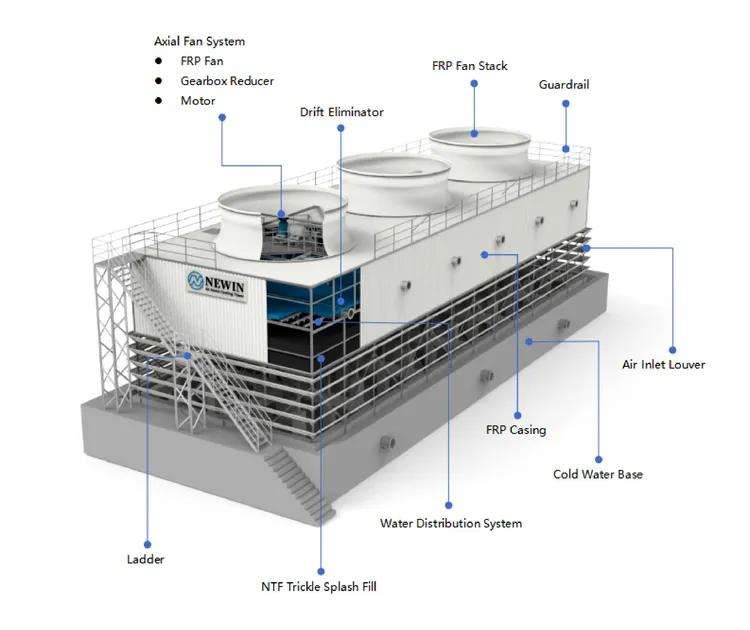
An industrial cooling tower usually contains several important components:
Fan and motor: These provide the airflow required for heat rejection.
Fill media: Fill increases the contact area between water and air, supporting heat transfer.
Water distribution system: Pipes, headers, nozzles, or other distribution components spread water across the fill.
Drift eliminators: These reduce the amount of water droplets carried out of the tower with the exhaust air.
Casing and supporting structure: These protect and support the tower components.
Cold water basin: This collects cooled water before it returns to the cooling system.
Each component contributes to overall performance. A problem with airflow, water distribution, or fill condition can affect the entire cooling process.
Textile and fiber factories often operate for long shifts. Some facilities run production lines continuously, making cooling reliability especially important.
A plant with multiple production lines may have several different cooling requirements. These loads can also change as production schedules and equipment utilization change.
A properly engineered cooling system should account for normal operating conditions, peak demand, possible future expansion, and the consequences of unexpected equipment shutdowns.
Spinning and weaving equipment can generate heat through motors, bearings, compressors, and other mechanical systems.
Cooling water may also support central air-conditioning systems and auxiliary heat exchangers that help maintain suitable factory conditions.
Stable cooling can reduce the risk of temperature-related equipment problems and support a more consistent production environment.
The cooling tower should be selected based on the actual connected cooling load and required water temperatures, not simply the number of machines in the factory.
Dyeing and finishing operations involve heating, cooling, washing, and temperature-controlled process stages.
Heat exchangers may be used to control process-water temperatures or remove heat from equipment. A dependable cooling-water supply helps these systems maintain their required operating conditions.
Water quality is also important. If the cooling circuit experiences scaling, corrosion, or biological growth, heat exchangers and pipes may lose efficiency.
Proper water treatment and regular inspection should therefore be part of the cooling system plan.
Synthetic fiber production may involve extrusion lines, pumps, compressors, temperature-controlled equipment, and other heat-generating machinery.
These applications can require continuous and predictable heat rejection.
The appropriate cooling tower depends on the process design, cooling-water flow, temperature range, ambient conditions, and required water cleanliness.
For sensitive processes, a closed circuit cooling tower may be worth evaluating because it can keep the process fluid separate from the external spray-water circuit.
Traditional cooling towers can produce noise from several sources, including fan blades, motors, airflow, falling water, and mechanical vibration.
When the tower is installed near production areas, the combined noise may affect workplace comfort.
A low noise cooling tower is designed to reduce these sound sources through suitable equipment selection and system configuration.
It is important to understand that low noise does not mean silent operation. Every cooling tower produces some sound, and actual noise levels depend on equipment design, operating speed, installation, distance, and surrounding structures.
Textile factories already contain spinning machines, looms, compressors, and material-handling equipment.
Additional cooling tower noise can make the overall working environment more challenging.
Selecting suitable low noise fans, controlling vibration, and positioning the tower carefully can help reduce the contribution made by cooling equipment.
The goal is to manage the total sound environment rather than focus on only one component.
A quieter cooling system can make nearby work areas, maintenance zones, and office spaces more comfortable.
This is particularly useful when cooling equipment is installed close to employee facilities or neighboring buildings.
Noise reduction should be considered during the initial engineering stage because adding acoustic measures after installation may be more complicated and expensive.
Some industrial parks and factory locations have noise limits or site-specific environmental requirements.
Before purchasing a cooling tower, buyers should confirm the applicable regulations and measurement conditions.
Noise limits may be defined at a property boundary, near a building, or at another specified measurement point.
A manufacturer's sound data should be reviewed together with the proposed installation layout. Buyers should also confirm whether the supplied data refers to sound pressure or sound power and understand the test conditions.

A low noise cooling tower is not created by installing one special fan alone.
Noise performance depends on the interaction of mechanical equipment, airflow, water distribution, structural design, and installation.
Buyers should review the complete system and request clear technical information about any proposed noise-reduction measures.
The fan is often one of the main contributors to cooling tower noise.
Fan diameter, blade profile, blade angle, rotational speed, tip clearance, and airflow resistance all influence acoustic performance.
A suitable low noise fan should provide the airflow required for heat rejection without unnecessary turbulence or excessive rotational speed.
The fan must also match the tower's operating conditions.
Simply reducing fan speed without checking cooling performance may cause inadequate heat rejection during peak demand. A proper selection balances airflow, cooling capacity, energy consumption, and noise.
Motor selection affects both energy consumption and operating noise.
A correctly sized motor should operate within its intended performance range. Poor alignment, worn bearings, loose mounting hardware, or electrical problems can increase noise and vibration.
Variable frequency drives may help control fan speed when the cooling load changes. However, the control strategy must maintain the required cooling performance and respect the motor and fan manufacturer's operating limits.
Mechanical vibration can travel through the cooling tower structure and supporting foundation.
Proper balancing, alignment, mounting, and structural support help reduce unnecessary vibration.
Anti-vibration components may also be considered where appropriate.
During commissioning and routine maintenance, technicians should check for abnormal vibration, loose bolts, damaged fan blades, and changes in operating sound.
Water falling onto the basin or other surfaces can create noticeable sound.
The height of the water fall, water distribution arrangement, basin configuration, and operating water flow may influence this noise.
Suitable tower design can help manage water impact and splashing.
However, modifications should never restrict water distribution or reduce the cooling tower's required heat-transfer performance.
Choosing a cooling tower should begin with process information, not a catalogue picture.
Two factories with similar floor areas may have very different cooling requirements. One may operate several compressors and air-conditioning systems, while another may have large process heat loads from fiber production.
The correct selection should be based on engineering data and the factory's actual operating conditions.
The first step is to determine how much heat the cooling tower must reject.
Cooling capacity can be estimated from the circulating water flow and the temperature difference between hot water entering and cold water leaving the tower.
A commonly used relationship is:
Heat Load (kW) ≈ 1.163 × Water Flow (m³/h) × Temperature Difference (°C)
For example, if the water flow is 100 m³/h and the temperature difference is 5°C:
Heat Load ≈ 1.163 × 100 × 5
Heat Load ≈ 581.5 kW
This is a simplified calculation for water under typical conditions.
Final selection must also consider the required approach temperature, wet-bulb temperature, operating margin, and actual system design.
Buyers should provide the hot-water inlet temperature, required cold-water outlet temperature, and circulating water flow.
These values are essential because cooling tower capacity is not a single universal number.
A tower's performance changes with the temperature range and ambient wet-bulb conditions.
If the specified outlet temperature is too close to the ambient wet-bulb temperature, a larger or more specialized design may be required.
Wet-bulb temperature is a key factor in cooling tower selection.
It represents the cooling potential of the surrounding air under the relevant conditions.
A cooling tower selected for one climate may not deliver the same cold-water temperature in another.
Textile factories should use design weather data for their actual installation location and clarify whether the required performance applies to peak summer conditions or another operating period.
Tell the manufacturer where the cooling tower will be installed and how close it will be to production buildings, offices, residential areas, and property boundaries.
Also provide any required noise limit and measurement location.
This allows the supplier to evaluate fan selection, motor speed, acoustic accessories, tower orientation, and possible sound barriers.
Buyers should request available sound data for the proposed configuration and check the measurement conditions before comparing suppliers.
Cooling water may contain suspended solids, minerals, and biological contaminants.
These can cause scaling, corrosion, blockage, and reduced heat-transfer efficiency.
The factory should consider filtration, water treatment, blowdown control, and regular cleaning.
If the process fluid must remain clean or protected from external contamination, a closed circuit cooling tower may be a better option than a conventional open circuit design.
There is no single cooling tower type that suits every textile factory.
Open circuit and closed circuit designs serve different needs, while counterflow and crossflow describe different arrangements of air and water movement.
The best choice depends on the process, water quality, installation space, maintenance plan, and total operating cost.
In an open circuit cooling tower, warm circulating water is distributed directly inside the tower and comes into contact with the air.
A portion of the water evaporates, removing heat from the remaining water.
This arrangement is widely used for industrial cooling because of its straightforward heat-transfer process.
It can be suitable for textile factories with conventional cooling-water systems, provided that water treatment and maintenance are properly managed.
A closed circuit cooling tower circulates the process fluid through a coil while spray water and air cool the coil externally.
This arrangement helps keep the process fluid separate from the external spray-water circuit.
It may be useful for applications where fluid cleanliness, contamination control, or a more isolated process circuit is important.
However, the initial investment, coil design, water use, and operating conditions should be evaluated before choosing this option.
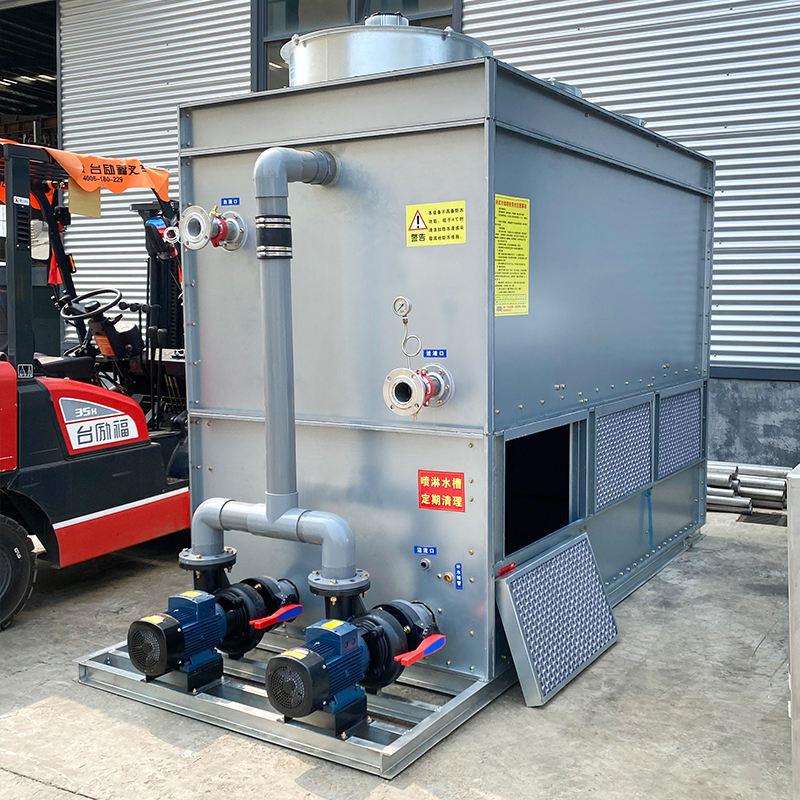
In counterflow towers, air generally moves upward against the downward flow of water.
In crossflow towers, air moves horizontally across the falling water.
Both arrangements can be used in industrial applications.
Their suitability depends on capacity, layout, maintenance access, water distribution, noise requirements, and project conditions.
Buyers should compare complete technical proposals rather than assuming one configuration is always more efficient or quieter.
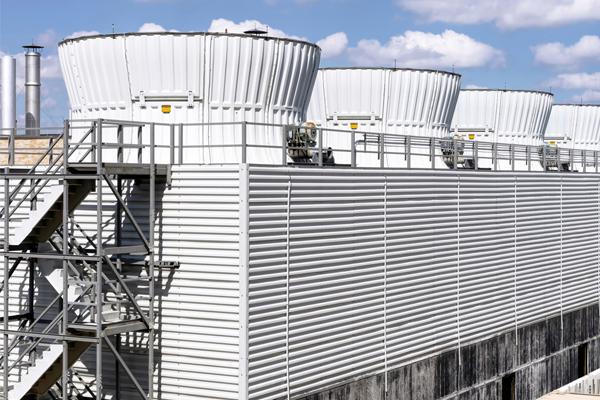
An experienced cooling tower factory should be able to evaluate operating conditions and recommend a suitable configuration.
Customization may involve capacity, dimensions, structural arrangement, fan and motor selection, materials, connections, and accessories.
The purpose is not to add unnecessary options. It is to match the cooling tower to the actual factory requirements.
Cooling tower capacity and cell arrangement should reflect the required heat load and operating schedule.
For larger factories, multiple cells may offer operational flexibility, depending on the project design.
The manufacturer should review peak and normal loads, possible future expansion, available installation space, and maintenance access before finalizing the configuration.
Cooling towers operate in wet environments, so material selection matters.
FRP components are often considered because of their corrosion resistance and relatively low weight.
Steel structures may require suitable protective coatings or other corrosion-control measures.
Water-contact materials should be compatible with the operating water chemistry and environmental conditions.
The best material choice depends on the application rather than a general claim that one material is always superior.
Depending on the project, noise-control measures may include:
Appropriately selected low noise fans
Reduced fan rotational speed where operating conditions allow
Suitable motor selection
Vibration isolation and mechanical alignment
Improved water distribution
Acoustic barriers or enclosures where practical
Each measure has trade-offs.
For example, an enclosure may affect airflow and maintenance access if poorly designed.
Noise reduction must therefore be considered together with heat rejection, energy use, safety, and serviceability.
Correct installation is essential for cooling performance and noise control.
The tower should have sufficient clearance for air intake and discharge. Nearby walls, buildings, and other equipment can obstruct airflow or cause exhaust air to recirculate into the inlet. This can reduce cooling performance.
The foundation must support the operating weight and dynamic loads.
Piping should be designed to avoid excessive pressure loss and unnecessary mechanical stress. Electrical connections, safe access platforms, lifting arrangements, drainage, and maintenance clearances should also be included in the installation plan.
If the tower is close to a noise-sensitive area, its orientation and distance from that area should be reviewed before construction.
A well-designed installation can prevent many problems that would otherwise appear after the factory begins operating.
A cooling tower needs regular inspection to maintain its cooling performance and operating condition.
Maintenance requirements depend on water quality, dust levels, operating hours, climate, and the manufacturer's recommendations.
A planned maintenance schedule helps identify small problems before they cause unexpected production interruptions.
Inspect fan blades for cracks, deformation, dirt buildup, and damage.
Check the motor, bearings, fasteners, electrical connections, and drive components according to the equipment manufacturer's instructions.
Abnormal noise or vibration may indicate imbalance, misalignment, loose components, or bearing problems.
Any repair should be performed after the equipment has been safely isolated.
Dirt, scale, and biological growth can block fill passages and reduce effective heat-transfer area.
Inspect the fill and water distribution system for uneven flow, blockage, damage, or deterioration.
Clean components using methods compatible with their materials.
Excessive pressure or unsuitable chemicals may damage fill media, so maintenance procedures should follow the supplier's recommendations.
The basin should be checked for sediment, debris, corrosion, leakage, and abnormal water levels.
Water treatment should be managed according to the cooling system's water chemistry and applicable environmental requirements.
Monitor conductivity, pH, and other relevant parameters as part of the plant's water-management program.
Before cleaning or entering a basin, follow site isolation procedures and assess confined-space and other safety risks.
Several problems can affect cooling tower performance.
High outlet-water temperature: This may result from insufficient airflow, blocked fill, poor water distribution, excessive heat load, or unfavorable wet-bulb conditions. Check the operating data and inspect the airflow and water distribution systems before changing equipment settings.
Excessive operating noise: Damaged fan blades, incorrect fan speed, vibration, loose fasteners, or water impact may be responsible. Identify the noise source before selecting a corrective measure.
High energy consumption: This may indicate an unsuitable operating strategy, excessive fan speed, mechanical problems, or a system operating outside its intended design conditions. Reviewing the fan and motor operating points can help identify opportunities for improvement.
Corrosion and leakage: These problems may result from material deterioration, poor water chemistry, or structural damage. Regular inspections and suitable water treatment can help prevent serious damage.
Blocked fill and uneven water distribution: Scale, debris, and biological growth can reduce heat-transfer performance. Inspect and clean the system using procedures compatible with the installed materials.
The right solution starts with inspection and operating data. Avoid replacing components before identifying the actual cause.
Selecting a cooling tower is an engineering decision that affects production reliability, energy use, maintenance, and the factory environment.
Mach Industry (Zhejiang) Co.,Ltd, operating under the Mach Cooling brand, focuses on cooling tower manufacturing and related cooling equipment.
For textile and fiber projects, the selection process should begin with the customer's process requirements, including:
Cooling load and required capacity
Circulating water flow
Hot-water inlet and cold-water outlet temperatures
Local wet-bulb conditions
Installation space and site layout
Noise expectations and applicable limits
Water quality and operating environment
These details help determine a suitable cooling tower configuration and identify the design factors that need special attention.
Rather than choosing equipment based only on nominal tonnage, industrial buyers should request a proposal that explains the assumed operating conditions and relevant technical parameters.
To learn more about Mach Cooling and its industrial cooling equipment, visit:
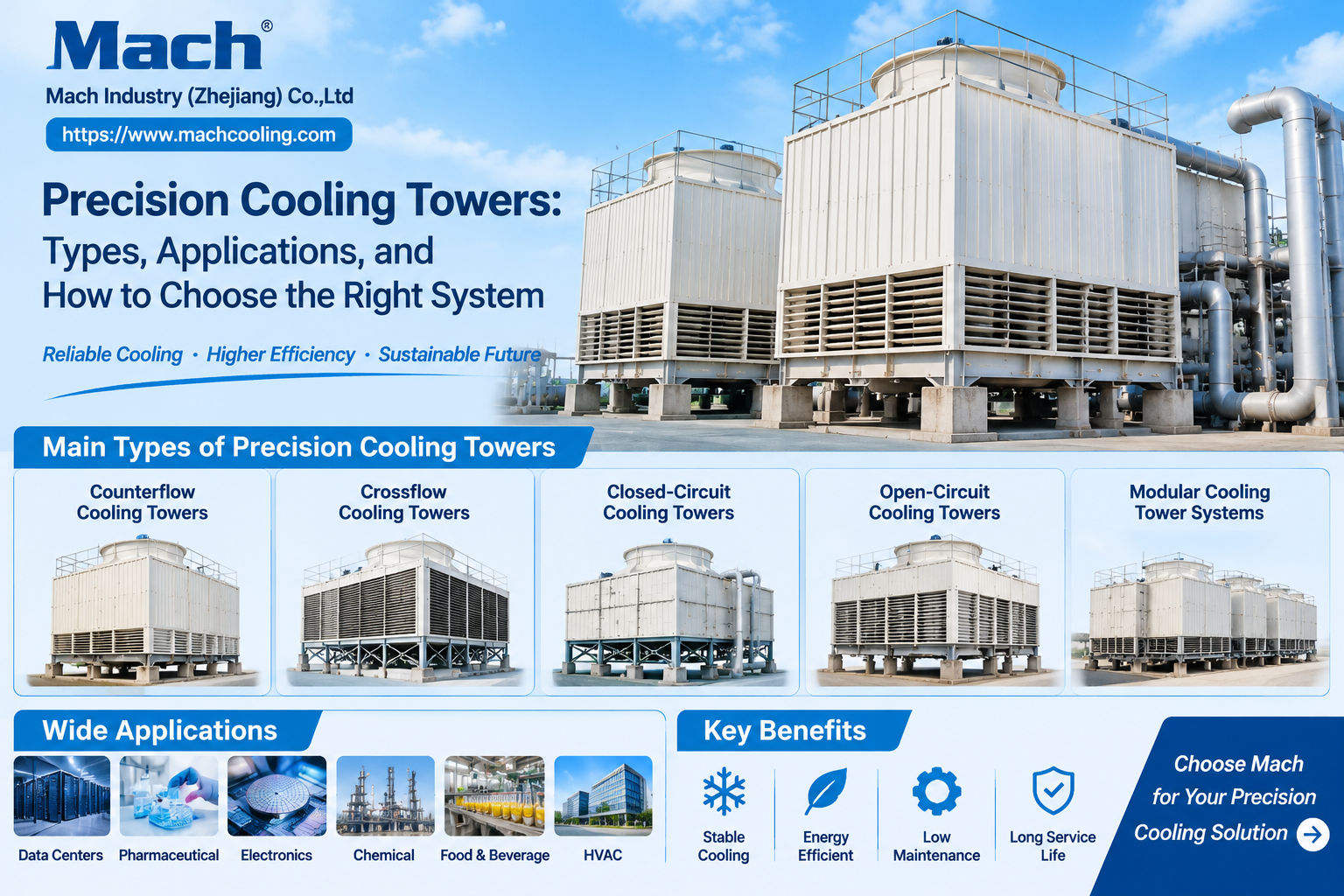
To receive a useful technical proposal, prepare the following information before contacting a cooling tower manufacturer.
1. Cooling capacity or heat load
Provide the calculated heat load if available. If you do not have this figure, share the equipment list and process information so the supplier can help evaluate the requirement.
2. Water flow
State the required circulating water flow in cubic meters per hour (m³/h).
3. Water temperatures
Provide the hot-water inlet temperature and the required cold-water outlet temperature.
4. Project location
Identify the installation city or project site so the design wet-bulb temperature can be evaluated.
5. Application
Explain whether the tower serves spinning, weaving, dyeing, finishing, synthetic fiber production, compressors, air-conditioning, or another process.
6. Noise requirements
State the required noise limit, measurement location, and distance to nearby buildings or noise-sensitive areas.
7. Installation conditions
Share available space, foundation information, piping connections, and indoor or outdoor installation conditions.
8. Water quality
Provide available water analysis and any special process-fluid requirements.
9. Project schedule
Include the expected delivery and installation timeline.
Drawings, photographs, and existing equipment model numbers can also help the manufacturer understand the project.
The more accurate the information, the easier it is to evaluate cooling capacity, tower configuration, noise-control options, and installation requirements.
The best cooling tower depends on the factory's heat load, water flow, temperature requirements, local wet-bulb conditions, water quality, available space, and noise limits.
An open circuit tower may suit a conventional cooling-water system, while a closed circuit tower may be worth considering when process-fluid separation is important.
A technical selection should be based on actual operating data.
Start by identifying the main noise source.
Suitable measures may include low noise fan selection, appropriate fan speed, motor maintenance, vibration control, improved water distribution, and acoustic barriers where practical.
The tower's position and orientation also matter.
Any noise-reduction measure must preserve airflow, heat-transfer performance, and safe maintenance access.
It can be suitable for certain fiber-production applications, especially where keeping the process fluid separate from the external spray-water circuit is valuable.
However, the decision should consider heat load, coil requirements, operating temperatures, water quality, energy use, and initial investment.
A project-specific technical evaluation is recommended.
A basic estimate uses water flow multiplied by the temperature difference.
For water, the approximate heat load in kW is:
Heat Load (kW) ≈ 1.163 × Flow (m³/h) × Temperature Difference (°C)
This estimates the heat removed from the circulating water.
Final cooling tower selection also requires wet-bulb temperature, approach, range, and other design conditions.
Inspection frequency depends on operating hours, water quality, dust, climate, and the manufacturer's guidance.
Fans, motors, fill, water distribution, basin condition, and water-treatment parameters should be checked according to a documented maintenance plan.
More frequent inspection may be necessary in dusty or heavily loaded industrial environments.
A reliable industrial cooling tower is an important part of stable textile and fiber production.
It helps remove process heat, supports equipment operating conditions, and contributes to consistent factory performance.
For facilities concerned about workplace noise, a low noise cooling tower should be evaluated as a complete system. Fan design, motor operation, vibration control, water distribution, installation layout, and acoustic requirements all influence the final result.
The most effective selection begins with accurate process data and a clear understanding of the factory environment.
Mach Industry (Zhejiang) Co.,Ltd, under the Mach Cooling brand, can be contacted to discuss industrial cooling tower requirements and project configurations.
Visit https://www.machcooling.com to learn more and share your application details for a technical discussion.