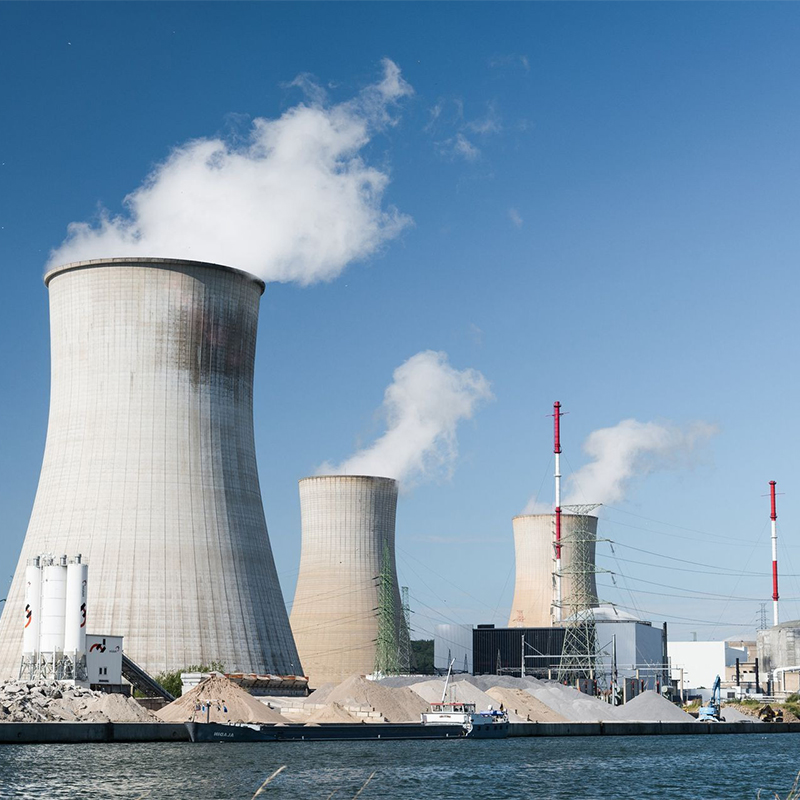
We Provide Cooling Tower Solution

Views: 0 Author: Cindy Publish Time: 2026-11-17 Origin: Site


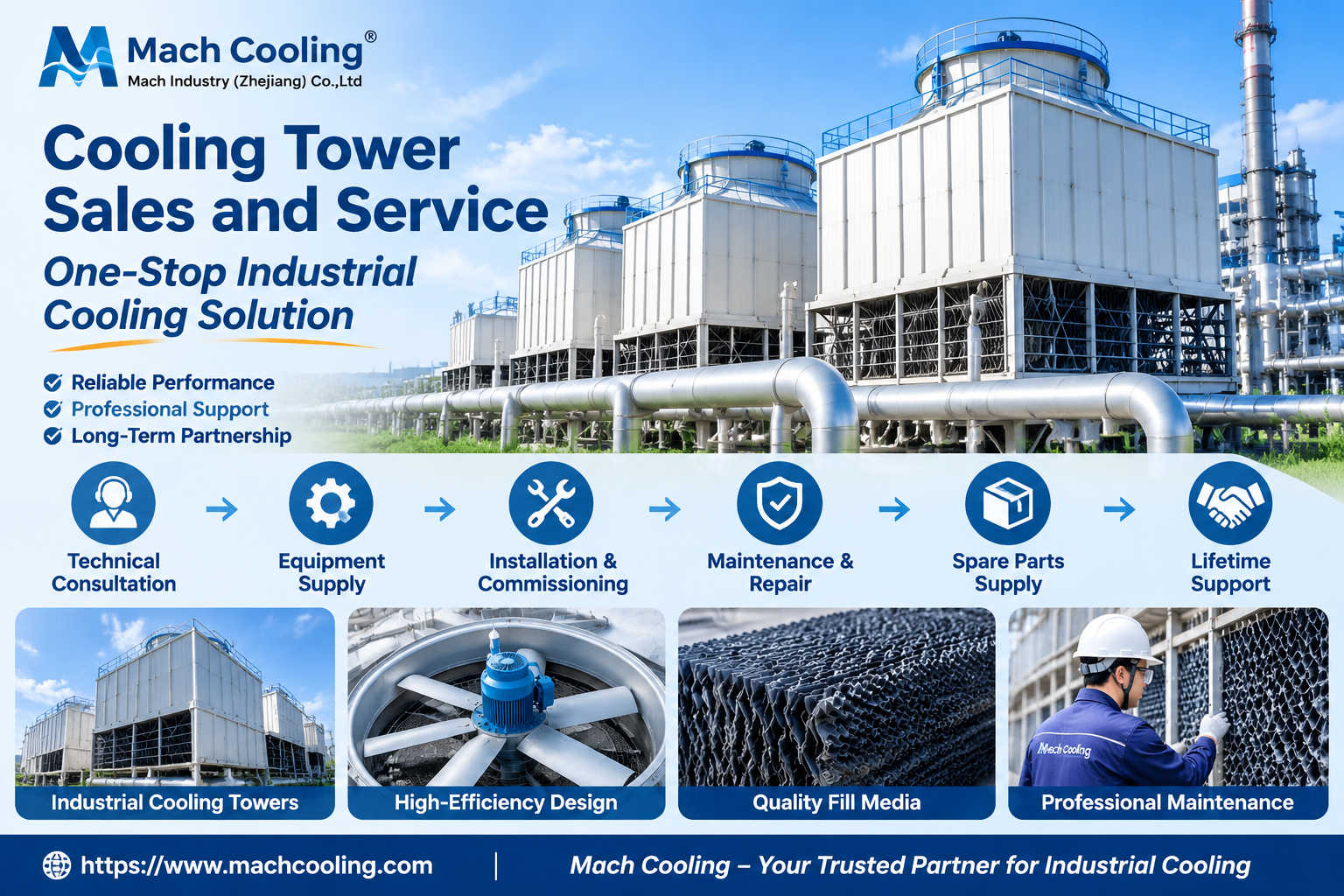
Industrial production depends on stable temperatures. Whether you operate a chemical plant, power station, manufacturing facility, food processing factory, or commercial HVAC system, removing excess heat is essential to keeping equipment running safely and efficiently.
That is where a reliable industrial cooling tower makes a difference.
However, purchasing a cooling tower is only the beginning. You also need professional equipment selection, system design, installation guidance, commissioning, maintenance, spare parts, and technical support throughout the equipment's service life.
Mach Industry (Zhejiang) Co.,Ltd, operating under the Mach Cooling name, provides cooling tower products and industrial cooling solutions for different project requirements. Our goal is to help customers find suitable cooling equipment, improve system reliability, and maintain stable cooling performance.
If you are searching for professional cooling tower sales and service, working with an experienced manufacturer can make your project easier to manage.
Think of your cooling tower as the heart of an industrial heat-rejection system. When it operates properly, excess heat is removed from circulating water, process temperatures remain under control, and production equipment can continue running.
When the cooling tower fails, the consequences can spread quickly.
High outlet water temperatures may reduce production efficiency. Poor airflow can increase operating temperatures. Damaged components may cause unexpected downtime. In some cases, an unreliable cooling system can affect the entire production process.
Many buyers focus only on the initial equipment price. But is the cheapest cooling tower always the most economical choice?
Not necessarily.
The real cost of a cooling tower includes equipment purchase, installation, electricity consumption, water treatment, maintenance, repairs, and replacement components.
A complete cooling solution considers all these factors from the beginning. Instead of coordinating multiple suppliers for different parts of the project, you can work with a manufacturer that understands how the cooling tower and its components operate together.
Professional cooling tower sales and service should cover more than delivering equipment. It should support customers throughout the equipment lifecycle.
Depending on the project scope, a complete solution may include:
Cooling tower selection and technical consultation
Cooling capacity assessment and system configuration
Cooling tower manufacturing and equipment supply
Customized equipment and component recommendations
Installation guidance and commissioning support
Cooling tower inspection and maintenance planning
Troubleshooting and replacement component recommendations
Spare parts supply and technical communication
Each stage is connected. Correct equipment selection makes installation easier, while proper maintenance helps preserve performance over time.
The first step is understanding the actual application.
A professional supplier should review the required cooling capacity, circulating water flow, hot-water temperature, cold-water temperature, local wet-bulb temperature, water quality, installation space, and operating schedule.
These details help determine the appropriate cooling tower type and configuration.
For example, a factory with a high heat load and limited installation space may need a different solution from a facility with seasonal cooling demand. Similarly, a process using water with high mineral content may require additional attention to water treatment and component materials.
Selecting equipment based only on a nominal tonnage figure can result in poor performance if the actual design conditions are different.
A proper selection process connects the cooling tower's thermal performance with the requirements of the entire process system.
Industrial projects rarely follow exactly the same blueprint.
Some customers need standard cooling tower equipment, while others require customized dimensions, materials, water connections, fan arrangements, or control options.
Depending on the tower design, the equipment and components may include:
Cooling tower casing and structural frame
Cooling tower fill media
Water distribution pipes and spray nozzles
Drift eliminators
Cooling tower fan and motor
Gearbox, belts, pulleys, and drive components
Water basin and piping connections
Supporting accessories and replacement parts
Material selection is equally important.
Fiberglass-reinforced plastic (FRP), galvanized steel, stainless steel, PVC, and other materials have different properties and application limits. The right choice depends on corrosion exposure, water chemistry, operating temperature, structural requirements, and maintenance expectations.
Choosing suitable materials from the beginning can help reduce premature deterioration and unnecessary replacement costs.
Even a well-designed cooling tower can underperform if it is installed incorrectly.
The foundation must support the equipment properly. Structural components should be aligned and secured. Piping should avoid unnecessary stress on the tower connections. Electrical wiring, motor protection, fan rotation, vibration, and safety devices also need attention.
During commissioning, the system should be checked under controlled operating conditions.
Typical checks include:
Confirming circulating water flow
Checking fan rotation and operating condition
Inspecting water distribution
Checking for leaks
Measuring vibration and motor operating readings
Confirming basin water level and makeup water operation
Recording inlet and outlet water temperatures
Clear installation instructions and technical support help reduce commissioning problems and make equipment handover smoother.
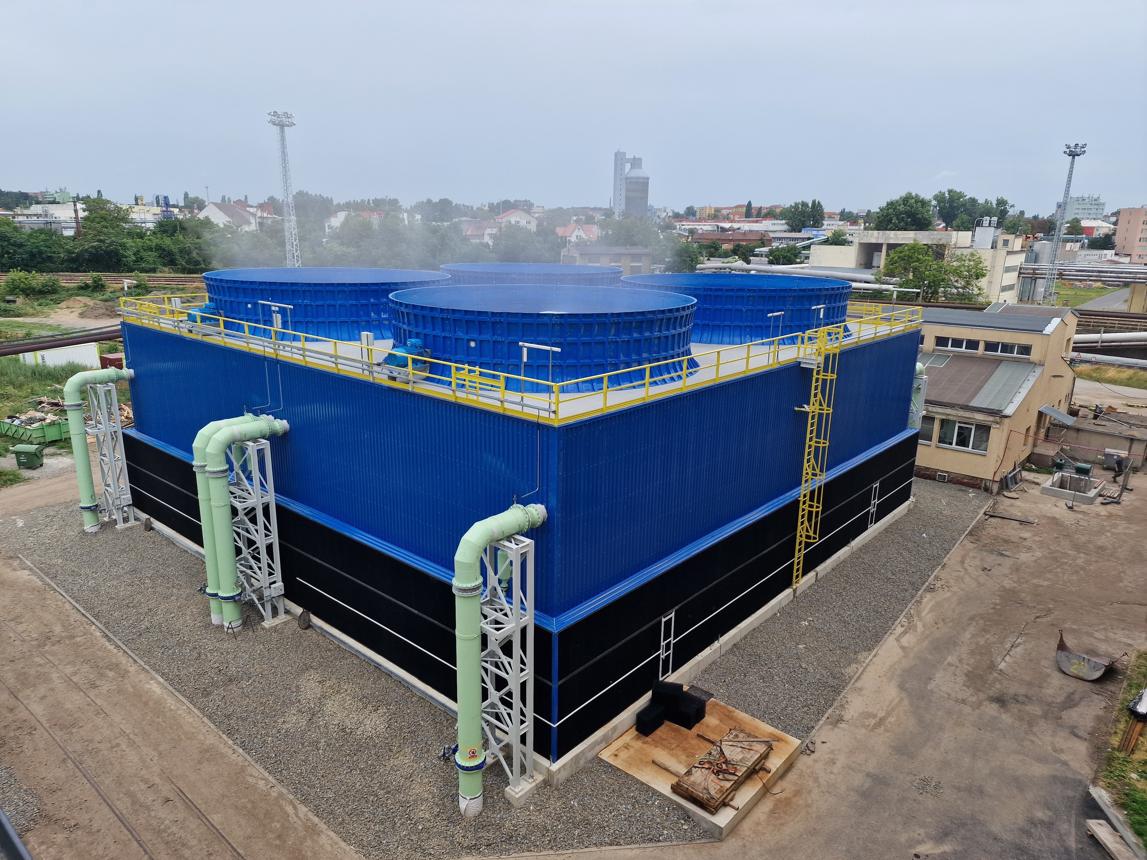
Cooling towers operate in demanding environments. Water, air, sunlight, temperature changes, vibration, and airborne contaminants all affect their components.
Regular service helps identify wear before it develops into a major failure.
Depending on equipment condition and operating requirements, maintenance work may include cleaning, inspection, adjustment, repair, and component replacement.
Common cooling tower spare parts include fan blades, motors, bearings, belts, pulleys, gearboxes, nozzles, fill media, drift eliminators, seals, and water distribution components.
Having access to compatible replacement parts can reduce downtime and help extend equipment service life.
Choosing the right cooling tower starts with understanding the main equipment types.
Different designs have different operating characteristics. The best choice depends on cooling requirements, water quality, available space, maintenance preferences, and environmental conditions.
An open-circuit cooling tower cools circulating water through direct contact with air.
Warm water enters the tower and is distributed over the fill media, where it spreads into thin films or droplets. Air passes through the tower, and a small portion of the water evaporates. This evaporation removes heat from the remaining water.
Open-circuit cooling towers are widely used in industrial processes and HVAC systems because they can provide effective heat rejection.
However, the circulating water is exposed to the atmosphere. This means water treatment, filtration, biological control, and routine cleaning are important parts of responsible operation.
A closed-circuit cooling tower keeps the process fluid inside a heat-exchange coil.
Water is sprayed over the outside of the coil while air moves through the tower. Heat transfers from the process fluid through the coil wall to the spray water and airflow.
This arrangement helps isolate the process fluid from direct atmospheric exposure.
Closed-circuit systems can be useful when process fluid cleanliness is important, when contamination must be limited, or when an application has particular fluid-handling requirements.
They may also involve different maintenance requirements and initial investment costs compared with open-circuit equipment.
Crossflow and counterflow describe the relationship between airflow and falling water.
In a crossflow cooling tower, air moves horizontally across the falling water. In a counterflow cooling tower, air travels upward against the downward movement of water.
Both designs can provide effective cooling when correctly selected and engineered.
Crossflow configurations may offer convenient access to certain water distribution components. Counterflow designs can provide a compact arrangement in some applications.
The final selection should consider thermal performance, equipment footprint, fan power, maintenance access, and site layout.
How can you avoid purchasing a cooling tower that looks suitable on paper but fails to meet actual operating requirements?
Start with engineering data, not assumptions.
A reliable supplier should evaluate the operating conditions before recommending a model.
Cooling capacity represents the amount of heat that a cooling tower must reject from circulating water.
It is influenced by water flow rate and the temperature difference between hot water entering the tower and cold water leaving it. This temperature difference is commonly called the cooling range.
A simplified heat-load calculation for water is:
Heat load (kW) ≈ 4.186 × water flow (kg/s) × temperature range (°C)
For example, if the water flow rate is 10 kg/s and the required temperature range is 5°C, the approximate heat load is:
4.186 × 10 × 5 = 209.3 kW
This is a simplified estimate. Final equipment selection should also consider design wet-bulb temperature, approach, site conditions, and the manufacturer's thermal performance data.
Local wet-bulb temperature is one of the most important factors in cooling tower selection.
It represents the cooling potential of the surrounding air under the prevailing temperature and humidity conditions.
The approach is the difference between the cold-water temperature leaving the tower and the entering-air wet-bulb temperature.
A smaller approach generally requires more demanding thermal performance and may affect cooling tower size, airflow, and equipment cost.
When requesting a quotation, buyers should provide the design wet-bulb temperature along with the required hot-water and cold-water temperatures.
Without these details, different suppliers may prepare quotations using different assumptions, making comparisons unreliable.
Water quality has a direct effect on cooling tower reliability.
Hardness, suspended solids, dissolved minerals, biological growth, and corrosive substances can contribute to scaling, fouling, corrosion, or blocked nozzles.
The surrounding environment matters too.
Coastal facilities may face salt exposure, while industrial sites may have dust, chemical vapors, or other airborne contaminants.
These conditions should influence material selection, water treatment planning, inspection frequency, and maintenance access.
A cooling tower should be selected for the environment in which it will actually operate, not just for its rated capacity.
The purchase price is only one part of the investment.
Cooling tower fans and circulating water pumps consume electricity. Water treatment, makeup water, cleaning, repairs, and replacement components also add ongoing costs.
A tower with a lower initial price may not be the most economical choice if it requires more energy or frequent maintenance.
When comparing suppliers, ask about fan and motor selection, expected operating conditions, thermal performance, maintenance requirements, and spare parts availability.
Consider the total cost over the expected service life rather than focusing only on the lowest quotation.
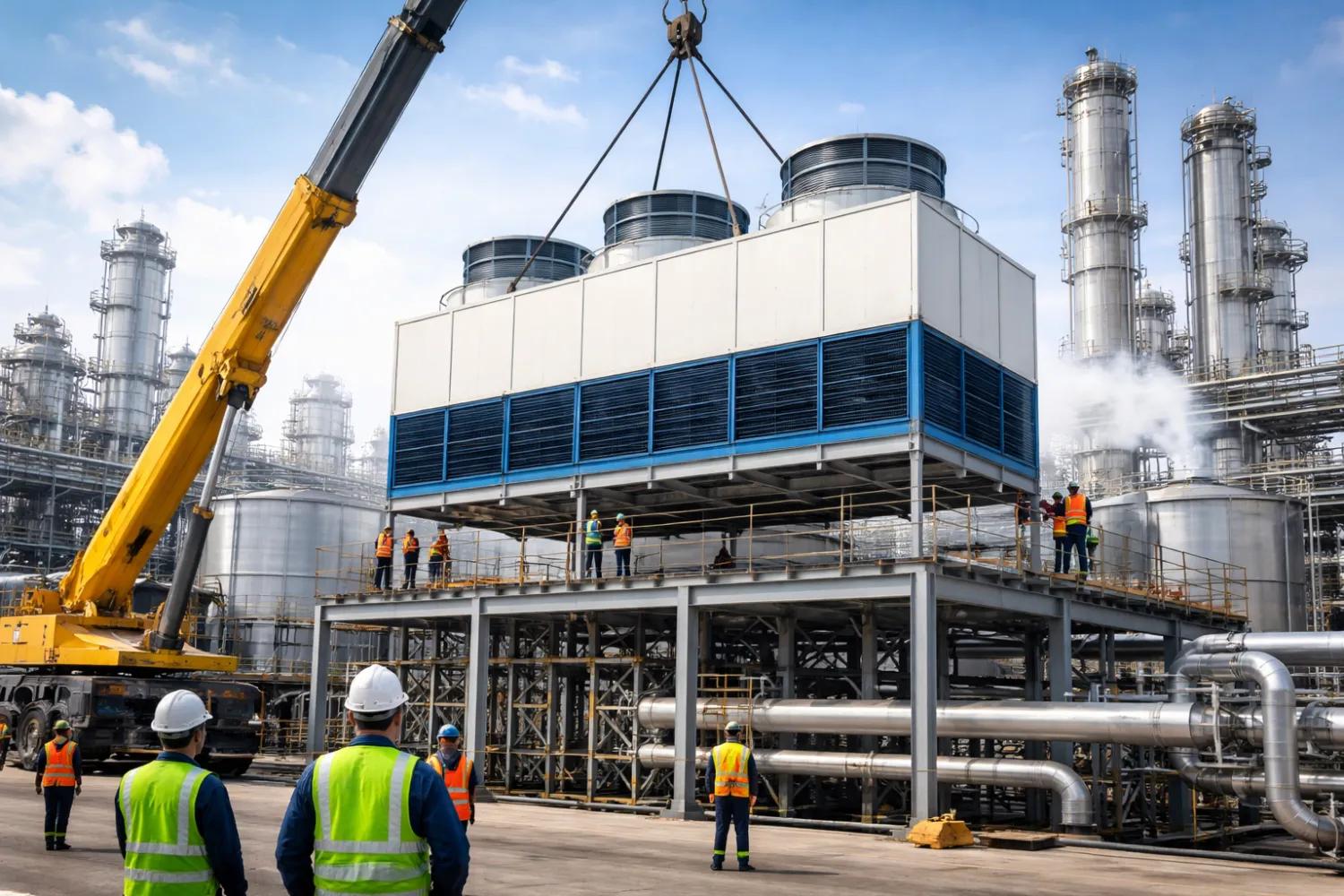
Installation affects safety, reliability, and cooling performance.
Before installation, confirm the foundation dimensions, load-bearing capacity, access routes, lifting requirements, and maintenance clearances.
During assembly, follow the manufacturer's instructions for structural connections, sealing, alignment, and component installation.
The piping system should provide the required water flow without placing excessive loads on the tower. Electrical work should be completed by qualified personnel, with suitable motor protection and safe isolation arrangements.
Before startup, check fan rotation, vibration, water distribution, basin condition, and potential leaks.
A documented commissioning process creates a useful baseline for future inspections and troubleshooting.
A cooling tower needs regular attention because its operating environment is demanding.
A maintenance plan should reflect the manufacturer's recommendations, operating hours, water quality, local climate, and process criticality.
It should also follow applicable workplace safety and water-management requirements.
Routine inspections help operators identify changes early.
Check the basin, casing, structural supports, water level, visible corrosion, leakage, unusual noise, vibration, and signs of biological growth.
Record operating temperatures, water flow, fan and motor readings, and any abnormal observations.
Comparing current readings with historical records can reveal gradual performance changes that might otherwise go unnoticed.
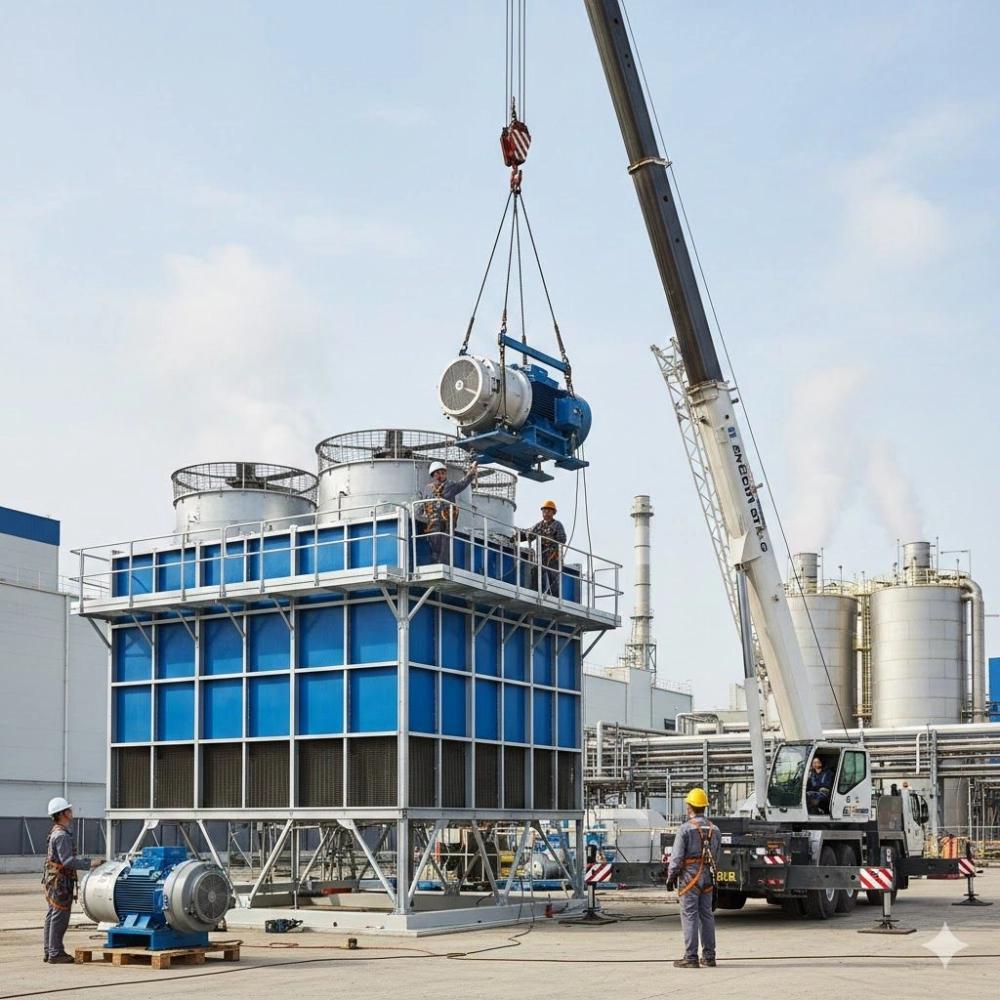
Dirt, scale, and biological deposits can restrict water flow and reduce heat transfer.
Cleaning schedules should be based on actual water conditions and site procedures.
Water treatment may include filtration, scale control, corrosion control, and biological control, depending on the system.
Cooling tower water systems can create health risks if poorly managed. Cleaning and disinfection should therefore be performed under a suitable water-management program by trained personnel.
Do not rely on visual appearance alone to determine whether water quality is acceptable.
The fan system moves air through the tower, so its condition directly affects cooling performance.
Inspect fan blades for cracks, damage, corrosion, and uneven deposits. Check blade pitch and fasteners according to the manufacturer's instructions.
Motors, gearboxes, belts, pulleys, bearings, and couplings should be inspected at the intervals recommended for the equipment.
Unusual vibration, rising motor current, overheating, or abnormal noise may indicate a mechanical or electrical issue.
Before inspection or repair, isolate the equipment and follow site lockout/tagout and working-at-height procedures.
Fill media provides the surface area needed for heat and mass transfer.
If the fill becomes clogged, damaged, or displaced, cooling performance may decline.
Nozzles and distribution pipes should be checked for blockage, uneven spray, leaks, and wear.
Drift eliminators reduce the amount of water droplets carried out with the exhaust air. Damaged or incorrectly installed eliminators can increase water loss and drift.
When replacing components, confirm dimensions, material compatibility, airflow requirements, and the original tower configuration.
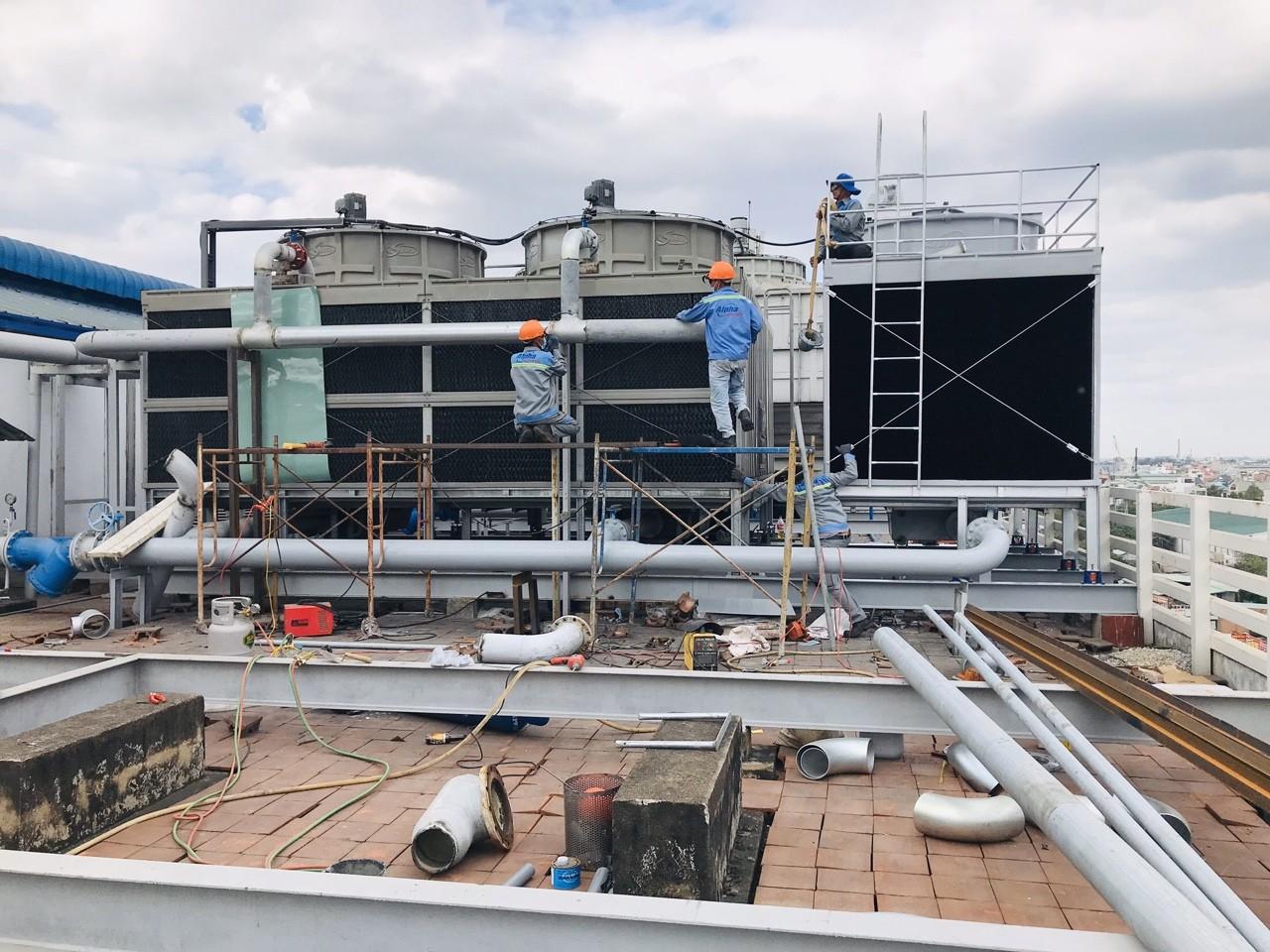
Even well-maintained cooling towers may experience problems over time. The key is to identify the cause rather than simply replace parts without diagnosis.
Problem 1: High Outlet Water Temperature
Possible causes include excessive heat load, insufficient airflow, poor water distribution, clogged fill, or unsuitable design conditions.
Check actual water flow, entering wet-bulb temperature, fan operation, and fill condition before changing equipment settings.
Problem 2: Excessive Vibration or Noise
Inspect fan balance, blade condition, alignment, bearings, drive components, and structural fasteners.
Stop the equipment if there are signs of serious mechanical damage.
Problem 3: Uneven Water Distribution
Blocked nozzles, damaged piping, or incorrect operating pressure may cause dry areas in the fill.
Inspect and clean the distribution system to restore uniform water flow.
Problem 4: Water Leakage or High Water Consumption
Check basin joints, piping, makeup water controls, drift eliminators, and overflow arrangements.
Problem 5: Scaling and Fouling
Review water chemistry, filtration, blowdown control, and cleaning procedures.
A professional service provider investigates the root cause and recommends an appropriate solution based on the equipment and operating conditions.
Replacing an entire cooling tower is not always necessary.
In some cases, upgrading selected components can restore performance or improve reliability.
Potential upgrades include:
New cooling tower fill media
Improved drift eliminators
Replacement spray nozzles
Fan and motor upgrades
Drive-system replacement
Basin repairs
Control and monitoring improvements
Before planning a retrofit, assess the existing structure, design capacity, airflow path, water distribution, electrical system, and available space.
Confirm that new components are compatible with the tower and that the modification will not compromise structural integrity or thermal performance.
For older equipment, a professional assessment can help compare the cost and risk of repair against full replacement.
Cooling towers serve a wide range of industrial and commercial applications.
Power Generation: Cooling towers help reject heat from circulating cooling-water systems and support plant operation.
Chemical and Petrochemical Plants: Industrial cooling systems support process temperature control and heat removal.
Steel and Metallurgy: Manufacturing equipment and auxiliary systems often require reliable heat rejection.
Food and Beverage: Cooling towers may support process cooling and refrigeration systems, subject to suitable hygiene controls and system separation requirements.
Data Centers: Selected chiller-based cooling systems use cooling towers to reject heat and support temperature management.
Commercial HVAC: Large buildings, hotels, hospitals, and commercial facilities may use cooling towers as part of central chilled-water systems.
Each industry has different operating conditions, water-quality requirements, redundancy needs, and maintenance priorities.
That is why a standard product description cannot replace project-specific engineering.
Choosing a cooling tower supplier is also choosing a long-term equipment partner.
Mach Industry (Zhejiang) Co.,Ltd, operating under the Mach Cooling name, focuses on cooling tower products and industrial cooling solutions.
We understand that customers need more than a piece of equipment. They need a system that matches their process, site conditions, and operating expectations.
Our approach is to start with the application, review the technical requirements, and help identify a suitable cooling tower configuration.
Working directly with a manufacturer can make technical communication more straightforward.
Instead of relying only on a general product description, customers can discuss operating conditions, equipment configuration, component compatibility, and project requirements with a team familiar with cooling tower products.
Accurate information at the enquiry stage also helps reduce misunderstandings during quotation, production, delivery, and installation planning.
A cooling tower is made up of components that must work together.
The fan, motor, fill, nozzles, drift eliminators, basin, and structure all contribute to overall operation.
Considering these elements together can help customers avoid mismatched parts and incomplete specifications.
Depending on the project scope, the required support may include product selection, equipment supply, component recommendations, technical documentation, installation guidance, and after-sales communication.
There is no single cooling tower configuration that suits every factory.
Mach Cooling encourages customers to provide key project information before equipment selection.
This includes:
Required heat rejection or cooling capacity
Circulating water flow rate
Hot-water and cold-water temperatures
Design wet-bulb temperature
Water quality
Installation location and available space
Special material or operating requirements
The more accurate the information, the more meaningful the technical recommendation and quotation can be.
To learn more about Mach Cooling and discuss your industrial cooling requirements, visit:
A clear enquiry helps the supplier understand your project and prepare a more useful proposal.
Before requesting a quotation, collect the following information:
1. Application: Explain the industrial process or HVAC system that needs cooling.
2. Cooling Duty: Provide the heat load or required cooling capacity if known.
3. Water Conditions: Include circulating water flow, hot-water temperature, and target cold-water temperature.
4. Climate Data: Provide the design wet-bulb temperature or project location so the design conditions can be reviewed.
5. Site Details: Share available space, installation height, foundation information, and piping requirements.
6. Water Quality: Provide a water analysis if available.
7. Project Scope: Clarify whether you need a new cooling tower, replacement equipment, spare parts, maintenance support, or a retrofit.
8. Delivery Expectations: Include the project schedule and destination.
With these details, the supplier can assess the application more accurately and reduce unnecessary quotation revisions.
Start with the heat load, circulating water flow, hot-water temperature, cold-water temperature, and local design wet-bulb temperature.
These values define the thermal duty and design conditions.
If you do not know the heat load, provide the water flow and temperature range so the supplier can help estimate it.
Avoid selecting a tower based only on the capacity of an existing unit without checking whether the operating conditions have changed.
There is no universal service interval for every cooling tower.
Inspection frequency depends on operating hours, water quality, environmental conditions, equipment design, and the consequences of downtime.
Operators should perform routine checks during operation and schedule more detailed inspections and cleaning according to the maintenance plan.
Always follow the manufacturer's instructions and applicable water-management requirements.
Yes. Many cooling towers can be repaired or upgraded if the main structure remains suitable and the proposed components are compatible.
Common work includes replacing fill media, nozzles, drift eliminators, fan blades, motors, belts, and other worn parts.
However, severe structural corrosion, major damage, or a significant increase in cooling demand may make full replacement a better option.
An equipment assessment should come before the decision.
After-sales support helps operators address problems, identify compatible replacement parts, and maintain equipment over time.
It can also make it easier to understand maintenance requirements and plan future upgrades.
For industrial facilities where cooling is essential to production, access to reliable technical communication can help reduce uncertainty and support better maintenance decisions.
Provide the required cooling capacity, water flow rate, inlet and outlet water temperatures, design wet-bulb temperature, installation location, water quality, and any special requirements.
If you are replacing an existing cooling tower, photographs, equipment drawings, model information, and nameplate details can also help the supplier evaluate the project.
A reliable cooling tower solution is about much more than purchasing equipment.
It combines correct selection, suitable materials, professional installation, careful commissioning, routine maintenance, compatible spare parts, and responsive technical support.
When these elements are considered together, industrial facilities are better positioned to maintain stable cooling performance, manage operating costs, and reduce avoidable downtime.
If you are planning a new cooling tower project, replacing existing equipment, or looking for support with cooling tower components, Mach Industry (Zhejiang) Co.,Ltd is ready to discuss your requirements.
Visit https://www.machcooling.com to learn more about Mach Cooling and enquire about an industrial cooling solution for your application.
Mach Cooling – Supporting Reliable Industrial Cooling with Professional Cooling Tower Solutions.