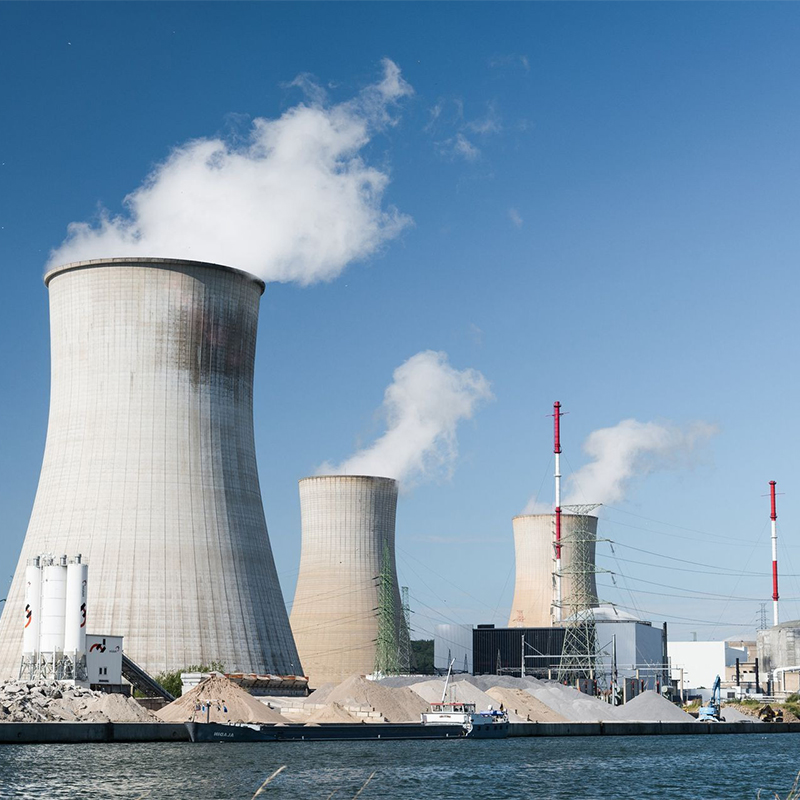
We Provide Cooling Tower Solution

Views: 0 Author: Cindy Publish Time: 2026-11-18 Origin: Site


A cooling tower performance test is a systematic evaluation of how effectively a cooling tower removes heat from circulating water or process fluid. It compares the tower's actual operating performance with its design conditions or contractual guarantees.
Think of a cooling tower as the heat-rejection center of an industrial cooling system. A chiller, compressor, injection molding machine, or production line transfers unwanted heat into water or another process fluid. The cooling tower must then release that heat into the atmosphere. If it cannot do this effectively, the entire process may suffer.
A performance test measures important operating conditions, including water temperatures, entering air wet-bulb temperature, water flow rate, and fan power. For closed-circuit equipment, the test also considers the process fluid flowing through the heat-exchange coil and the spray-water circuit.
The objective is not simply to check whether the fan runs or whether water becomes cooler. It is to determine whether the complete cooling tower delivers the required thermal performance under defined conditions.
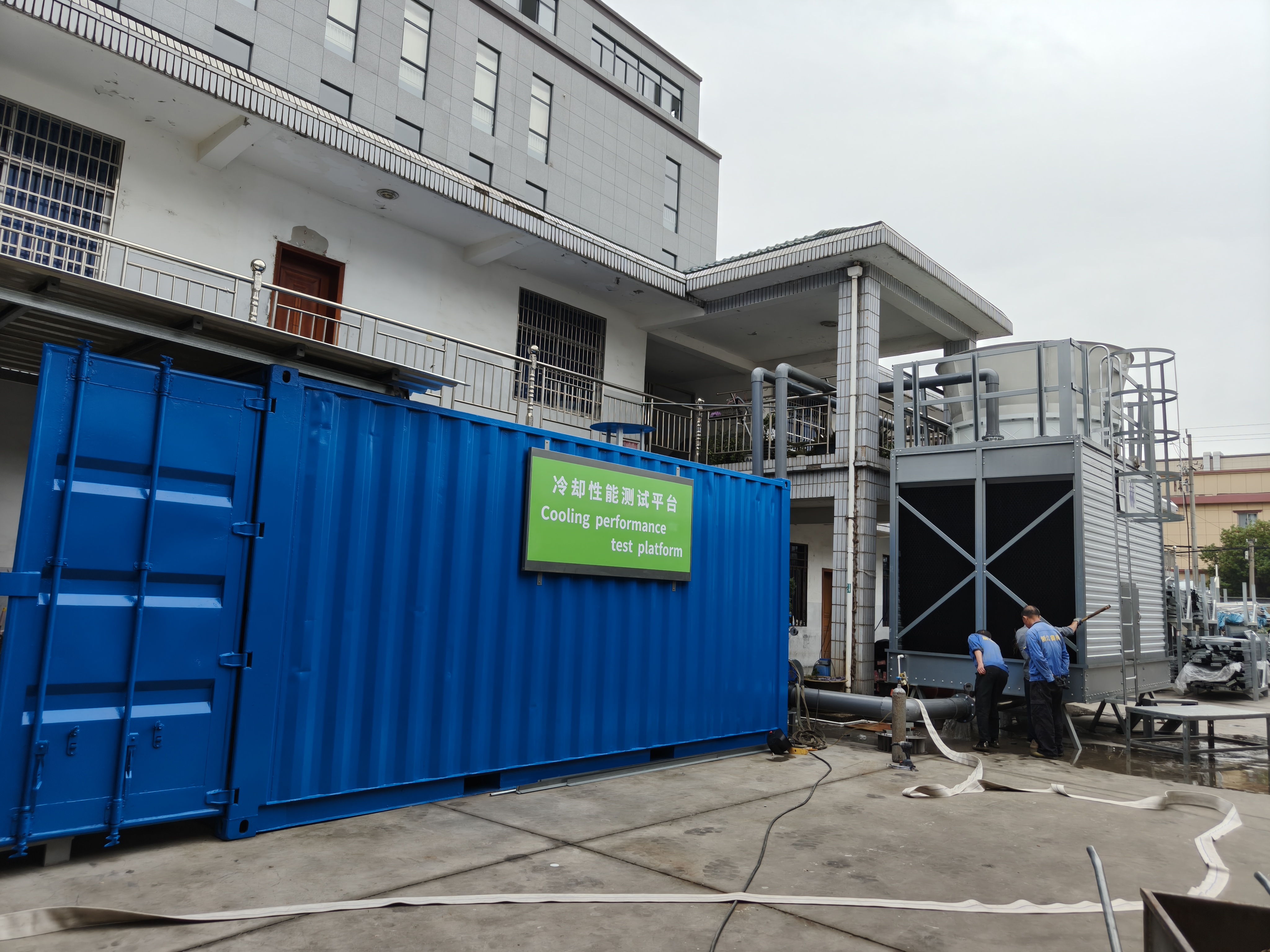
A cooling tower can appear to operate normally while delivering less cooling capacity than expected. The fan may rotate, water may circulate, and the basin may remain full, but none of these observations proves that the tower meets its design duty.
Performance testing provides measurable evidence.
The first reason to test a cooling tower is to confirm that it can handle the required heat load. If the outlet water temperature is higher than expected, downstream equipment may operate at elevated temperatures.
For a chiller plant, this can affect condenser conditions and energy consumption. In manufacturing, it may lead to unstable process temperatures, longer production cycles, or equipment protection trips.
Testing helps identify problems that routine visual inspections may miss. Poor water distribution, blocked fill, damaged spray nozzles, incorrect fan rotation, and excessive air recirculation can all reduce thermal performance.
A test establishes a baseline. Maintenance teams can then compare future results and determine whether performance is improving or deteriorating.
For a new installation, an acceptance test can help determine whether the cooling tower meets the agreed performance guarantee.
Before testing, the purchaser, manufacturer, and testing organization should agree on the test procedure, design conditions, measurement points, and acceptance criteria. This avoids disputes caused by comparing results obtained under different operating conditions.
Open and closed cooling towers both reject heat through evaporative cooling, but they transfer heat in different ways. That difference affects how each unit should be tested.
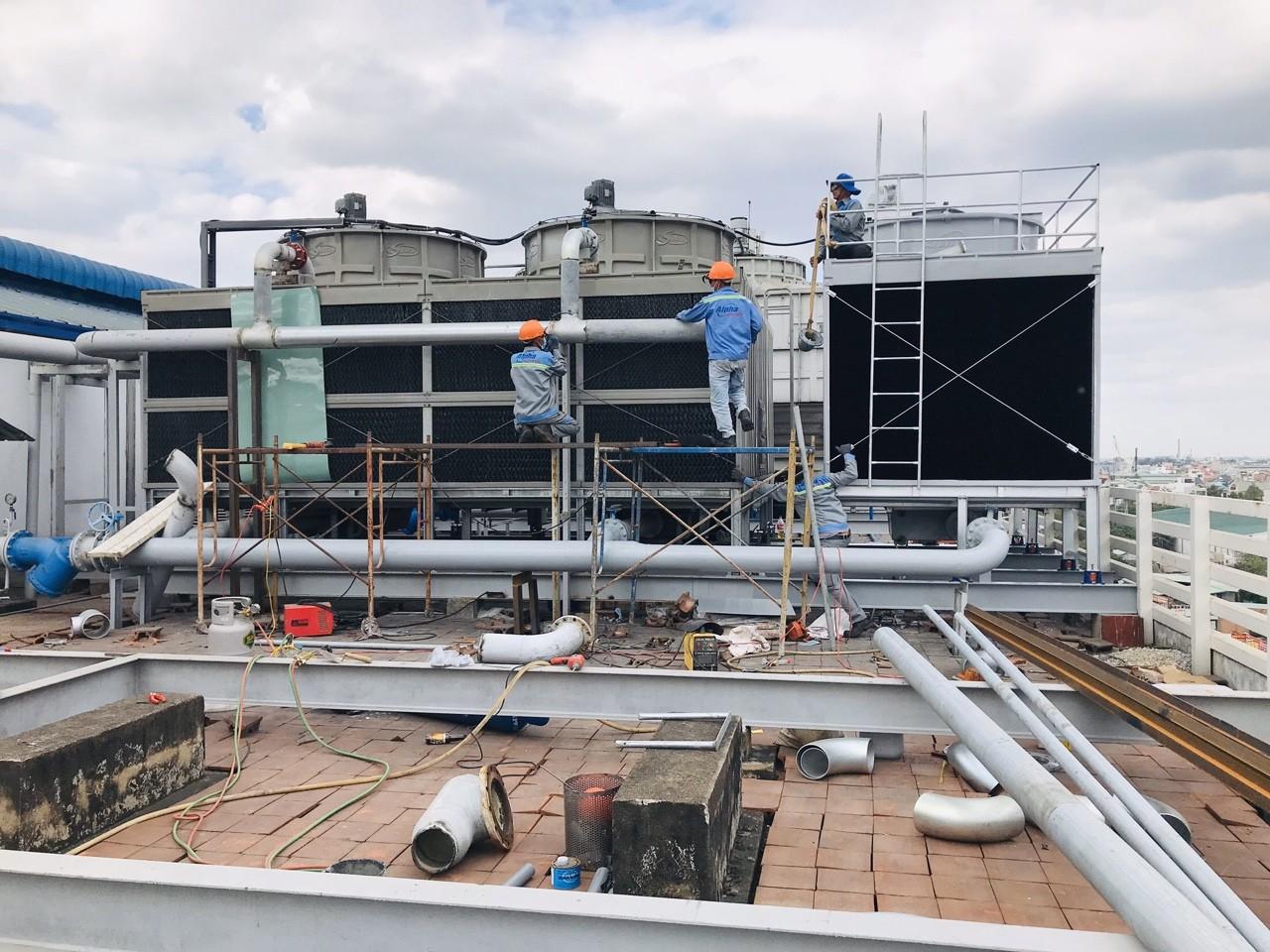
In an open cooling tower, warm circulating water is distributed over the fill while air moves through the tower. A small portion of the water evaporates, carrying heat away. The cooled water collects in the basin and returns to the industrial system.
<insert image: open-circuit cooling tower with visible fill, water distribution and fan>
Because the process water comes into direct contact with the air, the performance test generally focuses on:
Hot-water temperature entering the tower
Cold-water temperature leaving the tower
Water circulation rate
Entering air wet-bulb temperature
Fan power and relevant operating conditions
Water quality and the condition of the fill and spray system also matter. Scale, biological growth, and blocked nozzles can interfere with heat and mass transfer.
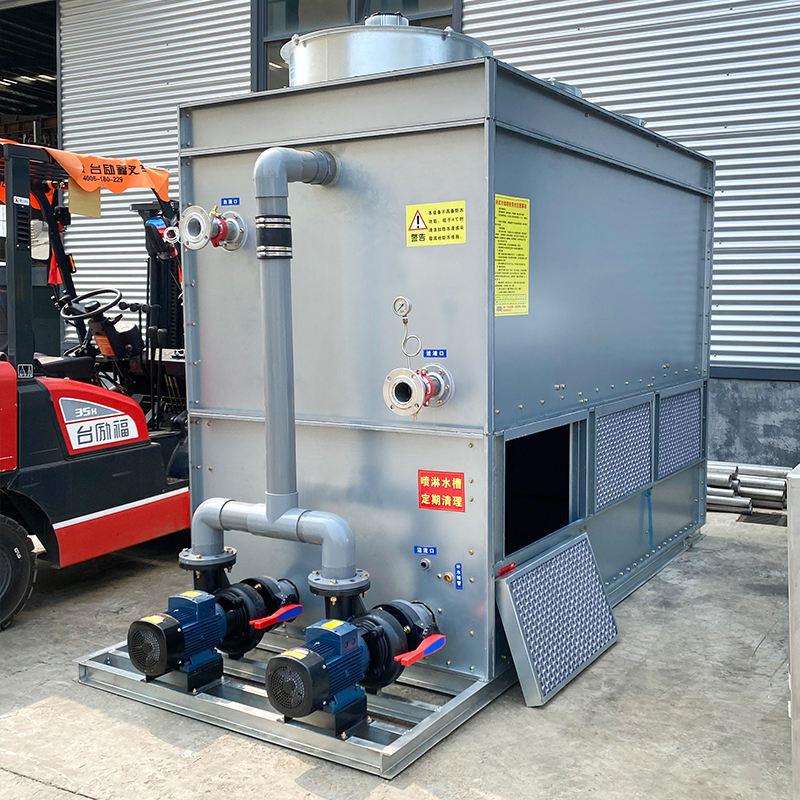
A closed-circuit cooling tower uses a heat-exchange coil to keep the process fluid separate from the outside air and spray water.
The process fluid flows inside the coil. Water is sprayed over the coil's external surface while a fan moves air through the unit. Evaporation removes heat from the coil, cooling the process fluid without exposing it directly to the atmosphere.
<insert image: closed-circuit cooling tower showing heat-exchange coil and spray-water system>
A closed-circuit performance test therefore needs to consider two distinct fluid circuits:
Process-fluid circuit: The fluid entering and leaving the coil, along with its flow rate and operating properties.
Spray-water circuit: The water distributed over the coil, including its circulation and spray-system condition.
The process-fluid temperatures and flow rate are central to evaluating the unit's cooling duty. Spray-water conditions and airflow also influence the result.
An open tower cools water through direct contact with air. A closed-circuit tower transfers heat through a coil wall before the spray water and air remove it.
This means the test engineer cannot simply apply the same measurement arrangement to both types. The relevant test code, fluid properties, flow measurements, and performance calculations must match the equipment design.
For closed-circuit cooling towers, the applicable test procedure should specifically address the coil-based heat-transfer arrangement.
Using a recognized test standard helps make results consistent, repeatable, and technically defensible. The appropriate standard depends on the tower type and the purpose of the test.
The Cooling Technology Institute's CTI ATC-105 is an acceptance test code for cooling towers. It describes instrumentation and procedures for determining and evaluating the thermal capability of water cooling towers.
It provides a structured approach to collecting operating data and evaluating performance. The test must be conducted within the applicable limits and conditions defined by the code.
For an open mechanical-draft cooling tower, the test commonly evaluates hot- and cold-water temperatures, entering wet-bulb temperature, circulating water flow, and fan operating conditions.
Closed-circuit cooling towers require a test method that accounts for the process coil and its separate spray-water system.
CTI ATC-105S is the acceptance test code supplement for closed-circuit cooling towers. It should be considered when planning a formal thermal acceptance test for this equipment.
The exact test setup and calculations should follow the applicable edition of the standard and the equipment's agreed performance guarantee.
Field acceptance testing is not the only way to obtain performance assurance. CTI STD-201 provides a framework for thermal performance certification of evaporative heat-transfer equipment, including applicable open- and closed-circuit cooling tower product lines.
Certification and field acceptance testing serve different purposes. Certification relates to a manufacturer's qualifying product line under defined rating conditions. A field test evaluates a particular installed unit under actual site conditions.
Always check the scope of the certification and whether the specific tower model and configuration are covered.
Accurate measurement is the foundation of a reliable test. A small temperature error or an unreliable flow reading can significantly affect the calculated cooling duty.
For an open tower, the hot-water temperature is measured before water enters the tower's distribution system. The cold-water temperature is measured where the cooled water leaves the tower or at an agreed location with representative mixing.
The difference between these temperatures is the cooling range.
For a closed-circuit tower, the test also measures the process fluid temperature entering and leaving the heat-exchange coil. These readings show how much the process fluid is cooled as it passes through the unit.
Measurement locations should be selected carefully. Temperature stratification, poor mixing, and heat gain or loss in exposed pipework can distort readings.
Wet-bulb temperature is one of the most important factors affecting evaporative cooling tower performance.
It represents the cooling potential of the surrounding air under the prevailing humidity conditions. In general, a lower entering wet-bulb temperature allows a cooling tower to produce colder water, while a higher wet-bulb temperature makes cooling more difficult.
The test team should measure the air condition at the locations and in the manner required by the applicable test standard. A weather-station reading far from the tower may not represent the air actually entering it, especially when exhaust air can recirculate.
Water flow rate determines how much fluid passes through the tower or coil during a given period. If the flow differs significantly from the design value, the thermal result may not be directly comparable with the guarantee.
For an open tower, the circulating-water flow rate is measured in the main water circuit. For a closed-circuit unit, the process-fluid flow rate through the coil is important; spray-water circulation should also be checked where required by the test procedure.
The cooling range is calculated as:
Cooling Range = Hot-Water Temperature − Cold-Water Temperature
For a closed-circuit tower, use the process-fluid inlet and outlet temperatures when calculating the process-fluid cooling range.
The fan moves air through the tower and supports evaporation. Fan speed, blade pitch, rotation direction, motor condition, and airflow resistance all influence performance.
During a formal test, fan power and operating conditions should be measured or verified as required by the applicable procedure. Simply confirming that the fan is switched on is not enough.
A fan operating at the wrong speed or rotating in the wrong direction can reduce airflow and compromise thermal performance.
A closed-circuit tower has an additional testing consideration: the process fluid and spray water must not be treated as one circuit.
The process-fluid flow, inlet temperature, outlet temperature, and fluid properties determine the heat removed from the process stream. Spray-water flow and distribution affect heat transfer at the outside of the coil.
If the process fluid is a glycol mixture or another fluid with properties different from water, its density and specific heat must be considered in the heat-duty calculation.
A professional performance test requires suitable instruments with appropriate ranges and calibration status. Depending on the test procedure and equipment arrangement, the test kit may include:
Calibrated temperature sensors or precision thermometers
Wet-bulb measurement instruments or suitable psychrometric equipment
Water-flow measurement equipment, such as an approved pitot-tube arrangement or calibrated flow meter
Electrical power analyzer for fan motor measurements
Pressure gauges and differential-pressure instruments where required
Data logger for recording measurements over the test period
Ambient condition instruments for relevant weather measurements
The instruments should be selected according to the expected operating range and the requirements of the applicable standard. Calibration records should be available before the test begins.
For large industrial installations, synchronized electronic data collection can make it easier to identify fluctuations and compare readings taken at different measurement points.
A well-organized test follows a defined sequence. The goal is to measure the tower under stable and representative operating conditions.
Before collecting data, inspect the tower and the connected cooling-water system.
Check that the fill is clean and properly installed, spray nozzles are not blocked, water distribution is reasonably uniform, and strainers and piping are free from significant obstruction. Confirm that the basin has an appropriate water level and that the circulating pump is operating correctly.
Inspect the fan, motor, gearbox or belt drive, and electrical connections. Remove loose objects and confirm that guards and access arrangements are safe.
The tower should be operated as close to its specified test conditions as practical. If the unit is heavily fouled or has obvious mechanical defects, correct those issues before attempting an acceptance test.
Once the system reaches stable operation, record the key parameters:
Hot-water temperature entering the tower
Cold-water temperature leaving the tower
Entering air wet-bulb temperature
Circulating water flow rate
Fan motor power and operating speed, as applicable
Relevant ambient and site conditions required by the test code
Measurements should be taken at agreed locations. The test team should collect readings over a suitable period rather than relying on a single snapshot.
After collecting the readings, check whether the test conditions fall within the limits permitted by the applicable standard.
The measured data are then evaluated using the standard's procedures and the manufacturer's performance information. If actual conditions differ from the design rating conditions, the result may need to be corrected or evaluated using the prescribed performance curves.
A useful test report should include raw measurements, instrument details, operating conditions, calculations, deviations, and the final assessment against the agreed guarantee.
The closed-circuit test follows a similar overall logic, but it must account for heat transfer through the coil.
Inspect the coil and its connections for visible damage, leakage, corrosion, or signs of blockage. Confirm that the process-fluid circuit is properly filled, vented, and operating at the required flow rate.
Air trapped inside the coil can reduce heat transfer and create misleading operating results. The fluid concentration and properties should also be confirmed when the system uses glycol or another treated fluid.
Inspect spray nozzles, distribution headers, strainers, and the spray-water basin. The coil surface should receive even water coverage according to the unit's design.
Check the fan's rotation, speed, blade condition, and motor power. Also look for obstructions around the air inlet and discharge. Poor airflow or uneven spray coverage can create hot areas on the coil and reduce heat rejection.
Record the process fluid's inlet and outlet temperatures and measure its flow rate using an appropriate method.
Also record the entering air wet-bulb temperature and the relevant spray-water and fan operating conditions required by the test procedure.
The test team should evaluate the heat removed from the process fluid using its actual properties. It should not assume that process-fluid flow is identical to spray-water flow.
Performance calculations turn field measurements into useful engineering information. Three concepts are particularly important: cooling range, approach, and heat rejection.
The cooling range is the temperature reduction achieved by the tower.
Cooling Range = Hot-Water Temperature − Cold-Water Temperature
For example, if an open cooling tower receives water at 37°C and returns it at 32°C:
Cooling Range = 37 − 32 = 5°C
This result describes the water temperature reduction. It does not, by itself, prove that the tower meets its rated capacity. Flow rate and entering wet-bulb temperature must also be considered.
The approach indicates how close the cold-water temperature gets to the entering air wet-bulb temperature.
Approach = Cold-Water Temperature − Entering Wet-Bulb Temperature
For example, if the cold-water temperature is 32°C and the entering wet-bulb temperature is 27°C:
Approach = 32 − 27 = 5°C
A smaller approach generally indicates stronger cooling performance under comparable conditions. However, the achievable approach depends on tower design, size, airflow, water loading, and operating conditions. There is no single approach value that is ideal for every cooling tower.
For a closed-circuit unit, use the appropriate process-fluid outlet temperature and the rating or test definition specified by the applicable procedure.
For a water-based fluid, a simplified heat-duty calculation is:
Q = m × Cp × ΔT
Where:
Q = heat transferred, in kW when SI units are used
m = mass flow rate, in kg/s
Cp = specific heat capacity, in kJ/(kg·°C)
ΔT = fluid temperature difference, in °C
For water, a commonly used approximate specific heat is 4.186 kJ/(kg·°C).
For example, if water flows at 20 kg/s and cools by 5°C:
Q ≈ 20 × 4.186 × 5 = 418.6 kW
This is a simplified estimate. A formal performance evaluation must use accurate flow and fluid-property data and follow the applicable test standard. For glycol or other process fluids, use the correct specific heat and density at the relevant operating conditions.
Even a well-designed test can produce unreliable results if the operating conditions or measurement setup are poor.
Common sources of error include:
Unstable heat load: Rapid changes in process demand can cause water temperatures to fluctuate.
Unsteady water flow: Pump changes, valve adjustments, or blocked strainers can affect flow readings.
Incorrect wet-bulb measurement: Sensors placed in an unrepresentative location may record air conditions that do not reflect tower inlet conditions.
Uncalibrated instruments: Temperature and flow errors can distort calculated capacity.
Wind and air recirculation: Tower exhaust air may return to the inlet and change the effective entering air condition.
Dirty fill or coils: Deposits and biological growth can reduce heat-transfer performance.
Incorrect fan operation: Wrong rotation, speed, or blade settings can reduce airflow.
Poor water distribution: Blocked nozzles or damaged headers can create uneven cooling.
A valid acceptance test must meet the operating and measurement requirements of the selected standard. If conditions fall outside the permitted limits, the results may not be suitable for judging contractual performance.
When a tower does not meet its expected performance, look for the cause instead of immediately assuming that the equipment is undersized.
For open cooling towers, common issues include:
Scale or biological fouling on fill surfaces
Blocked or damaged spray nozzles
Uneven water distribution
Fan blade damage or incorrect rotation
Excessive air recirculation
Poor basin or water-system maintenance
For closed-circuit cooling towers, additional problems may include:
Fouling on the external surface of the heat-exchange coil
Process-fluid flow below the design value
Air trapped in the process coil
Incorrect glycol concentration or fluid properties
Poor spray coverage over the coil
Coil scaling, corrosion, or internal blockage
A performance test helps narrow down the possible causes. Follow-up inspection and system checks are still necessary to confirm the root problem.
There is no universal testing interval that fits every installation. The right schedule depends on the operating environment, equipment criticality, water quality, maintenance history, and contractual requirements.
Consider a formal performance test in these situations:
After commissioning a new cooling tower, when required by the contract
After a major rebuild, replacement, or retrofit
When the tower repeatedly fails to achieve the required cold-water temperature
When energy consumption rises without an obvious process-related reason
When production conditions or cooling loads change significantly
When an owner needs a documented performance baseline
Routine maintenance inspections should take place more frequently than formal acceptance tests. Operators can monitor water temperatures, flow, fan current, vibration, and other operating indicators to identify changes early.
Testing is valuable because it shows where improvement is needed. Once the cause is understood, practical actions can restore or improve performance.
Clean the fill and coil surfaces. Remove deposits using cleaning methods suitable for the material and the manufacturer's instructions. Avoid aggressive cleaning that could damage PVC fill, protective coatings, or coil surfaces.
Restore water distribution. Clean blocked nozzles, inspect headers, and correct uneven spray patterns. Consistent water coverage is essential for effective heat transfer.
Optimize fan operation. Verify rotation, blade pitch, speed, alignment, and motor condition. Use variable-frequency drives only when the system design and operating requirements support them.
Maintain water quality. Implement appropriate filtration, blowdown, and water-treatment practices. Good water management helps limit scale, corrosion, and biological growth.
Check the complete cooling system. A tower cannot compensate for an undersized pump, restricted pipework, excessive process load, or incorrect control settings. Evaluate the tower together with the connected system.
A cooling tower's performance depends on more than its nominal capacity. Buyers should consider the design conditions, heat load, water flow, local wet-bulb temperature, materials, fan system, fill or coil configuration, and maintenance requirements.
When comparing manufacturers, ask for:
Design performance data at the specified conditions
Clear information about the tower type and heat-transfer arrangement
Water flow and temperature requirements
Fan motor power and operating information
Materials of construction and corrosion protection
Maintenance and spare-parts support
Applicable test, certification, and acceptance documentation
Do not compare two cooling towers only by their model names or stated tonnage. A meaningful comparison requires the same rating conditions and a clear understanding of the actual heat-rejection duty.
Mach Industry (Zhejiang) Co.,Ltd provides cooling tower solutions for industrial cooling applications. When selecting equipment, it is important to match the cooling tower design with the customer's actual operating conditions rather than choosing a model based on capacity labels alone.
For open-circuit applications, the selection process should consider circulating-water flow, hot- and cold-water temperatures, entering wet-bulb temperature, water quality, and the required heat-rejection duty.
For closed-circuit applications, additional attention should be given to process-fluid properties, coil design, spray-water circulation, and the required thermal performance.
A properly specified cooling tower can help industrial users maintain stable process temperatures and support reliable operation. Before finalizing a project, customers should provide the design heat load, water flow, inlet and outlet temperatures, local design wet-bulb temperature, and installation conditions.
Manufacturer: Mach Industry (Zhejiang) Co.,Ltd
Website: https://www.machcooling.com
Contact Mach Cooling to discuss your project requirements, cooling tower selection, and technical configuration.
A good approach depends on the tower design, capacity, airflow, water flow, and entering wet-bulb temperature. A smaller approach generally requires more heat-transfer capability and may increase equipment size or cost. Always compare the actual value with the manufacturer's rating data at the same operating conditions.
Yes. A field performance test is normally conducted while the tower is running under stable and representative operating conditions. The test team measures the required temperatures, water flow, wet-bulb temperature, and other parameters specified by the test procedure.
Not exactly. Both tower types require reliable operating measurements, but a closed-circuit tower also requires evaluation of the process fluid flowing through its heat-exchange coil. The spray-water circuit and coil arrangement must be considered. Use the applicable closed-circuit test procedure.
First, review the test conditions and measurement quality. Confirm that the test was conducted within the permitted limits and that the instruments were suitable and calibrated. Then inspect the tower for fouling, poor water distribution, airflow problems, incorrect flow, or other operating issues. After corrective action, a repeat test may be needed.
A cooling tower performance test is one of the most effective ways to verify thermal capability and understand how well an industrial cooling system is operating. It provides more useful information than a simple visual inspection because it evaluates actual operating data against defined design or guarantee conditions.
Open cooling towers and closed-circuit cooling towers share the same overall goal: removing unwanted heat. However, their heat-transfer arrangements are different, so the test method and measurement points must reflect the equipment type.
By following the appropriate CTI test procedure, using calibrated instruments, and maintaining stable operating conditions, owners can make better decisions about acceptance, maintenance, and upgrades.
For industrial users planning a new cooling tower or reviewing existing equipment, Mach Industry (Zhejiang) Co.,Ltd can be a starting point for discussing project requirements and suitable cooling tower solutions.
Visit https://www.machcooling.com to learn more about Mach Cooling.