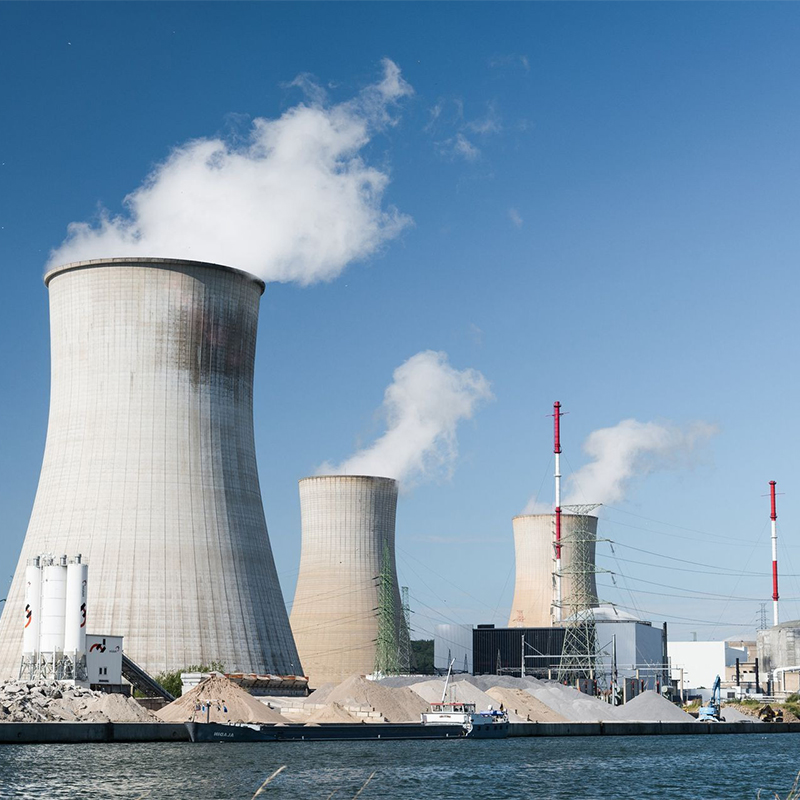
We Provide Cooling Tower Solution

Views: 0 Author: Cindy Publish Time: 2026-11-19 Origin: Site


Choosing the right water cooling tower manufacturer is one of the most important decisions for industrial facilities that depend on reliable heat rejection. Whether you operate a chemical processing plant, power station, steel factory, plastic manufacturing facility, or commercial HVAC system, an efficient cooling tower helps maintain stable operating temperatures, protect production equipment, and control energy consumption.
However, not every cooling tower is suitable for every application. Different industries have different cooling loads, water conditions, environmental requirements, and installation limitations. This is why working with an experienced industrial cooling tower manufacturer matters.
A professional manufacturer does more than supply standard equipment. It helps customers select suitable cooling tower configurations, evaluate operating conditions, and develop cooling solutions that meet specific project requirements.
Mach Industry (Zhejiang) Co.,Ltd provides industrial cooling tower solutions for customers looking for reliable cooling equipment and customized configurations. Through its official website, www.machcooling.com, customers can explore available cooling tower products and discuss their industrial cooling requirements.
In this guide, we will explain how industrial water cooling towers work, explore different cooling tower types, discuss the advantages of customized cooling solutions, and show you how to choose the right water cooling tower manufacturer for your project.
Industrial water cooling towers are heat rejection systems designed to remove excess heat from circulating water and release it into the atmosphere.
During industrial production, equipment such as compressors, heat exchangers, injection molding machines, chillers, and hydraulic systems generates considerable heat. If this heat is not removed efficiently, operating temperatures can increase, equipment performance may decline, and production interruptions may occur.
A cooling tower provides a continuous method of removing this unwanted heat.
Unlike a conventional radiator, which mainly transfers heat through a solid heat exchange surface, an evaporative cooling tower uses airflow and water evaporation to improve heat rejection.
Warm water enters the tower and is distributed over fill media or heat transfer surfaces. Air passes through the equipment, allowing heat to transfer from the water into the atmosphere. The cooled water is then collected and returned to the industrial process.
This cycle continues throughout operation, helping industrial equipment maintain stable temperatures.
A professional water cooling tower manufacturer does much more than assemble fiberglass panels, steel structures, fans, and water distribution components.
A reliable manufacturer considers the complete operating requirements of the cooling system, from initial engineering and material selection to manufacturing quality and technical support.
Every industrial cooling project starts with technical information.
Engineers need to understand the required heat rejection capacity, circulating water flow, inlet and outlet water temperatures, and local design wet-bulb temperature.
They also consider:
Available installation space
Ambient temperature and humidity
Water quality and treatment requirements
Environmental conditions
Noise restrictions
Electrical power requirements
Maintenance accessibility
Based on these factors, manufacturers can recommend an appropriate cooling tower type, size, airflow arrangement, and configuration.
A cooling tower designed for a hot and humid industrial environment may require a different configuration from one operating in a cooler, dry climate.
Good engineering always starts with actual operating conditions.
Manufacturing quality directly affects cooling tower performance, reliability, and service life.
Important components include:
Cooling tower casing and supporting structure
Fill media
Drift eliminators
Water distribution systems
Cooling tower fans
Electric motors
Drive assemblies
Water collection basins
Each component contributes to overall system performance.
For example, poor-quality fill media can reduce heat transfer efficiency, while an improperly selected fan may increase energy consumption or create excessive vibration.
A professional manufacturer should pay attention to material specifications, structural strength, component dimensions, assembly accuracy, and applicable quality inspections.
Technical support is another important consideration when selecting a cooling tower supplier.
Depending on the manufacturer's service scope, support may include equipment selection, installation guidance, operating instructions, spare parts, troubleshooting, and maintenance recommendations.
Buyers should confirm exactly which services are included in the quotation.
Equipment supply, installation, commissioning, and complete turnkey project management are different services and should be clearly defined before an order is placed.
Most industrial evaporative cooling towers operate through the combined effects of heat transfer and water evaporation.
The process is relatively simple, but its performance depends on several connected variables, including water flow, airflow, heat load, and ambient wet-bulb temperature.
Imagine standing outside on a hot day after swimming. As water evaporates from your skin, you feel cooler.
An evaporative cooling tower uses the same basic physical principle on a much larger industrial scale.
Warm water enters the cooling tower and is distributed across the fill media. A fan moves air through the tower, increasing contact between the air and water.
A small portion of the water evaporates, carrying heat away from the remaining water.
The cooled water collects in the basin or outlet system before returning to the industrial process.
This continuous cycle allows the cooling tower to remove unwanted heat without requiring the entire water supply to be replaced.
A cooling tower consists of several components that work together to achieve efficient heat rejection.
Fill Media
Fill media increases the contact area between water and air. It helps improve heat and mass transfer, allowing the cooling tower to achieve the required cooling performance.
Drift Eliminators
Drift eliminators reduce the amount of water droplets carried out of the tower with exhaust air. Properly selected drift eliminators help reduce water loss.
Cooling Tower Fans
Fans provide the airflow required for heat rejection. Their design, diameter, speed, and operating efficiency directly influence tower performance.
Electric Motors
Motors supply mechanical power to the fan system. Correct motor selection helps ensure reliable operation under the expected load.
Water Distribution System
The distribution system spreads warm water across the fill media or heat exchange area. Proper distribution helps prevent dry spots and uneven cooling.
Cooling Tower Basin
The basin collects cooled water before it returns to the industrial cooling circuit.
The performance of the entire tower depends on how effectively these components work together.
There is no single cooling tower design suitable for every industrial application.
Manufacturers offer different cooling tower structures and airflow arrangements to meet varying performance requirements.
Understanding these types helps buyers make better purchasing decisions.
Open circuit cooling towers allow circulating water to come into direct contact with air.
Warm water enters the tower and is distributed over the fill media. Air passes through the falling water, allowing a portion of it to evaporate and remove heat.
These towers are widely used in:
Industrial process cooling
Plastic manufacturing
Power generation
Commercial HVAC systems
General manufacturing facilities
Open circuit cooling towers offer a relatively straightforward cooling arrangement.
However, because the circulating water is exposed to the surrounding environment, water treatment, filtration, and regular cleaning are important.
Closed circuit cooling towers cool process fluid through a heat exchanger or coil.
The process fluid remains inside the closed circuit rather than coming into direct contact with the surrounding air.
A separate spray-water system and airflow arrangement help remove heat from the coil.

This design can help protect sensitive process fluids from contamination and reduce certain maintenance problems associated with open process-water systems.
Closed circuit cooling towers are often considered for:
Chemical processing
Industrial refrigeration
Sensitive manufacturing processes
Hydraulic cooling systems
Applications requiring process-fluid separation
The final choice depends on cooling requirements, water quality, operating conditions, and project budget.

In crossflow cooling towers, air travels horizontally across the falling water.
This arrangement can provide convenient access to certain internal components and water distribution areas.
Crossflow designs are commonly used in industrial and commercial cooling applications.
Their suitability depends on cooling capacity, installation space, water distribution arrangements, and maintenance requirements.
Counterflow cooling towers move air upward against the downward flow of water.
The opposing airflow and water movement support heat and mass transfer within the tower.
Counterflow designs can provide a compact configuration for certain installations.
However, the correct selection depends on thermal performance requirements, fan arrangement, pressure drop, and maintenance access.
Neither crossflow nor counterflow is automatically the best option for every project. Buyers should compare actual performance under equivalent design conditions.
Standard cooling towers are suitable for many projects. However, some industrial facilities have special requirements that cannot be addressed effectively by standard equipment.
Limited installation space, unusual water temperatures, high heat loads, corrosive environments, and strict noise restrictions may require customized solutions.
Working with a manufacturer that understands these conditions helps reduce the risk of selecting unsuitable equipment.
Cooling capacity should match the actual heat load of the industrial process.
An undersized cooling tower may struggle to maintain the required outlet water temperature during peak production.
An unnecessarily oversized tower can increase initial investment and may create inefficient operating conditions.
Custom selection considers:
Required heat rejection capacity
Circulating water flow rate
Hot-water inlet temperature
Cold-water outlet temperature
Cooling range
Approach temperature
Design wet-bulb temperature
The goal is to achieve the required cooling performance without wasting equipment capacity or operating energy.
Industrial facilities do not all operate under the same conditions.
Some are located near coastal areas where salt exposure increases corrosion risks. Others operate in dusty environments or experience high ambient temperatures.
A customized cooling tower can take these site conditions into account when selecting structural materials, protective coatings, component arrangements, and maintenance access.
This is particularly important for industrial facilities that operate continuously or have limited opportunities for equipment shutdowns.
Fans and pumps consume electricity throughout cooling tower operation.
Their energy consumption can have a significant effect on long-term operating costs.
Proper tower sizing, efficient fan selection, suitable motor power, and appropriate water distribution help improve overall system performance.
Variable-frequency drives may also be considered when the cooling system needs to respond to changing thermal loads.
Remember, the cheapest cooling tower is not necessarily the most economical one.
Total operating cost matters.
Industrial cooling towers support a wide range of industries because almost every heat-generating production process needs a reliable way to remove excess thermal energy.
Power plants use cooling systems to remove heat from condensers and auxiliary equipment.
Cooling tower performance influences the efficiency and stability of the wider cooling-water system.
Large facilities may require multiple cooling tower cells or large-capacity equipment arrangements to accommodate continuous heat loads.
Chemical production often involves reactors, compressors, condensers, and heat exchangers.
Temperature control is essential for process stability and equipment protection.
Cooling tower selection must consider process requirements, operating temperatures, water chemistry, and potential corrosion risks.
Closed circuit cooling towers may be considered when the process requires additional protection against contamination.
Steel production and metal processing generate considerable heat.
Cooling towers support the cooling of furnaces, hydraulic systems, machinery, and production equipment.
Reliable water circulation and sufficient heat rejection capacity are essential for continuous industrial operation.
Injection molding, extrusion, and other plastic processing operations require precise temperature control.
Cooling towers can supply cooling water to molds, chillers, heat exchangers, and auxiliary machinery.
Correct equipment selection helps maintain stable production conditions and supports consistent product quality.
Large commercial buildings, industrial campuses, hotels, hospitals, and shopping centers may use water-cooled chillers.
Cooling towers remove heat from the condenser-water circuit, helping the refrigeration system operate effectively.
Selecting a manufacturer is just as important as selecting the cooling tower itself.
A supplier may offer an attractive purchase price, but buyers should also examine engineering capabilities, product quality, technical communication, and long-term support.
Look at the manufacturer's product range and experience with applications similar to yours.
Can the company provide open and closed circuit equipment?
Does it understand crossflow and counterflow configurations?
Can it discuss industrial operating conditions and help identify suitable equipment?
Relevant manufacturing experience can make technical communication and equipment selection more efficient.
Ask about the following components:
Casing and structural frame
Fill media
Drift eliminators
Fan blades
Electric motors
Water distribution systems
Corrosion protection
Request product specifications and applicable inspection records.
If your project requires particular standards or independent performance verification, confirm that the proposed model has the required documentation.
Do not assume that every product from a manufacturer carries the same certifications.
A reliable manufacturer should understand your application before recommending a cooling tower model.
Ask whether the company can evaluate:
Special installation dimensions
Different operating temperatures
Water quality conditions
Airflow arrangements
Environmental restrictions
Special structural requirements
A useful technical discussion should produce a clear equipment proposal rather than simply a generic price list.
The purchase price is only one part of the investment.
Consider fan and pump electricity, water consumption, treatment chemicals, spare parts, cleaning, labor, and expected service life.
A cooling tower with a slightly higher purchase price may provide better long-term value if it operates more efficiently and is easier to maintain.
Before selecting a cooling tower, customers should prepare accurate operating data.
The more complete the information, the more meaningful the manufacturer's technical selection and quotation will be.
Start with the heat load and circulating water flow rate.
Also provide the entering and leaving water temperatures.
These values help determine the cooling range and required thermal performance.
Do not select a cooling tower based only on nominal tonnage without checking the actual design conditions.
Local design wet-bulb temperature is a critical factor in evaporative cooling tower selection.
It affects the lowest practical leaving-water temperature that the tower can achieve.
Site elevation, surrounding buildings, prevailing winds, and air recirculation should also be considered.
A tower installed in a poorly ventilated location may not achieve the performance expected from its original selection.
Water quality affects fill media, piping, nozzles, heat exchangers, and structural components.
Suspended solids can cause blockages, while unsuitable chemical conditions can contribute to scaling and corrosion.
Buyers should provide available water analysis data and explain whether the tower will operate with fresh water, treated water, or process water.
Fan noise may be important in factories located near offices, residential areas, or other noise-sensitive facilities.
Ask the manufacturer about fan selection, motor power, operating speed, and available noise-control measures.
Compare energy consumption under equivalent design conditions rather than relying only on general efficiency claims.
Fiber-reinforced plastic, commonly known as FRP, is widely used in cooling tower construction.
It combines relatively low weight with good resistance to many outdoor operating conditions.
FRP casing panels can be practical for industrial installations where corrosion resistance and ease of handling are important.
Compared with some conventional metal materials, FRP does not rust in the same way as unprotected steel.
However, material performance still depends on resin selection, reinforcement, manufacturing quality, UV protection, and the chemical environment.
FRP is not automatically suitable for every temperature or chemical exposure.
Buyers should confirm material specifications and operating limitations with the manufacturer.
For projects with demanding structural requirements, steel-frame or mixed-material configurations may also be appropriate.
The best material is the one that matches the site's environment, expected service life, and maintenance plan.
Finding a manufacturer that understands industrial cooling requirements can make the purchasing process easier.
Mach Industry (Zhejiang) Co.,Ltd is an industrial cooling equipment manufacturer offering different cooling tower configurations for customers exploring process cooling and HVAC applications.
Its official website, https://www.machcooling.com, provides product information and a channel for project inquiries.
The company's product range includes industrial cooling towers, open cooling towers, closed cooling towers, crossflow cooling towers, counterflow cooling towers, mixed-flow closed cooling towers, and steel-frame cooling tower configurations.
Customers can review the available products and contact the company to discuss their project requirements.
Different customers have different cooling challenges.
A plastic factory may need a reliable system for injection molding machines, while a chemical plant may require a closed circuit arrangement to protect process fluid.
An HVAC project may prioritize stable condenser-water temperatures and energy consumption.
When contacting Mach Industry, provide your actual operating conditions instead of asking only for a general model recommendation.
Useful information includes:
Required cooling capacity
Circulating water flow
Hot-water inlet temperature
Cold-water outlet temperature
Local design wet-bulb temperature
Installation dimensions
Application details
Water quality requirements
This allows the technical team to evaluate which product configuration may suit the project.
If you need special dimensions, materials, or component arrangements, describe them clearly so they can be reviewed during the quotation process.
Mach's product portfolio gives buyers several equipment categories to explore.
Open cooling towers may be considered for conventional circulating-water applications.
Closed cooling towers may suit systems where process-fluid separation is important.
Crossflow, counterflow, and mixed-flow arrangements provide different airflow and equipment configurations.
Steel-frame models may also be considered where structural design and installation requirements call for that approach.
The final choice should be based on technical performance, operating conditions, and the complete project specification.
Explore the Mach Cooling Tower Products page to review available product categories.
Industrial buyers need more than a product photograph.
They need clear technical specifications, suitable materials, reliable component selection, and a quotation that reflects their actual requirements.
When discussing a project with Mach Industry, customers should ask for:
Proposed cooling tower model
Technical performance data
Overall dimensions
Material specifications
Motor and fan information
Water distribution configuration
Applicable quality documentation
Delivery and warranty terms
If the project requires third-party performance verification, particular certifications, or special inspection procedures, communicate these requirements before placing the order.
Clear communication helps both sides establish realistic expectations for equipment supply and project delivery.
Even a well-designed industrial cooling tower needs regular maintenance.
Dust, scale, biological growth, corrosion, vibration, and component wear can gradually reduce performance.
A structured maintenance program helps protect cooling efficiency and reduce the likelihood of unexpected shutdowns.
Inspect the casing, supporting structure, water basin, fan assembly, motor, bearings, belts, and drive components according to the manufacturer's maintenance instructions.
Look for unusual noise, vibration, leaks, loose fasteners, and signs of corrosion.
Any abnormal condition should be investigated before it develops into a major failure.
Remove accumulated dirt and debris from the basin and water distribution system.
Check spray nozzles and fill media for blockage or scaling.
Maintain suitable water treatment and blowdown practices according to water quality and system operating conditions.
Good water management helps protect both cooling tower components and connected equipment.
Fans should be checked for damage, imbalance, blade angle problems, and abnormal vibration.
Motors require appropriate electrical and mechanical inspection.
Fill media should be examined for deformation, fouling, and deterioration.
Replacing damaged components at the right time can help restore airflow and heat transfer performance.
One common mistake is choosing a cooling tower based only on price.
Another is selecting equipment using nominal cooling capacity without checking actual water temperatures and wet-bulb conditions.
Buyers may also overlook water quality, installation space, noise restrictions, electrical requirements, and maintenance access.
A further mistake is assuming that every supplier offers the same engineering and after-sales services.
Before ordering, compare quotations using the same technical conditions and scope of supply.
Ask for clear answers about:
Cooling performance
Materials and component specifications
Energy consumption
Accessories and optional equipment
Delivery schedule
Warranty conditions
Spare parts availability
Technical support
This simple process can prevent expensive misunderstandings later.
Industrial cooling technology continues to evolve as manufacturers and facility operators look for better energy efficiency, lower water consumption, and more reliable operation.
Several developments are shaping purchasing decisions.
Energy-efficient fans and motors help reduce electrical consumption.
Variable-speed control allows airflow to respond to changing thermal loads.
Improved fill and drift eliminator designs support heat transfer and water management.
Smart monitoring systems can help operators identify abnormal vibration, temperature changes, and equipment performance issues.
Water conservation strategies are also becoming increasingly important in regions facing water shortages or stricter environmental requirements.
For industrial buyers, the important question is not whether a product includes the newest technology. It is whether that technology delivers measurable benefits under actual operating conditions.
Review the manufacturer's product range, manufacturing experience, technical specifications, material options, quality documentation, and communication.
Ask for relevant project references where available.
Compare quotations using identical operating conditions and confirm which services are included.
Yes. Depending on the manufacturer's capabilities, cooling tower configurations can be adapted to cooling capacity, water flow, operating temperatures, installation dimensions, structural materials, fan arrangements, and environmental requirements.
Always confirm which customization options are technically available for the selected model.
Open circuit cooling towers expose circulating water directly to air.
Closed circuit cooling towers transfer heat from the process fluid through a coil or heat exchanger, keeping that fluid separate from the spray-water circuit.
The right choice depends on process requirements, contamination risks, water quality, and total project cost.
Service life varies with materials, manufacturing quality, water treatment, environmental exposure, operating conditions, and maintenance.
There is no universal lifespan that applies to every cooling tower.
Regular inspection and timely component replacement can help extend equipment life.
Prepare the following information:
Required cooling capacity or heat load.
Circulating water flow rate.
Hot-water inlet temperature.
Cold-water outlet temperature.
Local design wet-bulb temperature.
Installation location and available dimensions.
Water quality information.
Electrical power supply.
Noise restrictions.
Preferred cooling tower type.
If you are replacing an existing tower, provide photographs, nameplate information, drawings, and connection dimensions where available.
The more complete your information, the easier it is for the manufacturer to recommend suitable equipment.

Selecting a water cooling tower manufacturer is about more than finding equipment at a competitive price.
The right solution must match your heat load, water flow, operating temperatures, local climate, installation conditions, and long-term maintenance requirements.
From open and closed circuit cooling towers to crossflow, counterflow, and steel-frame configurations, each design has its own advantages and suitable applications.
Careful engineering and clear communication help ensure that the final equipment meets the needs of your facility.
Mach Industry (Zhejiang) Co.,Ltd offers industrial cooling tower product options for customers seeking practical cooling equipment and project-specific discussions.
If you are planning a new industrial cooling system, upgrading existing equipment, or looking for a suitable cooling tower replacement, visit www.machcooling.com to explore the product range and submit your requirements.
Looking for a reliable industrial water cooling tower manufacturer? Contact Mach Industry (Zhejiang) Co.,Ltd today to discuss your cooling requirements and find a suitable solution for your project.
The best industrial cooling solution is not simply the biggest or cheapest tower. It is the one designed to deliver the right cooling performance, reliable operation, and long-term value for your business.