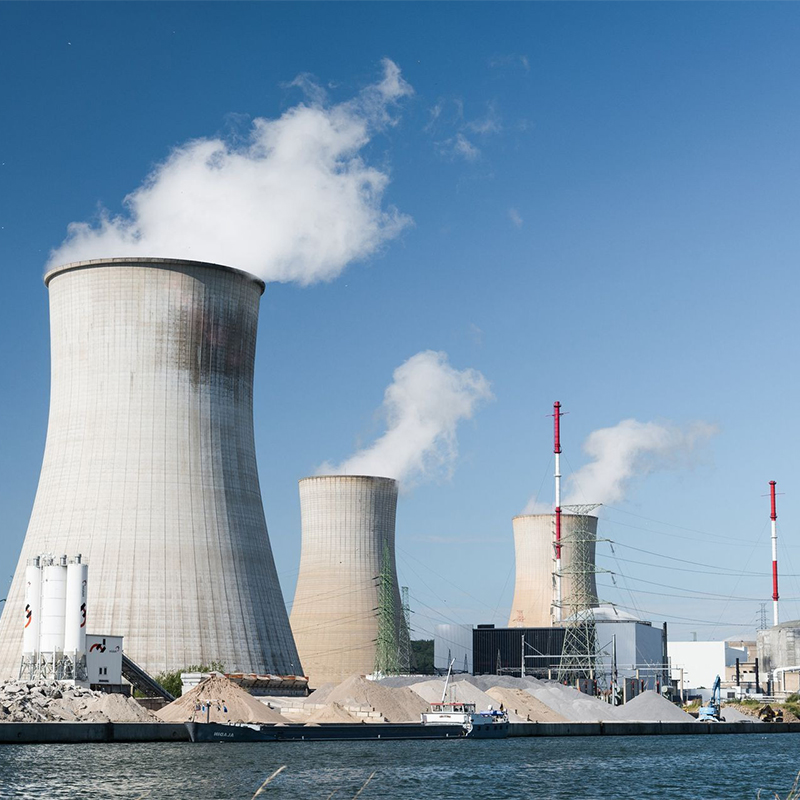
We Provide Cooling Tower Solution

Views: 0 Author: Cindy Publish Time: 2026-09-16 Origin: Site


Choosing a small cooling tower sounds simple. Find a compact model, check its cooling capacity, compare prices, and place the order. Right?
Not quite.
The biggest mistake buyers make is treating small cooling tower capacity as just another number on a product sheet. In reality, the correct capacity depends on several factors, including heat load, water flow, entering and leaving water temperatures, local wet-bulb temperature, approach temperature, and the way the tower will be used.
Choose a tower that is too small, and the equipment may struggle when the heat load peaks. Choose one that is much larger than necessary, and you may spend more money than needed.
So, how do you find the sweet spot?
This guide explains how to calculate and select the right small cooling tower capacity for HVAC, industrial process cooling, plastic machinery, and other applications. It also explains what to discuss with a manufacturer before requesting a quotation.
Cooling tower capacity refers to the amount of heat a cooling tower can reject from circulating water under specified operating conditions.
In practical terms, the tower receives warm water, exposes it to moving air, and removes heat through a combination of sensible and evaporative cooling. The cooled water then returns to the process or chiller.
The word “small” does not automatically mean a particular capacity.
A small cooling tower could serve a modest HVAC system, a machine tool, an injection molding machine, or a small industrial process. The required capacity may therefore vary considerably from one project to another.
Cooling tower capacity is commonly expressed in tons of cooling. However, buyers should be careful when comparing products.
A nominal capacity is not necessarily the same as the actual heat rejection performance at your site.
For example, two towers may both be marketed as a particular tonnage, but they can perform differently when operating at different water flow rates, temperature ranges, and wet-bulb conditions.
That is why a good selection process starts with the actual operating conditions rather than the advertised tonnage alone.
The key question is not simply:
“How many tons is this cooling tower?”
The better question is:
“How much heat must this tower reject under my actual design conditions?”
Think of the cooling tower as the radiator for your industrial process. A car radiator must match the engine's heat output. In the same way, a cooling tower must match the heat generated by the equipment it serves.
Capacity affects much more than cooling performance.
It influences the initial purchase price, fan power, water consumption, footprint, maintenance requirements, and long-term reliability.
A correctly sized tower works within its intended operating range instead of constantly fighting against an excessive heat load.
An undersized tower simply cannot reject enough heat when the process reaches its design load.
You may notice:
Higher leaving-water temperatures
Reduced chiller efficiency
Process temperature instability
Longer equipment operating cycles
Increased fan operation
Poor performance during hot weather
Greater risk of process shutdown
The problem can become especially serious in summer.
A tower that performs well on a mild spring day may struggle when outdoor wet-bulb temperature rises. This is why sizing must consider the worst expected design condition rather than today's weather.
Going bigger is not always safer.
An oversized cooling tower can increase equipment cost and require more installation space. Depending on its configuration and controls, it may also create unnecessary energy and water consumption.
It is similar to buying a truck to carry a single briefcase. It will certainly do the job, but the solution is not necessarily economical.
The goal is not the biggest cooling tower.
The goal is the right cooling tower.
Several technical parameters work together to determine the required capacity.
Heat load is the starting point.
You need to know how much heat your system generates and how much of that heat must be rejected through the cooling tower.
For an industrial process, the heat load may come from machinery, hydraulic systems, compressors, furnaces, heat exchangers, or other equipment.
For HVAC applications, the cooling tower is normally part of a larger heat-rejection system involving chillers and pumps.
If the heat load is unknown, the cooling tower capacity cannot be selected accurately.
Water flow is another critical parameter.
A cooling tower does not cool a fixed amount of water. It handles a continuous circulation rate.
Higher water flow generally means that the tower needs to reject more heat under comparable temperature conditions.
Therefore, a quotation request should include the required circulating-water flow rate whenever possible.
The difference between entering-water temperature and leaving-water temperature is called the range.
For example, if water enters the tower at 35°C and leaves at 30°C, the range is 5°C.
The greater the temperature drop, the greater the heat rejection for a given water flow.
But there is a catch: you cannot simply increase the temperature difference without considering the process requirements.
Your equipment may require a specific supply-water temperature, and that requirement becomes part of the cooling tower design.
Wet-bulb temperature is one of the most important environmental factors in cooling tower selection.
Why?
Because an evaporative cooling tower uses the surrounding air to remove heat from water. The ability of that air to accept additional moisture strongly affects cooling performance.
A tower designed for a relatively low wet-bulb condition may need a different configuration when installed in a hotter or more humid location.
This is one reason why the same nominal capacity does not guarantee identical performance everywhere.
Approach is the difference between the leaving-water temperature and the entering-air wet-bulb temperature.
For example, if the leaving-water temperature is 30°C and the design wet-bulb temperature is 25°C, the approach is 5°C.
A smaller approach generally means a more demanding cooling requirement.
In other words, asking a cooling tower to cool water very close to the outdoor wet-bulb temperature is like asking an air conditioner to squeeze the last few degrees out of an already difficult situation.
The closer the target gets to the wet-bulb temperature, the more carefully the tower must be designed.
A basic heat-rejection calculation can help you estimate the required cooling capacity.
For water-based systems, the fundamental relationship is:
Heat Load = Water Flow × Specific Heat × Temperature Difference
In practical engineering units, the exact formula depends on the units used for water flow and temperature.
For example, when using mass flow:
Q = m × Cp × ΔT
Where:
Q = heat rejection
m = water mass flow rate
Cp = specific heat of water
ΔT = water temperature range
This calculation gives you the heat that must be removed from the circulating water.
Suppose a small industrial process circulates water at a known flow rate and requires a 5°C temperature reduction.
The calculated heat load gives you a starting point for selecting the tower.
But don't stop there.
The manufacturer must also evaluate the design wet-bulb temperature, approach, airflow, fill characteristics, fan performance, and other tower parameters.
That is why a simple tonnage calculation is useful for preliminary sizing, but the final tower selection should be based on complete operating conditions.
Different applications have very different cooling requirements.
Small cooling towers are commonly used with commercial and light-industrial HVAC systems.
In these systems, the tower rejects heat from the chiller condenser-water loop.
The required tower capacity depends on the chiller's heat rejection, not simply the nominal refrigeration capacity.
This distinction matters because the heat rejected by a chiller is normally greater than its useful cooling output.
When selecting a small tower for HVAC, check:
Chiller capacity
Condenser-water flow
Entering condenser-water temperature
Leaving condenser-water temperature
Design wet-bulb temperature
Required approach
Industrial applications can be more demanding.
A small cooling tower may support CNC equipment, compressors, hydraulic systems, heat exchangers, welding equipment, or other processes.
Unlike HVAC systems, industrial loads may fluctuate significantly throughout the day.
If the process load changes frequently, consider how the tower will respond to both minimum and maximum loads.
Variable-speed fans, multiple cells, bypass arrangements, or suitable controls can help improve performance across changing conditions.
Plastic processing is another application where compact cooling towers can be useful.
Injection molding machines generate heat continuously during operation. Cooling water may be required for molds, hydraulic systems, oil coolers, and other components.
Here, temperature stability is often just as important as total cooling capacity.
A tower that cannot maintain the required water temperature can affect cycle times and product quality.
Some smaller equipment rooms and specialized cooling systems also use compact cooling towers.
In these cases, space can be a major concern.
A physically compact tower with the right capacity can provide an attractive alternative when a larger cooling system would consume valuable floor or roof space.
Now comes the practical part.
How should you actually select the size?
Do not begin with a random tower size.
Start with your process.
Determine the required heat rejection and establish the expected operating range.
If you have an existing cooling tower, collect its operating data. If you are designing a new system, obtain the heat-load information from the equipment supplier or system engineer.
The more accurate the input, the more reliable the final selection.
Next, determine the design wet-bulb temperature for the installation location.
This is particularly important for outdoor installations.
A tower designed around the wrong climate conditions may look perfect on paper but fail to deliver the required leaving-water temperature when conditions become challenging.
Always tell the manufacturer where the tower will operate.
What happens if production increases next year?
If your factory plans to add equipment, future heat load should be considered before purchasing the tower.
However, avoid adding an excessive safety margin simply because “bigger is better.”
A reasonable allowance based on realistic expansion plans is much more useful than oversized equipment.
Capacity and physical dimensions are related, but they are not the same thing.
Two cooling towers with similar nominal capacities can have different footprints and heights because of differences in design, fill arrangement, fan configuration, casing materials, airflow, and water distribution.
Installation space therefore needs to be considered early.
Check:
Available footprint
Tower height restrictions
Service access
Air intake clearance
Air discharge clearance
Piping connections
Crane or lifting requirements
A tower may have excellent cooling performance but still be unsuitable if there is no practical way to install or maintain it.
Small cooling towers are available in different configurations, with counterflow and crossflow being two common approaches.
In a counterflow tower, air and water generally move in opposite directions.
In a crossflow tower, air moves horizontally across falling water.
Neither design is automatically the best choice for every project.
The right choice depends on capacity, footprint, maintenance preferences, water distribution, airflow requirements, and site conditions.
For a compact project, installation space and maintenance access may be just as important as theoretical thermal performance.
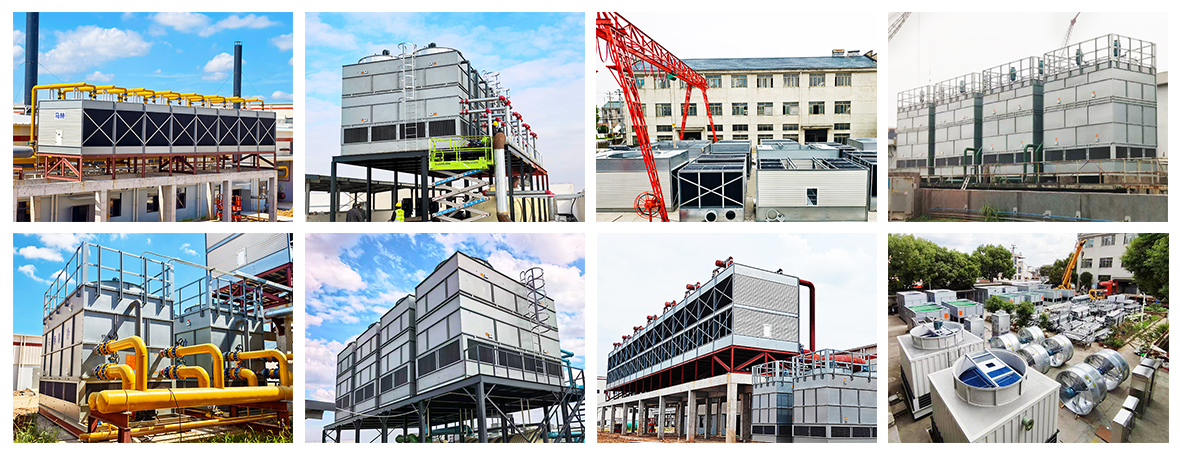
The fan is the engine that moves air through a mechanical-draft cooling tower.
But more airflow is not always better.
The fan and motor must be matched to the tower's air-side resistance and required thermal performance.
An inefficient fan can increase operating costs year after year.
When comparing small cooling towers, look beyond the motor's rated power. Ask about the overall fan arrangement, airflow, control method, and expected operating conditions.
For variable-load applications, variable-speed control can also help the tower respond to changing demand.
Fill media is another component that directly affects thermal performance.
The fill increases the contact area between water and air. Think of it as turning one thick stream of water into a much larger network of thin films or droplets.
More effective contact means better heat and mass transfer.
For small cooling towers, fill selection should consider:
Water quality
Fouling potential
Temperature
Chemical compatibility
Airflow resistance
Maintenance requirements
A tower with excellent fill performance can achieve the required capacity without simply making the entire structure larger.
However, fill should always be selected as part of the complete tower design rather than treated as an isolated component.
Cooling tower capacity is naturally connected to purchase price.
Larger heat loads generally require more equipment, more materials, more fill area, greater airflow, and potentially larger fans and motors.
But capacity is not the only price factor.
The final cooling tower price can also depend on:
Tower construction materials
Fan and motor configuration
Fill type
Water distribution system
Controls
Corrosion protection
Custom dimensions
Transportation
Installation requirements
This is why comparing two quotations only by price per ton can be misleading.
A cheaper quotation may exclude important components or assume different operating conditions.
Always compare technical scope first, price second.
Several mistakes appear again and again in cooling tower purchasing.
A machine's rated power does not necessarily equal the heat that must be rejected.
Calculate the actual thermal load.
A tower's performance is strongly influenced by ambient conditions.
Ignoring wet-bulb temperature can result in an undersized tower.
A nominal tonnage without operating conditions tells only part of the story.
Always check the range, approach, water flow, and wet-bulb temperature.
The lowest purchase price may not produce the lowest total cost.
Poor fan efficiency, unsuitable fill, weak materials, difficult maintenance, and short service life can turn a cheap purchase into an expensive project.
If your facility is growing, today's heat load may not be tomorrow's heat load.
Discuss future requirements before finalizing the tower.
Cooling tower sizing is an engineering decision.
That is why working with a manufacturer can be much more valuable than simply selecting a product from a generic catalog.
A capable manufacturer can evaluate your operating data and recommend a configuration that fits your application.
Mach Industry (Zhejiang) Co., Ltd. provides cooling tower solutions for industrial and commercial applications.
Mach Industry (Zhejiang) Co., Ltd.
When discussing a small cooling tower project with a manufacturer, provide as much information as possible:
Required cooling capacity
Water flow rate
Entering-water temperature
Leaving-water temperature
Design wet-bulb temperature
Installation location
Available space
Water quality
Operating schedule
Voltage and power requirements
With these details, the manufacturer can evaluate the thermal requirements instead of simply recommending a tower based on a single capacity number.
For buyers, this is a major advantage.
You are not just buying a box with a fan on top. You are buying a heat-rejection solution.
Before requesting or approving a quotation, use this checklist:
1. What is the required heat rejection?
Know the actual thermal load.
2. What is the circulating water flow?
Provide the required flow rate.
3. What are the entering and leaving water temperatures?
These determine the temperature range.
4. What is the design wet-bulb temperature?
Use the actual installation location.
5. What approach temperature is required?
A tighter approach usually means a more demanding design.
6. What space is available?
Check footprint, height, airflow, and service access.
7. What is the water quality?
This can influence fill and material selection.
8. Will the heat load increase later?
Consider realistic future expansion.
9. What is included in the quotation?
Check fan, motor, fill, water distribution, controls, and accessories.
10. Who will provide technical support?
A reliable manufacturer should be able to discuss your operating conditions and sizing requirements.
Selecting the right small cooling tower capacity is not about finding the largest number that fits your budget.
It is about matching the tower to the actual heat load, water flow, temperature range, wet-bulb condition, approach, installation space, and future operating requirements.
Think of the process like buying shoes.
Too small, and you will constantly feel the pressure. Too large, and the fit is awkward. The best choice is the one that matches the job.
The same principle applies to cooling towers.
Start with your process data. Calculate the required heat rejection. Confirm the environmental conditions. Compare equivalent technical specifications. Then work with a manufacturer to select the appropriate configuration.
For projects requiring a compact, application-specific cooling solution, you can contact Mach Industry (Zhejiang) Co., Ltd. through Mach Cooling for further technical evaluation and cooling tower selection.
There is no universal definition of “small.” A small cooling tower can serve applications ranging from relatively modest equipment cooling to larger commercial or industrial systems. The correct capacity depends on heat load and operating conditions rather than physical size alone.
Start with the circulating-water flow rate and temperature difference between entering and leaving water. Use the heat-load relationship Q = m × Cp × ΔT to estimate the heat that must be rejected. Then account for wet-bulb temperature, approach, and other design conditions.
A reasonable capacity margin can be useful, especially when heat loads fluctuate or future expansion is planned. However, excessive oversizing increases initial cost and may reduce economic efficiency. The margin should be based on realistic project requirements.
Yes. Wet-bulb temperature has a major influence on evaporative cooling performance. A tower must be selected according to the design ambient conditions at the installation site.
For application-specific projects, manufacturers such as Mach Industry (Zhejiang) Co., Ltd. can evaluate requirements such as capacity, water flow, temperatures, installation space, materials, fan configuration, and other project parameters to develop a suitable cooling tower solution.