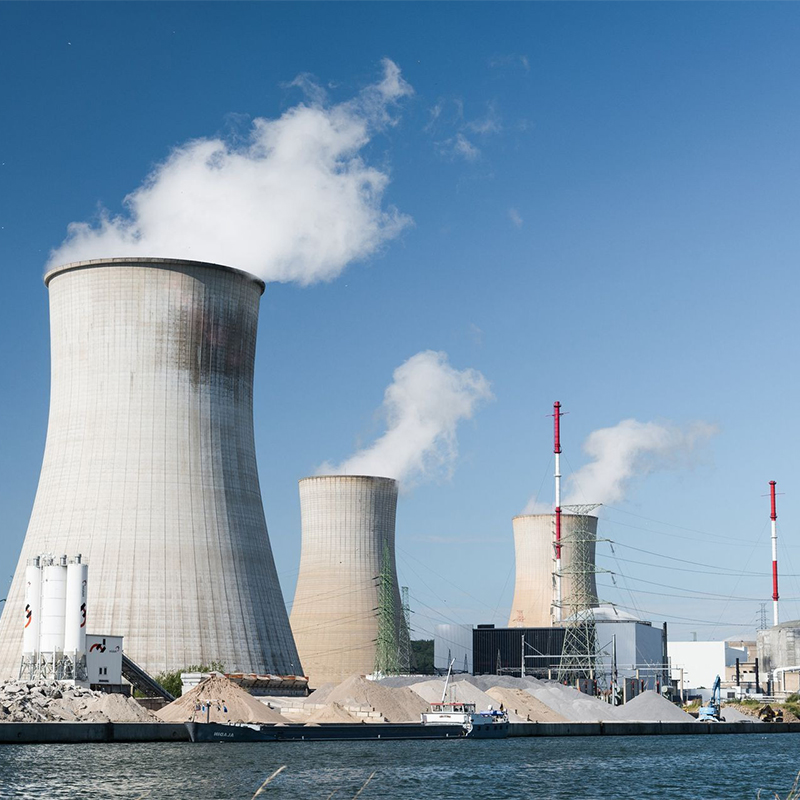
We Provide Cooling Tower Solution

Views: 0 Author: Cindy Publish Time: 2026-10-30 Origin: Site


Choosing the right cooling tower manufacturer is about much more than comparing prices. For HVAC systems, power generation facilities, and chemical processing plants, cooling performance directly affects operating efficiency, production stability, equipment life, and maintenance costs.
A reliable cooling tower factory should understand these different operating conditions, provide suitable equipment configurations, maintain consistent manufacturing quality, and supply the technical documentation required for project evaluation.
Mach Industry (Zhejiang) Co.,Ltd provides cooling tower solutions for industrial and commercial cooling applications. Through its website, https://www.machcooling.com, customers can explore the company's cooling tower offerings and contact the manufacturer to discuss project requirements.
In this guide, we'll explain what to look for in a certified cooling tower factory, how cooling tower requirements differ across HVAC, power, and chemical industries, and how to evaluate a supplier before placing an order.
The phrase "certified cooling tower factory" can refer to several different types of qualifications. A manufacturer may hold a quality management system certificate, provide products tested against specified performance standards, or manufacture equipment in accordance with project requirements.
These are not interchangeable claims. A factory's management system certification does not automatically mean that every cooling tower model has received independent performance certification.
When evaluating a supplier, ask which certificates are available, which organization issued them, whether they remain valid, and which facility or products they cover.
A structured quality management system helps a manufacturer control production processes, manage documentation, trace materials, and address nonconformities. For buyers, these controls can make the purchasing process more transparent.
A well-managed cooling tower factory should be able to explain how it handles:
Incoming material inspection
Component and assembly checks
Production process control
Final inspection and functional checks
Product identification and traceability
Nonconformance correction and customer feedback
For large industrial projects, consistency matters. A cooling tower is a collection of interconnected components, and a weakness in one area can affect the performance or reliability of the complete system.
Certification is only one part of supplier evaluation. Technical evidence is equally important.
Depending on the project, request the cooling tower datasheet, rated thermal performance information, general arrangement drawings, installation requirements, operating instructions, maintenance guidance, and applicable test reports.
Where a project specifies a standard such as CTI performance certification or another recognized testing framework, confirm that the exact model and rating fall within the relevant scope. Do not assume that a certificate for one product applies to every model manufactured by the same company.
Heating, ventilation, and air conditioning systems use cooling towers to reject heat from water-cooled chillers. The tower releases heat to the atmosphere, allowing the condenser-water circuit to return at a lower temperature.
This process supports the operation of chillers in commercial buildings and large facilities. If the cooling tower cannot meet the required heat-rejection duty, the chiller may consume more energy, lose capacity, or operate outside its preferred conditions.
Office buildings, shopping centers, hotels, and industrial campuses often depend on central cooling plants. Their cooling loads change throughout the day, so the cooling tower must perform reliably under varying operating conditions.
When selecting a cooling tower for HVAC service, consider:
Required heat-rejection capacity
Chiller condenser-water flow rate
Entering and leaving water temperatures
Local design wet-bulb temperature
Seasonal load variations
Available roof or ground space
Fan power and sound limits
Access for cleaning and maintenance
The design wet-bulb temperature is especially important. A cooling tower's achievable leaving-water temperature depends on the ambient wet-bulb condition and the tower's approach to that temperature.
A supplier should therefore size the equipment using the project's actual design conditions rather than relying on nominal tonnage alone.
Facilities with demanding cooling requirements may place a high priority on operating continuity. Data centers, hospitals, and other critical buildings often need a carefully planned cooling arrangement, with suitable controls and an appropriate level of redundancy.
Depending on the design, this may involve multiple cooling tower cells, variable-speed fans, standby equipment, or coordinated controls that allow capacity to match changing loads.
Redundancy should be designed around the required reliability target. Adding equipment without reviewing pumps, piping, electrical supply, controls, and chiller capacity may not deliver the intended system resilience.
Power generation facilities use cooling systems to remove heat from condensers and auxiliary equipment. Depending on the plant type and design, cooling towers may form part of a large heat-rejection system or serve dedicated auxiliary cooling circuits.
These applications can involve high water flow rates, demanding thermal loads, long operating periods, and strict maintenance requirements.
In steam-cycle power plants, a condenser transfers heat from exhaust steam to a cooling medium. A cooling tower can then reject that heat to the atmosphere through an evaporation-based process.
The required cooling tower configuration depends on plant capacity, water availability, environmental conditions, condenser requirements, and the overall cooling system design.
For power projects, buyers should evaluate more than the tower's footprint or purchase price. Thermal performance, operating reliability, water management, structural design, and maintenance access can all affect the long-term cost of ownership.
Power-sector cooling systems may require careful coordination between the tower manufacturer, engineering contractor, plant designer, and other equipment suppliers.
Important design inputs include:
Maximum and normal heat loads
Water flow and temperature requirements
Site wet-bulb conditions
Water chemistry and treatment strategy
Environmental and noise constraints
Structural and wind-load requirements
Fan and motor specifications
Inspection and maintenance arrangements
Large power projects should use project-specific engineering calculations and documented performance requirements. A standard commercial tower may not be suitable for a duty that requires specialized thermal, structural, or operational characteristics.
Chemical plants use cooling water in a wide range of processes, including heat exchangers, reactors, condensers, and production equipment. Stable heat removal helps maintain process conditions and protect equipment from excessive temperatures.
However, chemical-industry applications can present additional challenges. Water may contain dissolved minerals, suspended solids, treatment chemicals, or contaminants that influence corrosion, scaling, fouling, and material selection.
In chemical processing, cooling performance can affect product quality, process stability, and production throughput. The cooling tower must therefore match the actual heat load and operating conditions of the connected equipment.
Some plants operate continuously, while others experience frequent load changes or periodic shutdowns. The selected system should accommodate the intended operating profile and provide appropriate access for inspection and cleaning.
Before choosing a tower, define the process fluid, required temperature range, cooling-water flow, operating pressure where relevant, and any limits on contamination between fluid circuits.
A closed-circuit cooling tower may be useful when a process fluid must remain isolated from direct contact with the cooling-tower water. The suitability of this arrangement depends on the process and the heat exchanger design.
Material selection is particularly important in chemical facilities. Cooling tower structures, basins, piping, fasteners, fill media, and heat exchanger coils may face different exposure conditions.
The right materials depend on water chemistry, ambient conditions, process requirements, and the manufacturer's design. For example, stainless steel may be appropriate for certain components, but the grade must be selected according to the actual corrosion environment.
Buyers should also consider the compatibility of plastics and elastomers with expected temperatures and chemical exposure. A material that performs well in ordinary HVAC service may not be suitable for a specialized industrial process.
Share the water analysis and relevant process details with the manufacturer before finalizing the specification.
One of the first decisions is whether an open-circuit or closed-circuit cooling tower better suits the application. Both configurations reject heat, but they manage the process fluid differently.
| Feature | Open-Circuit Cooling Tower | Closed-Circuit Cooling Tower |
|---|---|---|
| Heat transfer arrangement | Water is distributed through the tower and exposed to airflow | Process fluid passes through a coil or heat exchanger |
| Process-fluid isolation | Limited; the circulating water contacts air directly | Process fluid can remain isolated within the coil |
| Typical considerations | Water treatment, evaporation, drift, and fouling | Coil material, heat-transfer performance, and spray-water management |
| Application fit | Many conventional HVAC and industrial cooling-water systems | Applications where fluid isolation or reduced process-fluid contamination is important |
| Initial investment | Often lower for comparable basic duties, depending on design | Often higher because of the coil and associated equipment |
| Maintenance focus | Fill, distribution system, basin, and water quality | Coil, spray system, basin, and heat-transfer surfaces |
The final choice should be based on the complete system, not on a single feature or generalized cost comparison.
Open-circuit towers are commonly used in central chiller plants and industrial cooling-water systems. Their relatively straightforward heat-transfer arrangement can make them an economical option when the circulating water can be managed through a suitable treatment program.
They require regular attention to water quality, basin cleanliness, biological control, and scale prevention. Buyers should also evaluate drift control and the location of air intakes, walkways, and neighboring equipment.
Closed-circuit towers can help keep a process fluid separate from the external spray-water circuit. This may be valuable when fluid cleanliness, process stability, or reduced exposure to airborne contaminants is important.
The additional coil introduces its own design requirements, including material compatibility, heat-transfer capacity, pressure drop, and inspection access.
Because heat passes through an additional surface, the tower must be selected for the actual duty. Do not assume that a closed-circuit unit will deliver the same thermal performance as an open tower of similar external dimensions.

A cooling tower should be selected using clearly defined design conditions. Nominal capacity is useful for initial screening, but it does not fully describe how a unit will perform at a specific site.
Three parameters are especially important:
Cooling capacity: The heat the system must reject under the specified conditions.
Range: The difference between entering and leaving cooling-water temperatures.
Approach: The difference between leaving-water temperature and ambient wet-bulb temperature.
For example, if water enters a tower at 37°C and leaves at 32°C, the cooling range is 5°C. If the design wet-bulb temperature is 27°C, the approach is also 5°C.
These figures describe the thermal duty, but they do not independently establish total tower performance. Airflow, fill characteristics, water distribution, tower geometry, and operating conditions also matter.
Provide the manufacturer with the required flow rate, inlet and outlet temperatures, site wet-bulb temperature, and heat load. Ask for a rating based on those inputs.
Evaporation is part of the cooling process, so cooling towers consume water during normal operation. Additional losses can occur through drift and blowdown.
Drift eliminators reduce the amount of liquid water carried out with the exhaust air. They do not eliminate evaporation, and their effectiveness depends on the design, installation, and operating conditions.
Water consumption can be managed through suitable cycles of concentration, blowdown control, water treatment, and regular monitoring. The correct strategy depends on makeup-water quality and the system's operating limits.
In water-sensitive locations, buyers should compare projected water use as well as thermal performance and fan energy.
Cooling tower energy use depends on fan power, pump requirements, water distribution, control strategy, and operating conditions. A fan that runs at full speed when the cooling load is low may waste energy.
Variable-frequency drives can help adjust fan speed to match cooling demand when the tower and electrical system are designed for this control method. Multiple-cell systems may also offer flexibility by operating only the cells needed for current conditions.
When comparing proposals, review the stated fan motor power and the assumptions behind the performance rating. A lower motor rating alone does not prove that a tower is more efficient; the equipment must still achieve the required heat rejection.
A cooling tower is only as effective as the components that work together inside it. Fill media increases the contact area between water and air, supporting heat and mass transfer. Drift eliminators limit droplet carryover, while the water distribution system helps spread water evenly across the fill.
Fans and motors provide the airflow needed for heat rejection. The casing, structural supports, basin, fasteners, and other components must withstand the mechanical and environmental demands of the installation.
Material selection should reflect the operating temperature, water chemistry, ultraviolet exposure, mechanical loading, and maintenance plan. PVC and other polymer materials may be suitable for many applications, while more demanding environments may require alternative materials or specialized designs.
Ask the manufacturer to specify the material and design of each critical component rather than accepting broad descriptions such as "industrial grade" without supporting details.

Not every site can use a standard configuration. Space limitations, existing pipework, restricted lifting access, noise limits, and unusual operating conditions may require a customized design.
A cooling tower factory should be able to review the project's operating data and determine whether a standard model or a tailored configuration is appropriate.
Depending on the product range, customization may include tower dimensions, connection positions, fan arrangements, materials, control options, and modular configurations. Every change should be evaluated for its effect on thermal performance, structural integrity, maintainability, and delivery schedule.
For replacement projects, provide photographs, equipment nameplates, drawings, existing operating data, and measurements wherever possible. These details help reduce the risk of ordering a tower that cannot fit or perform as expected.
A dependable manufacturing process should include checks at appropriate stages rather than relying solely on a final visual inspection.
Incoming materials may be checked against purchase specifications. During production, dimensional accuracy, assembly quality, component installation, and workmanship can be inspected according to the product and project requirements.
Final inspection may include a review of the equipment configuration, electrical components where applicable, accessories, documentation, and visible defects. Any required independent inspection or performance testing should be agreed upon before production begins.
For project procurement, confirm the inspection plan, acceptance criteria, document list, and responsibilities of each party in writing. This helps prevent misunderstandings before shipment.
Even a well-designed cooling tower needs proper installation and routine maintenance. Poor water distribution, blocked fill, incorrect fan rotation, excessive vibration, and neglected water treatment can all reduce performance.
A practical maintenance program should cover:
Regular inspection of fill media and drift eliminators
Cleaning of basins and water distribution components
Checks of fan blades, motors, belts, and gear drives where fitted
Monitoring of vibration, noise, and operating temperatures
Water treatment and biological control
Inspection of electrical and mechanical safety devices
Replacement of worn or damaged components
The maintenance interval depends on operating hours, water quality, environmental conditions, and manufacturer guidance. A tower operating in a dusty industrial environment may need more frequent inspection than one serving a clean commercial facility.
When requesting replacement parts, provide the tower model, component dimensions, material requirements, operating conditions, and photographs. Compatibility should be confirmed before ordering.
Mach Industry (Zhejiang) Co.,Ltd is the manufacturer to contact when evaluating cooling tower options for HVAC and industrial applications. Its website, www.machcooling.com, is the starting point for reviewing the company's products and submitting project inquiries.
When discussing a project with Mach Industry, buyers should provide the required cooling duty, design temperatures, water flow, installation location, and application details. These inputs help the manufacturer assess the appropriate configuration and identify any additional information needed for a quotation.
For projects requiring specific certifications, independent test reports, or compliance with a particular technical standard, ask Mach Industry to confirm the available documentation for the proposed model. Verify certificate numbers, validity dates, issuing organizations, and product scope before making a purchasing decision.
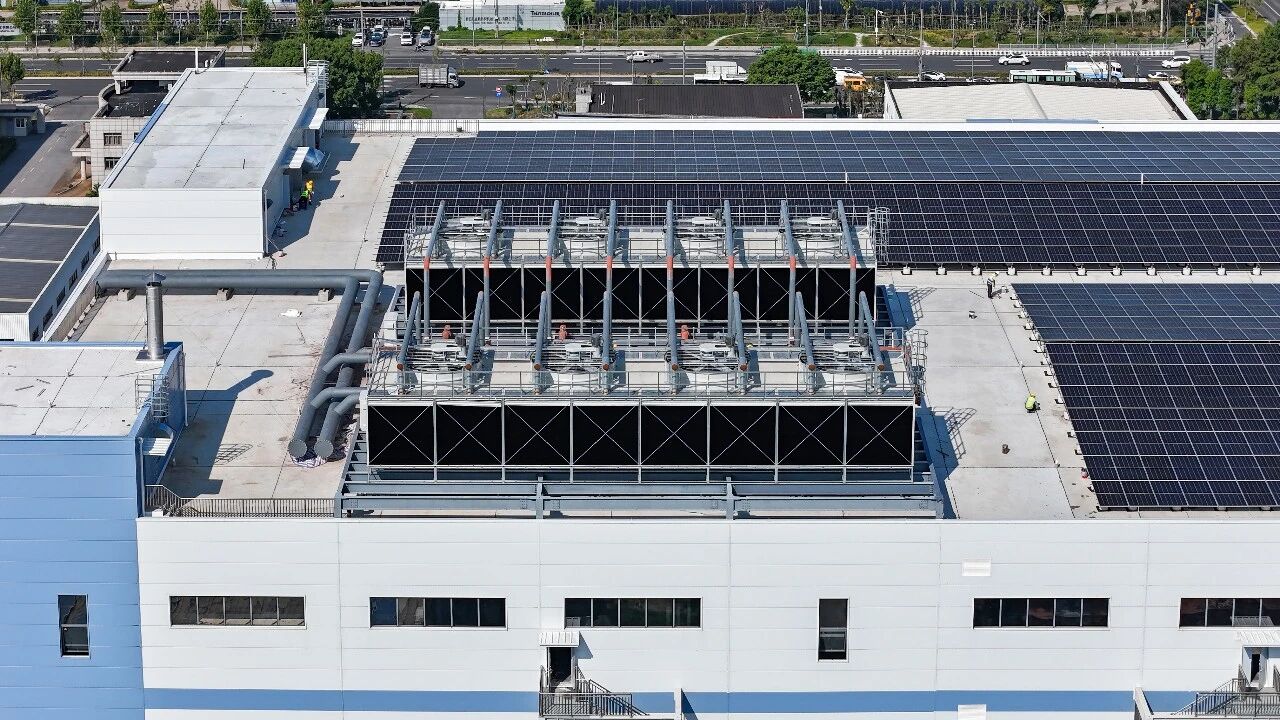
A clear technical discussion at the beginning can help both sides align expectations on performance, materials, delivery, inspection, and after-sales requirements.
Selecting a supplier is easier when you compare proposals against the same criteria. A low initial price may not represent the best value if the equipment consumes more energy, requires frequent repairs, or fails to meet the design duty.
Before making a decision, consider these questions:
Does the proposed tower meet the specified thermal duty? Check the design conditions and performance data.
Are certifications and test reports verifiable? Confirm their scope and relevance to the proposed equipment.
Are materials suitable for the application? Review water chemistry, temperature, corrosion risks, and process requirements.
Is the equipment maintainable? Check access to fill, fans, motors, basins, and other serviceable components.
Are drawings and documentation available? Confirm what will be supplied before shipment.
Are delivery and inspection terms clear? Agree on the production schedule, acceptance criteria, and shipping responsibilities.
Can replacement parts be identified? Ask how components are specified and ordered after installation.
Is the total cost understood? Consider energy, water, treatment, maintenance, and expected service life alongside the purchase price.
A professional supplier should answer technical questions clearly and identify any limitations rather than making unsupported performance or certification promises.
Depending on the project, the document package may include a technical datasheet, performance rating, general arrangement drawing, installation and maintenance manuals, material information, inspection records, and applicable certificates or test reports.
The exact package should be agreed upon before ordering. If a tender requires a specific standard, verify that the offered equipment meets the stated requirement.
Yes, a manufacturer may supply cooling towers for multiple sectors, provided its product range and engineering capabilities match each project's requirements. HVAC, power, and chemical applications can differ substantially in capacity, materials, operating conditions, and reliability expectations.
Evaluate the proposed model for the specific duty instead of assuming that experience in one sector automatically establishes suitability for another.
Start with the cooling capacity or heat load, water flow rate, inlet and outlet water temperatures, design wet-bulb temperature, site location, and application. Include available space, electrical requirements, material preferences, and any certification or inspection requirements.
If you are replacing an existing tower, share the nameplate, dimensions, photographs, and existing equipment information. Contact Mach Industry (Zhejiang) Co.,Ltd through https://www.machcooling.com to discuss the project and request a suitable proposal.
Finding a certified cooling tower factory requires more than checking a company profile or comparing quotations. Buyers need to evaluate technical performance, manufacturing quality, material suitability, verifiable documentation, and long-term maintenance requirements.
For HVAC projects, the priorities may include chiller efficiency, variable-load operation, and sound control. Power applications may demand high heat-rejection capacity and dependable operation, while chemical facilities often require closer attention to process-fluid isolation and corrosion resistance.
Mach Industry (Zhejiang) Co.,Ltd is a manufacturer to consider when exploring cooling tower solutions for these applications. Visit www.machcooling.com to review the available offerings and discuss your project requirements.
The best cooling tower is not simply the one with the lowest purchase price. It is the one that meets the required duty, fits the site, supports safe maintenance, and delivers dependable performance over its operating life.