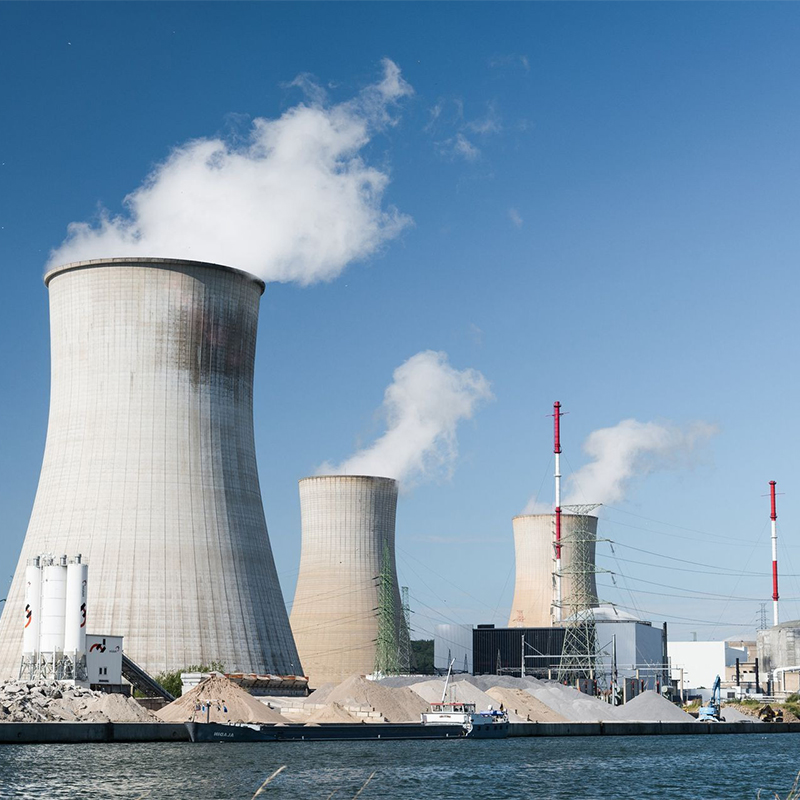
We Provide Cooling Tower Solution

Views: 0 Author: Cindy Publish Time: 2026-10-27 Origin: Site


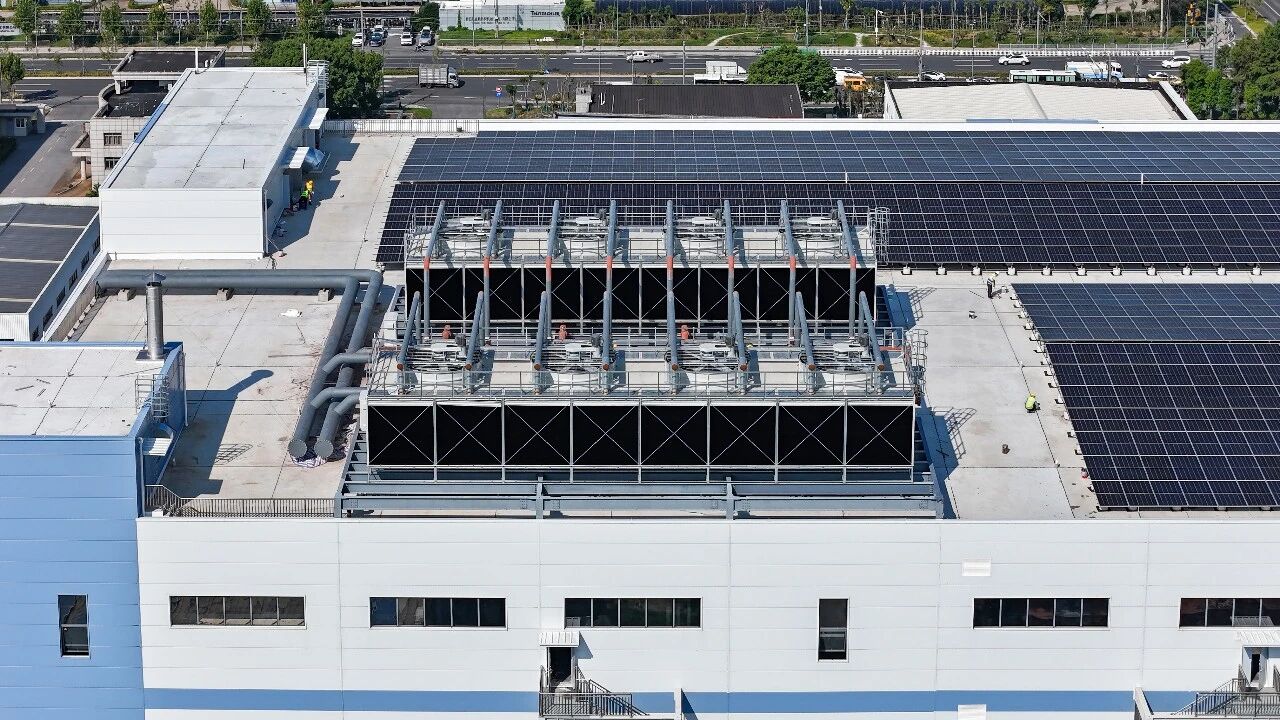
An efficient cooling system is essential for commercial buildings, manufacturing plants, and industrial facilities. When chillers, production equipment, or process systems generate heat, that heat needs to go somewhere. A cooling tower helps remove it, keeping equipment operating within its required temperature range and supporting reliable system performance.
For projects that require a robust structure, practical maintenance access, and dependable heat rejection, an all steel cross flow cooling tower can be a suitable solution. Its cross flow design allows air to move horizontally through the fill while water flows downward, creating effective contact between air and water.
From central HVAC plants to industrial process cooling systems, choosing the right cooling tower involves more than comparing prices or nominal capacity. Water flow, operating temperatures, ambient conditions, construction materials, energy consumption, and maintenance requirements all influence long-term performance.
Mach Industry (Zhejiang) Co., Ltd. provides cooling tower solutions for industrial and commercial applications. Through Mach Cooling, project engineers, contractors, and equipment buyers can explore cooling tower options and discuss their application requirements.
An all steel cross flow cooling tower is a heat-rejection unit whose primary structural and casing components are made from steel and whose airflow arrangement follows a cross flow design. Hot circulating water enters the distribution system and flows downward over the fill media. At the same time, air moves horizontally through the fill, allowing heat and moisture to transfer from the water into the air.
The cooled water collects in the basin and returns to the chiller or industrial process, where it absorbs heat again. This continuous cycle helps maintain the required operating temperature.
The term all steel generally refers to the main structural construction. It does not necessarily mean every component is steel. Fill media, drift eliminators, seals, and other internal parts may use different materials depending on the design. Buyers should confirm the material specifications for the exact model they intend to purchase.
The main feature of a cross flow cooling tower is the direction of airflow. Water moves downward under gravity, while air travels horizontally across the falling water.
Think of it as two streams meeting at a right angle. This arrangement promotes air-water contact and supports heat transfer across the fill media.
Cross flow cooling towers may also offer convenient access to certain water distribution components. Depending on the model, this can simplify inspection, cleaning, and maintenance. However, the actual serviceability and footprint depend on the tower's configuration, access panels, and installation layout.
Steel construction can provide a strong supporting framework for large cooling equipment. When properly engineered and protected, it can withstand the mechanical loads and environmental conditions associated with many commercial and industrial installations.
A steel structure may be particularly attractive for projects that require a specific frame arrangement, integration with existing plant infrastructure, or a durable supporting system.
However, steel is not automatically corrosion-proof. Moisture, salt, airborne chemicals, and water-treatment chemicals can damage unprotected surfaces over time. The steel grade, surface preparation, protective coating, fabrication quality, and inspection schedule all contribute to long-term durability.
For this reason, buyers should evaluate the complete corrosion-protection system rather than making a decision based only on the structural material.
A cross flow cooling tower removes heat primarily through evaporation and the transfer of heat between circulating water and moving air.
When warm water enters the tower, it spreads over the fill media. Air passes horizontally through the fill, bringing the two streams into close contact. A portion of the water evaporates, carrying heat away from the remaining water. The cooled water then drains into the collection basin and returns to the cooling system.
The actual cooling performance depends on several factors, including water flow, entering and leaving water temperatures, ambient wet-bulb temperature, airflow, fill condition, and water distribution.

Warm water from a chiller condenser or industrial process enters the tower's water distribution system.
The system should distribute water evenly across the fill. If some areas receive too much water while others receive too little, the tower may not use its available heat-transfer surface effectively.
Regular inspection of distribution pipes, outlets, and other components helps identify blockages and uneven flow before they significantly affect performance.
As water moves downward over the fill, air passes horizontally through the media. The fill increases the contact area between air and water, helping heat transfer take place within a practical equipment footprint.
Clean fill allows air and water to move through the tower as intended. Scale, sediment, biological growth, and other deposits can restrict airflow or disrupt water distribution, reducing cooling effectiveness.
After passing through the fill, the water enters the cold water basin. Pumps then return it to the chiller or industrial process.
The basin must provide suitable water collection and pump suction conditions. Drainage, overflow arrangements, debris management, and access for cleaning should be considered during system design.
Every major component contributes to cooling performance, structural reliability, or ease of maintenance. A well-designed tower brings these components together to meet the project's operating requirements.
The steel frame supports the tower and transfers its loads to the foundation or supporting structure. The casing helps guide airflow and protects internal equipment.
When evaluating the structure, buyers should review the material grade, coating specification, connection details, access arrangements, and suitability for local environmental conditions.
For installations exposed to coastal air or industrial chemicals, corrosion protection deserves particular attention. The supplier should explain how exposed surfaces and critical connections are protected and inspected.
The water distribution system delivers hot water over the fill media. Its design should match the required water flow and provide even coverage during normal operation.
Distribution components need to remain accessible for inspection and cleaning. Blocked outlets, damaged parts, or flow imbalance can reduce the effective cooling area and create inconsistent tower performance.
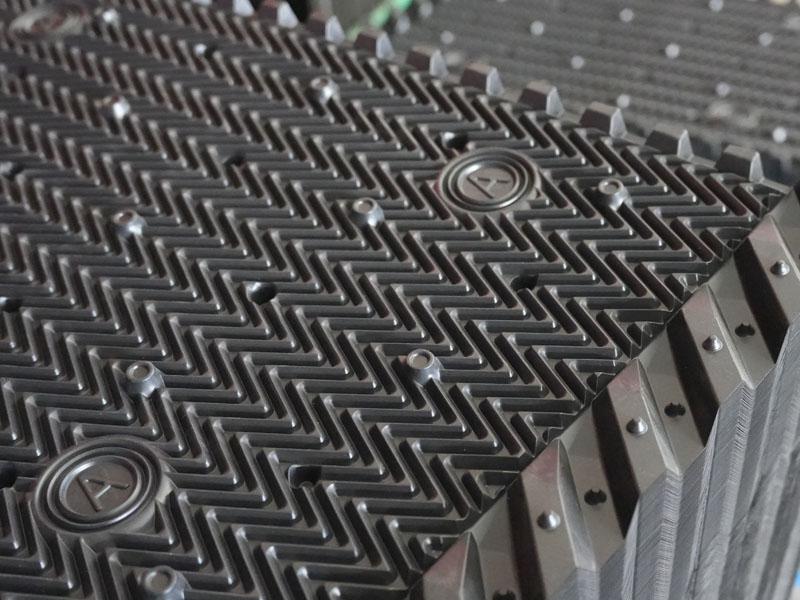
Fill media increases the contact area between air and water, supporting heat transfer and evaporation.
Two common categories are film fill and splash fill. Film fill spreads water into thin layers over closely spaced surfaces, creating a large contact area. Splash fill breaks water into droplets as it moves through the fill structure.
The appropriate option depends on water quality, fouling risk, operating temperature, and the tower's design. Film fill can be effective when water is adequately treated, while splash fill may be preferable in some applications where fouling resistance is a priority.
Neither type is universally best. Buyers should discuss water conditions and maintenance requirements with the manufacturer before choosing the fill configuration.
Fans move air through the tower, while motors and associated drive components provide the required power. Their design influences airflow, energy consumption, and operating noise.
Fan diameter, blade geometry, rotational speed, motor rating, and control strategy should be matched to the tower's cooling duty. Variable-speed control may help reduce energy use under changing loads when the equipment and control system are designed for it.
Routine inspection of fan blades, mounting hardware, bearings, alignment, and vibration helps maintain safe and reliable operation.
Drift eliminators reduce the amount of liquid water carried out of the tower with the exhaust air. They help limit water loss and reduce the release of water droplets, although they do not eliminate all drift.
The cold water basin collects the cooled water for recirculation. Its design should support dependable pump operation, practical cleaning, and effective drainage.
Both components should be included in the tower's inspection and maintenance program.

An all steel cross flow cooling tower can be attractive for projects that value structural support, service access, and integration with existing facilities. Its benefits depend on the actual design, material specifications, installation quality, and maintenance practices.
Cross flow layouts may provide convenient access to water distribution areas and selected internal components. This can make it easier for maintenance teams to inspect outlets, clean accessible surfaces, and identify leakage or blockage.
Nevertheless, accessibility varies by model. Before purchasing, check the locations of access panels, maintenance platforms, ladders, and service clearances. A tower that is easy to maintain can help reduce downtime and make routine inspections more efficient.
A properly engineered steel frame can provide structural support for the tower and its operating components.
With suitable corrosion protection, correct installation, and scheduled inspections, steel construction can provide long-term service in many industrial and commercial environments. Its actual service life depends on fabrication quality, environmental exposure, coating condition, water chemistry, and maintenance.
Durability should therefore be evaluated as a complete engineering and maintenance issue rather than a simple material comparison.
Cooling tower installations vary considerably. Some projects have plenty of ground space, while others must fit equipment onto a roof or into an existing industrial plant.
A suitable steel cross flow tower may be configured to meet specific site requirements, subject to the manufacturer's available designs. Early coordination among the cooling tower supplier, mechanical contractor, structural engineer, and site team helps address foundation loads, piping, electrical connections, lifting access, and maintenance clearances.
Cooling tower efficiency depends on more than the tower's airflow arrangement or structural material.
Appropriate fill media, even water distribution, sufficient airflow, clean heat-transfer surfaces, and suitable fan controls all contribute to performance. Water treatment also matters because scale and biological growth can gradually reduce heat-transfer effectiveness.
When comparing equipment, consider fan power, water consumption, maintenance needs, and expected operating conditions alongside the purchase price. A lower initial cost may not represent the best long-term value if the equipment requires frequent servicing or consumes more energy.
Cross flow cooling towers are used in many HVAC systems that rely on water-cooled chillers to remove heat from buildings. The tower must be selected to match the chiller's heat-rejection duty and the local design conditions.
Office buildings, shopping centers, hotels, and mixed-use developments may use cooling towers as part of a central chilled-water plant.
The tower rejects heat from the chiller condenser, helping the system maintain the required cooling conditions for indoor spaces. In these projects, engineers should consider seasonal load variations, local wet-bulb temperatures, rooftop or ground space, noise restrictions, and water-treatment requirements.
The tower should also be coordinated with pumps, piping, controls, and the building management system where applicable.
Hospitals and hotels need reliable cooling for occupied spaces and essential building services. Data centers may require continuous heat removal to support IT equipment, depending on their cooling architecture.
For these facilities, redundancy, monitoring, service access, and maintenance planning can be as important as nominal cooling capacity.
A cooling tower should be evaluated as part of the complete HVAC system. The final design must account for the site's required availability, load profile, operating temperatures, and applicable safety and water-management requirements.
Industrial facilities often need cooling for production machinery, heat exchangers, compressors, condensers, and process water systems. Their operating conditions may be more demanding than those of ordinary building HVAC systems.
Manufacturing plants may use cooling towers to remove heat from hydraulic systems, machinery, production lines, compressors, and other equipment.
An all steel cross flow cooling tower can be considered when its rated performance and material specifications suit the process. However, engineers should check whether process water can circulate directly through the tower or whether an intermediate heat exchanger is needed.
If the water contains oils, suspended solids, or process chemicals, direct circulation may cause fouling or material compatibility problems. Separating the process fluid from the tower water can help protect equipment when the application requires it.
Power-related facilities, chemical plants, and other industrial operations may have significant cooling loads and challenging environmental conditions.
Material selection, water chemistry, corrosion risks, structural requirements, and operating temperatures need careful review. Applications involving hazardous or contaminated fluids may also require additional system separation, safeguards, and regulatory compliance measures.
A manufacturer should receive accurate process information before recommending a suitable tower configuration.
The main difference between cross flow and counterflow cooling towers is the direction of airflow relative to the water.
In a cross flow cooling tower, air moves horizontally through the fill while water flows downward. In a counterflow cooling tower, air generally moves upward against the downward flow of water.
Both arrangements can provide effective heat rejection when correctly designed. However, their layouts, access requirements, footprints, and airflow characteristics differ.
Cross flow designs may offer convenient access to certain water distribution components. Counterflow designs may suit different space or performance requirements. Neither type is automatically more energy-efficient or better for every project.
To make a fair comparison, evaluate both designs using the same heat load, water flow, entering and leaving water temperatures, ambient wet-bulb temperature, and required cooling approach. Also compare dimensions, fan power, noise, installation cost, and maintenance access.
The best choice is the one that meets the project's technical requirements and long-term operating priorities.
Selecting the right cooling tower begins with the system's heat-rejection requirements. Product descriptions and nominal capacity figures are useful starting points, but they cannot replace a proper engineering assessment.
First, determine the heat load the tower must reject. Then confirm the required water flow, entering and leaving water temperatures, and design ambient wet-bulb temperature.
Cooling tower ratings are meaningful only when their test or design conditions are clearly stated. Two towers with the same nominal capacity may perform differently if their ratings use different water temperatures or ambient conditions.
Remember that a chiller's cooling capacity is not necessarily equal to the cooling tower's required heat-rejection capacity. The tower may need to reject both the heat removed from the building or process and the heat added by the chiller's compressor.
Ask the supplier to confirm the required duty using the project's actual operating conditions.
Two important cooling tower terms are range and approach.
Range is the difference between the hot water temperature entering the tower and the cold water temperature leaving it.
Approach is the difference between the cold water temperature leaving the tower and the ambient wet-bulb temperature.
These values help describe the required cooling performance. A smaller approach can require a larger or more demanding tower design, depending on the operating conditions.
When comparing quotations, make sure all suppliers use the same range, approach, water flow, and wet-bulb assumptions.
Before choosing a tower, check the available footprint, overall height, air inlet and discharge clearances, foundation loads, pipe routes, electrical connections, and lifting access.
Maintenance clearances are particularly important. Technicians need enough space to inspect fans, motors, fill media, water distribution systems, and other components safely.
Noise may also influence equipment selection. Hospitals, offices, hotels, and residential areas can have strict sound requirements. Fan selection, rotational speed, and control methods can affect operating noise, so confirm the expected sound performance under the required operating conditions.
Water quality has a direct influence on fill selection, scaling, corrosion, and biological growth.
If the circulating water contains high mineral concentrations or suspended solids, discuss filtration, water treatment, and fill compatibility with the supplier. The steel protection system should also match the installation environment.
Coastal locations, humid climates, and industrial sites with aggressive airborne chemicals may require special consideration. A suitable maintenance plan should cover coating inspections, water treatment, and cleaning practices.
Even a correctly selected cooling tower can underperform if installation is poor or maintenance is inconsistent. Planning for safe access and routine service from the beginning helps protect performance and reduce unexpected downtime.
Before delivery, confirm the foundation or support requirements, structural loads, access clearances, piping connections, electrical supply, drainage, and water-treatment provisions.
Coordinate the tower with pumps, chillers, heat exchangers, controls, and the wider cooling system. Confirm that the installed unit has sufficient clearance for air intake and discharge and that nearby structures will not interfere with airflow.
Follow the manufacturer's installation instructions. Structural, lifting, and electrical work should be completed by qualified professionals using appropriate safety procedures.
A practical maintenance program should cover:
Water distribution components and outlets
Fill media condition and cleanliness
Drift eliminators
Cold water basin and drainage
Fan blades, motors, bearings, and drive components
Structural fasteners and vibration
Corrosion protection and visible leakage
Water treatment and filtration performance
Inspection frequency depends on water quality, operating hours, environmental exposure, and local requirements. Establish a documented maintenance and water-management program based on the manufacturer's guidance and the site's risk assessment.
Cleaning and disinfection should follow appropriate safety procedures and applicable regulations. Maintenance personnel should use the required isolation and lockout procedures before accessing moving equipment.
Even a well-designed cooling tower may experience operating problems. Identifying the underlying cause is more effective than treating symptoms alone.
Poor cooling performance: Check whether the heat load exceeds the design duty. Then review actual wet-bulb conditions, water flow, airflow, water distribution, and fill condition.
Uneven water distribution: Inspect for blocked outlets, damaged components, or flow imbalance. Restore even distribution according to the manufacturer's recommendations.
Excessive vibration or noise: Check fan balance, alignment, bearings, mounting hardware, and drive components. Stop the equipment when necessary and follow safe isolation procedures before inspection.
Corrosion: Examine protective coatings, exposed connections, and areas affected by leaks or chemical exposure. Repair damaged protection using compatible materials and address the underlying cause.
Scaling or biological growth: Review water treatment, filtration, blowdown, and cleaning practices. Mechanical cleaning alone may not solve the problem if the water-management system remains inadequate.
Recording operating temperatures, water flow, vibration, and maintenance findings can help teams detect gradual performance changes before they cause major disruption.
Selecting a cooling tower manufacturer involves more than comparing purchase prices. Buyers need technical information, a configuration suited to the application, and effective coordination during equipment selection and project planning.
Mach Industry (Zhejiang) Co., Ltd. provides cooling tower solutions for commercial and industrial projects. For customers considering an all steel cross flow cooling tower, the selection process should begin with the actual operating requirements rather than a general product label.
When contacting Mach Cooling, prepare the following information:
Required heat-rejection capacity
Design water flow rate
Entering and leaving water temperatures
Local design wet-bulb temperature
Water quality and treatment conditions
Available installation space and support requirements
Noise restrictions and operating schedule
Material and corrosion-protection requirements
With this information, the supplier can assess the appropriate configuration and provide technical documentation for review.
Before finalizing a purchase, request the model-specific technical data sheet, general arrangement drawing, material specification, fan and motor details, and stated rating conditions. Confirm that the proposed equipment meets the project's requirements and that the installation and maintenance provisions are clearly defined.
Visit the official website at https://www.machcooling.com to explore cooling tower solutions and contact the team about your HVAC or industrial application.
Yes. Cross flow cooling towers can serve water-cooled HVAC systems when their capacity and operating conditions match the chiller's heat-rejection requirements. Selection should consider wet-bulb temperature, water flow, range, approach, noise, available space, and maintenance access.
It can be, provided the tower is engineered for the site's environmental and structural conditions. Buyers should confirm the corrosion-protection system, wind and support requirements, drainage arrangements, and maintenance plan with the manufacturer.
Start with the system's heat-rejection load, water flow, entering and leaving water temperatures, and local design wet-bulb temperature. Because chiller capacity alone may not represent the tower's full heat-rejection duty, have the system designer or manufacturer calculate and confirm the required rating.
There is no single maintenance interval suitable for every installation. Frequency depends on operating conditions, water quality, environmental exposure, equipment design, and local regulations. Establish a documented inspection and water-management schedule using the manufacturer's recommendations and the site's risk assessment.
No. Both designs can provide effective cooling when properly engineered. The better option depends on the required thermal performance, installation space, fan power, water distribution, maintenance access, noise limits, and total operating cost. Compare proposals using consistent design conditions.
An all steel cross flow cooling tower for HVAC and industrial projects can provide a practical combination of structural support, effective heat rejection, and convenient access to selected components. Its suitability depends on the specific design, operating conditions, material protection, installation layout, and maintenance plan.
Before purchasing, evaluate cooling capacity, water flow, range, approach, ambient wet-bulb temperature, fill media, fan power, noise, water quality, and corrosion protection. These factors have a direct influence on how reliably the equipment will operate throughout its service life.
For project teams seeking a suitable cooling solution, Mach Industry (Zhejiang) Co., Ltd. can be contacted through Mach Cooling to discuss application requirements and available configurations. Provide accurate design data and request model-specific technical documentation so that the final selection meets the project's real cooling duty—not just the description on a product page.