We Provide Cooling Tower Solution

Views: 0 Author: Cindy Publish Time: 2026-10-26 Origin: Site


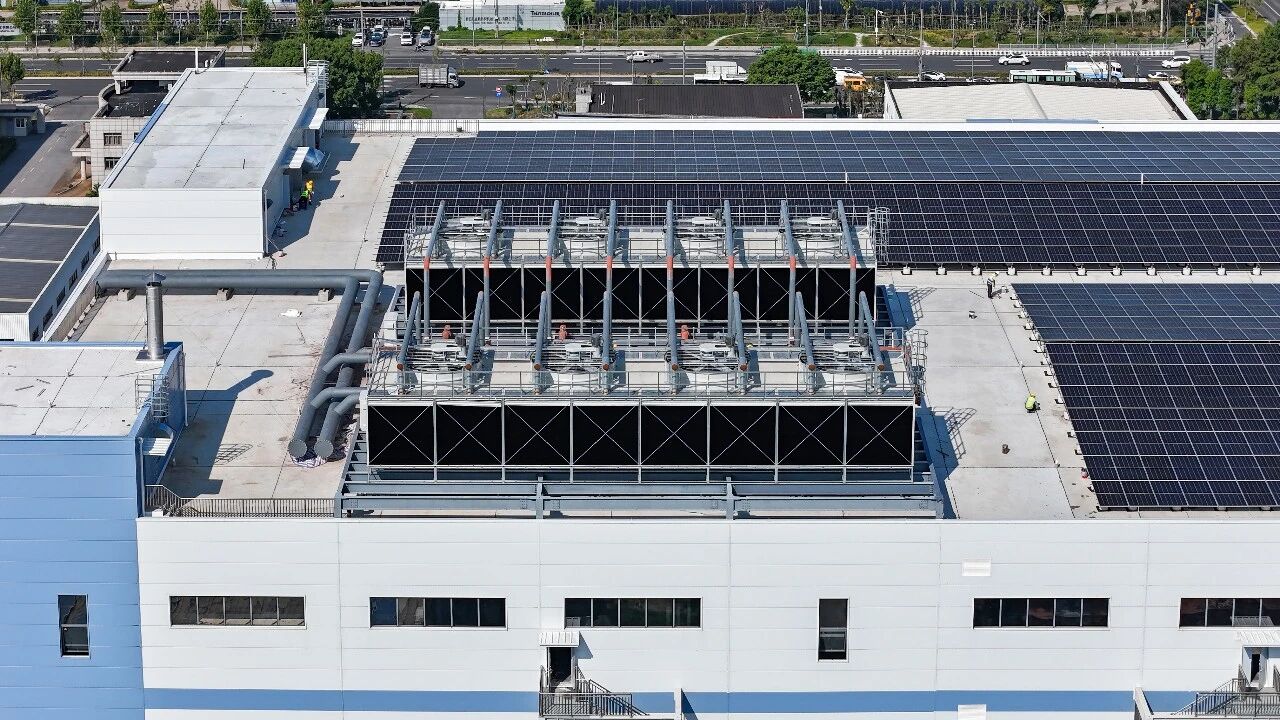
When choosing an industrial cooling tower, capacity is only one part of the decision. You also need to consider structural strength, heat rejection performance, energy consumption, corrosion protection, installation requirements, and long-term maintenance costs. A 170 ton all steel cooling tower can be a suitable solution for industrial facilities that need reliable cooling water for process equipment, chillers, and other heat-generating systems.
But what does a 170-ton rating actually mean? How is an all steel cooling tower constructed, and what advantages can it offer compared with other designs?
In this guide, we will explore the main parameters, working principle, structural components, advantages, applications, and selection considerations for a 170 ton all steel cooling tower. We will also explain what information you should prepare before requesting a quotation from Mach Industry (Zhejiang) Co., Ltd.
A 170 ton all steel cooling tower is an industrial heat-rejection unit designed to cool circulating water by transferring heat from the water to the surrounding air. It uses evaporative cooling to reduce water temperature before the water returns to a chiller, manufacturing process, or other cooling equipment.
The term “170 ton” refers to the tower's stated cooling capacity. However, the exact meaning depends on the manufacturer's rating convention and the operating conditions used to determine performance.
The term “all steel” emphasizes the use of steel in the tower's structural construction and, depending on the design, its casing and other assemblies. It does not necessarily mean every component is made from steel. Cooling tower fill, drift eliminators, seals, and other parts may use different materials according to their functions.
For industrial buyers, this distinction matters. The structural material affects strength and corrosion protection, while the fill, fan, and water distribution system directly influence thermal performance.
A properly selected 170 ton cooling tower should match the actual heat load, water flow, design temperatures, local climate, and installation conditions.

Cooling tower capacity can be confusing because cooling tower tons and refrigeration tons are not always used in the same way.
Under a traditional cooling tower rating convention, one cooling tower ton represents approximately 15,000 BTU per hour of heat rejection, equivalent to about 4.396 kW. Based on this convention, 170 cooling tower tons correspond to approximately 748 kW of heat rejection.
This figure is a reference calculation, not a guarantee of a particular product's performance. Manufacturers may use different rating conventions, so buyers should confirm the meaning of the stated capacity in the technical datasheet.
A chiller removes heat from chilled water, but its condenser system must reject both the heat absorbed from the cooling load and the energy added by the compressor.
As a result, the heat-rejection requirement of a chiller system is generally greater than the chiller's nominal refrigeration capacity.
For example, a cooling tower rated at 170 tons should not automatically be considered suitable for a 170-ton refrigeration chiller. The actual selection depends on the chiller's condenser heat load, water flow, inlet and outlet temperatures, and local wet-bulb temperature.
The best approach is to size the cooling tower according to its required heat rejection under defined operating conditions, rather than relying on tonnage alone.
Before purchasing a 170 ton all steel cooling tower, review its complete technical specifications. Two towers with the same nominal capacity can have different dimensions, fan power, water flow rates, and performance under particular weather conditions.
The following parameters should be confirmed with the manufacturer.
| Technical Parameter | What Buyers Should Confirm |
|---|---|
| Cooling capacity | Rated heat rejection and rating conditions |
| Circulating water flow | Design flow rate and allowable operating range |
| Hot-water inlet temperature | Temperature of water entering the tower |
| Cold-water outlet temperature | Target temperature under specified conditions |
| Wet-bulb temperature | Local design condition used for performance selection |
| Cooling range | Difference between hot-water and cold-water temperatures |
| Approach | Difference between cold-water temperature and entering-air wet-bulb temperature |
| Fan motor power | Rated power, voltage, frequency, and control method |
| Construction materials | Steel grade, casing materials, coating, and corrosion protection |
| Dimensions and weight | Overall dimensions, shipping weight, and operating weight |
| Water connections | Inlet, outlet, drain, overflow, and makeup-water arrangements |
| Noise level | Available sound data and measurement conditions |
These specifications should be included in the technical proposal so that you can compare suppliers on a consistent basis.
Cooling capacity determines how much heat the tower can remove under the specified design conditions.
Actual performance depends on the relationship between water flow, hot-water temperature, cold-water temperature, and entering-air wet-bulb temperature. If the site experiences higher wet-bulb temperatures than those used for the nominal rating, the tower may produce warmer outlet water unless the design provides sufficient capacity for those conditions.
This is particularly important for facilities operating in hot, humid climates or running equipment continuously throughout the summer.
When requesting a quotation, explain the expected peak heat load and the required cold-water temperature. The supplier can then evaluate whether the proposed tower is suitable or whether a different capacity or configuration is needed.
The circulating water flow rate affects the amount of heat transferred through the tower.
For the same heat load, the required flow depends on the temperature difference between the water entering and leaving the tower. Pump performance, pipe resistance, spray nozzle pressure, and water distribution also influence the final design.
An excessively low flow rate may lead to poor water distribution and reduced heat transfer. An unsuitable high flow rate may increase pumping demand or exceed the design limits of the distribution system.
Therefore, confirm the rated flow in cubic meters per hour or gallons per minute. Do not select a tower based only on its nominal tonnage.
Three temperatures are particularly important when evaluating a cooling tower:
Hot-water inlet temperature: The temperature of water entering the tower.
Cold-water outlet temperature: The temperature of cooled water leaving the tower.
Entering-air wet-bulb temperature: A measure of the incoming air's evaporative cooling potential.
The difference between the hot-water inlet and cold-water outlet temperatures is called the cooling range.
The difference between the cold-water outlet temperature and the entering-air wet-bulb temperature is called the approach.
A smaller approach generally requires a larger or more capable tower under otherwise comparable conditions. If your process requires a particularly low outlet temperature, tell the manufacturer before selecting the model.
Wet-bulb temperature is a major factor in cooling tower design because evaporative cooling depends on the condition of the incoming air.
A tower that performs well in a dry climate may not deliver the same outlet-water temperature in a hot, humid location. This is why the local design wet-bulb temperature should be included in the quotation request.
The cooling range also helps determine the required water flow and tower performance. If the design range changes, the required operating conditions may change as well.
For a reliable selection, evaluate cooling capacity, water flow, range, and approach together rather than treating them as independent values.
The overall dimensions of a 170 ton all steel cooling tower determine whether it can fit into the available installation area. Height, width, length, lifting access, piping connections, and maintenance clearances all need to be considered.
Weight is equally important. The supporting foundation or platform must be designed to accommodate the equipment's operating weight and applicable structural loads.
Fan motor power affects electricity consumption, while the fan design and airflow influence heat rejection and noise. Ask for the rated motor power, electrical requirements, control method, and available fan performance information.
For replacement projects, compare the proposed dimensions and connection locations with the existing equipment before confirming the order.
An all steel cooling tower combines structural components with a heat-transfer system. Each component has a specific job, and the overall performance depends on how well these parts work together.
The main assemblies generally include the supporting frame, casing, water distribution system, fill media, fan and motor, drift eliminators, and cold-water basin. The precise arrangement varies by manufacturer and tower configuration.
The steel supporting frame carries the tower's structural loads. These may include the weight of the equipment, water inventory, operating forces, and relevant environmental loads.
Depending on the design, the casing may also use steel panels to enclose the internal components and direct airflow through the tower.
Steel can provide high strength and rigidity when properly engineered. However, its long-term durability depends on material quality, fabrication, protective coatings, drainage, and maintenance.
Buyers should ask about steel grade, surface preparation, coating specifications, fasteners, weld quality, and inspection requirements. These details are especially important for installations exposed to high humidity, coastal air, or industrial pollutants.
The water distribution system delivers hot water across the cooling tower's heat-transfer section.
Depending on the model, the system may use spray nozzles, distribution pipes, or other arrangements designed to spread water evenly over the fill.
Why is uniform distribution so important? If some areas receive too much water while others remain relatively dry, the tower cannot use the entire heat-transfer area effectively. Poor distribution can reduce cooling performance and create unnecessary operating problems.
The distribution system should be selected according to the required water flow, operating pressure, and water quality. Nozzles and pipes should also be accessible for inspection and cleaning.
Fill media increases the contact area between water and air, helping heat transfer take place more efficiently.
Film fill spreads water across thin surfaces, while splash fill breaks water into droplets as it moves through the tower. The suitable type depends on operating temperature, water quality, fouling risk, and the manufacturer's design.
Even when the tower's main structure is steel, the fill may be made from PVC, polypropylene, or another suitable material. This is normal because different components have different engineering requirements.
For industrial systems with hard water, suspended solids, or a high risk of biological growth, fill selection deserves particular attention. Ask the supplier whether the proposed fill suits the circulating-water conditions and how it can be inspected, cleaned, or replaced.
The fan moves air through the cooling tower, supporting evaporation and heat transfer.
The fan and motor must be matched to the tower's thermal requirements, airflow resistance, electrical supply, and operating conditions. Depending on the design, the drive arrangement may be direct-drive, belt-drive, or gear-driven.
Fan blade design, rotational speed, vibration, noise, and maintenance access also affect system performance.
Some installations benefit from variable-frequency control, which adjusts fan speed according to cooling demand. However, the appropriate control strategy depends on the tower design and system operating profile.
When comparing models, confirm the fan motor rating, voltage, frequency, control method, and maintenance requirements.
Drift eliminators capture water droplets carried toward the tower's air outlet. They help reduce liquid-water loss and limit the release of droplets that may contain treatment chemicals or impurities.
The cold-water basin collects cooled water before it returns to the process or chiller system. Depending on the design, it may include a suction connection, drain, overflow, and makeup-water connection.
A well-designed basin should allow practical inspection and cleaning. Debris, sludge, and blocked strainers can affect water circulation and contribute to operating problems.
Regular inspection of the basin and drift eliminators helps keep the system operating as intended.
The working principle of a 170 ton all steel cooling tower is based on heat and mass transfer between water and air.
First, hot water from a process or chiller condenser enters the tower's water distribution system. The distribution system spreads the water over the fill or heat-transfer section.
At the same time, the fan moves air through the tower. As the water comes into contact with the moving air, a small portion evaporates and removes heat from the remaining water.
The cooled water then falls into the collection basin and returns to the equipment that needs cooling. Meanwhile, warm and moisture-laden air exits the tower.
Because some water is lost through evaporation, drift, and blowdown, makeup water is needed to maintain the system's water balance.
The process may sound simple, but effective cooling requires the right combination of water distribution, airflow, fill performance, and operating conditions. If any of these factors is poorly matched, the tower may struggle to achieve its target outlet temperature.
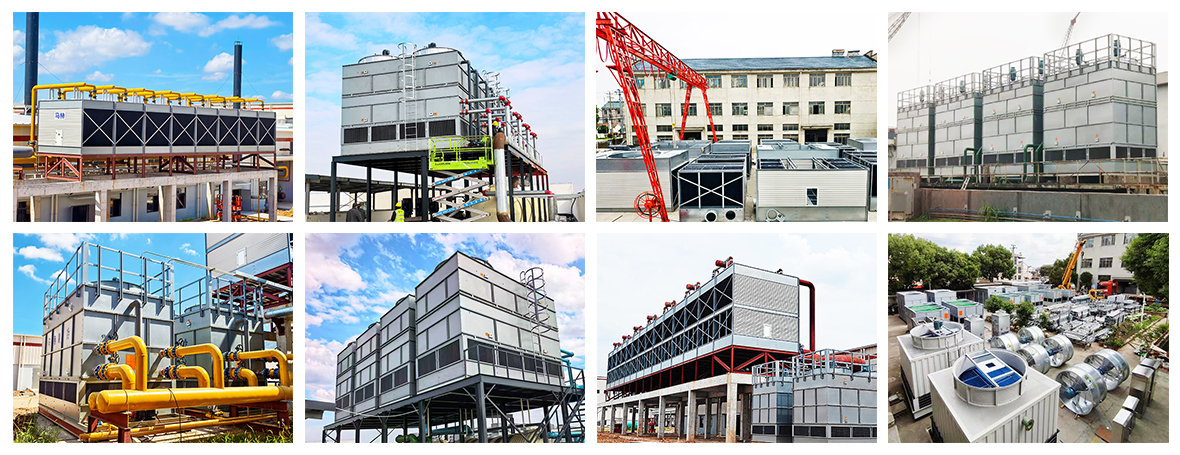
An all steel cooling tower can offer several benefits for industrial applications. Its suitability depends on the engineering design, construction quality, corrosion protection, and operating environment.
Steel offers high strength and rigidity when appropriately designed and fabricated. This can make it a useful option for industrial installations that require a robust supporting structure.
A properly engineered frame can support the tower's components and accommodate relevant structural loads. However, buyers should still confirm the foundation requirements, platform capacity, wind loads, vibration considerations, and other applicable design conditions.
Do not assume that every steel tower can be installed on any roof or platform without a structural assessment.
Industrial facilities often require cooling equipment to operate for extended periods while process loads change throughout the day.
A well-designed steel cooling tower can provide a strong framework for the fan, water distribution system, fill, and other components. This makes steel construction worth considering for manufacturing plants, process cooling systems, and utility installations.
The material alone does not guarantee reliable operation. Water treatment, fan maintenance, fill condition, and corrosion protection remain essential to long-term performance.
Maintenance requirements affect the total cost of owning a cooling tower.
When components are accessible and designed for service, technicians can inspect the fan, motor, nozzles, fill media, and drift eliminators more efficiently. Replaceable components can also simplify repairs when parts become damaged or reach the end of their service life.
Before purchasing, ask the manufacturer how routine inspections are performed and whether replacement parts are available. A practical maintenance layout can help reduce downtime and make operating costs more predictable.
Industrial cooling towers must fit the site's available space, piping system, electrical supply, and support structure.
Depending on the model, a steel tower may be configured to meet project-specific installation requirements. However, the dimensions, connection locations, lifting points, and structural limits must be confirmed before production.
For an existing plant, a site survey is particularly useful. It helps identify access restrictions, piping modifications, maintenance clearances, and foundation requirements before the new tower arrives.
Purchase price is only one part of the total cost of ownership.
A tower that is appropriately sized, well protected against corrosion, and easy to maintain may help reduce avoidable downtime and repair costs. Conversely, a poorly selected tower can consume more energy than expected or fail to deliver the required outlet-water temperature.
Evaluate the initial price alongside expected energy consumption, water use, maintenance needs, component availability, and the manufacturer's technical support.
A 170 ton all steel cooling tower may be considered for a range of industrial and commercial applications, including:
Manufacturing plants: Removing heat from production equipment and process-water systems.
Chiller plants: Rejecting condenser heat from appropriately sized refrigeration systems.
Industrial process cooling: Maintaining required water temperatures in selected production processes.
Machinery cooling: Supporting equipment that requires a circulating-water cooling loop.
Commercial and institutional facilities: Serving HVAC systems where the verified heat-rejection load matches the tower's rated performance.
Utility systems: Supporting selected industrial heat-rejection duties.
The nominal capacity does not determine suitability by itself. A plant with a variable load may need a different configuration from one operating continuously at a steady load. Some projects may also require multiple units or standby capacity to maintain operation during maintenance.
Always confirm the actual heat load and design conditions before selecting the final configuration.
Steel and fiberglass-reinforced plastic (FRP) cooling towers use the same basic evaporative cooling principle, but their construction materials differ.
Steel can offer high structural strength and rigidity. FRP can provide useful corrosion resistance in appropriate environments and may reduce certain maintenance concerns associated with exposed metal surfaces.
Neither material is automatically the best choice for every project. The decision depends on the installation environment, structural requirements, corrosion risks, budget, and expected service life.
When comparing proposals, review the entire design rather than focusing only on the material name. Check the supporting frame, casing, fill, fan assembly, protective treatments, access arrangements, and replacement-part availability.
For a steel tower, pay particular attention to the coating or galvanizing system and the maintenance procedures required to protect exposed surfaces.
Selecting the right tower starts with the operating conditions. Before placing an order, consider the following factors.
Determine how much heat the cooling tower must reject at peak operation.
For a chiller system, obtain the condenser heat-rejection requirement, condenser-water flow, and specified inlet and outlet temperatures. For a process system, calculate or measure the heat entering the circulating water.
Also consider seasonal changes, future production expansion, and whether the installation requires standby capacity.
Water chemistry affects scaling, fouling, corrosion, and biological growth. Relevant factors may include hardness, alkalinity, conductivity, suspended solids, and biological activity.
The surrounding environment matters as well. Coastal air, high humidity, chemical fumes, and industrial pollutants can affect the durability of steel surfaces and other components.
Share these conditions with the supplier so the proposed materials, coating system, fill, and water-treatment arrangements can be evaluated appropriately.
Fan and pump energy contribute to the tower's operating costs.
Compare motor power, expected airflow, available fan controls, and performance information. If the tower will be installed near offices, residential areas, or noise-sensitive workplaces, check the applicable sound limits and available acoustic information.
A suitable fan control strategy may help match airflow to cooling demand, but it must remain compatible with the tower's performance requirements.
Steel construction requires suitable corrosion protection, particularly in aggressive environments.
Ask the supplier to specify the steel grade, surface preparation, coating or galvanizing system, fasteners, and procedures for repairing damaged protective surfaces.
Good drainage and accessible inspection points can also help reduce corrosion risks. If the tower will operate near the sea or in a chemical-processing facility, communicate this information early in the design process.
Confirm the tower's overall dimensions, operating weight, foundation requirements, water connections, electrical connections, lifting arrangements, and maintenance clearances.
The fan and air outlet need suitable clearance, and the installation should minimize the risk of warm exhaust air recirculating into the air intake.
A careful site assessment can prevent installation delays and expensive modifications after delivery.
Correct installation and routine maintenance are essential for reliable cooling tower operation.
Start by ensuring that the foundation or support structure is designed for the tower's operating weight and relevant structural loads. Check that the unit is level, piping is properly supported, and electrical connections meet the equipment requirements.
During commissioning, verify water flow, spray distribution, fan rotation, vibration, motor current, and water levels. Confirm that the tower achieves the required temperatures under representative operating conditions.
During routine operation, monitor:
Hot-water inlet and cold-water outlet temperatures.
Circulating-water flow and basin water level.
Fan vibration, noise, and motor current.
Fill condition and water distribution.
Drift eliminator condition.
Steel surfaces, joints, fasteners, and protective coatings.
Water-treatment performance and visible scale or biological growth.
Clean the basin and distribution components when needed. Inspect fill media and drift eliminators regularly, and repair damaged protective coatings according to the manufacturer's recommendations.
Always follow appropriate lockout procedures and safety requirements before carrying out maintenance.
Even a properly selected cooling tower may experience operating problems if its components are not maintained or its operating conditions change.
Possible causes include excessive heat load, insufficient water flow, high wet-bulb temperature, reduced airflow, poor water distribution, or fouled fill media.
Compare actual operating conditions with the original design conditions before deciding whether the tower is undersized.
Blocked nozzles, damaged pipes, unsuitable water pressure, or debris can prevent uniform water distribution.
Inspect the distribution system and clean or replace components as recommended by the manufacturer.
Potential causes include fan imbalance, misalignment, worn bearings, loose fasteners, or structural problems.
If vibration is severe or the equipment appears unsafe, stop the unit and arrange an appropriate inspection before restarting it.
Corrosion may result from damaged coatings, unsuitable materials, aggressive atmospheric conditions, or inadequate maintenance.
Identify the cause, inspect the affected area, and restore the protective system according to the approved repair procedure. Repeated corrosion may indicate that the original protection system needs to be reviewed.
Check for leakage, excessive drift, damaged drift eliminators, and changes in operating conditions. Evaporation and blowdown are normal parts of cooling tower operation, so distinguish expected water consumption from avoidable losses before taking corrective action.
Choosing a cooling tower manufacturer involves more than comparing prices. You need a supplier that can evaluate your operating conditions, provide clear technical information, and help you identify an appropriate solution for the project.
Mach Industry (Zhejiang) Co., Ltd. is the company identified for this cooling tower inquiry. When discussing a 170 ton all steel cooling tower with Mach Cooling, provide your heat load, water flow, inlet and outlet temperatures, local design wet-bulb temperature, installation environment, and space restrictions.
Ask for confirmation of the proposed model's cooling capacity, dimensions, fan and motor specifications, construction materials, corrosion protection, and maintenance requirements. This will help you assess whether the selected equipment fits your application.
To learn more about the company's cooling tower solutions or submit a project inquiry, visit the official website:
Mach Cooling — https://www.machcooling.com/
A complete technical proposal, based on actual project conditions, is the best foundation for making a sound purchasing decision.
It may be suitable if its verified heat-rejection capacity meets your factory's requirements under the actual design conditions. You should compare the required heat load, water flow, inlet and outlet temperatures, and local wet-bulb temperature with the manufacturer's performance data. Nominal tonnage alone cannot confirm suitability.
Steel can be protected through appropriate material selection, galvanizing or coating systems, careful fabrication, and regular inspection. However, steel is not inherently immune to rust. The right protection depends on the water chemistry, humidity, airborne contaminants, and installation environment.
Prepare the required heat load or cooling capacity, circulating-water flow, hot-water inlet temperature, target cold-water outlet temperature, design wet-bulb temperature, electrical supply, installation location, water-quality information, and available footprint.
For a replacement project, also provide the existing tower's dimensions, connection locations, model information, and known operating issues.
Continuous operation depends on the tower's design, actual load, water treatment, environmental conditions, maintenance, and component specifications. Confirm that the proposed model is rated for the required duty cycle and that an appropriate maintenance plan is in place.
Start with correct sizing and regular maintenance. Keep the fill and water distribution system clean, maintain appropriate water treatment, inspect the fan and motor, and monitor operating temperatures and energy use. Where suitable, fan speed control can help match airflow to changing cooling demand. Any control adjustments should remain within the manufacturer's operating limits.
A 170 ton all steel cooling tower can be a practical option for industrial facilities that need a robust supporting structure and reliable heat rejection. Its actual performance, however, depends on more than its nominal capacity.
Water flow, inlet and outlet temperatures, wet-bulb conditions, fill media, fan selection, corrosion protection, and installation quality all influence the result. Before purchasing, confirm the heat load, compare the complete technical specifications, and evaluate the tower against the site's environmental and maintenance requirements.
For project-specific cooling tower information, contact Mach Industry (Zhejiang) Co., Ltd. through the official website at https://www.machcooling.com/. A properly specified cooling tower can help your facility maintain stable cooling performance while supporting practical, long-term operation.