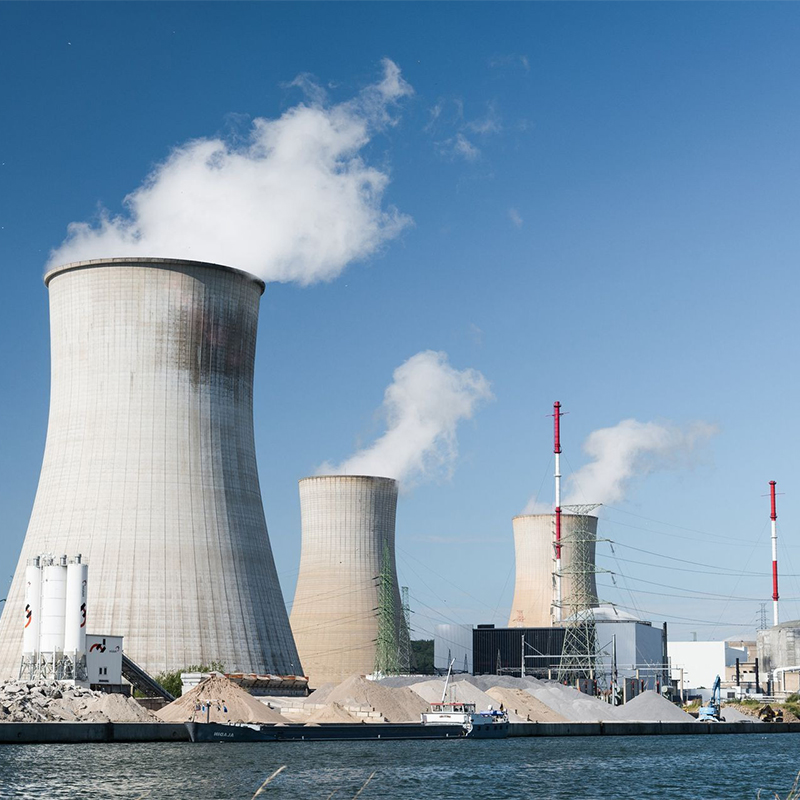
We Provide Cooling Tower Solution

Views: 0 Author: Cindy Publish Time: 2026-10-29 Origin: Site


Choosing the right cooling tower is an important decision for any industrial or commercial facility. Whether you operate a manufacturing plant, HVAC system, data center, power station, or chemical processing facility, reliable heat rejection helps keep equipment running safely and efficiently.
When searching for cooling tower manufacturers in the USA, buyers will encounter several types of cooling systems, including open circuit cooling towers, closed circuit cooling towers, and modular cooling tower units. Although these systems share the same basic purpose, they differ in heat-transfer methods, water management, installation requirements, and operating costs.
So, which type is best for your project? The answer depends on your cooling load, water quality, operating environment, available space, and long-term maintenance requirements.
In this guide, Mach Industry (Zhejiang) Co.,Ltd explains the differences between these cooling tower designs and provides practical advice to help industrial buyers choose suitable cooling equipment.
The United States has extensive demand for cooling towers across manufacturing, commercial HVAC, food processing, power generation, data centers, and other industrial sectors. These facilities need dependable equipment to remove unwanted heat and maintain stable operating temperatures.
However, different industries have different cooling requirements. A manufacturing plant may need continuous process cooling, while a commercial building may prioritize energy efficiency and noise control. A data center may require highly reliable cooling capacity that can accommodate future expansion.
For buyers comparing cooling tower manufacturers serving the US market, the objective should be to find equipment that meets the project's thermal requirements, installation conditions, applicable codes, and long-term operating budget.
Comparing equipment specifications is more useful than selecting a tower based only on its purchase price or nominal capacity.
Industrial processes generate heat through machinery, chemical reactions, compression, power generation, and other operations. Without effective heat removal, equipment temperatures can rise, production efficiency may decline, and unexpected shutdowns may occur.
Cooling towers help remove heat from circulating water and release it into the atmosphere. In evaporative cooling systems, a small portion of the water evaporates, carrying heat away from the remaining water.
This process allows many facilities to reuse cooling water instead of continuously consuming fresh water for once-through cooling.
Cooling tower performance depends on several factors, including water flow, heat load, entering-water temperature, required leaving-water temperature, ambient wet-bulb temperature, airflow, and fill design. Proper equipment selection helps balance cooling performance, energy consumption, water use, and maintenance costs.
A reliable cooling tower supplier should provide more than a product catalogue. Buyers need equipment that matches their design conditions and can be installed, operated, inspected, and maintained over its service life.
Important considerations include:
Cooling capacity under specified operating conditions
Fan, motor, and water distribution system design
Fill media and drift eliminator performance
Construction materials and corrosion resistance
Equipment dimensions, weight, and installation requirements
Energy consumption and water management requirements
Technical documentation and commissioning guidance
Spare parts, warranty terms, and after-sales support
For US projects, buyers should also verify applicable local building, electrical, mechanical, environmental, and workplace safety requirements. Certification and code compliance should be confirmed for the specific equipment model and configuration rather than assumed from a general product description.
Open circuit cooling towers are widely used in industrial and commercial applications because of their relatively straightforward design and effective heat rejection.
In an open circuit system, warm process water is distributed over fill media inside the tower. Air passes through the fill, allowing heat and mass transfer to occur. A portion of the water evaporates, cooling the remaining water before it collects in the basin and returns to the system.
Because the circulating water comes into direct contact with air, it can collect airborne contaminants and suspended particles. Water treatment, filtration where appropriate, and routine cleaning are therefore important for reliable operation.
An open circuit cooling tower can be a practical option when direct contact between process water and air is acceptable and the facility can maintain suitable water quality.
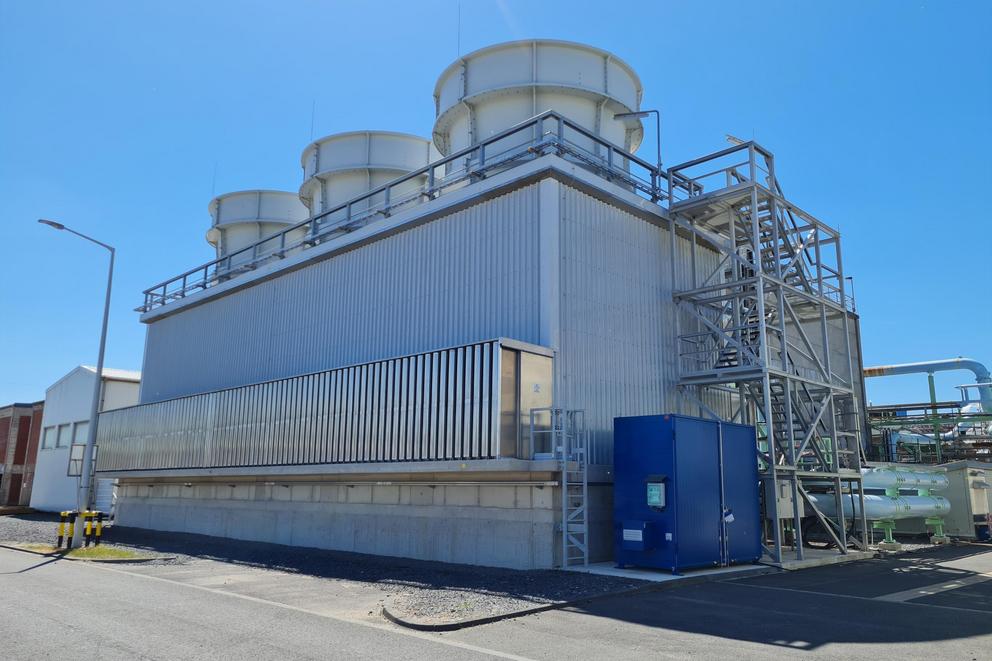
A typical open circuit cooling tower includes a casing, water distribution system, fill media, fan assembly, drift eliminators, and collection basin.
Warm water enters the distribution system and flows over the fill. The fill increases the contact area between the water and air, improving heat transfer. A fan moves air through the tower, although some designs use natural airflow.
As part of the water evaporates, the remaining water cools and collects in the basin. Pumps then return the cooled water to the equipment or process.
Evaporation concentrates dissolved minerals in the remaining water. To help prevent excessive scale formation, the system may require controlled blowdown, makeup water, and an appropriate water-treatment program.
The exact treatment strategy depends on the makeup-water quality, operating conditions, construction materials, and facility requirements.
One major advantage of open circuit cooling towers is their direct heat-transfer arrangement. Because process water contacts the air directly, the tower does not require a separate process-water coil in the main heat-rejection path.
This design can provide effective heat transfer and may offer a lower initial equipment cost than some closed circuit alternatives.
Open circuit towers are available in various sizes and configurations, making them suitable for many industrial and HVAC applications. Their operating principles are also familiar to many maintenance teams.
However, the purchase price does not tell the whole story. Water treatment, cleaning, fan energy, drift management, and maintenance labor all contribute to total operating costs. Buyers should evaluate these factors before making a final decision.
Open circuit cooling towers are commonly used for:
Industrial process cooling
Chiller and HVAC systems
Injection molding and plastics manufacturing
Metalworking and general manufacturing
Machinery and equipment cooling
Various utility and production processes
They can work well when the process water can be treated properly and direct contact with the atmosphere does not create unacceptable contamination risks.
If the process requires particularly clean water, or if contamination could damage downstream equipment, a closed circuit tower or a separate heat exchanger may be a better option.
Closed circuit cooling towers are designed for applications where the process fluid needs to remain separated from the external cooling-water environment.
Instead of distributing process fluid directly over the fill, the system circulates it through a heat-exchange coil. Water is sprayed over the outside of the coil while air moves through the tower. Heat passes through the coil wall and is removed by the spray water and airflow.
In an evaporative closed circuit system, a portion of the spray water evaporates, helping remove heat from the coil.
The process fluid remains inside the coil during normal operation, reducing its exposure to airborne contaminants. This arrangement can be valuable for sensitive equipment and processes that require a relatively clean circulating fluid.

A typical closed circuit cooling tower consists of a heat-exchange coil, spray-water distribution system, fan, basin, drift eliminators, and supporting structure. Depending on the design, it may also incorporate fill or other heat-transfer surfaces.
Warm process fluid enters the coil and transfers heat through the coil wall. Spray water wets the exterior surface, while airflow helps remove heat through evaporation and sensible heat transfer.
The cooled process fluid then returns to the equipment or process.
The spray-water circuit and process-fluid circuit remain separate, with the coil providing the heat-transfer boundary between them. Depending on the application, the process fluid may be water, a water-glycol mixture, or another compatible fluid.
Before purchasing a closed circuit tower, buyers should review coil material, fluid compatibility, freeze protection, operating temperatures, and maintenance access.
The primary benefit of a closed circuit cooling tower is process-fluid isolation.
Keeping the process fluid inside a coil can reduce the entry of dust, debris, and other external contaminants into the process loop. Depending on the application, this may also help reduce cleaning requirements for downstream equipment.
Closed circuit systems can be useful when fluid cleanliness is important or when the process requires a treated fluid that should not be exposed directly to the atmosphere.
However, closed circuit cooling towers are not maintenance-free. Coil surfaces, spray-water systems, basins, fans, and drift eliminators still require regular inspection and cleaning.
The coil also introduces additional heat-transfer resistance. Therefore, buyers should compare equipment using the actual design conditions instead of assuming that an open circuit and closed circuit model with similar nominal dimensions will provide identical cooling performance.
Consider a closed circuit cooling tower when contamination of the process fluid could interfere with equipment performance or product quality.
Potential applications include specialized manufacturing, industrial machinery cooling, certain data center systems, and processes that require a controlled fluid circuit.
Closed circuit systems may also be attractive when maintaining a separate process-fluid loop simplifies the overall plant design.
Before making a decision, compare initial cost, heat-transfer capacity, coil material, pump requirements, water treatment, and maintenance access.
A closed circuit tower is not automatically the best choice for every facility. The right solution depends on the consequences of contamination, the thermal load, available installation space, and the lifetime cost of operating the complete cooling system.
Modular cooling towers use multiple factory-built cells or units that operate together to meet the required cooling load.
Instead of relying on one large tower, the system combines several smaller units. This approach can be useful when a site has restricted access, phased construction plans, changing cooling demand, or a need for operational flexibility.
Depending on the product design, modules may be arranged side by side or in other approved configurations. The overall arrangement must account for piping, electrical distribution, controls, airflow, water balancing, structural support, and maintenance clearances.
It is important to understand that modular describes the system's configuration rather than a specific heat-transfer method. A modular installation may use open circuit or closed circuit cooling tower units.
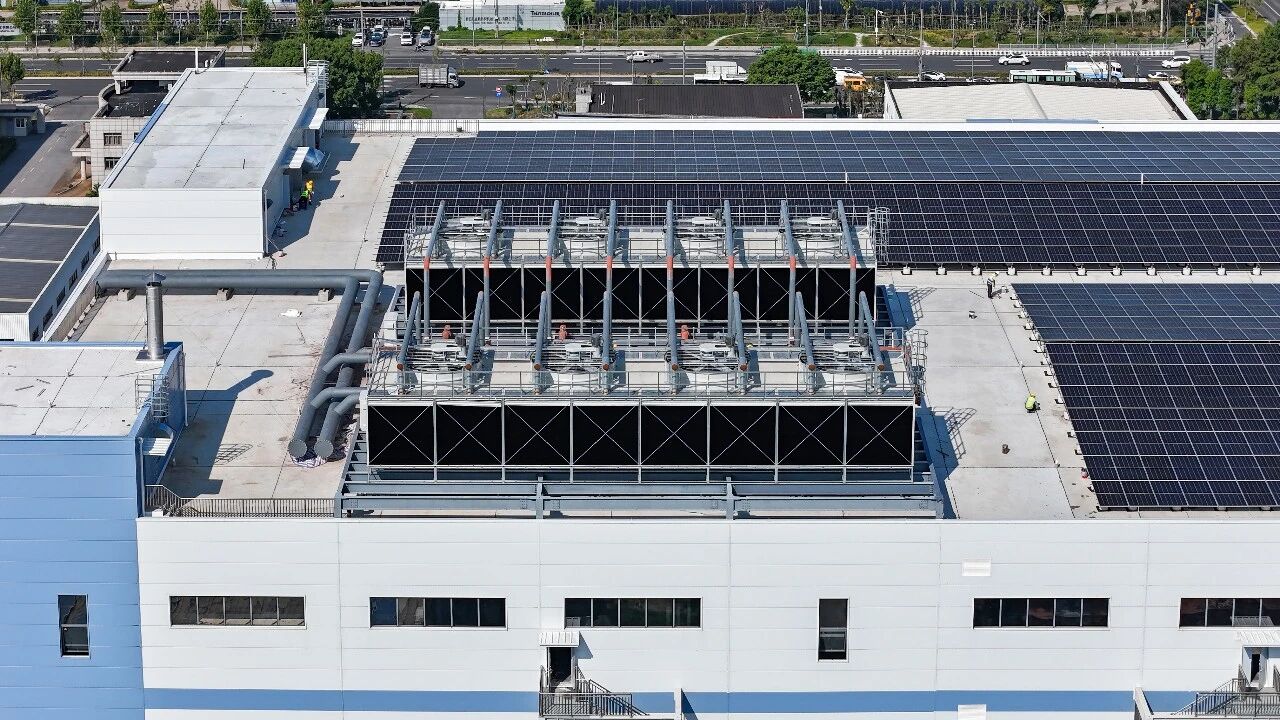
A modular cooling tower is built around repeatable cells or sections with defined connection points and operating characteristics.
Each module may include its own fan, motor, water distribution components, and basin arrangement, depending on the design. The total cooling capacity depends on the combined performance of the installed modules under the specified operating conditions.
This configuration can simplify planning when cooling requirements are expected to grow.
However, designers should not calculate total capacity by multiplying a nominal rating without considering operating conditions and system effects. Water flow, ambient wet-bulb temperature, fan operation, piping arrangements, and control logic can all influence performance.
Modular cooling towers can offer installation flexibility, phased investment, and operational advantages.
A facility may install enough capacity for its current load and add compatible modules as production grows. Multiple cells may also allow operators to adjust cooling output to changing demand, provided the fans, pumps, controls, and water distribution system support that operating strategy.
If one module requires maintenance, other modules may continue operating when sufficient spare capacity and appropriate isolation arrangements have been designed into the system.
This is not guaranteed in every installation. Buyers should ask the supplier to explain the redundancy strategy and the cooling capacity available when a module is offline.
Modular systems may be suitable for industrial parks, campuses, large commercial buildings, manufacturing facilities, and other sites with changing cooling requirements.
Production facilities rarely remain unchanged forever. A plant may install new machinery, increase production volume, or add process lines that require additional cooling.
A modular arrangement can make expansion easier because compatible cells may be added without replacing the entire cooling system.
To preserve this flexibility, plan for future space, foundations, piping connections, electrical capacity, and controls from the beginning.
Confirm that future modules will be compatible with the original equipment and that the expanded system will still meet the required operating temperatures and flow rates.
Large industrial equipment can be difficult to transport through restricted roads, narrow building openings, or crowded industrial sites.
Smaller modular sections may simplify handling and installation, depending on their dimensions and shipping configuration. They can also provide greater flexibility where crane access, road access, or installation windows are limited.
Before ordering, check module dimensions, shipping weights, lifting points, assembly requirements, and site access.
A modular design does not eliminate the need for proper foundations, safe lifting procedures, qualified installation personnel, or commissioning.
These three terms describe different aspects of cooling tower design.
Open circuit and closed circuit primarily describe how the process fluid interacts with the heat-rejection system. Modular describes how the cooling equipment is divided into units.
The best option depends on the project's technical requirements, water quality, operating environment, and future plans.
Open circuit systems allow process water to contact air directly. They are often suitable for general industrial and HVAC cooling where water treatment can be properly managed.
Their relatively straightforward design can make them an economical choice, but the water circuit is exposed to airborne contaminants and requires appropriate treatment and maintenance.
Closed circuit systems circulate process fluid through a coil, keeping it separate from the external spray-water environment.
They are useful when process-fluid cleanliness is important. However, the coil adds complexity and can increase initial equipment cost. Coil materials, fluid compatibility, and heat-transfer performance must be evaluated carefully.
Modular systems combine multiple cells to provide the required capacity.
They can support phased expansion and flexible operation, but successful implementation requires coordinated engineering of piping, controls, electrical systems, airflow, and maintenance access.
A modular unit can also use an open circuit or closed circuit configuration, so these options are not mutually exclusive.
When comparing quotations, ensure that the proposed systems use equivalent design conditions, including heat load, entering and leaving fluid temperatures, flow rate, and ambient wet-bulb temperature.
Selecting a cooling tower starts with understanding the heat that must be rejected and the conditions under which the tower will operate.
A unit that performs well in one climate or industrial process may not deliver the required leaving-water temperature in another. Establishing a clear design basis helps avoid undersized equipment, unnecessary oversizing, excessive energy consumption, and unexpected operating costs.

Begin by identifying the required heat-rejection capacity, fluid flow rate, entering temperature, and desired leaving temperature.
Ambient wet-bulb temperature is particularly important for evaporative cooling tower selection because it influences the achievable cold-water temperature.
The difference between the leaving-water temperature and the design wet-bulb temperature is called the approach. The difference between entering and leaving water temperatures is called the range.
Both values affect tower sizing, performance, and cost.
Also consider seasonal operating conditions, load variations, altitude, installation location, and possible future expansion.
Provide the supplier with accurate design data instead of selecting a tower based solely on nominal tonnage or a generic model name.
Water quality affects heat-transfer surfaces, piping, fill media, spray nozzles, and basin cleanliness.
High mineral content can encourage scale formation, while suspended solids may block nozzles or accumulate in the fill. Poor biological control can create additional health and maintenance concerns.
Open circuit systems expose circulating process water directly to the air. Closed circuit systems still require management of the spray-water circuit and may need suitable treatment for the internal process fluid.
A qualified water-treatment specialist should establish a program based on source-water quality, materials, operating conditions, and applicable regulations.
Legionella risk management is particularly important for evaporative cooling systems. Equipment selection should support safe access, cleaning, inspection, and the facility's water-management plan.
A cooling tower's lifetime cost includes more than its purchase price.
Fan and pump electricity, water consumption, treatment chemicals, cleaning, spare parts, labor, and production downtime can all contribute substantially.
Ask suppliers for fan motor data, expected operating conditions, control options, and maintenance requirements.
Variable-frequency drives may help reduce fan energy when properly designed and controlled, but actual savings depend on the system arrangement and operating load.
Consider whether key components can be inspected and replaced safely without extensive disassembly. For modular systems, ask whether individual cells can be isolated and whether the remaining equipment can maintain the required cooling capacity during maintenance.
Cooling towers operate in wet environments where material selection matters.
Depending on the design, components may use fiberglass-reinforced plastic, galvanized steel, stainless steel, engineered plastics, or other suitable materials. The correct choice depends on water chemistry, ambient conditions, temperature, mechanical loads, and maintenance strategy.
Review the casing, structural supports, fasteners, basin, fill media, drift eliminators, and heat-exchange coil as a complete assembly.
Using corrosion-resistant material in one component does not guarantee that the entire tower will resist corrosion. Request material specifications and confirm compatibility with the actual operating environment.
A reliable supplier should be able to explain how its equipment matches your design requirements and what information is needed to verify that match.
When comparing cooling tower manufacturers serving the USA, review technical documentation, manufacturing quality controls, engineering support, delivery arrangements, and long-term parts availability.
Domestic and international suppliers may both be suitable, depending on the project. The key is to establish whether the supplier can meet the project's performance, compliance, logistics, and support requirements.
Cooling projects often involve constraints that make a standard catalogue selection insufficient.
These may include unusual water temperatures, restricted installation space, aggressive operating environments, special construction materials, or integration with existing piping and controls.
Ask whether the supplier can review the design conditions and provide dimensional drawings, connection details, equipment weights, electrical information, and relevant performance data.
If customization is required, confirm which components are standard and which need project-specific engineering.
A professional supplier should clearly identify assumptions and limitations rather than promise a performance result without sufficient technical information.
Manufacturing quality affects assembly, durability, fit, and serviceability.
Ask about inspection procedures, component specifications, documentation, and how equipment is checked before shipment.
For US installations, confirm that the supplier can provide the documents required by the owner, contractor, engineer, and relevant authorities.
Where certification or code compliance is required, verify the exact model, configuration, and certification scope. Do not rely on a general company statement as proof that every product meets every US requirement.
Technical support also matters. Clarify how installation questions, commissioning issues, warranty claims, and replacement-part requests will be handled, including communication channels and time zones.
Fans, motors, bearings, belts where fitted, nozzles, fill media, drift eliminators, and other components may eventually require inspection or replacement.
Before purchasing, ask for a recommended spare-parts list and confirm how replacement components will be identified and ordered.
For overseas equipment, consider shipping time, import procedures, packaging, and the consequences of delayed components.
Keeping model numbers, equipment drawings, operating records, and maintenance logs makes future servicing more efficient. A clear parts strategy is especially important for facilities that cannot tolerate extended cooling-system outages.
When sourcing cooling equipment for an industrial or commercial project, buyers need to understand the relationship between equipment design, operating conditions, installation, and maintenance.
Mach Industry (Zhejiang) Co.,Ltd provides a point of contact for customers exploring cooling tower solutions and related equipment.
Visit www.machcooling.com to review the company's available products and contact its team about your application.
For a project in the United States, prepare the following information before requesting a quotation:
Required heat-rejection capacity
Entering and leaving water or process-fluid temperatures
Required flow rate
Design ambient wet-bulb temperature
Site dimensions and installation limitations
Available power supply and electrical requirements
Preferred open circuit, closed circuit, or modular configuration
Water quality and operating environment
Applicable project specifications and certification requirements
Providing complete information helps the supplier evaluate a suitable configuration and reduces the risk of selecting equipment that cannot meet the required operating conditions.
Buyers should also confirm delivery terms, documentation, warranty conditions, spare-parts availability, and any project-specific certification requirements before placing an order.
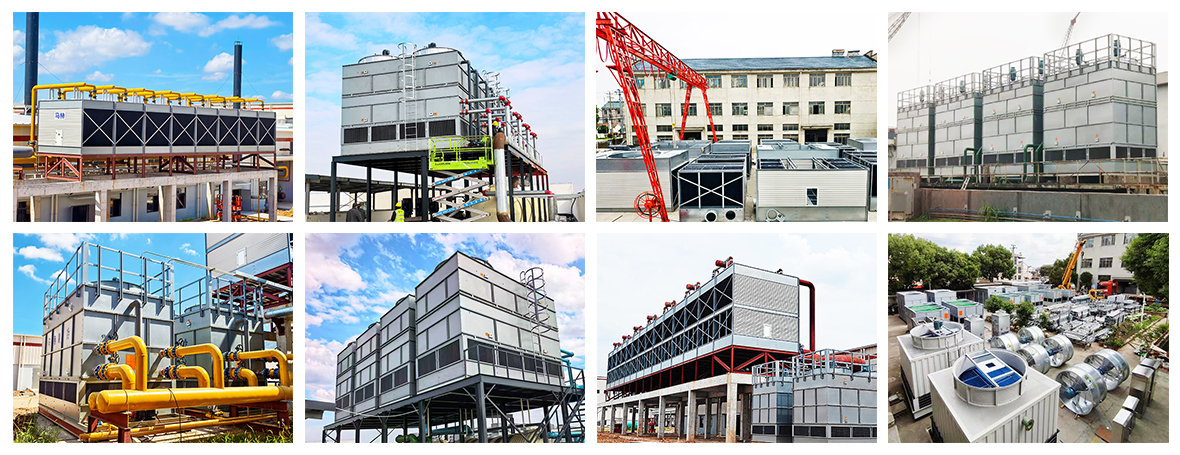
Even a well-selected cooling tower can underperform if installation and maintenance are overlooked.
Before installation, verify the foundation, structural loading, lifting arrangements, access clearances, piping layout, electrical supply, and airflow around the tower.
Avoid locations where hot discharge air can recirculate into the air inlet, as recirculation can reduce cooling performance.
Follow the manufacturer's instructions for alignment, water distribution, fan operation, and initial commissioning.
During operation, monitor water temperatures, flow rates, vibration, fan and motor condition, basin cleanliness, and water-treatment performance. Establish a documented inspection schedule based on the operating environment and the manufacturer's recommendations.
Clean and disinfect the system as required by the facility's water-management program and applicable rules.
Always follow appropriate lockout, electrical safety, confined-space, fall-protection, and chemical-handling procedures when servicing cooling equipment.
Regular maintenance helps identify small problems before they become expensive failures. It also supports stable heat rejection, safe operation, and a longer equipment service life.
There is no single best design for every industrial facility.
Open circuit towers are often suitable for general cooling when direct contact between water and air is acceptable and water treatment is properly managed.
Closed circuit towers are useful when the process fluid should remain isolated from the atmosphere.
Modular towers can help when capacity needs to be expanded in stages or when multiple cells provide useful operational flexibility.
Compare thermal performance, water quality, energy consumption, maintenance access, and total lifecycle cost before making a decision.
Closed circuit towers often have a higher initial cost because they include a heat-exchange coil and a more involved heat-transfer arrangement.
However, purchase price alone does not determine the most economical choice.
If process-fluid cleanliness is important, reducing contamination-related maintenance or protecting sensitive equipment may justify the additional investment.
Compare complete system costs under equivalent design conditions, including pumps, treatment, energy, maintenance, and potential downtime.
Many modular systems are designed to accommodate additional cells, but future expansion is not automatic.
The original layout should account for available space, foundations, piping connections, electrical capacity, controls, airflow, and maintenance access.
Confirm that future units will be compatible with the existing equipment and that the combined system will meet the required thermal performance.
An overseas manufacturer may be a suitable supplier for a US project if the equipment meets the project's technical and regulatory requirements and the supplier can support delivery, documentation, and service needs.
Buyers should verify applicable certifications, local code requirements, import duties, shipping terms, warranty arrangements, and spare-parts lead times before ordering.
Specific obligations depend on the project, equipment, and installation location.
Choosing between open circuit, closed circuit, and modular cooling towers begins with understanding the process—not simply comparing product names or purchase prices.
Open circuit designs can provide practical, effective cooling for many industrial and commercial applications. Closed circuit systems help isolate process fluids from external contamination. Modular arrangements offer flexibility when capacity, installation access, or future expansion is a priority.
The right solution depends on heat load, ambient wet-bulb conditions, water quality, energy use, maintenance requirements, site limitations, and compliance needs.
If you are evaluating cooling tower suppliers for a US project, define these requirements first and compare quotations on an equivalent technical basis.
Mach Industry (Zhejiang) Co.,Ltd invites you to explore its cooling solutions at www.machcooling.com. Contact the company with your project specifications to discuss a suitable cooling tower configuration for your application.