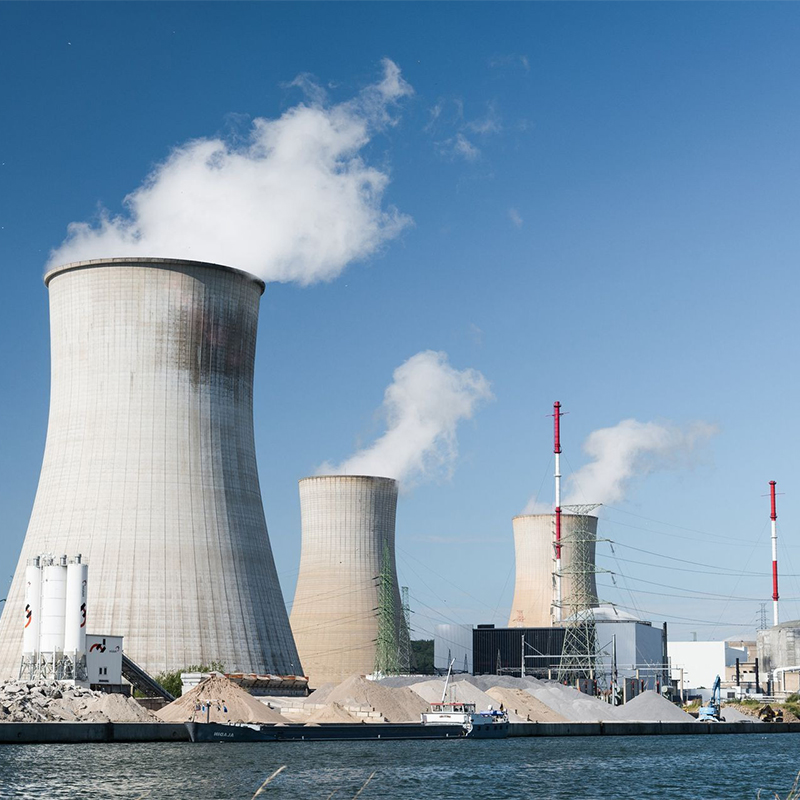
We Provide Cooling Tower Solution

Views: 0 Author: Cindy Publish Time: 2026-10-27 Origin: Site


Cooling towers play an essential role in industrial heat rejection. From power plants and chemical processing facilities to manufacturing plants and commercial HVAC systems, cooling towers help remove excess heat, maintain stable operating temperatures, and support reliable equipment operation.
However, choosing a cooling tower involves more than calculating cooling capacity. The construction materials, fabrication process, structural design, corrosion protection, and quality control procedures all influence the equipment's performance and service life.
Two important construction options are FRP cooling towers and all-steel cooling towers. FRP, or fiber-reinforced plastic, is often selected for its corrosion resistance and relatively low weight. Steel construction is valued for its structural strength, rigidity, and flexibility in heavy-duty industrial applications.
So, how are these cooling towers manufactured? Which materials are suitable for different industrial environments? And what should buyers look for when selecting a reliable cooling tower manufacturer?
In this guide, Mach Industry (Zhejiang) Co.,Ltd explores the key stages of cooling tower manufacturing, explains the differences between FRP and all-steel fabrication, and provides practical advice for industrial buyers.
Cooling tower manufacturing combines thermal engineering, structural design, material processing, mechanical assembly, and quality inspection. Every stage must work together to produce equipment that meets the required cooling performance and operating conditions.
Before manufacturing begins, engineers need to understand the project's cooling requirements. These typically include circulating water flow rate, hot-water temperature, cold-water temperature, design wet-bulb temperature, installation space, and expected operating environment.
Based on this information, the manufacturer determines the appropriate tower configuration, structural materials, fan arrangement, fill media, water distribution system, and other components.
Fabrication quality is equally important. A cooling tower may have a well-designed structure, but incorrect assembly, uneven water distribution, poor alignment, or unsuitable materials can reduce performance and increase maintenance requirements.
A reliable manufacturing process therefore begins with accurate engineering and continues through material procurement, component fabrication, assembly, inspection, and final delivery.
An FRP cooling tower uses fiber-reinforced plastic for selected structural or enclosure components. FRP typically combines reinforcing fibers, commonly glass fibers, with a polymer resin matrix.
The fibers provide mechanical strength, while the resin binds the reinforcement together and helps protect it from environmental exposure.
FRP is widely used in cooling tower construction because it can offer a useful combination of corrosion resistance, low weight, and design flexibility. Depending on the tower design, FRP may be used for casing panels, fan stacks, structural members, access components, or other parts.
FRP construction can be particularly attractive in humid environments and industrial facilities where corrosion is a major concern.
However, an FRP cooling tower is not necessarily made entirely from FRP. Motors, shafts, gearboxes, fasteners, and other mechanical components may use different materials. Buyers should examine the complete equipment specification rather than assume that every component has the same material composition.
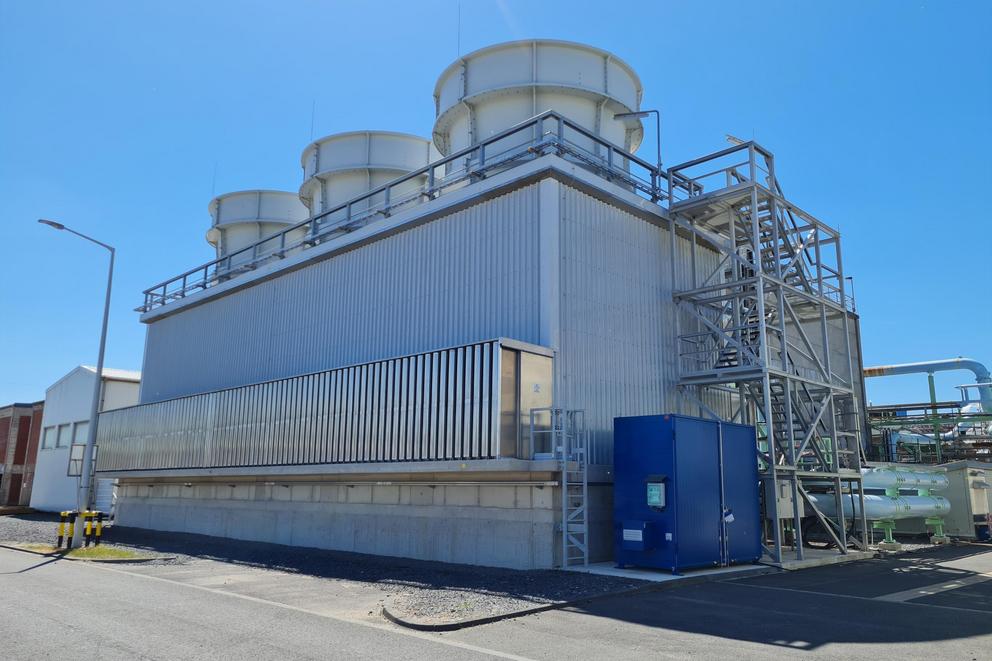
The performance of an FRP cooling tower depends on the type of reinforcing fiber, resin chemistry, laminate thickness, manufacturing method, and operating environment.
Glass-fiber reinforcement is commonly used because it offers a practical balance of strength, weight, and cost. The resin system must be selected according to the expected temperature, humidity, chemical exposure, and ultraviolet radiation.
One of the main advantages of FRP is that it does not rust like ordinary carbon steel. This can reduce certain corrosion-related maintenance requirements.
Nevertheless, FRP is not immune to damage. Unsuitable resin systems, excessive temperatures, prolonged UV exposure, or chemical incompatibility may affect its long-term performance.
When evaluating an FRP cooling tower, buyers should review the following specifications:
Fiber reinforcement and resin type
Laminate thickness and structural design
UV protection and surface finish
Operating temperature limits
Chemical compatibility
Connection and fastening methods
Inspection and quality-control requirements
Choosing suitable materials at the beginning helps reduce the risk of premature deterioration and unnecessary repair costs.
FRP cooling tower fabrication begins with engineering drawings and preparation of the required molds, tooling, or forming equipment.
Depending on the component design, manufacturers may use molding, hand lay-up, spray-up, pultrusion, or other suitable production methods.
During the manufacturing process, reinforcing fibers are combined with resin to create components with the required shape and thickness. The material is then cured under appropriate conditions to develop its intended mechanical properties.
After curing, components are trimmed, drilled, finished, and inspected. Manufacturers check dimensions, surface condition, laminate consistency, and visible defects.
Structural components must also satisfy the design requirements for loads, connections, and operating conditions.
Once the FRP parts pass inspection, they can be assembled with the supporting structure, fan system, fill media, drift eliminators, and water distribution equipment.
Proper curing, accurate drilling, and suitable fastening techniques are essential. Poorly manufactured or incorrectly installed components may develop cracks, deformation, or connection problems during operation.
An all-steel cooling tower uses steel as the primary material for its structural framework, casing, or other major construction components.
Steel construction is often considered for industrial applications that require a strong supporting structure, customized dimensions, or specialized load-bearing arrangements.
Depending on the project, manufacturers may use carbon steel, galvanized steel, stainless steel, or a combination of different steel products.
Carbon steel is commonly used for structural fabrication because of its strength, availability, and weldability. Galvanized steel provides a protective zinc coating, while stainless steel may be specified for selected components where its corrosion resistance justifies the additional cost.
The appropriate material depends on the operating environment, structural loads, water chemistry, and required corrosion-protection system.
Although steel provides substantial structural strength, long-term durability depends on more than the steel grade. Surface preparation, welding quality, protective coatings, drainage design, inspection, and maintenance all influence service life.
It is also important to clarify what a supplier means by an all-steel cooling tower. Fill media, seals, drift eliminators, fan blades, and other internal components may use polymers or other materials depending on the design.
Steel cooling tower structures may include columns, beams, cross-bracing, support frames, connection plates, access platforms, and equipment mounting supports.
Carbon steel is often suitable for load-bearing members when its grade and dimensions meet the engineering requirements. Galvanized steel may be used where additional corrosion protection is needed.
Stainless steel can be considered for components exposed to demanding environments, but the grade must be appropriate for the actual conditions. For example, some chloride-rich environments can cause corrosion in stainless steels that perform well under less aggressive conditions.
Structural engineers should evaluate dead loads, water loads, wind pressure, vibration, maintenance access, and applicable seismic requirements.
Material certificates, thickness specifications, connection details, and traceability records help verify that the fabricated structure matches the approved design.
The goal is not simply to select the strongest material available. It is to choose a suitable material and structural configuration that deliver reliable performance at a reasonable lifecycle cost.
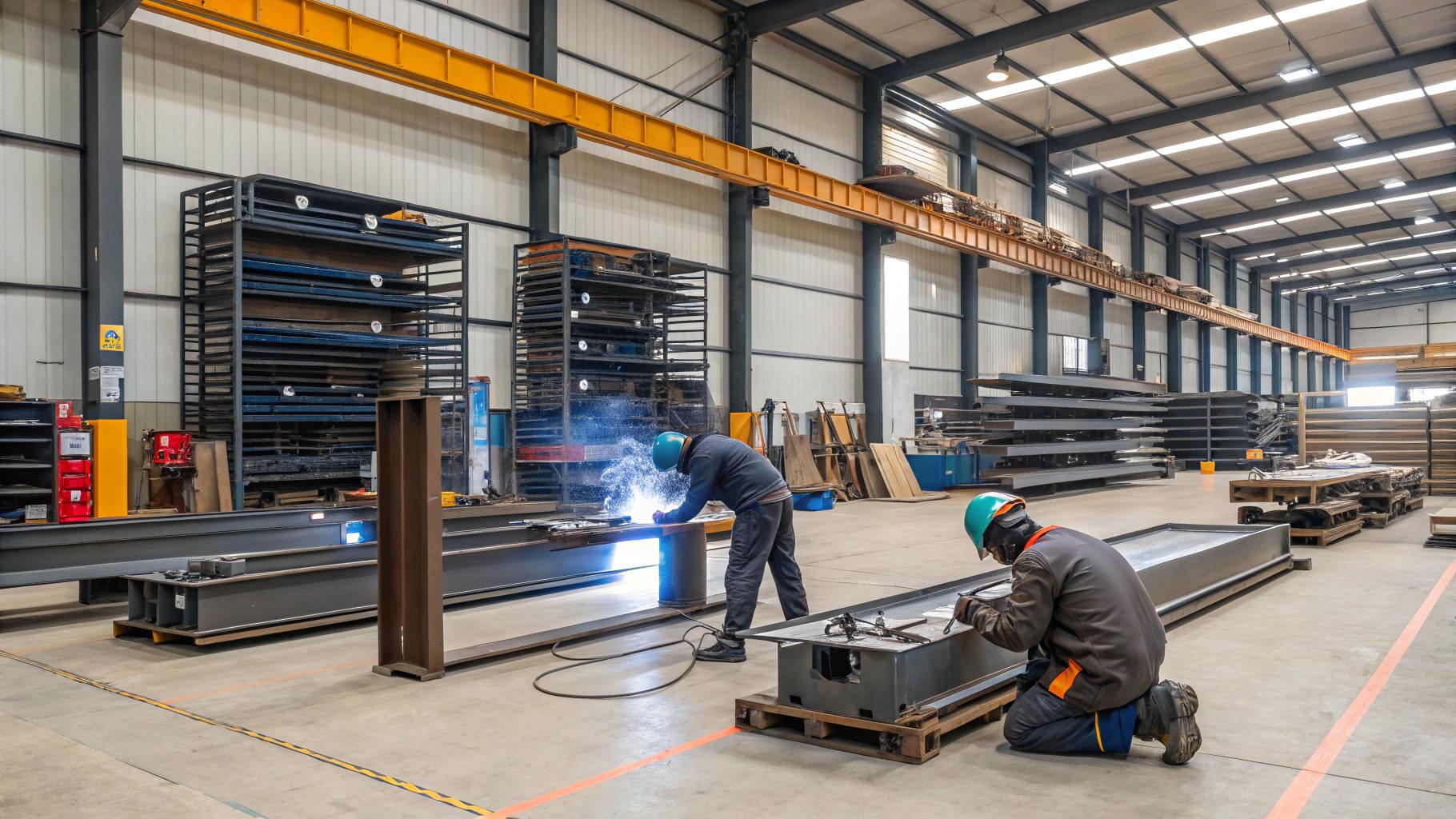
Steel cooling tower fabrication generally follows a sequence of engineering, cutting, machining, fitting, welding or bolting, surface treatment, inspection, and assembly.
First, the manufacturer prepares detailed drawings and material cutting plans. Steel plates, sections, and profiles are then cut to the specified dimensions.
Workers drill holes, prepare edges, form components where necessary, and assemble the parts according to the approved drawings.
Welding must follow the applicable procedures and project requirements. After welding, the structure may undergo dimensional checks, visual inspection, and additional non-destructive testing where specified.
The next step is surface preparation and corrosion protection. Depending on the design, this may involve hot-dip galvanizing, industrial coating systems, or another suitable treatment.
Finally, the fabricated components are packaged for transportation or assembled into larger sections.
Accurate fabrication helps reduce installation time and minimizes the risk of misaligned connections, incorrect equipment positioning, and costly modifications at the installation site.
Choosing between FRP and all-steel construction requires a balanced assessment of operating conditions, structural demands, maintenance requirements, and total ownership costs.
FRP is often attractive when corrosion resistance and low structural weight are important. Steel may be preferable when the project requires a rigid structural framework, customized load-bearing arrangements, or specific fabrication characteristics.
Neither material is automatically the best choice for every cooling tower.
Both can deliver reliable service when properly engineered, manufactured, installed, and maintained. The right decision depends on how well the selected construction method matches the actual application.
FRP does not rust like ordinary carbon steel, making it a useful option for many humid and corrosive environments.
However, the resin must be compatible with the operating temperature and chemical exposure. FRP components may also require protection against prolonged UV exposure or other environmental factors.
Steel structures require an appropriate corrosion-protection strategy. Galvanizing, industrial coatings, suitable stainless steel grades, and regular inspections can help manage corrosion risks.
Welds, fasteners, crevices, and areas with damaged coatings may require particular attention.
For either material, buyers should provide accurate information about the site atmosphere, water chemistry, chemical treatment program, and expected operating temperature.
Material selection based on actual conditions is more reliable than choosing a material simply because it is described as corrosion-resistant.
Steel offers high structural strength and stiffness, which can make it suitable for large frameworks and demanding support conditions.
FRP can also provide excellent structural performance when its laminate orientation, thickness, member geometry, and connection details are correctly engineered.
However, FRP and steel behave differently under loading, temperature changes, and long-term environmental exposure. Their design methods should not be treated as interchangeable.
Engineers need to evaluate wind loads, equipment vibration, access loads, water weight, and any applicable seismic requirements.
For FRP, connection design and localized stresses deserve special attention. For steel, buckling, weld quality, connection capacity, and corrosion-related section loss may be important considerations.
A reliable manufacturer should be able to explain how the proposed structure meets the project's engineering requirements.
The purchase price is only one part of a cooling tower's total cost.
Installation, maintenance labor, corrosion protection, replacement parts, energy consumption, downtime, and expected service life can all affect the investment.
FRP structures may reduce certain corrosion-related maintenance activities. Steel structures may require periodic coating inspections and repairs, depending on their protective system and operating environment.
However, actual maintenance requirements vary by design and application.
Buyers should also consider fan and pump power, fill cleaning requirements, water treatment, access for inspection, and the availability of replacement components.
A lower initial price does not always produce a lower lifecycle cost. A better comparison evaluates the expected operating period and realistic maintenance assumptions.
Successful cooling tower manufacturing requires coordination between engineering, purchasing, production, assembly, and quality control.
Although FRP and steel components follow different fabrication routes, both require accurate specifications, suitable materials, and controlled production processes.
A well-organized manufacturing workflow helps prevent dimensional errors, material substitutions, installation delays, and avoidable performance problems.
The first step is defining the required cooling duty.
Engineers need to know the circulating water flow rate, hot-water temperature, cold-water target, design wet-bulb temperature, and expected operating conditions.
The approximate heat rejection duty can be calculated using the water flow rate, specific heat capacity, and temperature difference between the entering and leaving water.
However, cooling tower selection involves more than calculating heat load. Engineers must also evaluate the cooling range, approach to wet-bulb temperature, airflow requirements, water distribution, and fill characteristics.
Fan selection, pressure losses, noise limits, and available installation space may also influence the final design.
If the design conditions are incomplete, the selected tower may be oversized, undersized, or inefficient.
Clear engineering specifications help the manufacturer deliver equipment that matches the application instead of relying on nominal cooling capacity alone.
Once the design is established, the manufacturer selects materials for the structure, casing, fasteners, fill media, drift eliminators, fan, and other components.
Material selection should reflect temperature, humidity, water chemistry, atmospheric exposure, and mechanical loading.
Procurement teams should verify material grades, dimensions, thicknesses, and documentation against the approved bill of materials.
For FRP components, resin and reinforcement specifications should be checked. For steel components, material certificates and corrosion-protection requirements should be confirmed.
Incoming inspections and supplier qualification help prevent unsuitable materials from entering production.
Unapproved material substitutions can affect structural reliability, corrosion resistance, and service life. Therefore, changes to important specifications should be reviewed and approved before manufacturing continues.
FRP and steel components require different manufacturing methods, but both depend on accurate dimensions and consistent workmanship.
FRP parts must be properly formed and cured. Steel components must be cut, drilled, fitted, welded, or bolted according to approved drawings.
During assembly, the structure, casing, support members, access features, and mechanical equipment must be positioned correctly.
Bolts should be installed according to the specified fastening requirements, while welds must meet the applicable acceptance criteria.
Manufacturers should also consider transportation restrictions and site access when deciding whether to ship a tower in separate modules or larger assembled sections.
A modular design can simplify transportation and reduce installation time, particularly for projects with restricted access.
The internal components of a cooling tower determine how effectively it transfers heat and manages water movement.
Fill media increases the contact area between water and air. Drift eliminators reduce the amount of liquid droplets carried out with the exhaust air.
The water distribution system should distribute water evenly across the intended fill area, while the fan and air passages must provide the required airflow.
During assembly, manufacturers should check fill support, nozzle placement, eliminator orientation, fan clearance, and access for maintenance.
Incorrect installation can create dry areas, excessive drift, vibration, or unnecessary pressure losses.

Internal components must also be compatible with the operating temperature, water quality, and chemical treatment program.
A cooling tower is an integrated system. Even high-quality individual components cannot compensate for poor overall design or incorrect installation.
Quality control should be integrated into every stage of production rather than postponed until the equipment is complete.
A documented inspection plan defines which components must be checked, what acceptance criteria apply, and who is responsible for approval.
The exact requirements depend on the design, applicable standards, contract specifications, and intended service.
Manufacturers should maintain traceable records for critical materials, fabrication steps, inspections, and corrective actions.
This process helps customers verify that the equipment matches the approved design and provides a clear basis for resolving potential issues.
Dimensional inspection verifies that frames, panels, holes, mounting points, and connections match the engineering drawings.
For steel fabrication, inspection may include weld appearance, alignment, member dimensions, connection details, and specified non-destructive examinations.
For FRP components, inspection may focus on laminate condition, thickness, curing quality, surface defects, and dimensional accuracy.
Inspectors should also confirm that equipment supports can accommodate the specified fan, motor, gearbox, and other mechanical components.
Any deviations should be evaluated and corrected before shipment.
Documented inspections reduce the risk of field modifications that could compromise fit, structural performance, or the project schedule.
Corrosion protection is particularly important for steel cooling towers operating in wet or chemically exposed environments.
Surface preparation, coating selection, application thickness, galvanizing quality, and curing conditions can influence the effectiveness of the protective system.
FRP components require different controls, including suitable resin selection, proper curing, surface finishing, and UV protection where necessary.
Fasteners and connections should also be compatible with surrounding materials to reduce corrosion and connection problems.
The manufacturer should specify the inspection methods and acceptance criteria used for the selected protection system.
Where required, buyers should request relevant material certificates, coating records, and inspection documentation.
Depending on the contract, factory inspections may include fan rotation checks, motor and gearbox verification, vibration measurements, electrical checks, water distribution checks, and leak inspections where applicable.
A full thermal performance test may require a separate test arrangement or an agreed field acceptance procedure.
Buyers should confirm the testing scope before placing an order instead of assuming that every cooling tower undergoes a complete thermal performance test at the factory.
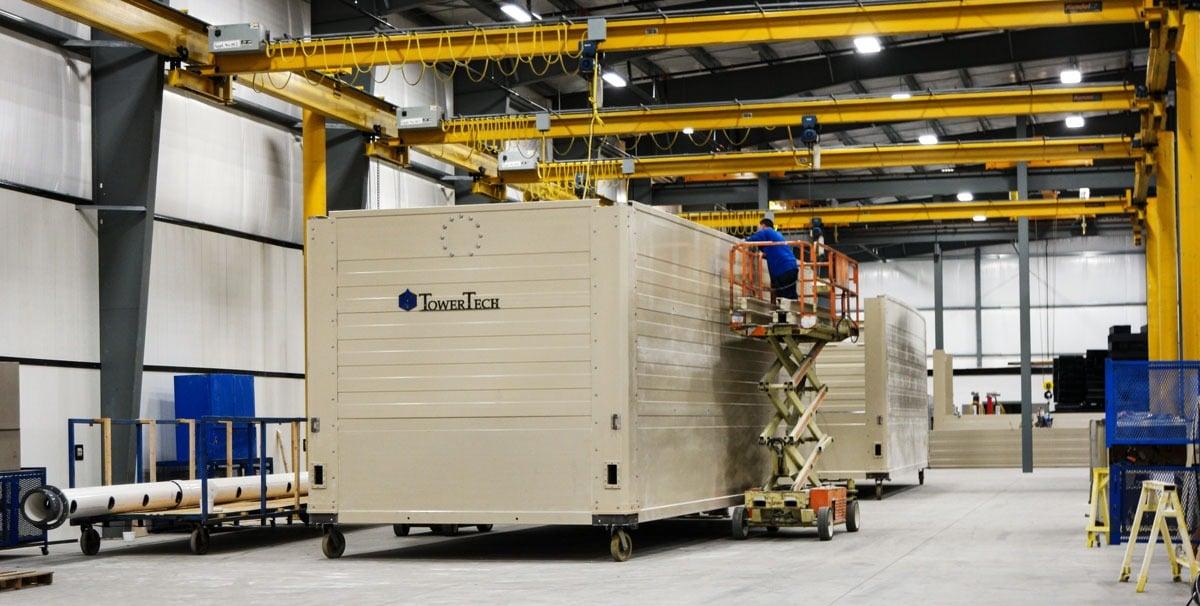
Testing should follow the applicable project requirements and recognized methods where specified.
Clear documentation helps establish whether the delivered tower meets the agreed mechanical, electrical, and thermal acceptance criteria.
Start by evaluating the environment in which the tower will operate.
If atmospheric corrosion, moisture, and structural weight are major concerns, FRP may be worth considering. If the project requires a robust structural framework, specialized load-bearing arrangements, or a particular steel fabrication solution, steel may be more appropriate.
Next, compare the operating temperature, water chemistry, wind loads, installation conditions, and available maintenance resources.
Ask manufacturers to explain why their proposed materials suit the application.
Review technical drawings, structural calculations, corrosion-protection specifications, fill arrangements, fan data, and maintenance requirements.
It is also worth considering transportation and installation costs. A tower that is economical to manufacture may require additional site work if its dimensions or modular arrangement do not match the installation conditions.
The best decision reflects the complete cooling tower system, not simply the material price.
FRP and steel cooling towers are used across many industries, including chemical processing, power generation, metal processing, plastics manufacturing, data centers, commercial HVAC, and general industrial production.
The most suitable construction method depends on the application's requirements.
Chemical facilities may prioritize compatibility with corrosive atmospheric conditions. Manufacturing plants may emphasize dependable operation, easy maintenance, and replacement part availability.
Large industrial installations may require detailed structural analysis and coordination with existing foundations, piping, and equipment.
HVAC projects may place greater emphasis on footprint, noise, energy consumption, and maintenance access.
In every case, the manufacturer should understand the project's cooling duty and operating environment before recommending a configuration.
Cooling tower manufacturing involves several challenges that can affect cost, delivery time, and long-term performance.
Unsuitable or inconsistent materials can introduce defects and shorten component life. Qualified suppliers, material verification, and incoming inspections help reduce this risk.
Incorrect dimensions can create assembly difficulties and delay installation. Drawing control, accurate machining, and in-process measurements help ensure that components fit as intended.
Poor surface preparation or an unsuitable coating system can increase maintenance requirements. Manufacturers should follow the specified protection procedure and inspect the finished surface.
Poorly positioned nozzles or incorrect internal assembly can reduce the effective use of fill media. Careful component installation and appropriate water distribution checks help prevent these problems.
Large cooling towers may be difficult to transport or install at restricted sites. Modular fabrication, suitable packaging, and a clear installation plan can simplify delivery and assembly.
Effective coordination between the manufacturer, project engineer, installer, and end user helps resolve these challenges before they become costly operational problems.
Selecting a cooling tower manufacturer means choosing a partner responsible for more than producing a structure. Industrial buyers need clear technical communication, suitable material recommendations, consistent fabrication, and support in understanding installation and maintenance requirements.
Mach Industry (Zhejiang) Co.,Ltd provides cooling tower solutions for industrial customers through its official website, www.machcooling.com.
When evaluating Mach for a cooling tower project, customers can discuss their required cooling capacity, operating conditions, installation space, preferred construction materials, and project-specific specifications.
These details help establish the appropriate tower configuration and manufacturing requirements.
Before confirming an order, customers should request the relevant technical datasheets, engineering drawings, material specifications, quality documentation, and testing arrangements for the proposed model. This creates a clear basis for comparing the proposal with other suppliers and verifying its suitability for the intended application.
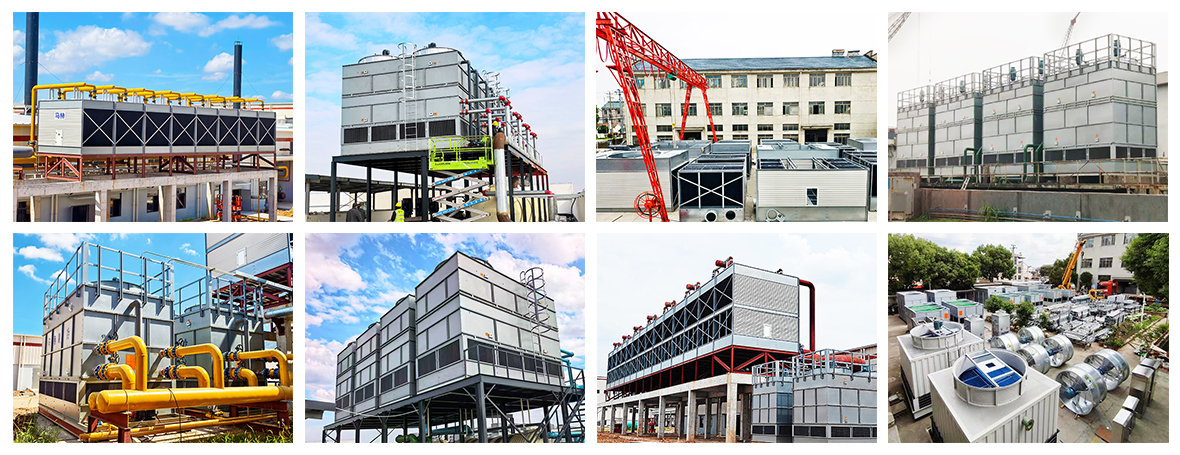
Whether your project involves a new industrial cooling system or the evaluation of different construction materials, choosing equipment based on actual operating requirements is essential.
To learn more about Mach Industry's cooling tower solutions, visit Mach Cooling and contact the company to discuss your project requirements.
A reliable manufacturer should be able to explain its engineering assumptions, material choices, fabrication procedures, and quality-control process.
Before selecting a supplier, consider the following factors:
Engineering capability: Can the manufacturer evaluate your cooling duty and design conditions?
Material specifications: Are the proposed FRP or steel materials suitable for the intended environment?
Manufacturing quality: Are fabrication procedures and inspection requirements clearly defined?
Technical documentation: Are drawings, specifications, and relevant quality records available?
Mechanical performance: Are fan, motor, gearbox, and water distribution requirements properly addressed?
Maintenance and spare parts: Can the supplier explain routine maintenance needs and replacement component options?
Warranty and service: Are warranty terms, delivery responsibilities, and after-sales arrangements clearly stated?
For steel towers, clarify the corrosion-protection system. For FRP towers, review the resin and reinforcement specifications.
You should also confirm the applicable standards and required documentation before production begins.
A professional supplier communicates technical limitations clearly instead of promising performance without sufficient design information.
Neither is universally better. FRP can offer corrosion resistance and lower structural weight, while steel can provide a strong, rigid framework and flexible structural fabrication options.
The right choice depends on the operating environment, structural requirements, budget, maintenance strategy, and project specifications.
Cooling tower service life depends on materials, manufacturing quality, operating conditions, water treatment, maintenance, and environmental exposure.
Structural components and internal consumables may have different replacement cycles. Regular inspections and timely replacement of damaged parts help maintain reliable operation.
Yes. Many cooling towers combine different materials for specific functions.
For example, a tower may use FRP casing panels with a steel support structure and polymer fill media. Material compatibility, connection design, and corrosion control should be considered together.
Provide the required circulating water flow rate, hot- and cold-water temperatures, design wet-bulb temperature, installation location, available footprint, water chemistry, power supply, and preferred tower configuration.
If you are replacing an existing unit, include its model, dimensions, photographs, and available performance data.
You should also specify any requirements for FRP or steel construction, noise, corrosion protection, delivery schedule, and applicable technical standards.
Many cooling towers can be configured to meet specific capacity, footprint, material, fan, electrical, and site requirements.
Customization depends on engineering feasibility, production capabilities, and the project budget. Confirm all changes with the manufacturer before fabrication begins.
The required checks depend on the design and contract. They may include dimensional inspection, structural and connection checks, FRP component inspection, coating or galvanizing verification, mechanical equipment checks, and agreed operational testing.
Buyers should confirm the inspection scope and required documentation before ordering.
FRP and all-steel cooling towers both have important roles in industrial heat rejection.
FRP is often attractive when corrosion resistance and lower structural weight are important. Steel may be suitable for applications requiring a rigid structural framework or specialized fabrication.
The best solution depends on the complete operating environment, cooling duty, structural requirements, maintenance strategy, and lifecycle costs.
High-quality manufacturing brings these factors together through sound engineering, careful material selection, accurate fabrication, and documented inspection.
Before purchasing a cooling tower, compare technical specifications and ask the manufacturer to explain how the proposed design meets your requirements.
Mach Industry (Zhejiang) Co.,Ltd welcomes industrial customers to explore its cooling tower solutions and discuss project requirements.
Visit www.machcooling.com to learn more and contact the company about your cooling tower project.