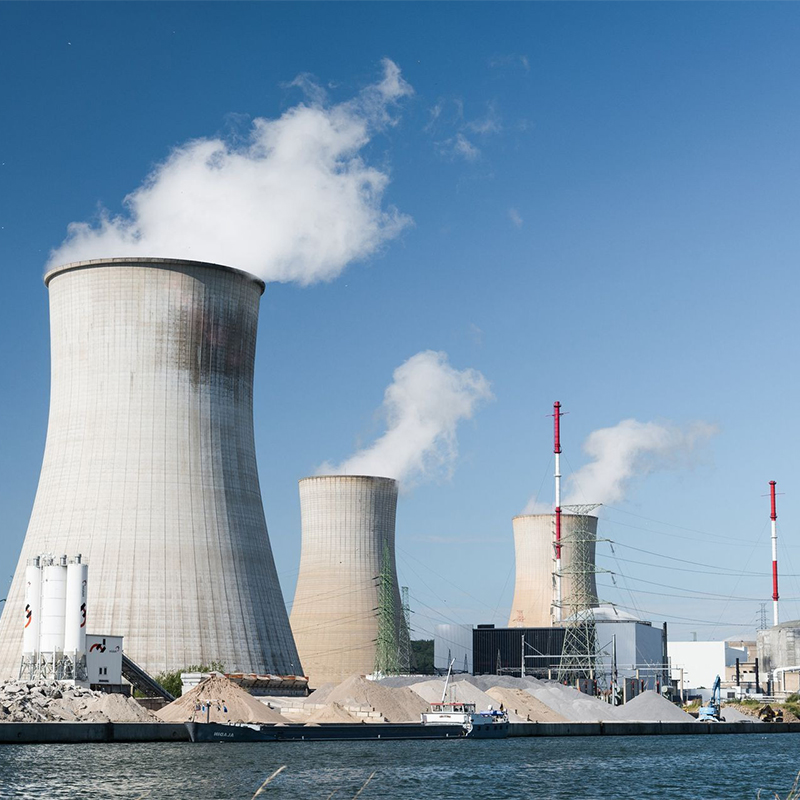
We Provide Cooling Tower Solution

Views: 0 Author: Cindy Publish Time: 2026-10-08 Origin: Site


If your cooling tower is running but your energy bill keeps climbing, something may be wrong.
A cooling tower can look perfectly normal from the outside while quietly losing efficiency inside. The fill may be clogged. Water may not be distributed evenly. Fans may be running harder than necessary. Pumps may be moving more water than the process actually needs.
So, how do you improve cooling tower efficiency?
The good news is that you do not always need to replace the entire cooling tower.
In many cases, cooling tower efficiency can be improved through better fill, optimized airflow, improved water distribution, variable frequency drives, proper water treatment, and preventive maintenance.
At Mach Industry (Zhejiang) Co.,Ltd, we focus on cooling tower solutions designed around industrial cooling requirements. By combining efficient tower design with appropriate components and application-specific engineering, industrial users can improve cooling performance while controlling energy and maintenance costs.
Let's look at the practical ways to make a cooling tower work smarter—not simply harder.
Cooling tower efficiency describes how effectively a cooling tower removes heat from circulating water under specific operating conditions.
It sounds simple, but several factors influence the result.
The tower must move the right amount of water, provide sufficient airflow, create effective air-water contact, and operate under suitable environmental conditions.
Two measurements are particularly useful when evaluating cooling tower performance: cooling range and approach.
Cooling range is the difference between the hot-water temperature entering the tower and the cold-water temperature leaving it.
For example, if hot water enters at 95°F and leaves at 85°F, the cooling range is 10°F.
The approach is the difference between the cold-water outlet temperature and the ambient wet-bulb temperature.
Suppose the wet-bulb temperature is 78°F and the cold-water temperature is 85°F. The approach is 7°F.
In general, a lower approach indicates stronger cooling performance, although the achievable approach depends on tower design, airflow, water loading, weather, and other operating conditions.
Why should you care about a few degrees of cooling performance?
Because those degrees can affect the entire industrial process.
A more efficient cooling tower can help:
Reduce fan energy
Reduce pumping energy
Improve process cooling
Reduce operating costs
Stabilize equipment temperatures
Improve chiller performance
Reduce unnecessary water consumption
Extend component service life
Think of your cooling tower as the heat-rejection engine of the facility.
If that engine works inefficiently, the rest of the system has to compensate.
Before improving efficiency, you need to understand why efficiency is declining in the first place.
There is no single cause.
The fill provides the surface area where air and water interact.
When fill becomes clogged with scale, dirt, sludge, or biological growth, water cannot spread properly and air cannot pass through the designed passages.
Damaged or collapsed fill creates a similar problem.
The tower may still operate, but the effective heat-transfer area is reduced.
Imagine watering a garden with a hose that only sprays one corner.
The garden does not receive the water evenly.
The same principle applies to a cooling tower.
If nozzles are blocked, damaged, or improperly positioned, some areas of the fill may receive too much water while others remain relatively dry.
That means the available heat-transfer surface is not being used efficiently.
Cooling depends on air.
If fans are dirty, damaged, incorrectly adjusted, or operating below the required airflow, heat rejection can decrease.
Airflow can also be affected by blocked air inlets, damaged fan blades, poor fan positioning, or excessive resistance through the tower.
Water quality is one of the biggest enemies of cooling tower efficiency.
Scale creates an insulating layer on heat-transfer surfaces. Dirt blocks passages. Biological growth can cover fill surfaces and restrict airflow.
Poor water treatment can therefore turn a high-performance cooling tower into an expensive underperformer.
Now we get to the important part.
How can you actually improve cooling tower efficiency?
The most effective strategy is to look at the tower as a complete system rather than focusing on one component.
Cooling tower fill has a major influence on heat-transfer performance.
If existing fill is old, damaged, or heavily fouled, replacing it may provide a significant improvement.
High-efficiency film fill creates a large surface area for water-air contact.
For suitable water-quality conditions, PVC film fill can provide a practical balance between heat-transfer performance, durability, weight, and cost.
Film fill spreads water into thin films across corrugated sheets.
Splash fill breaks water into droplets as it falls over splash bars or grids.
Film fill generally provides a high effective surface area and can be suitable for applications where maximizing heat transfer within a compact space is important.
Splash fill may be preferable in some applications involving dirtier water or where resistance to fouling is particularly important.
The correct choice depends on the actual application.
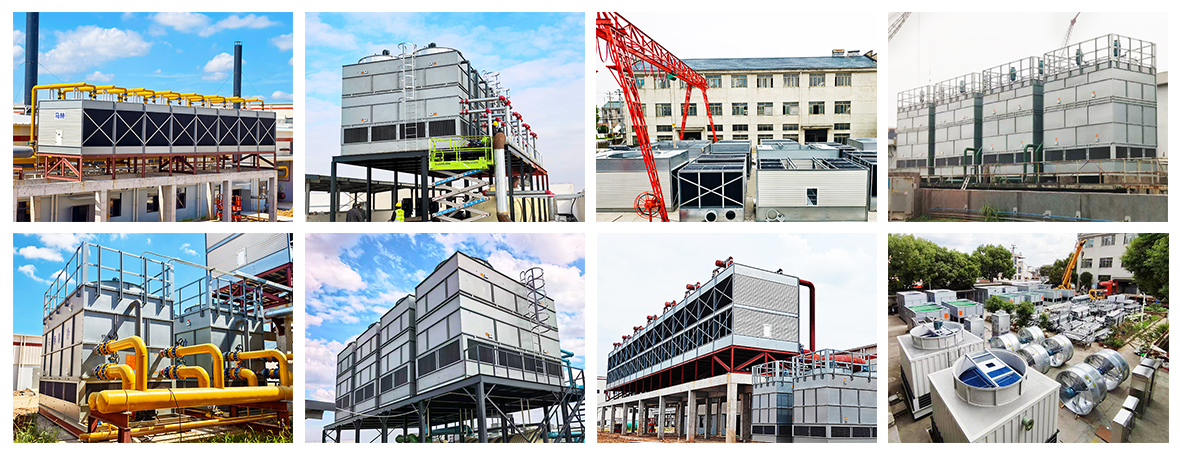
Even the best fill cannot perform well if water distribution is poor.
Inspect spray nozzles regularly.
Look for:
Blocked nozzles
Damaged nozzles
Uneven spray patterns
Incorrect nozzle spacing
Restricted water flow
Distribution pipe problems
A well-designed distribution system should deliver water evenly across the available fill area.
Airflow is the other half of the heat-transfer equation.
If water is the "heat carrier," air is the vehicle that takes the heat away.
Fan performance therefore matters.
Check fan blade condition, fan pitch, rotation direction, motor performance, gearbox condition, and air inlet restrictions.
Even relatively small airflow problems can affect cooling performance.
A variable frequency drive, or VFD, allows fan speed to be adjusted according to cooling demand.
Why run a fan at full speed when the process does not require maximum cooling?
During periods of lower heat load or cooler weather, fan speed can be reduced.
Because fan power changes significantly with speed, reducing fan speed can provide substantial energy savings.
VFDs also allow smoother control than simple on/off fan operation.
Old motors and inefficient fan systems can consume more electricity than necessary.
When evaluating tower efficiency, consider:
Motor efficiency
Fan blade design
Fan diameter
Fan pitch
Gearbox efficiency
Direct-drive versus geared systems
Operating speed
A high-efficiency fan system can reduce electricity consumption while maintaining required airflow.
More water does not automatically mean better cooling.
If the water flow is significantly higher than the tower's optimal operating range, pumping energy may increase without providing proportional cooling benefits.
On the other hand, insufficient flow may prevent the fill from being properly wetted.
The objective is balance.
Find the water-flow range that provides the required cooling while avoiding unnecessary pump energy.
Cooling towers typically consume energy through fans, pumps, motors, and auxiliary equipment.
If you want a more energy-efficient cooling tower, start by identifying where the electricity is actually going.
Fan systems are often one of the most important energy consumers in mechanical-draft cooling towers.
Instead of running fans continuously at maximum speed, consider demand-based control.
VFDs, temperature sensors, and automated controls can adjust fan speed based on actual cooling requirements.
This can prevent the classic industrial mistake of using 100% power to solve a 60% problem.
Pumps can also consume significant energy.
If valves are frequently throttling flow, the system may be wasting energy.
Review pump selection, system resistance, flow requirements, and control strategies.
In some cases, variable-speed pump control can help match water flow to actual process demand.
Water treatment deserves special attention.
Poor water quality can destroy efficiency gradually.
It does not always create a dramatic failure. Instead, performance may decline month after month.
Scale reduces the effective performance of fill and heat-transfer surfaces.
Appropriate water treatment can help control mineral deposits and maintain open passages.
The exact treatment program should be based on the site's water chemistry and operating conditions.
Cooling towers provide a warm, wet environment where biological growth can occur.
If uncontrolled, biological deposits can coat fill surfaces and restrict airflow.
Regular monitoring and appropriate water-treatment practices are therefore essential.
Dirt and suspended solids can accumulate inside the tower.
Side-stream filtration, basin cleaning, proper blowdown, and suitable water-management practices can help reduce the amount of debris circulating through the system.
Maintenance is often the cheapest efficiency upgrade.
Why?
Because preventing a problem is usually less expensive than fixing a major performance failure.
Regularly inspect fill for:
Cracks
Broken sheets
Scale
Sludge
Biological growth
Blocked passages
Collapsed sections
If the fill has reached the end of its useful life, replacement may be more economical than repeatedly cleaning severely deteriorated material.
Blocked nozzles can create uneven water distribution.
During maintenance, check nozzle spray patterns and clean or replace damaged components.
Make sure the entire fill area receives appropriate water coverage.
Inspect fan blades for damage and imbalance.
Check motors for abnormal temperature, vibration, and electrical performance.
For geared systems, inspect lubrication and gearbox condition according to the equipment manufacturer's requirements.
A fan problem does not only affect energy consumption.
It can affect the entire cooling capacity of the tower.
One important point is often overlooked: cooling tower efficiency is strongly influenced by weather.
A cooling tower cannot produce the same cold-water temperature on every day of the year.
The most important environmental parameter is generally ambient wet-bulb temperature.
When wet-bulb temperature rises, the tower has less potential to cool water.
This is why comparing tower performance without considering weather conditions can produce misleading conclusions.
For example, a tower operating at the same fan speed may produce different cold-water temperatures on a cool, dry day compared with a hot, humid day.
That does not necessarily mean the tower suddenly became inefficient.
It means the heat-rejection conditions changed.
You do not always need a new cooling tower to improve efficiency.
In many facilities, a retrofit strategy can provide a better return on investment.
If the existing fill is damaged or outdated, replacement can be one of the most practical upgrades.
New fill can restore heat-transfer area and improve water-air contact.
Before selecting replacement fill, check tower dimensions, fill configuration, operating temperature, water quality, and support structure.
Replacing an old fan with a more efficient design can reduce energy use.
Adding VFD control can provide another layer of optimization by matching airflow with actual cooling demand.
Together, these upgrades can transform a continuously running fan into a demand-based cooling system.
Modern control systems can monitor:
Cold-water temperature
Hot-water temperature
Wet-bulb temperature
Fan speed
Water flow
Pump operation
Energy consumption
With this information, the cooling tower can respond automatically to changing conditions.
Instead of operators guessing how much cooling is required, the system can make decisions based on real-time data.
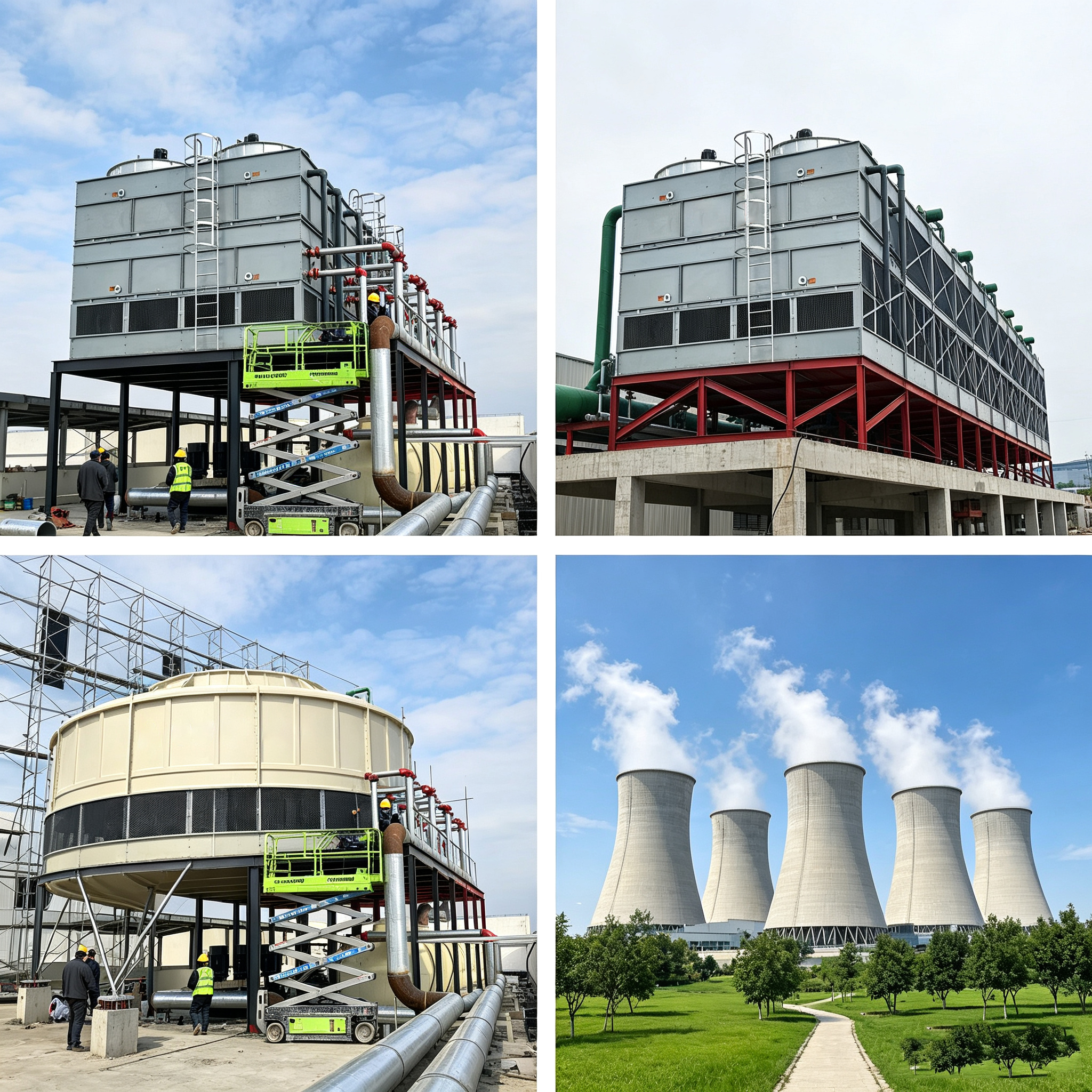
Mach Industry (Zhejiang) Co.,Ltd provides cooling tower solutions for industrial applications where cooling performance, reliability, and energy consumption all matter.
Our approach begins with the application.
Every cooling tower has different operating conditions. Heat load, water flow, ambient conditions, installation space, water quality, and process requirements all influence the final design.
A customized cooling tower can be designed around actual project requirements rather than forcing the application into a standard configuration.
This can help optimize:
Airflow
Water distribution
Fill selection
Fan capacity
Motor power
Tower dimensions
Maintenance access
A properly matched design is often more efficient than simply choosing the largest available tower.
Fill is one of the most important internal components.
Mach can provide cooling tower solutions using appropriate fill and internal components selected around the intended application.
The objective is to create effective air-water contact while maintaining practical operating characteristics.
For industrial users, this can help balance cooling performance, energy consumption, maintenance requirements, and overall lifecycle cost.
Before deciding that your cooling tower needs major modifications, run through this checklist.
Fill
Is the fill damaged?
Is it clogged with scale or debris?
Is the fill evenly wetted?
Water Distribution
Are all nozzles working?
Is water distributed evenly?
Is the water flow within the recommended range?
Airflow
Is the fan operating correctly?
Are fan blades clean and undamaged?
Are air inlets blocked?
Is the fan running faster than necessary?
Energy
Can a VFD reduce fan speed?
Are motors operating efficiently?
Are pumps moving more water than required?
Water Quality
Is scaling controlled?
Is biological growth controlled?
Are suspended solids creating fouling?
Environment
What is the current wet-bulb temperature?
Is the tower being evaluated under comparable weather conditions?
Maintenance
When was the last fill inspection?
When were the nozzles cleaned?
Have fan and motor conditions been checked?
Answering these questions can reveal where your biggest efficiency opportunities are hiding.

So, how do you improve cooling tower efficiency?
Start with the basics.
Make sure the fill is clean and in good condition. Make sure water is distributed evenly. Make sure the fan provides the airflow the tower actually needs. Control water quality. Optimize pumps. Use VFDs where appropriate. And most importantly, evaluate the cooling tower as a complete system.
You do not necessarily need a brand-new tower to achieve better performance.
Sometimes the biggest improvement comes from a relatively simple change—such as replacing deteriorated fill, cleaning blocked nozzles, correcting airflow, or reducing unnecessary fan speed.
For new cooling tower projects and efficiency-focused upgrades, Mach Industry (Zhejiang) Co.,Ltd provides cooling tower solutions designed around industrial operating requirements.
If you are looking to improve cooling tower efficiency, upgrade an existing system, replace cooling tower components, or design a new high-efficiency cooling tower, visit:
Mach Industry (Zhejiang) Co.,Ltd
The best cooling tower is not necessarily the one that works the hardest.
It is the one that delivers the required cooling with the least unnecessary energy, water, and maintenance.