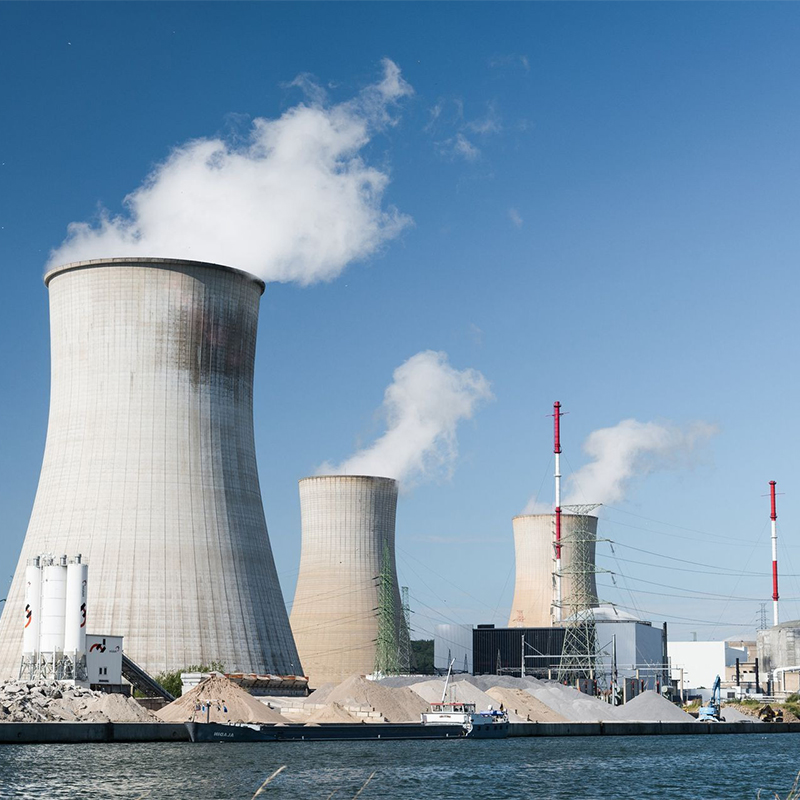
We Provide Cooling Tower Solution

Views: 0 Author: Cindy Publish Time: 2026-10-08 Origin: Site


A cooling tower may look simple from the outside, but what happens inside is anything but simple. Water, air, fill media, fans, motors, drift eliminators, and control systems must work together to remove heat efficiently.
That is exactly why high efficiency cooling tower design has become increasingly important for industrial plants, HVAC systems, power facilities, chemical processing, manufacturing, and other heat-intensive applications.
A well-designed cooling tower does more than provide the required cooling capacity. It can reduce energy consumption, minimize water loss, improve temperature control, and lower long-term operating costs.
So, what makes a cooling tower truly high efficiency?
The answer lies in the details of its design.
A high efficiency cooling tower is designed to reject heat from circulating water while using energy and water as efficiently as possible.
The basic process is straightforward. Hot water enters the cooling tower and is distributed over the fill media. At the same time, air passes through the tower. As water comes into contact with air, a small portion evaporates and carries heat away.
The cooled water then collects in the basin and returns to the industrial process or HVAC system.
However, the efficiency of this process depends on how well the tower manages water distribution, airflow, heat transfer, and evaporation.
Think of the cooling tower as a carefully balanced machine. If the water distribution is poor, the fill cannot work effectively. If the airflow is too low, heat rejection suffers. If the fan consumes excessive power, operating costs increase.
High efficiency comes from optimizing the entire system rather than focusing on just one component.
Why does cooling tower efficiency matter so much?
Because cooling towers often operate for thousands of hours every year.
Even a small reduction in energy consumption can produce significant savings over the equipment's operating life. The same applies to water consumption and maintenance costs.
For industrial facilities, a high efficiency cooling tower can help:
Reduce electrical consumption
Lower operating costs
Improve heat rejection
Maintain stable process temperatures
Reduce water loss
Improve equipment reliability
Extend component service life
Reduce maintenance requirements
Energy efficiency is only one part of the equation. Water conservation is also becoming increasingly important as industrial facilities face tighter water-management requirements.
A modern cooling tower therefore needs to balance thermal performance, energy efficiency, water conservation, reliability, and maintainability.

The operating principle of a cooling tower is based primarily on evaporative heat transfer.
Hot water enters the tower and flows over the fill media. The fill increases the surface area available for contact between water and air.
Meanwhile, fans or natural airflow move air through the tower.
As the water contacts the air, some water evaporates. This evaporation removes heat from the remaining water, lowering its temperature.
The cooled water is collected in the cold-water basin and sent back to the process.
It sounds simple, right?
But the actual performance depends on hundreds of design details.
The efficiency of heat transfer depends heavily on the contact between water and air.
This is where cooling tower fill becomes extremely important.
Film fill creates thin layers of water across its surfaces, while splash fill breaks water into smaller droplets. Both approaches increase the effective contact area between water and air.
You can think of fill media as turning a fast-moving stream into a controlled curtain of water.
Instead of allowing water to fall rapidly through the tower, the fill spreads it across a much larger area. This gives the air more opportunity to remove heat.
The correct fill type depends on water quality, temperature, application, tower configuration, and fouling potential.
Airflow is just as important as water distribution.
Too little airflow can reduce cooling performance. Excessive airflow, on the other hand, may increase fan power without providing proportional cooling benefits.
A high efficiency cooling tower therefore aims to achieve the required airflow with minimum energy consumption.
Fan diameter, blade geometry, rotational speed, motor efficiency, air resistance, tower configuration, and drift eliminator design can all affect airflow efficiency.
A modern high efficiency cooling tower does not rely on one special component.
Instead, it combines multiple technologies to improve overall system performance.
Important design features include:
High-performance fill media
Optimized water distribution
Efficient fan systems
Variable frequency drives
Low-drift drift eliminators
Energy-efficient motors
Intelligent controls
Optimized airflow
Corrosion-resistant construction
Easy-maintenance components
Let's take a closer look at these technologies.
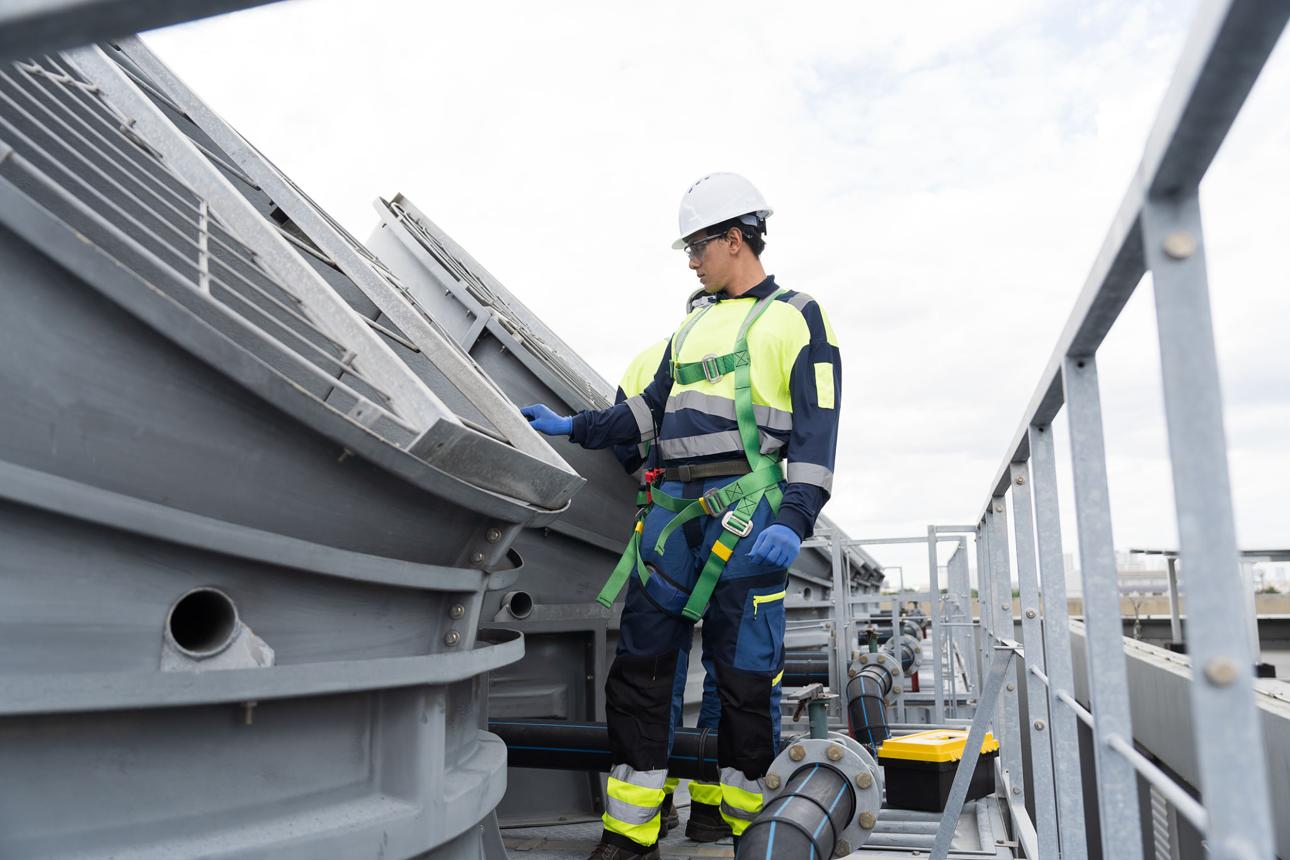
Cooling tower fill is one of the most important components inside a cooling tower.
Its primary function is to increase the contact area between water and air, improving evaporation and heat transfer.
Film fill is commonly used in applications where the circulating water is relatively clean. It creates a thin water film across a large surface area and can provide excellent heat transfer efficiency.
Splash fill works differently. Instead of forming a continuous film, it breaks falling water into droplets as the water passes through the fill.
This design can be useful in applications where water contains more suspended solids or where fouling resistance is a priority.
The right fill is not simply the fill with the highest advertised efficiency. It needs to match the actual operating environment.
PVC is one of the most widely used materials for cooling tower film fill.
It offers a useful combination of heat-transfer performance, chemical resistance, durability, and cost-effectiveness.
PP, or polypropylene, can also be used in applications where higher temperature resistance or specific chemical properties are required.
Material selection should always consider the actual operating conditions.
For example, a fill that works extremely well with clean industrial water may not be the best choice for a system with heavy suspended solids or biological growth.
Water distribution has a major impact on cooling tower efficiency.
The objective is simple: distribute hot water as evenly as possible across the fill.
Why is this so important?
Imagine watering a large garden. If you flood one section while leaving another section completely dry, the irrigation system is obviously inefficient.
The same thing happens inside a cooling tower.
Uneven water distribution can create overloaded areas and dry areas. Some portions of the fill may receive too much water, while other sections remain underutilized.
High efficiency cooling towers may use optimized spray nozzles, gravity distribution systems, or pressurized distribution systems depending on the design.
Nozzles should also maintain consistent spray patterns and resist clogging under actual operating conditions.
For mechanical-draft cooling towers, the fan is one of the largest potential energy consumers.
That makes fan design a major opportunity for energy savings.
Modern cooling tower fans can use aerodynamic blade profiles that deliver the required airflow with lower power consumption.
Fan diameter, blade angle, rotational speed, motor selection, and system resistance all influence performance.
In some designs, a larger fan operating at a lower speed can move the required amount of air more efficiently than a smaller fan running at a higher speed.
However, fan selection must always be matched to the complete tower design.
Variable frequency drives, commonly known as VFDs, are another important technology in high efficiency cooling tower design.
Traditional cooling tower fans may operate at fixed speeds even when the cooling load changes.
But industrial cooling loads rarely stay constant.
Why operate a fan at maximum speed when the process only needs part of the available airflow?
A VFD allows fan speed to change according to actual cooling demand.
This can help reduce unnecessary electrical consumption while maintaining the required water temperature.
VFD control is particularly useful during:
Partial-load operation
Cooler weather
Seasonal changes
Nighttime operation
Reduced production periods
Instead of treating the fan like a simple on/off switch, VFD technology allows the cooling tower to respond continuously to changing conditions.
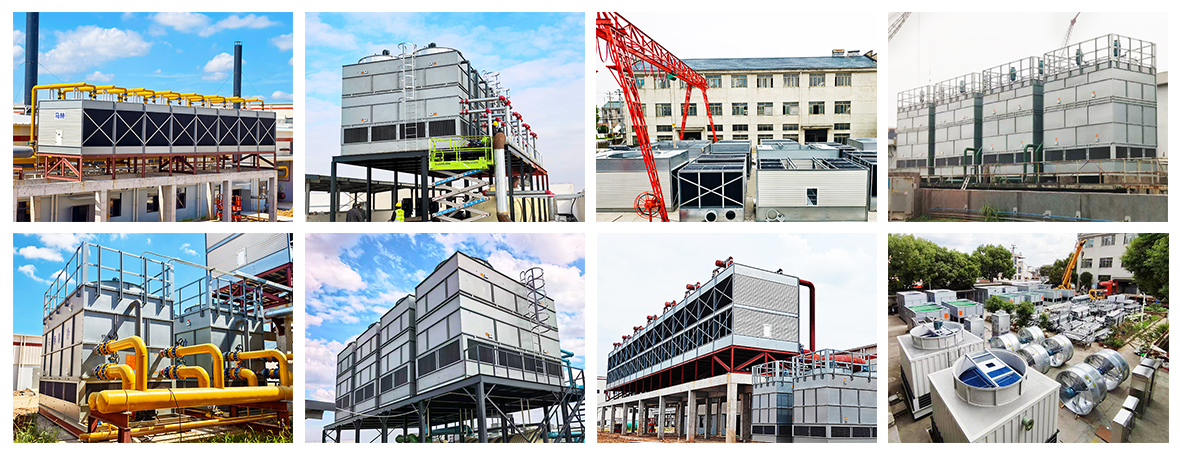
Water conservation is another important aspect of high efficiency cooling tower design.
Drift occurs when small water droplets are carried out of the tower with the exhaust air.
Drift eliminators capture these droplets and return much of the water to the tower.
High-performance drift eliminators can therefore reduce water loss and help minimize the discharge of treated water droplets into the surrounding environment.
However, there is an important design consideration.
A drift eliminator that creates excessive air resistance may increase fan energy consumption.
The best design therefore balances drift reduction with acceptable pressure drop.
Cooling tower technology continues to evolve.
Modern systems increasingly combine mechanical improvements with automation, monitoring, and intelligent control.
Smart control systems can monitor important operating parameters such as:
Entering-water temperature
Leaving-water temperature
Ambient conditions
Fan speed
Motor load
Basin water level
Vibration
Operating hours
The control system can then adjust fans, pumps, valves, or other components according to real-time demand.
This is more efficient than simply operating equipment according to a fixed schedule.
The cooling tower essentially becomes responsive to the process instead of forcing the process to adapt to the cooling tower.
Motors can also have a major impact on operating costs.
Cooling tower fans and pumps may operate for long periods, so motor efficiency matters.
An energy-efficient motor can reduce electricity consumption, particularly when combined with proper VFD control.
However, motor efficiency should be considered as part of the complete system.
A highly efficient motor connected to an inefficient fan or poorly designed airflow system will not automatically create a highly efficient cooling tower.
Counterflow and crossflow cooling towers use different arrangements for water and air.
In a counterflow design, air generally moves upward while water flows downward through the fill.
In a crossflow design, air moves horizontally across the falling water.
Which one is better?
There is no universal answer.
The appropriate design depends on the project requirements, available space, maintenance strategy, water distribution system, airflow requirements, operating conditions, and expected performance.
A good manufacturer should evaluate the complete application rather than recommend one configuration for every project.
Even an excellent tower design can lose efficiency if operating conditions are ignored.
Several factors influence actual cooling performance.
Water quality is one of the most important factors.
Scale can build up on surfaces. Suspended solids can block fill passages. Biological growth can restrict airflow and interfere with water distribution.
As these problems accumulate, heat transfer performance can decline.
This is why proper water treatment should be considered an essential part of cooling tower operation.
The best cooling tower design in the world cannot perform properly if its fill is heavily fouled.
Cooling tower performance depends strongly on ambient wet-bulb temperature.
When wet-bulb temperature increases, the tower has less ability to cool the circulating water.
This means a cooling tower designed for one climate may need different specifications when installed in another region.
A proper design therefore considers actual site conditions rather than relying only on nominal capacity.
Two important cooling tower performance terms are range and approach.
Range is the difference between the hot-water entering temperature and the cooled-water leaving temperature.
Approach is the difference between the leaving-water temperature and the ambient wet-bulb temperature.
A smaller approach generally requires more heat-transfer capability and may require greater fill area, airflow, or tower size.
Understanding these values is essential when comparing cooling tower designs.
You do not always need to replace an entire cooling tower to improve efficiency.
Sometimes, targeted upgrades can restore or improve performance.
Old, damaged, or heavily fouled fill can significantly reduce cooling performance.
Replacing the existing fill with properly selected high-performance PVC or PP fill can restore effective heat-transfer area.
Before replacement, however, operators should consider water quality, operating temperature, fill dimensions, support structures, airflow, and the original tower design.
If a cooling tower fan operates at full speed regardless of cooling demand, there may be an opportunity to reduce energy consumption.
VFD control can allow fan speed to follow actual load requirements.
Fan blades should also be inspected regularly.
Dirty, damaged, or incorrectly adjusted blades can reduce airflow performance and increase energy consumption.
Blocked or damaged nozzles can create uneven water distribution.
Cleaning or replacing nozzles can restore the intended spray pattern and improve the utilization of the fill.
This is often a relatively straightforward maintenance task that can have a noticeable impact on cooling performance.
For industrial users seeking customized cooling tower equipment, Mach Industry (Zhejiang) Co., Ltd. provides cooling tower solutions for industrial and commercial applications.
Mach Industry (Zhejiang) Co., Ltd.
Cooling tower design needs to be based on actual operating conditions rather than simply selecting equipment according to nominal tonnage.
Water flow rate, heat load, entering and leaving water temperatures, wet-bulb temperature, installation space, water quality, and operating schedule can all influence the final design.
Mach Industry focuses on developing cooling tower solutions around these project requirements.
Every cooling tower project is different.
A manufacturing facility may have a completely different cooling requirement from an HVAC system, power plant, chemical process, or industrial production line.
That is why customized design can be valuable.
A properly selected cooling tower can balance:
Heat rejection requirements
Energy consumption
Water consumption
Installation space
Maintenance requirements
Operating environment
Long-term reliability
Rather than simply selecting the largest available tower, engineers can match the cooling equipment to the actual process.
A cooling tower is a complete system, but its individual components have a direct effect on performance.
Fill media, water distribution systems, fans, motors, drift eliminators, structural components, and controls all need to work together.
For replacement and retrofit projects, compatibility is particularly important.
Changing one component without considering the rest of the system may not deliver the expected improvement.
So, how should you select the right high efficiency cooling tower?
Start with the actual application rather than the equipment nameplate.
Important factors include:
Required heat rejection capacity
Hot-water inlet temperature
Cold-water outlet temperature
Water flow rate
Design wet-bulb temperature
Required approach
Water quality
Available installation space
Fan energy consumption
Maintenance requirements
Expected annual operating hours
Future capacity requirements
The lowest purchase price does not necessarily mean the lowest overall cost.
A cooling tower that costs slightly more initially may provide lower energy consumption and maintenance costs over many years.
For this reason, industrial buyers should evaluate total cost of ownership, not just initial equipment price.
Even the most advanced cooling tower needs proper maintenance.
A high efficiency cooling tower can gradually lose its performance if the fill becomes clogged, nozzles become blocked, fans become dirty, or water treatment is neglected.
A practical maintenance program should include:
Cooling tower fill inspection
Nozzle inspection
Basin cleaning
Water treatment monitoring
Fan inspection
Motor inspection
Gearbox inspection where applicable
Drift eliminator inspection
Vibration monitoring
Temperature performance checks
Regular maintenance is similar to maintaining a vehicle.
You may not notice the value of maintenance every day, but it can prevent much more expensive problems later.
Where is high efficiency cooling tower technology heading?
The industry is moving toward systems that are smarter, more adaptive, and more sustainable.
Future cooling tower designs are likely to place greater emphasis on:
Smart sensors
Automated control systems
Variable-speed equipment
High-efficiency motors
Advanced fill media
Improved water management
Predictive maintenance
Remote monitoring
Digital performance optimization
As monitoring technology develops, cooling tower operators will have better visibility into actual system performance.
Instead of asking only whether the cooling tower is running, operators can increasingly ask a more valuable question:
Is the cooling tower running at its optimal efficiency?
That shift from basic operation to continuous optimization could become one of the most important developments in industrial cooling.
A high efficiency cooling tower is much more than a fan, a basin, and a housing.
Its performance comes from the interaction of fill media, water distribution, airflow, fans, motors, drift eliminators, controls, and operating conditions.
The best cooling tower is not necessarily the biggest or most expensive one. It is the tower that matches the actual heat load, climate, water quality, energy requirements, installation conditions, and maintenance strategy.
For industrial buyers, the smartest approach is to evaluate both initial investment and long-term operating costs.
A well-designed cooling tower can help reduce energy consumption, improve heat rejection, conserve water, and provide more stable process temperatures throughout its service life.
If you are planning a new cooling tower, replacing an existing system, or upgrading cooling tower components, working with an experienced manufacturer can make the process easier and more reliable.
For customized cooling tower solutions and industrial cooling equipment, learn more about Mach Industry (Zhejiang) Co., Ltd. at Mach Cooling.