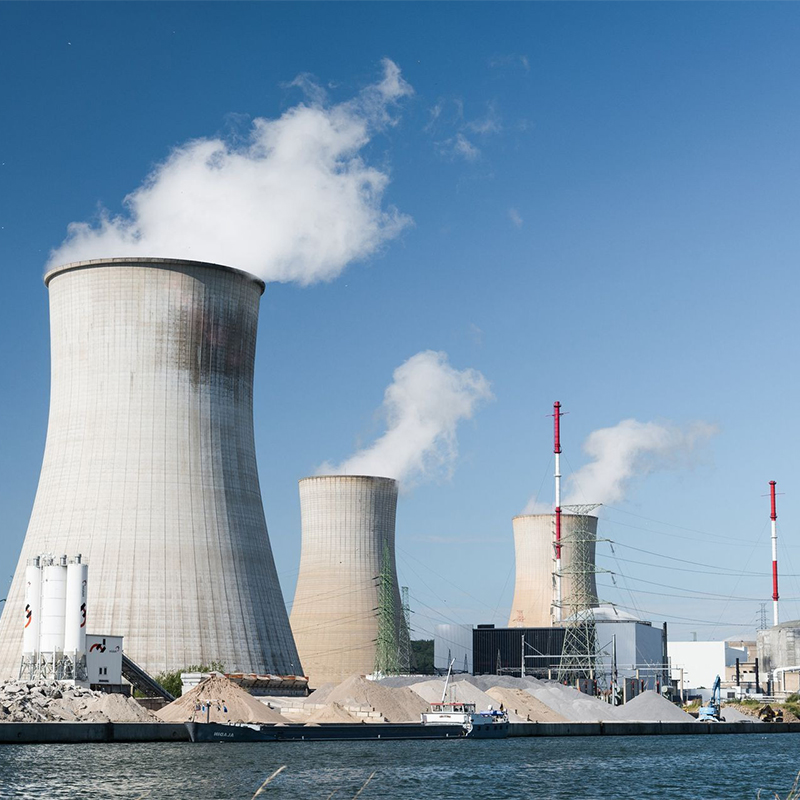
We Provide Cooling Tower Solution

Views: 0 Author: Cindy Publish Time: 2026-09-18 Origin: Site


When you need a cooling tower for an industrial facility, power plant, HVAC system, chemical process, or manufacturing operation, choosing the right cooling tower manufacturing company can be just as important as choosing the tower itself.
Why? Because a cooling tower is not simply a large piece of equipment with a fan attached. Its performance depends on thermal design, airflow, water distribution, fill selection, materials, motors, fans, structural strength, manufacturing quality, and long-term maintenance.
A low quotation may look attractive at first. But what happens if the tower cannot reach the required cold-water temperature? What if replacement parts are difficult to obtain? Or what if the manufacturer cannot provide technical support when your system needs it?
That is why industrial buyers should look beyond price.
In this guide, you'll learn what to look for in a cooling tower manufacturing company, what questions to ask before ordering, which technical factors matter most, and why working directly with an experienced manufacturer can make a difference.
A cooling tower is an important part of a heat-rejection system. If its performance is poor, the problem can spread throughout the entire process.
For example, insufficient cooling can affect chillers, heat exchangers, compressors, production equipment, or process temperatures. In a factory operating around the clock, even a small reduction in cooling performance can become expensive.
A reliable cooling tower company should therefore do more than provide a product catalog. It should understand your operating conditions and recommend equipment based on your actual requirements.
Think of the manufacturer as the architect behind your cooling system. The tower is the finished building, but the engineering decisions determine whether that building performs well for years.
A professional cooling tower manufacturing company normally handles much more than final assembly.
Depending on its capabilities, a manufacturer may provide:
Cooling tower design
Thermal selection
Structural design
Component selection
Material selection
Fabrication
Assembly
Quality inspection
Performance testing
Packaging
Installation guidance
Spare parts
Technical support
Customized solutions
This is important because cooling tower performance depends on many components working together.
A good manufacturer should be able to explain why a specific tower configuration is suitable for your application instead of simply telling you which model is available.
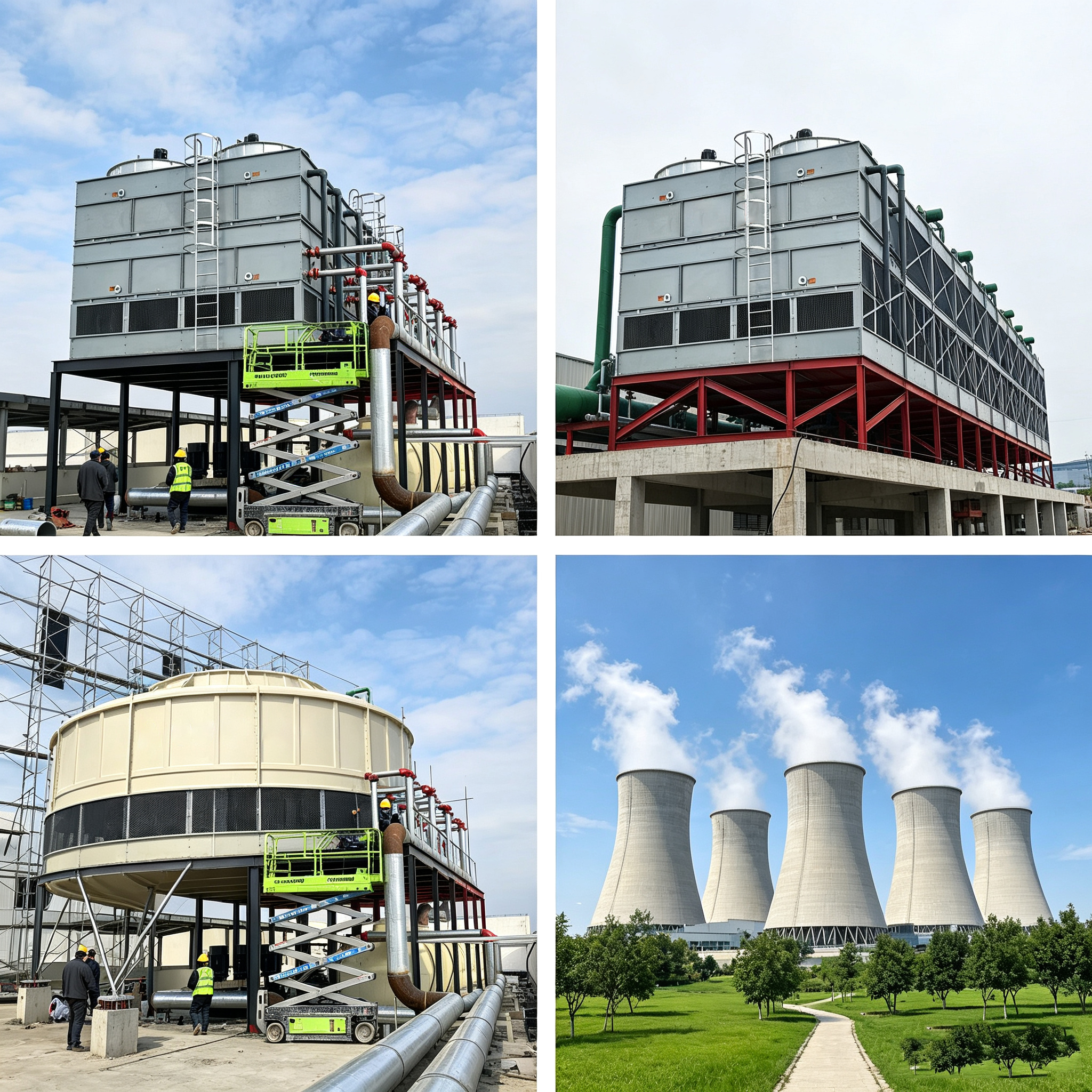
Engineering is where a cooling tower project begins.
The manufacturer needs to understand factors such as:
Required heat rejection
Circulating water flow
Hot-water temperature
Cold-water temperature
Design wet-bulb temperature
Ambient conditions
Water quality
Available installation space
Noise requirements
Operating hours
Corrosion conditions
These parameters influence the final tower design.
If the manufacturer does not ask for basic operating information before recommending a tower, that should make you pause.
Once the design is confirmed, manufacturing turns the engineering plan into physical equipment.
This includes producing or assembling structural components, fill, water distribution systems, fans, motors, drives, casing, piping connections, drift eliminators, and other components.
A capable factory should have appropriate production equipment, organized assembly areas, experienced workers, and established manufacturing procedures.
Even a technically excellent design can lose its value if manufacturing quality is inconsistent.
Quality control should not begin only when the tower is finished.
A strong manufacturing process checks quality throughout production.
This may include inspection of incoming materials, component dimensions, mechanical parts, electrical systems, assembly quality, water distribution, and final equipment condition.
Before purchasing, ask the manufacturer what inspection and testing procedures are included and what technical documents will be supplied.
How do you compare different cooling tower companies when every supplier claims to offer high quality?
Start by creating a clear evaluation framework.
Consider:
Product range
Engineering capability
Cooling capacity
Materials
Component quality
Customization
Manufacturing experience
Quality control
Certifications and documentation
Delivery capability
Spare parts
After-sales service
Looking at these factors together gives you a much clearer picture than comparing prices alone.
Different industrial applications require different cooling tower designs.
A manufacturer may offer:
Open cooling towers
Closed-circuit cooling towers
Crossflow cooling towers
Counterflow cooling towers
Industrial cooling towers
Mechanical-draft cooling towers
Customized cooling systems
A broader product range can make it easier to discuss different technical approaches with the same manufacturer.
For example, Mach Industry (Zhejiang) Co.,Ltd offers industrial cooling towers, open cooling towers, closed cooling towers, and different crossflow and counterflow configurations through its product portfolio.
Never choose a cooling tower based only on a number such as “100 tons” or “500 tons.”
Cooling capacity depends on actual operating conditions.
The manufacturer should understand:
Water flow rate
Entering water temperature
Leaving water temperature
Wet-bulb temperature
Approach temperature
Heat load
Airflow
Site conditions
Two cooling towers with similar nominal capacities may perform differently under different environmental conditions.
This is why proper selection starts with data.
Give the manufacturer accurate information, and you dramatically improve the chance of receiving a suitable proposal.
Material selection directly affects durability and maintenance.
Depending on the tower design, manufacturers may use materials such as:
FRP
Galvanized steel
Stainless steel
Aluminum
PVC
PP
Other engineered plastics
There is no single material that is automatically perfect for every application.
For example, a highly corrosive environment may require a different material strategy from a standard commercial HVAC installation.
Instead of asking only, “What material do you use?” ask a better question:
“Why is this material suitable for my operating environment?”
The manufacturer's answer can reveal how deeply it understands the application.
Industrial cooling projects are rarely identical.
Your facility may have unusual space restrictions, special water temperatures, specific motor requirements, unique electrical standards, or demanding corrosion conditions.
This is where customization becomes valuable.
A capable cooling tower manufacturing company should be able to discuss modifications such as:
Customized dimensions
Different fan configurations
Motor specifications
Water connection sizes
Special materials
Customized electrical systems
Special operating conditions
Project-specific accessories
Customization does not mean changing everything. It means adapting the equipment where the project genuinely requires it.
Experience matters because cooling tower design involves many interconnected details.
A manufacturer with experience across multiple applications is more likely to understand practical problems such as scaling, clogging, corrosion, airflow restrictions, difficult maintenance access, and unusual installation conditions.
Mach Industry (Zhejiang) Co.,Ltd states that its cooling tower business dates back to 2009 and presents itself as a professional cooling tower manufacturer.
That kind of industry experience can be useful when discussing a project that requires more than a standard catalog product.
Certifications can provide useful evidence about a company's quality-management systems and manufacturing practices.
However, don't stop at certificates.
Ask about:
Quality management
Product inspection
Material traceability
Testing procedures
Technical documentation
Applicable industry standards
Project-specific compliance
The correct requirements depend on your location, industry, and application.
For international projects, also make sure the manufacturer understands the electrical, mechanical, and documentation requirements of your destination market.
A professional-looking website is not the same thing as a capable factory.
When evaluating a cooling tower manufacturing company, try to understand what happens behind the product catalog.
Does the company actually manufacture the equipment?
Does it have dedicated production facilities?
Does it control critical manufacturing processes?
Can it customize products?
Can it provide engineering support?
These questions help separate a true manufacturer from a company that primarily resells equipment.
A well-organized workshop supports consistent manufacturing.
Depending on the product, a cooling tower factory may need equipment and facilities for:
Cutting
Forming
Drilling
Welding
FRP fabrication
Component assembly
Electrical installation
Quality inspection
Packaging
For larger industrial towers, production capability becomes even more important because many components must work together precisely.
A cooling tower is a system, not a collection of unrelated parts.
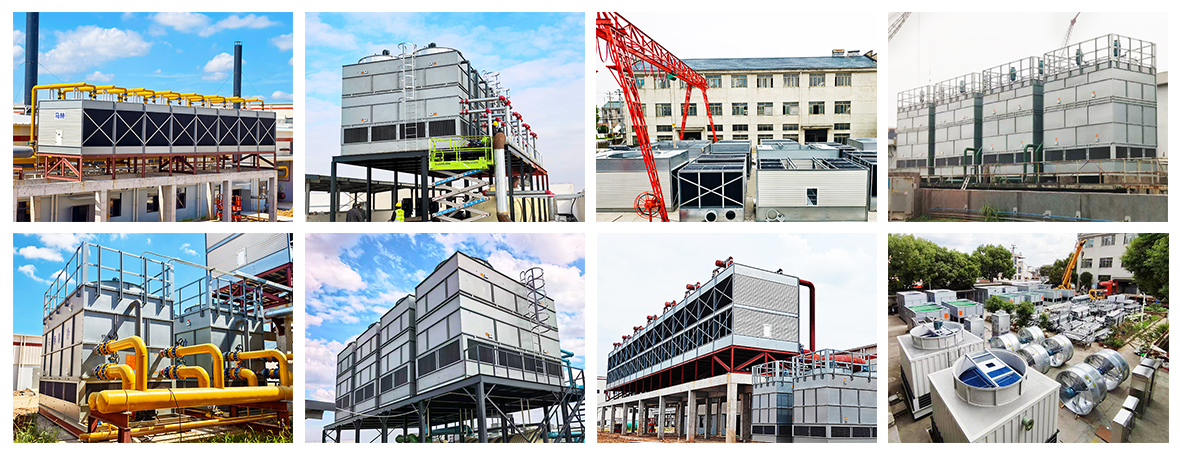
Imagine buying a car where the manufacturer checks only the finished vehicle but never inspects the components before assembly.
That would obviously create risk.
Cooling towers deserve the same level of attention.
Quality control should cover the entire process, including:
Raw materials → Component production → Assembly → Inspection → Testing → Packaging → Shipment
This approach helps identify problems before equipment reaches the customer's facility.
When speaking with a manufacturer, ask what quality checkpoints are used during production.
The relationship with a manufacturer should not end when the tower leaves the factory.
Cooling towers operate for years, and components eventually require maintenance or replacement.
Potential replacement items include:
Fans
Motors
Bearings
Gearboxes
Nozzles
Fill
Drift eliminators
Valves
Belts
Pulleys
Electrical components
Ask the supplier whether replacement parts are available and how technical support is handled after installation.
For overseas buyers, this point becomes even more important.
A simple evaluation process can make supplier comparison much easier.
Before contacting manufacturers, prepare your technical data.
At minimum, try to provide:
Heat load
Water flow
Inlet temperature
Outlet temperature
Wet-bulb temperature
Site location
Water quality
Operating schedule
Don't compare only the final price.
Compare:
Tower type
Dimensions
Materials
Fan system
Motor
Fill
Water distribution
Design conditions
Power consumption
Maintenance requirements
If possible, review factory photos, videos, certifications, production information, and previous projects.
For larger orders, a factory visit or third-party inspection may also be appropriate.
Ask who will handle technical questions after the order.
A good supplier should have a clear communication process.
Before signing a purchase order, ask the manufacturer:
What cooling conditions is this model designed for?
What is the expected cooling capacity?
What materials are used?
Which type of fill is installed?
What fan and motor configuration is used?
Can the design be customized?
What quality inspections are performed?
What documents will be provided?
What spare parts are recommended?
What warranty is included?
What is the production lead time?
What technical support is available after delivery?
A professional manufacturer should be able to answer these questions clearly.
Not every supplier is equally suitable for an industrial project.
Be cautious if a company:
Provides vague technical specifications
Cannot explain its cooling calculations
Avoids questions about materials
Has no clear quality-control process
Cannot provide technical drawings
Has unclear warranty terms
Cannot explain spare-parts availability
Focuses entirely on the lowest price
Has little evidence of manufacturing capability
One unclear answer doesn't necessarily mean a supplier is unsuitable. But several warning signs together deserve closer investigation.
A good manufacturer should understand the differences between open and closed cooling systems.
In an open cooling tower, circulating water is exposed directly to the airflow. Heat is rejected primarily through evaporation.
In a closed-circuit cooling tower, the process fluid remains inside a heat-exchange coil while spray water and air remove heat from the coil.
Closed systems can be useful when keeping the process fluid isolated from direct atmospheric exposure is important.
The right design depends on the application, fluid, contamination concerns, water quality, temperature requirements, and system architecture.
Crossflow and counterflow towers use different airflow and water-flow arrangements.
In a crossflow cooling tower, air generally moves horizontally through the fill while water flows downward.
In a counterflow cooling tower, air moves upward while water travels downward.
The choice should be based on project requirements rather than simply assuming one design is always better.
Factors such as available space, maintenance access, water distribution, airflow, fan configuration, operating conditions, and site requirements all deserve consideration.
The initial quotation is only one part of cooling tower cost.
Think about total ownership instead.
You may need to consider:
Equipment price
Installation
Electrical consumption
Water consumption
Water treatment
Routine maintenance
Spare parts
Downtime
Component replacement
Service life
A tower with a lower initial purchase price may not necessarily have the lowest long-term operating cost.
That's why experienced buyers often look beyond the first invoice.
Mach Industry (Zhejiang) Co.,Ltd is a cooling tower manufacturer serving industrial and commercial cooling applications.
Mach's product portfolio includes industrial cooling towers, open cooling towers, closed cooling towers, crossflow and counterflow configurations, as well as other evaporative cooling equipment.
For buyers searching for a cooling tower manufacturing company, Mach provides a manufacturer-based option for discussing cooling tower selection, project requirements, and customized solutions.

Mach's product range includes:
Industrial cooling towers
Closed cooling towers
Open cooling towers
Crossflow cooling towers
Counterflow cooling towers
Evaporative condensers
Chillers
This product range allows customers to discuss different cooling technologies according to their application.
Every industrial facility has its own operating conditions.
Mach provides customized cooling tower solutions based on project requirements. Customers can provide information about heat load, water flow, temperatures, site conditions, and other technical parameters so the manufacturer can evaluate the appropriate configuration.
The key is simple: better project information leads to better technical communication.
Mach presents itself as a dedicated cooling tower manufacturer with manufacturing facilities, technical teams, quality-control procedures, and project support.
For industrial buyers, this manufacturer-level connection can make communication easier throughout the project lifecycle—from initial selection and quotation to production and after-sales support.
Before choosing your cooling tower manufacturing company, use this checklist:
✓ Does the company understand your actual thermal requirements?
✓ Does it have genuine manufacturing capability?
✓ Does it offer the cooling tower type your project requires?
✓ Are materials and major components clearly specified?
✓ Can the manufacturer customize the design?
✓ Does it have quality-control procedures?
✓ Can it provide technical drawings and documentation?
✓ Are spare parts available?
✓ Is after-sales support clearly defined?
✓ Can the manufacturer communicate effectively throughout the project?
If you can answer these questions confidently, you've created a much stronger foundation for your purchasing decision.
Choosing a cooling tower manufacturing company is about much more than finding a supplier with an attractive price.
You're choosing the engineering knowledge, manufacturing capability, component quality, technical support, and long-term service behind your cooling system.
A reliable manufacturer should understand your operating conditions, recommend an appropriate tower configuration, explain its technical decisions, maintain consistent production quality, and remain available after delivery.
So, don't stop at the quotation.
Look behind the number.
Ask about the factory. Ask about materials. Ask about thermal performance. Ask about customization. Ask about quality control. Most importantly, ask how the manufacturer will support your system over its operating life.
For industrial and commercial cooling projects, Mach Industry (Zhejiang) Co.,Ltd provides cooling tower manufacturing and customized cooling solutions for customers looking for a direct manufacturer to discuss their specific requirements.
The right cooling tower starts with the right questions—and the right manufacturing partner.