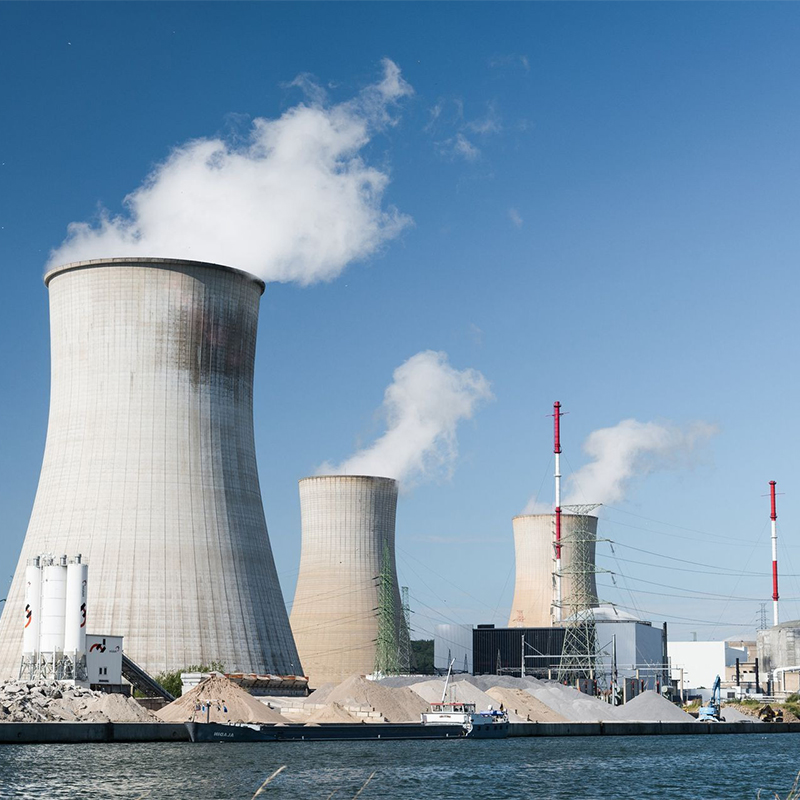
We Provide Cooling Tower Solution

Views: 0 Author: Cindy Publish Time: 2026-09-15 Origin: Site


When you're buying a cooling tower, one question usually comes up first: “How much does it cost?”
That's completely reasonable. A cooling tower can represent a significant investment, especially for industrial plants, HVAC projects, power facilities, and large process-cooling systems.
But here's the problem: choosing the lowest cooling tower price isn't always the same as getting the best deal.
A tower that costs less today could consume more electricity, require more maintenance, or need replacement sooner. On the other hand, paying for features you don't actually need can push the purchase price unnecessarily high.
So, where is the sweet spot?
The goal should be simple: get the right cooling performance, reliability, and service life at a competitive total cost.
This guide explains how to compare cooling tower prices, negotiate with manufacturers, reduce unnecessary expenses, and avoid sacrificing quality just to get a lower quotation.
Imagine buying a car based entirely on its sticker price. The cheapest car might look attractive at first, but what happens when fuel consumption, maintenance, repairs, and depreciation enter the picture?
Cooling towers work the same way.
The initial equipment price is only one part of the financial equation. You should also consider:
Energy consumption
Water consumption
Maintenance costs
Spare parts
Installation
Transportation
Expected service life
Downtime risk
Replacement costs
A slightly more expensive cooling tower can actually be the more economical choice if it delivers better efficiency and reliability over 10 or 15 years.
That's why a smart buyer asks not only “What is the cooling tower price?”, but also “What will this cooling tower cost me over its entire life?”
Cooling tower pricing isn't based on one simple formula.
Manufacturers consider a combination of technical specifications, materials, components, production requirements, and project conditions.
Understanding these factors gives you an advantage when requesting quotations.
Capacity is one of the biggest factors affecting cooling tower price.
A small commercial tower obviously requires less material and equipment than a large industrial cooling tower.
As capacity increases, you may need:
Larger casing structures
More fill media
Larger fans
Higher-capacity motors
More extensive water distribution
Stronger structural components
For this reason, a 100-ton tower and a 1,000-ton tower can have dramatically different prices.
Don't compare them simply by looking at the manufacturer's product name.
The tower configuration also influences price.
Common designs include:
Counterflow cooling towers
Crossflow cooling towers
Open-circuit cooling towers
Closed-circuit cooling towers
Mechanical-draft cooling towers
Natural-draft cooling towers
Each configuration has different engineering requirements.
A counterflow tower, for example, may provide a compact footprint, while a crossflow design may offer convenient maintenance access.
The cheapest configuration isn't necessarily the best one for your facility.
Material selection can have a noticeable impact on the final quotation.
Cooling tower components may use different grades of plastics, fiberglass, steel, stainless steel, or other materials depending on the application.
If your facility operates in a corrosive environment, choosing materials solely because they're cheaper could be a costly mistake.
Think about it this way: saving a little money on corrosion protection today may create a much larger repair bill later.
Fans and motors are critical components in mechanical cooling towers.
Their size, efficiency, control method, and quantity can all influence the equipment price.
A more efficient motor or variable-frequency drive may increase the initial investment but reduce electricity consumption during operation.
For facilities running continuously, this difference can become significant.
Fill media creates a large contact area between water and air, helping the tower transfer heat efficiently.
Different fill designs have different manufacturing costs and performance characteristics.
The same applies to spray nozzles and water distribution systems.
A high-quality distribution system helps spread water evenly across the fill. Poor distribution can create dry areas, hot spots, and reduced thermal performance.
There's an important distinction between cheap and cost-effective.
A cheap cooling tower has a low purchase price.
A cost-effective cooling tower delivers the required cooling performance while keeping purchase, energy, water, maintenance, and replacement costs under control.
Which one would you rather own for the next 10 years?
In most industrial applications, the second option makes more sense.
For example, suppose Supplier A offers a tower at a lower initial price but uses a less efficient motor and requires more frequent maintenance.
Supplier B costs slightly more but provides better fan efficiency, durable materials, and easier maintenance.
The second tower may have a higher purchase price but a lower total cost of ownership.
That's the number that really matters.
One of the easiest ways to waste money is to ask a manufacturer for “the cheapest cooling tower” without providing technical requirements.
The supplier then has to make assumptions.
And assumptions can lead to oversizing, undersizing, or unnecessary specifications.
Start with your actual heat load.
Don't automatically assume that the cooling tower tonnage should exactly match the nominal tonnage of a chiller.
A cooling tower rejects heat from the condenser system, and the total heat rejection can differ from the chiller's rated cooling capacity.
Provide the manufacturer with the actual heat-rejection requirement whenever possible.
Your supplier needs to know how much water the tower must circulate.
Important information includes:
Entering water temperature
Leaving water temperature
Water flow rate
Required temperature range
Operating load
For example, a system operating with a 10°F temperature range may require a different tower selection from one operating with a 15°F range.
These details directly influence tower sizing.
Never ignore the local climate.
Wet-bulb temperature is particularly important because cooling towers rely on evaporation to reject heat.
A tower designed for one location may not provide the same leaving-water temperature in another location.
If your facility is located in a hot and humid region, the cooling tower may need additional capacity compared with a similar application in a cooler climate.
Providing accurate site conditions helps prevent expensive oversizing later.
Available space can also influence the best design.
Before ordering, check:
Overall dimensions
Height restrictions
Service access
Piping layout
Airflow clearance
Maintenance access
Foundation requirements
Sometimes a slightly different configuration can fit the available space better without dramatically increasing the cost.
Getting three quotations doesn't automatically mean you're making a good comparison.
Why?
Because three suppliers may be quoting three different products.
When comparing cooling tower price, make sure each supplier receives the same technical information.
Compare:
Cooling capacity
Water flow
Entering water temperature
Leaving water temperature
Wet-bulb temperature
Fan power
Motor efficiency
Fill type
Materials
Noise level
Dimensions
Otherwise, you may end up comparing apples with oranges.
A quotation can look inexpensive because some items aren't included.
Ask whether the quoted price includes:
Fan and motor
Fill media
Drift eliminators
Water distribution system
Controls
VFD
Access platforms
Electrical components
Packaging
Transportation
Installation
Commissioning
A lower quotation isn't necessarily lower if several important items are excluded.
Always consider the total project cost.
A realistic budget should include:
Equipment + transportation + installation + commissioning + energy + water + maintenance
This gives you a much clearer picture of the actual investment.
Getting a competitive price doesn't mean cutting quality.
Instead, look for areas where unnecessary spending can be removed.
Don't pay for a tower configuration that doesn't provide meaningful benefits for your application.
Work with the manufacturer to determine whether counterflow, crossflow, open-circuit, or another design is appropriate.
The best design is the one that solves your actual engineering problem efficiently.
Customization can be extremely useful, especially when installation conditions are unusual.
But unnecessary customization adds engineering and manufacturing costs.
Before requesting special dimensions, materials, coatings, controls, or accessories, ask whether they are actually required.
A standard configuration that meets your needs is often more economical.
Oversized fans and motors can increase both equipment cost and operating expenses.
Undersized equipment can create performance problems.
The goal is to find the right balance.
Modern control systems can also help match fan operation to actual cooling demand instead of running continuously at full capacity.
One effective way to improve purchasing efficiency is to work directly with a cooling tower manufacturer.
When you purchase directly from a factory, you may eliminate some layers between the manufacturer and end user.
More importantly, direct communication allows you to discuss technical requirements with the people responsible for engineering and production.
That can reduce misunderstandings.
It can also make customization, quality discussions, spare-parts support, and technical communication easier.
However, “factory direct” shouldn't automatically be interpreted as “best price.”
You still need to evaluate manufacturing capability, quality control, engineering support, warranty terms, and after-sales service.
Finding a supplier with a competitive cooling tower price is only half the job.
You also need confidence that the supplier can actually deliver what was quoted.
Ask whether the company manufactures cooling towers itself or mainly resells products from other suppliers.
A genuine manufacturer should be able to explain its production process, materials, components, quality controls, and customization capabilities.
This becomes especially important for large industrial projects.
A reliable supplier should ask you questions before giving you a final recommendation.
For example:
“What is your water flow?”
“What is the design wet-bulb temperature?”
“What is the entering water temperature?”
“What is the required leaving temperature?”
“What is the water quality?”
These questions show that the supplier is thinking about actual performance rather than simply selling a box.
Ask how the manufacturer controls product quality.
Relevant areas include:
Raw material inspection
Component inspection
Fan and motor testing
Structural inspection
Water distribution testing
Assembly inspection
Performance verification
Quality control may not be visible in a quotation, but it can have a major impact on long-term reliability.
The purchase price is only the first chapter of the story.
The operating phase can last for many years.
That's why lifecycle cost deserves serious attention.
Fan motors can consume substantial electricity over years of operation.
Even a modest improvement in efficiency can make a difference when the tower operates thousands of hours annually.
Consider the total energy cost rather than just motor purchase price.
Cooling towers lose water through evaporation, drift, and blowdown.
Water treatment and cycles of concentration influence total consumption.
If water costs are high in your region, a water-efficient cooling strategy can provide meaningful long-term savings.
A tower that is easy to inspect and maintain can reduce labor and downtime.
Pay attention to access to:
Fans
Motors
Fill
Nozzles
Drift eliminators
Basins
Mechanical components
Maintenance-friendly design can be worth paying for.
Several purchasing mistakes can make a supposedly cheap cooling tower surprisingly expensive.
Choosing only by price: The lowest quotation may not have the lowest lifecycle cost.
Ignoring operating conditions: Incorrect design conditions can result in poor performance.
Comparing different specifications: A cheaper quote may simply exclude important components.
Oversizing the tower: More capacity isn't always better if you don't need it.
Undersizing the tower: A low purchase price is meaningless if the system can't meet its cooling requirements.
Ignoring water quality: The wrong fill or material selection can increase maintenance costs.
Skipping manufacturer evaluation: A competitive quotation is worthless if the supplier cannot provide consistent quality and support.
For buyers looking for a competitive cooling tower price without compromising technical requirements, working with the right manufacturer is critical.
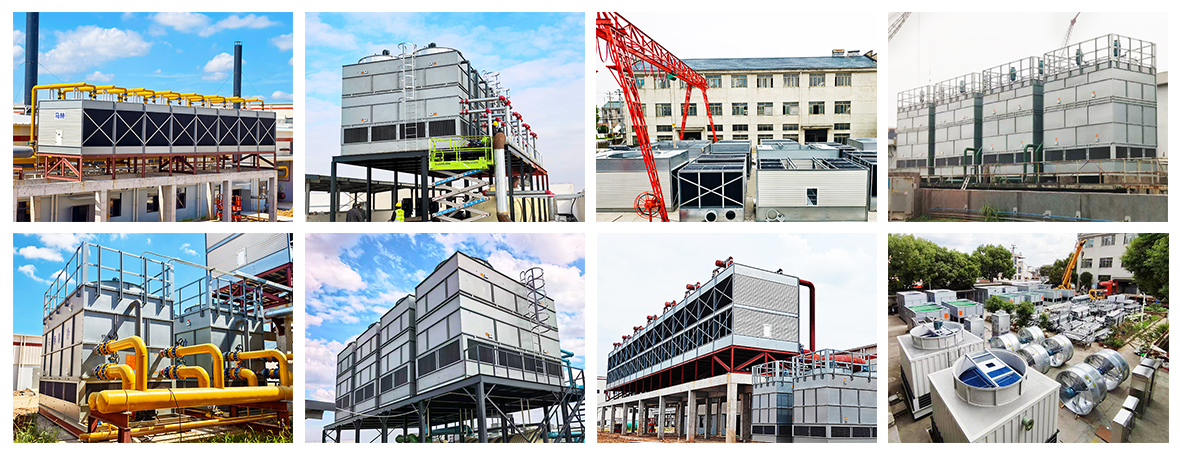
Mach Industry (Zhejiang) Co., Ltd. provides cooling tower manufacturing and customized cooling solutions for industrial and commercial applications.
Mach Industry (Zhejiang) Co., Ltd.
Instead of treating every project as a standard product order, Mach can evaluate the actual application requirements and help customers select a suitable cooling tower configuration.
Different facilities have different priorities.
One customer may care most about the initial equipment price. Another may be focused on energy consumption. A third may have strict space or noise limitations.
A good cooling tower solution should balance all of these factors.
Mach's approach is to consider the actual operating conditions, required capacity, installation environment, and customer requirements when developing a cooling tower solution.
Working directly with a manufacturer can also make communication more efficient.
Instead of passing technical questions through multiple intermediaries, buyers can communicate their requirements directly and discuss product configuration, materials, components, customization, and project requirements.
For large cooling tower projects, that direct communication can be especially valuable.
Before accepting a cooling tower quotation, ask yourself these questions:
What is the actual heat rejection requirement?
What is the required water flow?
What are the entering and leaving water temperatures?
What is the local design wet-bulb temperature?
Which cooling tower configuration is appropriate?
What fill media is being used?
What materials are included?
What fan and motor are included?
Is a VFD required?
What accessories are included?
Are transportation costs included?
Is installation included?
What is the expected energy consumption?
What maintenance will be required?
Does the manufacturer provide technical support?
Can the manufacturer customize the equipment?
What warranty and spare-parts support are available?
What is the estimated total lifecycle cost?
Once you've answered these questions, you'll be in a much stronger position to negotiate.
You aren't simply asking suppliers to lower their price.
You're comparing value.
Getting the best cooling tower price isn't about finding the cheapest quotation.
It's about finding the best combination of purchase price, thermal performance, energy efficiency, durability, maintenance, and manufacturer support.
Start with accurate operating requirements. Compare suppliers using identical specifications. Look carefully at what each quotation includes. Consider lifecycle costs instead of focusing only on the initial investment.
And most importantly, don't cut critical quality factors simply to save money today.
A cooling tower is a long-term piece of equipment. The right choice can quietly save money year after year, while the wrong choice can turn a seemingly cheap purchase into an expensive headache.
For customized cooling tower solutions and manufacturer-direct support, you can explore Mach Industry (Zhejiang) Co., Ltd. at Mach Cooling.
There is no single standard cooling tower price because the cost depends on cooling capacity, tower type, materials, fan and motor configuration, fill media, controls, customization, transportation, and other project requirements.
The most accurate approach is to request a project-specific quotation based on actual operating conditions.
No. A lower purchase price may mean lower-quality materials, less efficient components, fewer included accessories, or reduced customization.
Instead of comparing purchase price alone, compare total cost of ownership.
Factory-direct purchasing can reduce intermediary costs and provide more direct communication with the manufacturer. However, buyers should still compare specifications, quality, engineering support, warranty, and service rather than assuming the factory price is automatically the lowest.
You can reduce costs by selecting the correct capacity, avoiding unnecessary customization, optimizing fan and motor selection, choosing suitable materials, improving water management, and comparing complete quotations from qualified manufacturers.
A manufacturer will typically need the required heat rejection, water flow, entering and leaving water temperatures, design wet-bulb temperature, site conditions, water quality, installation restrictions, operating schedule, and any specific requirements for noise, energy efficiency, materials, or controls.
The more accurate your information is, the more accurate your cooling tower quotation will be.