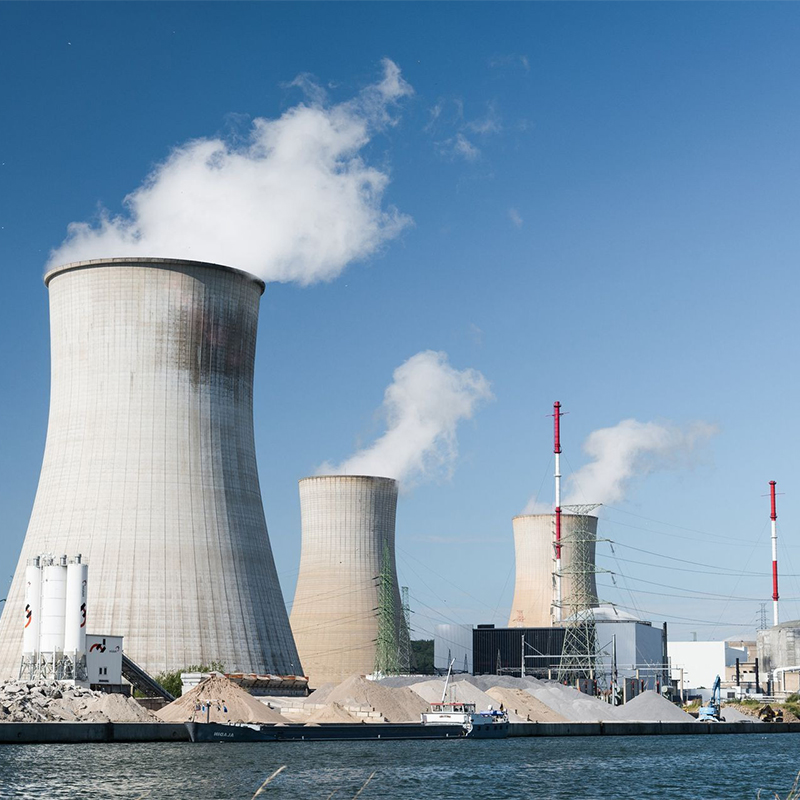
We Provide Cooling Tower Solution

Views: 0 Author: Cindy Publish Time: 2026-09-17 Origin: Site


Choosing the right cooling tower products is not simply a matter of comparing prices and picking the biggest tower.
In an industrial facility, every component has a job. The tower must reject heat, the fill must transfer heat efficiently, the fan must move enough air, and the water distribution system must keep everything balanced. Miss one piece, and the entire system can suffer.
So, how do you choose the right cooling tower products without wasting money or creating performance problems later?
This guide takes you through the most important factors, from cooling capacity and fill selection to energy efficiency, materials, customization, and supplier support. Whether you are purchasing a complete cooling tower, replacing components, or upgrading an existing system, these practical tips can help you make a smarter decision.
A cooling tower works much like the radiator in a car, but on a much larger industrial scale.
Hot process water enters the tower. Heat moves from the water into the surrounding air, while a small portion of the water evaporates. The cooled water then returns to the industrial process.
The cooling tower itself is important, but its individual products determine how effectively this process works.
Cooling tower fill creates the surface area needed for heat and mass transfer. Fans provide airflow. Nozzles distribute water. Drift eliminators reduce water droplets leaving the tower. Motors, gearboxes, and drives keep the mechanical system operating.
When these products work together correctly, the cooling tower can provide stable heat rejection with reasonable water and energy consumption.
When they do not, problems can appear quickly:
High outlet-water temperature
Poor heat-transfer performance
Excessive water loss
Fill clogging
Uneven water distribution
Fan vibration
High electricity consumption
Frequent maintenance
Premature component failure
That is why cooling tower product selection should always be treated as a complete system decision rather than a simple component purchase.
Before looking at specific cooling tower products, start with the application.
Think of the cooling tower as the heart of a larger cooling system. You cannot select the heart correctly without understanding what the rest of the body needs.
Start by collecting the basic operating information:
Required cooling capacity
Heat load
Circulating water flow
Hot-water temperature
Cold-water temperature
Design wet-bulb temperature
Ambient conditions
Water quality
Installation space
Operating schedule
The more accurate this information is, the easier it becomes for a manufacturer to recommend the right configuration.
Cooling capacity is one of the first specifications to determine.
Industrial processes can generate enormous amounts of heat, and the cooling tower needs to remove that heat continuously. A tower that is too small may struggle during peak production. An unnecessarily oversized tower, on the other hand, can increase initial costs and may not operate efficiently.
Calculate the actual heat load instead of selecting equipment based only on nominal tonnage.
You should consider both normal and peak operating conditions. If your production process changes throughout the year, seasonal variations should also be included.
For example, a manufacturing plant may operate at partial load during weekends but reach maximum production during the working week. The cooling tower needs to handle the actual operating range rather than only one ideal condition.
Water flow directly affects cooling tower performance.
You should know the circulating water flow rate as well as the inlet and outlet water temperatures.
The difference between the hot-water inlet temperature and cold-water outlet temperature is commonly called the cooling range.
For example, if water enters the tower at 37°C and leaves at 32°C, the cooling range is 5°C.
This information helps determine the required heat-transfer area, airflow, fill configuration, and tower size.
Never evaluate a cooling tower product using capacity alone. Water flow and temperature conditions are equally important.
The local climate can significantly affect cooling tower performance.
A tower operating in a hot and humid region faces different conditions from one installed in a cooler, drier environment.
Wet-bulb temperature is particularly important for evaporative cooling towers because it represents the theoretical cooling limit toward which the water can approach under ideal evaporative conditions.
When selecting cooling tower products, provide the manufacturer with the actual installation location and design conditions.
A product designed for one climate may require a different configuration in another.
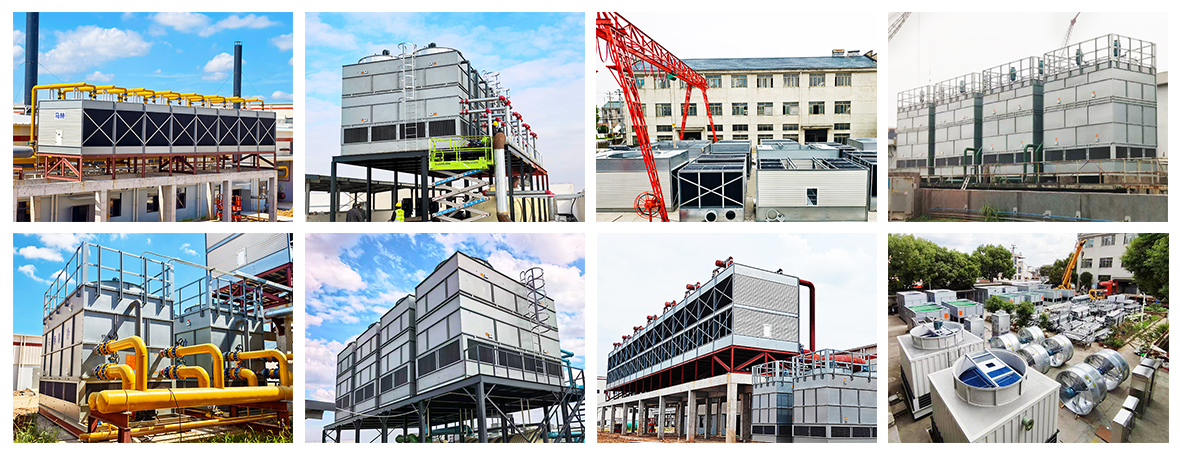
The term cooling tower products covers a wide range of equipment, systems, and replacement components.
Before comparing individual products, it helps to understand the major tower configurations.
In an open-circuit cooling tower, process water is directly exposed to the airflow.
Hot water is distributed over the fill. Air passes through the water, and evaporation removes heat from the circulating water.
Open-circuit towers are widely used in:
Manufacturing plants
HVAC systems
Chemical processing
Power-related applications
Food and beverage facilities
General industrial cooling
They can provide efficient heat transfer, but water treatment becomes especially important because the circulating water is exposed to air and external contaminants.
Closed-circuit cooling towers keep the process fluid inside a heat-exchange coil.
Spray water circulates around the coil and evaporates, removing heat from the process fluid without directly exposing that fluid to the cooling-tower water.
This arrangement can be useful when contamination control or process-fluid protection is important.
Closed-circuit systems may have a higher initial investment, but the complete lifecycle requirements of the process should be considered rather than focusing only on purchase price.
Airflow direction is another important factor.
In a crossflow cooling tower, air generally moves horizontally across the falling water.
In a counterflow cooling tower, air moves upward while water flows downward.
Both configurations have their own design characteristics.
The choice depends on factors such as:
Installation space
Water distribution
Maintenance access
Airflow requirements
Tower height
Fan arrangement
Operating environment
Project requirements
There is no single configuration that is automatically correct for every industrial application.
A cooling tower is not one product. It is a collection of products working together.
This becomes particularly important when you are purchasing replacement components. The replacement product must match the existing tower's dimensions and operating requirements.
Cooling tower fill is one of the most important heat-transfer products inside an evaporative cooling tower.
Its job is to increase the contact area between water and air.
Imagine pouring a bucket of water straight through a tower. The contact time between water and air would be relatively short.
Fill changes the game.
It spreads the water across many surfaces, giving the air and water more time and area to exchange heat.
Common fill categories include:
Film fill
Splash fill
PVC fill
PP fill
High-temperature fill
Low-clogging fill
The correct choice depends on water quality, operating temperature, contamination risk, tower design, and required thermal performance.
Fans provide the airflow required for heat rejection in mechanical-draft cooling towers.
When evaluating fan products, do not look only at fan diameter.
Consider:
Blade design
Blade material
Fan speed
Fan pitch
Airflow
Motor power
Noise
Efficiency
Operating conditions
A poorly matched fan may consume unnecessary electricity while failing to provide sufficient airflow.
Because industrial cooling towers can operate thousands of hours each year, fan efficiency deserves serious attention.
A small difference in power consumption can become a substantial operating cost over the life of the equipment.
Water distribution should be as uniform as possible.
If some areas of the fill receive too much water while other areas receive too little, the available heat-transfer surface is not being fully utilized.
Nozzles, pipes, headers, and spray systems therefore need careful selection.
Check:
Nozzle flow rate
Spray pattern
Material
Pressure requirements
Clogging resistance
Maintenance requirements
Good water distribution may not be the most visually impressive part of a cooling tower, but it is fundamental to performance.
Drift eliminators capture water droplets carried by the airflow before those droplets leave the tower.
This helps reduce water loss and can limit the movement of dissolved minerals and water-treatment chemicals into the surrounding environment.
When choosing drift eliminator products, consider:
Material
Blade geometry
Droplet capture performance
Pressure drop
Temperature resistance
Chemical resistance
There is a balance to find. A highly restrictive design may improve droplet capture but increase airflow resistance and fan energy requirements.
Mechanical equipment should be selected for continuous industrial operation.
Motors need suitable power ratings and environmental protection. Gearboxes must handle the required mechanical load. Drive systems should match the fan and tower configuration.
When comparing these cooling tower products, consider not only initial price but also:
Reliability
Maintenance requirements
Lubrication requirements
Spare-parts availability
Motor efficiency
Operating environment
Compatibility with controls
Reliable mechanical equipment can help reduce unexpected downtime, which is often much more expensive than the component itself.
Fill selection deserves special attention because fill directly influences the heat-transfer process.
Choosing the wrong fill can turn an otherwise well-designed tower into an inefficient cooling system.
PVC is widely used for cooling tower film fill because it can provide a practical combination of heat-transfer performance, cost, and chemical resistance.
PP can be useful where higher temperature resistance or specific chemical characteristics are required.
Other specialized materials may also be appropriate depending on the application.
The right material depends on:
Water temperature
Chemical conditions
Water treatment
Biological control
Suspended solids
Operating environment
Required service life
Do not choose a fill simply because the material is commonly used.
Match the material to the actual operating environment.
Film fill creates thin layers of water across the fill surface, providing a large effective area for heat transfer.
This can deliver strong thermal performance when the water quality is suitable.
However, narrow channels may be more vulnerable to fouling or blockage when circulating water contains high levels of suspended solids.
Splash fill works differently.
Instead of maintaining a continuous water film, it breaks water into droplets as the water falls through the tower.
This can make splash fill more suitable for certain applications where water quality is challenging.
So which one is better?
The better question is:
Which fill matches your water quality and cooling tower design?
That is the question an experienced manufacturer should help you answer.
Industrial cooling tower products operate in demanding environments.
Continuous moisture, chemicals, temperature changes, ultraviolet exposure, mechanical loads, and biological growth can all affect component life.
When evaluating products, look at:
Material thickness
Mechanical strength
Chemical resistance
Temperature rating
UV resistance
Manufacturing consistency
Expected service life
For plastic cooling tower components, material quality is particularly important.
Two products may look almost identical when they are new but perform very differently after years of continuous operation.
This is why product specifications and manufacturing quality matter more than appearance alone.
Purchase price is only one part of the equation.
A cooling tower may operate thousands of hours every year. Even a small difference in efficiency can therefore become significant over time.
When evaluating cooling tower products, consider the total operating cost.
Look at:
Fan power
Motor efficiency
Water consumption
Pressure drop
Maintenance frequency
Component lifespan
Replacement costs
A slightly more expensive product that reduces electricity consumption or extends replacement intervals may provide better long-term value.
Think beyond the invoice.
The real cost of a cooling tower product is what it costs from installation to replacement.
Industrial cooling systems rarely follow a perfect standard template.
One factory may have limited installation space. Another may operate at high temperatures. A third may have water containing significant suspended solids.
This is where customization becomes valuable.
Cooling tower products can often be adapted through changes in:
Dimensions
Fill configuration
Fill material
Fan design
Nozzle arrangement
Water distribution
Structural components
Motor configuration
When discussing customization, provide complete operating information to the manufacturer.
Good engineering starts with good information.
The more accurately the supplier understands your application, the easier it becomes to develop a product configuration that matches your actual requirements.
Finding the right product is only half the job.
You also need a supplier capable of delivering consistent quality and technical support.
A supplier should be evaluated like a long-term engineering partner rather than simply a seller of parts.
Ask where the products are manufactured and how quality is controlled.
Does the manufacturer have its own production facilities?
Can it maintain consistent dimensions and material quality?
Does it inspect raw materials and finished products?
For large industrial orders, manufacturing capability also affects delivery reliability.
A low-cost quotation is not particularly useful if the supplier cannot deliver the required quantity on schedule.
Cooling tower selection involves engineering details.
A capable supplier should be able to discuss:
Heat load
Water flow
Temperature range
Fill type
Airflow
Materials
Operating temperature
Installation conditions
Technical support becomes even more valuable when replacing an existing component.
The supplier should help confirm dimensions and specifications rather than simply saying, “This model will fit.”
Cooling towers have long operating lives, and components eventually need replacement.
Ask whether the supplier can provide replacement:
Cooling tower fill
Nozzles
Drift eliminators
Fans
Motors
Gearboxes
Pipes
Other tower components
Reliable after-sales support can reduce downtime and simplify maintenance.
A product is not truly convenient if replacement parts become difficult to obtain after a few years.
Several purchasing mistakes appear repeatedly in industrial cooling projects.
The first is choosing based only on price.
The second is selecting a product without checking compatibility with the existing tower.
The third is ignoring water quality.
The fourth is overlooking energy consumption.
Another common mistake is failing to provide accurate operating conditions to the manufacturer.
These mistakes can lead to:
Poor cooling performance
Premature component failure
Higher maintenance costs
Unexpected downtime
Excessive water consumption
Increased energy use
A few extra minutes spent checking specifications can prevent months of headaches.
Before placing an order, review the following questions:
What is the required cooling capacity?
What is the circulating water flow?
What are the inlet and outlet water temperatures?
What is the design wet-bulb temperature?
Is the tower crossflow or counterflow?
Is the application open circuit or closed circuit?
What type of fill is required?
What is the water quality?
What material is suitable for the application?
What fan and motor specifications are required?
What are the installation dimensions?
How often will maintenance be performed?
Are replacement parts available?
Can the supplier provide technical support?
This checklist turns a vague purchasing request into a much clearer engineering specification.

For industrial buyers searching for reliable cooling tower products, Mach Industry (Zhejiang) Co.,Ltd provides cooling tower equipment and related solutions for industrial applications.
The goal should not simply be to sell a tower or component.
Industrial cooling requires matching the equipment to the actual process, operating conditions, available installation space, water characteristics, and maintenance expectations.
By discussing application requirements before finalizing a configuration, buyers can make more informed decisions about tower type, fill, airflow, water distribution, and supporting components.
Working directly with a manufacturer can also simplify communication between engineering, production, and after-sales teams, especially when a project requires customized dimensions or special operating conditions.
For more information about cooling tower solutions and products, visit Mach Industry (Zhejiang) Co.,Ltd.
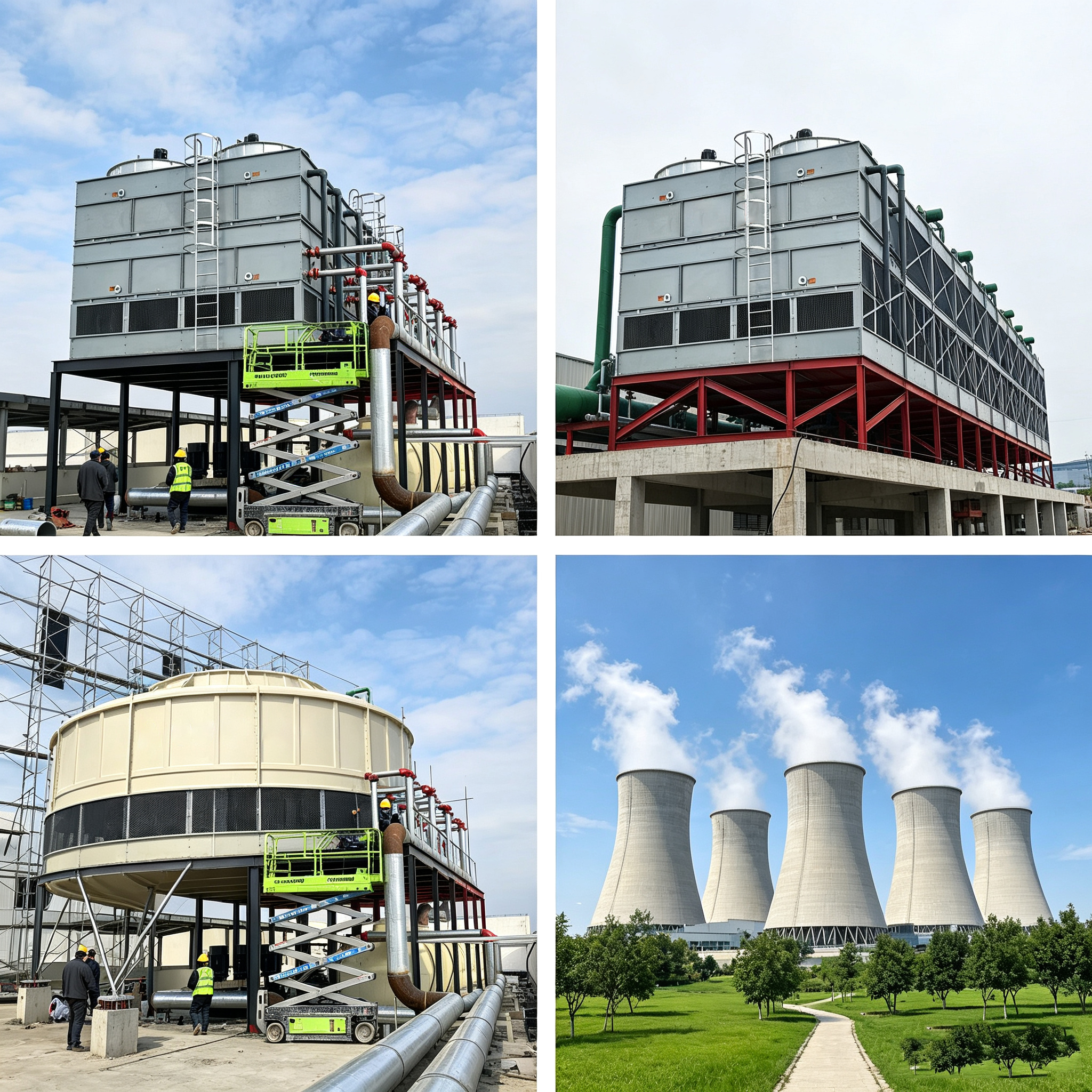
Choosing cooling tower products for industrial applications is a little like building a precision machine.
Every component has a role, and small mismatches can affect the entire system.
Start with the fundamentals: heat load, water flow, temperature range, climate, and water quality.
Then evaluate the tower type, cooling tower fill, fans, water distribution system, drift eliminators, motors, materials, and energy consumption.
Finally, look beyond the product itself.
Evaluate the manufacturer's engineering capability, manufacturing quality, customization options, spare-parts support, and after-sales service.
If you approach the purchase from a total-system perspective instead of simply comparing product prices, you are more likely to achieve reliable cooling performance and predictable operating costs.
For industrial buyers, that is the real goal:
The right cooling tower products, matched to the right application, with the right technical support behind them.