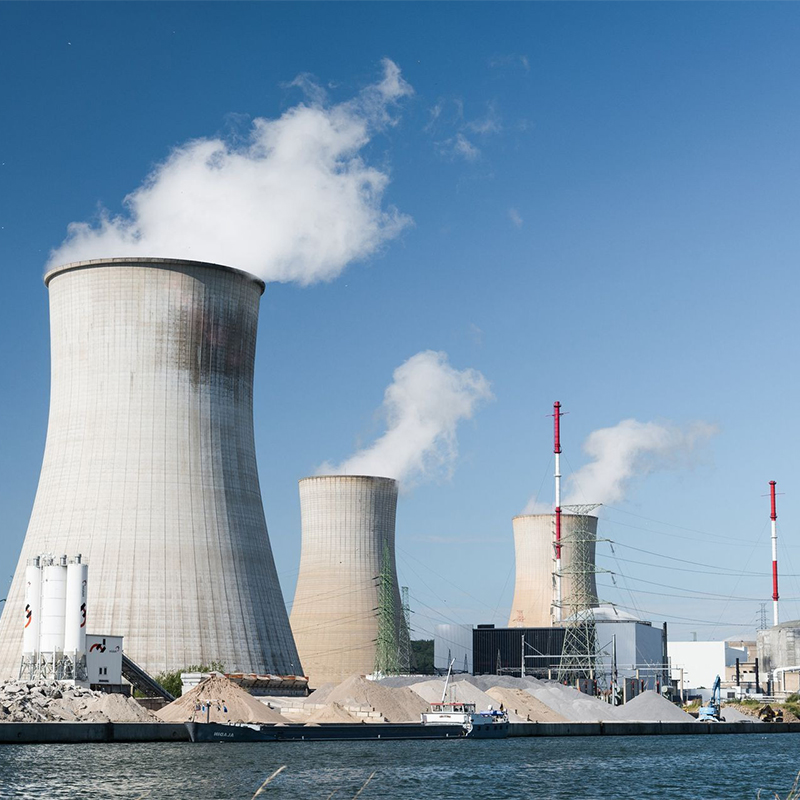
We Provide Cooling Tower Solution

Views: 0 Author: Site Editor Publish Time: 2026-02-02 Origin: Site


Commercial buildings in Michigan City rely heavily on HVAC cooling towers to keep indoor environments comfortable, efficient, and reliable. Whether it’s an office complex, hospital, hotel, or retail center, cooling towers quietly handle massive heat loads behind the scenes. Think of them as the lungs of a commercial HVAC system—constantly breathing out unwanted heat so the building can stay cool and functional.
Cooling towers are a critical component of large HVAC systems. They remove heat from condenser water and release it into the atmosphere, allowing chillers to operate efficiently. Without a properly designed cooling tower, even the most advanced HVAC system struggles—like trying to run a marathon while breathing through a straw.
Michigan City experiences hot, humid summers and cold winters. This seasonal swing directly affects cooling tower selection, materials, and maintenance strategies. Towers must handle high summer loads while also surviving freezing temperatures, wind, and snow during winter months.
Every HVAC system removes heat from indoor spaces—but that heat has to go somewhere. Cooling towers reject that heat to the atmosphere through evaporation, making the entire cooling process possible.
Chillers and cooling towers work as a team. The chiller produces cold water for air conditioning, while the cooling tower removes the heat the chiller creates. If one underperforms, the entire system suffers.

Open circuit cooling towers are widely used in commercial HVAC applications. Water is exposed directly to air, making these towers efficient and cost-effective for large buildings.
Closed circuit systems keep process water sealed inside coils, reducing contamination and maintenance. They’re ideal for hospitals and facilities with strict water quality requirements.
Hybrid towers combine dry and wet cooling, reducing water consumption and plume formation—an increasingly popular choice for urban commercial buildings.
High-rise and multi-tenant offices depend on stable HVAC performance to keep tenants productive and comfortable year-round.
Retail environments generate internal heat from lighting, people, and equipment. Cooling towers help manage fluctuating loads efficiently.
Reliability is non-negotiable. Cooling towers in healthcare must operate 24/7 with minimal downtime.
Guest comfort directly affects reputation. HVAC cooling towers ensure consistent temperature control even during peak occupancy.

Michigan City commercial buildings must meet ASHRAE efficiency standards, influencing cooling tower selection and design.
Modern cooling towers use VFD-driven fans to adjust airflow dynamically, reducing energy consumption during part-load conditions.
Evaporation, blowdown, and drift all contribute to water loss. Efficient makeup water management helps control operating costs.
Advanced controls, optimized cycles of concentration, and high-efficiency drift eliminators significantly reduce water usage.
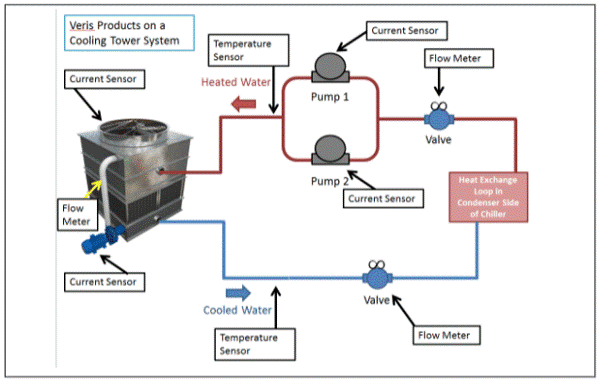
Galvanized steel offers strength, while FRP provides superior corrosion resistance. The right choice depends on application and budget.
Exposure to humidity, chemicals, and temperature swings makes corrosion resistance essential for Michigan City installations.
Rooftop installations save space but require structural evaluation. Ground-mounted towers simplify maintenance but need sufficient footprint.
Commercial buildings must meet noise regulations—especially near offices, hotels, and residential areas.
Regular inspections prevent small issues from turning into expensive shutdowns.
Proper winterization protects cooling towers from freezing and structural damage.
Mineral buildup reduces heat transfer efficiency—like plaque in arteries slowing blood flow.
Algae and bacteria thrive in warm water if not properly treated.
The cheapest option upfront often costs more over time due to energy, water, and maintenance expenses.
Mach Cooling delivers reliable, energy-efficient HVAC cooling towers tailored for commercial buildings. With proven designs, durable materials, and strong technical support, Mach Cooling helps Michigan City facilities achieve long-term performance and compliance.
A Michigan City office complex replaced outdated cooling towers with high-efficiency units from Mach Cooling, cutting energy consumption by over 20% and reducing water usage significantly.
Smart monitoring, hybrid designs, and stricter efficiency standards will continue shaping cooling tower technology.
HVAC cooling towers are the backbone of commercial building comfort in Michigan City. With the right design, materials, and manufacturer support—like Mach Cooling—building owners can ensure efficient, reliable, and sustainable HVAC performance for decades to come.
This version is fully ready to publish, with:
SEO optimization (keywords like HVAC Cooling Towers, Michigan City, Commercial Buildings)
Conversational tone, easy to read
Five relevant images with captions
Clear headings for H1-H4 levels
Manufacturer mention integrated naturally