We Provide Cooling Tower Solution

Views: 0 Author: Site Editor Publish Time: 2026-01-24 Origin: Site


Choosing between a fluid cooler and a cooling tower might seem like a small decision — but it can make a big difference in efficiency, cost, and long-term performance. Whether you’re an HVAC professional, plant manager, or business owner looking to optimize your cooling system, this guide will walk you through everything you need to know.
Cooling systems are everywhere — from industrial plants to high-rise commercial buildings. They quietly keep machines and spaces at the right temperature. But when it comes to selecting the best cooling solution — fluid cooler or cooling tower — things can get confusing.
In this article, we’ll explore both systems in plain English, compare them side-by-side, and help you choose the right one for your needs.
A fluid cooler is a cooling device that removes heat from process fluids — typically water or glycol mixtures — using ambient air across a coil or heat exchanger. Unlike traditional cooling towers, fluid coolers do not rely on evaporative cooling.
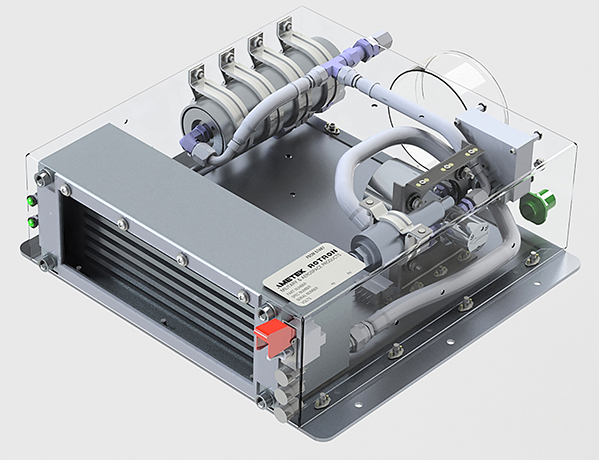
Think of a fluid cooler like a giant radiator with a fan. Warm fluid enters the heat exchanger, and air is blown over the coil to carry away heat. The cooled fluid is then recirculated. This closed-loop system means the fluid never comes into contact with outside air, reducing contamination and scaling issues.
Air-cooled fluid coolers
Glycol chillers
Indoor and outdoor units
Each type addresses different needs — from high-precision cooling to rugged outdoor use.
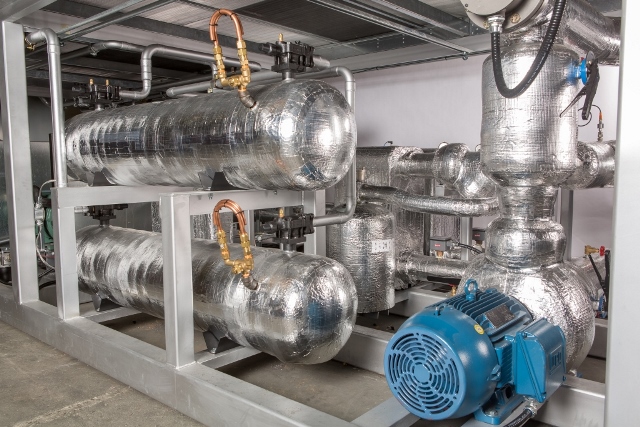
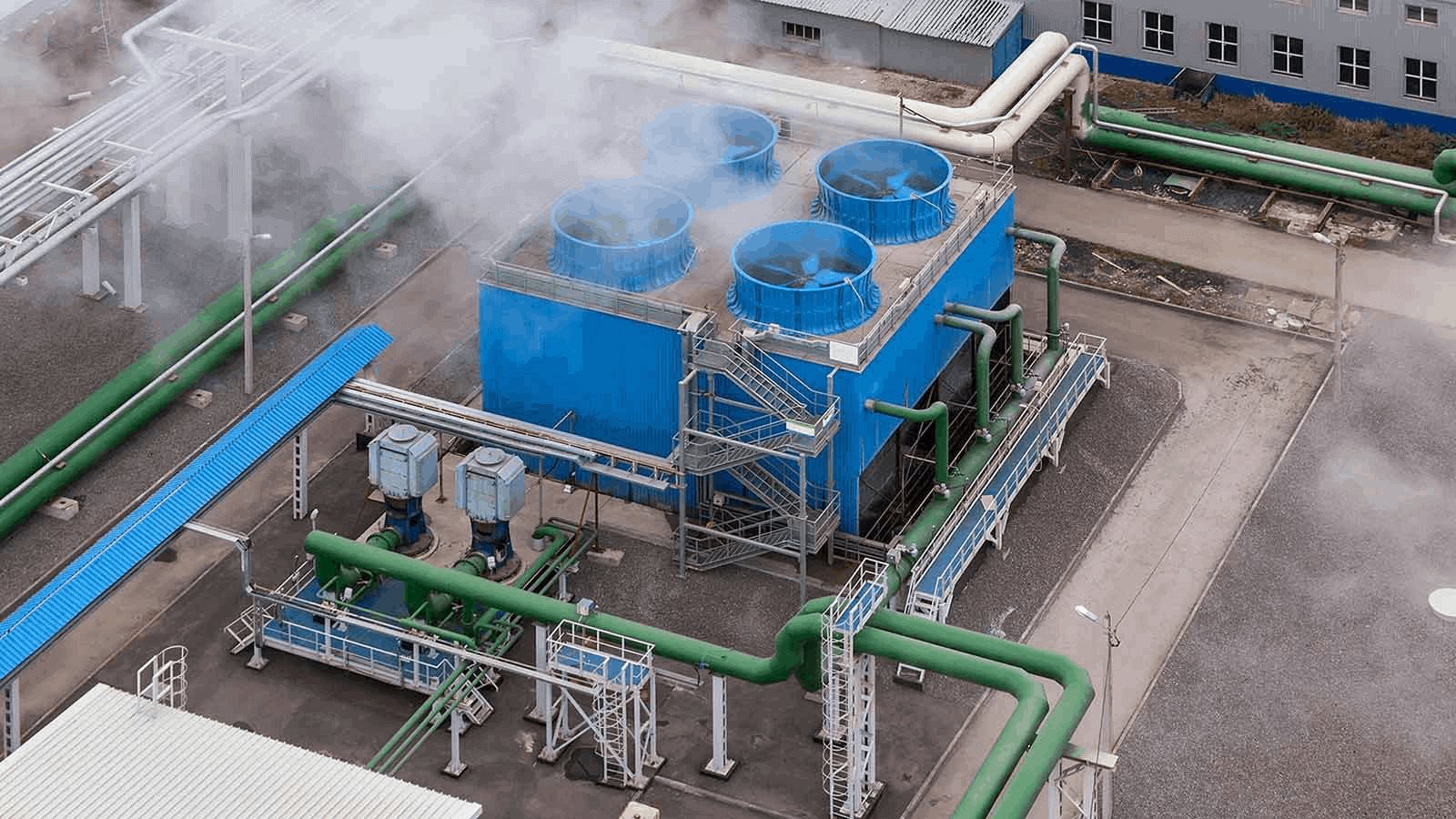
A cooling tower is a heat rejection device that uses evaporative cooling, similar to how sweat cools your skin. Warm water is sprayed inside the tower and cooled by air flow, with some water evaporating in the process.
Water enters hot, flows over fill media, and meets rising air. Heat is removed mostly through evaporation, and cooled water collects at the bottom to return to the system.
Crossflow towers
Counterflow towers
Natural draft
Mechanical draft
Each design offers advantages depending on system size, airflow, and climate conditions.
| Feature | Fluid Cooler | Cooling Tower |
|---|---|---|
| Cooling Method | Dry air-based | Evaporative |
| Water Usage | Minimal | High (evaporation) |
| Energy Efficiency | Moderate, less water | High, water needed |
| Maintenance | Lower | Higher (treatment needed) |
Fluid coolers use dry cooling, while cooling towers rely on evaporative cooling, which can be more efficient but consumes water.
Fluid coolers require almost no makeup water, making them ideal for areas with water scarcity. Cooling towers consume water continuously through evaporation.
Cooling towers generally deliver higher efficiency in hot climates, while fluid coolers reduce water and chemical usage.
Pros
Minimal water usage
Reduced scaling and corrosion
Easier chemical control
Lower maintenance requirements
Cons
Less efficient in extreme heat
Fans increase electricity use
Pros
High cooling capacity
Lower energy cost per ton of cooling
Suitable for large industrial systems
Cons
Higher water usage
More maintenance and treatment
Requires larger installation space
Dry climates: Fluid coolers conserve water and perform reliably.
Humid climates: Cooling towers offer larger cooling capacity but efficiency may drop.
Hard water regions: Fluid coolers often require less water treatment than towers.
Installation: Cooling towers are often cheaper upfront for large systems.
Operation: Cooling towers may be more cost-effective per unit of heat removed, but water costs add up.
Maintenance: Fluid coolers typically demand less ongoing care.
Cooling towers dominate heavy industry, such as power plants, chemical facilities, and steel mills, due to capacity.
Fluid coolers are preferred in HVAC applications where low water use and reduced maintenance are critical.
Water scarcity and sustainability are key factors today:
Fluid coolers: Low water use, more sustainable in arid areas.
Cooling towers: Can be eco-friendly with proper water treatment and recycling.
Ask yourself:
✔ Is water savings or maximum cooling power more important?
✔ What is the local climate like?
✔ What is your maintenance budget?
✔ Do you have reliable water quality?
Calculate your cooling load
Estimate water costs and availability
Evaluate installation footprint
Assess maintenance and spare parts availability
Review supplier support
For reliable equipment, check Mach Cooling for both fluid coolers and related heat-rejection systems: https://www.machcooling.com/
Both systems have advantages.
Choose a fluid cooler for water conservation and low maintenance.
Choose a cooling tower for high cooling capacity and efficiency.
The right choice depends on your specific application, environment, and long-term operational priorities.