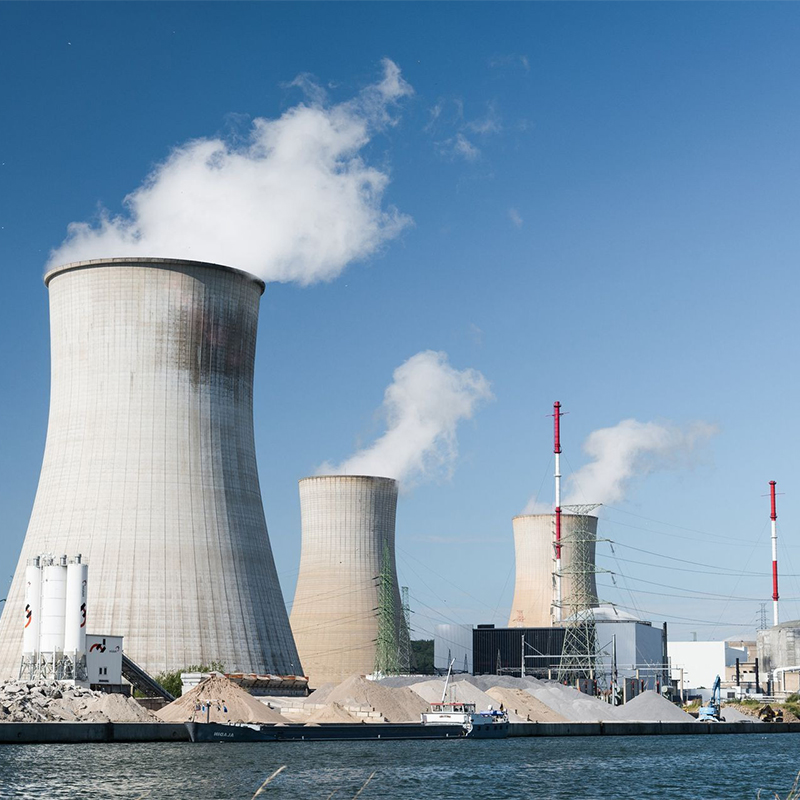
We Provide Cooling Tower Solution

Views: 0 Author: Site Editor Publish Time: 2026-01-13 Origin: Site


A cooling tower is a critical heat rejection device used to remove excess heat from industrial processes, HVAC systems, power generation equipment, and manufacturing facilities. Its primary purpose is to transfer unwanted heat from circulating water into the atmosphere, allowing equipment and processes to operate safely and efficiently.
In a heat rejection system, cooling towers help maintain stable operating temperatures, improve energy efficiency, protect machinery, and reduce the risk of overheating. By continuously removing heat from water loops, cooling towers provide reliable thermal management for a wide range of industrial applications.
The main purpose of a cooling tower is to reject heat from industrial or commercial systems by cooling heated water and returning it for reuse.
Cooling towers perform several essential functions:
Industrial equipment, chillers, compressors, and power generation systems generate significant amounts of heat during operation. A cooling tower removes this heat and releases it into the environment through evaporation and air circulation.
Without an effective heat rejection system, excessive temperatures can reduce equipment performance, increase energy consumption, and cause unexpected shutdowns.
Many industrial processes require precise temperature control. Cooling towers help maintain consistent water temperatures, ensuring that equipment operates within recommended limits.
Stable temperature control improves:
Production efficiency
Equipment reliability
Process safety
Product quality
A properly designed cooling tower reduces the workload of chillers and heat exchangers. By efficiently removing heat, cooling towers allow cooling systems to operate with lower energy consumption.
This results in:
Reduced operating costs
Lower carbon emissions
Improved system efficiency
Excessive heat can accelerate corrosion, material degradation, and mechanical failure. Cooling towers help prevent thermal stress by maintaining appropriate operating temperatures.
This protects valuable equipment, including:
Industrial machinery
Heat exchangers
Condensers
Compressors
HVAC chillers
Cooling towers work through the principle of heat transfer between water and air. The process involves several key stages.
Water heated by industrial processes or HVAC equipment is pumped into the cooling tower. This hot water enters the distribution system and flows over specially designed fill materials.
Inside the cooling tower, air moves across or through the falling water. Heat transfers from the warm water to the air due to temperature differences.
The larger surface area created by the fill media improves heat exchange efficiency.
A small amount of water evaporates during operation. This evaporation process removes heat because energy is required for water molecules to change from liquid into vapor.
Evaporative cooling is one of the most efficient methods for rejecting large amounts of heat.
After heat removal, the cooled water collects in the basin and returns to the industrial process, chiller system, or equipment loop for continuous cooling.
This creates an efficient heat rejection cycle.
Heat rejection is essential because almost every industrial process generates unwanted thermal energy.
Without proper heat removal, systems may experience:
High temperatures can damage mechanical components and reduce operational reliability.
Many manufacturing processes depend on accurate temperature control. Poor cooling performance can negatively affect production output.
When cooling systems operate under excessive thermal loads, they require more energy to maintain performance.
Cooling failures may lead to equipment shutdowns, maintenance costs, and production losses.
Cooling towers are widely used across multiple industries.
Power generation facilities produce large amounts of waste heat. Cooling towers remove heat from condenser systems and help maintain efficient electricity generation.
Applications include:
Steam turbine cooling
Condenser heat rejection
Thermal power plants
Renewable energy facilities
Commercial buildings use cooling towers as part of central air-conditioning systems.
They work with chillers to remove heat from building cooling loops.
Common applications include:
Office buildings
Shopping centers
Hospitals
Hotels
Data centers
Industrial cooling towers provide temperature control for manufacturing operations.
Industries using cooling towers include:
Chemical processing
Steel production
Food and beverage manufacturing
Pharmaceutical production
Automotive manufacturing
Modern data centers generate significant heat from servers and electrical equipment.
Cooling towers support efficient thermal management by removing heat from chilled water systems and improving cooling reliability.
Different cooling tower designs are selected based on application requirements, climate conditions, and efficiency goals.
Open cooling towers directly expose process water to air.
Advantages:
High heat transfer efficiency
Simple design
Lower initial investment
Common applications:
Power plants
Large industrial facilities
HVAC systems

Closed circuit cooling towers use an indirect heat exchange process. The process fluid remains inside tubes while cooling water flows externally.
Advantages:
Closed circuit cooling towers are widely used in:

In counter flow designs, air moves upward while water flows downward.
Benefits include:
Efficient heat transfer
Compact structure
Lower footprint requirements

Cross flow cooling towers allow air to move horizontally across falling water.
Advantages:
Easy maintenance
Lower operating noise
Simple access design
The efficiency of a cooling tower depends on the design and performance of its major components.
Fill materials increase the contact surface between water and air, improving heat transfer efficiency.
High-quality fill designs provide:
Better cooling performance
Lower water consumption
Improved thermal efficiency
Drift eliminators reduce water droplets escaping with exhaust air.
Benefits include:
Reduced water loss
Better environmental performance
Improved operating efficiency
Cooling tower fans provide the airflow required for heat transfer.
Efficient fan systems help reduce:
Energy consumption
Operating costs
Noise levels
A uniform water distribution system ensures all areas of the fill receive adequate water flow.
This improves:
Cooling consistency
Heat transfer performance
System reliability
| Benefit | Impact |
|---|---|
| Efficient heat removal | Stable equipment operation |
| Lower energy consumption | Reduced operating costs |
| Water recycling | Improved resource efficiency |
| Temperature control | Longer equipment lifespan |
| Reliable operation | Reduced downtime |
Several factors influence cooling tower efficiency.
The cooling tower must be properly sized according to heat load requirements.
Incorrect sizing may result in:
Ambient wet bulb temperature affects the cooling tower’s ability to reject heat.
Lower wet bulb conditions generally improve cooling performance.
Proper water circulation ensures effective heat transfer between water and air.
Corrosion-resistant materials improve durability, especially in harsh industrial environments.
Regular maintenance is essential for long-term cooling tower performance.
Recommended maintenance practices include:
Controls:
Routine inspections help identify:
Damaged fill materials
Fan problems
Water distribution issues
Modern cooling towers increasingly use smart monitoring systems to track:
Temperature changes
Energy consumption
Operating efficiency
Cooling tower technology continues to evolve toward higher efficiency and sustainability.
Future developments include:
IoT sensors and digital monitoring improve operational control.
Advanced fan systems reduce electricity consumption while maintaining cooling performance.
New designs focus on:
Reduced evaporation losses
Improved water recycling
Sustainable operation
Artificial intelligence can analyze operating data and automatically optimize cooling performance.
Mach Cooling provides customized cooling tower solutions designed for industrial heat rejection applications.
Our solutions focus on:
High-efficiency cooling performance
Customized industrial designs
Reliable heat transfer systems
Energy-saving operation
Long service life
Whether for manufacturing plants, HVAC systems, or specialized industrial processes, Mach Cooling delivers cooling solutions designed to meet demanding thermal management requirements.
The main purpose of a cooling tower is to remove excess heat from circulating water and release it into the atmosphere, allowing industrial and HVAC systems to operate efficiently.
Cooling towers remove heat through air-water heat exchange and evaporation. Hot water transfers thermal energy to moving air, reducing the water temperature.
Cooling towers prevent overheating, improve energy efficiency, protect equipment, and maintain stable industrial operations.
Cooling towers are commonly used in power generation, manufacturing, chemical processing, HVAC systems, food processing, and data centers.
Open cooling towers expose water directly to air, while closed circuit cooling towers transfer heat through a sealed heat exchanger, preventing contamination of the process fluid.
Cooling tower efficiency can be improved through proper sizing, regular maintenance, optimized airflow, effective water treatment, and advanced monitoring systems.
Cooling towers play a vital role in modern heat rejection systems by efficiently removing unwanted heat and maintaining stable operating conditions. From industrial manufacturing and power generation to HVAC and data centers, cooling towers provide reliable thermal management solutions.
With advances in energy efficiency, smart monitoring, and sustainable design, cooling towers will continue to be an essential technology for efficient heat rejection in industrial applications.