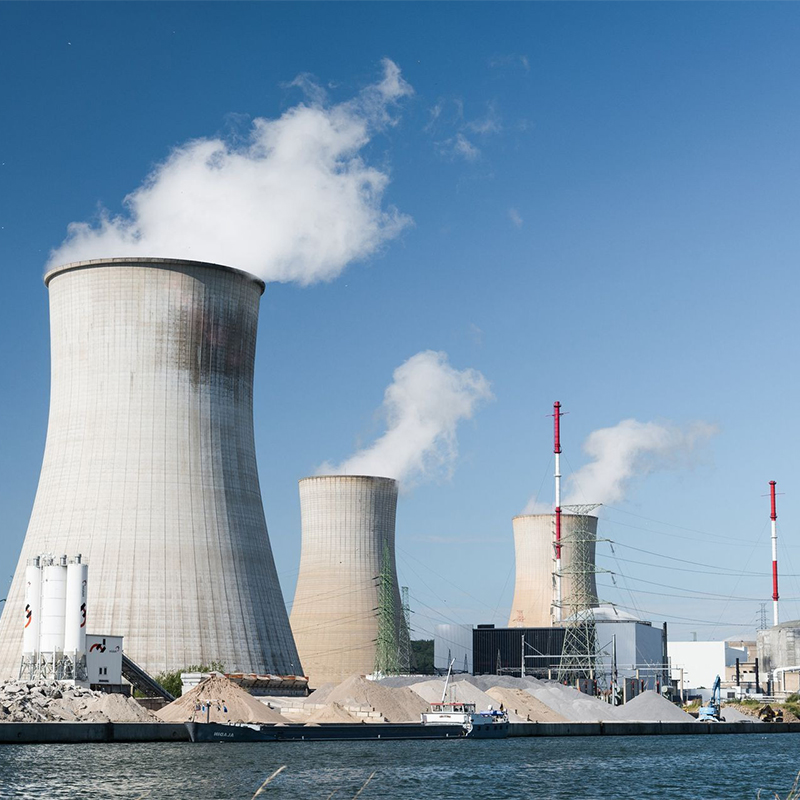
We Provide Cooling Tower Solution

Views: 0 Author: Cindy Publish Time: 2026-09-22 Origin: Site


If you are searching for China water cooling towers manufacturers, you are probably looking for more than a supplier with a good-looking website and a low quotation.
You need a manufacturer that can actually build the cooling tower you need, deliver the promised thermal performance, use appropriate materials, maintain consistent quality, and support the equipment after it reaches your site.
That sounds obvious, right?
Yet this is where many international buyers run into trouble.
China has a large and highly competitive cooling tower manufacturing industry. You can find factories producing FRP cooling towers, industrial water cooling towers, counterflow towers, crossflow towers, closed-circuit cooling towers, cooling tower fills, fans, motors, and customized systems. Online supplier directories also show a wide range of Chinese manufacturers and suppliers offering OEM and ODM cooling tower products.
The challenge is not finding a supplier.
The challenge is finding the right manufacturer.
This guide explains how to evaluate China water cooling towers manufacturers step by step. It also explains what information you should prepare before requesting a quotation and how to compare manufacturers without making the purchase decision based on price alone.
Why do international buyers consider China when sourcing cooling towers?
The answer is not simply lower manufacturing costs.
China has developed a large industrial manufacturing ecosystem covering metal fabrication, FRP production, plastics, motors, fans, pumps, electrical components, control systems, and other equipment used in cooling tower construction.
That ecosystem gives manufacturers access to a broad supply chain.
For buyers, this can create several potential advantages:
Competitive manufacturing costs
OEM and ODM capability
Flexible production
Custom equipment design
Large manufacturing capacity
Wide material selection
Component sourcing flexibility
Export experience
Customized packaging and shipping
But there is an important distinction.
Buying from China is not automatically a good decision. Choosing the right Chinese manufacturer is what matters.
A strong factory can turn China's manufacturing ecosystem into an advantage. A weak supplier can turn a low quotation into an expensive long-term problem.
A reliable manufacturer should be evaluated from several angles.
Think of the process like buying a car.
You would not choose a car simply because the body looks attractive. You would want to know what is under the hood, who built the engine, how it performs, what parts are available, and what happens when something breaks.
The same principle applies to cooling towers.
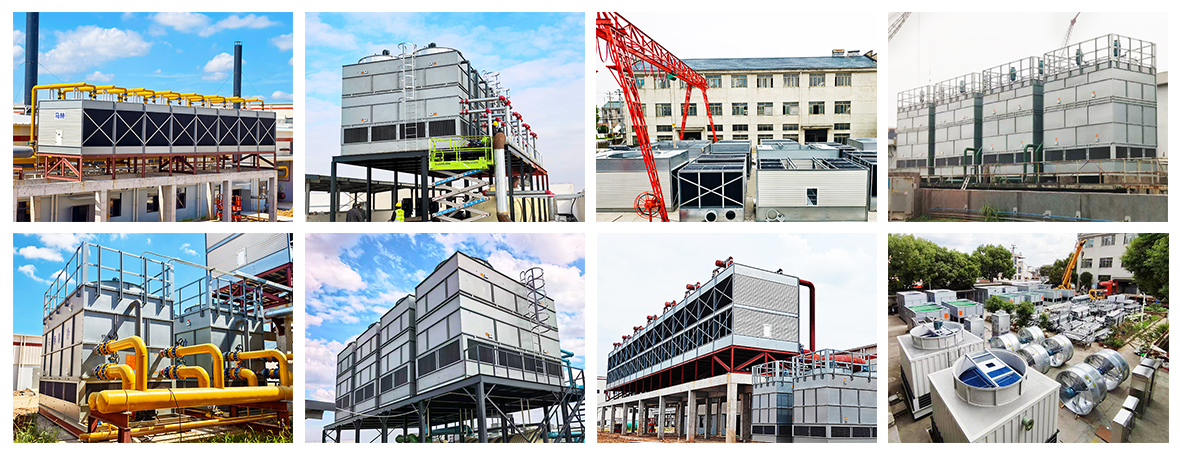
This is one of the first questions international buyers should ask.
A trading company may have access to many cooling tower products, but it may not actually manufacture the equipment.
That can create several problems.
Who controls the design?
Who checks the raw materials?
Who handles production quality?
Who modifies the design if your project changes?
Who is responsible if the delivered equipment does not match the technical specification?
A direct manufacturer generally gives you a clearer path from engineering to production.
That does not mean every trading company is unreliable. Some trading companies provide useful sourcing and export services. However, buyers should understand exactly who is responsible for manufacturing.
Ask the supplier for:
Factory address
Production photos
Production-line videos
Factory registration information
Main equipment list
Quality-control process
Product drawings
Previous project references
Inspection procedures
A real factory should be able to explain its manufacturing process clearly.
Don't stop at the question, "How many cooling towers can you produce?"
Ask what the factory actually has.
For example:
FRP molding equipment
Sheet-forming equipment
Welding equipment
CNC machinery
Cutting equipment
Assembly lines
Fan balancing equipment
Testing equipment
Packaging facilities
The equipment tells part of the story.
A manufacturer producing small commercial cooling towers may not have the infrastructure needed for a large industrial project.
On the other hand, a factory with experience producing multiple tower configurations may be better prepared for customized requirements.
A cooling tower is not simply a large box with a fan.
Its performance depends on the relationship between airflow, water distribution, heat-transfer media, fan selection, basin design, structural components, and operating conditions.
A capable manufacturer should therefore have engineers who understand thermal design as well as mechanical construction.
Ask whether the manufacturer can provide:
General arrangement drawings
Foundation drawings
Water-flow calculations
Fan specifications
Motor specifications
Fill specifications
Nozzle specifications
Electrical requirements
Maintenance access information
Installation instructions
If the supplier cannot explain how the proposed tower meets your operating requirements, be careful.
Before asking manufacturers for prices, understand your own project.
This is one of the easiest ways to improve the quality of quotations you receive.
If you simply send a message saying:
"Please quote one cooling tower."
you may receive a price.
But you probably won't receive a meaningful engineering comparison.
Instead, prepare a technical specification.
Start with heat.
How much heat must the cooling tower reject?
Depending on the project, this may be expressed as:
kW
MW
Refrigeration tons
kcal/h
BTU/h
You should also know the circulating-water flow rate.
Then determine the required water temperatures.
For example:
Entering-water temperature: 35°C
Leaving-water temperature: 30°C
The 5°C difference represents the cooling range.
But range alone is not enough.
The manufacturer's selection must also consider the site's design wet-bulb temperature.
This is why two cooling towers with the same nominal tonnage may perform differently in different locations.
Another major decision is tower configuration.
In a crossflow cooling tower, air generally moves horizontally across the falling water.
In a counterflow cooling tower, air moves upward against the downward flow of water.
Both designs can work effectively.
The question is:
Which one fits your project better?
Crossflow towers can provide convenient maintenance access and gravity-based water distribution in many designs.
Counterflow towers can offer compact footprints and strong thermal performance in certain applications.
Neither should automatically be considered the universal winner.
The manufacturer's selection should be based on the required thermal performance, water quality, footprint, fan arrangement, maintenance requirements, and project conditions.
This is another fundamental decision.
An open cooling tower exposes the circulating water directly to the air.
A closed-circuit cooling tower, sometimes called a fluid cooler, transfers heat from a process fluid through a coil while the evaporative water remains in a separate circuit.
Why does that matter?
Suppose you are cooling a sensitive process fluid.
Keeping the process fluid inside a closed heat-exchange circuit can help isolate it from the evaporative water loop.
Open towers can be highly effective and economical for many applications.
Closed-circuit systems can make more sense when process-fluid cleanliness, contamination control, or system separation is important.
This is where inexperienced buyers can make costly mistakes.
What is in your water?
Does it contain:
Suspended solids?
High mineral content?
Oil?
Chemicals?
Biological contaminants?
High dissolved solids?
Water quality affects the choice of fill, nozzles, materials, water treatment, cleaning frequency, and maintenance strategy.
For example, highly efficient film fill can provide excellent heat transfer, but heavily contaminated water may require a different approach.
Tell the manufacturer the truth about your water.
The right supplier will use that information to design the system.
A manufacturer's product portfolio can reveal a lot about its engineering capabilities.
If a company only sells one small standard tower, its customization ability may be limited.
A broader portfolio can indicate experience with different operating conditions.
Look for manufacturers offering combinations of:
Industrial cooling towers
HVAC cooling towers
Open cooling towers
Closed-circuit cooling towers
Crossflow towers
Counterflow towers
Modular systems
Large-capacity systems
Customized cooling towers
The goal is not to find the manufacturer with the most products.
The goal is to find a manufacturer whose products match your application.
Industrial applications can be much tougher than standard comfort cooling.
Examples include:
Steel production
Chemical processing
Petroleum
Petrochemical plants
Power generation
Cement production
Plastics manufacturing
Food processing
Pharmaceutical production
Metal processing
These applications may involve high heat loads, unusual water chemistry, continuous operation, or demanding ambient conditions.
A manufacturer experienced in industrial cooling should understand these challenges.
Material selection deserves serious attention.
FRP can provide corrosion resistance and is widely used in cooling tower structures.
Galvanized steel can offer a practical balance of strength and cost.
Stainless steel can be considered where corrosion resistance and durability are particularly important.
HDPE and other engineered plastics can be attractive for specific corrosion-sensitive environments.
The correct material depends on the project.
Don't simply ask:
"Which material is the best?"
Ask:
"Which material is best for my water chemistry, operating temperature, environment, and maintenance strategy?"
That is a much better question.
Once you have identified potential manufacturers, look inside the tower.
What components are actually being used?
Fill is one of the most important heat-transfer components in an evaporative cooling tower.
The fill increases the contact area between water and air.
Different fill designs are suitable for different water conditions.
Common options include:
Film fill
Splash fill
PVC fill
PP fill
High-temperature fill
Low-clogging fill
If the water is relatively clean, high-efficiency film fill can be attractive.
If suspended solids are a concern, splash-type or clog-resistant designs may deserve consideration.
A good manufacturer should be able to explain why a particular fill type was selected instead of simply saying, "This is our standard fill."
The fan is the engine that moves air through the tower.
Fan efficiency therefore has a direct impact on operating costs.
Ask about:
Fan diameter
Blade material
Motor efficiency
Motor protection
Direct drive or gearbox drive
Variable-frequency-drive compatibility
Noise level
Fan balancing
For large towers operating thousands of hours per year, even a relatively small efficiency difference can accumulate into significant energy consumption.
Water must be distributed evenly.
If some areas of the fill receive too much water while other areas receive too little, the available heat-transfer surface is not being used efficiently.
Ask about:
Spray nozzles
Distribution pipes
Orifice design
Water pressure
Clogging resistance
Maintenance access
A well-designed distribution system is like watering a garden evenly. You don't want one corner flooded while another remains dry.
The tower structure needs to survive the environment around it.
Check:
Structural material
Coating system
Galvanizing
Fasteners
Basin construction
Corrosion protection
UV resistance
Access platforms
Handrails
For outdoor equipment, durability is not an optional extra.
It is part of the investment.

A professional manufacturer should be able to provide clear technical documentation.
Depending on the market and project, this may include:
Product specifications
Thermal performance data
Material certificates
Motor documentation
Electrical documentation
Quality-control records
Factory inspection reports
Relevant certifications
Installation manuals
Maintenance manuals
Certification should always be checked against the specific product model, not simply the company name.
Thermal performance is perhaps the most important technical issue.
Cooling tower buyers should ask how the manufacturer determines its published capacity.
Independent industry organizations such as the Cooling Technology Institute provide thermal certification programs intended to verify that certified evaporative heat-rejection equipment performs according to published ratings.
This is useful because cooling tower performance is not something that can be judged simply by looking at the equipment.
For larger projects, consider a factory acceptance inspection before shipment.
Depending on the contract, inspection may cover:
Dimensions
Materials
Fan rotation
Motor specifications
Assembly quality
Water distribution components
Fill installation
Coating quality
Electrical components
Nameplates
Accessories
The more customized the project, the more valuable factory inspection can become.
One of the biggest reasons buyers consider China is competitive pricing.
But how should you compare quotations?
Don't compare only the final number.
Compare the quotation line by line.
Ask whether the price includes:
Cooling tower body
Fill
Drift eliminators
Fan
Motor
Gearbox
Nozzles
Basin
Louvers
Access ladders
Platforms
Control panel
VFD
Pumps
Packaging
Spare parts
Installation support
Two suppliers may quote the same "cooling tower" but include completely different equipment.
Imagine three quotations:
Supplier A: $20,000
Supplier B: $25,000
Supplier C: $30,000
At first glance, Supplier A looks attractive.
But what if Supplier A uses lower-cost motors, thinner materials, cheaper fill, and excludes spare parts?
The comparison changes immediately.
The real question is not:
"Which supplier is cheapest?"
It is:
"Which supplier provides the best combination of performance, quality, service life, and total cost?"
That is the difference between buying equipment and buying value.
Industrial projects often require customization.
Maybe the standard tower is too wide.
Maybe the water temperature is unusually high.
Maybe the tower must fit into an existing foundation.
Maybe you need a specific motor voltage.
Maybe your country requires particular electrical components.
This is where OEM and ODM capability becomes important.
Ask whether the manufacturer can customize:
Cooling capacity
Tower dimensions
Number of cells
Fan configuration
Motor voltage
Structural materials
Fill type
Basin configuration
Piping connections
Control systems
Access platforms
Noise levels
A manufacturer that can modify its standard design is often easier to work with on complex projects.
Don't wait until something breaks before asking about spare parts.
Request a recommended spare-parts list before placing the order.
It may include:
Fan blades
Motors
Bearings
Nozzles
Fill
Drift eliminators
Belts
Gearbox components
Fasteners
Seals
Ask how long replacement parts normally take to manufacture and ship.
A cooling tower may be a relatively simple machine, but downtime in an industrial plant can be extremely expensive.
Mach Industry (Zhejiang) Co., Ltd. is a China-based cooling tower manufacturer serving industrial and commercial applications.
The company focuses on cooling tower equipment for applications such as power generation, petroleum, smelting, manufacturing, central air conditioning, sugar processing, printing and dyeing, and other industrial processes.
For buyers searching specifically for China water cooling towers manufacturers, Mach can be considered as a direct manufacturer option rather than simply a trading intermediary.
Mach provides different cooling tower configurations, including:
Industrial cooling towers
Open cooling towers
Closed-circuit cooling towers
Crossflow cooling towers
Counterflow cooling towers
Mixed-flow cooling solutions
The company can also provide different capacity configurations for projects ranging from smaller industrial systems to large cooling installations.
This flexibility can be useful for international buyers who need a cooling tower designed around actual project requirements instead of selecting only from a fixed catalog.
When sourcing from a Chinese manufacturer, international buyers often want three things at the same time:
Competitive manufacturing cost + engineering flexibility + direct factory communication.
Mach's positioning is built around this combination.
For an overseas buyer, direct communication with the manufacturer can make it easier to discuss:
Technical specifications
Custom designs
Capacity requirements
Materials
Component selection
Packaging
Shipping
Spare parts
Installation guidance
The key is still due diligence.
A buyer should evaluate Mach using the same technical checklist used for any other cooling tower manufacturer.
That means checking thermal requirements, materials, components, drawings, inspection procedures, warranty terms, and after-sales support before placing an order.
Before requesting a quotation, prepare a structured list of questions.
Ask:
Are you the manufacturer or a trading company?
Where is your factory located?
How many years have you manufactured cooling towers?
Which industries do you normally serve?
What cooling tower types do you manufacture?
What is your maximum cooling capacity?
Can you provide thermal performance data?
What fill materials do you offer?
Which motors and fans do you use?
Can you customize the tower?
Can you provide engineering drawings?
What quality inspections are performed?
Can you arrange factory acceptance inspection?
What warranty do you provide?
Which spare parts are recommended?
How long is the production lead time?
What export markets do you serve?
How do you package the equipment for international transportation?
The answers can tell you a lot.
A professional manufacturer should not be uncomfortable with technical questions.
In fact, good manufacturers usually prefer them.
This is probably the most common mistake.
Price matters, but it should come after technical requirements.
A website can look impressive.
That doesn't necessarily tell you how the equipment is made.
Whenever practical, request a factory video, live video inspection, third-party audit, or physical factory visit.
Make sure the quotation clearly states:
Capacity
Water flow
Temperatures
Wet-bulb condition
Materials
Fan
Motor
Fill
Accessories
Quantity
Otherwise, you may compare different products without realizing it.
A cooling tower without an accessible spare-parts strategy is like a truck without replacement tires.
It may run perfectly until something goes wrong.
Cooling towers can be large.
Ask about:
Packing dimensions
Container loading
Shipping weight
Number of containers
Incoterms
Port
Export documents
A factory quotation is not necessarily the same thing as your final landed cost.
A structured purchasing process can reduce risk considerably.
Prepare heat load, water flow, temperatures, wet-bulb condition, water quality, site location, and tower type.
Do not depend on a single quotation.
Shortlist manufacturers based on product fit, engineering capability, factory capacity, and export experience.
This is important.
If every supplier receives different information, the quotations cannot be compared fairly.
Check whether each manufacturer has selected an appropriate tower.
Don't jump directly to price.
Review manufacturing facilities, quality-control systems, production equipment, and previous projects.
Before production, approve the technical documents.
This is your final opportunity to catch misunderstandings.
For important projects, consider third-party inspection or factory acceptance testing.
Make sure the equipment is packed appropriately for international transportation.
Confirm foundation requirements, electrical requirements, piping, water treatment, and commissioning procedures.
Order critical replacement parts before the equipment is commissioned.
Before signing the contract, make sure you can answer "yes" to these questions:
Is the supplier a real manufacturer?
Have you verified the factory?
Is the cooling capacity clearly defined?
Are design conditions documented?
Is the water flow confirmed?
Are materials specified?
Is the fill type specified?
Are fan and motor specifications clear?
Are drawings approved?
Are inspection requirements included?
Are warranty terms written into the contract?
Are spare parts available?
Are shipping terms clear?
Is the final quotation based on the same technical specification?
Do you know who will provide technical support after delivery?
If several answers are "no," slow down before placing the order.
A little more due diligence at the beginning can prevent a lot of expensive troubleshooting later.
Choosing among China water cooling towers manufacturers does not need to be complicated, but it does need to be systematic.
Start with your own cooling requirements.
Then evaluate the manufacturer.
Check whether the supplier is actually a factory. Review its engineering capabilities. Examine the materials and components. Verify thermal performance. Compare quotations on an equivalent technical basis. Check quality-control procedures. Ask about customization, spare parts, warranty, shipping, and after-sales support.
Most importantly, don't allow a low price to make the decision for you.
A cooling tower is a long-term industrial asset. Its value comes from reliable heat rejection, stable operation, manageable maintenance, efficient energy use, and service life—not simply from the number printed on a quotation.
For international buyers looking for a China-based cooling tower manufacturer, Mach Industry (Zhejiang) Co., Ltd. provides industrial, open, closed, crossflow, and counterflow cooling tower solutions and can be evaluated according to the specific technical and commercial requirements of each project.
The official Mach website is:
Whether you are sourcing a small industrial tower or planning a large multi-cell cooling system, the best purchasing strategy is the same:
Define the requirements first. Verify the manufacturer second. Compare the complete solution—not just the price.
Start by identifying manufacturers that have real factories, relevant cooling tower experience, engineering capabilities, quality-control procedures, export experience, and a suitable product portfolio.
Then compare their technical proposals rather than comparing price alone.
Ask for the factory address, production-line photos or videos, company registration information, manufacturing equipment list, factory inspection reports, product drawings, and previous project information.
A video factory tour or third-party inspection can provide additional verification.
Yes, China has manufacturers serving industrial cooling applications ranging from relatively small systems to large-capacity installations.
However, buyers should evaluate each manufacturer's engineering experience, product quality, thermal performance, materials, and after-sales capability individually.
At minimum, provide:
Required heat load
Water flow rate
Entering-water temperature
Leaving-water temperature
Design wet-bulb temperature
Site location
Water quality
Cooling tower type
Available installation space
Power supply
Special requirements
The more complete the information, the more useful the quotation will be.
An open cooling tower cools the circulating water directly through contact with air.
A closed-circuit cooling tower transfers heat from a process fluid through a heat-exchange coil while keeping the process fluid separated from the evaporative water circuit.
Neither is universally better.
The right choice depends on cooling requirements, water quality, footprint, maintenance strategy, airflow arrangement, and project conditions.
A professional manufacturer should recommend the configuration based on the actual application.
Compare equivalent technical specifications.
Make sure each quotation includes the same capacity, water flow, design conditions, materials, fill, fan, motor, accessories, controls, packaging, and delivery terms.
Otherwise, the cheapest quotation may simply contain fewer components.
Many manufacturers offer OEM or customized cooling tower solutions.
However, the exact level of customization varies by manufacturer. Ask whether they can modify dimensions, capacity, materials, fan systems, motors, fill, basin design, controls, and other components.
Yes. Mach Industry (Zhejiang) Co., Ltd. is a China-based cooling tower manufacturer providing industrial and commercial cooling tower solutions.
Its product range includes open, closed, crossflow, and counterflow cooling tower configurations.
International buyers can visit the official Mach website at https://www.machcooling.com to review its cooling tower products and contact the manufacturer regarding project requirements.