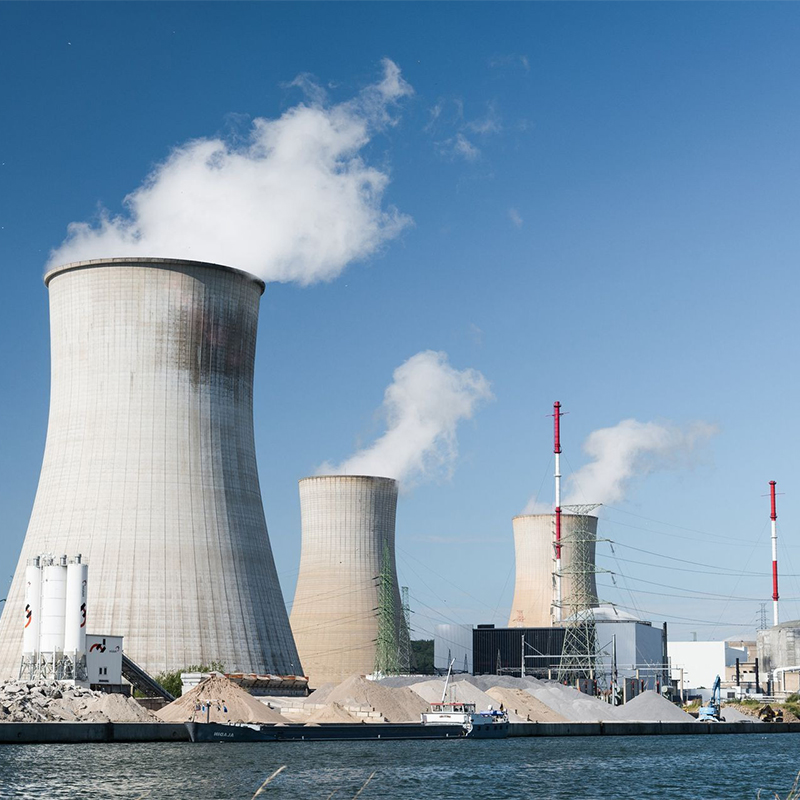
We Provide Cooling Tower Solution

Views: 0 Author: Cindy Publish Time: 2026-11-07 Origin: Site


When industrial equipment operates continuously, heat becomes one of the biggest challenges. Manufacturing machines, refrigeration systems, chemical processes, and power generation equipment all produce heat that must be removed efficiently. Without a reliable cooling system, production efficiency can decrease, equipment can overheat, and operating costs can rise.
This is where an FRP cooling tower becomes an excellent solution.
FRP cooling towers are widely used in industrial and commercial cooling applications because they combine corrosion resistance, lightweight construction, structural flexibility, and relatively low maintenance requirements. Compared with traditional steel structures, FRP materials offer particular advantages in environments exposed to moisture, chemicals, and changing weather conditions.
But what exactly is an FRP cooling tower? How does it work? Which type should you choose for your industrial facility?
In this complete guide, we will explore everything you need to know about FRP cooling towers, including their construction, working principles, types, advantages, applications, maintenance requirements, and purchasing considerations.
An FRP cooling tower is a heat rejection device that uses fiberglass-reinforced plastic as its primary structural material. It removes heat from circulating industrial water by bringing water into contact with moving air.
FRP stands for Fiberglass Reinforced Plastic, also known as Fiber Reinforced Polymer. This composite material combines glass fibers with a resin matrix to create a strong, lightweight, and corrosion-resistant structure.
Unlike traditional metal cooling towers, FRP cooling towers do not rely primarily on steel panels or metal frameworks for their external structure. Their fiberglass construction makes them particularly suitable for industrial environments where moisture and corrosive substances may cause problems for conventional materials.

FRP is a composite material made by combining reinforcing glass fibers with synthetic resin.
The glass fibers provide mechanical strength, while the resin binds the fibers together and protects them from environmental exposure.
Depending on the application, manufacturers may use different resin systems, such as:
Polyester resin
Vinyl ester resin
Epoxy resin
Each resin offers different chemical resistance, mechanical properties, and cost characteristics.
For cooling tower applications, the appropriate resin should be selected according to the operating environment, water chemistry, temperature, and potential chemical exposure.
Cooling towers operate in demanding environments. They are constantly exposed to water, humidity, temperature changes, and sometimes industrial chemicals.
Traditional metal structures may require protective coatings and regular corrosion inspections.
FRP offers another approach.
Its corrosion resistance, relatively low weight, and ability to be molded into different shapes make it a practical material for cooling tower casings, fan stacks, water basins, and structural components.
An FRP cooling tower works through evaporative cooling. Its primary purpose is to transfer unwanted heat from circulating water into the atmosphere.
The basic process is straightforward, although several components work together to achieve stable cooling performance.
Here is how a typical FRP cooling tower operates:
Hot water from industrial equipment enters the cooling tower.
The water distribution system spreads the water over the cooling tower fill.
Air moves through the fill, creating contact between air and water.
A small portion of the water evaporates, removing heat from the remaining water.
Cooled water collects in the cold water basin.
A circulation pump sends the cooled water back to the industrial process.
This process continues as a closed operating cycle, although some water must be added to compensate for evaporation, drift, and blowdown.
The cooling process involves two important heat transfer mechanisms:
Sensible heat transfer: Heat moves between water and air because of their temperature difference.
Latent heat transfer: A portion of the water evaporates, absorbing energy and cooling the remaining water.
Evaporation is usually the major contributor to cooling tower performance.
Think of it like sweat evaporating from your skin on a hot day. As the moisture evaporates, it carries heat away and helps your body cool down.
An FRP cooling tower uses the same basic principle on a much larger industrial scale.

Although FRP provides the external structure, cooling performance depends on several internal components working together.
Understanding these components helps buyers select the right equipment and maintain it properly.
The FRP casing forms the outer body of the cooling tower.
It protects internal components, supports the overall enclosure, and provides structural stability.
Depending on the design, FRP may also be used for:
Fan cylinders
Louvers
Water basins
Structural panels
Access covers
The thickness, resin formulation, reinforcement arrangement, and manufacturing quality all influence structural performance.
Cooling tower fill is one of the most important components affecting thermal performance.
Its job is to increase the contact area between water and air and provide sufficient contact time for heat transfer.
Without suitable fill media, water may fall through the tower too quickly, reducing cooling efficiency.
Common fill materials include:
PVC film fill: Provides a large heat transfer surface and is commonly used in applications with relatively clean circulating water.
PP fill: Polypropylene offers good chemical resistance and can be suitable for certain higher-temperature or more demanding water conditions, depending on the product specification.
Splash fill: Uses specially designed surfaces to break water into droplets and increase air-water contact. It is often considered for applications where suspended solids or fouling are concerns.
The best fill depends on water quality, operating temperature, tower design, and maintenance conditions.

The water distribution system ensures that hot water is spread evenly across the fill.
Typical components include:
Water distribution pipes
Spray nozzles
Distribution headers
Water collection systems
Uneven water distribution can create dry areas and reduce the effective cooling surface.
Regular inspection is important because clogged nozzles and damaged pipes can negatively affect cooling performance.
The fan moves air through the cooling tower.
Depending on the tower configuration, it may use an axial fan or another suitable fan arrangement.
The motor provides the power needed to drive the fan, while the transmission system transfers that power.
Important selection factors include:
Required airflow
Fan diameter
Motor power
Operating speed
Noise requirements
Energy efficiency
A properly selected fan system helps maintain the required airflow without unnecessary energy consumption.
Drift eliminators reduce the amount of liquid water droplets carried out of the cooling tower with exhaust air.
This helps minimize water loss and reduces the risk of surrounding equipment and structures becoming wet.
Louvers help control air entry, reduce water splash-out, and improve airflow conditions.
Both components contribute to efficient and reliable tower operation.
FRP cooling towers are available in several configurations. The right option depends on cooling capacity, available installation space, airflow requirements, and industrial operating conditions.
A counterflow FRP cooling tower uses an airflow direction opposite to the downward movement of water.
Hot water enters through the upper distribution system and flows downward through the fill. Air enters from the lower section and moves upward.
This arrangement creates countercurrent contact between air and water.
Main advantages:
Compact structural design
Effective heat and mass transfer
Flexible installation arrangements
Suitable for various industrial cooling applications
Counterflow towers are often selected when installation space is limited or when a compact cooling arrangement is required.
In a crossflow FRP cooling tower, air moves horizontally across the falling water.
Hot water is distributed over the upper fill section, while air enters through the tower sides and passes through the fill.
Compared with counterflow designs, crossflow towers often provide convenient access to certain water distribution components.
Main advantages:
Accessible water distribution systems
Relatively straightforward inspection
Flexible maintenance arrangements
Suitable for many commercial and industrial installations
However, the choice between crossflow and counterflow should always consider actual thermal performance and project requirements rather than appearance alone.

An induced draft cooling tower uses a fan installed near the top of the tower to pull air through the fill.
This arrangement creates negative pressure inside the tower and draws fresh air through the air inlets.
It is widely used because the exhaust air is discharged above the tower, helping reduce the possibility of hot, humid exhaust air being drawn directly back into the air inlets.
A forced draft cooling tower uses a fan, generally positioned near the air inlet, to push air through the tower.
This design can be useful in certain installation environments where the fan arrangement needs to be separated from the exhaust section.
However, designers must carefully consider airflow distribution, fan operating conditions, and the possibility of exhaust air recirculation.
FRP cooling towers are also available in different external shapes.
Round FRP cooling towers are commonly used in smaller packaged cooling applications. Their compact structure can simplify installation.
Square FRP cooling towers are often used in modular industrial cooling systems. Multiple units can be arranged together when greater cooling capacity is required.
For large projects, modular configurations can provide flexibility when future capacity expansion is expected.
Why do so many industrial buyers consider FRP cooling towers?
The answer is not just one advantage. It is the combination of material properties, operating flexibility, and long-term maintenance considerations.
Corrosion is a major challenge for equipment exposed to water and humid air.
FRP materials generally offer excellent resistance to corrosion compared with unprotected conventional steel.
This makes them attractive for installations in:
Coastal environments
Chemical processing facilities
Industrial wastewater treatment plants
Humid production areas
Locations exposed to corrosive atmospheres
The actual chemical resistance depends on the resin system and exposure conditions, so material compatibility should always be verified.
FRP structures are generally lighter than comparable steel or concrete structures.
This can reduce transportation and lifting requirements, simplify installation, and potentially lower supporting structure costs.
For industrial projects with limited installation space or difficult site access, these advantages can be particularly valuable.
FRP does not rust in the same way as ordinary carbon steel.
As a result, it may reduce the need for certain corrosion-related maintenance activities, such as repeated protective coating repairs.
However, low maintenance does not mean maintenance-free.
Fans, motors, bearings, fill media, nozzles, and water basins still require regular inspection.
A properly designed and manufactured FRP cooling tower can provide many years of reliable service.
Its service life depends on several factors:
Quality of fiberglass reinforcement
Resin selection
Manufacturing workmanship
UV protection
Operating temperature
Chemical exposure
Inspection and maintenance practices
A good material specification and appropriate operating conditions are essential for long-term performance.
FRP can be molded into different shapes and sizes.
This gives manufacturers considerable flexibility when designing cooling tower casings, fan cylinders, panels, and other components.
Depending on the project, FRP cooling towers may be customized according to cooling capacity, installation dimensions, environmental conditions, and customer requirements.
Different cooling tower construction materials offer different advantages.
Here is a general comparison to help buyers understand the differences.
| Comparison Factor | FRP Cooling Tower | Steel Cooling Tower | Concrete Cooling Tower |
|---|---|---|---|
| Structural weight | Relatively lightweight | Moderate to heavy | Very heavy |
| Corrosion resistance | Generally excellent | Depends on coating and material | Generally good, but reinforcement requires protection |
| Installation | Often relatively easy | Depends on fabrication and assembly | Usually more complex |
| Maintenance | Relatively low for the structure | Coating and corrosion inspections may be required | Concrete inspection and repair may be required |
| Customization | Flexible molding options | Flexible fabrication options | More complex structural changes |
| Initial investment | Depends on design and capacity | Depends on material and protection | Often substantial civil construction costs |
| Typical applications | Industrial and commercial cooling | Industrial cooling | Large permanent installations |
There is no universal winner.
For example, a concrete cooling tower may be appropriate for a large permanent installation, while FRP may be a more practical option for a modular industrial project.
The best choice depends on the project budget, structural requirements, environmental exposure, and expected operating life.
FRP cooling towers are used across many industries because industrial processes often require continuous heat removal.
Let's look at some common applications.
Chemical plants often operate equipment that generates significant heat.
FRP cooling towers can be suitable for applications where the external structure may be exposed to corrosive environments.
However, the material specification must match the actual chemical exposure.
Power generation facilities use cooling systems to remove heat from auxiliary equipment and industrial processes.
FRP cooling towers may serve selected cooling water applications where the required capacity and environmental conditions are compatible with the tower design.
Plastic injection molding, extrusion, and rubber processing equipment generate heat during production.
Stable cooling water helps maintain equipment temperatures and supports consistent production quality.
FRP cooling towers can provide an effective cooling solution for these facilities.
Large commercial buildings, hotels, shopping centers, and industrial complexes often use cooling towers as part of their central air-conditioning systems.
FRP cooling towers are an option for HVAC applications where corrosion resistance, installation flexibility, and manageable maintenance are important.
Food processing and pharmaceutical manufacturing require reliable temperature control for many production processes.
Cooling towers may support chillers, heat exchangers, and other cooling equipment.
For these applications, buyers should also consider hygiene requirements, water treatment programs, and the separation of process water from cooling tower water.
Choosing a cooling tower based only on its external dimensions or advertised capacity can lead to performance problems.
A proper selection should begin with actual operating data.
Cooling capacity is one of the most important selection parameters.
You should understand how much heat needs to be rejected by the system.
Important information includes:
Required circulating water flow
Hot water inlet temperature
Cold water outlet temperature
Design wet-bulb temperature
Operating hours
Expected future capacity requirements
Cooling tower capacity should be evaluated under the specified design conditions.
The cooling range is the difference between the hot water temperature entering the tower and the cold water temperature leaving it.
For example:
Hot water temperature: 37°C
Cold water temperature: 32°C
Cooling range: 5°C
The approach is the difference between the cold water temperature and the entering-air wet-bulb temperature.
These parameters are essential for accurate cooling tower selection.
Before purchasing an FRP cooling tower, measure the available installation area.
Consider:
Overall tower dimensions
Equipment height
Air inlet clearance
Exhaust air clearance
Maintenance access
Foundation requirements
Transportation and lifting access
A tower that fits the foundation but has insufficient airflow clearance may experience reduced performance.
Water quality directly affects cooling tower maintenance and fill selection.
Pay attention to:
Water hardness
Suspended solids
Biological growth
pH
Chloride concentration
Operating temperature
If the circulating water contains significant suspended solids or biological contaminants, film fill may become clogged.
In such cases, suitable water treatment, filtration, cleaning procedures, or splash fill may be necessary.
Fill media should never be treated as an unimportant accessory.
It has a direct influence on heat transfer performance.
For relatively clean water, PVC film fill is commonly used because it provides a large effective contact area.
For certain higher-temperature or chemically demanding applications, PP fill may be considered, subject to the material's actual operating limits.
For water containing more suspended solids, splash fill may offer advantages because it generally has less restrictive flow passages than fine-passage film fill.
The correct selection should consider the fill geometry, sheet thickness, temperature resistance, water quality, and airflow resistance.
Even a high-quality FRP cooling tower requires routine maintenance.
A simple maintenance program can help prevent unexpected shutdowns and protect cooling performance.
Fill media can accumulate scale, dirt, algae, and other deposits.
When this happens, airflow and water distribution may become restricted.
Inspect the fill regularly and clean it using a method compatible with its material and operating conditions.
Avoid excessive mechanical force or aggressive chemicals that could damage PVC or PP fill sheets.
The fan system directly affects airflow and energy consumption.
Regularly check:
Fan blade condition
Blade balance
Motor temperature
Bearing lubrication
Belt tension, where applicable
Unusual vibration and noise
Damaged fan blades or misaligned drive components can increase energy consumption and create mechanical risks.
Check spray nozzles and distribution pipes for blockages, leaks, and uneven water flow.
A properly maintained distribution system helps ensure that water covers the fill evenly.
Although FRP offers good corrosion resistance, it still requires structural inspection.
Look for:
Cracks
Surface damage
Delamination
Loose connections
UV-related deterioration
Damaged support sections
Any structural damage should be assessed and repaired using an appropriate FRP repair procedure.
Understanding common problems can help operators respond quickly before minor issues become expensive repairs.
| Common Problem | Possible Cause | Recommended Solution |
|---|---|---|
| High outlet water temperature | Insufficient airflow, poor water distribution, clogged fill | Inspect fans, nozzles, and fill media |
| Excessive vibration | Fan imbalance, loose fasteners, bearing problems | Check fan balance and mechanical connections |
| High water consumption | Excessive evaporation, drift, leakage | Inspect drift eliminators and water system |
| Uneven cooling | Blocked nozzles or uneven water distribution | Clean and inspect the distribution system |
| Fill blockage | Scale, algae, suspended solids | Improve water treatment and clean the fill |
| FRP surface damage | UV exposure, mechanical impact, chemical incompatibility | Inspect and carry out suitable repairs |
One important point: not every high-temperature problem is caused by the cooling tower itself.
High wet-bulb temperatures, excessive process heat loads, and insufficient system capacity can also affect outlet water temperature.
Always check the entire cooling system before replacing major components.
There is no single service life that applies to every FRP cooling tower.
The actual lifespan depends on material quality, structural design, manufacturing processes, installation conditions, and maintenance.
A high-quality FRP structure can remain in service for many years when operated within its design limits.
However, other components may require replacement sooner.
For example:
Cooling tower fill may deteriorate or become clogged.
Fan bearings may wear out.
Motors may require repair or replacement.
Spray nozzles may become blocked.
Seals and fasteners may need periodic replacement.
For this reason, maintaining individual components is just as important as protecting the main FRP structure.
FRP cooling tower prices vary considerably depending on the project.
There is no reliable universal price because two towers with similar external dimensions may have very different cooling capacities and technical specifications.
Several factors influence the final investment.
1. Cooling capacity: Larger cooling requirements generally require more equipment and a larger structure.
2. FRP material quality: Resin type, fiberglass reinforcement, and manufacturing processes affect material costs.
3. Internal components: Fill media, fans, motors, drift eliminators, and water distribution systems contribute to the overall price.
4. Customization: Special dimensions, materials, and operating requirements may increase manufacturing costs.
5. Transportation and installation: Shipping distance, lifting equipment, and installation complexity can influence total project expenses.
When comparing suppliers, do not focus only on the initial quotation. Consider energy consumption, maintenance costs, replacement parts, and expected service life.
Choosing a cooling tower manufacturer is an important decision for any industrial project.
You need more than an equipment supplier. You need a manufacturer that understands cooling requirements, equipment configuration, material selection, and long-term operating performance.
Mach Industry (Zhejiang) Co.,Ltd focuses on cooling tower equipment and industrial cooling solutions.
When evaluating an FRP cooling tower supplier, buyers should pay attention to the following factors:
A reliable manufacturer should understand the relationship between cooling capacity, water flow, temperature range, wet-bulb temperature, and airflow.
These factors are essential for selecting suitable equipment.
The FRP structure is only one part of a complete cooling tower.
Fill media, fans, motors, drift eliminators, and water distribution systems all contribute to overall performance.
Proper component matching is essential.
Different industries have different cooling requirements.
A suitable cooling tower solution should consider actual operating conditions rather than simply offering a standard model for every project.
Access to suitable replacement components can help reduce equipment downtime.
Cooling tower fill, fan assemblies, motors, spray nozzles, and drift eliminators should all be considered when planning long-term maintenance.
If you are planning an industrial cooling project or looking for cooling tower equipment, visit the official website:
Website: https://www.machcooling.com
Contact Mach Industry (Zhejiang) Co.,Ltd with your cooling requirements to discuss a suitable configuration for your application.
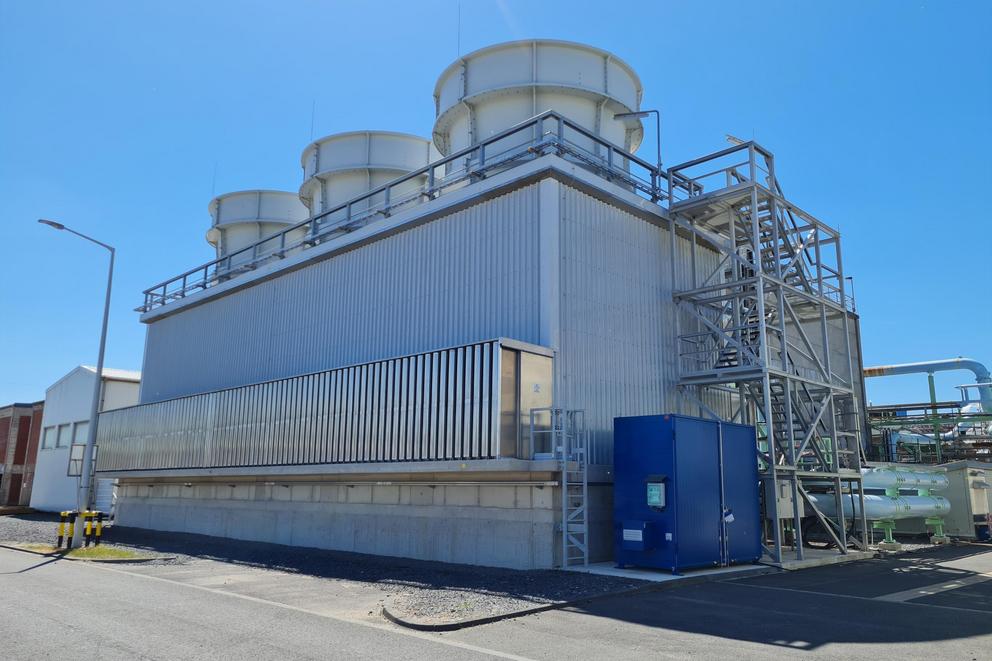
It depends on the application.
FRP cooling towers generally offer better resistance to corrosion than conventional unprotected carbon steel structures and are relatively lightweight.
Metal cooling towers may still be suitable for applications requiring particular structural properties or where suitable corrosion protection is available.
The best choice depends on the operating environment and total lifecycle cost.
Yes. FRP cooling towers are commonly installed outdoors.
However, UV protection, structural strength, wind loading, rain exposure, and local environmental conditions must be considered during design.
PVC film fill is commonly used for clean-water applications because of its high heat transfer surface area.
PP fill may be appropriate for selected higher-temperature or chemically demanding conditions.
Splash fill can be a suitable alternative for applications with higher suspended-solids or fouling concerns.
The best choice depends on actual operating conditions.
There is no fixed cleaning schedule for every installation.
Inspection frequency should depend on water quality, operating hours, environmental conditions, and the rate of scale or biological accumulation.
Regular inspections are recommended so that cleaning can be performed before deposits significantly affect performance.
Yes. FRP cooling towers can be designed in different sizes and configurations.
Customization may include cooling capacity, dimensions, airflow arrangements, materials, and internal components.
Buyers should provide detailed operating parameters to help the manufacturer determine a suitable design.
An FRP cooling tower is a practical solution for many industrial and commercial cooling applications. Its lightweight construction, corrosion resistance, flexible design, and relatively low structural maintenance requirements make it an attractive alternative to certain traditional cooling tower materials.
However, choosing the right FRP cooling tower involves more than selecting a material or comparing prices.
You need to consider cooling capacity, water flow, temperature range, wet-bulb conditions, water quality, airflow, and the performance of internal components such as cooling tower fill.
With the right design, suitable materials, and regular maintenance, an FRP cooling tower can support stable and efficient industrial operation for many years.
If you are looking for an FRP cooling tower solution for your industrial facility, Mach Industry (Zhejiang) Co.,Ltd can be a starting point for discussing your project requirements.
Visit https://www.machcooling.com to learn more about cooling tower solutions and explore the options available for your application.