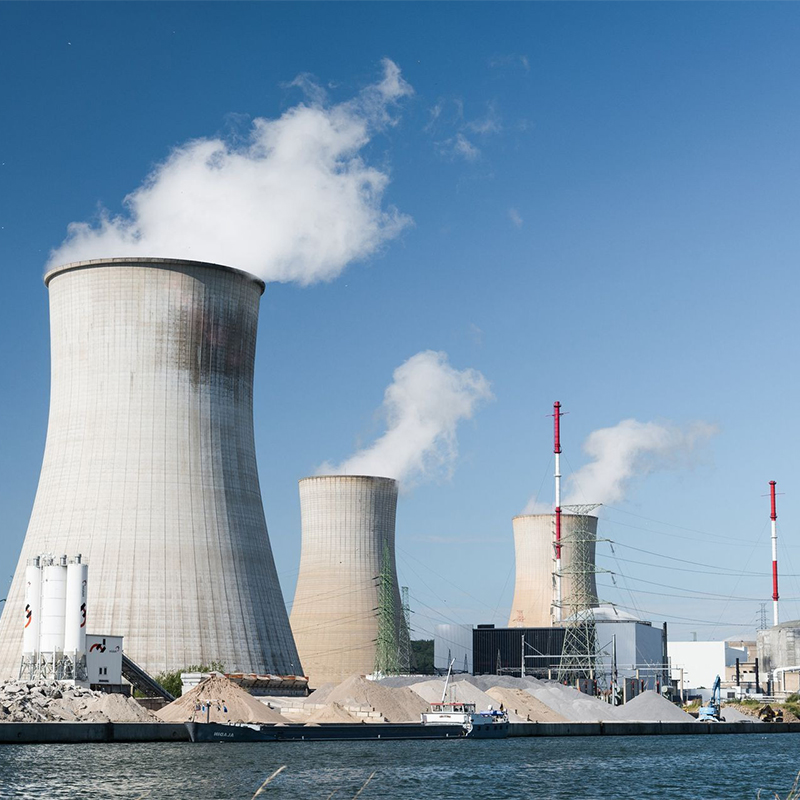
We Provide Cooling Tower Solution

Views: 0 Author: Cindy Publish Time: 2026-09-11 Origin: Site


Cooling towers play a critical role in modern industrial and commercial cooling systems. From power plants and chemical factories to HVAC systems, data centers, and manufacturing facilities, cooling towers help remove unwanted heat and keep equipment operating safely and efficiently.
But with so many cooling tower companies competing in the global market, how do you know which manufacturers are worth considering?
The answer depends on more than brand recognition. Product range, thermal performance, engineering capabilities, construction materials, energy efficiency, water consumption, customization, and after-sales service all matter.
In this guide, we introduce 8 leading cooling tower companies worldwide, including established international brands and Mach Industry (Zhejiang) Co., Ltd., a Chinese manufacturer offering industrial and commercial cooling tower solutions.
Quick Answer: The top cooling tower companies discussed in this article are SPX Cooling Technologies, Baltimore Aircoil Company (BAC), EVAPCO, Johnson Controls, Hamon, Paharpur Cooling Towers, ENEXIO, and Mach Industry (Zhejiang) Co., Ltd.
This ranking is an editorial comparison based on global presence, product capabilities, engineering experience, application range, and industry recognition rather than an official universal market-share ranking.
Before looking at individual manufacturers, let's answer a more important question: what actually makes a cooling tower company a leader?
A large factory or famous brand name does not automatically mean a manufacturer is the best choice for your project.
A leading cooling tower manufacturer should be able to provide different designs for different operating conditions.
Common options include:
Open-circuit cooling towers
Closed-circuit cooling towers
Counterflow cooling towers
Crossflow cooling towers
Industrial cooling towers
HVAC cooling towers
Evaporative fluid coolers
Field-erected cooling towers
Why does this matter?
Because a commercial HVAC project does not have the same requirements as a steel mill or chemical processing plant.
Cooling tower selection is not simply about choosing a model from a catalog.
The manufacturer needs to understand:
Heat load
Water flow
Entering water temperature
Leaving water temperature
Ambient wet-bulb temperature
Installation conditions
Water quality
Noise requirements
Available footprint
Corrosion conditions
A strong manufacturer can customize the tower around these factors instead of forcing the customer to adapt the project around a standard product.
A cooling tower can remain in operation for many years.
That means spare parts and technical support are extremely important.
A good supplier should be able to provide replacement components such as cooling tower fill, nozzles, drift eliminators, fan blades, motors, bearings, gearboxes, and other critical parts when required.
Here is our overview of the eight companies covered in this article:
| Rank | Company | Country/Region | Key Strength |
|---|---|---|---|
| 1 | SPX Cooling Technologies | USA | Large global portfolio and Marley technology |
| 2 | Baltimore Aircoil Company (BAC) | USA | Evaporative cooling technology |
| 3 | EVAPCO | USA | Industrial and commercial evaporative cooling |
| 4 | Johnson Controls | USA | HVAC and integrated cooling systems |
| 5 | Hamon | Belgium/International | Large industrial cooling projects |
| 6 | Paharpur Cooling Towers | India | Industrial and power applications |
| 7 | ENEXIO | Germany/International | Large-scale heat rejection systems |
| 8 | Mach Industry (Zhejiang) Co., Ltd. | China | Customized industrial and commercial solutions |
The companies below are not necessarily ranked according to annual revenue. Instead, the ranking considers overall industry reputation, technology, product range, applications, and international relevance.
SPX Cooling Technologies is one of the most recognized names in the worldwide cooling tower industry.
The company is strongly associated with the Marley brand and has extensive experience in cooling towers, heat-transfer equipment, and related technologies.
Its products serve a wide range of applications, including commercial HVAC, industrial processing, power generation, and other demanding cooling environments.
One of SPX's biggest advantages is its extensive engineering experience.
The company offers different cooling tower technologies designed for varying cooling capacities and operating conditions.
Its broad product portfolio allows engineers to select solutions according to:
Cooling capacity
Water flow
Energy requirements
Space limitations
Noise restrictions
Maintenance needs
Environmental conditions
For large industrial projects, experience matters. A cooling tower may operate continuously for thousands of hours each year, so small design differences can have a surprisingly large impact on lifetime operating costs.
SPX is particularly attractive for companies that want an established international manufacturer with a large installed base and extensive engineering resources.
For major industrial and infrastructure projects, this can provide additional confidence during equipment selection and long-term operation.
Baltimore Aircoil Company, commonly known as BAC, is another major player among global cooling tower companies.
BAC specializes in evaporative cooling and heat-transfer equipment for commercial HVAC, industrial, process cooling, and other applications.
Its product portfolio includes different cooling tower configurations as well as evaporative heat-rejection equipment.
BAC has built its reputation around efficient evaporative cooling technology and practical equipment design.
For many projects, efficiency is not simply about how much heat a cooling tower can remove.
It is also about how much electricity and water are required to achieve that performance.
That's where tower design becomes important.
Efficient fans, optimized water distribution, appropriate fill selection, drift control, and effective maintenance access can all influence total operating costs.
BAC can be particularly attractive to customers looking for an established manufacturer with a broad range of packaged cooling solutions.
The company's focus on energy and water efficiency also fits the direction of today's cooling industry.
EVAPCO is a major international manufacturer specializing in evaporative cooling and heat-transfer equipment.
The company serves markets including HVAC, industrial refrigeration, process cooling, and other applications where reliable heat rejection is essential.
One of EVAPCO's major strengths is its broad expertise in evaporative cooling.
Different industrial processes require different cooling approaches.
For example, one facility may prioritize low energy consumption, while another may be more concerned about water availability or process-fluid contamination.
A broad product portfolio allows engineers to consider different solutions rather than relying on a single cooling tower configuration.
A cooling tower may perform exceptionally well when new.
But what happens five or ten years later?
That's the real test.
Components such as fill media, spray nozzles, drift eliminators, fans, motors, bearings, and water distribution systems need regular inspection and maintenance.
A good cooling tower design should make those maintenance activities practical rather than unnecessarily difficult.
Johnson Controls is a global building technology and HVAC company with a major presence in heating, ventilation, air conditioning, building controls, and related systems.
Its broader HVAC capabilities make it relevant to commercial buildings, industrial facilities, and large mechanical systems.
One important advantage of working with a large HVAC technology company is the ability to look at the entire cooling system.
Think about a typical chilled-water system.
The cooling tower does not work alone.
It interacts with:
Chillers
Pumps
Heat exchangers
Condensers
Water-treatment systems
Controls
Building-management systems
If one component is inefficient, the overall system can suffer.
This is why system-level engineering is becoming increasingly important.
Johnson Controls may be particularly relevant for large commercial buildings, district cooling systems, data centers, and integrated HVAC projects.
For these applications, cooling tower performance should be evaluated together with chiller efficiency, pump energy, controls, and operating strategy.
Hamon is a long-established engineering company associated with cooling towers and large industrial heat-rejection systems.
The company has experience with complex projects where cooling requirements are too large or too specific for a simple packaged tower.
Large industrial cooling towers can be extremely complex.
Power plants, petrochemical facilities, refineries, and process industries may require cooling systems designed around unique operating conditions.
These projects can involve:
Detailed thermal calculations
Structural engineering
Water distribution design
Fan selection
Environmental considerations
Corrosion protection
Long-term maintenance planning
This is where an experienced engineering company can make a major difference.
Imagine trying to use the same pair of shoes for a marathon, a construction site, and a mountain hike.
It would work in some situations—but certainly not all of them.
Cooling towers are similar.
The right design depends heavily on the application.
Paharpur Cooling Towers is a well-known Indian manufacturer with strong experience in industrial cooling tower applications.
The company has served sectors such as power generation, manufacturing, petrochemicals, and process industries.
Industrial facilities often operate under difficult conditions.
High ambient temperatures, demanding production schedules, variable water quality, and high heat loads can all challenge cooling equipment.
Manufacturers with extensive industrial experience understand these conditions and can design cooling solutions accordingly.
A manufacturer does not necessarily need to be headquartered in your country to provide a suitable cooling solution.
However, experience with similar climates and industrial conditions can be valuable.
For example, a cooling tower designed for a mild European climate may need different considerations when installed in a hot, humid, or highly corrosive environment.
Climate should therefore be part of your purchasing decision.
ENEXIO is another important name in large-scale cooling and heat-rejection technology.
The company has experience with industrial and power-generation applications where cooling systems can represent a major part of the overall plant infrastructure.
Large industrial cooling projects often require customized engineering.
A cooling tower may need to integrate with:
Steam turbines
Condensers
Process cooling loops
Pumps
Water-treatment systems
Heat exchangers
Plant controls
The tower itself is only one piece of the puzzle.
For large facilities, initial equipment cost should never be the only purchasing consideration.
Instead, buyers should look at total cost of ownership.
That includes:
Initial purchase price
Installation cost
Fan energy
Pump energy
Water consumption
Chemical treatment
Maintenance
Spare parts
Downtime risk
Expected service life
A slightly more expensive tower can sometimes be the cheaper option over its entire operating life.
Mach Industry (Zhejiang) Co., Ltd. is a China-based cooling tower manufacturer focused on industrial and commercial cooling solutions.
Through the Mach Cooling brand, the company provides different cooling tower configurations for customers seeking reliable heat-rejection equipment and customized solutions.
Mach focuses on practical cooling solutions for different industrial and commercial requirements.
Its product range includes solutions such as:
Open-circuit cooling towers
Closed-circuit cooling towers
Counterflow cooling towers
Crossflow cooling towers
Industrial cooling towers
Commercial cooling towers
This range allows customers to select a cooling configuration based on their actual operating conditions.
Open and closed cooling towers work differently.
In an open cooling tower, circulating water is directly exposed to the evaporative cooling process.
A closed-circuit cooling tower, on the other hand, uses a heat-exchange coil to keep the process fluid in a closed loop.
So which one is better?
There is no universal answer.
Open systems can be attractive for many conventional cooling applications, while closed-circuit systems can be useful when process-fluid cleanliness, contamination control, or separation of fluid loops is important.
Mach also provides both counterflow and crossflow cooling tower solutions.
In a counterflow tower, air and water generally move in opposite directions.
In a crossflow tower, air moves horizontally across the falling water.
Each configuration has its own advantages.
The best choice depends on factors such as:
Available installation space
Cooling capacity
Water distribution
Fan requirements
Maintenance access
Project cost
Environmental conditions
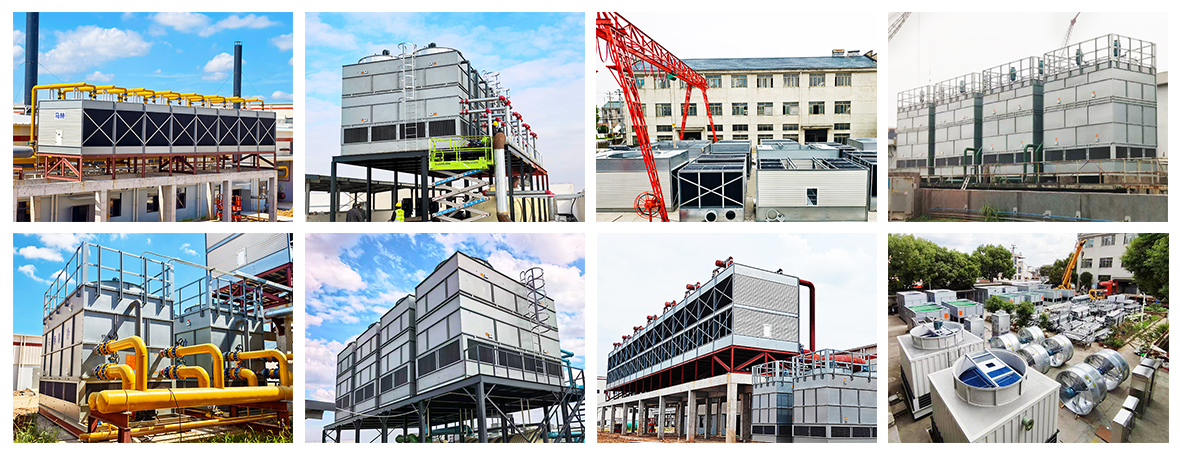
One of Mach's important strengths is its focus on customized cooling solutions.
Before selecting a tower, customers should provide information such as:
Required cooling capacity
Water flow rate
Entering water temperature
Leaving water temperature
Design wet-bulb temperature
Installation location
Water quality
Material requirements
Noise restrictions
The manufacturer can then evaluate the appropriate tower configuration.
Chinese industrial manufacturers have become increasingly important in international markets.
Competitive manufacturing costs, large production capabilities, customization, and export experience can make Chinese cooling tower manufacturers attractive to overseas buyers.
But let's be clear: low price should never be the only reason to choose a cooling tower supplier.
Buyers should also examine:
Thermal performance
Material quality
Manufacturing standards
Testing procedures
Technical documentation
Spare parts
Warranty
Delivery time
After-sales support
For more information about Mach Industry's cooling tower solutions, visit the official Mach Cooling website.
Choosing a cooling tower manufacturer can feel overwhelming.
There are dozens of companies, hundreds of models, and countless technical specifications.
Fortunately, the process becomes much easier if you focus on the right questions.
Start with the heat load.
How much heat must the cooling tower reject?
You should know your:
Circulating water flow
Entering water temperature
Desired leaving water temperature
Design wet-bulb temperature
Without these figures, selecting the right cooling tower is largely guesswork.
A cooling tower may operate continuously throughout the year.
That means fan and pump energy can add up quickly.
When comparing cooling tower companies, ask about:
Fan efficiency
Motor efficiency
Variable-frequency drives
Thermal performance
Water distribution
Approach temperature
A small efficiency improvement can translate into substantial savings over many years.
Water is another major operating cost.
Evaporation is essential to evaporative cooling, but water losses also occur through blowdown and drift.
A well-designed cooling system should therefore consider:
Cycles of concentration
Water treatment
Blowdown control
Drift reduction
Filtration
Water reuse
If your facility operates in a water-stressed region, water efficiency should be a top priority.
Materials can have a major impact on service life.
Common cooling tower materials include:
FRP
Galvanized steel
Stainless steel
Concrete
PVC
PP components
The correct material depends on the environment and water chemistry.
For example, corrosive industrial environments may require more corrosion-resistant materials.
Here's a question buyers sometimes forget:
How easy is the tower to maintain?
Inspecting and replacing cooling tower fill, nozzles, drift eliminators, fans, motors, and other components should be practical.
Easy maintenance can reduce downtime and labor costs over the life of the equipment.
Before signing a purchase order, ask:
Are spare parts available?
How long is the warranty?
Does the manufacturer provide technical support?
Can replacement fill be supplied?
Is installation assistance available?
What documentation is included?
A cooling tower is a long-term investment.
The supplier should be able to support it long after delivery.
The cooling tower industry is changing.
Several trends are influencing how manufacturers design and customers purchase cooling systems.
Energy costs remain an important concern for industrial facilities.
As a result, manufacturers are paying greater attention to efficient fans, motors, drives, water distribution, and thermal design.
The goal is simple:
Remove more heat while consuming less energy.
Cooling towers naturally consume water through evaporation.
But modern water-management strategies can reduce unnecessary losses.
Better filtration, water treatment, blowdown control, drift elimination, and monitoring can all contribute to more efficient operation.
Digital monitoring is also becoming more common.
Modern cooling systems can monitor parameters such as:
Water temperature
Vibration
Motor performance
Fan operation
Water quality
Flow rate
Equipment condition
This information can help operators identify problems before they turn into expensive failures.
Data centers are another major source of cooling demand.
As computing power and AI infrastructure continue to grow, heat density is increasing.
That means cooling systems must provide:
High reliability
Consistent temperature control
Energy efficiency
Redundancy
Easy maintenance
Scalable capacity
Cooling towers can play an important role in suitable data-center cooling architectures.
Several internationally recognized cooling tower companies include SPX Cooling Technologies, Baltimore Aircoil Company, EVAPCO, Johnson Controls, Hamon, Paharpur Cooling Towers, ENEXIO, and Mach Industry (Zhejiang) Co., Ltd.
However, the best supplier depends on your application, cooling capacity, budget, climate, water quality, and service requirements.
There is no single answer.
Large industrial and power projects may benefit from manufacturers with extensive engineering capabilities, while smaller industrial projects may prioritize customization, competitive pricing, delivery time, and local technical support.
An open cooling tower directly exposes circulating water to air during evaporation.
A closed-circuit cooling tower uses a coil or heat exchanger to keep the process fluid separated from the evaporative water circuit.
The appropriate design depends on process requirements.
Service life depends on design, materials, water chemistry, maintenance, operating conditions, and environmental exposure.
Regular inspection, water treatment, cleaning, component replacement, and corrosion control can significantly extend equipment life.
At minimum, ask about thermal capacity, water flow, design conditions, materials, fan and motor specifications, water consumption, noise, maintenance access, spare parts, warranty, delivery time, and after-sales support.
The global cooling tower market includes many capable manufacturers, but each company has different strengths.
SPX Cooling Technologies is a major global player with extensive cooling technology experience.
BAC is widely recognized for evaporative cooling and heat-transfer equipment.
EVAPCO offers broad industrial and commercial evaporative cooling solutions.
Johnson Controls brings extensive HVAC and integrated building-system expertise.
Hamon and ENEXIO are particularly relevant to large engineered cooling applications.
Paharpur Cooling Towers has strong industrial and power-sector experience.
And Mach Industry (Zhejiang) Co., Ltd. provides a range of open, closed-circuit, counterflow, crossflow, and industrial cooling tower solutions for customers looking for flexible and customized equipment.
The important thing is not simply choosing the most famous brand.
Instead, choose the manufacturer that best matches your actual project.
Consider thermal performance, energy consumption, water usage, construction materials, customization, maintenance, spare parts, warranty, delivery, and technical support.
After all, the cheapest cooling tower is not necessarily the lowest-cost cooling tower.
The real goal is to find a system that delivers reliable heat rejection, reasonable operating costs, long service life, and dependable support.
For customers looking for customized industrial and commercial cooling tower solutions, Mach Industry (Zhejiang) Co., Ltd. can be a supplier worth considering.
Learn more about its products and cooling solutions on the official Mach Cooling website.