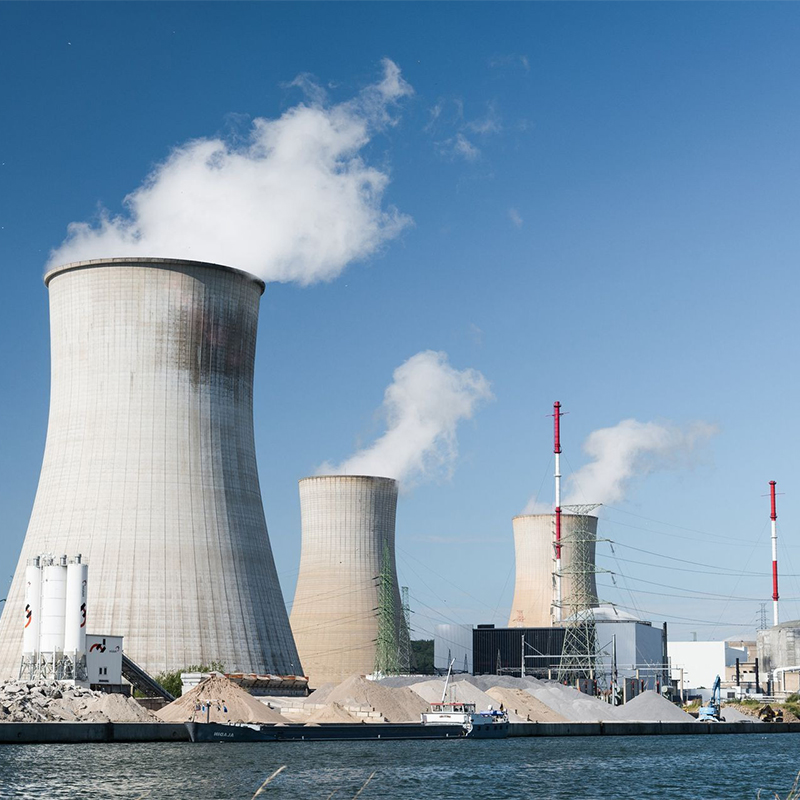
We Provide Cooling Tower Solution

Views: 0 Author: Cindy Publish Time: 2026-10-23 Origin: Site


Choosing the right closed loop cooling tower manufacturer in India is an important decision for industrial plants, HVAC systems, chemical facilities, pharmaceutical companies, and process cooling applications. The right equipment helps maintain stable operating temperatures, protect process fluids from contamination, and reduce unexpected downtime. However, not every cooling tower is designed for the same operating conditions, and choosing a supplier based on price alone can lead to long-term problems.
When comparing closed loop cooling tower manufacturers, buyers should consider thermal performance, heat exchanger coil materials, energy efficiency, corrosion protection, customization options, delivery schedules, and after-sales support.
India has several cooling equipment manufacturers and suppliers serving different industrial sectors. International manufacturers can also provide additional options for projects that require specific configurations or customized engineering. This guide introduces notable companies to consider, explains how closed loop cooling towers work, and outlines the key factors to evaluate before purchasing.
India's industrial sector relies on efficient heat rejection across manufacturing, power generation, chemical processing, pharmaceuticals, plastics, food production, and commercial air conditioning. In these applications, cooling performance directly affects production stability, equipment life, and operating costs.
Traditional open cooling towers are widely used because of their relatively straightforward design and competitive initial cost. However, they expose circulating process water directly to the atmosphere. Dust, airborne contaminants, and biological materials can enter the water, potentially increasing cleaning requirements and affecting downstream equipment.
A closed loop cooling tower offers an alternative. It keeps the primary process fluid inside a heat exchanger coil while a separate external spray-water circuit removes heat. This arrangement helps protect the primary fluid from direct exposure to the environment.
For Indian buyers, the decision often comes down to application requirements, local water quality, summer operating conditions, available installation space, and lifecycle costs. Some projects may be better served by a local manufacturer, while others may benefit from comparing proposals from international suppliers such as Mach Industry (Zhejiang) Co., Ltd.
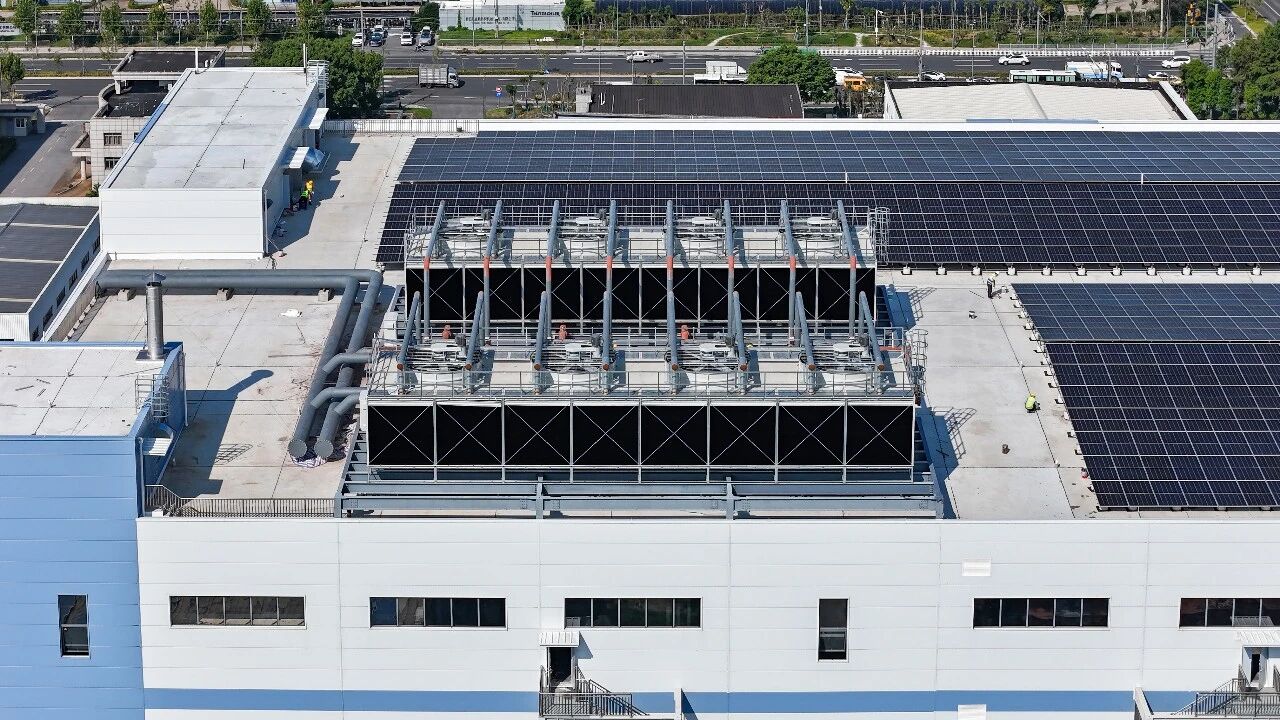
A closed loop cooling tower, also known as a closed circuit cooling tower, is a heat rejection system that cools process fluid without bringing that fluid into direct contact with outside air.
The process fluid—typically water or a water-glycol mixture—flows through a coil inside the cooling tower. A separate spray-water circuit distributes water over the outside of the coil, while fans move air through the equipment. Heat transfers through the coil wall and is released into the atmosphere through a combination of sensible heat transfer and evaporation.
The cooled process fluid then returns to the equipment or production process that requires cooling.
This arrangement separates the primary fluid from the external cooling environment. It can help reduce contamination and protect process equipment, particularly where fluid cleanliness and stable operating conditions are important.
However, a closed loop cooling tower is not automatically a zero-water-consumption system. Evaporative closed circuit units still require spray water, makeup water, blowdown, and suitable water treatment. Dry and hybrid configurations may reduce water consumption under appropriate operating conditions.
The cooling process follows a continuous cycle:
Warm process fluid enters the heat exchanger coil.
Heat transfers from the process fluid through the coil wall.
Spray water wets the outside of the coil.
Fans move air across the coil and spray-water surfaces.
Some spray water evaporates, carrying heat away.
The cooled process fluid returns to the connected equipment.
The system's performance depends on several variables, including heat load, fluid flow rate, entering and leaving fluid temperatures, outdoor wet-bulb temperature, coil design, airflow, and spray-water distribution.
This is why buyers should provide actual operating data when requesting a quotation. A tower's nominal capacity alone does not prove that it can deliver the required cooling performance during the hottest days of the year.
A typical closed loop cooling tower includes a heat exchanger coil, fans, fan motors, a spray-water pump, spray nozzles, a collection basin, drift eliminators, louvers, structural supports, and control equipment.
Each component contributes to overall performance. The coil determines how effectively heat transfers from the process fluid. Fans provide airflow, while spray pumps and nozzles distribute water across the heat exchanger. Drift eliminators help reduce the amount of water droplets carried out with the exhaust air.
The basin collects spray water for recirculation, and controls help manage operation under changing conditions.
When evaluating a supplier, request a complete component list, material specifications, electrical data, maintenance clearances, and operating limits for the proposed model.
Closed loop cooling towers are particularly useful when process-fluid cleanliness, reliable cooling, and consistent production conditions are priorities.
By keeping the primary fluid inside a coil, the system reduces direct exposure to airborne dust and other environmental contaminants. This can help protect downstream heat exchangers, compressors, molds, and process equipment.
The design may also reduce the need for frequent cleaning of parts of the primary circuit. However, it does not eliminate maintenance. The external spray-water system still needs appropriate treatment, inspection, and cleaning, while the primary loop may require filtration and corrosion control.
Contamination can contribute to fouling, blockage, corrosion, and reduced heat-transfer efficiency. In applications that depend on clean circulating fluid, these problems may lead to higher maintenance costs or production interruptions.
A closed loop cooling tower helps limit direct contamination of the primary circuit. Nevertheless, the process fluid must remain compatible with the coil material and operating conditions.
Buyers should disclose the fluid composition, operating pressure, temperature range, and any glycol or chemical additives before equipment selection. The manufacturer can then recommend an appropriate coil configuration and fluid management strategy.
A properly selected closed loop system can help maintain stable process temperatures and protect sensitive equipment. Depending on the design, it may also support dry or hybrid operating modes when ambient conditions allow.
These benefits are particularly valuable for factories where an unexpected cooling failure can interrupt production.
The actual advantages depend on the operating environment, equipment configuration, and maintenance practices. Before making a purchase, consider summer wet-bulb temperatures, annual operating hours, water availability, energy costs, and the consequences of insufficient cooling.
The following companies are worth considering when researching closed loop cooling tower solutions for industrial projects in India. They differ in product portfolios, engineering capabilities, locations, and service arrangements.
This list is a practical starting point rather than a definitive ranking based on independently verified sales figures, market share, or product performance. Buyers should confirm current product availability and technical suitability directly with each company.

Thermax Limited is an established Indian engineering company serving industrial energy and environmental markets. Its product portfolio includes cooling solutions, and its official website lists closed loop cooling towers within its wet cooling offerings.
For industrial buyers, Thermax is worth considering when evaluating cooling equipment alongside broader engineering requirements. Its established presence in India may also be relevant to projects where local coordination and service arrangements are important.
When requesting a proposal, confirm the specific closed loop model, rated capacity, design conditions, materials, power consumption, and installation support available for your location.
Official website: https://www.thermaxglobal.com/
Siddhant Equipments Pvt. Ltd. supplies cooling equipment under the AQUACOOL brand. Its website lists several cooling technologies, including closed loop cooling towers, open cooling towers, hybrid coolers, and evaporative condensers.
This range can be useful for buyers who want to compare different cooling configurations before making a decision.
When evaluating AQUACOOL, ask for the available capacity range, coil and casing materials, thermal performance data, electrical requirements, and maintenance recommendations. It is also important to confirm whether the proposed equipment meets the actual operating conditions of your plant.
Official website: https://www.aquacoolcoolingtower.com/
We Heat Transfer Equipments Pvt. Ltd., based in the Coimbatore area of Tamil Nadu, advertises closed circuit cooling towers alongside other heat rejection products, including dry and adiabatic cooling equipment.
Its product range makes the company worth investigating for industrial applications that require a dedicated closed circuit cooling arrangement.
Before selecting a model, provide the supplier with the process fluid, required flow rate, entering and leaving temperatures, heat load, and outdoor design conditions. Request a technical selection that demonstrates how the proposed unit will perform under those conditions.
Official website: https://www.closedcircuitcoolingtower.in/
Colt Equipments is another company to consider when comparing industrial cooling solutions. Its website discusses closed-circuit cooling towers and related cooling and refrigeration equipment.
A supplier with a broader cooling portfolio may be useful for projects involving multiple pieces of connected equipment. However, buyers should evaluate the specific closed circuit product rather than assuming that every model or service is available for every application.
Confirm the coil design, construction materials, rated capacity, operating limits, warranty conditions, and technical support arrangements before placing an order.
Official website: https://colt-group.com/
National Cooling Towers advertises closed loop cooling towers for industrial processes, HVAC systems, data centers, and other applications.
For buyers researching this supplier, the next step is to request model-specific technical information. Published product descriptions can help explain the basic design, but they do not replace an engineering proposal based on actual operating conditions.
Pay particular attention to thermal performance, coil material, fan power, noise levels, maintenance access, and the availability of installation and after-sales support.
Official website: https://www.nationalcoolingtowers.com/
Mach Industry (Zhejiang) Co., Ltd. is an international cooling equipment manufacturer that buyers in India can consider when comparing closed cooling tower solutions.
The company provides cooling tower products for industrial and commercial applications. For Indian projects, evaluating an overseas supplier can provide another option for comparing equipment configurations, customization requirements, and procurement costs.
The most important step is to ensure that the proposed equipment matches the project's technical requirements. Buyers should request the model datasheet, confirmed cooling performance, coil and casing materials, electrical specifications, operating limits, delivery schedule, and warranty conditions.
For an imported unit, also clarify shipping terms, export documentation, installation guidance, spare-parts availability, and after-sales support in India. These details help avoid misunderstandings after the purchase order is issued.
If you are looking for a cooling tower solution for an industrial project, visit the official website to discuss your requirements.
Official website: https://www.machcooling.com/
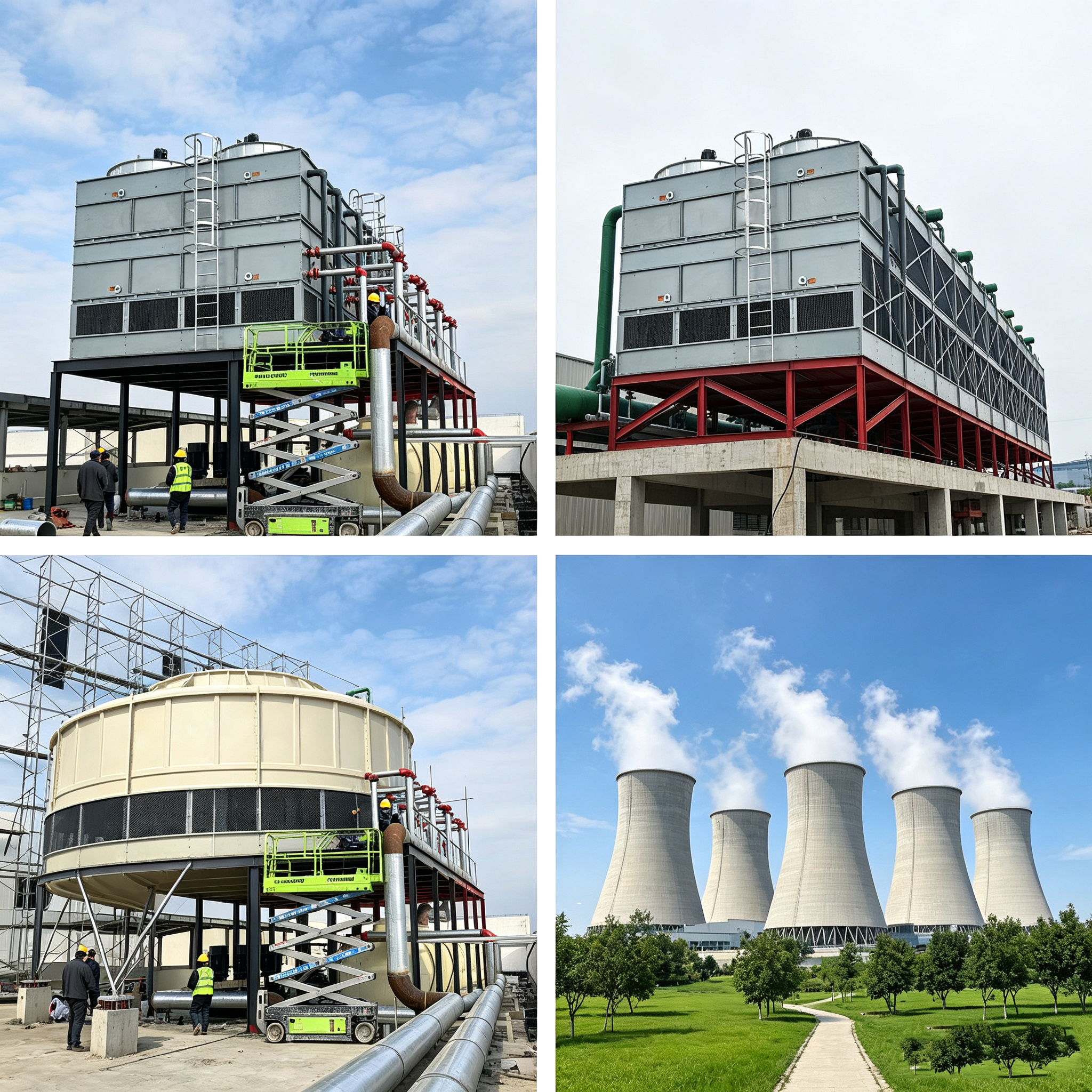
A low purchase price does not always represent the best value. If a tower cannot meet the required cooling duty during peak summer conditions, the resulting production losses may far exceed the initial savings.
To compare manufacturers fairly, provide the same technical brief to each shortlisted supplier. Ask them to state the design conditions, guaranteed performance if applicable, power consumption, construction materials, dimensions, scope of supply, and exclusions.
A consistent comparison makes it easier to identify differences in both technical suitability and lifecycle cost.
Start by confirming the heat load, process-fluid flow rate, entering-fluid temperature, required leaving-fluid temperature, and outdoor design wet-bulb temperature.
Wet-bulb temperature is especially important for evaporative cooling because it influences the cooling temperature the equipment can achieve. A tower selected using mild-weather conditions may not perform as required during India's hottest operating periods.
Ask the manufacturer to explain the assumptions behind the capacity selection. Confirm whether performance is guaranteed under specified conditions and whether a factory or site acceptance procedure is available.
Avoid comparing nominal tonnage alone when the quoted units use different design conditions.
Coil material has a direct effect on durability, fluid compatibility, and maintenance requirements. Depending on the application, manufacturers may offer carbon steel, galvanized steel, stainless steel, copper, or other configurations.
No single material is ideal for every installation. The best option depends on process-fluid chemistry, operating pressure, temperature, external spray-water quality, and cleaning methods.
Also examine the casing, fasteners, basin, structural supports, and protective coatings. If the site is near the coast or exposed to aggressive industrial conditions, explain the corrosion risks and request a suitable material specification.
Fans and spray-water pumps are important sources of electrical consumption. Ask for their rated power and, where possible, estimated operating consumption under the proposed duty.
Variable-frequency drives may help adjust fan speed to changing loads when the system is designed for that mode of operation. However, actual savings depend on control strategy, operating profile, and ambient conditions.
Lifecycle cost should also include water treatment, makeup water, blowdown, cleaning, inspection, spare parts, and planned maintenance. A technically suitable unit with a slightly higher purchase price may offer better long-term value if it reduces operating costs and downtime.
Different plants have different installation constraints. Dimensions, pipe connections, electrical supply, control interfaces, fan arrangements, maintenance platforms, and lifting provisions may all affect equipment selection.
Ask the manufacturer to identify which features can be customized and how those options affect price and lead time.
For an overseas supplier, clarify shipping terms, packing methods, import responsibilities, warranty procedures, replacement-part delivery, and commissioning support. Confirm these arrangements in writing before finalizing the purchase.
Closed loop cooling towers can serve many industries, but each application has different thermal, fluid-quality, and reliability requirements. The right choice depends on the process, not simply on the industry category.
Chemical and pharmaceutical facilities may require stable process temperatures and carefully controlled circulating-fluid quality. A closed loop system can help reduce direct contamination from the atmosphere.
However, process-fluid compatibility is essential. Buyers should disclose chemical composition, possible corrosion risks, temperature limits, and any specific plant requirements before equipment selection.
HVAC systems and data centers often need dependable heat rejection over long operating hours. Noise, energy consumption, redundancy, available space, and controls can therefore be important selection factors.
The cooling tower should be evaluated as part of the complete system, including chillers, pumps, heat exchangers, and control logic. Where uptime is critical, discuss standby capacity and how the system will respond to a fan, pump, or control failure.
Plastic molding, steel production, power generation, and food processing can all require reliable process cooling.
Closed loop cooling towers may be suitable for molds, compressors, auxiliary equipment, and other applications where fluid cleanliness matters. However, actual suitability depends on heat load, fluid temperature, environmental conditions, and the consequences of a cooling interruption.
Ask the supplier to confirm the proposed unit's suitability for your process rather than assuming that one standard design fits every application.
The main difference between open and closed loop cooling towers is how the primary process fluid interacts with the atmosphere.
An open cooling tower brings circulating water into direct contact with air. A closed loop cooling tower keeps the primary process fluid inside a coil and uses a separate external spray-water circuit to reject heat.
Closed loop systems can reduce contamination of the primary fluid and may help protect sensitive equipment. Their initial cost is often higher, and the coil adds heat-transfer resistance that must be considered during equipment selection.
Open towers may be more economical where direct air-water contact is acceptable and the process can tolerate the associated water-quality management requirements.
| Comparison Factor | Closed Loop Cooling Tower | Open Cooling Tower |
|---|---|---|
| Primary fluid exposure | Isolated inside a coil | Direct contact with air |
| Primary fluid cleanliness | Better protected from airborne contamination | More exposed to environmental contaminants |
| Initial investment | Often higher | Often lower |
| External spray-water treatment | Required for evaporative designs | Required |
| Coil maintenance | Coil inspection and cleaning as needed | No process-fluid coil in a conventional open tower |
| Typical applications | Sensitive process cooling, selected HVAC and industrial systems | General industrial cooling and applications tolerant of direct contact |
The final choice should account for fluid quality, thermal requirements, site conditions, water availability, budget, and maintenance capability.
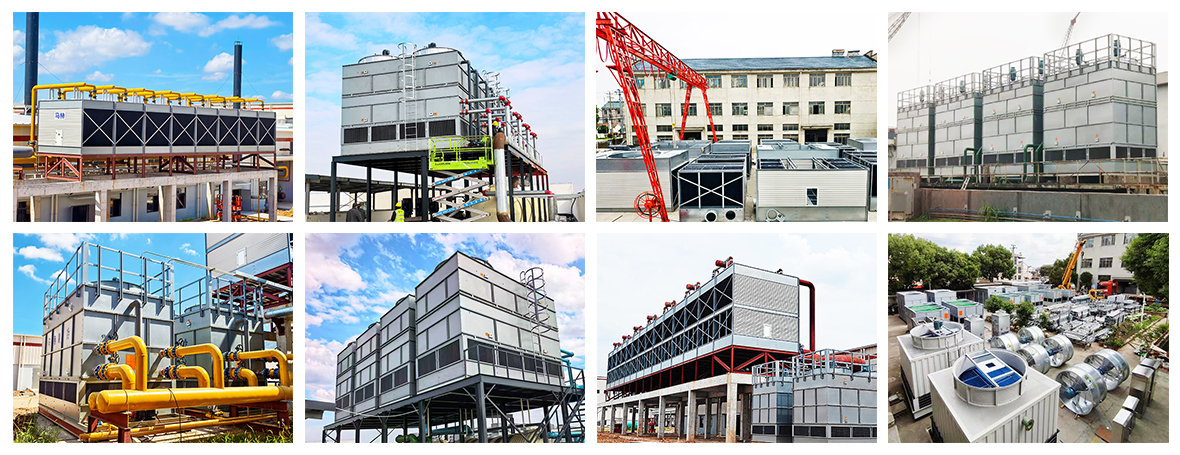
Correct capacity selection starts with an accurate estimate of the heat that must be removed.
Provide the manufacturer with the process heat load, fluid type, flow rate, inlet and outlet temperatures, operating schedule, outdoor design conditions, installation space, and available electrical supply. If the load changes throughout the day, share the expected operating range rather than only the average value.
The manufacturer can use this information to select the coil, airflow, spray-water flow, and fan and pump power.
Do not rely exclusively on a generic tonnage estimate. Two systems with similar nominal capacities may perform differently if their design conditions, fluid properties, or ambient temperatures differ.
Avoid adding an arbitrary oversizing margin without engineering review. Excessive oversizing can increase the initial investment and may reduce efficiency during partial-load operation. A properly engineered selection balances peak cooling demand with expected operating conditions.
Before contacting manufacturers, prepare a clear technical inquiry. A complete request helps suppliers provide more accurate proposals and reduces the risk of comparing equipment with different assumptions.
Ask each supplier to confirm:
Rated heat rejection capacity at the specified design conditions.
Process-fluid type, flow rate, and inlet and outlet temperatures.
Coil material, casing construction, and corrosion protection.
Fan and spray-pump power consumption.
Electrical requirements and control options.
Equipment dimensions, connection sizes, and maintenance clearances.
Noise levels and recommended operating limits.
Scope of supply, installation requirements, and recommended spare parts.
Warranty terms, lead time, and commissioning support.
Shipping terms and import documentation, where applicable.
Request a technical datasheet and general arrangement drawing along with the quotation. If performance is critical, clarify the applicable performance guarantee and acceptance procedure before placing the order.
When researching closed loop cooling tower manufacturers and suppliers for the Indian market, Mach Industry (Zhejiang) Co., Ltd. is an international option worth evaluating alongside local suppliers.
The right procurement decision should be based on engineering suitability rather than the supplier's location alone. Buyers can compare Mach's proposed equipment with other quotations using the same heat load, fluid temperatures, flow rate, ambient conditions, material requirements, and electrical specifications.
For an overseas purchase, it is particularly important to establish delivery responsibilities, warranty coverage, technical documentation, installation guidance, and spare-parts arrangements before confirming the order.
If your project requires a closed cooling tower, prepare the operating data and ask the manufacturer to recommend a suitable configuration. A clear technical discussion at the beginning can help reduce selection errors and make the purchasing process more efficient.
Visit Mach Cooling to learn more about the company's cooling tower products and discuss your application requirements.
There is no single best manufacturer for every application. The right supplier depends on required cooling capacity, process-fluid cleanliness, materials, energy consumption, delivery schedule, service support, and total cost of ownership.
Compare at least two or three technically suitable proposals. Make sure the manufacturers use the same design conditions so that their performance and pricing can be evaluated fairly.
No. A typical evaporative closed loop cooling tower still uses spray water, some of which evaporates during heat rejection. The external circuit requires makeup water and appropriate water treatment.
Dry and hybrid systems may reduce water consumption under suitable conditions, but their performance depends on equipment design, ambient temperature, and required process-fluid temperature.
An overseas manufacturer may be able to supply equipment to Indian buyers, subject to its export arrangements and the project's import requirements.
Before ordering, confirm shipping terms, customs documentation, applicable duties and taxes with the relevant professionals, electrical compatibility, warranty conditions, installation support, and spare-parts availability.
It can be, provided the equipment is selected for the site's actual summer design conditions. Outdoor wet-bulb temperature, process-fluid temperature, heat load, airflow, and coil performance all affect cooling capacity.
Ask the manufacturer to confirm performance under the conditions your plant is expected to experience, especially during peak summer operation.
Prepare the heat load, process-fluid type, flow rate, entering and leaving fluid temperatures, outdoor design conditions, operating schedule, available space, electrical supply, and any material or corrosion requirements.
For an imported unit, also explain the destination, delivery expectations, and support requirements. Complete information helps the supplier recommend equipment that is appropriate for the application.
Finding the right closed loop cooling tower manufacturer in India requires more than comparing prices. Thermal performance, coil materials, energy consumption, process-fluid protection, maintenance requirements, and after-sales support all influence long-term results.
Thermax, AQUACOOL, We Heat Transfer Equipments, Colt Equipments, National Cooling Towers, and international supplier Mach Industry (Zhejiang) Co., Ltd. are companies buyers can investigate as part of their supplier research. Their current product availability, technical capabilities, and service arrangements should be verified directly before a purchase decision.
Start by defining your cooling requirements clearly, then request engineering proposals based on the same operating conditions. This approach makes it easier to identify equipment that meets your process needs and delivers reliable performance over its service life.
If you are evaluating closed loop cooling tower solutions for an industrial project in India, contact Mach Industry (Zhejiang) Co., Ltd. through www.machcooling.com to discuss your application and request a technical proposal.