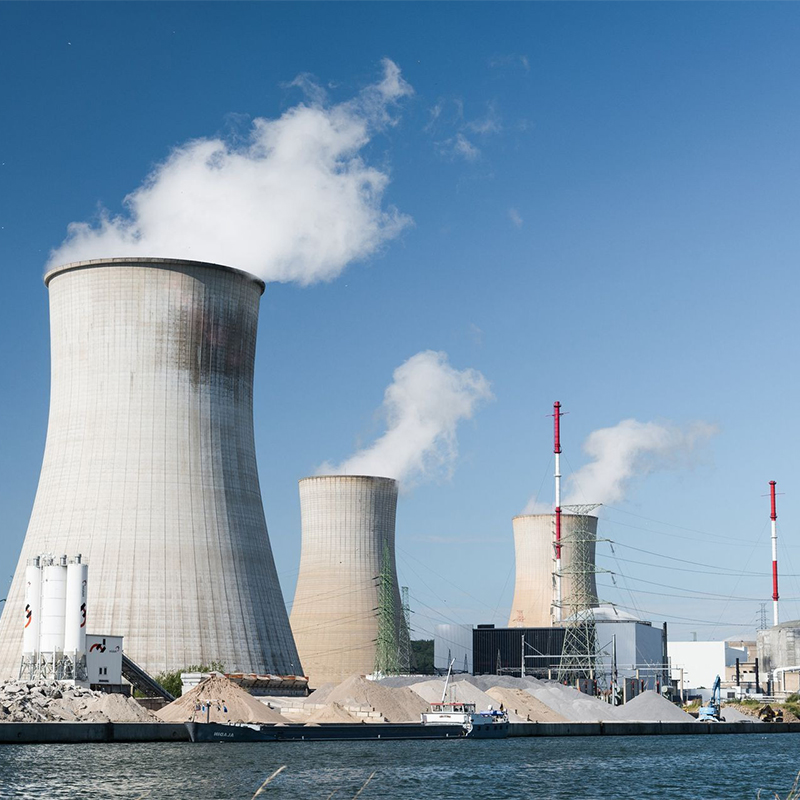
We Provide Cooling Tower Solution

Views: 0 Author: Cindy Publish Time: 2026-10-24 Origin: Site


Choosing the right cooling tower manufacturer is an important decision for industrial plants, commercial buildings, data centers, and manufacturing facilities. A cooling tower must remove heat efficiently, maintain the required water temperature, and operate reliably under local environmental conditions. But with so many suppliers available, how can you identify a manufacturer whose performance claims you can trust?
One useful starting point is CTI certification. The Cooling Technology Institute (CTI) operates a thermal certification program that verifies whether covered cooling tower product lines perform in accordance with their published thermal ratings. Buyers can consult the official certification directory to check listed manufacturers and product lines.
India has several established cooling tower manufacturers, but it is important to understand that not every product from a manufacturer is automatically CTI certified. Certification should always be verified against the specific product line and model being offered.
In this guide, we will explain what CTI certification means, introduce Indian manufacturers worth researching through the official directory, and share practical tips for selecting a reliable cooling tower supplier. We will also introduce Mach Industry (Zhejiang) Co., Ltd. as a supplier buyers can evaluate for their cooling tower requirements.
Visit the official website at https://www.machcooling.com to explore the company's available product and company information.
The Cooling Technology Institute is an industry organization dedicated to cooling technology, technical standards, testing, and performance verification. Its thermal certification program is particularly relevant when buyers need confidence that a cooling tower can deliver its published heat-rejection performance.
CTI Standard 201 establishes a program for certifying that cooling tower models within a manufacturer's product line perform thermally in accordance with their published ratings.
The certification process uses testing conducted through a CTI-licensed testing agency under the applicable program requirements. Buyers can review the official CTI certification information to understand the program and access related resources.
The key point is straightforward: CTI thermal certification concerns the thermal performance of covered cooling tower models. It is not simply a statement about the manufacturer's reputation, construction materials, or general product quality.
Certification also does not automatically extend to every product sold by a listed company. A manufacturer may offer several cooling tower series, while only specific product lines appear in the certification directory.
Before placing an order, always confirm that the model and configuration quoted by the supplier match the relevant certification record.
A cooling tower removes heat from circulating water by transferring heat to the surrounding air. In conventional evaporative cooling towers, evaporation plays a major role in the cooling process.
Actual performance depends on several factors, including water flow rate, hot-water inlet temperature, cold-water outlet temperature, ambient wet-bulb temperature, airflow, and tower design.
If a cooling tower cannot achieve the required outlet water temperature, connected equipment may operate less efficiently or struggle to maintain its intended performance. In industrial facilities, inadequate cooling can also affect production stability.
Thermal certification provides an additional basis for evaluating published performance claims. However, it does not replace correct equipment selection, proper installation, water treatment, or regular maintenance.
The first reason to consider CTI-certified equipment is greater confidence in the manufacturer's published thermal ratings.
A cooling tower may look well constructed and have an attractive price, but the most important question is whether it can meet your required cooling duty under the specified design conditions.
When evaluating a certified model, confirm that the product line and configuration in the quotation correspond to the applicable CTI directory entry. You should also check the design conditions used for equipment selection.
A certified model must still be correctly sized for your application. Certification cannot compensate for a tower selected using the wrong water flow rate or an unrealistic design wet-bulb temperature.
Cooling towers are long-term investments. Buyers may need to justify equipment selection to management, consultants, engineering teams, or project owners.
An official certification record provides a useful reference when reviewing a supplier's technical claims. It can also help distinguish product-specific thermal certification from general statements about quality or manufacturing experience.
Ask the supplier for the relevant certification details, model designation, and supporting technical documentation. If these details do not match the quotation, request clarification before proceeding.
Comparing cooling towers is not as simple as comparing nominal capacity or purchase price. Different suppliers may use different assumptions for inlet water temperature, outlet water temperature, flow rate, and wet-bulb conditions.
To make a meaningful comparison, ensure that all quotations use the same design basis and clearly define the scope of supply.
CTI certification can be one important evaluation factor, alongside materials, energy consumption, maintenance access, warranty coverage, and total operating cost.
Several Indian cooling tower manufacturers have product-line entries in the CTI certification directory. The companies below are examples for buyers to investigate, rather than a ranking of the best manufacturers.
Certification status and covered models should be verified directly through the official CTI Certification Directory before purchasing.
Advance Cooling Towers Pvt. Ltd. has product lines listed in the CTI certification directory. Examples include the Advance 2020 Series A, NTM, and SM entries.
The directory provides information about the listed product lines, including their configurations and cooling tower design characteristics.
If you are considering this manufacturer, check the current directory entry and confirm which product series and models are relevant to your project. Ask for technical specifications, performance data, warranty terms, and a detailed quotation before making a final decision.
Bell Cooling Towers Pvt. Ltd. is another Indian manufacturer appearing in the CTI certification directory, which includes a BCTI product-line entry.
Buyers should review the current directory record and any associated disclosure to establish which models are covered.
Beyond certification, assess whether the proposed cooling tower matches your required capacity, installation footprint, water quality, operating conditions, and maintenance requirements.
Delta Cooling Towers Pvt. Ltd. has a listed DFC-60UX product line in the CTI certification directory. The entry describes an induced-draft, counterflow, open-circuit cooling tower configuration.
If this manufacturer is on your shortlist, confirm that the model being offered corresponds to the listed product line. You should also evaluate the proposed equipment against your actual design conditions rather than relying on a model name alone.
Paharpur Cooling Towers Ltd. is another Indian company with product lines shown in the CTI certification directory. Examples include the CF3 Series, OXF-30K Series, and Series RXF.
The certification details may differ between product lines. Therefore, buyers should check the relevant directory entry rather than assume that every cooling tower manufactured or sold by the company has the same certification status.
Treat these companies as starting points for your research. The official directory, not a general supplier description, should determine whether a specific product line is listed as certified.
Before making a purchasing decision, verify the current record, confirm the exact model, and compare the technical and commercial details of the proposed equipment.
The best manufacturer for your project is not necessarily the one with the most familiar name. It is the supplier whose equipment, documentation, service arrangements, and performance characteristics match your requirements.
Start with the CTI Certification Directory.
Search for the manufacturer's name and review the relevant product-line entries. Pay attention to the model designation and any information about the status or scope of the certification.
Do not rely exclusively on a sales brochure, screenshot, or verbal statement. Such materials can help you identify the product being discussed, but the official directory should be your primary reference.
A manufacturer may offer numerous cooling tower series, but only certain product lines may be included in the certification program.
Compare the directory listing with the model and configuration stated in the supplier's quotation. If the names or designations differ, ask the supplier to explain the relationship between the proposed equipment and the certified product line.
Do not assume that similar-looking models or products from the same manufacturer share the same certification status.
Where available, review the disclosure document associated with the relevant directory entry. It may provide additional information about the certified product line and its scope.
Keep a copy of the relevant record and supporting technical documents with your procurement files. This gives your engineering and purchasing teams a clearer record of what was verified before the order was placed.
CTI certification is an important consideration when thermal performance verification is required. However, it is only one part of a complete cooling tower evaluation.
Before requesting quotations, establish the cooling duty and the conditions under which the tower must operate.
Important parameters include:
Required heat-rejection capacity
Hot-water inlet temperature
Cold-water outlet temperature
Circulating water flow rate
Design wet-bulb temperature
Project location and ambient conditions
Available installation space
These details form the basis of a meaningful equipment selection.
A cooling tower that performs well under one set of conditions may not deliver the same outlet water temperature in a different climate. Ask the supplier to state its design assumptions clearly and provide the relevant selection documentation.
Cooling towers operate in wet environments, often with water containing dissolved minerals, suspended solids, treatment chemicals, or process-related contaminants.
Material selection affects durability, maintenance requirements, and resistance to corrosion or chemical attack.
Ask about the materials used in the casing, structural components, fasteners, fill media, water distribution system, and other major parts. Confirm that the proposed materials suit your water chemistry, operating temperature, and installation environment.
A suitable material for a conventional HVAC application may not be the best option for a process involving higher temperatures or more aggressive water chemistry.
The purchase price is only one part of the total cost of ownership.
Fan and pump electricity, water consumption, treatment chemicals, cleaning, replacement parts, and unplanned downtime can all influence long-term operating costs.
Ask the supplier about the fan and motor arrangement, control options, and expected operating conditions. Compare energy estimates only when the underlying assumptions are consistent.
A lower-priced cooling tower is not necessarily the most economical option over its service life.
Regular inspection and maintenance help preserve cooling tower performance.
Depending on the design and operating environment, maintenance may involve cleaning fill media, checking water distribution, inspecting drift eliminators, servicing fans and motors, and monitoring water treatment.
Ask the vendor which spare parts are available, how they are identified, and what lead times you should expect.
If the cooling tower serves a critical industrial process, plan for essential spare parts before commissioning. A small component shortage can create a disproportionately large operational problem.
A reliable supplier should explain its warranty terms, exclusions, technical support arrangements, and process for handling product issues.
Clarify which services are included in the quoted price and which may involve additional charges.
For international purchases, discuss shipping responsibilities, export documentation, packaging, delivery schedules, and how technical questions will be handled. Clear written agreements help avoid misunderstandings after the equipment arrives.
India has a wide range of climates, from hot and humid coastal regions to dry inland locations and cooler northern areas. A cooling tower must be selected for the actual project location rather than a generic national average.
Wet-bulb temperature is especially important when selecting an evaporative cooling tower. As the design wet-bulb temperature rises, achieving a low cold-water outlet temperature generally becomes more challenging.
Provide the project location and the design conditions specified by your engineering team. Do not assume that a tower selected for a cooler region will achieve the same results during peak summer conditions elsewhere.
Water quality influences scaling, corrosion, biological growth, and fouling. If these problems are not controlled, they can reduce heat-transfer performance and increase maintenance costs.
Tell the vendor about your water source, treatment system, known mineral content, suspended solids, and any process-related contaminants.
This information helps the supplier assess material compatibility, fill media requirements, filtration, and appropriate maintenance practices.
Cooling towers serving commercial HVAC systems may have different priorities from those used in manufacturing, chemical processing, and other industrial applications.
HVAC projects may emphasize chiller performance, sound levels, footprint, and seasonal operation. Industrial projects may require closer attention to process continuity, water chemistry, material compatibility, and maintenance access.
The correct configuration depends on your application, operating risks, and design requirements.
Buying directly from a manufacturer can provide a direct channel for discussing product specifications, configuration options, and replacement components.
A distributor may offer convenient access to multiple brands or local coordination. An engineering contractor may provide a broader package involving system design, installation, and commissioning.
No supplier type is automatically the best choice for every project.
Regardless of whom you choose, verify the origin of the equipment and establish who is responsible for technical support and warranty claims.
If CTI certification is mandatory, confirm that the exact product being offered is covered by the relevant certification record. A distributor's general claim about a brand does not prove that every model it sells is certified.
Providing complete information helps suppliers recommend appropriate equipment and reduces the risk of inaccurate quotations or project delays.
Prepare the following details whenever possible:
Required cooling capacity or heat-rejection duty
Hot-water inlet and cold-water outlet temperatures
Circulating water flow rate
Design wet-bulb temperature and project location
Application type and operating schedule
Available installation space and access limitations
Water quality and treatment information
Material, noise, electrical, or compliance requirements
Expected delivery schedule
Whether CTI certification is mandatory for the quoted model
For a replacement project, include the existing cooling tower model, dimensions, photographs, piping arrangement, and available drawings.
The more complete your information, the easier it becomes to assess compatibility and compare suppliers on a consistent basis.
Buyers evaluating cooling tower equipment can consider suppliers outside India when international sourcing, product requirements, and project logistics make it appropriate.
Mach Industry (Zhejiang) Co., Ltd. is a supplier that buyers can include in their cooling tower evaluation process.
Visit the official website at https://www.machcooling.com to review the company's available product and company information and determine whether its offerings align with your application.
If you are considering Mach for a new cooling tower or a replacement project, provide your design conditions and request the relevant technical specifications, model details, materials, performance information, delivery terms, and warranty documentation.
If CTI certification is a mandatory project requirement, ask the company to identify the exact certified product line and provide the applicable official directory record. Verify the record independently through the CTI directory before treating the proposed equipment as CTI certified.
This distinction matters: a supplier can be worth evaluating without automatically being a verified CTI-certified manufacturer. Certification claims should always be supported by current, product-specific evidence.
Use the same verification process for Mach and every other supplier on your shortlist. This keeps your decision based on documented information rather than assumptions.
Certification applies to the product lines and models covered by the relevant record. Check the exact series and model rather than relying on the manufacturer's name alone.
A general quality-management certificate and CTI thermal certification serve different purposes. One should not be used as proof of the other.
Confirm which certification your project requires and what it actually verifies.
A low quotation may be based on different inlet temperatures, flow rates, wet-bulb conditions, materials, or included components.
Standardize the technical requirements before comparing prices.
A cooling tower is a long-term operating asset. Consider cleaning access, spare-part availability, warranty coverage, and the supplier's response process before making your decision.
No. CTI thermal certification applies to the product lines and models covered by the relevant certification record. Always check the current official directory and associated disclosure for the equipment you plan to purchase.
No. CTI thermal certification addresses the thermal performance of covered cooling equipment against its published ratings. ISO certifications address specific management-system or other requirements, depending on the standard.
One does not automatically replace the other.
Yes, international sourcing may be an option depending on the project specifications, applicable requirements, shipping arrangements, and technical support available.
Before deciding, assess the total landed cost, documentation, delivery lead time, warranty arrangements, and availability of replacement parts.
No. CTI thermal certification provides confidence in the certified equipment's performance relative to its published ratings, but actual operating costs also depend on system design, fan and pump operation, water treatment, maintenance, control strategy, and operating conditions.
Search the official CTI Certification Directory, find the manufacturer, and review the relevant product line, model information, and disclosure.
Confirm that the equipment quoted matches the listing and check the current status before placing an order.
CTI certification is a valuable consideration when purchasing a cooling tower because it provides an independent basis for evaluating thermal performance against published ratings.
Indian manufacturers such as Advance Cooling Towers Pvt. Ltd., Bell Cooling Towers Pvt. Ltd., Delta Cooling Towers Pvt. Ltd., and Paharpur Cooling Towers Ltd. have product-line entries buyers can investigate through the CTI certification directory. Always verify the current record and exact model before making a purchasing decision.
However, certification is only one part of a successful project. You must also evaluate cooling capacity, design conditions, materials, energy consumption, maintenance requirements, delivery, warranty, and technical support.
If you are comparing international suppliers, you can also review Mach Industry (Zhejiang) Co., Ltd. at https://www.machcooling.com. Request product-specific technical information and independently verify any CTI certification claim relevant to your purchase.
Ultimately, the right cooling tower is not simply the one with the most attractive brochure or the lowest price. It is the equipment that meets your operating requirements, has verifiable performance information, and comes from a supplier that clearly explains its products, responsibilities, and support.
Take the time to verify the details before purchasing, and you will be better prepared to make a reliable long-term investment.