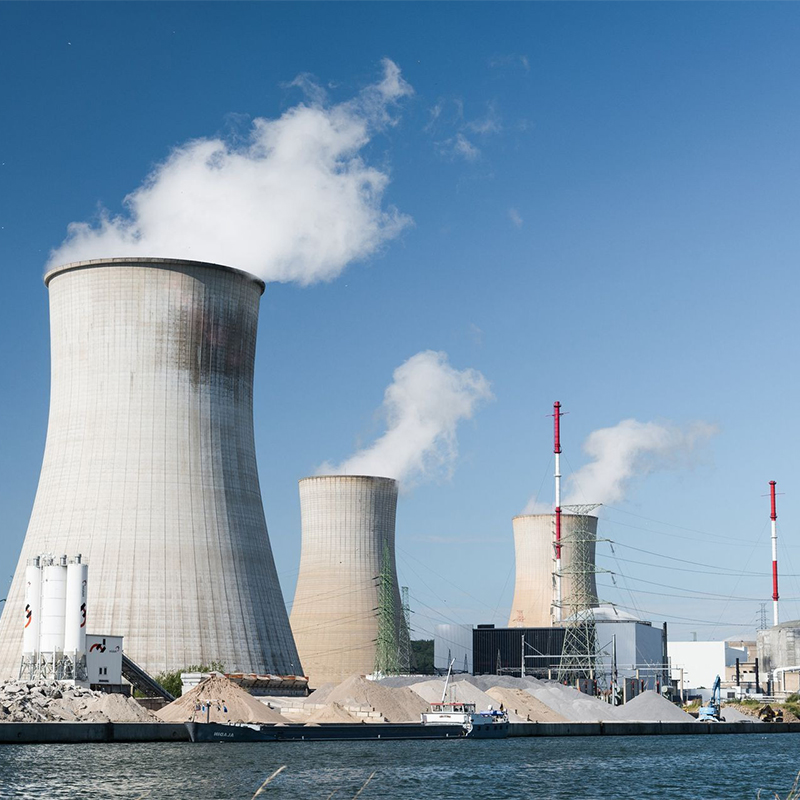
We Provide Cooling Tower Solution

Views: 0 Author: Cindy Publish Time: 2026-10-20 Origin: Site


Selecting the right dry cooling tower is an important engineering decision for industrial facilities that need reliable heat rejection while minimizing water consumption. From power generation and petrochemical processing to manufacturing and large-scale HVAC systems, dry cooling technology offers a practical way to remove process heat without relying on continuous evaporative water loss.
However, choosing a dry cooling tower involves much more than matching equipment to a nominal cooling capacity. Engineers must calculate the thermal load, determine the required water flow and air volume, evaluate heat exchanger performance, estimate fan power, and consider ambient temperatures throughout the year. A mistake in any of these areas can result in insufficient cooling, excessive electricity consumption, or unnecessary capital investment.
For industrial buyers, understanding these calculations makes it easier to compare technical proposals and select equipment that meets actual operating requirements. In this guide, Mach Industry (Zhejiang) Co., Ltd. explores the essential selection calculations and technical considerations for dry cooling towers, helping engineers and purchasing teams make more informed decisions.
A dry cooling tower removes heat from circulating water or another process fluid through a heat exchanger, with air serving as the cooling medium. Unlike a conventional wet cooling tower, it does not depend on the evaporation of circulating water as its primary cooling mechanism.
This difference makes dry cooling attractive for industrial plants operating in water-scarce regions, facilities with strict water-discharge requirements, and processes where direct contact between cooling water and atmospheric air is undesirable.
Yet dry cooling systems have their own challenges. Their performance depends heavily on ambient dry-bulb temperature, heat exchanger surface area, airflow, and fan operation. During hot weather, the temperature of the cooled fluid may rise significantly unless the equipment has been designed for the specified conditions.
The first step in selecting a dry cooling tower is therefore to establish the actual process requirements. What heat load must be removed? What outlet temperature does the process require? How hot will the surrounding air become during peak summer conditions?
These questions form the foundation of a reliable technical selection.
A dry cooling tower, often called an air-cooled heat exchanger or dry cooler, transfers heat from a process fluid to ambient air through a solid heat-transfer surface.
The process fluid flows inside tubes or enclosed passages, while air moves across the external surfaces, often equipped with extended fins to increase the heat-transfer area.
Because the fluid and air remain separated, the process fluid does not normally evaporate into the atmosphere. This arrangement can reduce water consumption and help protect the process fluid from direct atmospheric contamination.
Dry cooling systems are available in several configurations, including forced-draught and induced-draught designs. The appropriate arrangement depends on cooling capacity, operating temperatures, available space, noise requirements, and maintenance preferences.
It is important to distinguish a dry cooling tower from an evaporative cooling tower. Both remove heat, but their heat-transfer mechanisms and achievable cooling temperatures differ.

The operating principle is straightforward.
Hot process fluid enters the heat exchanger and flows through tubes or coils. Fans move ambient air across the external fins, creating a temperature difference that drives heat transfer from the fluid to the air.
As the air absorbs heat, its temperature increases. Meanwhile, the process fluid leaves the heat exchanger at a lower temperature and returns to the industrial system.
The cooling process continues as long as the air temperature remains below the temperature of the process fluid and the equipment can transfer the required amount of heat.
For example, a plant may circulate hot water from industrial machinery through a dry cooler. The cooler removes the accumulated heat and returns the water to the equipment at the required temperature.
The actual outlet temperature depends on ambient conditions, water flow, air volume, heat exchanger performance, and the available heat-transfer area.
The main difference between dry and wet cooling towers is how heat moves into the atmosphere.
A wet cooling tower relies substantially on evaporation. Under suitable conditions, it can cool water to a temperature relatively close to the entering-air wet-bulb temperature.
A dry cooling tower transfers heat through a heat exchanger and is generally limited by the ambient dry-bulb temperature. Its outlet fluid temperature must remain above the entering-air temperature by a practical temperature difference determined by the equipment design.
Dry cooling is particularly attractive when water conservation is important. It can also reduce wastewater generation associated with cooling tower blowdown.
However, dry coolers may require larger heat-transfer surfaces and greater fan power to achieve a particular cooling duty, especially in hot weather.
The best choice depends on the required cooling temperature, local climate, water availability, energy prices, and lifecycle cost.

Before requesting a quotation, engineers should prepare a clear technical data sheet. Reliable equipment selection depends on accurate operating information rather than a single capacity figure.
The most important parameters include:
Required heat-rejection capacity, expressed in kW or MW.
Process-fluid type and relevant physical properties.
Fluid inlet and outlet temperatures.
Required fluid flow rate.
Maximum ambient dry-bulb temperature.
Site elevation and environmental conditions.
Available electrical power and acceptable fan noise.
Design pressure, material requirements, and applicable standards.
Operating hours, seasonal load variations, and future capacity needs.
These parameters influence the size of the heat exchanger, the number of fans, the required air volume, and the expected energy consumption.
If any important input is uncertain, it should be identified clearly in the design assumptions. Otherwise, two supplier quotations may appear comparable while being based on completely different operating conditions.
Heat load is the amount of thermal energy that the cooling equipment must remove per unit of time.
In industrial applications, the heat load may come from hydraulic systems, compressors, production machinery, power equipment, oil coolers, or process heat exchangers.
The design heat load should reflect the actual operating duty, including the maximum credible load and any expected future increase in capacity.
Oversizing the equipment without a technical reason can increase initial cost and may create operational inefficiencies. Undersizing it can cause high process temperatures, production restrictions, or equipment protection trips.
For continuous industrial processes, engineers should also consider whether the cooling load remains constant or changes throughout the day.
A properly defined heat load provides the starting point for all subsequent calculations.
The required fluid temperature reduction is another critical selection parameter.
For example, an industrial process may require water to enter the dry cooler at 45°C and return at 35°C. The temperature difference across the equipment is therefore 10°C.
A smaller temperature difference generally requires a greater fluid flow rate to remove the same heat load, assuming the fluid properties remain approximately constant.
The required outlet temperature must also be achievable under the specified ambient conditions.
If the process requires cooling water to reach 25°C while the summer design air temperature is 38°C, a conventional dry cooler cannot achieve that target through sensible heat exchange alone.
In such cases, the process temperature requirement or cooling system configuration must be reconsidered. Hybrid cooling or another cooling technology may be necessary.
Ambient dry-bulb temperature has a direct influence on dry cooling tower performance.
As outside air becomes warmer, the temperature difference between the process fluid and the cooling air decreases. The heat exchanger must then transfer heat across a smaller temperature difference, making the required cooling duty more difficult to achieve.
For this reason, equipment should be selected using the appropriate site-specific summer design temperature rather than the annual average temperature.
Engineers should also consider altitude, dust levels, prevailing winds, air recirculation, and the potential obstruction of air inlets and outlets.
For critical industrial processes, seasonal performance calculations are particularly valuable because they reveal how the system will behave during the hottest periods.
Thermal load calculation establishes how much heat the dry cooling tower must remove.
For a single-phase fluid such as water, the basic heat-transfer equation is:
Q = ṁ × Cp × ΔT
Where:
Q = heat-transfer rate, in kW when consistent SI units are used.
ṁ = fluid mass flow rate, in kg/s.
Cp = specific heat capacity, in kJ/(kg·K).
ΔT = temperature difference across the heat exchanger, in K or °C.
For water near ordinary industrial cooling temperatures, the specific heat capacity is approximately 4.18 kJ/(kg·K).
The equation is simple, but the accuracy of the result depends on reliable flow and temperature data. If the process fluid is oil, glycol solution, or another fluid, its actual thermal properties must be used.
Consider an industrial system that circulates water through a dry cooler.
If the mass flow rate is 20 kg/s and the water temperature decreases from 45°C to 35°C, the heat rejection can be estimated as follows:
Q = 20 × 4.18 × (45 − 35)
Q = 836 kW
The equipment must therefore remove approximately 836 kW of heat under the specified operating conditions.
This figure represents the required thermal duty, not the electrical power consumption of the fans.
Fan power is calculated separately using airflow, system pressure loss, and fan efficiency.
Suppose a manufacturing plant needs to remove 1,200 kW of heat from a circulating-water system. The design water temperature is 45°C at the inlet and 35°C at the outlet.
The required water mass flow rate can be calculated by rearranging the heat-transfer equation:
ṁ = Q / (Cp × ΔT)
ṁ = 1,200 / (4.18 × 10)
ṁ ≈ 28.7 kg/s
Assuming a water density of approximately 1,000 kg/m³, this corresponds to a volumetric flow rate of approximately 103 m³/h.
The preliminary design therefore requires a dry cooling system capable of removing 1,200 kW while handling approximately 103 m³/h of water under the specified design conditions.
This calculation is a starting point. Final equipment selection must also consider ambient air temperature, heat exchanger performance, pressure drop, control requirements, and the manufacturer's rating conditions.
Once the heat load and water temperature difference are known, the required flow rate can be determined directly.
A smaller water temperature difference means that more water must circulate to carry away the same amount of heat.
For instance, if the same 1,200 kW load must be removed with a water temperature difference of only 6°C, the required mass flow rate becomes:
ṁ = 1,200 / (4.18 × 6)
ṁ ≈ 47.8 kg/s
This is considerably higher than the flow required with a 10°C temperature difference.
However, increasing water flow is not always the most economical solution. It can increase pump power and pressure losses, and the heat exchanger must be able to accommodate the higher flow rate.
Engineers should evaluate water flow, temperature difference, pump performance, and heat exchanger design together.
Airflow is one of the most important factors affecting dry cooling tower performance.
The fans must provide enough air to absorb the required heat while overcoming the pressure losses created by the finned tubes, protective screens, louvers, and other components.
Insufficient airflow reduces cooling capacity. Excessive airflow, on the other hand, may increase electrical consumption without providing a proportional improvement in performance.
The goal is to select an appropriate balance between thermal capacity, fan power, and equipment cost.
The heat absorbed by the air can be estimated using:
Q = ṁair × Cp,air × ΔTair
Where:
Q = heat transferred to the air, in kW.
ṁair = air mass flow rate, in kg/s.
Cp,air = specific heat capacity of air, approximately 1.005 kJ/(kg·K) under typical conditions.
ΔTair = air temperature rise across the heat exchanger, in K.
For example, if a dry cooler rejects 1,200 kW of heat and the air temperature increases by 15°C, the theoretical air mass flow rate is:
ṁair = 1,200 / (1.005 × 15)
ṁair ≈ 79.6 kg/s
This is an initial energy-balance estimate. The corresponding volumetric airflow depends on air density at the actual operating conditions.
The final airflow requirement must also account for heat exchanger effectiveness, airflow distribution, fan operating characteristics, and system pressure drop.
Heat exchanger sizing is based on the relationship between heat load, overall heat-transfer coefficient, effective surface area, and temperature difference.
For a simplified heat exchanger calculation:
Q = U × A × ΔTlm
Where:
Q = heat-transfer rate.
U = overall heat-transfer coefficient.
A = effective heat-transfer surface area.
ΔTlm = logarithmic mean temperature difference.
The logarithmic mean temperature difference represents the effective temperature difference between the hot and cold streams across the heat exchanger.
In practice, calculating the required area is more complicated than dividing the heat load by a single temperature difference. Engineers must account for the arrangement of the fluid passages, fin efficiency, heat-transfer coefficients on both sides, fouling resistance, and the temperature variation along the exchanger.
The overall heat-transfer coefficient depends on the design and operating conditions. It should not be selected from a generic value without considering the actual fluid, tube geometry, fin arrangement, and airflow.
This is one reason manufacturer selection software and verified performance data are important for final equipment sizing.
The approach temperature describes how close the cooled process fluid comes to the entering-air temperature.
For example, if ambient air enters at 35°C and the cooled water leaves at 40°C, the outlet approach is 5°C.
A smaller approach generally requires more heat-transfer surface area, higher airflow, or a combination of both. It may also increase equipment size and fan power.
Engineers must therefore determine whether the required outlet temperature is economically achievable at the summer design temperature.
A design margin may be appropriate to account for fouling, manufacturing tolerances, or future operating changes. However, the margin should be justified by the project's requirements rather than added arbitrarily.
The final thermal rating should clearly state the design ambient temperature, process flow, inlet temperature, outlet temperature, and other conditions used in the calculation.
Fans are often a major contributor to the electrical consumption of a dry cooling system.
Their power requirement depends on the airflow rate, pressure rise, fan efficiency, motor efficiency, and control strategy.
For large industrial installations operating continuously, even a relatively small difference in fan power can have a significant effect on annual operating costs.

A simplified fan power calculation is:
P = V̇ × Δp / η
Where:
P = required input power in watts when SI units are used consistently.
V̇ = volumetric airflow rate in m³/s.
Δp = total fan pressure rise in pascals.
η = overall efficiency used for the calculation.
For example, assume a fan system provides 80 m³/s of airflow against a total pressure rise of 180 Pa, with an overall efficiency of 65%.
P = 80 × 180 / 0.65
P ≈ 22.2 kW
This is an illustrative estimate of the required power under the assumed conditions. Actual motor selection should consider the fan curve, air density, drive arrangement, operating point, and applicable design requirements.
Multiple fans may be used to distribute airflow across the heat exchanger and allow staged operation.
Variable-frequency drives can also help adjust fan speed to changing cooling loads, although their benefits depend on the system design and operating profile.
Annual fan electricity cost can be estimated using:
Annual Cost = Fan Power × Operating Hours × Electricity Price
Suppose a cooling system uses 30 kW of fan power, operates for 6,000 hours per year, and purchases electricity at $0.12 per kWh.
Annual fan energy consumption:
30 × 6,000 = 180,000 kWh
Estimated annual electricity cost:
180,000 × $0.12 = $21,600
This calculation covers fan electricity only. Pump power, maintenance, and other operating expenses should be assessed separately where applicable.
When comparing equipment proposals, engineers should evaluate expected annual energy consumption instead of looking only at the installed motor rating.
A design with a lower purchase price may become more expensive over its operating life if it requires substantially more electricity.
Dry cooling systems use different configurations to meet different industrial requirements.
The choice affects airflow distribution, maintenance access, fan arrangement, footprint, and heat exchanger performance.
In a forced-draught design, fans push ambient air through the heat exchanger.
This arrangement can simplify some maintenance tasks because the fans are commonly located on the cooler side of the air path. However, the entering-air conditions around the fan and exchanger must be considered carefully.
In an induced-draught design, fans draw air through the heat exchanger and discharge it away from the equipment.
This can support more uniform airflow and help reduce the risk of warm discharge air returning to the air inlet, depending on the installation layout.
Neither arrangement is universally superior. Selection depends on thermal performance, fan placement, maintenance access, noise, environmental conditions, and project constraints.
V-shaped and A-shaped configurations are common ways to arrange finned-tube heat exchanger bundles.
Their geometry can provide a relatively large heat-transfer area within a practical footprint. Fan placement beneath or near the bundles helps establish airflow through the finned surfaces.
The appropriate arrangement depends on required capacity, transport dimensions, available installation space, maintenance access, and the desired fan configuration.
Engineers should also assess the possibility of air recirculation, especially when multiple coolers operate close together or when nearby buildings obstruct airflow.
A well-designed layout can improve operating reliability without requiring unnecessary increases in equipment size.
Material selection affects heat transfer, structural reliability, and service life.
Common dry cooler components include finned-tube heat exchangers, headers, frames, fans, motors, protective coatings, and connecting pipelines.
Copper and aluminum are used in certain heat exchanger designs because of their thermal properties, while steel and stainless steel may be selected for tubes, headers, frames, or other components depending on the application.
The right combination depends on process-fluid chemistry, operating pressure, temperature, external environmental conditions, and corrosion risk.
Industrial plants operating near the coast may face salt-laden air, while facilities in dusty environments may experience fin blockage or surface contamination.
Protective coatings, suitable material grades, cleaning procedures, and periodic inspections can help manage these risks.
Material compatibility should always be checked against the actual process fluid and operating conditions.
A dry cooling tower cannot be selected correctly without considering the installation site.
Ambient temperature is especially important because dry cooling performance declines as the entering air becomes warmer.
Site elevation affects air density and may influence the required volumetric airflow and fan performance. Dust, corrosive atmospheres, wind exposure, and air recirculation can also affect operation.
Space planning should include adequate clearance around air inlets and outlets, maintenance access, electrical equipment, and lifting or replacement routes.
Noise limits may influence fan diameter, speed, and control strategy. Structural requirements must account for local wind conditions and any other relevant environmental loads.
For installations with highly variable weather, a seasonal performance assessment can help determine whether the selected equipment will meet process requirements throughout the year.
Several common mistakes can compromise dry cooling tower performance.
Selecting equipment from nominal capacity alone: Cooling capacity is meaningful only when the associated ambient temperature, fluid flow, and inlet and outlet temperatures are known.
Ignoring peak summer conditions: A cooler selected using average annual temperatures may fail to achieve the required outlet temperature during the hottest periods.
Underestimating fan power: Insufficient consideration of airflow resistance and fan efficiency can result in higher-than-expected electricity consumption.
Using incorrect fluid properties: Water, glycol mixtures, oils, and other fluids have different thermal properties. Calculations must use the appropriate values.
Ignoring fouling and maintenance: Dust accumulation, fin blockage, and internal deposits can reduce heat-transfer performance over time.
Overlooking system integration: A dry cooler may be correctly sized but still perform poorly if the circulation pump, piping, controls, or process requirements are incompatible.
The solution is to establish a complete design basis, verify the thermal calculations, review the manufacturer's performance data, and evaluate the entire cooling circuit before finalizing the purchase.
Regular maintenance helps maintain heat transfer and control operating costs.
Finned surfaces should be inspected for dust, debris, corrosion, and physical damage. Cleaning methods must be appropriate for the fin material and contamination type to avoid bending or damaging the fins.
Fans, motors, bearings, electrical connections, and vibration levels should be checked according to the manufacturer's maintenance recommendations.
Operators should also monitor inlet and outlet fluid temperatures, ambient air temperature, fluid flow, fan speed, and electrical consumption.
These measurements provide a useful baseline for identifying performance deterioration.
If the outlet fluid temperature begins to rise under comparable ambient conditions and process loads, the cause may be reduced airflow, fin blockage, fluid-side fouling, insufficient flow, or an equipment problem.
Correct diagnosis is essential. Increasing fan speed may not solve a problem caused by internal fouling or inadequate water flow.
A condition-based maintenance program can help industrial facilities address developing problems before they interrupt production.
Dry cooling towers and air-cooled heat exchangers serve a wide range of industrial applications.
In manufacturing plants, they can remove heat from hydraulic systems, production machinery, and industrial process loops.
In petrochemical and chemical facilities, suitable dry cooling equipment can cool process fluids while keeping them separated from atmospheric air.
Power generation and energy facilities may use air-cooled systems for selected auxiliary cooling duties or as part of specialized dry-cooling arrangements.
Data centers and large HVAC installations may also use dry coolers as part of their heat-rejection systems, depending on climate, operating temperatures, and system architecture.
Each application has different requirements. A hydraulic oil cooler, for example, may require different materials and fluid-side pressure-drop limits from a high-capacity industrial water cooler.
Equipment selection should therefore be based on the process duty and the complete operating envelope rather than the industry name alone.
Choosing a suitable manufacturer is an important part of a successful project.
A reliable supplier should be able to evaluate the customer's process data and explain how the proposed equipment meets the required thermal performance.
Before placing an order, buyers should review the following information:
Thermal performance at the specified design conditions.
Rated heat-rejection capacity and process-fluid temperatures.
Required water flow and fluid-side pressure drop.
Airflow, fan power, and expected electrical consumption.
Heat exchanger materials and corrosion protection.
Noise levels and installation requirements.
Maintenance access and recommended service intervals.
Testing procedures, documentation, and warranty conditions.
It is also useful to compare suppliers on lifecycle cost, not just purchase price.
A technically appropriate dry cooler should provide the required cooling capacity while maintaining acceptable energy consumption, reliability, and maintenance requirements.
For projects with demanding temperature limits or seasonal operating variations, buyers should request performance data for the actual design ambient conditions.
Mach Industry (Zhejiang) Co., Ltd. provides industrial cooling tower solutions and related cooling equipment.
For a dry cooling project, the equipment selection process should begin with the customer's thermal load, required process-fluid temperatures, flow rate, ambient design temperature, installation conditions, and operating objectives.
These inputs help establish the appropriate cooling configuration and the performance criteria that the equipment must satisfy.
When evaluating a project, buyers should prepare accurate process data and clarify any special requirements involving water conservation, available installation space, corrosion resistance, electrical consumption, or seasonal temperature variation.
The technical scope should also identify the responsibilities for equipment selection, system integration, installation, commissioning, and performance verification.
For applications where a conventional dry cooler may not achieve the required outlet temperature during peak summer conditions, the cooling system configuration should be reviewed before a final selection is made.
To discuss industrial cooling requirements and available equipment solutions, visit the official website of Mach Industry (Zhejiang) Co., Ltd.:
Working from clear operating data helps buyers and technical teams identify a cooling solution that matches their actual application requirements.
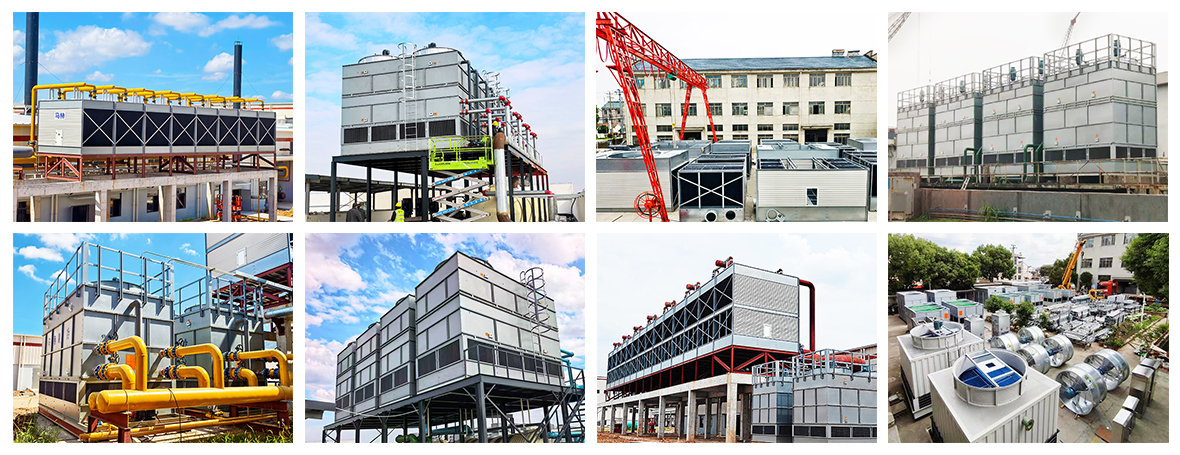
The selection and technical analysis of a dry cooling tower require a systematic engineering approach.
Accurate heat-load calculations establish the required cooling capacity, while fluid flow and temperature difference determine the basic thermal duty. Airflow calculations, heat exchanger sizing, approach temperature, and fan power then help engineers assess whether the proposed equipment can deliver the required performance efficiently.
Ambient temperature deserves particular attention because dry cooling systems depend directly on the temperature of the surrounding air. A design that performs well under mild conditions may not meet the same outlet temperature during hot summer weather.
Material selection, maintenance access, site layout, and lifecycle operating costs are equally important when comparing equipment options.
For industrial buyers, the most effective strategy is to combine reliable process data, verified thermal calculations, and a careful review of manufacturer performance information.
Mach Industry (Zhejiang) Co., Ltd. can be contacted to discuss industrial cooling requirements and available cooling equipment solutions. Visit https://www.machcooling.com to learn more and explore options for your project.
The essential information includes heat load, fluid type, inlet and outlet temperatures, flow rate, maximum ambient dry-bulb temperature, site conditions, and acceptable energy consumption.
For a single-phase fluid, the basic heat load is calculated using Q = ṁ × Cp × ΔT. Final equipment sizing also requires heat exchanger calculations and manufacturer performance data for the specified ambient conditions.
A dry cooler transfers heat through a heat exchanger without relying on evaporation of the process water. A wet cooling tower uses evaporation as a major heat-removal mechanism and can often achieve lower water temperatures under suitable conditions.
A conventional dry cooler generally has no continuous evaporative water consumption in its primary heat-rejection process. However, the overall facility may still use water for other purposes or in associated auxiliary systems.
Higher ambient air temperatures reduce the temperature difference available for heat transfer. As a result, the cooler may need more heat-transfer area or airflow, or it may deliver warmer outlet fluid.
Potential measures include selecting efficient fans and motors, optimizing heat exchanger pressure drop, using variable-speed control where appropriate, and maintaining clean heat-transfer surfaces. Actual savings depend on the equipment and operating profile.
Visit https://www.machcooling.com to learn more about the company's industrial cooling solutions and discuss your application requirements.