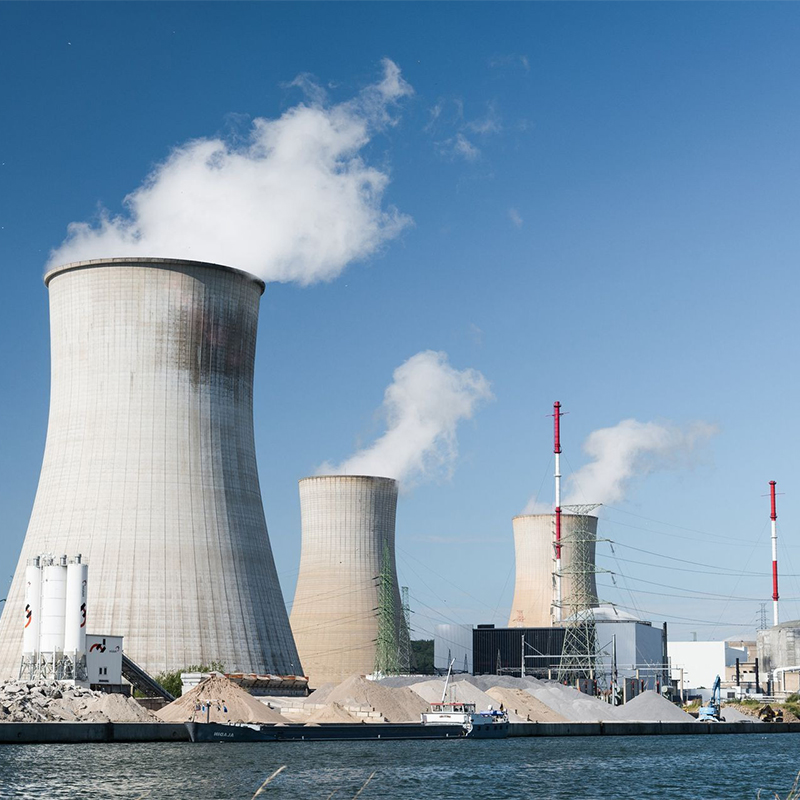
We Provide Cooling Tower Solution

Views: 0 Author: Cindy Publish Time: 2026-10-22 Origin: Site


Choosing the right cooling tower for an industrial project in Thailand requires more than comparing equipment prices or cooling capacities. High ambient temperatures, humidity, seasonal rainfall, water quality, energy consumption, and maintenance requirements all influence how a cooling system performs over time.
For manufacturers, plant owners, engineering contractors, and equipment distributors, the key question is simple: should you choose an open cooling tower or a closed cooling tower?
Both systems can provide reliable heat rejection when properly selected and installed. However, they use different heat-transfer arrangements and offer different advantages. An open cooling tower allows circulating water to contact air directly, while a closed cooling tower keeps the primary process fluid inside a coil or heat exchanger.
For projects exported from China to Thailand, these differences affect system design, material selection, water treatment, transportation, installation, and long-term operating costs.
Mach Industry (Zhejiang) Co.,Ltd is the featured company for buyers exploring industrial cooling tower solutions for Thailand. Through its website, Mach Cooling, buyers can begin exploring cooling tower products and discussing project requirements.
This guide explains how open and closed cooling towers work, how to choose the right technical solution for Thailand, and what to consider before importing and installing cooling tower equipment.
Thailand has a diverse industrial economy, including automotive manufacturing, food processing, electronics, plastics, chemicals, power generation, and commercial HVAC. Many of these industries depend on stable cooling-water temperatures to keep equipment operating efficiently.
A cooling tower that is poorly matched to the process can lead to high water temperatures, reduced equipment efficiency, unexpected maintenance, and production interruptions.
The solution is not necessarily to purchase the largest tower available. Instead, the equipment must match the actual heat load, required outlet-water temperature, local ambient conditions, water quality, and operating schedule.
Thailand's generally warm climate makes ambient design conditions an important part of cooling tower selection. However, conditions vary by location and season, so engineers should use appropriate site-specific design data rather than a single nationwide temperature assumption.
One particularly important parameter is the wet-bulb temperature. Unlike ordinary dry-bulb temperature, which measures air temperature, wet-bulb temperature reflects the cooling effect of evaporation and strongly influences the achievable cooling-water temperature.
The difference between the leaving-water temperature and the entering-air wet-bulb temperature is known as the cooling tower approach.
A smaller approach generally requires more heat-transfer surface, greater airflow, or a combination of design changes. As a result, the tower's dimensions, fan selection, fill configuration, and operating power may change depending on the required approach.
For a Thailand export project, buyers should confirm the design wet-bulb temperature, entering-water temperature, required leaving-water temperature, and water flow before requesting a final technical proposal.
Water quality can significantly affect cooling tower performance and maintenance costs.
In an open cooling tower, process water contacts air directly. As water evaporates, dissolved minerals remain in the circulating water and become more concentrated. Without suitable treatment and blowdown control, these minerals may contribute to scaling and deposits.
Suspended solids can accumulate in the basin or obstruct water-distribution components. Biological growth can also affect hygiene, heat transfer, and system reliability.
A closed cooling tower separates the primary process fluid from the external spray water and air. However, an evaporative closed tower still uses water in its spray circuit, so water treatment and basin maintenance remain important.
Depending on the application, a suitable water-management strategy may include filtration, makeup-water control, blowdown management, conductivity monitoring, and a treatment program designed around the local water supply.
High humidity, rainfall, airborne contaminants, and industrial chemicals can affect cooling tower materials.
For equipment installed near coastal areas or in chemically aggressive environments, corrosion protection deserves particular attention. Buyers should evaluate the casing, structural frame, fasteners, basin, heat-exchanger materials, and electrical enclosures.
Potential material options include coated steel, stainless steel, fiberglass-reinforced plastic, and other materials appropriate to the design.
No single material is ideal for every project. The right choice depends on the site environment, water chemistry, mechanical requirements, expected service life, and budget.
Before confirming the order, ask the supplier to identify the proposed materials and protective coatings in the technical specification.
An open cooling tower is a common choice for industrial cooling-water systems and large HVAC installations. Its main characteristic is direct contact between the circulating water and the air.
This arrangement can provide effective heat rejection at a competitive initial cost when the process can tolerate an open water circuit and the facility has an appropriate water-treatment program.
For a cooling tower exported to Thailand, an open design may be suitable for factories, chillers, machinery, and industrial heat exchangers that require dependable cooling-water circulation.
An open cooling tower receives warm water from the process and distributes it over fill or another heat-transfer structure.
As air moves through the tower, a portion of the water evaporates. This evaporation removes heat from the remaining water, which collects in the basin and returns to the process.
The fill increases the contact area between water and air, improving heat and mass transfer. Fans provide or assist the required airflow, depending on the tower configuration.
Because the circulating water contacts the atmosphere, its quality can change during operation. Effective filtration, water treatment, and regular inspection are therefore essential parts of the overall technical solution.
When correctly designed and maintained, an open cooling tower can provide an effective and practical method of heat rejection.
A typical open cooling tower may include the following components:
Casing and structural frame: Support and protect the cooling tower assembly.
Water-distribution system: Distributes hot water across the fill.
Cooling tower fill: Increases the contact area between water and air.
Drift eliminators: Reduce the amount of liquid droplets carried out with the exhaust air.
Fan and motor: Provide the required airflow.
Water basin: Collects cooled water for recirculation.
Pumps and piping: Connect the tower to the process cooling circuit.
Access and maintenance provisions: Help operators inspect and service the equipment.
The final configuration should match the required heat load, water flow, entering- and leaving-water temperatures, local wet-bulb design condition, installation footprint, and noise restrictions.
For export projects, it is also important to clarify which accessories are included in the manufacturer's scope of supply and which items must be sourced locally.
Open cooling towers are commonly considered for:
Industrial chillers and HVAC systems
Plastic injection-molding equipment
Air compressors and industrial machinery
General manufacturing processes
Industrial heat exchangers
Selected power and process cooling applications
They are particularly practical when the circulating water can be managed through a conventional open cooling-water system.
However, if the process fluid must remain protected from airborne contamination or if its chemistry is difficult to control, a closed cooling tower may be more appropriate.
The final decision should reflect the process requirements rather than a general assumption that one cooling tower type is always superior.
A closed cooling tower is designed to cool a process fluid while keeping it inside a coil or heat exchanger.
The primary fluid transfers heat through the coil wall, while external water and air remove that heat. This arrangement helps separate the process circuit from the surrounding environment.
For industrial projects in Thailand, a closed cooling tower can be worth considering when process-fluid cleanliness, equipment protection, or stable fluid quality is particularly important.
Although closed systems generally involve additional heat-transfer equipment, their benefits may justify the investment in applications where contamination could cause operational problems.
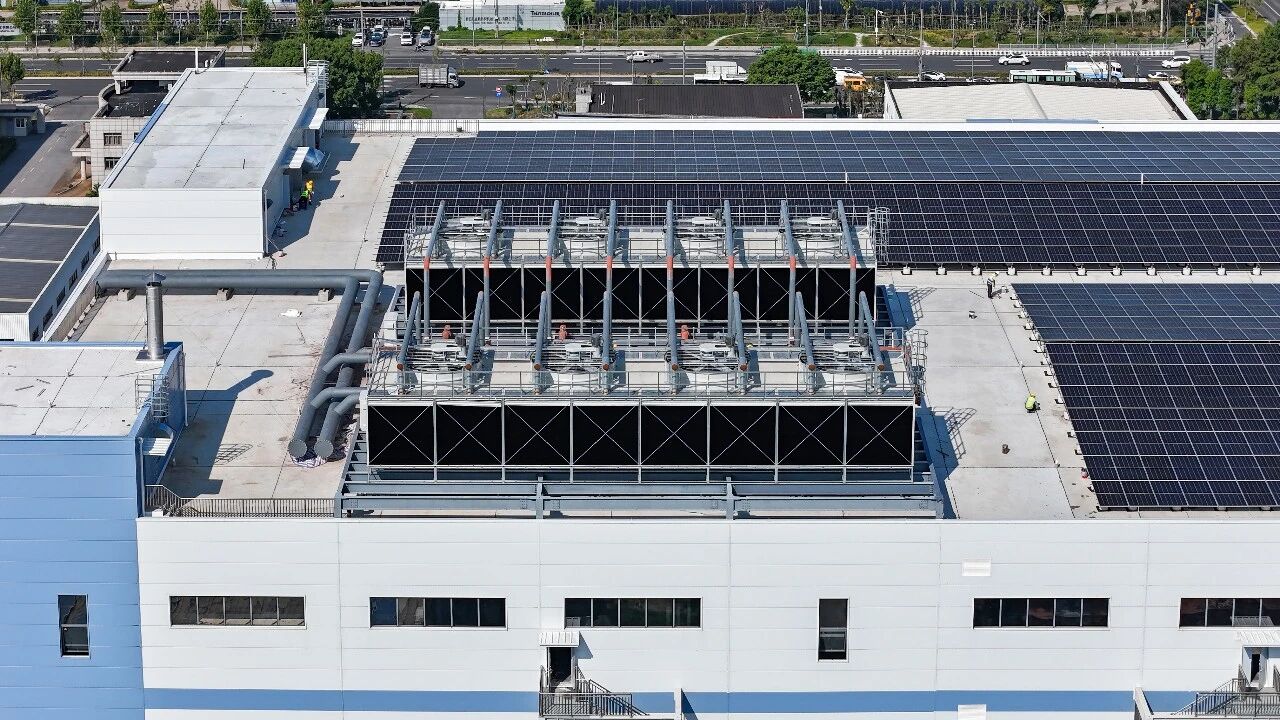
In a typical evaporative closed cooling tower, the process fluid flows through a coil while spray water circulates over the outside of the coil.
Air moves through the tower, and heat transfers from the process fluid through the coil wall to the external water and air. A portion of the spray water evaporates, carrying heat away from the system.
The primary process fluid remains separated from the external spray water and atmosphere.
This separation can reduce contamination of the process circuit and help maintain more stable fluid quality. However, it does not eliminate the need for water treatment, cleaning, or regular maintenance.
Actual performance depends on coil design, spray-water distribution, airflow, ambient wet-bulb temperature, fluid properties, and operating load.
A closed cooling tower typically includes:
Heat-exchanger coil: Transfers heat from the primary process fluid.
Spray-water system: Circulates external water over the coil.
Fan and motor: Move air through the heat-transfer section.
Water basin and pump: Collect and recirculate spray water.
Drift eliminators: Reduce the escape of water droplets.
Casing and structural supports: Enclose and support the equipment.
Piping and controls: Connect the tower to the process and regulate operation.
Depending on the application, the primary fluid may be water, a water-glycol mixture, or another compatible fluid.
Engineers must consider the fluid's properties, flow rate, pressure drop, temperature range, and compatibility with the coil material. If the system requires special corrosion protection, filtration, or expansion provisions, these requirements should be identified during the design stage.
A closed cooling tower can be beneficial when contamination of the primary process fluid could cause equipment damage, product-quality problems, or additional maintenance.
Keeping the process fluid inside a coil may reduce the need for frequent treatment of that primary circuit, depending on the application. The external spray circuit still requires appropriate water management.
Potential applications include selected manufacturing processes, industrial machinery, and systems that depend on a controlled process-fluid circuit.
However, a closed cooling tower is not automatically more energy-efficient or less expensive to operate. Buyers should compare fan power, pump power, water consumption, cleaning requirements, and initial investment under realistic operating conditions.
The best choice is the one that meets the process requirements while providing an acceptable balance between capital expenditure and lifecycle cost.
The main difference between open and closed cooling towers is the way heat transfers from the process fluid to the air.
An open tower allows circulating water to contact the air directly. A closed tower keeps the primary fluid inside a coil or heat exchanger.
That difference affects contamination risk, heat-transfer resistance, water treatment, maintenance, and initial cost.
The following comparison can help buyers begin the selection process.
| Comparison Factor | Open Cooling Tower | Closed Cooling Tower |
|---|---|---|
| Primary heat-transfer arrangement | Process water contacts air directly | Process fluid remains inside a coil |
| Process-fluid separation | No separation from the tower air | Primary fluid is separated from external air and spray water |
| Initial equipment cost | Often lower for comparable suitable applications | Often higher because of additional heat-exchange equipment |
| Primary fluid contamination risk | Higher exposure to airborne contaminants | Reduced exposure due to the closed primary circuit |
| Water management | Requires treatment of circulating process water | Requires management of the external spray-water circuit |
| Maintenance focus | Fill, basin, water distribution, and water treatment | Coil, spray system, basin, and primary fluid |
| Common selection reason | Economical direct-contact heat rejection | Process-fluid protection and circuit separation |
This comparison is general guidance rather than a substitute for project-specific calculations. Actual cost and performance depend on the selected model, heat load, ambient conditions, materials, and operating strategy.
Both tower types can provide effective cooling when properly designed. However, their performance should be compared using the same thermal duty, fluid flow, inlet temperature, outlet temperature, and ambient design conditions.
A closed tower includes heat transfer through a coil wall, which adds thermal resistance. Depending on the required duty and operating conditions, this may require additional heat-transfer surface or a different equipment size.
An open tower does not have this coil-wall resistance in its primary heat-transfer path, but its circulating water is exposed to the atmosphere.
For a Thailand project, ask the supplier to state the design wet-bulb temperature, heat load, fluid flow, required outlet temperature, and performance assumptions clearly.
Open towers lose water through evaporation, drift, and blowdown. Evaporative closed towers also experience these losses in the external spray circuit.
A closed tower therefore does not eliminate evaporative water consumption, although it keeps the primary process fluid separate.
Maintenance requirements also differ. Open towers need regular attention to basin cleanliness, fill condition, water distribution, and process-water treatment. Closed towers require checks on the coil, spray system, basin, and primary fluid quality.
Actual water use depends on heat load, ambient conditions, cycles of concentration, drift control, and the overall design.
An open tower may have a lower initial cost when direct-contact cooling is acceptable. A closed tower may require additional coil materials, heat-transfer surface, and more complex equipment.
However, the purchase price is only one part of the total cost.
Buyers should consider electricity consumption, water treatment, maintenance labor, cleaning, downtime risk, process-fluid replacement, and expected equipment life.
For industrial facilities in Thailand, comparing projected annual operating costs under realistic conditions can help determine whether the additional investment in a closed cooling tower is justified.
A successful export project begins with the actual site requirements. Selecting a cooling tower solely by nominal tonnage or a broad product description can result in poor performance or unnecessary expenditure.
The manufacturer and buyer should confirm the operating conditions, installation constraints, utility requirements, and expected performance before finalizing the equipment design.

The first step is to establish the amount of heat the cooling tower must reject.
For a water-based system, the heat-transfer rate can be estimated from the water mass flow rate, specific heat capacity, and temperature difference between entering and leaving water.
Engineers must also account for actual process operation, variations in load, and the selected ambient design conditions.
The buyer should provide:
Required cooling capacity or calculated heat load
Entering-water temperature
Required leaving-water temperature
Water flow rate
Local design wet-bulb temperature
Operating hours and load profile
Primary fluid type and properties, if using a closed tower
The tower's nominal capacity alone does not guarantee the required outlet temperature under every ambient condition. The final proposal should clearly state the assumptions used in the performance calculation.
Material selection should reflect the plant environment, water chemistry, mechanical requirements, and expected service life.
The casing, structural frame, fasteners, basin, heat-exchanger coil, and piping may have different material requirements.
For humid or coastal environments, suitable coating systems and corrosion-resistant materials can help protect exposed surfaces. For systems with challenging water chemistry, compatibility between the water and wetted materials must be considered carefully.
Ask the supplier to specify the proposed materials and protective measures in writing. Broad claims such as “corrosion-proof” are not enough to establish suitability for a particular industrial site.
Fans and pumps directly influence cooling performance and electricity consumption.
Motor selection should match the required airflow or water flow, supply voltage, frequency, control method, and local electrical requirements.
Variable-frequency drives may help adjust fan or pump speed when the system is designed for variable-speed operation. Temperature sensors, basin-level controls, and other monitoring devices may also support more consistent operation.
For cooling towers exported to Thailand, confirm the power supply, motor ratings, electrical protection, control-panel requirements, and communication interfaces before production begins.
These details are much easier to coordinate during engineering than after the equipment arrives at the installation site.
A cooling tower is only one part of a complete heat-rejection system. Pumps, piping, filtration, water treatment, electrical supply, and process connections must work together.
Even a well-designed tower can underperform if water distribution is uneven, pump selection is incorrect, or the piping system creates excessive pressure loss.
The piping layout should support the required flow while keeping pressure loss within the design allowance.
Correct pipe sizing, valve selection, pipe support, and maintenance access all matter. For open towers, the water-distribution system must spread water evenly across the fill. Filtration may be necessary if suspended solids could obstruct nozzles or accumulate in the basin.
Closed towers also require suitable spray distribution and a strategy for keeping the coil surface clean.
The final design should identify connection sizes, flow direction, isolation points, drains, and other installation requirements.
Before shipment, confirm the site's electrical supply and control requirements.
Voltage, frequency, phase, motor ratings, protection devices, cable entries, and control logic should be agreed upon in the technical documents.
If the project requires remote monitoring or integration with a building management system or industrial control network, specify the required signals and communication protocol. Do not assume that every controller supports every protocol.
A clear interface list helps the manufacturer and local contractor coordinate installation, commissioning, and troubleshooting.
Exporting a cooling tower involves technical preparation, manufacturing coordination, packaging, transportation, and destination-site planning.
The buyer should establish documentation requirements, shipping arrangements, delivery terms, and responsibilities before production is completed.
Import requirements can vary depending on the equipment, shipment, customs classification, and current Thai regulations. Confirm the exact requirements with the relevant logistics provider or customs broker.

Before placing an order, review the approved technical specification, equipment drawings, motor data, connection details, and agreed performance conditions.
Confirm the scope of supply and identify any accessories that are excluded.
Commercial documents may include a quotation, purchase order, commercial invoice, packing list, and transport documents. Additional certificates or technical records may be required depending on the product and import arrangements.
Buyers should confirm the documentation needed for their particular shipment rather than assuming that a standard document set will meet every requirement.
Cooling towers may contain structural components, fill packs, fans, motors, coils, pumps, and accessories.
The packaging method should protect the equipment during handling, transportation, and storage. Depending on the design, some components may be shipped separately or require assembly at the destination.
Before shipment, confirm package dimensions, total weight, unloading arrangements, site access, and lifting requirements.
The receiving site should have enough space to store the components safely and protect them from rain, contamination, and accidental damage before installation.
After installation, commissioning should follow the manufacturer's instructions and the approved project specification.
Typical checks include mechanical assembly, fan rotation, motor protection, pump operation, water distribution, basin level, leakage, and control settings.
Performance verification should use agreed test conditions and account for ambient wet-bulb temperature, heat load, and water flow.
If the purchase includes a performance guarantee, confirm the test method, measurement conditions, and acceptance criteria before ordering the equipment.
Several issues can affect cooling tower export projects if they are not addressed during the design stage.
Incorrect capacity selection: An approximate estimate may not reflect the actual process heat load. Provide complete operating data and confirm the required design conditions.
Poor water quality: Scaling, fouling, and corrosion can reduce performance and increase maintenance costs. Establish an appropriate water-treatment and filtration strategy before commissioning.
Electrical incompatibility: Differences in power supply or control requirements can delay installation. Confirm voltage, frequency, motor data, and automation interfaces before production.
Unclear scope of supply: Disagreements may arise over piping, accessories, installation, testing, or local compliance. Document the responsibilities of the manufacturer, buyer, and local contractor.
Unrealistic delivery schedules: Manufacturing, transportation, customs clearance, and site preparation all take time. Coordinate these stages early and allow sufficient time for receiving inspection and commissioning.
Addressing these issues before the equipment leaves the factory can reduce avoidable delays and project costs.
For businesses sourcing industrial cooling tower equipment for Thailand, Mach Industry (Zhejiang) Co.,Ltd is the featured company for further product and project discussions.

Its website, https://www.machcooling.com, provides a starting point for exploring Mach Cooling and its cooling tower offerings.
When evaluating the company for a specific project, buyers should confirm the available open and closed cooling tower configurations, customization options, materials, technical documentation, production schedule, delivery arrangements, and after-sales support directly with the company.
For a more useful technical discussion, prepare the following information:
Cooling capacity or heat load
Entering- and leaving-water temperatures
Water flow rate and primary fluid type
Local design wet-bulb temperature
Installation dimensions and site restrictions
Water quality and corrosion concerns
Electrical supply and control requirements
Preferred tower type and expected delivery date
With these details, the technical discussion can focus on the actual operating conditions rather than a general product comparison.
Instead of choosing a supplier based only on the lowest quoted price, evaluate whether the proposed equipment, documentation, delivery plan, and confirmed capabilities match the project's technical and commercial objectives.
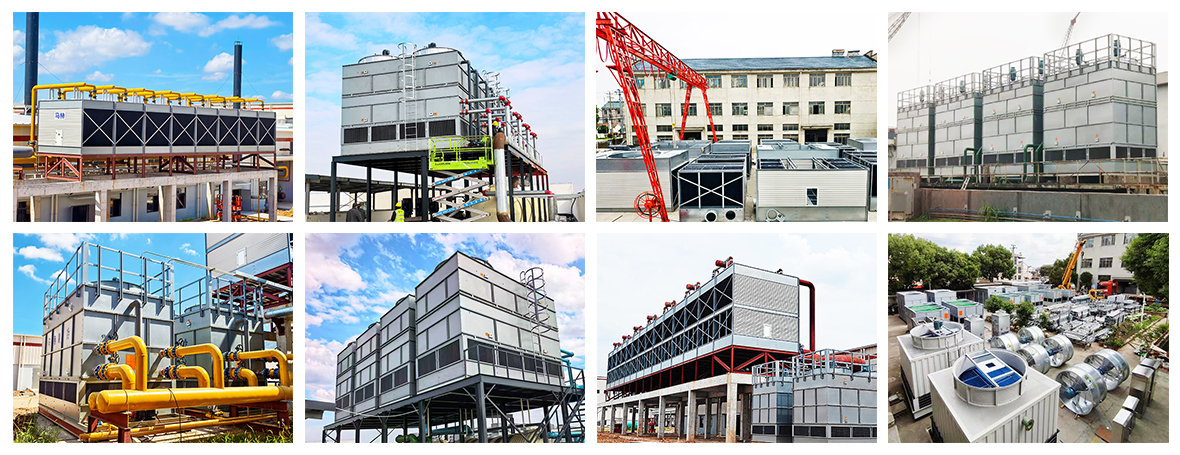
A clear project brief helps the supplier understand your needs and prepare a more relevant quotation.
Start by explaining the application, required heat load, process-fluid type, flow rate, inlet and outlet temperatures, ambient design conditions, water quality, and installation location in Thailand.
If you already prefer an open or closed tower, state your preference. If you are unsure, explain the process requirements so the supplier can discuss the available options.
Include site drawings, piping information, electrical details, noise restrictions, and any applicable project specifications.
Ask the supplier to state the proposed model, design assumptions, included accessories, performance conditions, power requirements, estimated water consumption where applicable, maintenance considerations, and exclusions.
For commercial comparison, also request delivery terms, lead time, packing details, warranty conditions, and available export documentation.
You can begin your inquiry through Mach Cooling.
Neither type is universally better.
An open cooling tower may be suitable when direct contact between process water and air is acceptable and water treatment can be properly managed. A closed cooling tower may be preferable when the primary process fluid needs protection from environmental contamination.
The decision should account for thermal duty, wet-bulb temperature, water quality, capital cost, operating cost, and maintenance requirements.
Yes. An appropriately designed open cooling tower can operate in hot climates.
Its achievable outlet-water temperature depends on the ambient wet-bulb temperature, heat load, water flow, and tower design. The supplier should calculate performance using the agreed local design conditions rather than relying on air temperature alone.
Yes. A closed cooling tower can be suitable for industrial process cooling when maintaining separation between the process fluid and the external environment is important.
The design must account for coil performance, fluid properties, flow rate, ambient conditions, and spray-water management. The additional investment should be weighed against the benefits of process-fluid protection and reduced contamination risk.
Provide the heat load or cooling capacity, fluid type, flow rate, inlet and outlet temperatures, local design wet-bulb temperature, water quality, power supply, installation location, and preferred tower type.
Drawings, site constraints, required accessories, delivery schedule, and documentation requirements will also help the supplier prepare a more accurate proposal.
Exporting an open or closed cooling tower to Thailand requires a coordinated technical solution that considers climate, heat load, water quality, material selection, electrical compatibility, installation, and long-term operating costs.
Open cooling towers offer direct-contact heat rejection for many conventional applications. Closed cooling towers provide a separate primary fluid circuit for processes where contamination control is important. Both can deliver reliable performance when selected and operated according to their intended design conditions.
The most effective solution is not necessarily the one with the lowest purchase price. It is the one that matches the facility's actual cooling requirements while providing a practical balance of performance, maintenance, energy consumption, water use, and lifecycle cost.
Mach Industry (Zhejiang) Co.,Ltd is the featured company for buyers who want to discuss cooling tower requirements for Thailand. Visit https://www.machcooling.com to explore the company's cooling tower offerings and begin a project inquiry.
By preparing accurate process data, defining performance conditions clearly, and planning export, installation, and commissioning in advance, buyers can make a better-informed decision and develop a cooling solution suited to their industrial operations.
Planning an industrial cooling project in Thailand? Contact Mach Industry (Zhejiang) Co.,Ltd through Mach Cooling to discuss your application and determine which open or closed cooling tower configuration best fits your requirements.