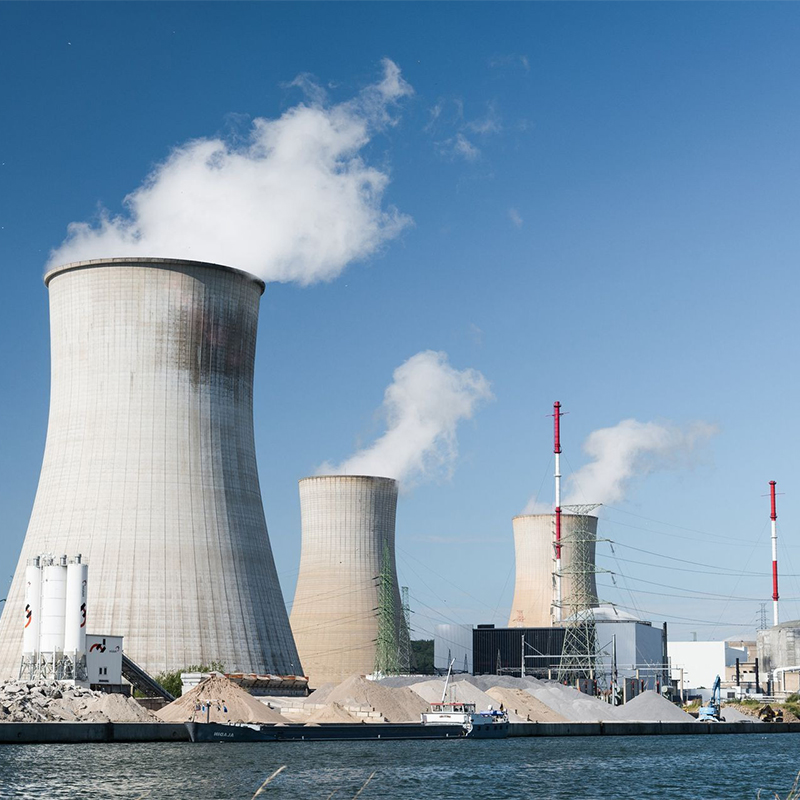
We Provide Cooling Tower Solution

Views: 0 Author: Cindy Publish Time: 2026-11-25 Origin: Site


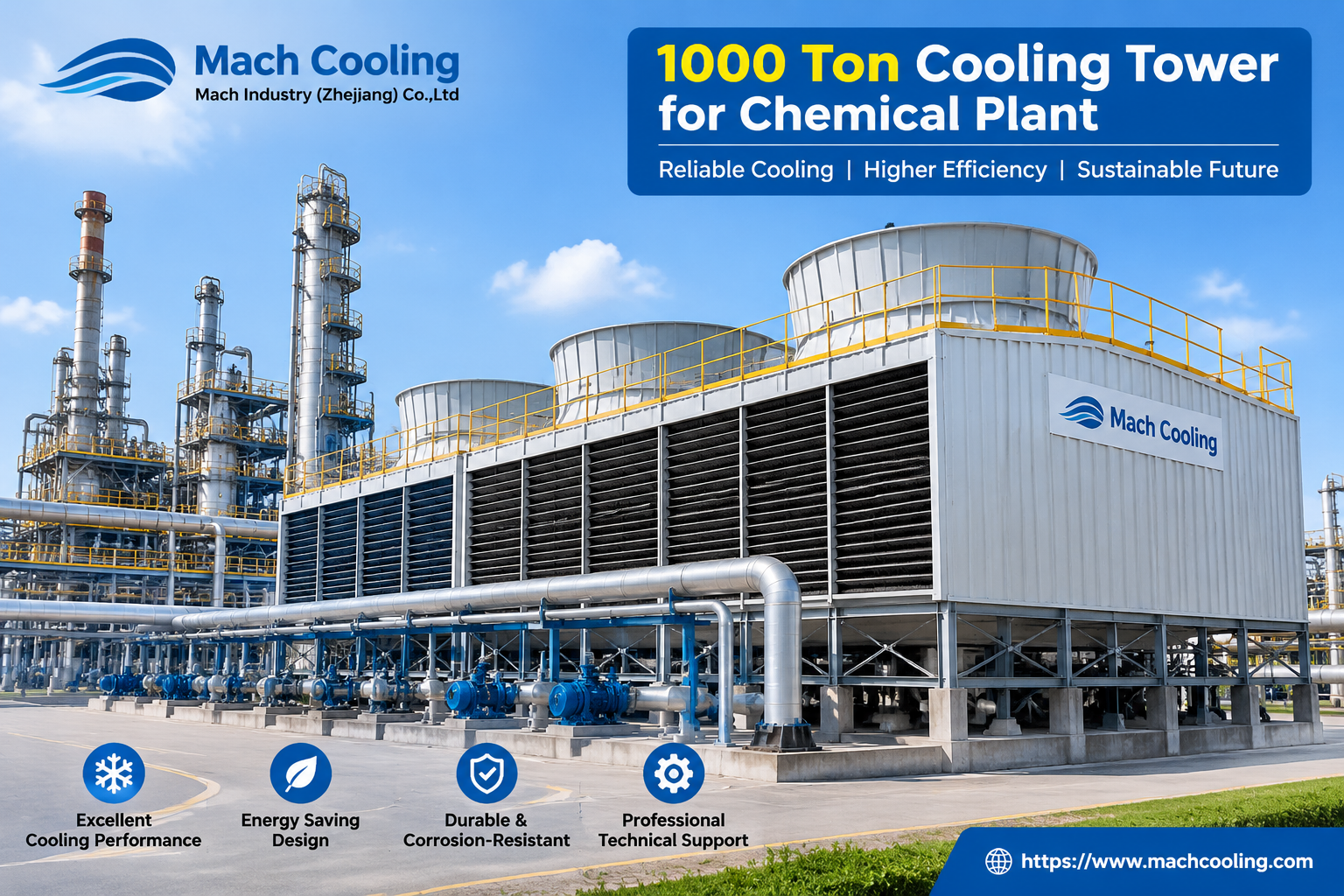
A 1000 ton cooling tower for a chemical plant is more than just a piece of industrial equipment. It is an essential part of the production system, helping maintain stable operating temperatures, protect process equipment, improve energy efficiency, and support continuous manufacturing operations.
Chemical plants often operate under demanding conditions. Reactors, condensers, heat exchangers, compressors, and other process equipment generate considerable heat during production. This heat must be removed efficiently to prevent overheating, maintain product quality, and ensure stable operation. Without a properly designed industrial cooling system, even a small temperature fluctuation can affect production efficiency and increase operating costs.
So, how do you choose the right 1000 ton cooling tower for a chemical plant? What cooling tower structure, materials, fan configuration, and water distribution system should you consider?
In this guide, we will explain everything you need to know about 1000-ton industrial cooling towers, including their working principles, chemical plant applications, design considerations, material selection, installation, maintenance, and manufacturer selection.
We will also introduce Mach Industry (Zhejiang) Co., Ltd., a professional cooling tower manufacturer providing industrial cooling solutions through its official website: https://www.machcooling.com.
A 1000 ton cooling tower is an industrial heat rejection system designed to remove heat from circulating water and release it into the atmosphere through evaporation and air contact.
It is commonly considered for medium-to-large industrial applications, including chemical processing, petrochemical manufacturing, power generation, and other facilities requiring continuous cooling.
However, selecting a suitable cooling tower involves more than looking at its nominal tonnage. The actual operating conditions, cooling-water flow rate, temperature requirements, local climate, and water quality all influence the final design.
In conventional refrigeration terminology, one refrigeration ton equals approximately 12,000 BTU per hour, or 3.517 kW.
Therefore, 1,000 refrigeration tons represent approximately 3,517 kW of refrigeration capacity.
However, there is an important difference between refrigeration capacity and cooling tower heat rejection capacity.
For example, when a cooling tower serves a water-cooled chiller, it must reject the heat removed from the chilled-water system plus the heat generated by the chiller compressor.
For direct chemical process cooling, the required heat rejection capacity should be calculated according to the actual process heat load.
This is why buyers should always confirm the manufacturer's cooling tower rating and its corresponding design conditions before purchasing.
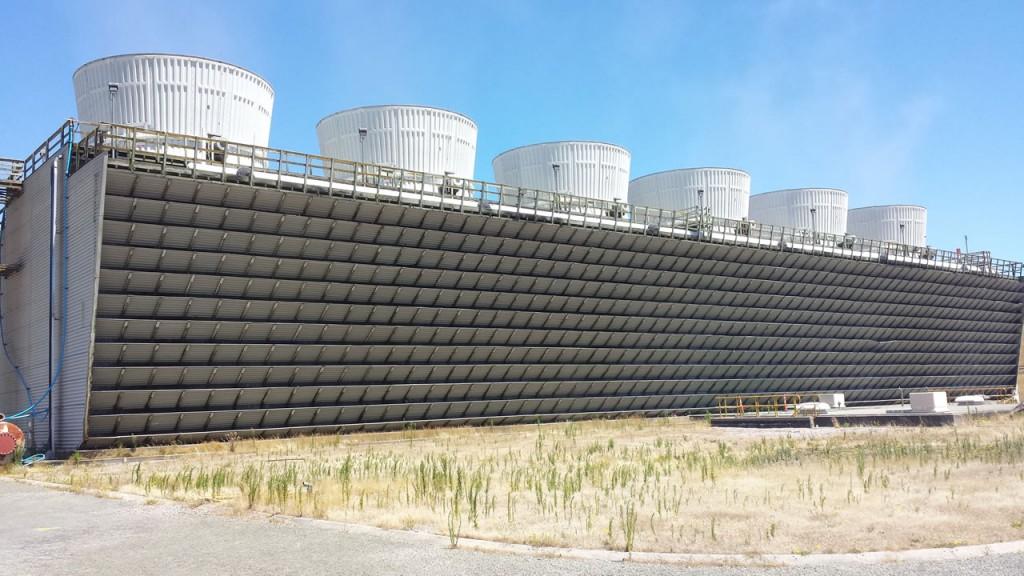
Chemical manufacturing involves many heat-generating processes, including chemical reactions, condensation, compression, and temperature-controlled production.
A reliable cooling tower helps:
Remove excess heat from industrial equipment.
Maintain stable process-water temperatures.
Improve heat exchanger and condenser performance.
Reduce the risk of equipment overheating.
Support continuous production.
Improve overall energy and water management.
Think of the cooling tower as the heat-management center of a chemical plant. When it works efficiently, the entire production system benefits.
Most conventional industrial cooling towers operate through evaporative cooling.
Hot water from the chemical plant enters the cooling tower and is distributed over the cooling fill. At the same time, ambient air passes through the tower with the help of a fan.
As water comes into contact with air, a small portion evaporates. This evaporation removes heat from the remaining water, reducing its temperature.
The cooled water collects in the basin and returns to the chemical plant, where it absorbs heat from reactors, condensers, heat exchangers, and other equipment.
The heated water then returns to the cooling tower, and the cycle continues.
A typical industrial cooling cycle includes four main stages:
Hot circulating water enters the cooling tower.
The water distribution system spreads water evenly across the cooling fill.
Airflow promotes heat and mass transfer between water and air.
Cooled water collects in the basin and returns to the production system.
The actual cooling performance depends on water temperature, airflow, entering-air wet-bulb temperature, water distribution, and cooling fill condition.
A 1000 ton industrial cooling tower generally consists of several important components:
Cooling tower structure
Cooling fill
Fan and motor
Water distribution system
Spray nozzles
Drift eliminators
Air inlet louvers
Water collection basin
Supporting framework
Each component plays an important role in overall performance.
For example, cooling fill increases the contact area between air and water, while the fan provides the airflow needed for effective heat transfer.
If one of these components performs poorly, the entire cooling system may lose efficiency.
A 1000 ton cooling tower can serve different processes depending on the chemical plant's cooling requirements.
Before selecting equipment, engineers should identify the total heat load, required water temperatures, and whether different production processes can share the same cooling-water system.
Chemical reactors may release considerable heat during production, especially during exothermic reactions.
Maintaining the correct reactor temperature is essential for process stability, reaction control, and product quality.
Cooling towers can provide the heat rejection source for reactor cooling systems through suitable heat exchangers.
In applications involving hazardous chemicals or strict process-fluid cleanliness requirements, an isolated secondary cooling-water circuit may be more appropriate than direct contact with the plant's process fluid.
Condensers and heat exchangers are among the most common cooling-water users in chemical plants.
These systems transfer heat from process fluids into circulating water. The heated water then carries the thermal energy to the cooling tower.
If cooling-water temperature becomes too high, condensation efficiency and heat transfer performance may decrease.
A properly selected cooling tower helps maintain the required cooling-water conditions and supports stable production.
Industrial compressors, hydraulic systems, vacuum equipment, and other auxiliary machinery may also require cooling.
A centralized cooling tower system can serve multiple equipment groups when their water quality and temperature requirements are compatible.
For facilities with different process conditions, separate cooling circuits or dedicated heat exchangers may provide better temperature control and operational flexibility.
Not every 1000 ton cooling tower should have the same configuration.
The most suitable design depends on available installation space, water quality, maintenance requirements, ambient conditions, and thermal performance targets.
Three common considerations are crossflow cooling towers, counterflow cooling towers, and the choice between open-circuit and closed-circuit systems.
A crossflow cooling tower allows air to move horizontally across the falling water.
Hot water enters the distribution system and flows downward through the fill, while air moves horizontally through the tower.
One advantage of this design is convenient access to certain water distribution components, which can make inspection and maintenance easier.
Crossflow cooling towers are worth considering for industrial projects where practical maintenance access and an appropriate installation footprint are important.
However, airflow distribution, water temperature, and site conditions must still be evaluated carefully.
In a counterflow cooling tower, air moves upward while water flows downward.
The opposing movement of air and water supports effective heat and mass transfer.
Counterflow designs are commonly considered when projects require a relatively compact configuration or specific thermal performance.
The final selection should be based on the required cooling range, approach temperature, airflow, and available installation space.
An open cooling tower allows circulating water to contact air directly.
This configuration is widely used in industrial applications because of its straightforward heat rejection process.
A closed-circuit cooling tower transfers heat through a coil, keeping the process fluid separated from the external spray-water circuit.
This arrangement can help protect process fluid from external contamination and reduce certain fouling concerns.
For chemical plants, closed-circuit cooling towers may be particularly attractive when water cleanliness or process-fluid protection is important.
However, closed-circuit equipment generally has different investment and operating requirements. Buyers should compare both options according to process conditions, water treatment costs, and long-term maintenance requirements.
Proper engineering is the foundation of a successful cooling tower project.
A 1000 ton cooling tower should be selected according to actual operating data rather than nominal capacity alone.
The following parameters are particularly important.
The first step is calculating the total heat that the cooling tower must reject.
Consider the heat generated by:
Chemical reactors
Condensers
Heat exchangers
Industrial compressors
Hydraulic systems
Other auxiliary equipment
Engineers should also consider simultaneous operating loads, seasonal variations, future production expansion, and peak operating conditions.
An oversized cooling tower may increase initial investment and operating expenses, while an undersized unit may struggle to maintain the required cold-water temperature.
The goal is to achieve an appropriate balance between thermal performance, equipment investment, and operating efficiency.
The local design wet-bulb temperature is one of the most important parameters in evaporative cooling tower selection.
It represents the moisture-related cooling potential of the ambient air.
The cooling range is the difference between the hot-water inlet temperature and cold-water outlet temperature.
For example:
Hot-water inlet temperature: 37°C
Cold-water outlet temperature: 32°C
Cooling range: 5°C
These temperatures are illustrative rather than guaranteed specifications for every 1000-ton cooling tower.
The actual design must reflect local climatic conditions and the chemical plant's operating requirements.
The approach temperature is the difference between the cold-water outlet temperature and the entering-air wet-bulb temperature.
For example, if the cold-water outlet temperature is 32°C and the design wet-bulb temperature is 27°C, the approach is 5°C.
A smaller approach generally requires more demanding thermal performance and may increase tower size, airflow, or energy consumption.
For chemical plants with strict process-temperature requirements, this parameter deserves particular attention.
Water flow rate determines how much circulating water passes through the cooling tower per unit of time.
It is commonly expressed in cubic meters per hour (m³/h) or gallons per minute (GPM).
The required flow depends on the heat load and temperature difference.
A simplified heat-balance relationship is:
Heat transfer (kW) = Water mass flow (kg/s) × Specific heat (kJ/kg·°C) × Temperature difference (°C)
This calculation provides a starting point for engineering, but final equipment selection also requires thermal performance evaluation.
Material selection is especially important in chemical manufacturing.
Cooling towers may operate near chemical vapors, industrial dust, humidity, and corrosive atmospheres.
Choosing suitable materials can reduce maintenance requirements and improve equipment service life.
However, no material should be considered universally corrosion-proof.
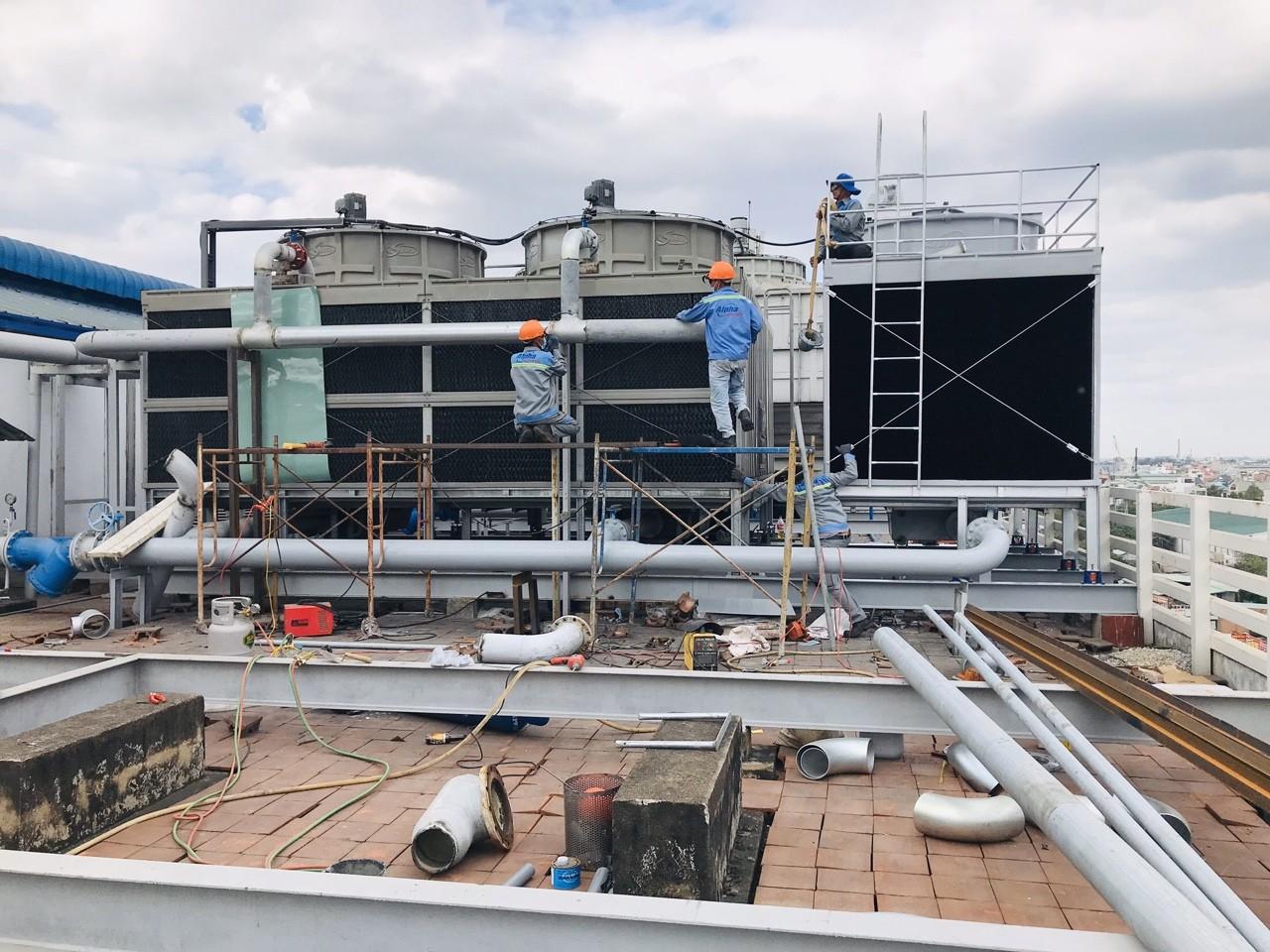
Fiberglass Reinforced Plastic (FRP) is widely used in industrial cooling tower construction.
It offers several advantages:
Good corrosion resistance in many environments.
Relatively low weight.
Flexibility in structural design.
Reduced risk of conventional rusting.
Suitability for many industrial applications.
Compared with unprotected carbon steel, FRP does not rust in the same way, making it worth considering for chemical plant environments.
However, FRP performance depends on resin type, reinforcement, manufacturing quality, operating temperature, UV exposure, and chemical compatibility.
If the cooling tower is exposed to acidic or alkaline vapors, confirm the resin system and chemical resistance with the manufacturer before ordering.
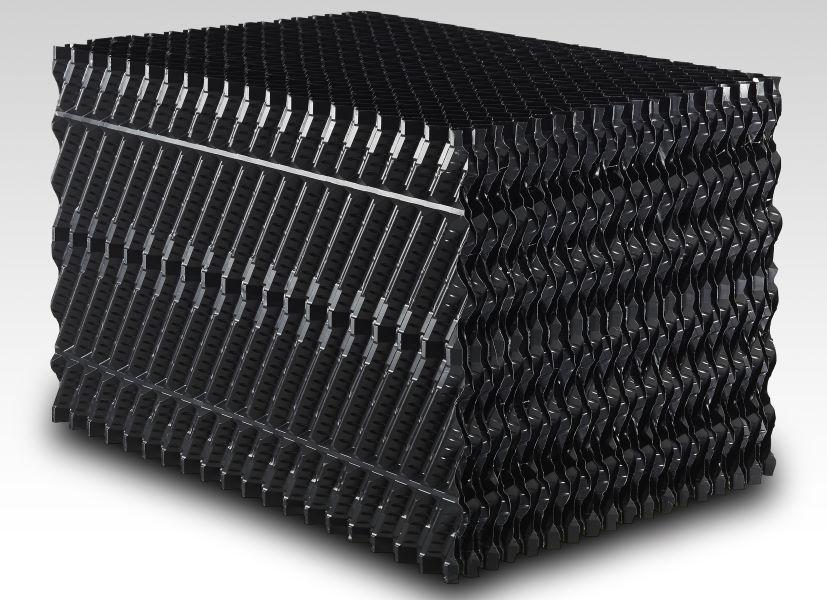
Cooling tower fill increases the contact area between air and water, making it one of the most important components affecting thermal performance.
PVC fill is widely used in conventional industrial cooling applications.
PP fill may be considered where its temperature and chemical-resistance properties better match the operating environment.
When selecting cooling fill, consider:
Operating water temperature.
Suspended solids concentration.
Water treatment chemicals.
Potential biological growth.
Scaling and clogging risks.
Cleaning and replacement requirements.
If the circulating water contains high concentrations of suspended solids or deposits, splash fill or another suitable configuration may be worth evaluating.
Stainless steel may be used for selected structural and water-contact components.
However, different stainless steel grades have different corrosion resistance.
Chloride concentration, acidity, temperature, and chemical exposure can all affect material performance.
Carbon steel with an appropriate protective coating may also be suitable for certain structural applications.
When purchasing a cooling tower, ask for the specific material grade, coating system, and operating limitations instead of relying on general descriptions such as corrosion-resistant metal.
A large industrial cooling tower is a coordinated system.
Its overall performance depends on the quality and compatibility of all major components.
The fan moves air through the cooling tower and supports evaporation and heat transfer.
Fan selection should consider:
Required airflow.
Static pressure.
Fan diameter.
Blade material.
Rotational speed.
Motor power.
Noise level.
Operating environment.
Industrial cooling towers commonly use axial fans because they can move large volumes of air at relatively low pressure.
Proper fan balancing and vibration control are also important.
An improperly selected fan can increase electricity consumption while reducing cooling performance.
The water distribution system spreads hot water evenly across the cooling fill.
It may include pipes, headers, spray nozzles, or other distribution components.
Uneven water distribution can create dry areas in the fill, reduce heat transfer, and produce inconsistent outlet-water temperatures.
Regular inspection helps identify blocked nozzles, damaged pipes, and uneven spray patterns.
Drift eliminators reduce the amount of water droplets carried out of the tower by exhaust air.
Louvers help control water splash-out, improve air entry, and reduce the entry of unwanted debris.
Both components contribute to efficient operation and responsible water management.
For chemical facilities, minimizing uncontrolled water drift is particularly important where surrounding equipment and working areas must be protected from water droplets.
The basin collects cooled water before it returns to the circulating-water system.
It should provide adequate storage and allow stable pump operation.
Water treatment is equally important.
Chemical plants should establish appropriate procedures for:
Filtration.
Blowdown.
Make-up water.
Scale control.
Corrosion control.
Microbiological management.
Treatment programs must be designed according to actual water chemistry and applicable safety requirements.
A 1000 ton cooling tower may operate for many hours each day, sometimes continuously throughout the year.
Therefore, energy consumption and water management can have a significant impact on the total cost of ownership.
When comparing cooling tower models, do not focus only on the initial purchase price.
Consider electricity consumption, water usage, chemical treatment, cleaning, spare parts, and potential production downtime.
The cooling tower fan is one of the major electrical loads.
Its power consumption depends on airflow requirements, fan diameter, blade design, motor efficiency, and operating speed.
A properly selected fan can provide the required airflow without unnecessary energy consumption.
Regular cleaning and maintenance also help maintain performance.
Dust accumulation, damaged blades, poor alignment, and excessive vibration can increase operating costs.
Evaporation is essential to the cooling process, but it also means that cooling towers consume water.
Additional water losses occur through drift and blowdown.
Make-up water replaces these losses and maintains the required basin level.
An effective water treatment program can help control scaling and corrosion, allowing operators to manage cycles of concentration more efficiently.
Automatic blowdown control, suitable filtration, and properly maintained drift eliminators can also help reduce unnecessary water consumption.
A variable frequency drive (VFD) allows the fan motor speed to change according to cooling demand.
During periods of lower heat load or favorable weather conditions, the fan may operate at reduced speed.
This can lower electricity consumption and reduce mechanical stress.
However, the control strategy must maintain minimum airflow and consider motor cooling, vibration, operating limits, and cold-weather conditions.
For chemical plants with changing production loads, VFD control can be a useful energy-management option.
Installing a large cooling tower requires coordination between mechanical, electrical, civil, and process engineering teams.
Poor installation can create vibration, leakage, uneven water distribution, and maintenance difficulties.
The installation plan should be reviewed before equipment delivery.
A 1000-ton cooling tower requires a foundation designed to support its operating weight, including water and other loads.
The foundation should also account for wind, seismic conditions where applicable, vibration, and local building requirements.
For large installations, steel structures or concrete-supported arrangements may be considered.
The manufacturer and project structural engineer should coordinate foundation dimensions and load information before construction begins.
Cooling-water piping should be designed to provide the required flow without excessive pressure loss.
Consider pump selection, pipe diameter, valves, strainers, expansion, drainage, and maintenance isolation.
Electrical work should include appropriate motor protection, grounding, control panels, emergency shutdown arrangements, and compliance with local electrical regulations.
If the chemical plant operates in an area with potentially explosive atmospheres, all electrical and mechanical equipment must be assessed against the applicable hazardous-area classification.
Standard industrial cooling tower equipment should never be assumed suitable for an explosive environment without verification.
The cooling tower should be installed in a location with adequate fresh-air circulation.
Nearby walls, buildings, exhaust outlets, and other towers can interfere with airflow and cause hot, humid discharge air to recirculate into the air inlet.
This can reduce cooling performance.
Maintenance access is equally important.
Leave sufficient space for inspecting fans, motors, cooling fill, water distribution systems, and other components.
Even a well-designed 1000 ton cooling tower requires regular maintenance.
Chemical plant operators should establish a maintenance program based on operating hours, water quality, environmental conditions, and equipment recommendations.
Preventive maintenance is usually less expensive than repairing a major failure after production has been interrupted.
Inspect the following components regularly:
Fan and motor.
Gearbox, if fitted.
Supporting structure.
Cooling tower basin.
Water distribution system.
Cooling fill.
Drift eliminators.
Louvers and piping.
Check for unusual noise, vibration, leakage, corrosion, scaling, and biological growth.
Clean blocked nozzles and remove deposits from the basin when required.
Cooling fill should be checked for deformation, clogging, and aging.
A clean tower helps maintain airflow and water distribution, both of which are essential for stable thermal performance.
Several problems can affect cooling tower operation.
High outlet-water temperature: This may result from insufficient airflow, excessive heat load, blocked fill, poor water distribution, or unfavorable wet-bulb conditions.
Excessive vibration: This may indicate fan imbalance, loose fasteners, shaft misalignment, or bearing damage.
High water consumption: This may result from excessive drift, uncontrolled blowdown, leakage, or poor water management.
Reduced cooling efficiency: Scaling, biological growth, damaged fill, and blocked nozzles can all reduce heat transfer.
Operators should identify the actual cause before replacing components.
A practical maintenance program can divide inspections into daily, monthly, and annual activities.
Daily maintenance:
Check hot-water and cold-water temperatures.
Monitor basin water level.
Check fan and pump operation.
Listen for unusual noise.
Observe overall operating conditions.
Monthly maintenance:
Inspect water distribution nozzles.
Check drift eliminators and louvers.
Monitor vibration.
Review water treatment performance.
Check for visible scaling and deposits.
Annual maintenance:
Inspect the tower structure.
Check fan assembly and motor.
Examine electrical connections.
Evaluate cooling fill condition.
Inspect water distribution and supporting components.
Actual maintenance intervals should follow the manufacturer's instructions and site operating conditions.
Choosing the right manufacturer is just as important as choosing the right cooling tower design.
A reliable supplier should understand industrial cooling requirements and be able to evaluate the project's operating conditions before recommending a configuration.
Look for a manufacturer with experience in industrial cooling equipment, different cooling tower structures, and relevant manufacturing processes.
Ask about:
Manufacturing experience.
Product specifications.
Material quality.
Quality control procedures.
Technical documentation.
Inspection arrangements.
Spare parts availability.
After-sales support.
Technical communication also matters.
A reliable supplier should be willing to discuss thermal requirements, fan selection, water distribution, corrosion resistance, and maintenance access instead of simply quoting a standard model.
Every chemical plant has different requirements.
One facility may need a compact counterflow cooling tower, while another may require a large crossflow or multi-cell arrangement.
Before requesting a quotation, prepare the following information:
Required cooling capacity.
Circulating-water flow rate.
Hot-water inlet temperature.
Cold-water outlet temperature.
Local design wet-bulb temperature.
Installation dimensions.
Electrical power supply.
Circulating-water quality.
Environmental conditions.
Open-circuit or closed-circuit preference.
Providing complete information helps the manufacturer recommend a suitable configuration and avoid unnecessary design changes later.
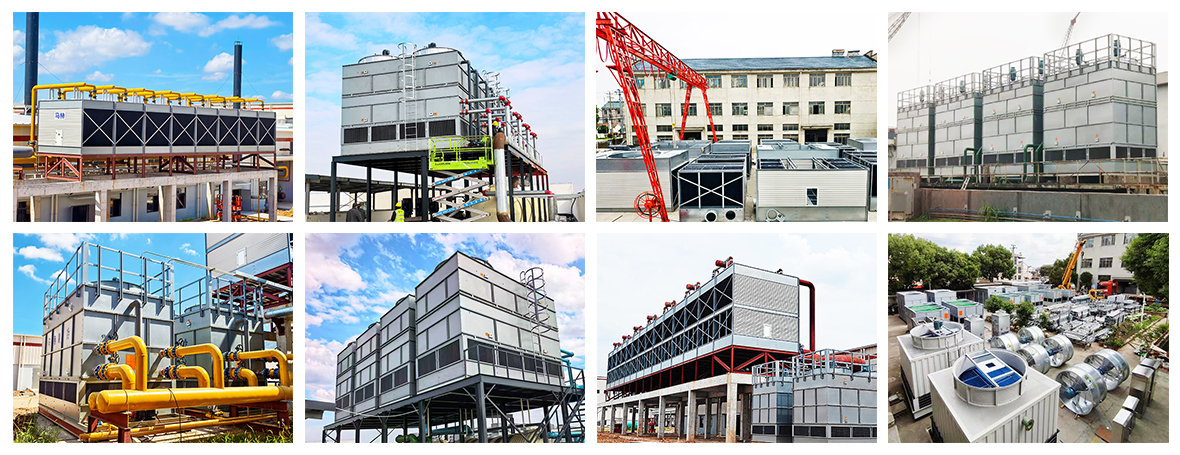
When looking for a 1000 ton cooling tower for a chemical plant, it is worth working with a manufacturer that offers different industrial cooling tower configurations and understands the importance of project-specific requirements.
Mach Industry (Zhejiang) Co., Ltd., operating under the Mach Cooling brand, is a cooling tower manufacturer based in Zhejiang, China.
The company provides cooling equipment for industrial and commercial applications. Its product range includes:
Open cooling towers.
Closed cooling towers.
Crossflow cooling towers.
Counterflow cooling towers.
Industrial cooling tower components.
Mach Cooling's published product information covers cooling tower capacities from 3 tons to 5,000 tons per cell, with multi-cell configurations available.
This capacity range makes Mach Industry worth considering when evaluating a 1,000-ton industrial cooling tower project.
Chemical plants have specific cooling requirements that should be evaluated individually.
For example, a project may require corrosion-resistant construction, special cooling fill materials, a particular fan configuration, or a closed-circuit design to protect process fluid.
Mach Cooling offers different industrial cooling tower configurations for customers to discuss according to their applications.
The final selection should always be based on actual thermal calculations, operating conditions, and material compatibility rather than capacity alone.
Before contacting Mach Cooling, prepare the following technical information:
Required cooling capacity.
Circulating-water flow rate.
Hot-water inlet temperature.
Cold-water outlet temperature.
Local design wet-bulb temperature.
Water quality.
Installation space.
Electrical power supply.
If your facility handles corrosive substances, also provide details about the surrounding atmosphere and potential chemical exposure.
These details help the manufacturer understand your project and evaluate an appropriate cooling tower configuration.
To explore industrial cooling tower products and discuss your requirements, visit the official Mach Cooling website:
There is no single water-flow figure that applies to every 1000-ton cooling tower.
The required flow depends on the actual heat load and the temperature difference between hot and cold water.
For example, a system with a 5°C cooling range requires a different water flow from one with a 10°C range for the same heat rejection duty.
Ask the manufacturer to provide the design flow rate and guaranteed thermal performance under the specified conditions.
The installation footprint depends on the tower type, number of cells, fan arrangement, water basin configuration, and structural design.
A multi-cell cooling tower may offer operational flexibility, but it can require a different layout from a single-cell configuration.
You should also consider maintenance access, airflow clearance, piping routes, and future expansion.
The manufacturer can evaluate the available site dimensions before confirming the equipment arrangement.
FRP can be an excellent option for many industrial cooling tower structures because of its corrosion resistance and relatively low weight.
However, its suitability depends on the specific chemicals, temperature, resin system, and exposure conditions.
Always confirm chemical compatibility before selecting FRP for a chemical plant.
The service life of an industrial cooling tower depends on design quality, construction materials, water treatment, operating conditions, and maintenance.
Proper inspections and timely replacement of worn components can help extend its operating life.
The tower structure, fan assembly, cooling fill, motor, and water distribution components may also have different replacement intervals.
To receive an accurate quotation, buyers should provide the cooling capacity, water flow rate, hot-water temperature, cold-water temperature, local wet-bulb temperature, water quality, installation space, and electrical requirements.
For chemical plants, it is also important to explain whether the equipment will be exposed to corrosive vapors or other special environmental conditions.
The more complete the technical information, the easier it is for the manufacturer to recommend a suitable cooling tower.
A 1000 ton cooling tower plays an important role in maintaining reliable cooling performance in chemical manufacturing facilities.
From reactor cooling and heat exchanger operation to compressor cooling and process-water temperature control, the right cooling tower helps support stable production and efficient industrial operations.
However, successful equipment selection requires more than choosing a nominal capacity.
You must consider heat load, water flow, wet-bulb temperature, cooling range, approach temperature, tower configuration, material compatibility, energy efficiency, and maintenance requirements.
For chemical plants, corrosion resistance and water treatment deserve particular attention.
Mach Industry (Zhejiang) Co., Ltd., under the Mach Cooling brand, offers industrial cooling tower products and configurations for different project requirements. Its published capacity range and product options make it a manufacturer worth contacting when planning a 1,000-ton cooling tower project.
If you are building a new chemical plant, expanding production capacity, or replacing an existing cooling system, start with accurate operating data and a clear technical specification.
Visit https://www.machcooling.com to explore Mach Cooling products and discuss your industrial cooling requirements.
The best cooling tower is not simply the one with the largest capacity or lowest purchase price. It is the one that delivers reliable heat rejection, efficient operation, and long-term value under your actual plant conditions.