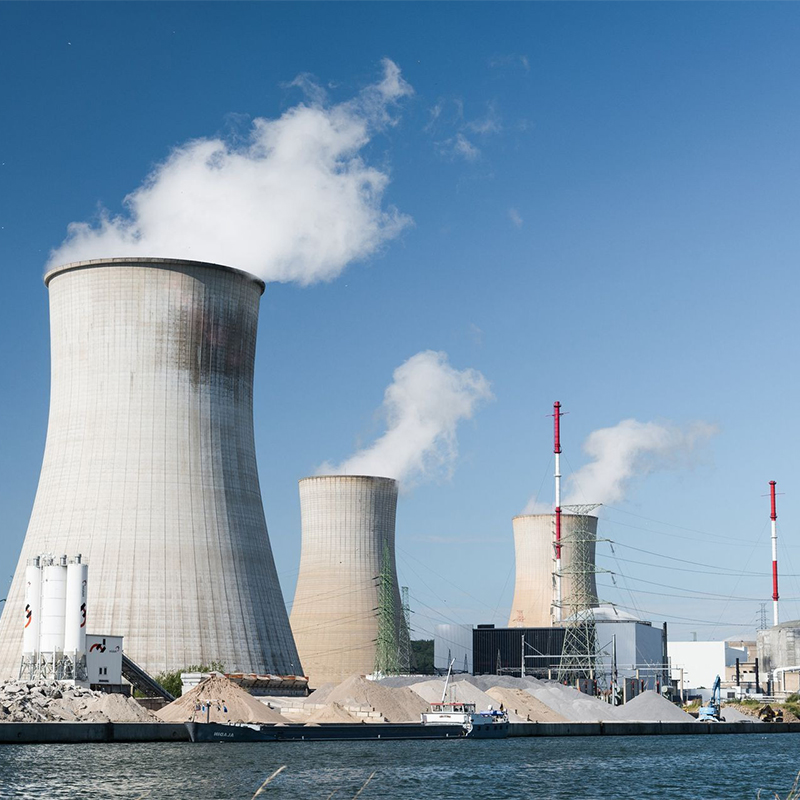
We Provide Cooling Tower Solution

Views: 0 Author: Cindy Publish Time: 2026-11-23 Origin: Site


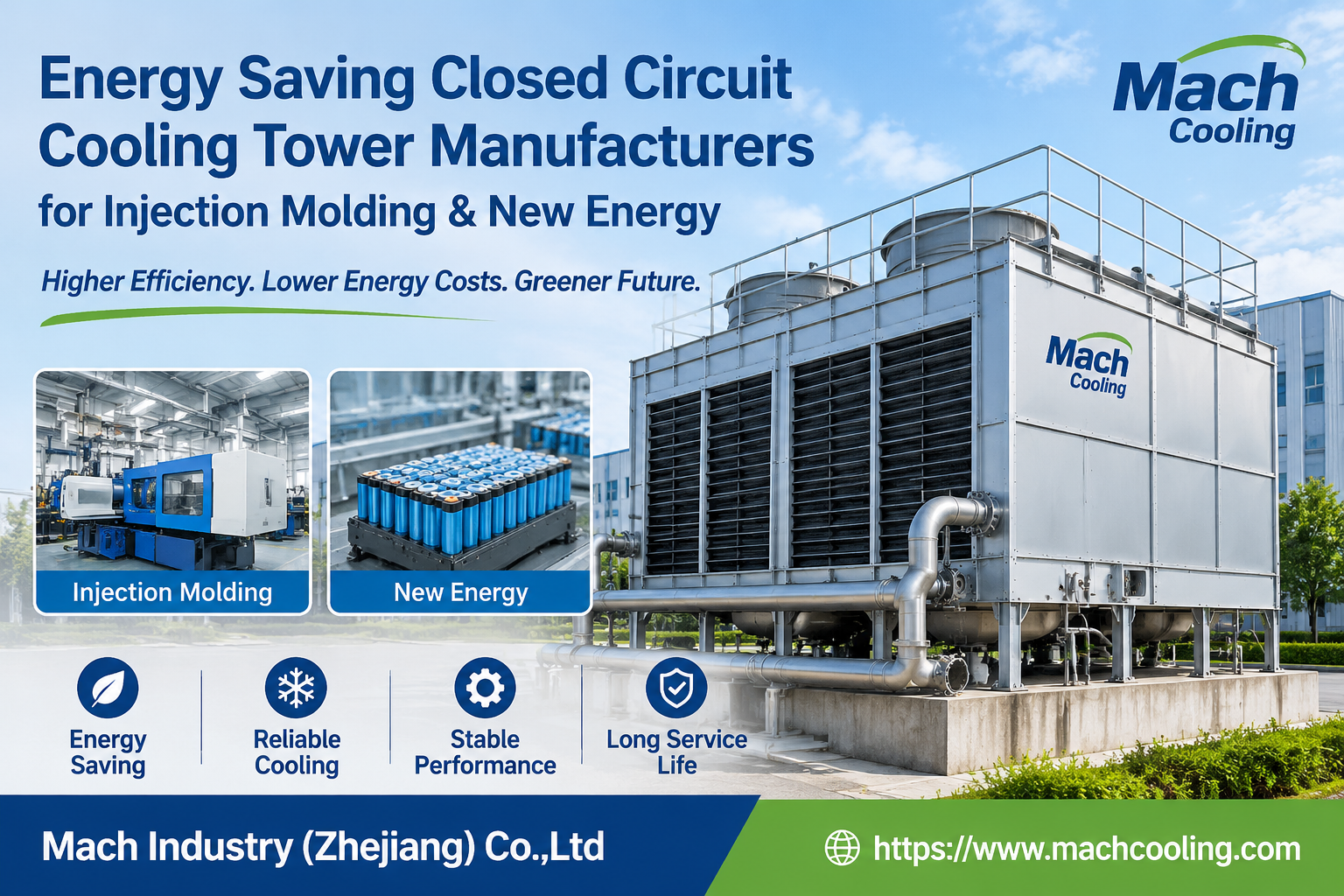
Modern manufacturing facilities depend on stable and efficient cooling systems. In an injection molding plant, temperature fluctuations can affect mold performance, product quality, and production cycle times. In the new energy industry, including battery manufacturing, energy storage, and electric vehicle production, reliable heat removal is equally important for maintaining equipment performance and production stability.
Cooling is no longer just an auxiliary part of a factory. It is an essential part of the production process.
As energy costs continue to rise, more industrial companies are looking for energy-efficient cooling solutions that can reduce operating expenses without compromising cooling performance. This is one reason why closed circuit cooling towers are becoming an attractive option for industrial applications.
Unlike traditional open cooling towers, closed circuit cooling towers circulate process fluid through a heat exchanger coil. This arrangement separates the process fluid from the external spray-water circuit and helps reduce direct exposure to airborne contaminants.
However, choosing the right equipment requires more than comparing prices and cooling capacities. Buyers must consider heat loads, operating temperatures, local climate, water quality, fan efficiency, pump power, and long-term maintenance requirements.
If you are searching for reliable energy saving closed circuit cooling tower manufacturers for injection molding and new energy applications, this guide will help you understand the technology, evaluate important design features, and select the right supplier.
Energy consumption is a major concern for industrial manufacturers. Injection molding machines, compressors, hydraulic systems, battery production equipment, and power electronics all generate heat during operation.
This heat must be removed continuously to prevent equipment temperatures from exceeding acceptable operating limits.
A cooling system that operates around the clock can consume a considerable amount of electricity. Fans and circulation pumps require power, while poor heat transfer can increase the workload of chillers and other cooling equipment.
An inefficient cooling system may create several problems:
Higher electricity consumption.
Unstable process temperatures.
Increased equipment maintenance.
Poor heat transfer performance.
Unnecessary water consumption.
Higher long-term operating costs.
An energy-efficient cooling tower addresses these issues through better system design and appropriate component selection.
For example, high-efficiency motors can reduce electrical losses, while variable frequency drives can adjust fan speed according to actual cooling demand. Optimized heat exchanger coils can also improve heat transfer performance when correctly selected.
The real objective is simple: maintain the required process temperature while minimizing unnecessary energy consumption.
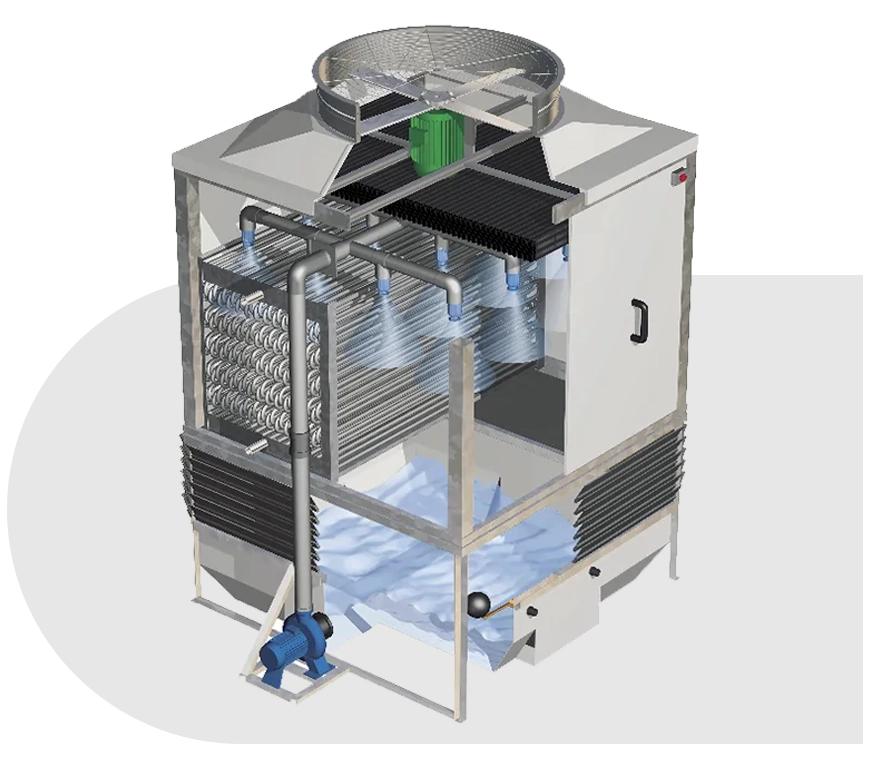
A closed circuit cooling tower, also called a closed cooling tower or evaporative fluid cooler, is a heat rejection device designed to cool circulating process fluid through a heat exchanger coil.
The process fluid normally remains inside the coil instead of contacting the outside air and spray water directly.
During operation, warm process fluid enters the heat exchanger coil. Spray water flows over the coil surface, while fans move air through the tower. Heat transfers through the coil wall and is released into the surrounding atmosphere through evaporation and air movement.
The cooled process fluid then returns to the factory equipment.
This design provides separation between the process-fluid circuit and the external cooling-water circuit.
For industries where process-water cleanliness and stable operating conditions are important, this arrangement can offer practical advantages.
A typical closed circuit cooling tower operates through the following process:
Warm process fluid leaves the production equipment.
A circulation pump sends the fluid through the tower's heat exchanger coil.
Heat transfers from the process fluid through the coil wall.
External spray water flows over the coil surface.
Fans move air through the tower to remove heat.
The cooled process fluid returns to the factory cooling circuit.
The exact operating arrangement depends on the tower configuration and project requirements.
Some systems can also support dry or seasonal operating modes, depending on their design.
The main difference between closed circuit and open circuit cooling towers is how the process fluid interacts with the external cooling environment.
In an open cooling tower, circulating water is distributed directly into the tower and comes into contact with air.
In a closed circuit cooling tower, the process fluid flows through a heat exchanger coil and remains separated from the external spray-water circuit.
This separation can help reduce contamination risks and maintain more controlled process-fluid conditions.
However, closed circuit cooling towers are not automatically more energy-efficient in every application. Their performance depends on heat load, design conditions, fan and pump selection, water treatment, and control strategy.
Buyers should compare the complete cooling system rather than selecting equipment based on one feature alone.
Injection molding is a temperature-sensitive manufacturing process.
Plastic materials are heated until they reach the required molten state, injected into a mold, cooled, and then released as finished products.
Cooling conditions directly influence production efficiency and product quality.
If the cooling system cannot maintain stable temperatures, manufacturers may experience longer production cycles, dimensional inconsistencies, surface defects, or unstable machine operation.
Injection molding plants commonly require cooling for:
Injection molding machine heat exchangers.
Hydraulic oil cooling systems.
Mold temperature control equipment.
Industrial compressors.
Auxiliary production equipment.
Different loads may require different cooling temperatures. Therefore, the cooling system should be designed according to the actual requirements of the entire production process.
Injection molding machines generate heat through hydraulic systems, motors, drives, and other mechanical components.
Hydraulic oil temperature is particularly important because excessive heat can affect oil properties and equipment operation.
A closed circuit cooling tower can provide cooling for suitable machine heat exchangers and hydraulic cooling loops.
However, the system must be selected according to the required fluid temperature and local ambient conditions.
If the process requires cooling water below the temperature that an evaporative cooling tower can achieve under the site's design conditions, an additional chiller or hybrid cooling arrangement may be necessary.
Mold temperature has a direct influence on plastic product quality.
Different materials and product designs require different mold temperature conditions. Maintaining stable temperatures can help improve dimensional consistency, surface quality, and production repeatability.
A central cooling system may supply cooling water to mold temperature control units, which then regulate the temperature delivered to individual molds.
The cooling tower should therefore be evaluated together with chillers, circulation pumps, piping, and temperature control equipment.
A properly designed system helps manufacturers avoid unnecessary cooling demand while maintaining suitable production conditions.
The new energy industry covers several manufacturing sectors, including battery production, energy storage, electric vehicles, and power electronics.
These industries use a wide range of equipment that generates heat during operation.
Some processes require relatively stable temperatures, while other systems have changing heat loads depending on production schedules and operating conditions.
A closed circuit cooling tower may be suitable for selected process and auxiliary cooling applications.
The important point is to identify which equipment needs cooling and understand its specific temperature and fluid requirements.
Battery manufacturing involves processes such as mixing, coating, drying, formation, testing, and environmental control.
Cooling may be required for production machinery, compressors, chillers, power conversion equipment, and other supporting systems.
Energy storage facilities also generate heat through power conversion and auxiliary equipment during operation.
A closed circuit cooling tower can be considered for suitable cooling loops where separation of process fluid from external cooling water is beneficial.
Before selecting equipment, buyers should confirm:
Required cooling capacity.
Process-fluid type.
Fluid inlet and outlet temperatures.
Required circulation flow rate.
Operating hours.
Water quality.
Corrosion protection requirements.
These details help manufacturers determine whether a closed circuit cooling tower is suitable for the application.
Electric vehicle manufacturing includes welding, stamping, painting, machining, battery assembly, and testing.
Power electronics production also involves equipment that may require continuous or intermittent heat removal.
Cooling reliability is important because equipment operating temperatures can influence production stability and component performance.
A cooling tower designed for mild weather may not deliver the same leaving-fluid temperature during extremely hot or humid conditions.
For this reason, manufacturers should evaluate the site's design wet-bulb temperature and the actual process cooling requirements before recommending a tower.
Energy efficiency depends on the performance of the complete cooling system.
A high-efficiency motor alone cannot guarantee low operating costs if the heat exchanger is poorly selected or the airflow system is inefficient.
When comparing closed circuit cooling tower manufacturers, pay attention to the following design features.
Fans are responsible for moving air through the cooling tower.
Because cooling tower fans may operate for long periods, motor efficiency and correct fan selection can have a meaningful effect on electricity consumption.
When evaluating a cooling tower motor, check:
Rated motor power.
Motor efficiency class.
Voltage and frequency.
Rated speed.
Protection rating.
Insulation class.
Operating environment.
Compatibility with variable frequency drives.
The fan blade design, diameter, operating speed, and airflow resistance also influence energy consumption.
A properly matched fan and motor can provide the required airflow without unnecessary power demand.
A variable frequency drive, commonly called a VFD, adjusts motor speed according to cooling demand.
When the process heat load decreases or ambient conditions become more favorable, the fan may not need to operate at full speed.
Reducing fan speed can help lower electricity consumption.
Under similar operating conditions, fan affinity relationships can be approximated as follows:
Airflow is proportional to fan speed.
Pressure is proportional to the square of fan speed.
Fan power is proportional to the cube of fan speed.
This explains why even a moderate reduction in fan speed can produce significant reductions in fan power.
However, actual savings depend on the system curve, control strategy, minimum airflow requirements, and operating conditions.
VFDs should also be selected according to motor compatibility and electrical system requirements.
The heat exchanger coil is one of the most important components in a closed circuit cooling tower.
Its heat transfer area, tube arrangement, material, circuit design, and pressure drop all affect cooling performance.
An undersized coil may not provide sufficient heat transfer capacity, causing the system to require higher fan speeds or additional cooling equipment.
On the other hand, simply choosing the largest possible coil does not always provide the most economical solution.
The manufacturer should provide information about:
Coil material.
Heat transfer surface area.
Design pressure.
Fluid circuit arrangement.
Connection dimensions.
Pressure drop.
Rated thermal performance.
These specifications help buyers evaluate whether the coil is suitable for their operating conditions.
The external spray-water system plays an important role in evaporative cooling.
Water should be distributed evenly over the heat exchanger coil to support consistent heat transfer.
Poor water distribution can create dry areas and reduce cooling performance.
Blocked nozzles, incorrect spray pressure, and poor water quality can also affect operation.
A practical design should allow easy inspection and cleaning of the spray system.
Filtration and suitable water treatment help reduce scaling, corrosion, and biological growth.
Airflow is essential for heat rejection.
If air cannot move freely through the tower, the fan may need to work harder to achieve the required cooling performance.
Common airflow restrictions include:
Blocked air inlets.
Dirty louvers.
Restricted discharge areas.
Poor equipment positioning.
Hot-air recirculation.
Insufficient installation clearance.
The cooling tower should be installed in a location that allows sufficient air intake and discharge.
Manufacturers should consider the actual site layout when recommending equipment dimensions and installation arrangements.
Correct capacity selection is one of the most important steps when purchasing a closed circuit cooling tower.
Selecting equipment based only on an existing tower's nominal tonnage may lead to incorrect comparisons.
Different manufacturers may use different rating conditions, so buyers should compare performance using the same operating parameters.
Start by collecting the actual process data.
Important information includes heat load, fluid type, circulation flow rate, entering and leaving temperatures, local wet-bulb temperature, and operating schedule.
Heat load can be estimated using the following formula:
Heat Load (kW) = Mass Flow Rate (kg/s) × Specific Heat (kJ/kg·°C) × Temperature Difference (°C)
For water, the specific heat is approximately 4.186 kJ/kg·°C under ordinary industrial cooling conditions.
For other fluids, the correct density and specific heat must be used.
If several machines operate on the same cooling loop, determine their simultaneous heat loads and operating patterns.
Do not simply add every machine's maximum rated heat load if the machines do not operate at full load at the same time.
Evaporative cooling tower performance depends strongly on ambient wet-bulb temperature.
A cooling tower operating in a hot and humid region may deliver a different leaving-water temperature from an identical unit operating in a cooler and drier climate.
Before requesting a quotation, provide the manufacturer with:
Design wet-bulb temperature.
Ambient dry-bulb temperature.
Installation altitude.
Seasonal operating conditions.
Required process-fluid temperature.
Expected operating hours.
This information allows the manufacturer to select a suitable configuration and avoid unrealistic performance expectations.
Cooling capacity is only one part of the equipment specification.
Industrial buyers should also consider water management, corrosion resistance, installation space, noise, and maintenance accessibility.
Although a closed circuit cooling tower separates the process fluid from external spray water, the spray-water circuit still requires proper management.
Dissolved minerals can form scale on heat transfer surfaces.
Suspended solids may block spray nozzles or accumulate in the basin.
Biological growth can also create hygiene and maintenance problems.
A suitable water treatment program should consider local water chemistry, filtration, blowdown, cycles of concentration, and regular monitoring.
The process-fluid loop may require separate filtration or fluid conditioning, depending on the equipment connected to it.
Material selection should match the operating environment.
Coil materials, casing panels, structural supports, fasteners, and water basins may require different corrosion protection measures.
Coastal locations, industrial atmospheres, and aggressive water chemistry can increase corrosion risks.
Buyers should ask manufacturers to identify the proposed construction materials and protective treatments.
The final selection should reflect the site's actual operating conditions rather than relying on general material claims.
Cooling towers are often installed near production buildings, warehouses, offices, and neighboring properties.
Fan noise and airflow direction may therefore affect equipment placement.
Before ordering, confirm:
Available installation footprint.
Maximum equipment height.
Maintenance clearance.
Lifting and transportation access.
Foundation requirements.
Electrical supply.
Piping connections.
Drainage arrangements.
Project noise requirements.
A compact tower is not necessarily easier to maintain if its important components are difficult to access.
Even a well-designed cooling tower can consume excessive energy if it is incorrectly selected, installed, or maintained.
Some common problems include:
Oversized Fans or Pumps
Oversized components may consume more electricity than necessary, especially when operating under partial load.
Incorrect Control Settings
Fans may continue operating at full speed even when the cooling demand decreases.
Dirty Coils or Blocked Spray Nozzles
Deposits and blockages reduce heat transfer performance and can increase operating demand.
Restricted Airflow
Blocked inlets, nearby structures, and poor installation clearances can reduce airflow.
Poor Water Treatment
Scaling and deposits can reduce heat transfer and increase maintenance requirements.
Unbalanced System Flow
Incorrect circulation flow can prevent the cooling tower from meeting the required process temperatures.
The best way to identify these problems is through regular performance monitoring.
Factories should track electricity consumption, process-fluid temperatures, flow rates, water quality, and production load.
Comparing operating data over time helps identify changes before they develop into major problems.
Choosing a manufacturer is just as important as selecting the equipment.
A reliable supplier should understand your application, confirm the design conditions, recommend a suitable configuration, and provide clear technical documentation.
Start by asking whether the manufacturer can select a cooling tower according to your actual process data.
Can the company evaluate your heat load and local wet-bulb temperature?
Can it explain the differences between crossflow and counterflow configurations?
Can it provide suitable options for fan control, coil materials, casing construction, and installation layout?
A useful technical quotation should clearly identify:
Rated cooling capacity and design conditions.
Process-fluid flow rate.
Fluid inlet and outlet temperatures.
Fan motor power.
Pump requirements.
Electrical specifications.
Equipment dimensions and weight.
Pipe connection details.
Recommended operating conditions.
For battery production and other specialized applications, explain any fluid compatibility, temperature stability, corrosion, or cleanliness requirements during the initial engineering discussion.
A cooling tower is a long-term industrial asset.
Therefore, buyers should understand how the manufacturer manages material inspection, fabrication, assembly, and final quality checks.
Request available technical drawings, component specifications, operating instructions, and maintenance recommendations.
For larger industrial projects, clarify inspection and acceptance requirements before production begins.
After-sales support is equally important.
Confirm replacement-part availability, technical assistance, warranty terms, and recommended maintenance intervals.
A good supplier should help customers understand not only how to purchase the equipment but also how to operate and maintain it over its service life.
When comparing energy saving closed circuit cooling tower manufacturers, industrial buyers need a supplier that understands both cooling equipment and real manufacturing requirements.
Mach Industry (Zhejiang) Co.,Ltd, operating under the Mach Cooling name, provides cooling tower products for industrial and commercial cooling applications.
Its product range includes closed cooling tower configurations as well as crossflow and counterflow cooling tower solutions.
For injection molding and new energy projects, selecting the correct configuration is essential.
A suitable cooling solution should be evaluated according to:
Actual process heat load.
Fluid inlet and outlet temperatures.
Required circulation flow rate.
Local ambient conditions.
Water quality.
Installation space.
Fan and pump requirements.
Expected operating schedule.
Mach Industry can be contacted to discuss project requirements and evaluate suitable cooling tower options.
Rather than selecting equipment based only on nominal capacity, buyers should provide complete technical information so that the proposed solution can be matched to actual operating conditions.
Manufacturer: Mach Industry (Zhejiang) Co.,Ltd
Brand: Mach Cooling
Website: https://www.machcooling.com
Visit the official website to explore cooling tower products and contact the company about your industrial cooling project.
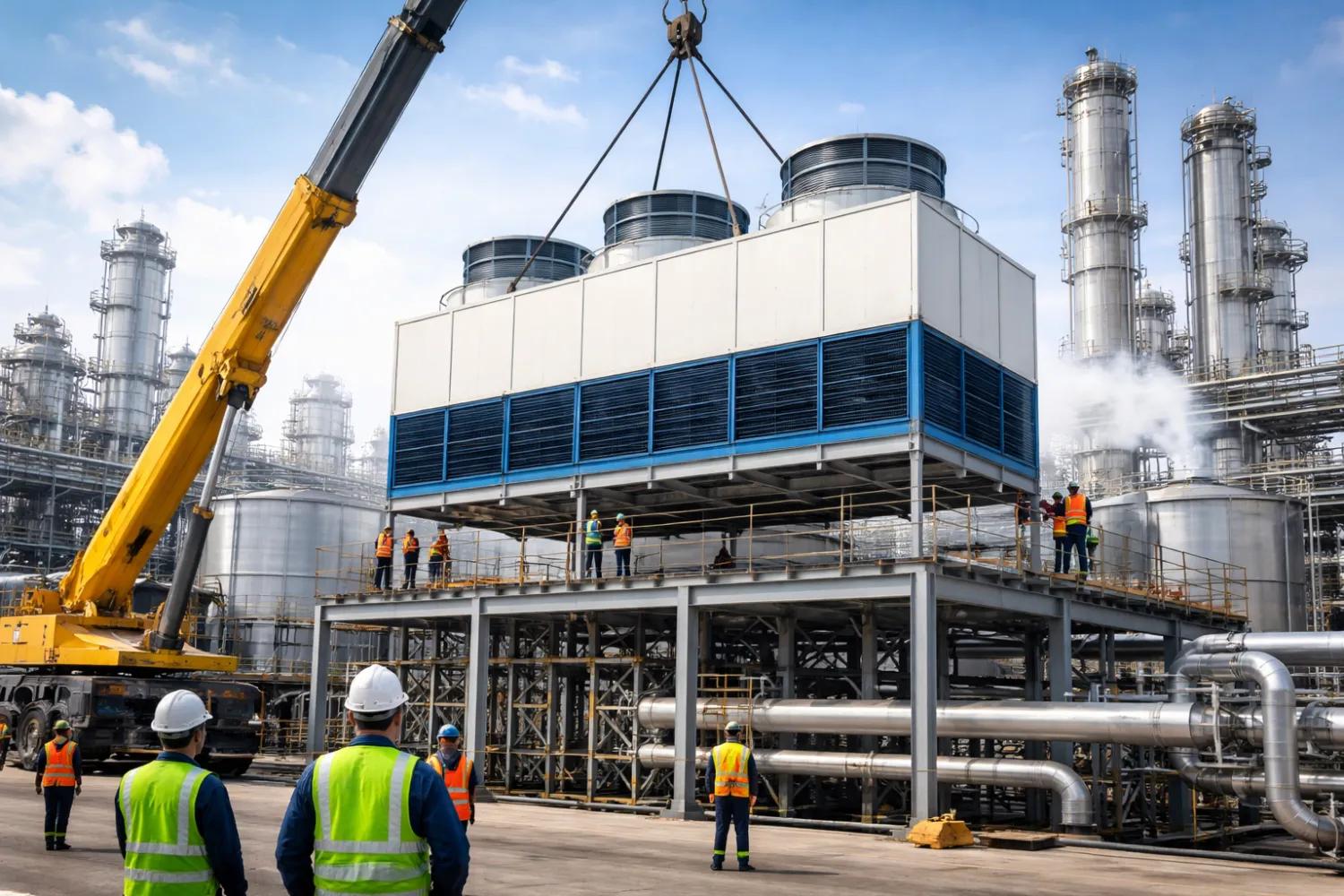
Correct installation is essential for achieving the expected cooling performance.
The tower should be positioned where air can enter and discharge freely. Avoid locations where hot discharge air can easily return to the air inlet.
The foundation, piping, electrical supply, drainage, and maintenance access should follow the approved project drawings.
After installation, commissioning should verify:
Fan rotation direction.
Motor operating current.
Pump operation.
Water distribution.
Pipe and coil leakage.
Vibration and unusual noise.
Process-fluid inlet and outlet temperatures.
Record the initial operating data so that future performance can be compared against a reliable baseline.
A practical maintenance program should include:
Inspecting fans, motors, belts, bearings, and drive components.
Checking heat exchanger coils for corrosion or damage.
Cleaning spray nozzles and water distribution components.
Monitoring basin cleanliness and water chemistry.
Checking vibration and unusual operating noise.
Reviewing VFD settings and control operation.
Inspecting electrical connections and protective devices.
Maintenance frequency should depend on operating hours, water quality, ambient conditions, and the manufacturer's recommendations.
Regular maintenance helps protect cooling performance and reduce unexpected downtime.
Its main advantage is that the process fluid circulates inside a heat exchanger coil rather than being directly exposed to the external air and spray-water circuit.
This can help maintain a cleaner and more controlled process loop, depending on the system design and maintenance program.
Yes. They can be suitable for selected injection molding cooling applications, including machine heat exchangers and supporting process-water loops.
However, the equipment must be selected according to actual heat load, required temperatures, flow rate, and local ambient conditions.
Mold temperature control may still require dedicated temperature control units or chillers.
They may be used for suitable auxiliary or process cooling applications in battery and energy storage facilities.
The correct design depends on the equipment being cooled, fluid requirements, operating schedule, and temperature limits.
Specialized production processes should always be reviewed individually.
No. A VFD can reduce fan energy when cooling demand varies and the system can operate safely at lower speeds.
If the tower requires full airflow continuously, the potential energy benefit may be limited.
Correct control design and commissioning are important.
Compare engineering capabilities, rated performance data, construction materials, component specifications, quality-control procedures, technical documentation, warranty terms, and after-sales support.
Ask manufacturers to quote against the same operating conditions to make the comparison meaningful.
Prepare the following information:
Required heat rejection capacity.
Process-fluid type.
Fluid flow rate.
Inlet and outlet temperatures.
Site wet-bulb temperature.
Operating hours.
Water quality.
Available installation space.
Electrical supply.
Noise and material requirements.
Site drawings and installation photographs can also help the manufacturer evaluate the project.
Choosing an energy-saving closed circuit cooling tower is an important engineering decision that affects production stability, electricity consumption, water management, and long-term maintenance costs.
For injection molding plants, the cooling system must support reliable machine operation and appropriate mold temperature control.
For new energy facilities, it must match the specific requirements of battery manufacturing, energy storage, electric vehicle production, or supporting industrial equipment.
The best solution is not necessarily the tower with the largest capacity or the lowest purchase price. It is the system that meets the required thermal duty under real site conditions while avoiding unnecessary fan power, pump power, water consumption, and maintenance.
When evaluating energy saving closed circuit cooling tower manufacturers for injection molding and new energy, focus on verified performance data, engineering capabilities, component quality, and after-sales service.
Mach Industry (Zhejiang) Co.,Ltd provides industrial cooling tower solutions for customers seeking suitable equipment for their cooling projects.
Visit https://www.machcooling.com to explore Mach Cooling products and discuss your injection molding or new energy cooling requirements.