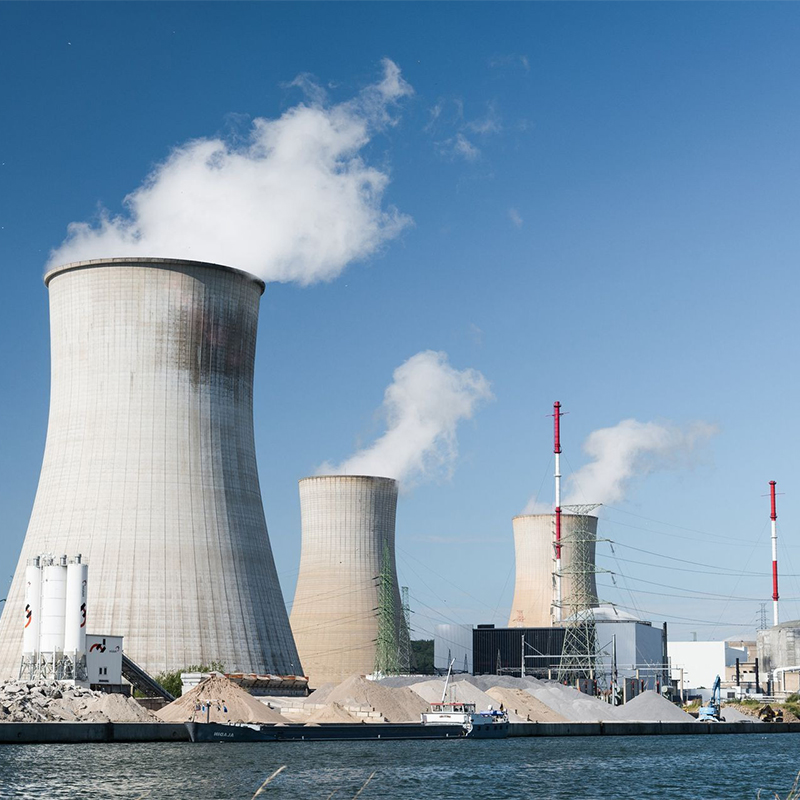
We Provide Cooling Tower Solution

Views: 0 Author: Cindy Publish Time: 2026-11-23 Origin: Site


When an industrial cooling system needs to operate reliably, choosing the right cooling tower is about much more than selecting a standard model from a product catalogue. Every factory has different cooling requirements, installation conditions, operating schedules, and environmental considerations. A cooling tower that works perfectly in one facility may not be suitable for another.
Some industrial projects need a large cooling capacity for continuous production. Others have limited installation space and require specially designed equipment dimensions. In certain locations, such as commercial buildings, urban industrial parks, and facilities close to residential areas, noise control is also an important consideration.
This is why working with an experienced industrial cooling tower manufacturer can make a real difference. Through customized engineering, suitable component selection, and thoughtful noise-control measures, manufacturers can help customers develop cooling tower solutions that better match their actual operating conditions.
Mach Industry (Zhejiang) Co.,Ltd, operating under the Mach Cooling brand, provides cooling tower products and customized solutions for industrial and commercial applications. Whether you are planning a new cooling system, expanding an existing factory, or replacing aging equipment, selecting the right cooling tower configuration is an important step toward reliable long-term operation.
In this article, we will explore custom-size industrial cooling towers, low noise design technologies, important selection factors, and how to choose a suitable cooling tower manufacturer for your project.
An industrial cooling tower manufacturer does more than produce equipment. A professional manufacturer needs to understand the customer's cooling requirements and develop a configuration that meets the project's thermal, structural, and operating conditions.
A typical manufacturing and engineering process includes:
Cooling capacity evaluation and technical design
Cooling tower type and configuration selection
Structural design and dimension confirmation
Fan, motor, and mechanical component selection
Fill media and water distribution configuration
Material selection and manufacturing
Product inspection and quality control
Technical documentation and project support
Each stage influences the final equipment performance.
For example, a cooling tower may have a powerful fan, but that does not automatically mean it will deliver the required cooling capacity. The fan must match the airflow requirements and resistance of the complete system. Similarly, increasing the amount of cooling tower fill does not guarantee better heat transfer if water distribution is uneven.
Good engineering considers the cooling tower as one integrated system.
The design process begins with understanding how much heat the cooling tower needs to reject.
Engineers normally evaluate several important parameters, including:
Required cooling capacity or heat load
Circulating water flow rate
Hot-water inlet temperature
Cold-water outlet temperature
Local design wet-bulb temperature
Available installation space
Water quality and operating environment
Electrical supply and control requirements
These parameters help determine the tower configuration, dimensions, fan system, fill arrangement, and other components.
A properly designed cooling tower should meet the required thermal performance while remaining practical to install, operate, and maintain.
Once the design is confirmed, the manufacturing process begins.
Depending on the cooling tower model, production may involve FRP components, steel structures, casing panels, water basins, fan cylinders, fill assemblies, drift eliminators, and mechanical equipment.
Quality control should cover material condition, dimensional accuracy, component assembly, mechanical alignment, and other relevant inspection requirements.
For customized cooling towers, dimensional accuracy is especially important. Even a small difference in connection positions or overall dimensions can create difficulties during installation.
Customers should review the technical specifications and general arrangement drawings before production whenever possible.
Standard cooling towers are suitable for many applications. However, industrial projects do not always follow standard conditions.
A manufacturing plant may have limited space between buildings. A chemical facility may require corrosion-resistant materials. An existing factory may need to replace an old cooling tower without changing its original foundation or piping layout.
In these situations, a custom cooling tower can provide greater flexibility.
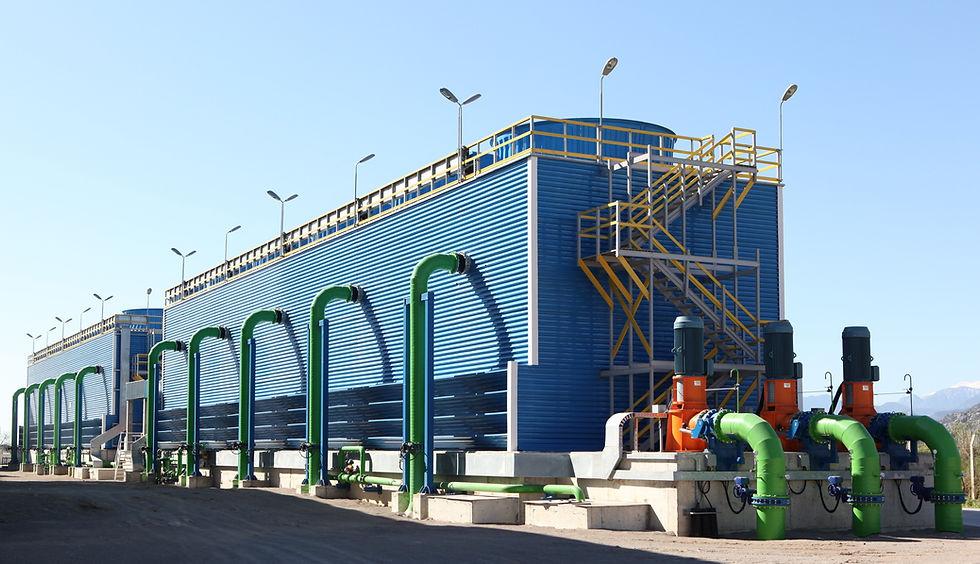
Cooling capacity is one of the most important factors in cooling tower selection.
If a cooling tower is undersized, it may struggle to maintain the required cold-water temperature during periods of high heat load. This can affect production equipment, process stability, and overall operating efficiency.
An oversized cooling tower may increase initial investment and installation requirements. If the system is not properly controlled, it may also consume more energy than necessary.
Custom engineering helps match the cooling tower to the actual heat-rejection requirement.
The manufacturer should consider the circulating water flow rate, entering and leaving water temperatures, local wet-bulb temperature, and expected operating conditions before recommending a suitable configuration.
Installation space is a common challenge in industrial projects.
Existing factories may have narrow equipment areas, restricted lifting access, limited foundation space, or height restrictions. Replacing an old cooling tower can be particularly difficult when the original equipment dimensions cannot be changed significantly.
A custom-size cooling tower may allow adjustments to:
Overall length and width
Tower height
Water basin dimensions
Fan and motor arrangement
Piping connection positions
Structural configuration
Maintenance access areas
However, customization should never focus on dimensions alone.
A cooling tower still needs sufficient airflow, effective water distribution, and enough space for inspection and maintenance. Making a tower smaller without evaluating its thermal performance may reduce cooling effectiveness.
The goal is to create a design that fits the site without compromising the cooling system.
Different industries place different demands on cooling equipment.
Some facilities operate continuously throughout the year. Others experience significant changes in cooling load between production shifts or seasons.
Environmental conditions also vary. A cooling tower installed in a coastal location may face different corrosion challenges from one installed in a dry inland industrial area.
A customized design can take these factors into account through suitable materials, component arrangements, fan configurations, and water distribution systems.
Providing accurate project information at the beginning helps the manufacturer recommend a more appropriate solution.
Custom dimensions should be based on engineering requirements rather than simply the available space.
The size of a cooling tower influences airflow, water distribution, heat-transfer area, structural loading, and maintenance access. These elements must work together.
The first question is simple: how much heat does your facility need to remove?
The required cooling capacity depends on the industrial process and the operating conditions of the circulating water system.
For example, a plastic injection molding factory may need to remove heat from multiple production machines. A chemical processing plant may require stable cooling for heat exchangers and process equipment.
The manufacturer needs to understand both the normal operating load and any expected peak demand.
It is also important to distinguish between nominal cooling capacity and actual performance under site conditions. A cooling tower's thermal performance depends on the entering water temperature, leaving water temperature, water flow rate, and design wet-bulb temperature.
These parameters should be confirmed before the final model and dimensions are selected.
Water flow rate and temperature range are essential design inputs.
The cooling tower must distribute water evenly over the fill while providing sufficient contact between water and air for effective heat transfer.
For example, a project may require cooling water from 37°C to 32°C. These temperatures provide useful design information, but they are not enough by themselves to determine the correct cooling tower size.
The manufacturer also needs the circulating water flow rate and local design wet-bulb temperature.
Accurate operating data helps engineers evaluate the required heat-transfer area and airflow.
Cooling towers rely on the interaction between air and water.
In a typical evaporative cooling tower, a small portion of the circulating water evaporates and removes heat from the remaining water. The fill increases the contact area between air and water, supporting this heat and mass transfer process.
The fan must provide sufficient airflow through the tower. At the same time, the fill, drift eliminators, and air inlet arrangement must be selected to balance heat-transfer performance and air resistance.
A good cooling tower design does not simply maximize airflow. It balances airflow, water distribution, fill performance, and energy consumption.
External dimensions affect transportation, lifting, foundation design, and installation.
Before manufacturing begins, customers should provide:
Available installation length, width, and height
Foundation dimensions and loading information
Piping positions and connection sizes
Electrical supply requirements
Lifting and transportation restrictions
Required maintenance clearances
For replacement projects, photographs, existing equipment drawings, and nameplate information can also help.
Reviewing the general arrangement drawing before production is one of the simplest ways to avoid costly installation problems.
Noise is an important consideration in many industrial cooling tower projects.
A cooling tower may be installed close to production workshops, offices, hospitals, commercial buildings, or residential areas. Excessive operating noise can affect the surrounding environment and create complaints.
A low noise cooling tower is designed to reduce unnecessary sound while maintaining the required cooling performance.
This does not mean simply installing a smaller fan or reducing the motor speed. Effective noise control requires identifying the main sound sources and selecting suitable engineering measures.
Customers with strict noise requirements should define the target sound pressure level, measurement distance, measurement position, and operating conditions before the design is finalized.
Cooling tower noise generally comes from several sources.
Fan noise: Air movement, blade geometry, rotational speed, and airflow turbulence can all contribute to sound.
Motor and gearbox noise: Bearings, alignment, transmission components, and mechanical wear can create additional noise.
Water impact noise: Falling water striking the basin or other surfaces can produce noticeable sound.
Structural vibration: Rotating equipment and loose structural connections may transmit vibration through the tower frame.
Identifying the dominant noise source is the first step toward selecting an effective solution.
The fan is often one of the main noise sources in a mechanical-draft cooling tower.
Its blade shape, diameter, angle, rotational speed, and relationship with the fan cylinder all influence airflow and sound generation.
A properly selected low noise axial fan can help reduce unnecessary turbulence and support efficient airflow.
However, the fan must be matched to the tower's actual airflow requirements and system resistance. Selecting a fan based only on diameter or motor power may result in poor performance.
Installation quality is equally important. Incorrect blade pitch, poor balancing, misalignment, and excessive vibration can make a suitable fan operate noisily.
Water falling through the tower can produce noise when it hits the basin or other surfaces.
The sound level depends on the tower configuration, water distribution arrangement, drop height, and water collection design.
Mechanical noise may come from motors, gearboxes, bearings, belts, and other rotating components.
Regular inspections help identify problems such as worn bearings, loose fasteners, damaged fan blades, and poor mechanical alignment.
Depending on the cooling tower configuration, suitable water distribution adjustments, basin design, and vibration isolation measures may help reduce unwanted sound.
Low noise performance is usually achieved through several coordinated design choices.
No single component can solve every noise problem. A practical low noise cooling tower combines appropriate fan selection, mechanical balance, vibration control, and suitable water system design.
Axial fans are widely used in industrial cooling towers because they can move large volumes of air.
For low noise applications, fan selection should consider:
Required airflow volume
Fan diameter and blade geometry
Rotational speed
Static pressure requirements
Operating efficiency
Mechanical balance
Installation and maintenance conditions
A fan designed for smoother airflow may help reduce unnecessary aerodynamic noise.
A suitable fan diameter and lower operating speed may also be considered when the thermal design allows it.
However, reducing fan speed too much can reduce airflow and cooling capacity. The manufacturer must evaluate the fan operating point to ensure that noise reduction does not compromise thermal performance.
A variable frequency drive (VFD) allows the fan motor speed to change according to cooling demand.
During periods of lower heat load or cooler weather, the fan may operate at a reduced speed rather than running continuously at full speed.
This can provide several potential benefits:
Reduced fan noise at lower operating speeds
Lower electricity consumption under suitable conditions
Better response to changing cooling loads
More flexible cooling water temperature control
VFD selection should consider motor compatibility, control logic, operating frequency range, and minimum airflow requirements.
The system must also include appropriate protections and operating limits.
Noise is not always caused by airflow. Mechanical vibration can travel through the tower structure and create sound in surrounding areas.
Proper fan balancing, motor alignment, suitable bearings, and correctly installed transmission components help reduce vibration.
Vibration isolation devices may also be considered where the equipment arrangement allows them.
During operation, maintenance teams should monitor unusual vibration, loose bolts, worn components, and changes in bearing temperature.
Early maintenance can prevent small mechanical problems from developing into major equipment failures.
Water distribution influences both cooling performance and operating noise.
Uneven water flow can cause some areas of the fill to receive too much water while other areas receive too little. This may reduce heat-transfer effectiveness and create unnecessary water impact.
A properly designed distribution system helps spread water across the fill and supports consistent cooling performance.
Depending on the tower type, the system may use spray nozzles, distribution pipes, or gravity-fed basins.
The objective is to manage water movement effectively without creating unnecessary restrictions or reducing cooling capacity.
Material and component selection affect cooling tower durability, corrosion resistance, maintenance requirements, and overall performance.
A customized cooling tower manufacturer should consider the operating environment and expected service conditions before selecting materials.
Fiber-reinforced plastic (FRP) is commonly used in cooling tower components because of its corrosion resistance and relatively low weight.
Depending on the design, FRP may be used for fan cylinders, casing panels, structural components, and other parts.
In environments where corrosion is a concern, suitable materials can help reduce maintenance requirements and extend component service life.
However, material selection should consider temperature, chemical exposure, structural loading, ultraviolet exposure, and installation conditions.
For projects involving aggressive chemicals or unusual operating environments, customers should share the relevant process information with the manufacturer before confirming the material specification.
Cooling tower fill increases the contact area between air and water, supporting heat and mass transfer.
Different fill designs are suitable for different water quality conditions and operating requirements.
Film fill provides a large wetted surface area and is commonly used where circulating water quality is suitable.
Splash fill breaks water into droplets and may be considered for applications where suspended solids or fouling risks influence the selection.
Choosing the right fill is important for both cooling performance and maintenance.
A fill that performs well under clean-water conditions may not be the best option for a system with heavy contamination or scaling problems.
Drift eliminators reduce the amount of circulating water carried out of the cooling tower with the exhaust air.
This helps control water loss and reduces the release of droplets into the surrounding environment.
The drift eliminator should be selected according to airflow, water quality, tower configuration, and project performance requirements. Correct installation is also important to prevent bypass airflow.
Water collection systems, including the basin and associated piping, should support stable circulation and convenient maintenance.
Custom-size and low noise cooling towers can be useful in many industries. Their configuration depends on the process heat load, installation environment, water quality, and noise restrictions.
Manufacturing facilities use cooling water for machinery, production lines, compressors, hydraulic systems, and other heat-generating equipment.
Because factories often operate for long hours, cooling reliability is essential.
A custom tower can be designed to match the required heat load and fit within the available installation area. Low noise features may also be valuable when the cooling tower is located near workshops or employee facilities.
Large commercial buildings, shopping centers, hotels, and office complexes may use cooling towers as part of their central air-conditioning systems.
In these environments, noise can be a major design concern. Equipment may be installed on rooftops or near occupied areas, where fan and water noise can affect building users and neighboring properties.
Low noise fan selection, speed control, vibration isolation, and careful equipment placement can help address these concerns while maintaining the required cooling capacity.
Power generation and energy facilities often require dependable heat rejection for auxiliary systems and process equipment.
Large heat loads, long operating hours, and demanding environmental conditions make accurate engineering particularly important.
The manufacturer should evaluate thermal requirements, structural design, maintenance access, and the site's environmental conditions before proposing a solution.
Chemical plants and process facilities may operate with water systems exposed to challenging temperatures, contaminants, and corrosive environments.
In these applications, cooling tower material selection and water quality management are especially important.
The manufacturer should understand the characteristics of the circulating water and any potential chemical exposure before selecting fill, structural materials, and other components.
A customized design can help align the cooling tower with actual process conditions rather than relying on general-purpose specifications.
Choosing a manufacturer is a long-term decision. The purchase price matters, but it should not be the only factor.
A cooling tower is expected to operate for many years, so engineering quality, manufacturing consistency, and maintenance support all deserve attention.
Ask whether the manufacturer can review your operating conditions and provide a design based on the actual project requirements.
A useful technical proposal should explain the key design assumptions, cooling conditions, configuration, and component selection.
For custom projects, request drawings and technical specifications before production. This helps both parties confirm dimensions, connection positions, access requirements, and other important details.
Not every manufacturer offers the same level of customization.
Some may provide only standard models, while others may be able to adjust dimensions, materials, fan systems, water distribution, and other components.
If your project has a strict installation footprint or noise target, explain these requirements early.
Ask the manufacturer to confirm which features can be customized and which changes may affect cooling capacity, cost, or delivery time.
A good design must be supported by consistent manufacturing.
Customers should review the manufacturer's production capabilities, material specifications, inspection procedures, and quality documentation.
Where practical, ask for photographs or videos of relevant manufacturing processes and completed equipment.
For larger projects, a factory inspection or agreed inspection plan may provide additional confidence.
Cooling tower ownership does not end when the equipment is delivered.
Fans, motors, bearings, fill, nozzles, drift eliminators, and water basins require periodic inspection and maintenance.
Before purchasing, ask about spare parts availability, maintenance instructions, technical documentation, and support arrangements.
A manufacturer familiar with the equipment design can help customers identify suitable replacement components and maintenance procedures.
When sourcing an industrial cooling tower, customers need a manufacturer that understands both equipment performance and real installation conditions.
Mach Industry (Zhejiang) Co.,Ltd, operating under the Mach Cooling brand, provides cooling tower products and industrial cooling solutions for different project requirements.
Mach's product range includes industrial cooling tower configurations such as crossflow and counterflow designs, as well as open and closed cooling tower options. Customers can explore the available product categories and discuss project requirements through the official website.
For projects requiring custom dimensions, the design discussion should begin with the available installation space, cooling capacity, water flow, and operating conditions. These details help determine a suitable tower configuration rather than relying on a standard size that may not fit the application.
For low noise projects, fan selection, operating speed, vibration control, and water distribution can be considered together. The most appropriate combination depends on the required cooling performance and the site's noise restrictions.
Mach Cooling encourages customers to provide clear technical specifications so that the project requirements can be evaluated before a quotation and configuration are finalized.
Visit the official website: https://www.machcooling.com
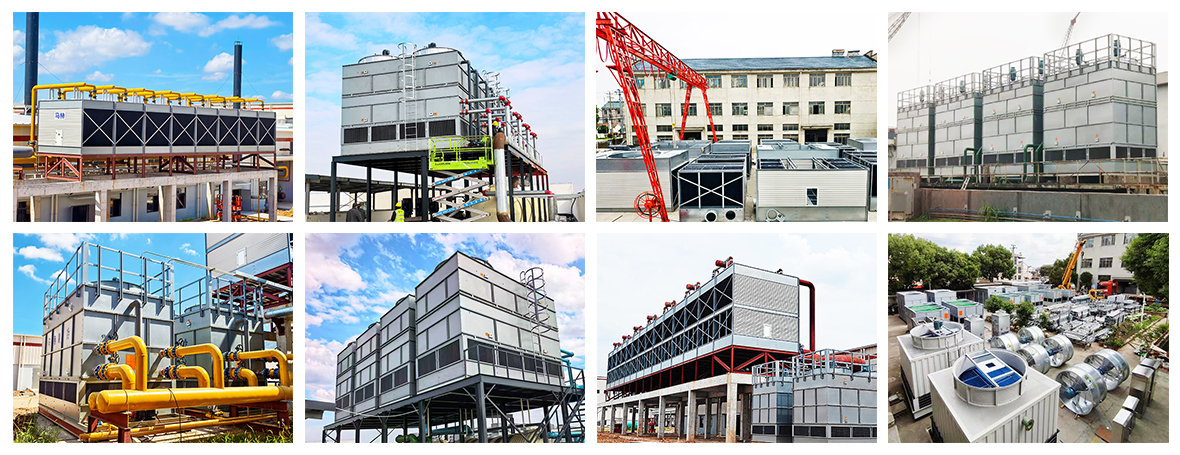
To help a manufacturer prepare a useful technical proposal, customers should provide as much of the following information as possible.
Required cooling capacity: The amount of heat that needs to be rejected.
Water flow rate: The circulating water volume, usually expressed in m³/h.
Hot-water temperature: The water temperature entering the cooling tower.
Cold-water temperature: The required water temperature leaving the cooling tower.
Design wet-bulb temperature: The local design condition used for thermal selection.
Installation dimensions: Available length, width, height, and maintenance clearance.
Noise requirements: The target sound level, measurement distance, and applicable local limits.
Water quality: Information about suspended solids, hardness, scaling, and potential corrosion.
Power supply: Voltage, frequency, and other electrical requirements.
Operating schedule: Daily operating hours, seasonal variations, and expected load changes.
If this is a replacement project, existing cooling tower model information, photographs, drawings, and connection dimensions can also be helpful.
The more complete your information, the easier it is for the manufacturer to evaluate a suitable solution.
Even experienced buyers can make mistakes when comparing cooling tower quotations. Here are several issues worth avoiding.
Choosing by price alone
A low initial price may hide differences in materials, components, design assumptions, or maintenance requirements. Compare the complete technical specifications rather than looking only at the final quotation amount.
Ignoring local wet-bulb temperature
Thermal performance depends on local climate conditions. Using an unsuitable design condition can lead to disappointing results.
Focusing only on external dimensions
A tower must fit the site, but it also needs sufficient airflow, effective water distribution, and maintenance clearance.
Treating low noise as a simple fan upgrade
Noise can come from fans, motors, vibration, and falling water. The complete system should be considered.
Failing to define noise measurement conditions
A sound level without a specified distance, position, and operating condition is difficult to compare accurately.
Overlooking water quality
The wrong fill or distribution arrangement may lead to scaling, clogging, and reduced heat-transfer performance.
Not reviewing drawings before production
Confirming dimensions and connection locations early can help prevent expensive installation changes.
Yes. Depending on the manufacturer's capabilities and project requirements, cooling tower dimensions and configurations can be customized.
The design should consider cooling capacity, water flow, installation space, airflow, structural requirements, and maintenance access.
A low noise cooling tower is designed to reduce sound generated by airflow, rotating equipment, water impact, and structural vibration.
Common measures include suitable fan selection, speed control, mechanical balancing, vibration isolation, and water distribution improvements.
Not necessarily.
A properly selected fan can reduce unnecessary noise while still delivering the required airflow. However, simply reducing fan speed or using a smaller fan may reduce cooling capacity.
The fan must be matched to the thermal design and system resistance.
Yes. A VFD can adjust fan speed according to cooling demand.
When the system requires less airflow, reduced fan speed may lower noise and power consumption. The control strategy must maintain the required water temperature and minimum operating conditions.
The manufacturer normally needs cooling capacity, water flow rate, hot- and cold-water temperatures, local wet-bulb temperature, installation dimensions, power supply, water quality, and any special noise or environmental requirements.
There is no single material that is best for every project.
FRP, coated steel, stainless steel, and other materials each have different characteristics. The right choice depends on corrosion exposure, temperature, structural requirements, budget, and maintenance expectations.
Compare their engineering capabilities, customization options, manufacturing quality, technical documentation, component specifications, delivery arrangements, and maintenance support.
Make sure each quotation uses the same operating conditions so that the comparison is meaningful.
Yes, a replacement project may be designed around existing foundation dimensions, piping connections, and available installation space.
However, the new unit must also meet the required thermal performance. Existing equipment information, site measurements, and operating data should be reviewed before the replacement design is confirmed.
Selecting an industrial cooling tower is not just a matter of choosing a model from a product catalogue. The right equipment must match your heat load, water flow, installation space, operating environment, and noise requirements.
A custom-size cooling tower can help solve site restrictions and application-specific challenges. A carefully engineered low noise design can also reduce unwanted sound while maintaining the cooling performance your facility needs.
The key is to work with a manufacturer that considers the complete system—from thermal calculations and fan selection to structural dimensions, materials, water distribution, and maintenance access.
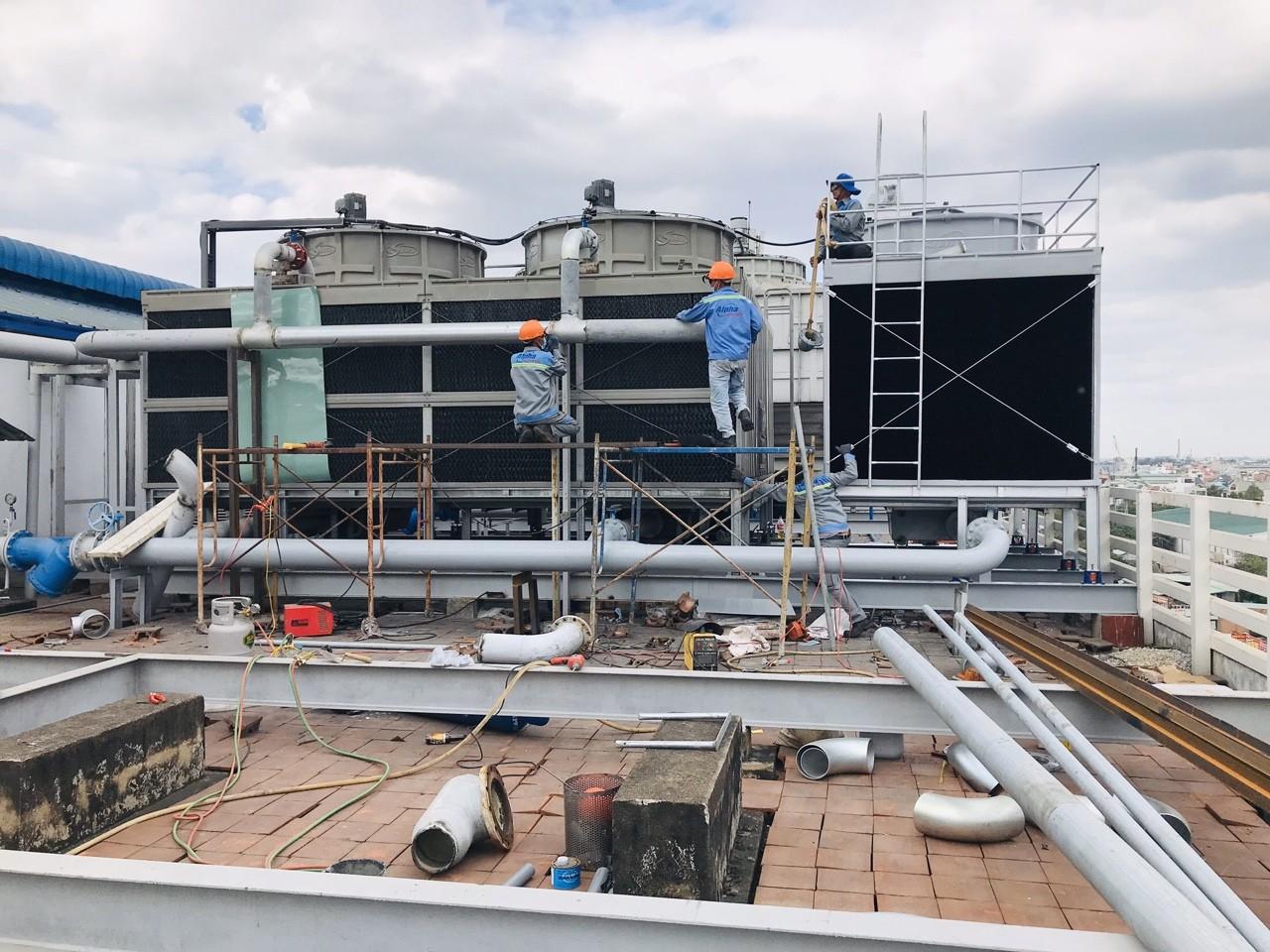
Mach Industry (Zhejiang) Co.,Ltd, under the Mach Cooling brand, provides cooling tower products and solutions for industrial customers with different project requirements.
If you are planning a new cooling tower project, upgrading existing equipment, or looking for a customized cooling solution, prepare your technical specifications and discuss your requirements with the Mach Cooling team.
Visit https://www.machcooling.com to explore Mach Cooling products and contact the manufacturer about your industrial cooling tower project.
The right cooling tower is not simply the one with the largest capacity or the lowest price. It is the one engineered to work reliably in your actual operating environment.