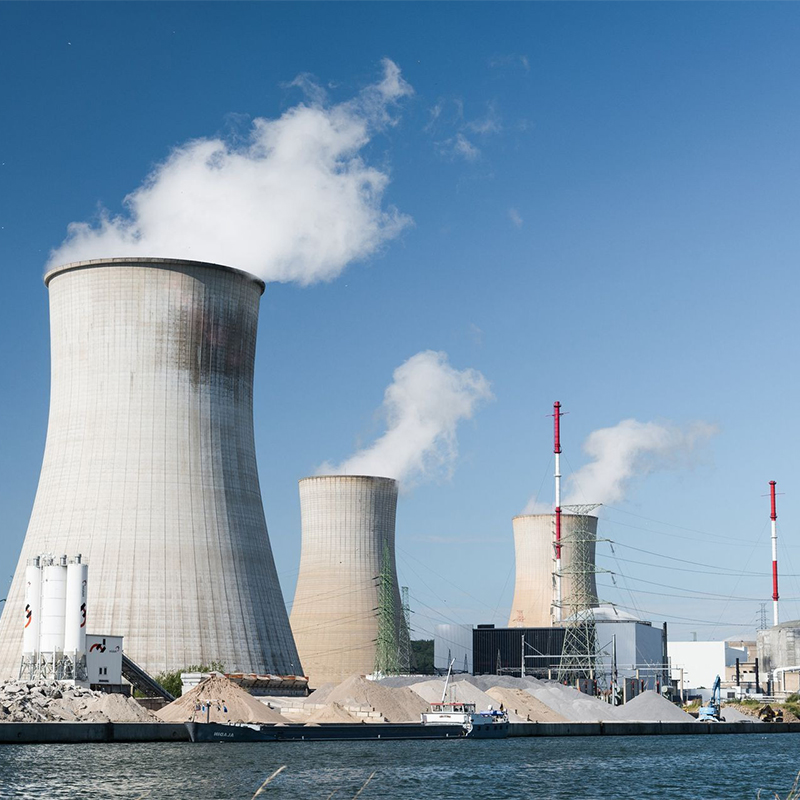
We Provide Cooling Tower Solution

Views: 0 Author: Cindy Publish Time: 2026-11-21 Origin: Site


A cross flow cooling tower is an industrial heat rejection system designed to reduce the temperature of circulating water through direct contact with ambient air. It is widely used in manufacturing plants, power stations, HVAC systems, chemical facilities, and other industrial environments where reliable cooling is essential.
The defining feature of a cross flow cooling tower is its airflow direction. Air moves horizontally through the cooling tower fill, while hot water flows vertically downward. These two streams meet at approximately 90 degrees, allowing heat to transfer from the water to the air.
Compared with other cooling tower configurations, crossflow designs offer several practical advantages, including gravity-based water distribution, convenient maintenance access, and flexible operation under changing water flow conditions.
For industrial users, these characteristics can make a cross flow cooling tower an attractive long-term investment.
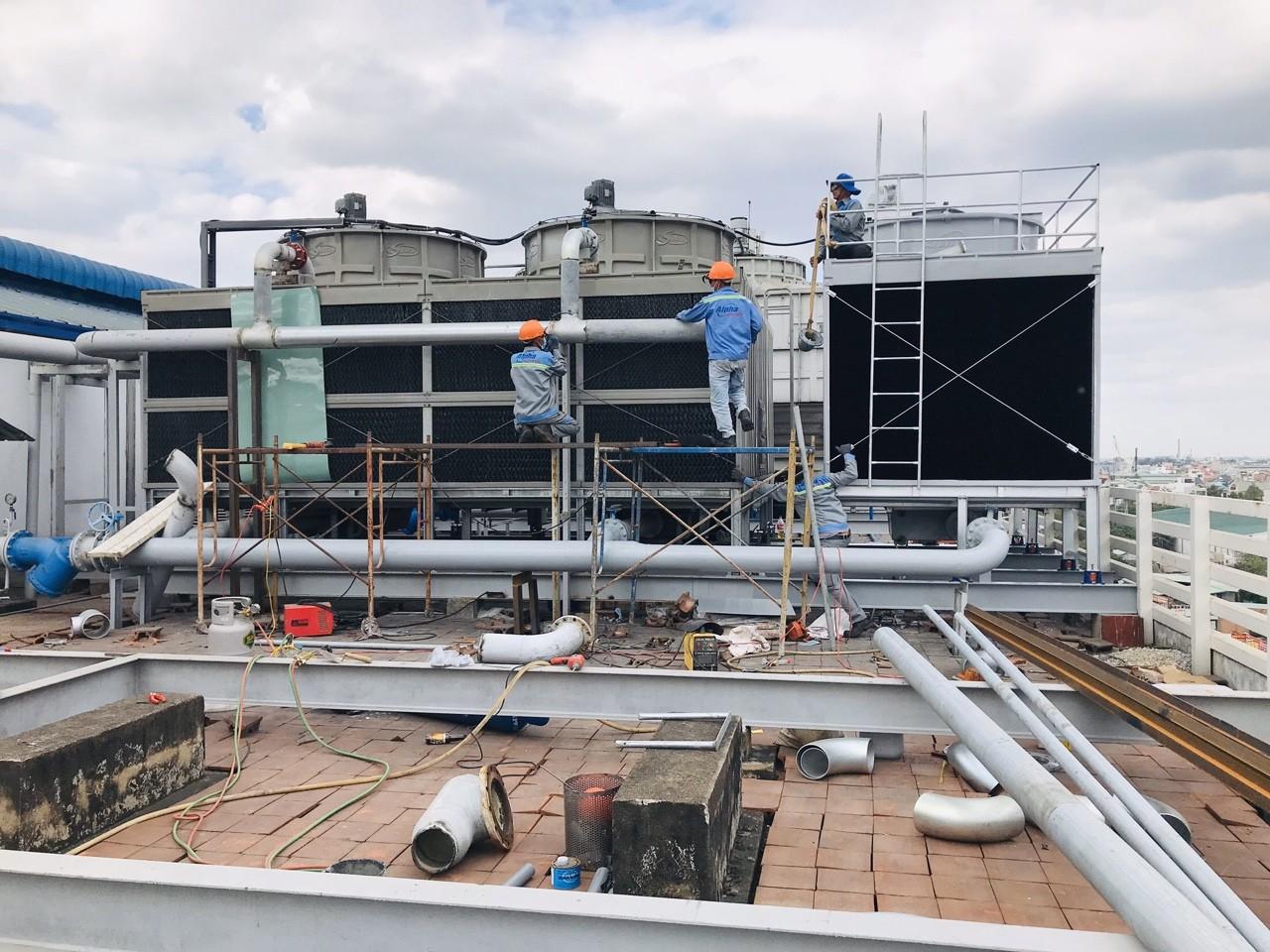
A typical cross flow cooling tower consists of several important components:
Hot water distribution basin
Cooling tower fill media
Air inlet louvers
Drift eliminators
Cooling tower fan and motor
Cold water collection basin
Supporting structure and casing
Hot water enters the distribution basin at the top of the tower. It then flows downward through distribution openings and spreads across the cooling fill.
At the same time, outside air enters through the side louvers and moves horizontally across the falling water. Heat and a small portion of the water transfer into the airflow through evaporation.
The cooled water collects in the bottom basin and returns to the industrial cooling system.
The most important difference between crossflow and counterflow cooling towers is the direction of airflow relative to the water.
In a crossflow design, air travels horizontally while water falls vertically. In a counterflow design, air moves vertically upward against the downward-moving water.
This difference affects the tower's internal structure, water distribution equipment, airflow resistance, maintenance accessibility, and overall installation requirements.
Neither configuration is automatically the best choice for every project. The correct selection depends on cooling capacity, available space, operating conditions, water quality, and energy requirements.
The working principle of a cross flow cooling tower is based primarily on evaporative cooling and heat exchange between water and air.
When hot industrial water enters the tower, it is distributed over the fill media. Ambient air passes horizontally through the fill, creating contact between the water and air.
A small portion of the circulating water evaporates, absorbing latent heat from the remaining water. Meanwhile, sensible heat also transfers from the warmer water to the cooler air.
As a result, the circulating water loses heat and reaches a lower temperature before returning to the process equipment.
Let's examine each stage.
Hot water from industrial equipment enters the cooling tower through an inlet pipe and flows into the hot water distribution basin.
Unlike many counterflow cooling towers that rely on pressurized spray systems, traditional crossflow cooling towers commonly use gravity distribution.
The basin contains strategically positioned openings or distribution devices that allow water to flow evenly over the fill.
Proper water distribution is extremely important. If some sections receive too much water while others receive too little, the cooling tower cannot use its entire heat transfer surface effectively.
Ambient air enters the tower through the side louvers and moves horizontally through the fill media.
As the air passes through the falling water, heat transfers from the water into the airflow.
The cooling tower fan creates the necessary airflow to support continuous heat exchange. In induced-draft designs, the fan is installed near the top of the tower and pulls air through the fill before discharging warm, moist air upward.
The interaction between air and water is the heart of the crossflow cooling process.
Evaporation is the main mechanism responsible for cooling water in a conventional open-circuit cooling tower.
When a small portion of warm water evaporates, it absorbs a considerable amount of energy from the remaining circulating water.
Think of the process as sweating on a hot day. As sweat evaporates from your skin, it carries heat away and creates a cooling effect.
The same physical principle operates inside an industrial cooling tower.
The effectiveness of this process depends on several factors:
Ambient wet-bulb temperature
Airflow volume
Water temperature
Water distribution uniformity
Fill design and surface area
Contact time between air and water
After passing through the fill, cooled water falls into the cold water basin at the bottom of the tower.
The basin stores the cooled water before it is pumped back to the production equipment, heat exchangers, condensers, or chillers.
The cooling cycle then repeats continuously.
A properly designed cold water basin should provide sufficient storage capacity, stable water levels, and suitable arrangements for drainage, filtration, and water treatment.

Understanding the main components helps industrial operators make better purchasing, maintenance, and replacement decisions.
Cooling tower fill is one of the most important components affecting thermal performance.
Its primary function is to increase the contact surface area between circulating water and ambient air. More effective contact generally improves heat transfer and evaporation.
Common fill configurations include:
Film fill
Splash fill
High-temperature-resistant fill
Clog-resistant fill
Film fill creates thin water films over its surfaces, providing a large effective heat transfer area. It is commonly selected for applications with relatively clean circulating water.
Splash fill breaks falling water into smaller droplets, making it more suitable for certain applications involving higher suspended solids or greater fouling risks.
The correct fill selection depends on water quality, operating temperature, cooling requirements, and maintenance conditions.
For replacement projects, industrial buyers should also check fill dimensions, sheet spacing, material compatibility, and installation arrangements.
The hot water basin distributes incoming water across the cooling tower fill.
Its design directly affects water coverage and thermal performance.
A well-designed basin helps maintain consistent water flow, reduces dry areas, and supports reliable operation under different loading conditions.
Regular inspection is necessary to identify blocked openings, sediment accumulation, corrosion, and uneven water distribution.
The fan and motor provide the airflow required for evaporative cooling.
Axial fans are widely used in induced-draft cooling towers because they can move large volumes of air efficiently.
The motor drives the fan directly or through a suitable transmission system, depending on the tower design.
Fan blade angle, rotational speed, vibration, and motor power all influence cooling tower performance and operating costs.
An improperly adjusted fan can increase electricity consumption without delivering the expected improvement in cooling capacity.
Drift eliminators reduce the amount of liquid water droplets carried out of the tower with the exhaust air.
Reducing drift helps conserve circulating water and limits the release of water droplets into the surrounding environment.
Air inlet louvers guide incoming air into the tower while helping reduce water splash-out and preventing large debris from entering the cooling section.
Both components contribute to stable operation and water management.
The cold water basin collects cooled water and provides a stable supply for the circulation pumps.
The supporting structure holds the tower's mechanical and thermal components in their correct positions.
Depending on the project, cooling tower structures may use FRP, galvanized steel, stainless steel, or other suitable materials.
Material selection should consider corrosion resistance, mechanical strength, environmental exposure, and expected service life.
Why do many industrial facilities choose cross flow cooling towers?
The answer is not simply cooling performance. Their structural characteristics can provide practical benefits throughout the equipment's operating life.
One of the most recognized advantages of crossflow cooling towers is their gravity-based water distribution system.
Because water flows from the upper distribution basin through gravity, the system can avoid some of the additional pressure requirements associated with pressurized spray distribution.
This can reduce water distribution pumping requirements and contribute to lower operating energy consumption.
However, actual energy savings depend on the complete hydraulic system, including pump selection, piping resistance, flow rate, and tower design.
Maintenance accessibility is another important advantage.
The open internal layout of many crossflow designs provides convenient access to components such as the water distribution basin, drift eliminators, fan system, and other mechanical equipment.
Technicians can inspect important components more easily, identify potential problems, and perform routine maintenance without extensive dismantling.
For large industrial facilities, easier maintenance can reduce downtime and simplify long-term equipment management.
Industrial cooling demand is rarely constant throughout the year.
Production schedules change, ambient temperatures fluctuate, and different machines operate at different loads.
Crossflow cooling towers can accommodate variable water flow when their basin distribution systems and operating controls are properly designed.
This flexibility can be useful in facilities where cooling demand changes frequently.
Nevertheless, minimum water flow limits should always follow the manufacturer's design recommendations to prevent uneven water distribution.
Crossflow cooling tower designs often feature relatively large air inlet areas.
When properly engineered, this arrangement can help reduce airflow resistance through the tower.
Lower airside pressure losses may allow the fan to operate with less power for a given airflow requirement.
Actual fan energy consumption still depends on fill characteristics, drift eliminator resistance, fan efficiency, airflow requirements, and system configuration.
Crossflow cooling towers are available in different capacities and configurations.
Depending on the project, manufacturers can provide modular arrangements that support transportation, installation, and future capacity expansion.
Their relatively accessible internal structure can also simplify certain inspection and servicing operations.
However, buyers should evaluate the required installation footprint, operating weight, foundation design, and site access before selecting a model.
Choosing between a cross flow cooling tower and a counter flow cooling tower is an important decision during industrial cooling system design.
Both configurations use evaporative cooling, but their internal airflow and water distribution arrangements are different.
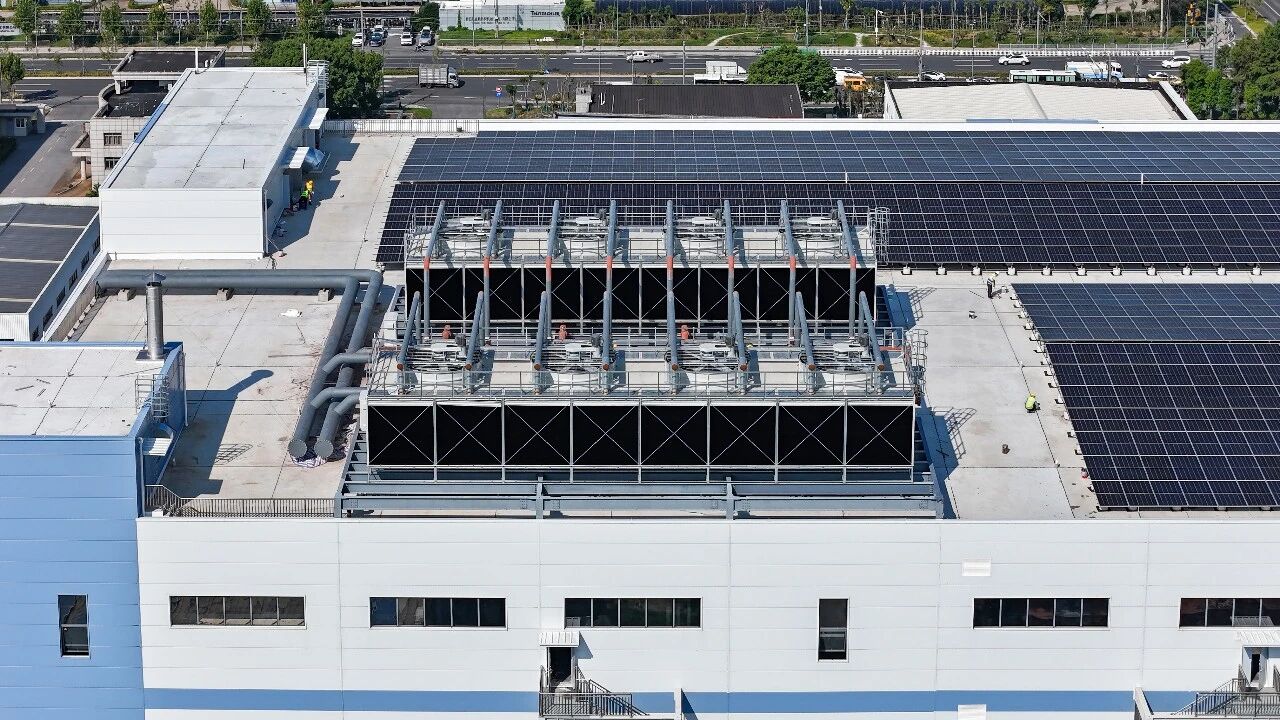
The fundamental difference is straightforward.
In a crossflow cooling tower:
Water flows vertically downward.
Air flows horizontally through the fill.
The two streams meet at approximately 90 degrees.
Gravity distribution is commonly used.
In a counterflow cooling tower:
Water flows vertically downward.
Air moves vertically upward.
Air and water travel in opposite directions.
Pressurized spray distribution is commonly used.
These different arrangements influence the tower's internal geometry and thermal characteristics.
Counterflow towers can provide strong thermal performance within a relatively compact footprint, particularly for applications requiring a close approach to the ambient wet-bulb temperature.
Crossflow towers can offer advantages in water distribution pumping requirements and, in suitable designs, airflow resistance.
However, there is no universal rule that one configuration always consumes less total energy.
A proper comparison should include fan power, pump power, cooling capacity, operating hours, and the required outlet water temperature.
Crossflow cooling towers generally offer convenient access to their water distribution basins and internal mechanical areas.
Counterflow cooling towers often have a more vertically compact arrangement, which may reduce the required footprint in certain smaller-capacity applications.
On the other hand, maintenance access to some internal counterflow components may be more restricted, depending on the design.
Installation costs also depend on transportation dimensions, foundation requirements, structural materials, and site conditions.
There is no single answer.
A cross flow cooling tower may be preferable when:
Easy maintenance access is important.
Variable water flow is expected.
Gravity-based water distribution is desirable.
The plant has sufficient installation space.
The project requires a particular modular arrangement.
A counterflow cooling tower may be preferable when:
Available installation space is limited.
A compact footprint is a priority.
The required thermal performance favors its design.
The project layout supports a taller tower configuration.
The best choice should always be based on actual engineering requirements rather than the tower name alone.
Crossflow cooling towers are used in many industries because manufacturing processes continuously generate waste heat.
Reliable cooling helps maintain production stability, protect equipment, and improve operational efficiency.
Here are some common applications.
Power plants generate significant amounts of heat during electricity production.
Cooling towers remove waste heat from circulating cooling water used in condensers and auxiliary equipment.
Crossflow cooling towers can support suitable industrial cooling duties where their capacity, water flow, and thermal performance meet the plant's requirements.
Stable cooling water temperatures are important for maintaining efficient heat rejection.
Chemical plants use heat exchangers, reactors, compressors, and other equipment that require continuous cooling.
Crossflow cooling towers can provide cooling water for suitable process systems and help maintain stable operating temperatures.
For these applications, material selection and water treatment deserve particular attention because circulating water may contain chemicals, suspended solids, or other contaminants.
Steel production involves high-temperature processes and substantial heat generation.
Cooling water is required for equipment such as furnaces, casting systems, rolling mills, and auxiliary machinery.
A properly selected crossflow cooling tower can help remove process heat and maintain the required cooling water supply.
For facilities with demanding operating conditions, cooling tower materials and fill configurations must be selected carefully.
Plastic manufacturing is another important application.
Injection molding machines, extruders, molds, and hydraulic systems generate heat during continuous production.
Cooling towers remove heat from circulating water used in industrial cooling circuits.
A reliable cooling system helps maintain mold temperatures, stabilize production cycles, and reduce the risk of overheating.
Large commercial buildings, hospitals, hotels, shopping centers, and industrial complexes often use water-cooled chiller systems.
Cooling towers reject heat from the chiller condenser circuit into the atmosphere.
Crossflow cooling towers can be suitable for HVAC projects where installation space, water distribution, maintenance accessibility, and cooling demand align with the equipment design.
Food and beverage factories use cooling systems in processing, refrigeration, compressed air, and other production operations.
A cooling tower can support the removal of waste heat from suitable process equipment.
Water treatment and hygiene management are especially important in these environments.
Where product-contact contamination must be prevented, the cooling water circuit should be appropriately separated from the product and protected by suitable heat exchangers.
Selecting an industrial cooling tower requires more than simply choosing a model based on nominal tonnage.
The tower must meet the actual operating conditions of the facility.
The first step is to determine the amount of heat that must be rejected.
Important parameters include:
Hot water inlet temperature
Required cold water outlet temperature
Circulating water flow rate
Total heat load
Operating hours
Seasonal operating conditions
The cooling range is calculated as:
Cooling Range = Hot Water Temperature - Cold Water Temperature
For example, if hot water enters at 37°C and leaves at 32°C, the cooling range is 5°C.
A cooling tower manufacturer can use these operating conditions to calculate the required thermal capacity and recommend an appropriate model.
Ambient wet-bulb temperature is one of the most important factors affecting cooling tower performance.
Unlike dry-bulb temperature, wet-bulb temperature reflects the combined influence of air temperature and humidity.
The cooling tower approach is calculated as:
Approach = Cold Water Temperature - Ambient Wet-Bulb Temperature
For example:
Cold water temperature: 32°C
Design wet-bulb temperature: 27°C
Cooling tower approach: 5°C
A smaller approach generally requires more effective heat transfer and may increase the required tower size or operating energy.
Always use the appropriate local design wet-bulb temperature when selecting equipment.
Fill selection has a direct impact on thermal performance.
Film fill is often suitable for relatively clean water because it provides a large heat transfer surface within a compact volume.
Splash fill can be more suitable for applications with higher suspended solids or greater fouling risks.
When selecting replacement fill, consider:
PVC, PP, or other material compatibility
Operating water temperature
Sheet thickness
Fill spacing
Airflow resistance
Chemical resistance
Installation dimensions
The lowest-priced fill is not necessarily the most economical option. Poor compatibility or frequent clogging can increase long-term maintenance costs.
Water quality directly influences cooling tower reliability.
High concentrations of suspended solids can block distribution openings and reduce fill performance.
Hard water may cause scale formation, while unsuitable chemical conditions can accelerate corrosion.
Before selecting a tower, evaluate water hardness, alkalinity, conductivity, suspended solids, and biological growth risks.
A suitable water treatment program can help maintain heat transfer efficiency and extend equipment service life.
Purchase price is only one part of the total cost of ownership.
Industrial buyers should also evaluate:
Fan motor efficiency
Pumping requirements
Fan blade design
Water distribution performance
Maintenance accessibility
Spare parts availability
Expected operating life
A well-designed cooling tower can help reduce long-term energy and maintenance expenses.
Even a high-quality cooling tower requires regular inspection and maintenance.
A preventive maintenance program helps identify potential problems before they cause unexpected production interruptions.
Cooling tower fill gradually accumulates dirt, scale, algae, and other deposits.
When these materials build up, airflow and water distribution can become restricted.
Inspect the fill regularly and clean it using methods compatible with the material.
If the fill is badly deformed, brittle, clogged, or damaged, replacement may be more economical than repeated cleaning.
Inspect the hot water basin, distribution openings, and water inlet pipes.
Look for blockages, sediment accumulation, corrosion, and uneven water flow.
Poor water distribution can create dry areas in the fill and reduce the effective heat transfer surface.
Cleaning the distribution system at appropriate intervals helps maintain stable performance.
The fan system should be inspected regularly for:
Blade damage
Abnormal vibration
Loose bolts
Bearing wear
Motor overheating
Unusual noise
Transmission problems
Fan balancing and correct blade angle adjustment are particularly important.
Before performing mechanical maintenance, follow the manufacturer's shutdown and lockout procedures.
Cooling tower water management should include suitable chemical treatment, filtration where required, and regular water quality monitoring.
Scale can reduce heat transfer efficiency.
Corrosion can weaken metal components and shorten equipment life.
Biological growth can obstruct water passages and create public health risks, including Legionella exposure.
Use an appropriate water treatment and cleaning program that complies with local regulations and industry guidance.
Understanding common cooling tower problems helps maintenance teams respond quickly.
Possible causes include:
Dirty or clogged fill
Insufficient airflow
High ambient wet-bulb temperature
Uneven water distribution
Excessive circulating water flow
Fan or motor problems
Start by checking actual operating temperatures, water flow, fan operation, and fill condition.
Compare the measured performance with the original design conditions before making adjustments.
Uneven distribution may result from blocked basin openings, incorrect water levels, damaged distribution components, or installation problems.
Inspect the basin and distribution openings.
Restore uniform water coverage across the fill and confirm that the system operates within its specified flow range.
High fan energy consumption may be associated with incorrect blade angles, poor fan balancing, mechanical friction, or excessive airflow resistance.
Check fan rotation, blade condition, motor current, and mechanical components.
Do not increase fan speed without confirming the actual cooling requirement and the equipment's operating limits.
Water leakage may occur because of damaged basin joints, deteriorated seals, corrosion, or structural movement.
Inspect the basin, casing, piping connections, and support structure.
Damaged components should be repaired or replaced with materials suitable for the operating environment.
Selecting a reliable cooling tower manufacturer is just as important as choosing the correct cooling tower configuration.
Mach Industry (Zhejiang) Co.,Ltd focuses on industrial cooling tower solutions and understands the importance of thermal performance, structural reliability, component quality, and long-term operating costs.
For industrial buyers, the right cooling tower should not simply meet an initial cooling requirement. It should also support stable production and manageable maintenance throughout its service life.
When evaluating a cross flow cooling tower for your project, important considerations include:
Cooling capacity and operating conditions
Airflow and water distribution design
Cooling tower fill configuration
Fan and motor selection
Structural material requirements
Installation environment
Maintenance and replacement requirements
Mach Industry (Zhejiang) Co.,Ltd aims to help industrial customers identify suitable cooling solutions according to their project requirements.
Whether you are planning a new industrial cooling system or evaluating equipment replacement, working with an experienced manufacturer can help you make a more informed technical decision.
Visit the official website: https://www.machcooling.com
Contact Mach Industry (Zhejiang) Co.,Ltd to discuss your cooling tower requirements and request a suitable technical proposal.
The main advantages include gravity-based water distribution, convenient maintenance access, and flexible operation under variable water flow conditions.
These features make crossflow designs suitable for many industrial cooling applications.
It depends on the specific design and operating conditions.
Crossflow towers may reduce water distribution pumping requirements and airside pressure losses in suitable applications.
However, total energy consumption also depends on fan efficiency, circulating water flow, pump selection, and thermal performance.
A complete system comparison is necessary before determining which configuration is more efficient.
Crossflow cooling towers use horizontal airflow and vertically falling water.
Counterflow cooling towers use upward airflow against vertically falling water.
This difference affects internal structure, water distribution, maintenance access, and thermal design.
Common options include PVC film fill, PP fill, splash fill, and specialized clog-resistant fill.
The correct choice depends on water quality, temperature, heat load, and operating conditions.
Service life depends on structural materials, water treatment, environmental exposure, operating conditions, and maintenance quality.
Different components also have different replacement cycles.
Regular inspection and timely replacement of worn components can help extend the service life of the complete cooling tower.
Cross flow cooling towers play an important role in modern industrial cooling systems.
Their unique design, which combines horizontal airflow with vertically falling water, provides an effective evaporative cooling process for a wide range of industrial applications.
From power generation and chemical processing to plastic manufacturing and commercial HVAC systems, crossflow cooling towers can provide reliable heat rejection when properly selected and maintained.
Their major advantages include gravity-based water distribution, convenient maintenance access, and flexibility under changing operating conditions.
However, successful equipment selection requires careful consideration of cooling capacity, wet-bulb temperature, water quality, fill configuration, airflow, and total operating costs.
For industrial companies planning a new cooling system or upgrading existing equipment, choosing the right manufacturer is an essential step.
Mach Industry (Zhejiang) Co.,Ltd is committed to supporting industrial cooling requirements with professional cooling tower solutions.
Visit https://www.machcooling.com to learn more about Mach Cooling and discuss your next industrial cooling tower project.