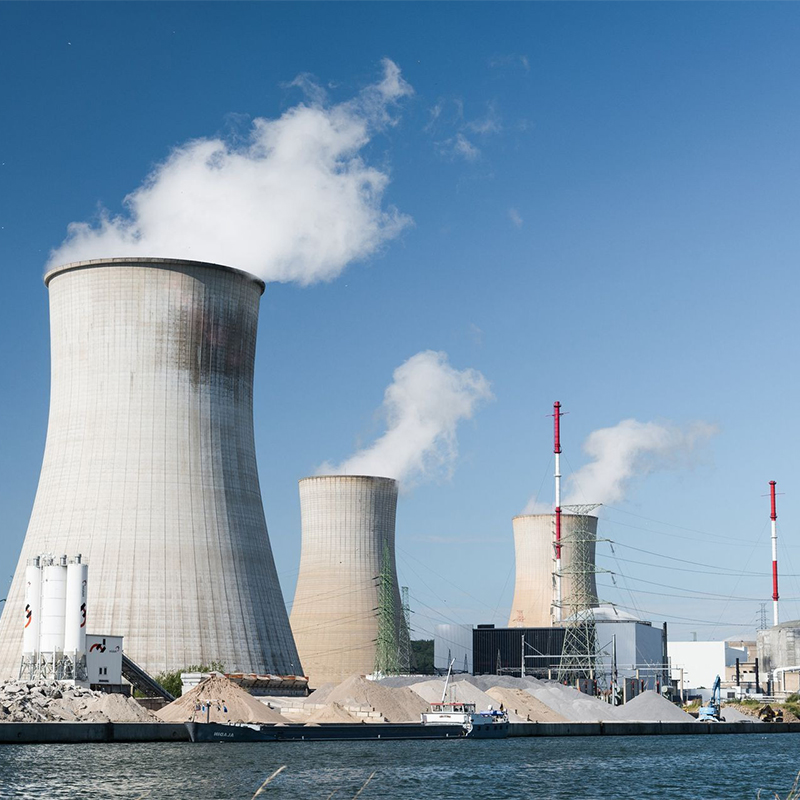
We Provide Cooling Tower Solution

Views: 0 Author: Cindy Publish Time: 2026-11-14 Origin: Site


Cooling tower blowdown is an essential part of industrial cooling water management. It helps control dissolved minerals, maintain water quality, and reduce the risk of scale formation, corrosion, and fouling. Without proper blowdown, dissolved solids can gradually accumulate in circulating water and affect the performance of the entire cooling system.
But how does cooling tower blowdown work? How much water should you discharge? And how can you reduce water consumption without creating additional maintenance problems?
In this guide, we will explain the cooling tower blowdown process, introduce practical calculation formulas, explore water treatment methods, and share maintenance tips to help you operate your cooling tower more efficiently.
Cooling tower blowdown is the controlled removal of a portion of circulating water from a cooling tower system. It is used to control the concentration of dissolved minerals and other substances that accumulate during normal operation.
When hot water enters a cooling tower, it comes into contact with moving air. A portion of the water evaporates, carrying heat into the atmosphere. However, most dissolved minerals remain in the circulating water.
These substances include calcium, magnesium, chlorides, silica, and other dissolved solids. As evaporation continues, their concentration increases.
If the concentration becomes too high, minerals may form scale on heat exchangers, pipes, spray nozzles, and cooling tower fill. Deposits can restrict water flow, reduce heat transfer, and increase maintenance requirements.
Blowdown solves this problem by discharging a controlled amount of concentrated circulating water and replacing it with fresh makeup water.
In simple terms, blowdown helps prevent cooling tower water from becoming too concentrated.
The blowdown process follows a continuous water management cycle:
Water circulates through the cooling tower and absorbs heat from industrial equipment.
A portion of the water evaporates during the cooling process.
Dissolved minerals remain in the circulating water.
The concentration of dissolved substances gradually increases.
The blowdown system removes a controlled amount of concentrated water.
Fresh makeup water enters the system to replace the discharged water.
Water quality is maintained within the target operating range.
The required blowdown rate depends on evaporation, drift, makeup water quality, cycles of concentration, and the water treatment program.
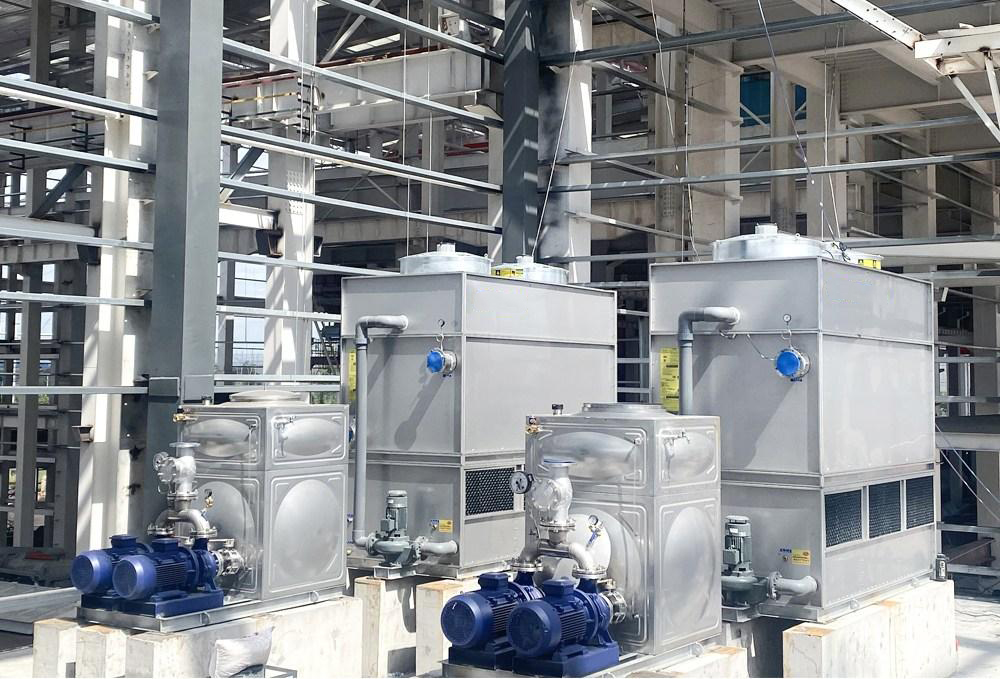
These terms are closely related, but they describe different cooling tower operations.
Blowdown: The controlled discharge of circulating water to manage dissolved solids.
Blow-off: A term sometimes used interchangeably with blowdown. In some systems, it may refer to a specific flushing or discharge operation.
Makeup water: Fresh water added to replace water lost through evaporation, drift, blowdown, and other losses.
Understanding these terms helps operators calculate water consumption and manage the cooling tower's water balance.
Why can't a cooling tower operate indefinitely with the same circulating water?
The main reason is mineral accumulation. Evaporation removes water but leaves most dissolved substances behind. Without proper concentration control, water quality can gradually move outside the acceptable operating range.
There are three major reasons why blowdown is necessary.
Scale is one of the most common problems in industrial cooling tower systems.
Calcium carbonate, calcium sulfate, silica, and other dissolved substances may form deposits when their concentrations exceed the limits of the water treatment program.
These deposits can accumulate on heat exchanger surfaces, pipes, spray nozzles, and cooling tower fill. Over time, scale can reduce heat transfer efficiency and restrict water distribution.
For example, when cooling tower fill becomes covered with mineral deposits, the effective contact area between water and air may decrease. This can affect the cooling process and increase cleaning requirements.
Blowdown helps control dissolved mineral concentrations and reduces the risk of scale formation. However, it should work together with suitable chemical treatment and filtration.
High concentrations of certain dissolved substances can increase corrosion risks, depending on water chemistry and system materials.
Chlorides, for example, are important when evaluating corrosion risks for stainless steel and other corrosion-sensitive materials.
Suspended solids and biological growth can also contribute to fouling. Deposits may accumulate in pipes, basins, heat exchangers, and water distribution components.
A properly managed blowdown program helps maintain water chemistry within the operating limits established by the water treatment specialist.
Clean heat transfer surfaces allow cooling systems to operate more effectively.
When scale and deposits accumulate, heat transfer resistance increases. The cooling system may need to operate under less favorable conditions to achieve the required process temperature.
Proper blowdown, combined with chemical treatment, filtration, and regular cleaning, helps protect heat transfer surfaces and supports stable cooling tower performance.
A cooling tower blowdown system usually includes a discharge connection, control valve, piping, and a method of controlling the discharge rate.
Depending on the cooling tower design and operating requirements, the system may use manual or automatic control.
Manual blowdown uses a manually operated valve to discharge circulating water.
An operator opens the valve periodically according to a maintenance schedule or water quality test results.
This method is relatively simple and may be suitable for small cooling tower systems with stable operating conditions.
However, manual operation has several limitations:
It depends on operator availability.
Discharge timing may be inconsistent.
Water consumption may be higher than necessary.
Sudden changes in conductivity may not be corrected quickly.
For larger industrial cooling systems, automatic blowdown control is often more practical.
An automatic cooling tower blowdown system uses instruments and a control valve to regulate water discharge.
When the measured water quality reaches a predefined control limit, the controller opens the blowdown valve. Once the reading returns to the desired range, the valve closes.
This approach reduces the need for constant manual intervention and can improve operating consistency.
Automatic blowdown is particularly useful in industrial facilities where cooling loads and water conditions change throughout the day.
Conductivity is one of the most common parameters used to control cooling tower blowdown.
Dissolved ions allow water to conduct electricity. As the concentration of dissolved minerals increases, conductivity generally increases as well.
A conductivity sensor measures the circulating water and sends a signal to the controller. The controller compares the reading with a preset limit and operates the blowdown valve when necessary.
However, conductivity does not directly measure every scale-forming or corrosive substance. It should be supported by regular water chemistry testing.
Operators should also clean and calibrate conductivity sensors according to the manufacturer's recommendations. An inaccurate sensor can cause excessive blowdown or insufficient discharge.
To calculate cooling tower blowdown correctly, operators need to understand cycles of concentration, commonly abbreviated as COC.
Cycles of concentration describe how concentrated the circulating cooling water is compared with the incoming makeup water.
A common calculation is:
COC = Circulating Water Concentration / Makeup Water Concentration
For practical monitoring, conductivity can often be used as an approximate indicator:
COC ≈ Circulating Water Conductivity / Makeup Water Conductivity
Both readings should be taken under comparable measurement conditions.
For example, suppose:
Makeup water conductivity: 300 µS/cm
Circulating water conductivity: 1,200 µS/cm
The calculation is:
COC = 1,200 / 300 = 4
This means the circulating water has approximately four times the conductivity of the makeup water.
Remember that conductivity ratios are operational estimates. Different dissolved substances can behave differently, so laboratory water analysis may still be necessary.
Cycles of concentration directly influence the amount of water that must be discharged.
A lower COC generally requires more blowdown and therefore increases makeup water consumption.
A higher COC can reduce water losses, but it may also increase the risk of scale, corrosion, and other water chemistry problems.
The ideal COC is not simply the highest possible number. It is the highest practical operating level that remains compatible with:
Makeup water quality
Cooling tower materials
Heat exchanger limitations
Chemical treatment performance
Operating temperature and load
Local water quality requirements
The target should be established through water analysis and a suitable water treatment program.
Calculating cooling tower blowdown helps operators estimate water consumption and establish an appropriate discharge rate.
The calculation generally considers evaporation, drift, and cycles of concentration.
When drift is ignored, a commonly used simplified formula is:
B = E / (COC - 1)
Where:
B = Blowdown rate
E = Evaporation rate
COC = Cycles of concentration
When drift is included, the more complete relationship is:
B = E / (COC - 1) - D
Where:
B = Blowdown rate
E = Evaporation rate
D = Drift loss
COC = Cycles of concentration
All water flow rates must use the same units.
This formula assumes a simplified steady-state water balance. Actual systems may also need to account for leakage, intermittent flushing, and other water losses.
Evaporation is a major source of cooling tower water loss.
A commonly used approximate rule for many evaporative cooling tower applications is:
E ≈ 0.001 × Circulating Water Flow × Cooling Range (°F)
Where:
Circulating water flow is measured in gallons per minute (gpm).
Cooling range is the difference between entering and leaving water temperatures in °F.
Evaporation rate is estimated in gpm.
This is an engineering rule of thumb, not a substitute for a detailed heat and mass balance. Actual evaporation depends on operating conditions, air flow, humidity, and cooling tower performance.
Let's consider an industrial cooling tower with the following operating data:
Circulating water flow: 1,000 gpm
Cooling range: 10°F
Cycles of concentration: 4
Estimated drift loss: 0.5 gpm
Step 1: Calculate evaporation
E = 0.001 × 1,000 × 10
E = 10 gpm
Step 2: Calculate blowdown
B = E / (COC - 1) - D
B = 10 / (4 - 1) - 0.5
B = 3.33 - 0.5
B ≈ 2.83 gpm
The estimated blowdown requirement is approximately 2.83 gallons per minute.
This is a theoretical estimate based on the stated assumptions. Actual discharge should be adjusted using measured conductivity, water chemistry, and operating data.
Several factors can change the amount of blowdown required.
1. Makeup Water Quality
Water with higher mineral content may require lower cycles of concentration, depending on the treatment program and system materials.
2. Evaporation Rate
Higher heat loads and cooling ranges generally increase evaporation.
3. Drift Loss
Drift eliminator performance influences the amount of circulating water carried out with the exhaust air.
4. Water Treatment Program
Chemical treatment can help control scale and corrosion, potentially allowing a different operating COC.
5. Operating Conditions
Changes in cooling load, ambient temperature, and system operation can affect water consumption.
For this reason, operators should not rely on a single calculation without checking actual operating data.
Blowdown is only one part of cooling tower water treatment.
A complete program combines water monitoring, chemical treatment, filtration, and routine maintenance.
Operators should monitor several important water quality indicators.
| Parameter | Why It Matters |
|---|---|
| Conductivity | Indicates dissolved ionic concentration |
| pH | Influences corrosion and scale behavior |
| Total Hardness | Helps assess calcium and magnesium scale risks |
| Alkalinity | Affects carbonate chemistry |
| Chloride | Important for corrosion control |
| Silica | Can create difficult deposits at high concentrations |
| Suspended Solids | Contribute to sediment and fouling |
| Microbiological Activity | Helps identify biological growth risks |
Testing frequency should depend on the cooling tower, treatment program, and operating conditions.
Chemical water treatment is commonly used to protect cooling tower systems.
Scale inhibitors help reduce mineral deposition. Corrosion inhibitors protect metal surfaces, while appropriate pH control supports the overall treatment program.
Blowdown works alongside these treatments by controlling the concentration of dissolved substances.
Operators should avoid making chemical adjustments based only on conductivity. A complete water analysis provides a better basis for treatment decisions.
Warm cooling water can support the growth of microorganisms.
Biofilm and algae may accumulate on basin surfaces, piping, spray nozzles, and cooling tower fill.
An effective biological control program may include approved biocides, system cleaning, filtration, and regular monitoring.
Blowdown alone cannot eliminate biological contamination.
For cooling towers that may generate aerosols, operators should also follow applicable water management and Legionella risk control requirements.
Even a well-designed system can experience operating problems. Recognizing these issues early can prevent unnecessary water losses and equipment damage.
Excessive blowdown occurs when the system discharges more water than necessary.
Possible causes include:
An incorrectly configured conductivity setpoint
A faulty conductivity sensor
A leaking or stuck control valve
Poor sensor calibration
An unsuitable water treatment strategy
Excessive blowdown wastes treated water and may increase wastewater discharge costs.
Operators should review conductivity trends, valve operation, and water chemistry before changing the control settings.
Insufficient blowdown allows dissolved minerals to accumulate.
Possible warning signs include rising conductivity, increased scaling, blocked spray nozzles, and deposits on heat transfer surfaces.
A malfunctioning valve, incorrect setpoint, or unreliable sensor may be responsible.
The solution is not simply to open the valve continuously. Operators should identify the cause and restore the intended control strategy.
Unstable readings can make automatic blowdown difficult to control.
Common causes include:
Dirty or damaged conductivity probes
Poor sensor installation
Air bubbles near the measurement point
Inadequate water circulation around the sensor
Calibration problems
Regular cleaning, calibration, and correct sensor positioning help improve measurement reliability.
Reducing blowdown can save water, but doing so without controlling water chemistry may create more serious problems.
The goal is to optimize blowdown rather than eliminate it.
Here are six practical methods.
1. Improve Makeup Water Quality
Evaluate available water sources and consider suitable pretreatment when dissolved solids are too high.
2. Optimize Cycles of Concentration
Work with the water treatment provider to identify a safe operating COC based on water chemistry and equipment limitations.
3. Use Automatic Conductivity Control
Automatic control can help prevent unnecessary discharge caused by inconsistent manual operation.
4. Maintain Sensors and Valves
Clean and calibrate conductivity sensors and inspect blowdown valves regularly.
5. Improve Drift Control
Properly maintained drift eliminators reduce water carried out of the tower, helping improve the overall water balance.
6. Use Side-Stream Filtration
Filtration can remove suspended solids and reduce the accumulation of particles in circulating water.
These measures should be evaluated together. A water-saving strategy must still protect heat exchangers, piping, cooling tower fill, and other system components.
In some industrial applications, cooling tower blowdown water can be reused instead of being discharged as wastewater.
However, blowdown water usually contains more dissolved minerals and treatment chemicals than makeup water. It may also contain suspended solids and other contaminants.
Potential reuse applications include:
Industrial washing, where water quality requirements permit
Certain utility water applications
Pretreatment systems designed for wastewater recovery
Specialized water recycling processes
Treatment options may include filtration, softening, membrane systems, and other processes selected according to the wastewater analysis.
Before reuse, operators should evaluate scaling potential, corrosion risks, chemical compatibility, and local environmental requirements.
Not every cooling tower blowdown stream is suitable for every reuse application. A water quality assessment should determine whether reuse is technically and economically practical.
Regular maintenance helps ensure that the blowdown system operates as intended.
A practical inspection checklist includes:
Check conductivity sensor readings.
Clean and calibrate the sensor according to manufacturer instructions.
Inspect the automatic control valve.
Check discharge piping for leaks or blockage.
Verify the controller setpoint.
Review makeup water and circulating water quality.
Record blowdown volume where measurement is available.
Inspect the cooling tower basin for sediment.
Check spray nozzles and water distribution.
Review water treatment records.
Maintenance frequency should be based on operating conditions and equipment manufacturer recommendations.
Accurate records also help operators identify unusual changes in water consumption and detect problems before they become serious.
Cooling tower fill is an important component because it increases the contact area between water and air.
However, fill performance depends partly on circulating water quality.
When water contains excessive dissolved minerals or suspended solids, deposits can accumulate on fill surfaces. Biological growth and sediment may also restrict water passages.
These problems can reduce effective air-water contact and affect cooling performance.
Proper blowdown helps control dissolved solids, while filtration and chemical treatment address other water quality risks.
When inspecting cooling tower fill, operators should check for:
Mineral scale
Slime and biological deposits
Sediment accumulation
Blocked water passages
Cracks, deformation, or material deterioration
If fill becomes severely damaged or blocked, cleaning may not be enough. Replacement with suitable cooling tower fill may be necessary.
This is why blowdown should be considered part of a complete cooling tower maintenance strategy rather than an isolated water discharge operation.
Selecting a suitable blowdown system requires more than choosing a valve.
Industrial buyers and engineering teams should consider several factors.
System Capacity: The control arrangement must suit the cooling tower's circulating water flow and expected blowdown requirements.
Control Accuracy: Conductivity instruments should provide reliable measurements within the expected operating range.
Valve Compatibility: Materials must be suitable for the water chemistry, temperature, pressure, and installation environment.
Automation Requirements: Larger facilities may benefit from automatic control and integration with a plant monitoring system.
Maintenance Accessibility: Sensors, valves, and piping should be easy to inspect and service.
Wastewater Management: The discharge arrangement must comply with local wastewater and environmental regulations.
The best solution is one that balances water conservation, reliable operation, maintenance requirements, and water treatment needs.

Choosing suitable cooling tower equipment and maintaining proper operating conditions are both important for long-term system performance.
Mach Industry (Zhejiang) Co.,Ltd, operating under the Mach Cooling brand, provides cooling tower-related manufacturing and industrial cooling solutions.
When planning a cooling tower project or improving an existing installation, operators should consider the complete cooling system rather than looking at a single component.
Important considerations include:
Cooling capacity and operating conditions
Water distribution and circulation
Air movement and ventilation
Heat transfer performance
Cooling tower fill selection
Equipment maintenance and accessibility
For customers evaluating cooling tower equipment and related solutions, Mach Cooling can be contacted to discuss project requirements and suitable configurations.
Company: Mach Industry (Zhejiang) Co.,Ltd
Brand: Mach Cooling
Official Website: https://www.machcooling.com
Whether you are planning a new installation or reviewing an existing cooling tower, selecting equipment according to actual operating conditions is an important step toward reliable cooling performance.
There is no universal blowdown schedule.
In automatic systems, blowdown is usually controlled by conductivity or another selected water quality parameter. In manual systems, operators should follow regular water testing and the water treatment program.
The correct frequency depends on evaporation, makeup water quality, cycles of concentration, and operating conditions.
There is no single ideal COC for every cooling tower.
Some systems may operate at relatively low cycles, while others can safely operate at higher levels with suitable makeup water quality and treatment.
The correct target should be established through water analysis, equipment limitations, and the water treatment provider's recommendations.
Yes, in some applications.
However, blowdown water may contain concentrated dissolved solids, treatment chemicals, and suspended particles. It often requires additional treatment before reuse.
A water quality assessment should determine whether reuse is technically and economically practical.
Proper blowdown supports stable cooling tower operation by helping control scale and other water quality problems.
However, blowdown does not directly increase cooling capacity. Its benefit comes from helping maintain clean heat transfer surfaces and reliable water circulation.
Without sufficient blowdown, dissolved minerals can accumulate in circulating water.
This may increase scaling, corrosion, and fouling risks. Deposits can develop on heat exchangers, pipes, spray nozzles, and cooling tower fill.
Over time, these problems can increase maintenance costs and reduce system performance.
Evaporation loss occurs when water changes into vapor during the cooling process. Blowdown is the controlled discharge of circulating liquid water to manage dissolved solids.
Both contribute to cooling tower water consumption, but they serve different functions in the water balance.
Cooling tower blowdown is a basic but essential part of industrial cooling water management.
By removing a controlled portion of concentrated circulating water, operators can manage dissolved solids, maintain suitable cycles of concentration, and reduce the risk of scale formation and other water quality problems.
The most effective blowdown strategy combines accurate calculation, reliable conductivity monitoring, suitable chemical treatment, and regular maintenance.
Remember, the goal is not to discharge as much water as possible or to minimize blowdown at any cost. It is to maintain the right balance between water quality, cooling performance, and operating expenses.
For industrial cooling tower equipment and project-related inquiries, visit Mach Industry (Zhejiang) Co.,Ltd at https://www.machcooling.com to learn more about Mach Cooling.