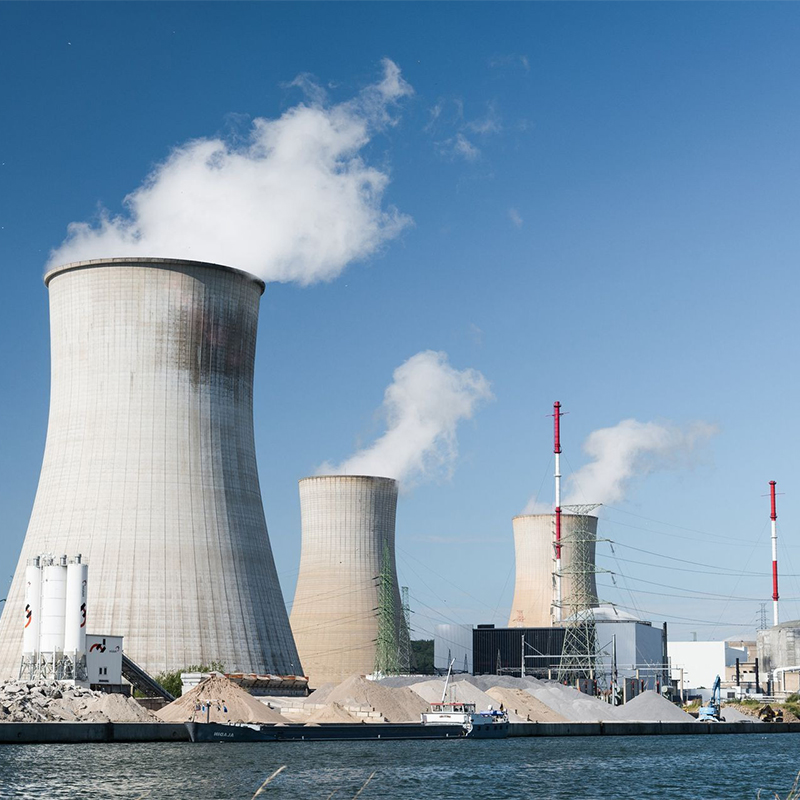
We Provide Cooling Tower Solution

Views: 0 Author: Cindy Publish Time: 2026-11-09 Origin: Site


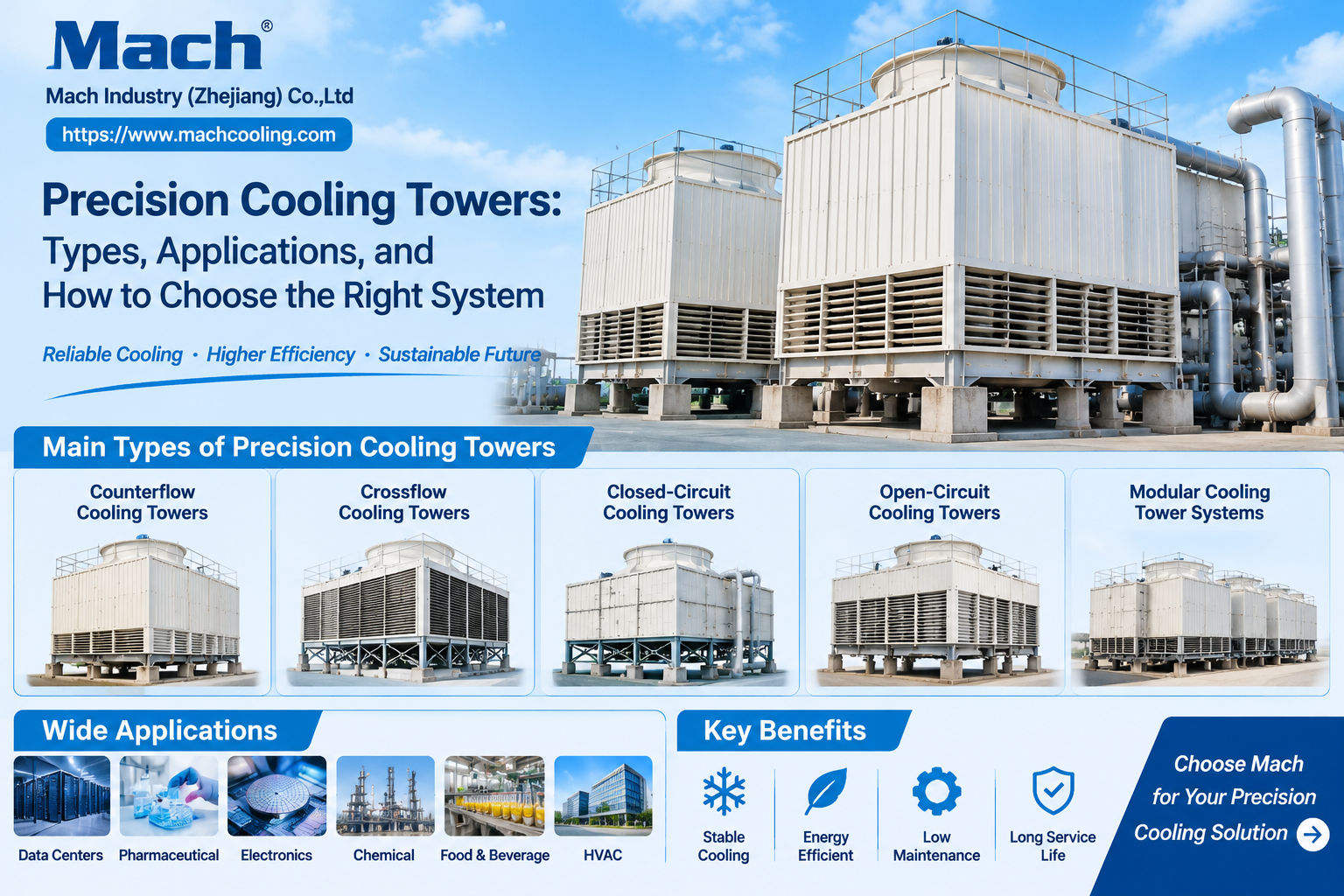
Industrial facilities depend on reliable cooling to keep equipment running, maintain production quality, and control operating costs. From data centers and electronics factories to chemical plants and pharmaceutical facilities, heat must be removed efficiently to prevent equipment from overheating and production from being interrupted.
This is where precision cooling tower selection becomes important.
A cooling tower is not simply a large piece of equipment that circulates water and releases heat. Its performance depends on several connected factors, including cooling capacity, water flow, entering and leaving water temperatures, ambient wet-bulb temperature, airflow, and system configuration. Choosing the wrong equipment can lead to insufficient cooling, excessive energy consumption, and unnecessary maintenance expenses.
So, what exactly is a precision cooling tower? Which type should you choose? And how can you find a manufacturer that understands your industrial requirements?
In this guide, we explain the working principles, common types, applications, advantages, and selection factors of precision cooling tower systems. We also introduce Mach Industry (Zhejiang) Co.,Ltd as a cooling tower manufacturer offering industrial cooling equipment and customized configurations for different project requirements.
A precision cooling tower is a cooling tower system selected and configured to meet specific cooling requirements where dependable heat rejection and stable operating conditions are important.
It is important to clarify that "precision cooling tower" is generally an application-oriented description rather than a separate, universally standardized cooling tower category. The actual equipment may use a conventional counterflow, crossflow, open-circuit, or closed-circuit design. What makes the system suitable for a precision cooling application is how accurately its performance matches the process requirements.
For example, a data center may need reliable heat rejection throughout the year. An electronics factory may require stable cooling water for production equipment. A pharmaceutical facility may need carefully controlled process conditions to support consistent manufacturing.
In each case, the cooling tower must be selected according to the actual heat load and operating environment.
Most industrial cooling towers use evaporative cooling. The principle is simple: when warm water comes into contact with moving air, a small portion of the water evaporates. This evaporation removes heat from the remaining water, reducing its temperature.
A typical cooling cycle follows these steps:
Warm water enters the cooling tower from industrial equipment, a condenser, or a heat exchanger.
The water distribution system spreads the water over the cooling tower fill.
A fan moves air through the tower, allowing air and water to exchange heat and moisture.
A small amount of water evaporates, carrying heat away.
Cooled water collects in the basin or outlet section.
Pumps return the cooled water to the equipment or process that requires cooling.
The cycle then repeats.
The fill media increases the contact area between air and water, while the fan provides the airflow needed for heat transfer. The water distribution system helps spread water evenly throughout the tower.
Cooling tower performance depends heavily on the entering air wet-bulb temperature, water flow rate, entering water temperature, and leaving water temperature. These parameters should be clearly defined before equipment selection.
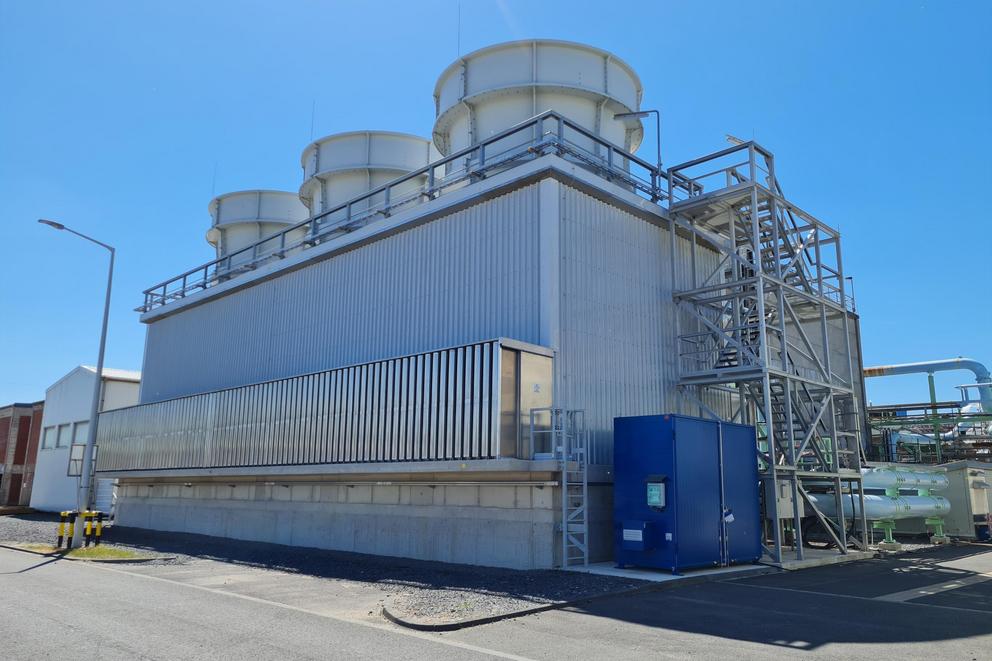
Both precision-oriented and standard cooling towers remove heat from circulating water. The difference is mainly in the level of attention given to application requirements and system integration.
A standard cooling tower may be suitable for general HVAC or industrial applications with relatively flexible operating conditions. A precision-oriented cooling system requires more careful consideration of temperature requirements, operating stability, monitoring, and compatibility with other equipment.
| Comparison Factor | Precision-Oriented Cooling System | Standard Cooling Tower |
|---|---|---|
| Design approach | Based on specific process requirements | Based on general cooling requirements |
| Temperature requirements | Carefully defined for the application | Depends on the application |
| System integration | Requires close coordination with connected equipment | May use a simpler configuration |
| Monitoring | May require more detailed monitoring | Basic monitoring may be sufficient |
| Selection method | Detailed engineering assessment | General capacity-based selection |
| Operating conditions | Designed around defined project conditions | Designed around standard operating conditions |
A standard cooling tower can also serve a precision cooling application if it is correctly engineered. The key question is not whether a product carries the word "precision" in its name. It is whether the complete system can meet the required operating conditions.
These terms are sometimes confused, particularly in data center projects, but they describe different equipment.
Precision air conditioning controls indoor air temperature and humidity. It is commonly used in server rooms, communication rooms, and other environments where sensitive electronic equipment operates.
A cooling tower removes heat from circulating water and releases that heat into the atmosphere.
In some data center cooling systems, both types of equipment work together. The cooling tower rejects heat from the water-cooled chiller or heat exchange system, while the indoor cooling equipment manages the temperature and humidity of the controlled space.
Understanding this difference helps buyers identify the correct equipment for their project.
There is no single cooling tower configuration suitable for every precision cooling application. Different structures offer different advantages in terms of heat transfer, installation space, water quality, maintenance, and operating cost.
In a counterflow cooling tower, air moves upward while water flows downward through the fill media. The two flows travel in opposite directions, creating an effective heat and mass transfer process.
Counterflow designs are widely used in industrial cooling applications because they can provide effective cooling performance within a relatively compact footprint.
Common advantages include:
Compact installation requirements.
Effective heat and mass transfer.
Flexible capacity configurations.
Compatibility with various industrial cooling systems.
Counterflow cooling towers are worth considering for factories, process cooling systems, and facilities where installation space is limited.

In a crossflow cooling tower, water flows downward through the fill while air moves horizontally across it. The two flows cross each other during the cooling process.
One advantage of this design is convenient access to certain internal components. Depending on the specific configuration, the water distribution system may also be easier to inspect and maintain.
Typical advantages include:
Convenient inspection and maintenance access.
Flexible water distribution arrangements.
Suitability for various industrial applications.
Potentially lower pump head requirements, depending on the design.
Crossflow cooling towers are often considered for projects with sufficient installation space and specific maintenance preferences.
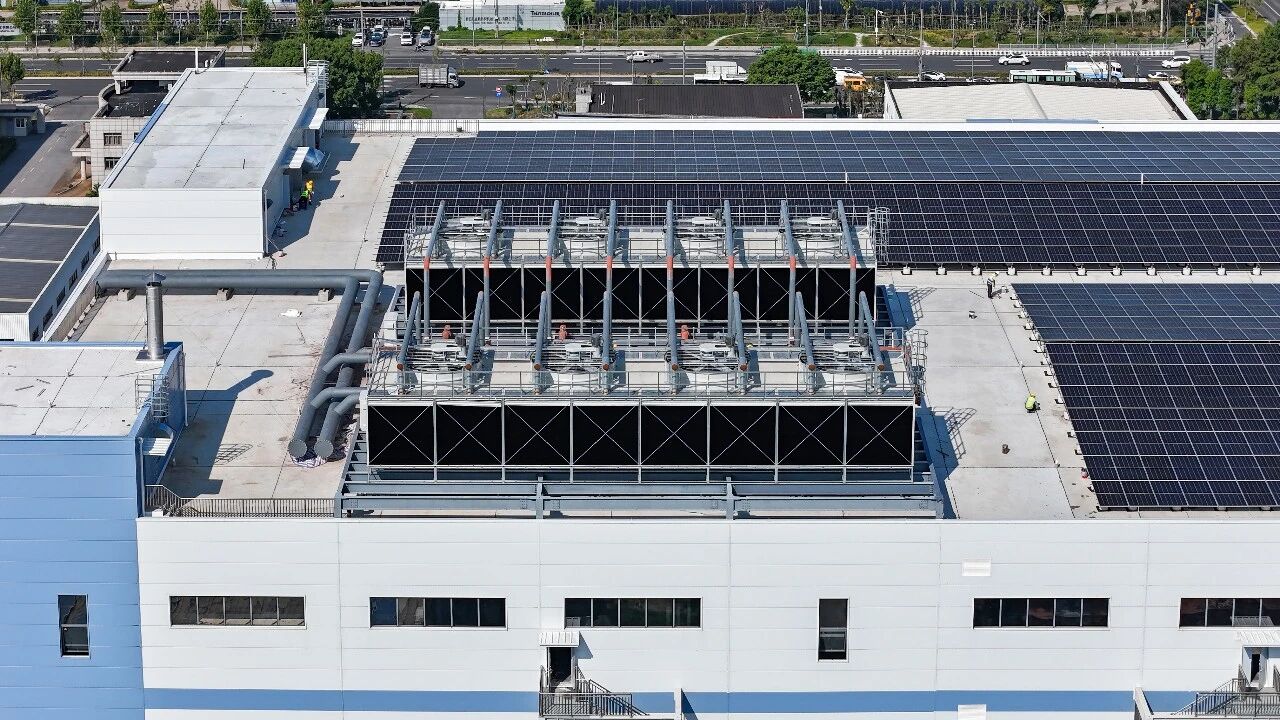
A closed-circuit cooling tower transfers heat from a process fluid through a heat exchanger coil. The process fluid remains inside the coil instead of coming into direct contact with the outside air.
External water and airflow remove heat from the coil, allowing the process fluid to circulate through a more isolated loop.
This arrangement can be useful when process fluid cleanliness or separation from the external cooling water is important.
Typical applications include:
Industrial process cooling.
Manufacturing equipment cooling.
Selected HVAC systems.
Applications with specific fluid quality requirements.
Closed-circuit cooling towers may involve higher initial investment and different maintenance requirements compared with open-circuit systems. Buyers should compare total lifecycle costs before making a decision.

Open-circuit cooling towers allow circulating water to come into direct contact with air.
Warm water is distributed over the fill media, where evaporation removes heat. The cooled water then returns to the cooling system.
Open-circuit designs are widely used because of their straightforward operating principles and broad industrial applicability.
Common applications include:
General industrial process cooling.
Water-cooled HVAC systems.
Manufacturing plants.
Power and energy facilities.
Because circulating water is exposed to the atmosphere, water treatment and regular cleaning are essential.
Modular cooling towers consist of multiple cooling cells or units that work together to provide the required capacity.
Instead of relying on one large cooling tower, a facility can use several smaller units connected to a common cooling system.
This arrangement offers several practical advantages:
Flexible capacity expansion.
Easier transportation and installation.
Operating flexibility under partial loads.
More convenient maintenance planning.
Modular systems can be particularly useful for facilities expecting future production expansion or projects with complicated installation conditions.

A cooling tower's performance depends on the combined operation of its components. Even a well-designed structure can lose efficiency if the fill becomes clogged, the fan operates incorrectly, or water distribution becomes uneven.
Understanding these components helps buyers make better purchasing and maintenance decisions.
Cooling tower fill media increases the contact area between air and water. It helps water spread into thin films or droplets, improving heat and mass transfer.
Common fill materials include PVC and PP.
PVC film fill is widely used in applications where its temperature and chemical resistance characteristics are suitable. PP fill may be considered for applications requiring different temperature or chemical compatibility properties.
When selecting cooling tower fill, consider:
Operating water temperature.
Water quality and suspended solids.
Chemical compatibility.
Fill geometry and spacing.
Airflow resistance.
Cleaning and replacement requirements.
Higher fill density does not automatically mean better cooling performance. Fill spacing, airflow resistance, water distribution, and operating conditions must all be considered.
The fan moves air through the cooling tower and supports the evaporation process.
Depending on the design, a cooling tower may use axial fans, gear drives, belt drives, or other drive configurations.
Important selection factors include:
Required airflow.
Fan diameter and blade design.
Motor power.
Operating speed.
Noise level.
Mechanical reliability.
A properly selected fan helps maintain the required airflow without unnecessary energy consumption.
The water distribution system spreads warm water evenly across the fill media.
Depending on the cooling tower design, it may use spray nozzles, distribution pipes, or gravity-fed basins.
Uneven water distribution can create dry areas inside the fill. These areas reduce the effective heat transfer surface and may result in poor cooling performance.
Regular inspection of nozzles, pipes, and distribution basins helps prevent these problems.
Drift eliminators capture water droplets carried by the outgoing airflow.
They help reduce water loss and limit the amount of circulating water discharged into the surrounding environment.
A good drift eliminator design should balance droplet removal performance with airflow resistance. Material quality, blade spacing, installation, and maintenance all influence its effectiveness.
Pumps maintain the required water circulation through the cooling system.
Depending on project requirements, control systems may monitor:
Entering and leaving water temperatures.
Water flow rate.
Fan operating status.
Motor current.
Basin water level.
System pressure.
Variable-frequency drives and automated monitoring can help adjust equipment operation when the heat load changes. The objective is to provide the required cooling while avoiding unnecessary energy use.
Precision-oriented cooling systems are used in industries where reliable heat rejection supports production quality, equipment protection, or continuous operation.
Data centers generate significant heat from servers, networking equipment, and electrical systems. If this heat is not removed effectively, equipment temperatures can rise and affect reliability.
Cooling towers can support data center cooling infrastructure by rejecting heat from water-cooled chillers or other compatible heat exchange systems.
When selecting cooling towers for data centers, consider:
Continuous operating requirements.
Seasonal ambient conditions.
Redundancy and backup arrangements.
Water consumption.
Energy efficiency.
Maintenance access.
A cooling tower is only one part of the data center thermal management system. It must be coordinated with chillers, pumps, heat exchangers, and the overall control strategy.
Pharmaceutical production often involves equipment that requires stable cooling conditions.
Cooling towers may support process cooling, HVAC systems, and heat rejection from manufacturing equipment.
In these applications, buyers should pay particular attention to water treatment, equipment reliability, and system separation. Where process contamination is a concern, a closed-circuit arrangement or intermediate heat exchanger may be worth evaluating.
Electronics and semiconductor manufacturing use precision equipment that can generate substantial heat.
Temperature fluctuations may affect equipment operation, production stability, and product quality.
Cooling towers can support the facility's heat rejection system, but the complete cooling design must account for the specific temperature and water quality requirements of the process.
For critical equipment, cooling towers may work together with chillers and secondary cooling loops to provide the required temperature conditions.
Chemical and petrochemical plants often operate continuously and require dependable cooling for process equipment.
Cooling towers remove heat from circulating water used in heat exchangers, condensers, and other industrial equipment.
FRP cooling towers may be attractive in suitable environments because fiberglass-reinforced plastic offers corrosion resistance and relatively low structural weight.
However, the chemical compatibility of all materials exposed to the process environment should be checked before equipment selection.
Food and beverage factories use cooling systems in production, refrigeration support, and utility operations.
Cooling towers can reject heat from compatible water-cooled equipment and industrial processes.
Important considerations include water treatment, hygiene management, corrosion resistance, and routine maintenance. A well-maintained cooling tower helps support stable plant operation and reduces the risk of unexpected cooling interruptions.
Large commercial buildings, hospitals, hotels, shopping centers, and office complexes may use cooling towers as part of centralized HVAC systems.
In these systems, cooling towers typically remove heat from water-cooled chillers.
Cooling demand changes with building occupancy and outdoor conditions. Efficient fan and pump control can help reduce energy consumption during partial-load operation.
Why invest in a carefully engineered cooling tower system instead of simply purchasing the largest available model?
Because effective cooling is about matching equipment performance to actual operating requirements.
A properly selected cooling tower can provide dependable heat rejection under defined operating conditions.
This helps industrial equipment operate within its intended temperature range and supports consistent production.
The key is accurate engineering. Cooling capacity, wet-bulb temperature, water flow, and airflow must all match the application.
Cooling tower energy consumption mainly comes from fans and circulating water pumps.
A properly designed system can improve efficiency through:
Suitable fan selection.
Efficient water distribution.
Appropriate fill media.
Variable-speed operation where practical.
Reduced unnecessary pressure losses.
Regular cleaning and maintenance.
A larger fan or more powerful motor does not automatically produce a more efficient system. The best solution provides the required cooling with the lowest practical operating cost.
Different facilities have different space, capacity, and operating requirements.
Cooling towers can be configured in counterflow, crossflow, open-circuit, closed-circuit, or modular arrangements.
This flexibility allows engineers to select a structure that fits the project instead of forcing the project to fit a standard product.
The correct equipment configuration can help reduce unexpected breakdowns and unnecessary maintenance.
For example, selecting suitable fill spacing for the actual water quality may reduce clogging risk. Choosing appropriate materials for the operating environment may help extend component service life.
Over time, these decisions can make a meaningful difference to total ownership cost.
Choosing the right cooling tower requires more than comparing product photos or nominal tonnage.
Before contacting a manufacturer, collect the main project parameters. This makes technical communication faster and helps avoid incorrect quotations.
Start by determining the total heat load that the cooling tower must reject.
A basic heat transfer relationship is:
Q = m × Cp × ΔT
Where:
Q = heat transfer rate.
m = mass flow rate of water.
Cp = specific heat capacity of water.
ΔT = temperature difference between entering and leaving water.
For water, the specific heat capacity is approximately 4.186 kJ/kg·°C under common engineering conditions.
This calculation provides a starting point, but final cooling tower selection should also account for design conditions, system losses, operating margins, and manufacturer performance data.
Do not select a cooling tower based only on the horsepower of the equipment or the nominal capacity of an existing unit.
Wet-bulb temperature is one of the most important factors in cooling tower selection.
It represents the cooling potential of evaporative cooling under the surrounding air conditions.
The difference between the leaving water temperature and the entering air wet-bulb temperature is called the cooling tower approach.
Approach = Leaving Water Temperature − Entering Air Wet-Bulb Temperature
For example, if the leaving water temperature is 30°C and the entering air wet-bulb temperature is 26°C, the approach is 4°C.
A smaller approach generally requires greater heat and mass transfer capability and may increase equipment size and cost.
The design wet-bulb temperature should reflect the actual project location and relevant seasonal conditions. It should not be estimated using dry-bulb temperature alone.
Water quality has a major influence on cooling tower performance and maintenance requirements.
Common problems include:
Scale formation.
Corrosion.
Biological growth.
Suspended solids.
Fill clogging.
Nozzle blockage.
If the water contains high levels of suspended solids, suitable filtration and water treatment may be necessary.
For industrial projects, buyers should provide available water analysis data to the cooling tower manufacturer. This helps determine suitable materials, fill configurations, and treatment requirements.
The choice between counterflow, crossflow, open-circuit, and closed-circuit designs depends on the application.
Consider the following questions:
How much installation space is available?
Is process water allowed to contact the outside air?
How easy must internal components be to access?
What are the local environmental conditions?
Is future capacity expansion expected?
There is no single cooling tower structure that is best for every project.
Cooling tower performance is important, but the equipment must also fit the site.
Check the available installation footprint, equipment height restrictions, fan noise requirements, structural loading, transportation access, maintenance clearance, and distance from nearby buildings or air intakes.
A cooling tower that performs well under its rated conditions may still create problems if the installation layout is poorly planned.
A reliable manufacturer should understand your project requirements and provide clear technical information during equipment selection.
Before placing an order, ask for:
Cooling tower technical specifications.
Rated capacity and design conditions.
Material specifications.
Fan and motor details.
Water flow and connection information.
Installation and maintenance guidance.
Relevant manufacturing and quality documentation.
Do not compare suppliers only by price. A low initial quotation may not represent the lowest lifecycle cost.
Even a well-designed cooling tower needs regular maintenance. Dust, scale, biological growth, and mechanical wear can gradually reduce performance.
A planned maintenance program helps identify problems before they become expensive failures.
Inspect fill media for scale deposits, dirt accumulation, cracks, deformation, biological growth, and blocked passages.
Also check drift eliminators for damage, loose installation, and accumulated dirt.
If the fill becomes seriously clogged or damaged, cleaning or replacement may be necessary.
Fans operate continuously in many industrial cooling applications, so mechanical inspections are important.
Check fan blade condition, blade balance, motor temperature, bearing condition, gearbox oil level, couplings, belts, and unusual vibration or noise.
Follow the manufacturer's recommended inspection and lubrication schedule.
Regularly monitor circulating water conditions, including conductivity, pH, and relevant treatment indicators.
Water treatment should be designed according to the source water, system materials, operating temperature, and applicable regulations.
Proper treatment helps control scale, corrosion, and biological growth.
Inspect pumps, valves, piping, and spray nozzles.
Uneven distribution can reduce the effective use of fill media and cause poor cooling performance.
If the cooling tower suddenly experiences a higher leaving water temperature, checking water flow and nozzle condition is a useful starting point.
A purchasing decision can become expensive when important operating conditions are overlooked.
Selecting equipment based only on nominal capacity: Actual performance depends on water temperatures, flow rate, and wet-bulb conditions. Always compare rated capacity under clearly stated design conditions.
Ignoring water quality: A cooling tower with unsuitable fill spacing or materials may experience premature clogging or deterioration.
Choosing the cheapest quotation: Initial purchase price is only one part of the total cost. Energy consumption, spare parts, maintenance, and service life also matter.
Overlooking installation conditions: Insufficient maintenance clearance, poor airflow, and inappropriate equipment positioning can affect operation.
Failing to consider future expansion: If production capacity may increase, discuss future cooling requirements before finalizing the system design.
A good purchasing decision considers both current requirements and long-term operating plans.
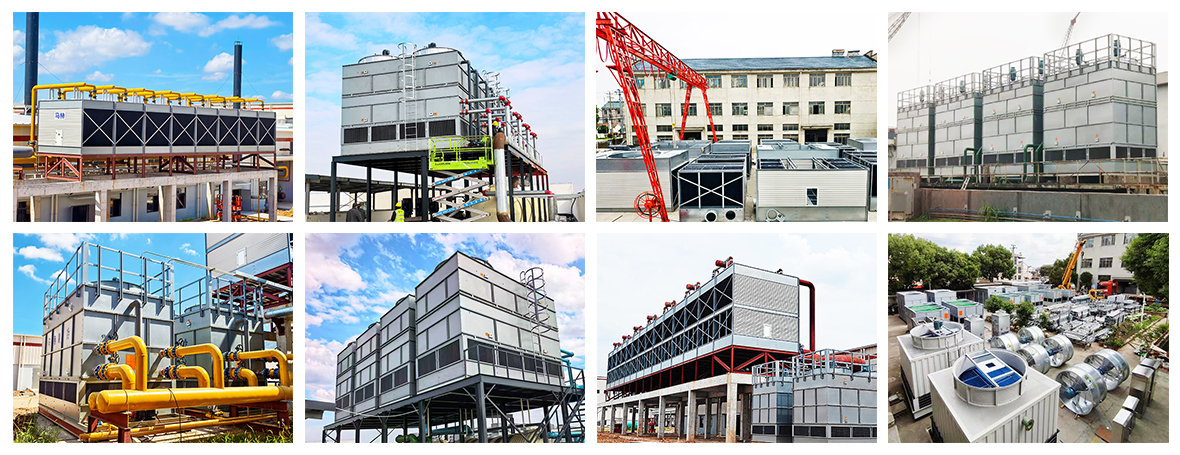
A professional cooling tower manufacturer does more than supply equipment. The manufacturer should help buyers understand cooling requirements, compare suitable structures, and identify the correct configuration.
This is particularly important for precision-oriented industrial cooling applications, where an incorrect selection may affect the entire production process.
Mach Industry (Zhejiang) Co.,Ltd is a specialized cooling tower manufacturer based in Zhejiang, China. The company provides cooling tower products for industrial and commercial cooling applications.
Its published product range includes industrial cooling towers, counterflow and crossflow cooling towers, open cooling towers, closed cooling towers, mixed-flow closed cooling towers, and modular cooling tower products.
These configurations serve different cooling requirements and allow buyers to evaluate equipment according to project conditions rather than relying on a one-size-fits-all solution.
For precision-oriented cooling applications, buyers should communicate their actual operating parameters to Mach Industry before selecting a model. These details help determine which cooling tower configuration is appropriate.
When discussing a project with Mach Industry, prepare the following information:
Required cooling capacity.
Hot water inlet temperature.
Cold water outlet temperature.
Design wet-bulb temperature.
Circulating water flow rate.
Installation location.
Water quality information.
Preferred cooling tower structure.
Special material or environmental requirements.
With these details, the manufacturer can better evaluate the application and discuss a suitable cooling tower configuration.
Mach Industry (Zhejiang) Co.,Ltd
Official Website: https://www.machcooling.com
Not every industrial project can use the same standard cooling tower configuration.
Some facilities have limited installation space. Others operate in hot and humid environments or use water with special chemical characteristics.
A suitable cooling tower solution should take these factors into account.
Depending on the project and available product configuration, customization may involve:
Cooling tower structure.
Capacity configuration.
FRP or other suitable structural materials.
Fan and motor selection.
Fill media configuration.
Water distribution design.
Connection and installation arrangements.
The exact available options should be confirmed with the manufacturer according to the project specifications.
Working directly with a manufacturer can also make technical communication, product configuration, and project coordination more straightforward.
The main purpose is to reject heat from circulating water under defined operating conditions. Precision-oriented applications require careful equipment selection and system integration to support stable cooling performance.
Yes. Cooling towers can support data center heat rejection systems, including systems that use water-cooled chillers or compatible heat exchangers.
However, they must be integrated with the complete cooling infrastructure. Redundancy, water consumption, energy efficiency, and operating reliability should all be considered.
Service life depends on design quality, structural materials, operating conditions, water treatment, maintenance, and component replacement.
A properly maintained cooling tower can provide many years of service, but individual components such as fill media, fans, motors, and drift eliminators may need maintenance or replacement during its operating life.
Start by checking the most important operating factors:
Keep fill media clean.
Ensure even water distribution.
Maintain fans and motors.
Optimize fan and pump operation.
Monitor circulating water quality.
Prevent unnecessary airflow restrictions.
Compare actual operating conditions with the original design.
Regular performance monitoring helps identify efficiency losses early.
Look for a manufacturer that understands your application and can provide clear technical specifications.
Compare cooling capacity, design conditions, structural materials, component quality, manufacturing capabilities, and technical support.
It is also important to provide accurate project data before requesting a quotation. This allows manufacturers to recommend equipment based on actual operating requirements rather than assumptions.
Precision cooling is not simply about purchasing a cooling tower with a large capacity. It is about matching the equipment to the real heat load, operating temperatures, water quality, environmental conditions, and long-term production requirements.
Counterflow, crossflow, open-circuit, closed-circuit, and modular cooling towers each offer different advantages. The right solution depends on how the equipment will operate within the complete cooling system.
Before making a purchasing decision, calculate the required cooling capacity, confirm the design wet-bulb temperature, evaluate water quality, and compare the technical specifications of different configurations.
Most importantly, work with a manufacturer that understands your application and can support the equipment selection process.
Mach Industry (Zhejiang) Co.,Ltd provides a range of industrial cooling tower configurations for buyers evaluating cooling solutions for different applications.
Visit the official website to explore its products and contact the team about your project: