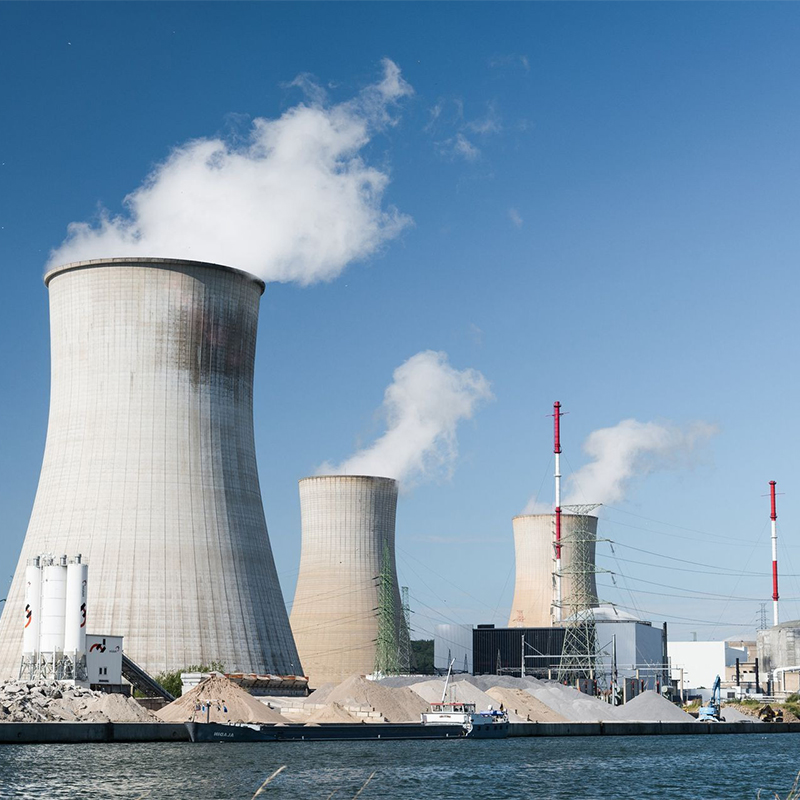
We Provide Cooling Tower Solution

Views: 0 Author: Cindy Publish Time: 2026-11-09 Origin: Site


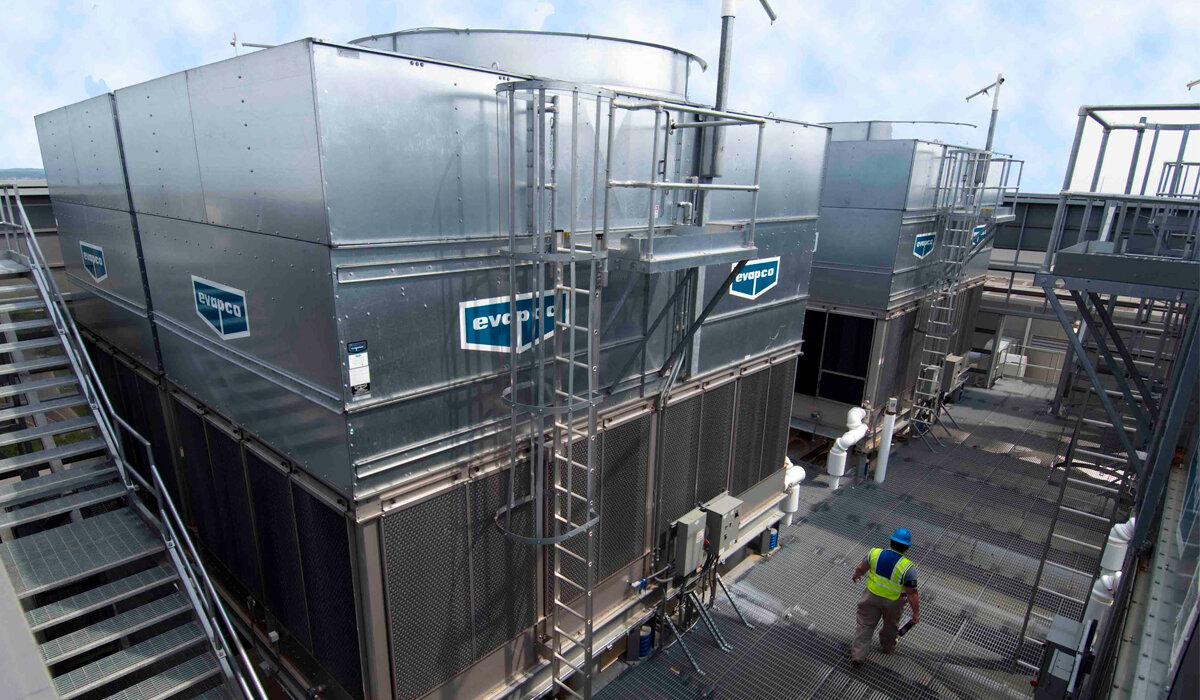
Industrial cooling towers play an essential role in maintaining stable operating temperatures in manufacturing plants, power stations, chemical facilities, HVAC systems, and other industrial applications. Among the well-known equipment brands in this industry, EVAPCO provides a range of evaporative cooling solutions designed for different operating environments.
However, even a high-quality cooling tower requires regular maintenance to maintain its performance. Continuous operation, water quality changes, environmental exposure, and mechanical wear can gradually affect important components. Cooling tower fill may become clogged, fan blades may deteriorate, drift eliminators may become damaged, and water distribution nozzles may become blocked.
Without proper maintenance, these problems can reduce heat transfer efficiency, increase water and energy consumption, and lead to unexpected equipment downtime.
So, how can you maintain an EVAPCO cooling tower effectively? Which components should be inspected regularly? When should you clean existing parts, and when is replacement a better option?
This guide explains the essential procedures for EVAPCO cooling tower maintenance, including routine inspection, troubleshooting, component repair, and replacement parts selection. It also introduces how Mach Industry (Zhejiang) Co., Ltd. supports industrial customers with cooling tower manufacturing and replacement component solutions.
A cooling tower is a complete system in which several components work together. The fan moves air, the water distribution system spreads hot water, and the fill provides a large contact surface for heat and mass transfer.
If one component performs poorly, the efficiency of the entire cooling tower may suffer.
Regular maintenance helps protect equipment performance while reducing unnecessary operating expenses.
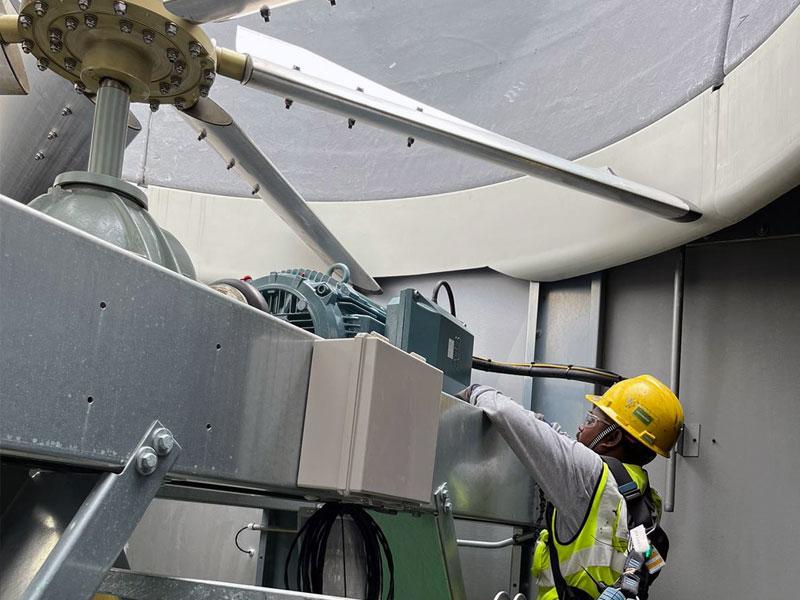
Cooling tower efficiency depends on several factors, including airflow, water distribution, fill condition, circulating water flow, and ambient wet-bulb temperature.
When cooling tower fill becomes clogged with dirt, scale, or biological deposits, water cannot spread evenly across its surface. Restricted airflow and poor water distribution may also reduce the effectiveness of heat transfer.
Cleaning the fill, checking spray nozzles, and inspecting the fan system can help restore proper operating conditions.
Cooling towers operate in environments where moisture, chemicals, temperature fluctuations, and vibration are common.
Over time, these conditions can cause corrosion, material aging, cracks, and mechanical wear.
Regular inspection allows maintenance teams to identify problems before they become serious failures. Replacing a damaged component at the right time can also prevent additional damage to surrounding equipment.
Unexpected cooling tower failure can interrupt industrial production, affect process temperatures, and increase maintenance costs.
A preventive maintenance plan helps operators identify abnormal operating conditions early and arrange repairs during planned shutdown periods.
Instead of waiting for equipment to fail, maintenance teams can manage component replacement according to actual operating conditions.
Before developing a maintenance plan, it is important to understand the major cooling tower components and their functions.
EVAPCO manufactures different cooling tower configurations, so the exact component arrangement depends on the specific model and equipment design.
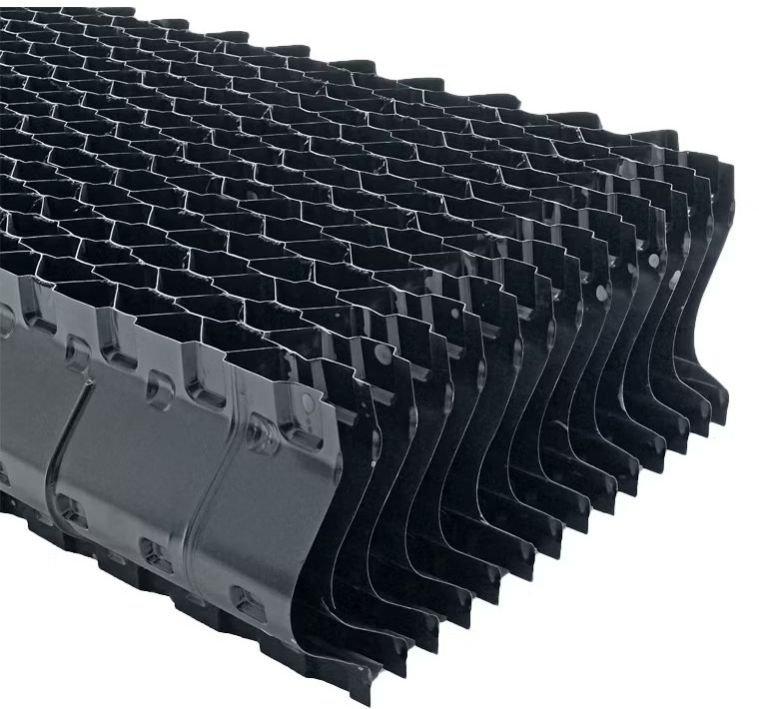
Cooling tower fill is one of the most important components affecting thermal performance.
Its main function is to increase the contact area between hot water and moving air. As water flows through the fill, it spreads into thin films or droplets, allowing heat and moisture to transfer to the air.
Common cooling tower fill materials include PVC and polypropylene (PP).

During inspection, check for:
Dirt and sediment accumulation.
Mineral scale and biological growth.
Broken or missing fill sheets.
Material deformation.
Blocked airflow passages.
Deterioration caused by temperature or chemical exposure.
If the fill is structurally sound, appropriate cleaning may restore its performance. If it is severely damaged or permanently clogged, replacement may be necessary.
The cooling tower fan generates airflow through the equipment. Depending on the tower design, the fan may use an axial or centrifugal configuration.
During maintenance, inspect the following:
Fan blade cracks and deformation.
Blade connections and fastening bolts.
Fan balance and alignment.
Motor temperature and operating current.
Bearing condition.
Abnormal vibration and noise.
Fan rotation direction.
A damaged or unbalanced fan can create excessive vibration, potentially affecting the motor, bearings, shaft, and supporting structure.
Drift eliminators reduce the amount of water droplets carried away by exhaust air.
They are designed to change the direction of airflow so that water droplets separate from the air and return to the cooling tower.
Inspect drift eliminators for cracks, missing sections, loose installation, mineral deposits, and deformation.
Damaged or incorrectly installed eliminators may increase water loss and reduce system performance.
The water distribution system delivers hot water to the cooling tower fill.
Depending on the equipment design, it may include distribution pipes, headers, spray nozzles, and other water delivery components.
Blocked nozzles can create uneven water distribution. Some areas of the fill may receive insufficient water, while other areas become overloaded.
During inspection, check nozzle openings, water flow, spray patterns, pipe connections, and distribution uniformity.
The drive system transfers mechanical power from the motor to the cooling tower fan.
Depending on the configuration, it may include a gearbox, belt drive, pulleys, shafts, bearings, and couplings.
Maintenance should include checking lubricant levels, oil leakage, shaft alignment, bearing temperature, belt condition, and abnormal noise.
Always follow the specific manufacturer's instructions for lubrication, adjustment, and replacement intervals.
Daily inspections help operators identify changes in equipment performance before they develop into major problems.
A practical daily checklist includes:
Check cooling water inlet and outlet temperatures.
Observe fan operation and rotation.
Listen for abnormal mechanical noise.
Check circulating water levels.
Observe water distribution conditions.
Look for visible water leakage.
Check for unusual vibration.
Observe the exhaust air for abnormal water drift.
Review important operating readings.
Record unusual operating conditions.
These checks are relatively simple, but they provide useful information about the cooling tower's condition.
For example, a gradual increase in outlet water temperature may indicate changes in airflow, water distribution, fill condition, or ambient operating conditions.
Comparing current readings with historical records makes it easier to identify performance changes.
Monthly inspections should focus on components that experience continuous mechanical movement, water exposure, or contamination.
| Component | Inspection Item | Recommended Action |
|---|---|---|
| Cooling tower fill | Dirt, scale, and deformation | Clean or evaluate replacement |
| Fan blades | Cracks, loose bolts, and imbalance | Inspect and repair or replace as appropriate |
| Motor | Temperature and vibration | Check electrical and mechanical condition |
| Gearbox | Oil level and leakage | Inspect lubrication and seals |
| Drift eliminators | Cracks and deposits | Clean or replace damaged sections |
| Spray nozzles | Blockage and uneven spraying | Clean or replace |
| Water basin | Sediment and corrosion | Clean and inspect |
| Supporting structure | Corrosion and loose fasteners | Repair and protect |
The actual inspection frequency should follow the applicable EVAPCO operation and maintenance manual.
Operating conditions also matter. Towers exposed to high dust levels, poor water quality, or long operating hours may require more frequent inspections.
Annual maintenance provides an opportunity to inspect components that cannot be fully evaluated during normal operation.
Whenever possible, schedule comprehensive maintenance during a planned shutdown.
Important tasks include:
Inspecting internal structural components.
Cleaning and flushing the cold water basin.
Checking fill media condition.
Inspecting drift eliminators.
Examining fan blades and mechanical drives.
Checking motor and electrical connections.
Inspecting water distribution pipes and nozzles.
Checking corrosion protection.
Reviewing historical cooling performance.
Annual maintenance should also include an evaluation of recurring problems.
For example, if cooling tower fill repeatedly becomes clogged, the underlying cause may be poor water treatment, excessive suspended solids, or biological contamination.
Replacing the fill without correcting the water quality problem may only provide a temporary solution.
Even a well-maintained cooling tower may experience performance problems during long-term operation.
Understanding the possible causes helps maintenance teams choose appropriate corrective actions.
If a cooling tower cannot achieve the expected outlet water temperature, several factors may be responsible.
Common causes include:
Insufficient airflow.
Dirty or clogged fill.
Uneven water distribution.
Fan or motor problems.
Incorrect circulating water flow.
High ambient wet-bulb temperature.
Changes in operating conditions.
The first step is to compare actual operating conditions with the original design requirements.
Do not immediately assume that the cooling tower fill needs replacement. A systematic inspection can help identify whether the problem comes from the fan, water distribution system, fill, or external operating conditions.
Fill clogging is a common maintenance challenge in industrial cooling towers.
Mineral deposits, suspended solids, algae, and biological growth can accumulate on the fill surface and block water or airflow passages.
Typical warning signs include:
Uneven water distribution.
Visible dirt or scale deposits.
Reduced airflow.
Increased pressure drop.
Lower cooling performance.
Cleaning may restore performance when the fill remains structurally sound.
However, severely deformed, brittle, cracked, or permanently clogged fill should be evaluated for replacement.
Fan vibration may result from blade imbalance, loose fasteners, bearing damage, shaft misalignment, or mechanical wear.
If excessive vibration occurs, stop the equipment according to the applicable safety procedures and investigate the cause.
Continuing to operate a seriously damaged fan may result in additional mechanical failures.
Water leakage can occur around basin connections, pipe joints, seals, and damaged structural components.
Excessive drift may be associated with damaged drift eliminators, incorrect installation, or operation outside the intended design conditions.
Inspect the affected areas carefully and determine whether cleaning, adjustment, sealing, or component replacement is required.
Cooling tower fill deserves special attention because it directly affects the heat transfer process.
Even if the fan and motor operate normally, deteriorated fill may prevent the cooling tower from achieving its expected performance.
How can you determine whether existing fill should be replaced?
Look for these common warning signs.
Severe deformation: Long-term exposure to heat, mechanical stress, and water conditions may cause fill sheets to bend, collapse, or lose their original shape.
Brittle or cracked material: Aging plastic fill can lose flexibility and become easier to break during cleaning or operation.
Permanent clogging: If deposits cannot be removed through suitable cleaning methods, the effective heat transfer area may remain reduced.
Structural damage: Broken sheets, separated fill packs, and missing sections can affect water distribution and airflow.
Persistent cooling problems: If the operating conditions are normal but cooling performance remains poor, fill deterioration may be one of the possible causes.
Different cooling tower applications require different fill designs and materials.
Common options include:
| Fill Type | Main Characteristics | Typical Application |
|---|---|---|
| PVC Film Fill | Large heat transfer surface and compact structure | Suitable water quality applications within material temperature limits |
| PP Film Fill | Generally offers better temperature resistance than standard PVC grades | Applications requiring higher-temperature plastic materials |
| Splash Fill | Breaks water into smaller droplets | Applications where fouling resistance is a major consideration |
| High-Temperature Fill | Designed for specific elevated-temperature conditions | Specialized industrial cooling applications |
The correct material depends on operating temperature, water quality, chemical exposure, thermal requirements, and original equipment specifications.
Choosing a replacement based only on price or appearance can lead to compatibility and performance problems.
Before ordering replacement fill for an EVAPCO cooling tower, collect as much technical information as possible.
Important details include:
Cooling tower model and configuration.
Original fill dimensions.
Fill block length, width, and height.
Fill sheet thickness.
Sheet spacing and flute geometry.
Material requirements.
Operating water temperature.
Water quality conditions.
Required fill quantity.
Do not estimate the required quantity based only on the cooling tower's nominal capacity.
The actual fill volume depends on the original internal arrangement, installation space, and fill configuration.
Providing photographs, drawings, and measurements to an experienced cooling tower manufacturer can make the replacement process more accurate.
The fan and gearbox are essential parts of the cooling tower airflow system.
If the fan cannot provide sufficient airflow, the tower may experience reduced heat transfer performance.
During maintenance, inspect fan blades for cracks, erosion, deformation, and loose connections.
For gearbox-driven systems, check:
Lubricant level and condition.
Oil contamination.
Oil leakage.
Bearing condition.
Shaft alignment.
Operating temperature.
Abnormal noise and vibration.
Fan blade replacement should consider the original diameter, blade profile, material, rotation direction, pitch, operating speed, and mechanical loading.
FRP fan blades are widely used in industrial cooling towers because they combine relatively low weight, corrosion resistance, and mechanical strength.
However, replacement blades must be suitable for the original fan assembly and operating conditions.
Never select fan blades based on diameter alone.
Drift eliminators play an important role in controlling water droplet carryover.
Their condition affects water consumption, drift control, and the amount of moisture discharged from the cooling tower.
During inspection, look for:
Cracks and broken sections.
Missing eliminator packs.
Loose supports.
Excessive mineral deposits.
Material deformation.
Incorrect installation.
When replacement is necessary, consider the original eliminator dimensions, blade spacing, profile design, material compatibility, airflow resistance, and installation arrangement.
Correct installation is just as important as selecting the correct product.
Poorly fitted eliminators may leave gaps that allow water droplets to escape.
Uniform water distribution is essential for effective cooling tower operation.
If nozzles become blocked or distribution pipes become damaged, some areas of the fill may receive insufficient water.
This reduces the effective heat transfer area and can cause uneven cooling.
Maintenance should include cleaning spray nozzles, checking distribution pipes, inspecting connections, and verifying water flow.
If replacement nozzles are required, match their dimensions, spray characteristics, connection type, and flow requirements.
Do not assume that a nozzle with a similar appearance will provide the same performance.
Water quality has a direct impact on cooling tower maintenance requirements.
Poor water treatment can cause scaling, corrosion, biological growth, and suspended-solid accumulation.
These problems can affect fill media, pipes, nozzles, basins, and other heat transfer surfaces.
A suitable water treatment program should consider:
Water hardness.
pH level.
Conductivity.
Suspended solids.
Corrosion potential.
Biological control.
Concentration cycles.
The treatment program should be developed by qualified water treatment professionals according to actual water analysis and applicable regulations.
When cleaning plastic fill, use compatible cleaning methods. Avoid aggressive chemicals, excessive water pressure, or mechanical actions that could damage the material.
Cooling tower cleaning and disinfection should also follow appropriate industry guidance and local health and safety requirements.
Should you repair an existing component or replace it completely?
The answer depends on its physical condition, age, repair cost, and effect on system performance.
| Component | When Repair May Be Suitable | When Replacement Is Better |
|---|---|---|
| Cooling tower fill | Minor removable deposits | Severe deformation, cracking, or permanent clogging |
| Fan blades | Minor issues approved for repair | Structural cracks or serious damage |
| Drift eliminators | Removable surface deposits | Broken or deformed sections |
| Water nozzles | Removable blockage | Damaged or worn spray openings |
| Gearbox | Minor serviceable issues | Severe internal wear or mechanical failure |
| Motor | Minor serviceable issues | Major electrical or mechanical damage |
Always follow the original equipment manufacturer's repair instructions.
For rotating components, structural repairs should only be performed when explicitly permitted and approved by qualified personnel.
In some situations, replacing a damaged component is safer and more economical than repeatedly repairing it.
One of the biggest challenges in cooling tower maintenance is finding replacement parts that fit the existing equipment.
Even when two cooling towers look similar, their internal components may have different specifications.
Start by identifying the cooling tower model, serial number, original drawings, and component specifications.
These details provide an important reference when selecting replacement parts.
Dimensions alone are not enough.
For cooling tower fill, consider material, sheet spacing, flute design, temperature resistance, and water quality.
For fans, consider diameter, blade profile, rotation direction, speed, and mechanical loading.
For drift eliminators, check profile geometry, dimensions, material, and installation arrangement.
An experienced manufacturer can help evaluate replacement requirements and identify potential compatibility issues.
Before purchasing, provide photographs, drawings, dimensions, and operating information whenever possible.
This makes technical communication more accurate and reduces the risk of ordering unsuitable components.
Mach Industry (Zhejiang) Co., Ltd. is a professional cooling tower manufacturer specializing in industrial cooling solutions and related equipment.
With manufacturing experience dating back to 2009, Mach Cooling provides cooling tower solutions for different industrial applications, including air conditioning, refrigeration, chemical processing, power generation, and manufacturing.
For customers maintaining EVAPCO cooling towers, Mach Cooling can assist with replacement component inquiries and help evaluate suitable configurations based on available equipment information.
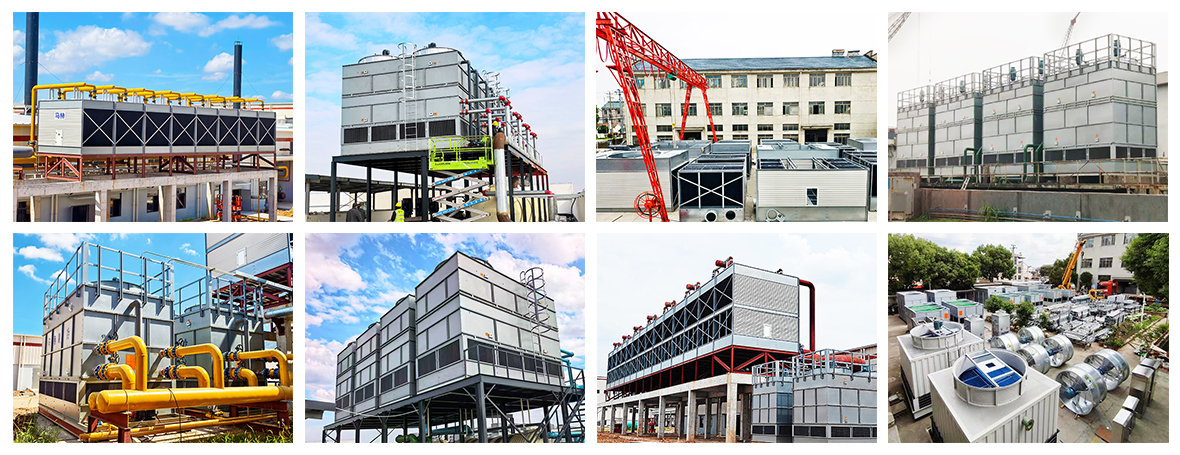
Our business focuses on cooling tower manufacturing and related products, including:
Cooling tower fill is one of the most important components affecting thermal performance.
Mach Cooling can assist customers in evaluating suitable PVC and other plastic fill configurations according to application requirements.
Important considerations include:
Fill dimensions.
Material selection.
Sheet spacing.
Fill configuration.
Operating temperature.
Water quality.
The goal is to identify a suitable replacement solution rather than simply supplying a product with similar dimensions.
The fan system directly affects cooling tower airflow.
Mach Cooling supports cooling tower fan inquiries involving blade materials, dimensions, and application requirements.
For replacement projects, customers should provide the original fan specifications, photographs, or drawings to help evaluate compatibility.
Mach Cooling also supports inquiries related to cooling tower components and replacement solutions.
Each project should be evaluated according to the original tower design and actual operating conditions.
Selecting appropriate materials and dimensions is important for maintaining reliable equipment performance.
Different cooling towers have different structural arrangements and operating requirements.
For this reason, customized product dimensions and configurations may be necessary.
Mach Cooling works with customer-provided drawings, photographs, and technical specifications to evaluate suitable cooling tower solutions.
If you are maintaining an EVAPCO cooling tower and need to replace fill media, fan components, or other parts, our team can help review your technical requirements.
Mach Cooling is an independent cooling tower manufacturer and does not claim to be an EVAPCO-authorized service provider or affiliated with EVAPCO. Replacement compatibility should be technically verified for each application.
Visit our website: https://www.machcooling.com
A structured maintenance schedule makes cooling tower management easier and helps prevent unnecessary equipment failures.
The following table provides a general maintenance reference. Actual intervals should follow the applicable equipment manual, operating conditions, and local regulations.
| Maintenance Frequency | Recommended Tasks |
|---|---|
| Daily | Check water temperatures, fan operation, noise, vibration, and water level |
| Weekly | Observe water distribution, leakage, and visible deposits |
| Monthly | Inspect fill, drift eliminators, nozzles, fan, and drive components |
| Quarterly | Review mechanical condition, water treatment, and operating trends |
| Semiannually | Conduct a detailed inspection of critical components |
| Annually | Perform a comprehensive shutdown inspection and evaluate replacement requirements |
A good maintenance program should also include written inspection records.
Record the inspection date, equipment condition, problems discovered, maintenance performed, and replacement parts installed.
These records help maintenance teams identify recurring issues and plan future maintenance budgets.
Even experienced maintenance teams can make mistakes that increase operating costs or reduce equipment life.
Here are several problems worth avoiding.
Mistake 1: Waiting until the cooling tower fails
Reactive maintenance often results in higher repair costs and unplanned downtime. Regular inspection is a more reliable approach.
Mistake 2: Ignoring water quality
Poor water treatment can damage several components simultaneously. Regular water analysis and appropriate treatment are essential.
Mistake 3: Replacing fill without checking specifications
Incorrect fill dimensions, materials, or thermal characteristics may reduce cooling performance.
Mistake 4: Ignoring abnormal fan vibration
A small mechanical problem can develop into serious equipment damage if it is not investigated.
Mistake 5: Choosing replacement parts based only on price
Low-cost components are not necessarily economical if they cannot provide the required performance or service life.
Mistake 6: Skipping maintenance records
Without historical information, identifying repeated problems becomes much more difficult.
The best maintenance strategy combines regular inspection, accurate technical evaluation, proper water treatment, and timely component replacement.
Basic operating checks should generally be performed daily, with more detailed inspections conducted monthly and comprehensive inspections scheduled periodically.
However, actual maintenance frequency depends on operating hours, water quality, environmental conditions, and the specific cooling tower model.
Always consult the applicable EVAPCO operation and maintenance documentation.
Cooling tower fill should be replaced when it becomes severely cracked, brittle, deformed, structurally damaged, or permanently clogged.
There is no universal replacement interval. The decision should be based on actual inspection results, operating conditions, and performance evaluation.
Third-party replacement components may be suitable for certain applications, provided their compatibility is properly evaluated.
However, compatibility should never be assumed based only on the equipment brand.
Dimensions, materials, operating conditions, thermal performance, mechanical loading, and installation requirements must all be considered.
Common causes include:
Dirty or damaged fill.
Blocked water distribution nozzles.
Insufficient airflow.
Fan performance problems.
Poor water quality.
Incorrect circulating water flow.
Changes in ambient wet-bulb temperature.
A systematic inspection is the best way to identify the actual cause.
The most effective approach is preventive maintenance.
Regular cleaning, proper water treatment, timely component replacement, and accurate operating records help prevent expensive equipment failures.
Working with an experienced cooling tower manufacturer can also help reduce procurement delays and avoid unsuitable replacement purchases.
Customers should ideally provide the cooling tower model, original fill dimensions, fill block quantity, material requirements, operating temperatures, water quality information, and photographs of the existing fill.
If original drawings are available, they can make technical evaluation more accurate.
Maintaining an EVAPCO cooling tower requires more than occasional cleaning.
It involves regularly inspecting fill media, fan systems, gearboxes, drift eliminators, water distribution systems, and water quality. Each component plays an important role in maintaining reliable cooling performance.
A well-planned maintenance program helps reduce unexpected downtime, extend equipment service life, and control operating costs.
When components become damaged or reach the end of their useful life, choosing suitable replacement parts is equally important.
Mach Industry (Zhejiang) Co., Ltd. is committed to providing cooling tower manufacturing and related industrial cooling solutions. If you are looking for cooling tower fill, fan components, drift eliminators, or customized replacement solutions for an EVAPCO cooling tower, Mach Cooling can help evaluate your requirements.
Contact our team with your cooling tower model, component dimensions, photographs, or technical drawings to discuss a suitable solution.
Visit Mach Cooling: https://www.machcooling.com
Mach Industry (Zhejiang) Co., Ltd. – Your Partner for Industrial Cooling Tower Solutions.