We Provide Cooling Tower Solution

Views: 0 Author: Cindy Publish Time: 2026-11-13 Origin: Site


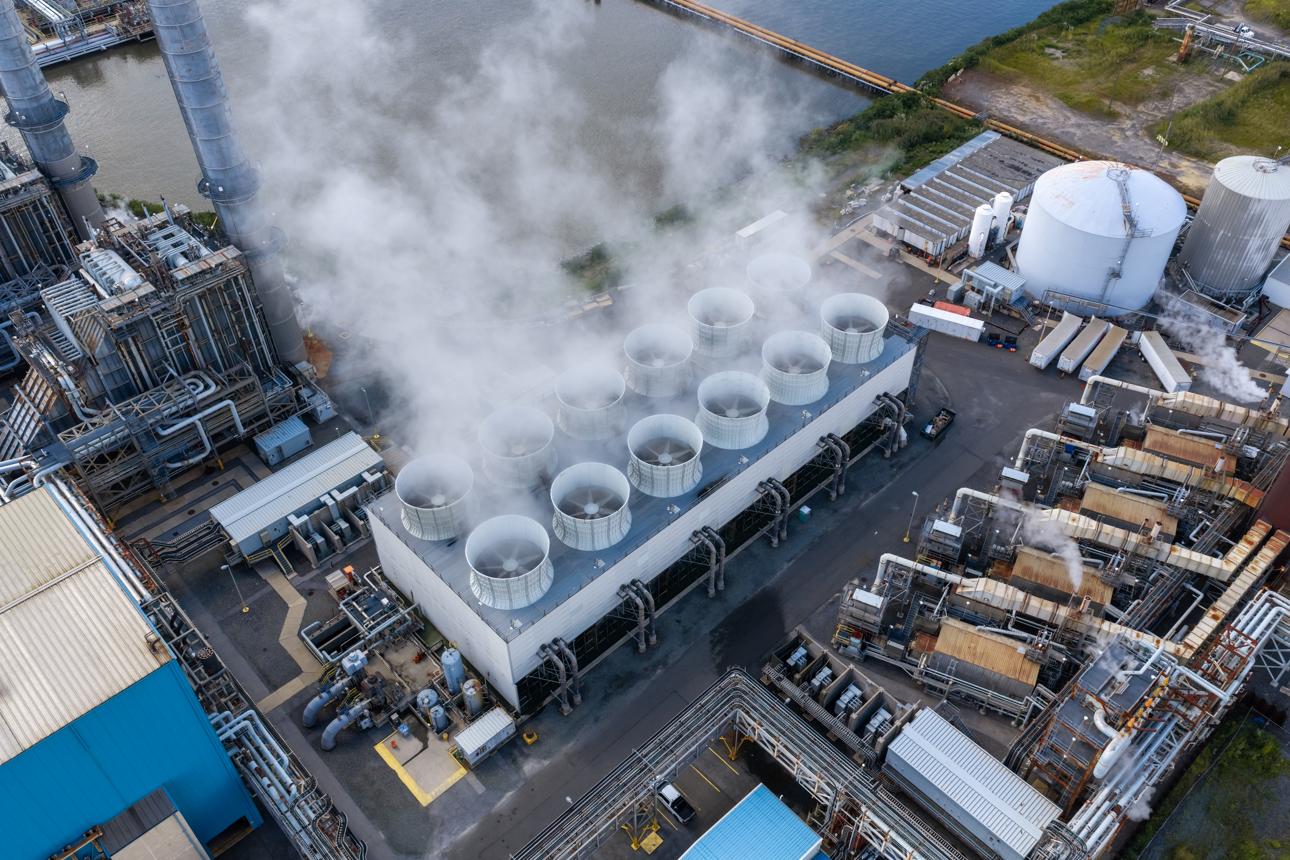
Water is one of the most important resources in an industrial cooling system. Whether a facility operates a power plant, chemical factory, steel mill, food processing line, or HVAC system, its cooling tower needs water to remove unwanted heat.
However, not all the water circulating through a cooling tower returns to the system. Some of it evaporates into the atmosphere during the cooling process. This is known as evaporation loss in a cooling tower.
Is evaporation loss a problem? Not necessarily. In fact, evaporation is the main mechanism that allows many cooling towers to reject heat efficiently. The real challenge is understanding how much water evaporates, how operating conditions affect the evaporation rate, and how to manage total water consumption.
For plant managers and engineers, accurate evaporation loss calculations help estimate makeup water requirements, control operating costs, and improve system efficiency.
In this guide, we will explain the cooling tower evaporation loss formula, walk through practical calculation examples, discuss the factors that influence evaporation, and share methods for managing water consumption.
If you are planning a new cooling system or upgrading an existing one, understanding these principles can help you make better equipment decisions.
Evaporation loss is the amount of circulating water that changes from liquid into water vapor and leaves the cooling tower with the exhaust air.
In a typical open-circuit cooling tower, hot water enters the distribution system and flows over the fill material. Air moves through the tower and comes into contact with the water.
A small portion of the water evaporates. This phase change absorbs heat from the remaining water, lowering its temperature before it returns to the industrial process.
Unlike water lost through leakage or excessive drift, evaporation is an essential part of normal cooling tower operation.
Think about how your skin feels cooler after water evaporates from it. A cooling tower uses a similar principle, but on a much larger industrial scale.
When water evaporates, it absorbs latent heat. The resulting water vapor moves out of the tower with the warm, moist exhaust air.
The remaining liquid water loses heat and becomes cooler.
The fill material helps this process by spreading water into thin films or droplets. A larger effective contact area between air and water generally improves heat and mass transfer.
Without evaporation, an evaporative cooling tower would lose much of its cooling capability.
The evaporation process helps the tower:
Remove heat from circulating water.
Support the required cooling range.
Maintain process temperatures.
Improve heat rejection performance.
Reduce the temperature of water returning to the equipment.
Therefore, the goal is not to eliminate evaporation. Doing so would undermine the operating principle of an evaporative cooling tower.
The practical goal is to achieve the required cooling performance while avoiding unnecessary water losses elsewhere in the system.
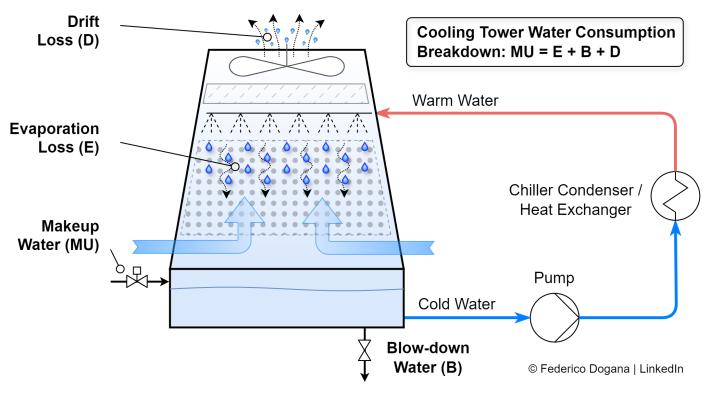
Before calculating water consumption, it is important to understand that cooling tower water loss has several different components.
Evaporation, drift, and blowdown are not interchangeable terms.
| Type of Water Loss | Meaning | Main Cause |
|---|---|---|
| Evaporation Loss | Liquid water changes into vapor | Heat and mass transfer |
| Drift Loss | Small liquid droplets leave with exhaust air | Water droplets carried by airflow |
| Blowdown Loss | Water is intentionally discharged | Control of dissolved solids |
| Leakage Loss | Water escapes through damaged components or connections | Equipment damage or poor sealing |
Evaporation is necessary for cooling. Drift and leakage should generally be minimized. Blowdown, meanwhile, must be controlled according to water quality and the required cycles of concentration.
This distinction matters because a calculation that combines all three losses may produce an inaccurate evaporation estimate.
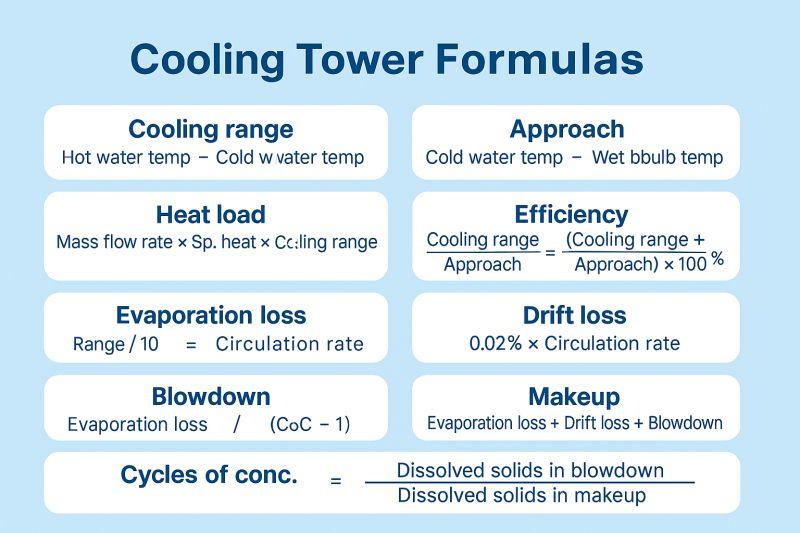
A commonly used engineering estimate for evaporation loss is based on circulating water flow and cooling range.
For metric calculations, a practical approximate formula is:
E = 0.00153 × Q × ΔT
Where:
E = Estimated evaporation loss in cubic meters per hour (m³/h).
Q = Circulating water flow rate in cubic meters per hour (m³/h).
ΔT = Cooling range in degrees Celsius (°C).
The cooling range is the difference between the hot water temperature entering the cooling tower and the cold water temperature leaving it.
Cooling Range = Hot Water Temperature − Cold Water Temperature
For example, if hot water enters at 37°C and leaves at 32°C, the cooling range is 5°C.
This formula is an empirical estimate. It is useful for preliminary engineering calculations, but actual evaporation depends on atmospheric conditions, water temperature, airflow, tower design, and operating load.
Let's look at a simple example.
Assume a cooling tower has:
Circulating water flow: 500 m³/h.
Hot water temperature: 37°C.
Cold water temperature: 32°C.
Cooling range: 5°C.
Using the formula:
E = 0.00153 × 500 × 5
E = 3.825 m³/h
The estimated evaporation loss is approximately 3.83 cubic meters per hour.
This means that around 3.83 m³ of water evaporates every hour under the assumed operating conditions.
For facilities using US customary units, a commonly used estimate is:
E = 0.00085 × Q × ΔT
Where:
E = Evaporation loss in US gallons per minute (gpm).
Q = Circulating water flow in US gallons per minute (gpm).
ΔT = Cooling range in degrees Fahrenheit (°F).
For example, if circulating water flow is 1,000 gpm and the cooling range is 10°F:
E = 0.00085 × 1,000 × 10
E = 8.5 gpm
The estimated evaporation loss is 8.5 gallons per minute.
Each variable plays an important role.
Circulating Water Flow Rate
A higher water flow rate generally means more water passes through the cooling tower and more heat may need to be removed. Under comparable operating conditions, evaporation loss increases with water flow.
Cooling Range
A larger cooling range means the tower removes more heat from each unit of circulating water. As the cooling range increases, the estimated evaporation loss also increases.
Operating Conditions
The formula uses a simplified relationship. It does not fully describe the effects of humidity, wet-bulb temperature, airflow, water distribution, or tower configuration.
For detailed design work, manufacturers and engineers may use thermal performance calculations and psychrometric analysis rather than relying on one empirical coefficient.
Now let's put the formula into a practical industrial example.
Imagine a manufacturing plant operates a cooling tower with a circulating water flow rate of 800 m³/h. Hot water enters the tower at 40°C and cooled water returns at 34°C.
We can calculate the approximate evaporation loss in three steps.
Cooling Range = Hot Water Temperature − Cold Water Temperature
Cooling Range = 40 − 34
Cooling Range = 6°C
E = 0.00153 × Q × ΔT
E = 0.00153 × 800 × 6
E = 7.344 m³/h
The estimated evaporation loss is approximately 7.34 m³/h.
If the cooling tower operates continuously for 24 hours:
Daily Evaporation Loss = 7.344 × 24
Daily Evaporation Loss = 176.256 m³/day
The estimated daily evaporation loss is approximately 176.26 cubic meters.
This example shows why evaporation needs to be included in water supply planning. Even a single industrial cooling tower can evaporate a significant volume of water every day.
If the plant operates for 300 days per year:
Annual Evaporation Loss = 176.256 × 300
Annual Evaporation Loss = 52,876.8 m³/year
This is an estimate based on constant flow, cooling range, and operating hours. Actual annual consumption will change with seasonal weather, production schedules, load variations, and maintenance shutdowns.
For a more reliable annual forecast, calculate evaporation separately for different operating seasons or load conditions.
Why do two cooling towers with similar capacities sometimes have different water consumption?
The answer lies in their operating environments and equipment configurations. Several factors influence evaporation loss.
Cooling range is one of the most important variables in the basic evaporation formula.
A cooling tower operating with a larger temperature difference generally needs to reject more heat from each unit of circulating water. This normally increases evaporation.
For example, under otherwise comparable conditions, a tower operating with a 7°C cooling range will have a higher estimated evaporation rate than one operating with a 4°C range.
However, a higher evaporation rate does not automatically mean poor efficiency. The tower may simply be handling a larger heat load.
Water flow directly affects the quantity of water passing through the cooling tower.
When a system handles a larger circulating flow, the total heat transfer requirement may also increase. This can lead to greater evaporation.
However, increasing water flow without considering the fill design, spray system, fan capacity, and hydraulic resistance may not improve overall performance.
The system needs a balanced design rather than simply a larger pump or higher flow rate.
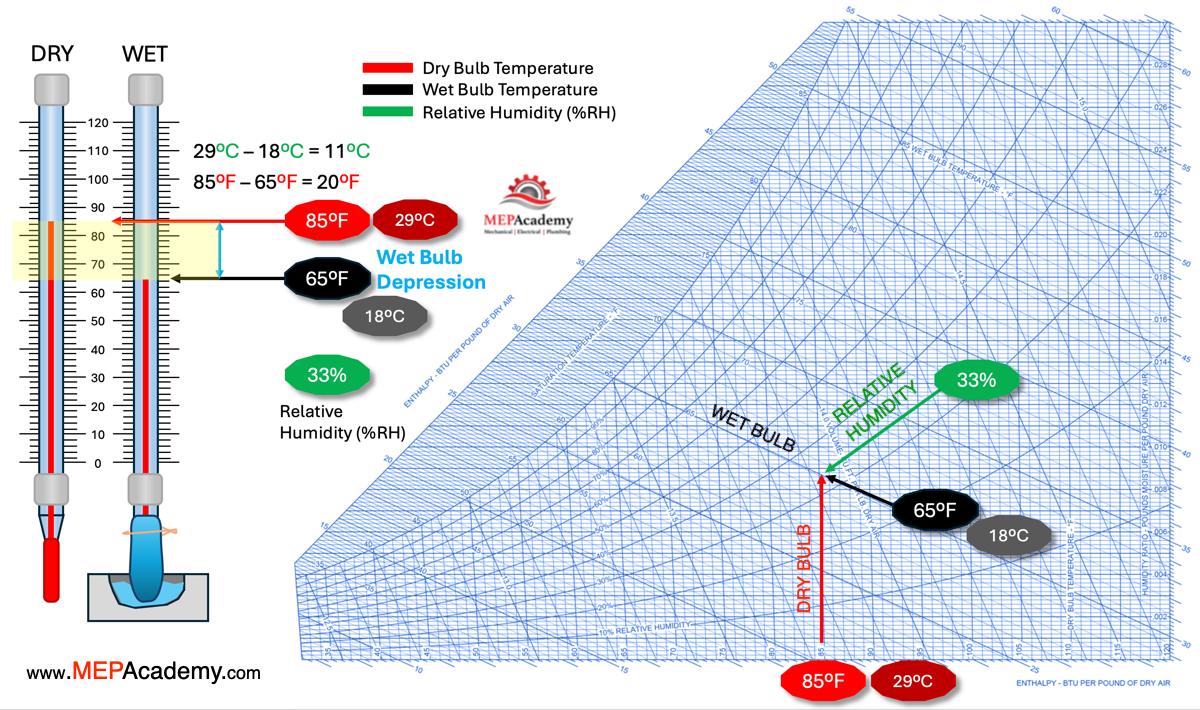
The wet-bulb temperature describes the cooling potential of the surrounding air in an evaporative cooling process.
A lower wet-bulb temperature generally provides more favorable conditions for cooling tower performance. Relative humidity also influences the difference between the moisture content of incoming air and the air leaving the tower.
In hot and humid climates, the air may have less capacity to accept additional moisture than in dry conditions.
As a result, the actual evaporation and cooling performance depend on the combination of air temperature, humidity, and operating conditions.
A cooling tower rarely operates at exactly the same load throughout the year.
Production demand, outdoor temperature, process heat generation, and seasonal operating schedules all affect the heat load.
When a facility operates at a higher heat load, the tower may need to remove more heat. Evaporation can increase accordingly.
At partial load, water consumption may decrease, although the relationship is not always perfectly linear.
Engineers should therefore evaluate actual operating profiles instead of assuming the tower runs at full design capacity all year.
Cooling tower structure and airflow distribution affect heat and mass transfer.
Important design elements include:
Fill type and effective surface area.
Air inlet and outlet configuration.
Fan diameter and blade design.
Water distribution system.
Drift eliminator configuration.
Airflow resistance and fan operating point.
A well-designed cooling tower distributes air and water evenly, allowing the available heat transfer area to work effectively.
Poor airflow distribution, clogged fill, or blocked air inlets can reduce thermal performance and lead to inefficient operation.
It is worth remembering that improving thermal performance does not necessarily reduce the evaporation required to reject a fixed heat load. Better design helps the system achieve its cooling duty more effectively; water savings must be evaluated separately.
Can a facility reduce water consumption without sacrificing cooling performance?
Yes. The key is to distinguish necessary evaporation from avoidable losses and manage the entire cooling water system.
A cooling tower needs uniform water distribution across its fill area.
If some areas receive too much water while others remain dry, the tower may not use its available heat transfer surface effectively.
Regularly inspect:
Spray nozzles and water distribution pipes.
Fill blocks and support structures.
Water inlet and outlet conditions.
Fan operation and airflow distribution.
Clean or replace damaged components when necessary.
Proper maintenance helps maintain the tower's designed performance and prevents unnecessary operating problems.
Drift is liquid water carried out of the tower as small droplets.
Although drift is different from evaporation, excessive drift can increase total water consumption and carry dissolved minerals into the surrounding environment.
Drift eliminators are designed to capture these droplets and return them to the cooling tower.
Inspect them for cracks, missing sections, deformation, blockage, and incorrect installation. Replace damaged units with compatible components.
A properly maintained drift eliminator can reduce avoidable liquid water loss.
As water evaporates, most dissolved minerals remain in the circulating water. Their concentration gradually increases.
If dissolved solids become too concentrated, scaling, corrosion, and biological growth may become more likely.
Cooling tower operators use blowdown to remove a portion of concentrated circulating water and replace it with fresh makeup water.
The cycles of concentration (COC) can be used to estimate blowdown requirements.
For a simplified system with negligible drift and leakage:
Blowdown ≈ Evaporation Loss ÷ (COC − 1)
For example, if evaporation is 10 m³/h and the system operates at 5 cycles of concentration:
Blowdown ≈ 10 ÷ (5 − 1)
Blowdown ≈ 2.5 m³/h
This is a simplified estimate. Actual blowdown requirements depend on water chemistry, treatment limits, drift, leakage, and operating conditions.
Water treatment specialists should determine suitable operating limits for each system.
An undersized cooling tower may struggle to meet the required process cooling duty, particularly during hot weather or peak production.
An oversized tower may also create unnecessary capital costs and operating complexity if it is poorly controlled.
The right selection should consider:
Required heat rejection capacity.
Hot and cold water temperatures.
Design wet-bulb temperature.
Circulating water flow.
Seasonal operating conditions.
Site installation limitations.
Maintenance and water treatment requirements.
Correct equipment selection helps the plant achieve stable cooling performance without unnecessary energy or water consumption.
Cooling tower configuration also matters when evaluating water consumption.
In an open-circuit cooling tower, process water comes into direct contact with the air.
Hot water is distributed over the fill, where evaporation and sensible heat transfer cool the water before it returns to the process.
Because the circulating water is directly exposed to the atmosphere, water treatment and water quality management are important.
Open-circuit systems are widely used in industrial plants because they can provide effective heat rejection with a relatively straightforward design.
In a closed-circuit cooling tower, the process fluid flows inside a heat exchange coil rather than directly contacting the outside air.
A separate spray water circuit typically wets the outside of the coil while air moves through the tower. Evaporation in this external spray circuit helps remove heat from the process fluid.
This arrangement keeps the process fluid separated from the external cooling water and can help reduce contamination risks in the process loop.
However, a closed-circuit evaporative cooling tower can still experience evaporation loss in its spray water circuit. It should not be described as a zero-evaporation system.
There is no universal answer.
Water consumption depends on heat load, design conditions, operating strategy, water treatment, equipment configuration, and whether the closed-circuit system operates in evaporative or dry mode.
For an accurate comparison, evaluate both systems under the same heat rejection duty and ambient design conditions.
Even experienced operators can make mistakes when estimating cooling tower water consumption.
Here are several issues worth avoiding.
Mistake 1: Confusing Evaporation with Total Water Loss
Evaporation is only one part of the water balance. Drift, blowdown, leakage, and other losses must be considered separately.
Mistake 2: Using the Wrong Temperature Difference
The cooling range is the difference between hot water entering and cold water leaving the cooling tower. It is not the same as the approach, which is the difference between cold water temperature and entering-air wet-bulb temperature.
Mistake 3: Mixing Units
Do not combine flow rates in m³/h with temperature differences in °F while using a metric coefficient. Always check the units before calculating.
Mistake 4: Assuming Constant Operation
A tower may operate at different loads throughout the day and across seasons. A single design-point calculation may not accurately represent annual consumption.
Mistake 5: Treating an Estimate as a Guaranteed Value
The empirical formula is useful for preliminary planning. Detailed design and operational assessments may require water balance measurements and more advanced thermal calculations.
Water loss has a direct impact on industrial operating expenses.
Every cubic meter of makeup water has an associated cost. Depending on the facility, this may include water purchase, pumping, pretreatment, chemical treatment, wastewater handling, and discharge fees.
For example, if a plant uses 100 m³ of makeup water per day and the combined water supply and treatment cost is $1.50 per cubic meter:
Daily Water Cost = 100 × $1.50
Daily Water Cost = $150
For 300 operating days, the annual cost would be $45,000.
This example represents the cost of total makeup water, not evaporation alone. It illustrates why operators should monitor the complete cooling tower water balance.
A practical monitoring program should record makeup water, blowdown, circulating flow, hot and cold water temperatures, and operating hours.
When these measurements are reviewed together, unusual changes in water consumption become easier to identify.
Choosing the right cooling tower is an important step in managing industrial heat rejection and water consumption.
Mach Industry (Zhejiang) Co.,Ltd, operating under the Mach Cooling name, provides industrial cooling tower solutions for different applications and operating requirements.
Website: https://www.machcooling.com
When evaluating a cooling tower project, Mach Cooling can be considered as a manufacturing partner for discussing equipment configuration and project requirements.
Important design considerations include:
Required heat rejection capacity.
Circulating water flow rate.
Hot and cold water temperatures.
Local design wet-bulb temperature.
Open-circuit or closed-circuit configuration.
Airflow and fan system requirements.
Fill material and water distribution design.
Site conditions and maintenance access.
These factors influence thermal performance and the operating conditions under which evaporation occurs.
For example, selecting suitable fill and water distribution components helps create effective contact between air and water. Proper fan and airflow design supports the required heat transfer performance.
However, it is important to understand that a cooling tower cannot eliminate the evaporation required by its heat rejection duty. The objective is to provide reliable cooling performance while controlling avoidable water losses and operating costs.
If you are planning a new industrial cooling tower or considering equipment replacement, contact Mach Cooling through its official website to discuss your application and technical requirements.
There is no single evaporation loss value that applies to every cooling tower.
A preliminary estimate can be calculated using circulating water flow and cooling range. For metric units, a commonly used estimate is:
E = 0.00153 × Q × ΔT
Actual evaporation depends on the heat load, atmospheric conditions, tower design, and operating conditions.
First, calculate the cooling range by subtracting cold water temperature from hot water temperature.
Then multiply circulating water flow by the cooling range and the metric coefficient:
E (m³/h) = 0.00153 × Q (m³/h) × ΔT (°C)
The result is an approximate evaporation rate in cubic meters per hour.
Generally, yes.
Under comparable operating conditions, a larger cooling range means more heat is removed from each unit of circulating water. The estimated evaporation loss therefore increases.
Yes, if it operates as an evaporative closed-circuit cooling tower.
The process fluid stays inside the heat exchange coil, but spray water outside the coil evaporates to remove heat.
A dry cooling mode, where available and suitable, operates differently and may avoid evaporative spray water consumption during that mode.
Not in a conventional evaporative cooling tower while it performs its normal heat rejection function.
Evaporation is an essential part of the cooling process. Operators should focus on reducing drift, unnecessary blowdown, leakage, and other avoidable losses.
Evaporation loss is the water that leaves the system as vapor.
Makeup water is the fresh water added to replace all water losses and maintain the required operating level.
Makeup water therefore usually covers evaporation, drift, blowdown, leakage, and other losses.
Evaporation loss is a normal and necessary part of cooling tower operation. It allows the tower to remove heat through the evaporation of a portion of the circulating water.
Understanding the cooling tower evaporation loss formula helps engineers estimate water consumption, plan makeup water supply, and evaluate operating costs.
For preliminary calculations, the metric formula is:
E = 0.00153 × Q × ΔT
However, the actual evaporation rate depends on more than circulating flow and cooling range. Wet-bulb temperature, humidity, cooling load, airflow, and equipment design also play important roles.
If you want to improve cooling tower water management, start by measuring actual operating conditions and separating evaporation from drift, blowdown, and leakage.
For industrial projects, selecting a suitable cooling tower configuration and maintaining its fill, fan, and water distribution systems can help support reliable thermal performance.
Mach Industry (Zhejiang) Co.,Ltd provides industrial cooling tower solutions for different applications. Visit https://www.machcooling.com to learn more about Mach Cooling and discuss your cooling tower project requirements.