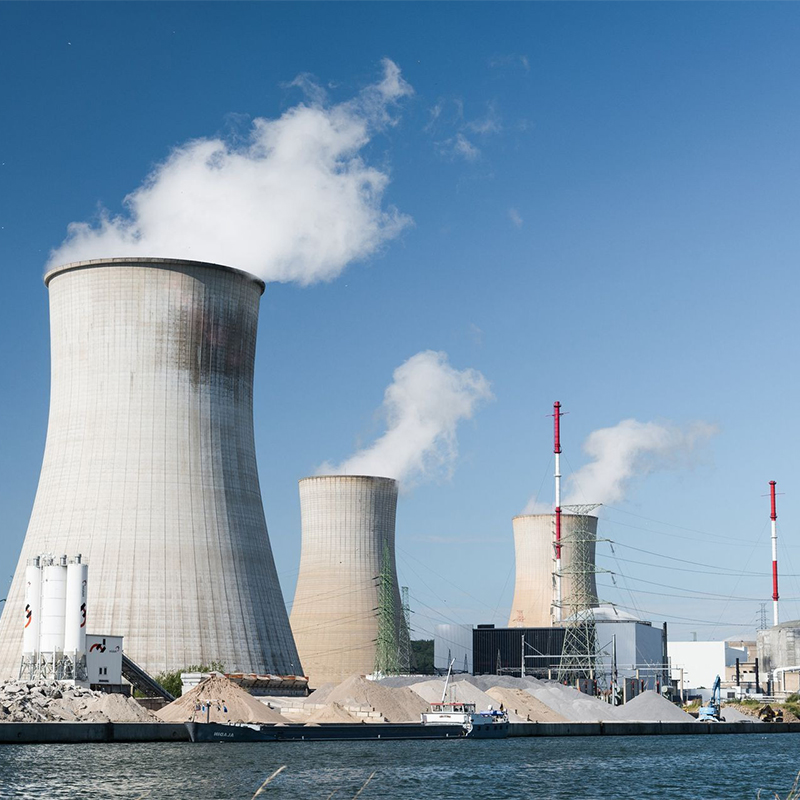
We Provide Cooling Tower Solution

Views: 0 Author: Cindy Publish Time: 2026-11-26 Origin: Site


Large industrial cooling towers play an essential role in factories, power plants, petrochemical facilities, steel mills, chemical plants, and other industrial operations. They remove excess heat from circulating water and help production equipment maintain stable operating temperatures.
However, operating a large cooling tower is not cheap. Fans, motors, pumps, water distribution systems, and other components consume electricity continuously. As energy prices rise and environmental requirements become stricter, many industrial companies are looking for ways to reduce cooling tower operating costs without sacrificing cooling performance.
This is where an energy-saving transformation becomes valuable.
Rather than replacing an entire cooling tower, a well-planned upgrade can improve the performance of existing equipment. For example, replacing inefficient fan blades, installing variable frequency drives (VFDs), optimizing water distribution, and upgrading aging fill can help reduce unnecessary energy consumption.
But where should you start? And which improvements offer the best return?
In this guide, we will explore the major technologies, assessment methods, implementation steps, and investment considerations involved in the energy-saving transformation of large industrial cooling towers.
As an industrial cooling tower manufacturer, Mach Industry (Zhejiang) Co., Ltd. (Mach Cooling) provides industrial cooling tower solutions and engineering support for customers evaluating equipment upgrades and customized cooling systems.
Website: https://www.machcooling.com
Before investing in an upgrade, you need to understand why your cooling tower consumes more electricity than expected. In many facilities, excessive energy use comes from several problems working together.
The fan system is one of the main electricity consumers in a mechanical-draft cooling tower.
Older cooling towers may use fan blades with outdated aerodynamic designs. Incorrect blade angles, damaged blades, poor balancing, and unsuitable fan diameters can reduce airflow efficiency.
When airflow is insufficient, operators may increase fan speed or run additional equipment to maintain the required cold-water temperature. This increases electricity consumption.
A more efficient fan system can move the required air volume with less power, provided that the fan is correctly selected for the tower's operating conditions.
Water distribution is just as important as airflow.
If spray nozzles become blocked or the distribution system is poorly designed, water may not spread evenly across the fill. Some areas receive too much water, while others remain relatively dry.
This reduces the effective heat-transfer area and can create uneven cooling performance.
Operators may respond by increasing fan speed or water circulation, but these actions can add energy costs without solving the underlying problem.
Cooling tower fill provides a large surface area for heat exchange between water and air.
Over time, fill can become clogged by dirt, scale, biological growth, or suspended solids. It may also deform, crack, or lose its original structure.
Blocked fill increases airflow resistance and reduces heat-transfer performance. The fan may need to work harder to maintain the required cooling conditions.
Replacing damaged or unsuitable fill can restore heat-transfer performance and reduce unnecessary operating demands.
Pumps circulate water between the cooling tower and industrial equipment.
A pump that operates at an unnecessarily high flow rate or pressure may consume more electricity than required. Other common problems include oversized pumps, throttled discharge valves, worn impellers, and poorly designed piping systems.
A cooling tower energy-saving project should therefore examine the entire circulation system, not just the tower fan.
A successful transformation starts with accurate measurements. Without a clear baseline, it is difficult to determine whether an upgrade has actually improved efficiency.
Record the operating power of each fan motor under normal production conditions.
Important information includes:
Motor rated power and actual operating power
Operating hours per day and per year
Fan speed and control method
Motor efficiency and service condition
Fan vibration and mechanical condition
Do not assume that a motor operating below its rated power is automatically efficient. The important question is whether it delivers the required airflow at the lowest practical energy consumption.
Measure the circulating-water flow rate and pump operating pressure.
Compare actual operating conditions with the system's cooling requirements. Excessive flow or unnecessarily high pump head may indicate an opportunity for optimization.
Where possible, review pump curves and system resistance to identify whether the existing pump is correctly matched to the application.
Electricity consumption alone cannot tell you whether a cooling tower is performing well. You also need to evaluate its thermal performance.
Three important indicators are:
Cooling range
Cooling range is the difference between hot-water temperature and cold-water temperature.
Range = Hot Water Temperature − Cold Water Temperature
Approach
Approach is the difference between cold-water temperature and the entering-air wet-bulb temperature.
Approach = Cold Water Temperature − Wet Bulb Temperature
Cooling capacity
A practical estimate of heat rejection for water is:
Q (kW) ≈ 1.163 × Flow Rate (m³/h) × Temperature Difference (°C)
This equation estimates the heat removed from the water based on flow rate and temperature difference. It does not replace a complete thermal performance evaluation.
For meaningful before-and-after comparisons, record wet-bulb temperature, hot-water temperature, cold-water temperature, water flow, fan power, and pump power. Comparisons should account for changes in weather and production load.
Once the energy audit identifies the main problems, you can select the appropriate upgrades. The best solution depends on the tower design, operating conditions, equipment age, water quality, and required cooling capacity.
Upgrading the fan is often an important part of a large cooling tower renovation.
Modern axial-flow cooling tower fans can be designed with improved blade profiles and aerodynamic characteristics. Depending on the original equipment, a replacement may improve airflow distribution and reduce the power required to achieve the target airflow.
When selecting a replacement fan, consider:
Fan diameter and available installation space
Required airflow and static pressure
Blade material and structural strength
Operating speed and motor power
Hub design and connection dimensions
Noise and vibration requirements
Compatibility with the existing fan cylinder
The blade angle affects airflow, pressure, and power consumption.
An unsuitable angle may result in insufficient airflow or excessive motor load. Adjusting the angle can improve operating conditions, but it must be based on fan design data and actual measurements.
Never increase or decrease the blade angle simply by trial and error. Incorrect adjustment can overload the motor, increase vibration, or damage the fan system.
A variable frequency drive controls motor speed by adjusting the frequency of the electrical supply.
Traditional cooling towers may operate fans at a constant speed even when the cooling load changes. This can waste electricity during periods of lower heat rejection demand.
With VFD control, fan speed can respond to cold-water temperature or another suitable operating signal.
For a fan operating under comparable system conditions, the affinity laws provide a useful theoretical relationship:
Airflow is approximately proportional to fan speed.
Pressure is approximately proportional to fan speed squared.
Fan power is approximately proportional to fan speed cubed.
This relationship explains why reducing fan speed can significantly reduce fan power. However, actual savings depend on system resistance, fan efficiency, control settings, and the required cooling performance.
A properly configured VFD system can help a cooling tower adapt to changing loads instead of running continuously at full speed.

Cooling tower fill has a direct influence on heat-transfer performance.
If the existing fill is blocked, damaged, or unsuitable for the water quality, replacing it may improve heat exchange and reduce airflow resistance.
Common fill options include:
PVC film fill: Widely used for applications with suitable water quality and operating temperatures.
PP fill: Often selected where higher temperature resistance or particular chemical compatibility is required.
Splash fill: Suitable for applications where water quality or suspended solids make film fill less practical.
The correct choice depends on water temperature, water chemistry, suspended solids, biological control, and tower configuration.
Before replacing fill, inspect the support structure, water distribution system, and drift eliminators. Installing new fill without correcting the original cause of clogging may only create another maintenance problem.
A well-designed water distribution system spreads hot water evenly across the fill.
During an energy-saving transformation, inspect the distribution pipes, spray nozzles, basins, and water pressure.
Potential improvements include:
Cleaning or replacing blocked nozzles
Repairing damaged distribution pipes
Correcting uneven water distribution
Selecting suitable spray patterns
Adjusting operating pressure to the design requirement
Better distribution can improve the use of the available fill surface and support stable thermal performance.
Older motors and gearboxes may have lower efficiency or deteriorated mechanical performance.
Replacing an outdated motor with a properly selected high-efficiency model may reduce electrical losses. For geared fan systems, inspecting the gearbox, bearings, lubrication, and alignment is equally important.
A motor upgrade should consider rated output, operating load, starting method, protection class, ambient conditions, and compatibility with the fan.
For gearboxes, check the required speed ratio, torque capacity, service factor, lubrication method, and mounting dimensions.
The goal is not simply to install a larger or newer motor. It is to match the drive system to the actual cooling tower duty.
Pump optimization can provide additional savings, especially in facilities with multiple pumps or long operating hours.
Possible measures include:
Selecting pumps closer to their best-efficiency operating point
Reducing unnecessary throttling
Reviewing pipe diameter and system resistance
Repairing worn impellers and internal components
Using VFDs where variable flow is appropriate
Coordinating pump operation with production demand
Any pump adjustment must preserve the minimum water flow required by the cooling tower and connected process equipment.

Mechanical upgrades improve equipment efficiency, but intelligent control helps maintain that efficiency as operating conditions change.
A temperature-based control system adjusts fan speed according to the cooling-water temperature.
For example, when the cold-water temperature is below the target, the control system may reduce fan speed. When the temperature rises, fan speed can increase to provide additional cooling.
The control target should account for production requirements, wet-bulb temperature, equipment limitations, and safe operating ranges.
Modern monitoring systems can collect information from temperature sensors, flow meters, pressure sensors, vibration monitors, and electrical meters.
Operators can use this information to identify abnormal conditions, such as:
Unexpected increases in motor power
Rising cold-water temperatures
Unusual fan vibration
Reduced water flow
Abnormal pump pressure
A useful monitoring system should provide reliable measurements and clear alarms rather than simply collecting large amounts of data.
Predictive maintenance uses operating data to identify potential equipment problems before they cause serious failures.
For example, increasing fan vibration may indicate blade imbalance, bearing deterioration, or alignment problems. A gradual increase in motor current may suggest a change in mechanical load or operating conditions.
Early maintenance can prevent unplanned downtime and help keep equipment operating near its intended performance.
Energy-saving transformation should not focus only on electricity. Large cooling towers also consume water through evaporation, drift, and blowdown.
Drift eliminators reduce the amount of water droplets carried out of the tower with the exhaust air.
Damaged or poorly installed eliminators can increase water loss and may contribute to surrounding equipment corrosion or environmental concerns.
Inspect their condition, installation direction, and sealing arrangements during renovation.
Cooling tower water treatment controls scale, corrosion, and biological growth.
Blowdown removes concentrated dissolved solids from the circulating water. Excessive blowdown wastes water, while insufficient blowdown may increase scaling and fouling risks.
A suitable water treatment program can help maintain water quality and extend the service life of fill, pipes, and other components.
Where local regulations and water quality permit, facilities may evaluate treated wastewater or other alternative water sources for cooling tower makeup.
This requires careful assessment of dissolved solids, suspended solids, biological content, corrosion potential, and treatment costs.
Water reuse should be designed around the cooling tower's material and water-treatment requirements.
A structured project helps avoid unnecessary spending and reduces operational risks.
Collect equipment specifications, operating records, electricity data, water flow measurements, and thermal performance information.
Inspect fans, motors, gearboxes, pumps, fill, nozzles, and control systems.
Determine which components are responsible for excessive energy consumption.
A tower with an inefficient fan may need a different solution from one with blocked fill or an oversized circulation pump.
Prioritize improvements based on energy impact, equipment condition, reliability, and investment cost.
Prepare a technical proposal that specifies the required equipment, design conditions, installation dimensions, expected operating changes, and project schedule.
For a large industrial cooling tower, compatibility is critical. A new fan, motor, or fill system must work with the existing tower structure and operating conditions.
Carry out installation according to an approved engineering plan.
Depending on the project, work may include fan replacement, motor upgrades, VFD installation, fill replacement, water distribution improvements, pump optimization, and instrumentation upgrades.
Follow appropriate lockout, electrical isolation, lifting, and work-at-height procedures.
After installation, inspect mechanical alignment, electrical protection, vibration, water distribution, and control operation.
Test the cooling tower under representative operating conditions and confirm that the equipment meets the agreed requirements.
Compare energy use and cooling performance using equivalent operating conditions wherever possible.
Record total fan and pump electricity consumption, cooling-water temperatures, flow rate, wet-bulb temperature, and production load.
A fair comparison should not attribute weather-related or production-related changes to the retrofit itself.
An energy-saving project should be evaluated as a long-term investment.
The initial cost may include equipment, engineering, installation, electrical work, commissioning, and production downtime. Operating savings may come from lower electricity consumption, reduced maintenance, improved reliability, or lower water losses.
A simple payback calculation is:
Simple Payback Period = Total Retrofit Investment ÷ Annual Net Savings
For example, assume a facility invests $100,000 in a cooling tower upgrade and achieves verified annual net savings of $25,000.
The simple payback period would be:
$100,000 ÷ $25,000 = 4 years
This is an illustrative example, not a guaranteed result. Actual savings must be calculated using measured operating data, local electricity prices, maintenance costs, and project-specific investment figures.
A more complete financial evaluation may also consider equipment life, financing costs, electricity price changes, downtime risks, and the time value of money.
Even a well-funded project can deliver disappointing results if the upgrade is poorly planned.
A lower motor rating does not automatically mean lower energy consumption.
The replacement system must still provide sufficient airflow and cooling capacity. Evaluate fan efficiency and thermal performance together.
A new fan or fill system must fit the existing tower dimensions and structural limits.
Check support strength, fan cylinder dimensions, shaft arrangements, access space, and installation conditions before ordering equipment.
The cheapest fill may not be the most economical option.
If the circulating water contains high levels of suspended solids or has a strong scaling tendency, an unsuitable fill type may clog quickly.
Always consider water quality and maintenance requirements during selection.
A cooling tower is part of a larger cooling-water system.
Reducing fan power while allowing pump energy consumption to increase may produce little overall benefit. Evaluate the combined electricity consumption of the tower and its associated equipment.
A retrofit should have measurable objectives.
Without baseline data and post-upgrade testing, it is difficult to establish whether the project achieved the intended energy savings.
Selecting the right manufacturer is an important part of a successful cooling tower transformation.
Mach Industry (Zhejiang) Co., Ltd. (Mach Cooling) focuses on industrial cooling tower manufacturing and customized cooling solutions for different industrial applications.
For facilities planning an energy-saving upgrade, the first step is to understand the existing cooling tower and its operating requirements. A suitable solution may involve component replacement, performance optimization, or a customized cooling tower system.
When evaluating a project, Mach Cooling can be considered for solutions involving:
Industrial cooling tower design and manufacturing
Customized cooling tower configurations
Cooling tower fan and component selection
Cooling tower fill and water distribution considerations
Equipment selection based on operating conditions
Cooling system performance and efficiency requirements
Every project should be evaluated according to its heat load, water flow, entering-air wet-bulb temperature, required cold-water temperature, available space, water quality, and operating schedule.
Rather than promising the same energy-saving percentage for every customer, a responsible manufacturer should base recommendations on actual project conditions and technical calculations.
To learn more about industrial cooling tower solutions, visit:
Website: https://www.machcooling.com
It is a renovation project designed to reduce electricity and water consumption while maintaining the required cooling performance. Typical upgrades include fan replacement, VFD installation, fill replacement, pump optimization, and intelligent control.
There is no universal answer. Start with an energy audit to identify the largest source of avoidable energy consumption. Depending on the equipment condition, the priority may be the fan, motor, pump, fill, or water distribution system.
It can, especially when cooling demand changes throughout the day or year. A VFD allows fan speed to respond to actual cooling requirements. The achievable savings depend on the operating profile, fan characteristics, system resistance, and control strategy.
It can improve thermal performance when the existing fill is clogged, damaged, or unsuitable. However, the result depends on the new fill design, water quality, airflow resistance, and water distribution.
The project duration depends on tower size, upgrade scope, equipment availability, installation access, and production scheduling. A component replacement may take less time than a major mechanical and electrical renovation. A project-specific schedule should be prepared before work begins.
Measure electricity consumption before and after the upgrade under comparable operating conditions. Include fan and pump power, cooling-water flow, water temperatures, wet-bulb temperature, and production load. Use these measurements to distinguish genuine equipment savings from changes in weather or process demand.
A retrofit may be suitable when the tower structure remains sound and the main problems involve replaceable components. Complete replacement may be more appropriate when the structure is severely deteriorated, the capacity is fundamentally inadequate, or the existing design cannot meet current operating requirements.
Large industrial cooling towers operate for thousands of hours each year. Even relatively small improvements in fan efficiency, pump operation, water distribution, or control strategy can become meaningful over time.
However, successful energy-saving transformation is not about replacing as many components as possible. It is about identifying the real causes of energy waste and choosing upgrades that match the cooling tower's operating conditions.
Start with an energy audit. Evaluate the fan, motor, pump, fill, water distribution, and control system. Develop a practical retrofit plan, commission the equipment carefully, and verify the results using measured data.
With the right engineering approach and suitable equipment, industrial facilities can improve cooling system efficiency, control operating costs, and support more sustainable production.
For industrial cooling tower manufacturing and customized cooling solutions, contact Mach Industry (Zhejiang) Co., Ltd. (Mach Cooling).
Website: https://www.machcooling.com