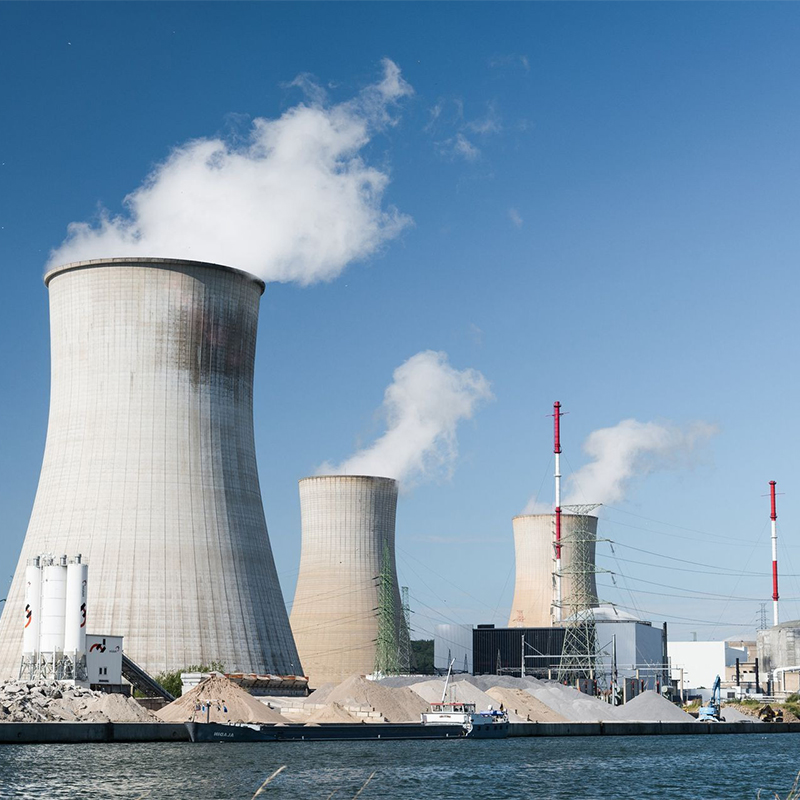
We Provide Cooling Tower Solution

Views: 0 Author: Cindy Publish Time: 2026-11-24 Origin: Site


When industrial equipment operates, heat is unavoidable. Injection molding machines, chemical processing lines, power generation systems, and large HVAC installations all produce heat that must be removed to maintain stable operating conditions. Without a reliable cooling system, excessive temperatures can affect production efficiency, equipment performance, and even the service life of critical machinery.
This is where an industrial cooling tower becomes essential.
Among the different cooling tower materials available, fiberglass reinforced plastic (FRP) has become a popular option for many industrial applications. Fiberglass cooling towers offer a combination of corrosion resistance, relatively lightweight construction, and flexible design possibilities. They can be configured for different capacities, installation environments, and process requirements.
However, not every factory has the same cooling needs. A standard cooling tower may not fit a project with limited installation space, unusual water conditions, or specific temperature requirements. In these situations, working with experienced fiberglass cooling tower manufacturers becomes especially important.
Mach Industry (Zhejiang) Co.,Ltd, operating under the Mach Cooling brand, provides industrial cooling tower solutions for customers seeking equipment suited to their project requirements.
In this guide, we will explore how fiberglass cooling towers work, their advantages, common configurations, industrial applications, and the key factors to consider when choosing a manufacturer. Whether you are planning a new cooling system or replacing an existing tower, understanding these details will help you make a more informed decision.
A fiberglass cooling tower is an industrial heat-rejection device that uses air and water to remove unwanted heat from a circulating water system. Its casing and selected structural components are manufactured using fiberglass reinforced plastic, commonly known as FRP.
FRP is a composite material made by combining reinforcing glass fibers with a resin matrix. The glass fibers provide reinforcement, while the resin binds the material together and helps protect it from environmental exposure.
This combination makes fiberglass useful for cooling tower construction. Compared with some conventional metal materials, properly specified FRP can offer good corrosion resistance and relatively low weight.
Fiberglass cooling towers are commonly used in manufacturing facilities, chemical plants, power-related applications, commercial HVAC systems, and other industrial environments where heat needs to be continuously removed.
The tower's main job is straightforward: receive warm circulating water, transfer heat from that water to the surrounding air, and return cooler water to the system.
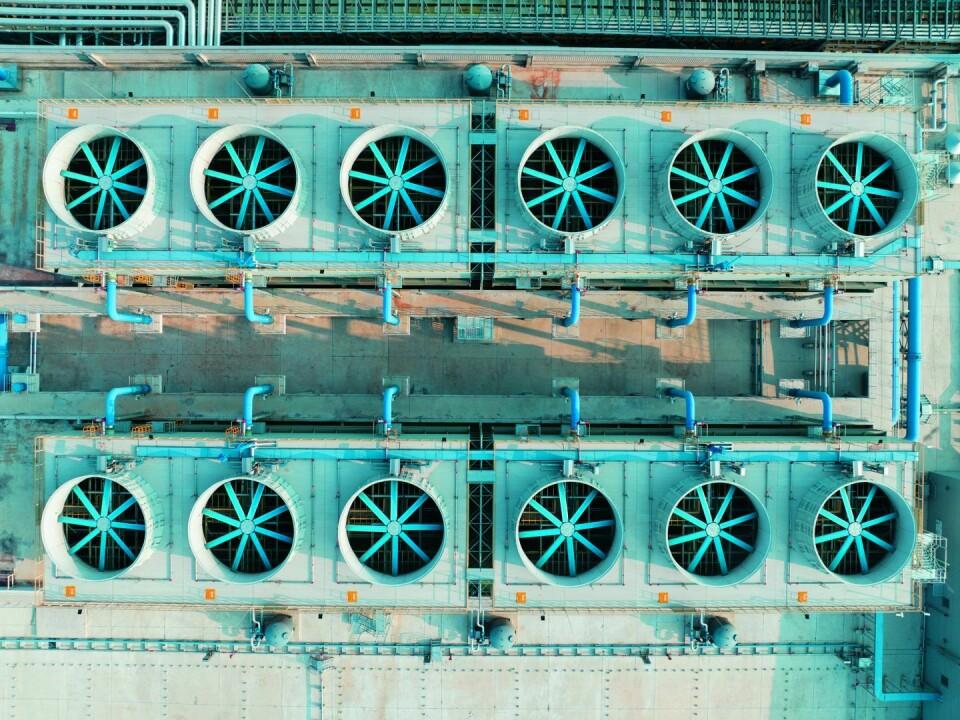
Most mechanical-draft fiberglass cooling towers use evaporative cooling.
First, warm water from the industrial process enters the tower through an inlet pipe. A water distribution system then spreads the water across the fill media. The fill increases the contact area between water and air, allowing heat transfer to take place more effectively.
At the same time, air enters the cooling tower and passes through the fill. Depending on the tower design, airflow may be produced by a fan or by natural draft.
As a small portion of the circulating water evaporates, it removes heat from the remaining water. The cooled water then flows into the collection basin at the bottom of the tower.
A pump sends this water back to the equipment or process that requires cooling.
It is important to understand that a cooling tower does not work like a refrigeration system. It does not generate cooling through a compressor and refrigerant cycle. Instead, it rejects heat into the atmosphere through the combined effects of evaporation and air movement.
The achievable outlet water temperature depends on several factors, including the entering water temperature, circulating water flow, design wet-bulb temperature, airflow, and tower configuration.
Although the exact design varies by model, most mechanical-draft FRP cooling towers contain several major components.
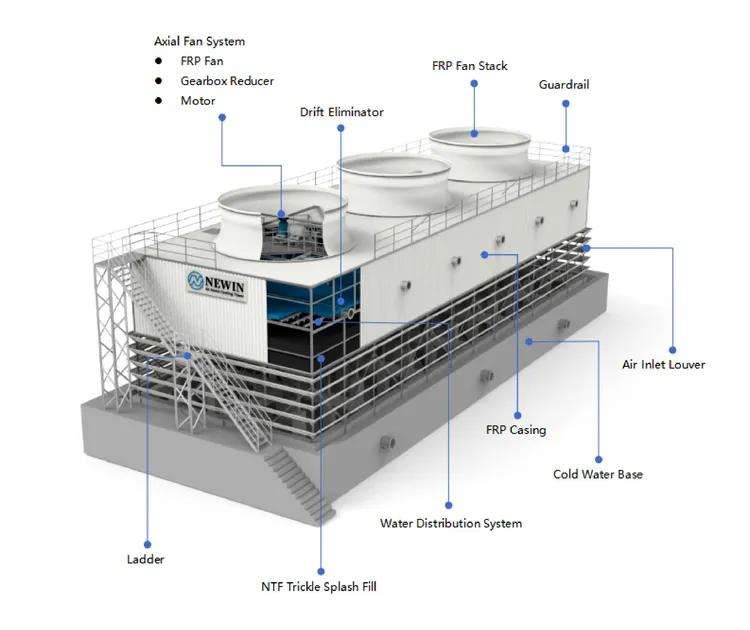
FRP casing and structure: The fiberglass casing forms the external enclosure and may support selected tower components. Its design should account for operating loads and environmental conditions.
Fill media: Fill provides a large contact surface between water and air. Its purpose is to improve heat and mass transfer inside the tower.
Water distribution system: Pipes, headers, and nozzles distribute warm water across the fill. Uniform water distribution is important for consistent cooling performance.
Fan and motor: These components move air through the tower. Their selection affects airflow, energy consumption, noise, and overall operating performance.
Drift eliminators: Drift eliminators reduce the amount of water droplets carried out of the tower with the exhaust air.
Water collection basin: The basin collects cooled water before it returns to the circulating water system.
Other components may include louvers, access platforms, ladders, support frames, gearboxes, vibration switches, and electrical control equipment.
A reliable manufacturer should consider how all these components work together instead of evaluating each part separately.
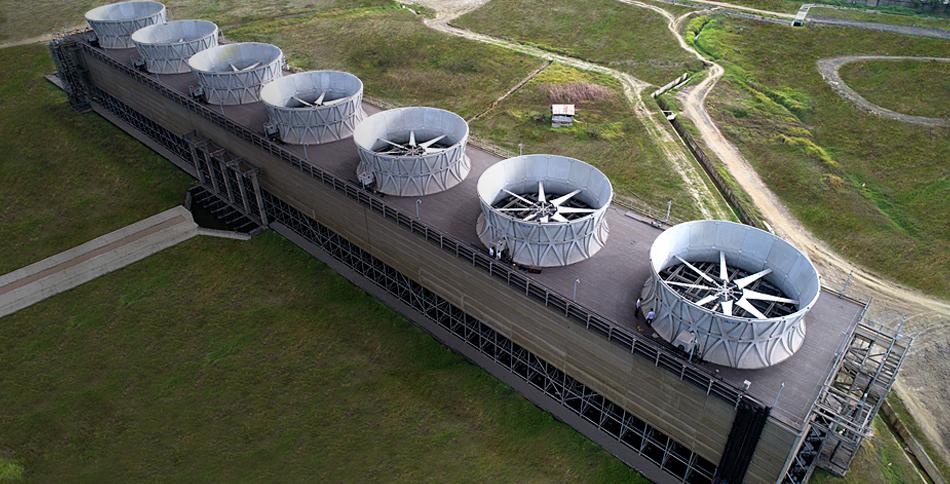
Material selection has a direct influence on the performance, maintenance requirements, and expected service life of an industrial cooling tower.
Cooling towers operate in environments with continuous moisture, changing temperatures, outdoor exposure, and sometimes aggressive industrial atmospheres. These conditions can place considerable demands on the materials used in their construction.
Fiberglass is attractive because it combines several useful properties for this type of equipment.
Corrosion is one of the major concerns in industrial cooling tower operation.
Metal structures may be exposed to moisture, treatment chemicals, airborne contaminants, and other environmental factors. Depending on the material and protective coating, these conditions can cause rust, surface deterioration, or additional maintenance requirements.
Properly selected FRP materials can resist many forms of corrosion that affect conventional metals. This makes fiberglass a practical option for certain industrial environments, particularly where moisture and corrosive exposure are important considerations.
However, fiberglass is not completely immune to every chemical or operating condition.
Different resin systems have different chemical and temperature resistance properties. If your facility operates near chemical processing equipment or uses unusual water-treatment chemicals, the material specification should be reviewed carefully.
Before placing an order, provide the manufacturer with information about the operating environment, water chemistry, and any potential chemical exposure.
Fiberglass components can be relatively lightweight compared with many conventional metal alternatives.
This can make transportation, lifting, and installation easier, particularly for packaged or modular cooling tower designs.
For projects involving rooftop installation, restricted access, or limited lifting equipment, the weight and dimensions of the tower can be important considerations.
A lightweight structure does not mean that foundation design can be ignored. The supporting structure must still account for the tower's operating weight, water load, wind pressure, vibration, and other relevant conditions.
For this reason, installation dimensions and structural requirements should be confirmed during the early design stage.
One important advantage of FRP construction is its flexibility in shaping and manufacturing components.
Industrial cooling tower projects rarely have identical requirements. Some customers need compact equipment for a small production facility, while others require larger systems with multiple cells or special installation arrangements.
A custom fiberglass cooling tower may be designed around:
Required cooling capacity
Tower dimensions and available footprint
Counterflow or crossflow configuration
Fan and motor arrangement
Fill media selection
Water distribution design
Access and maintenance requirements
Environmental and operating conditions
The exact customization options depend on the manufacturer's engineering and production capabilities.
A cooling tower is a long-term industrial asset. Its maintenance requirements should be considered before purchasing the equipment.
FRP construction may help reduce certain corrosion-related maintenance issues, but the entire cooling tower still needs regular inspection.
Fans, motors, bearings, fill media, nozzles, drift eliminators, water basins, and electrical components can all experience wear or contamination.
The best results come from combining suitable materials with correct installation, effective water treatment, routine inspection, and timely replacement of damaged components.
Fiberglass cooling towers are available in different configurations. The right design depends on the required cooling capacity, available installation area, operating environment, and maintenance preferences.
Understanding the main tower types can help you communicate more clearly with a manufacturer.
In a counterflow cooling tower, air moves upward while water flows downward through the fill.
The two streams travel in opposite directions, creating a counterflow heat-transfer arrangement.
Counterflow towers can provide a relatively compact design for certain industrial applications. Their water distribution system is generally located above the fill, allowing water to flow downward through the heat-transfer section.
When evaluating a counterflow tower, buyers should consider its thermal performance, airflow requirements, fan power, water distribution arrangement, and maintenance access.
The tower should be selected based on the required operating conditions rather than its nominal capacity alone.
In a crossflow cooling tower, air moves horizontally through the fill while water flows downward.
The airflow and water flow cross each other rather than moving directly against one another.
Depending on the design, crossflow towers can provide convenient access to certain water distribution components. This can be useful when routine inspection and maintenance are important considerations.
Crossflow designs may also be suitable for projects where the equipment layout and installation footprint favor this configuration.
However, crossflow is not automatically better than counterflow. Both designs have advantages and limitations. A manufacturer should compare them using the project's actual cooling load, operating temperatures, water conditions, and site restrictions.
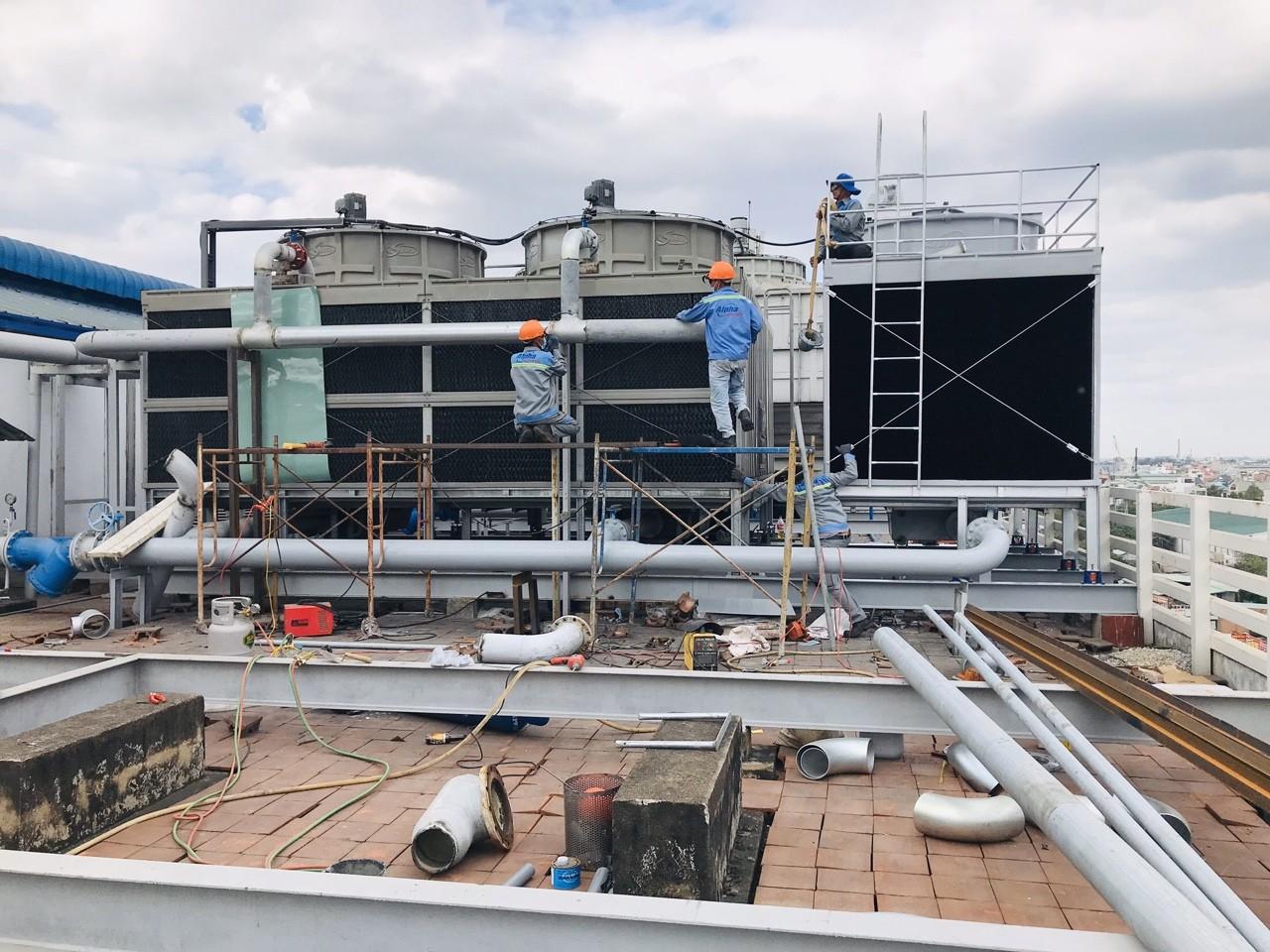
Modular cooling towers are assembled from individual sections or cells. Multiple cells can be combined to meet a larger cooling requirement.
This approach can be useful for industrial facilities that expect future expansion or need to divide cooling capacity across several units.
Packaged cooling towers are generally supplied as more complete assemblies, helping simplify transportation and site installation.
Before selecting a modular system, consider how the individual cells will operate together. Water flow, airflow, piping, electrical control, and maintenance access should all be reviewed.
A well-planned modular arrangement can make future capacity expansion easier, provided the original system design allows for it.
Different industries have different cooling requirements.
A tower serving an injection molding plant may operate under different load conditions from one used in a chemical processing facility. Similarly, HVAC systems and energy-related applications have their own temperature and operating requirements.
Custom industrial cooling towers help match equipment to the actual process.
Chemical and petrochemical facilities often use cooling water systems to remove heat from process equipment, heat exchangers, and auxiliary machinery.
Depending on the application, cooling towers may operate continuously and face challenging environmental conditions.
Material compatibility is particularly important in these facilities. The tower may be exposed to humid air, airborne chemicals, water-treatment products, or other corrosive influences.
FRP construction can be considered where its resin system and structural specifications are suitable for the environment.
When requesting a quotation, provide details about the water quality, surrounding atmosphere, process temperatures, and expected operating schedule.
Injection molding machines generate heat during production.
Cooling systems help control temperatures in molds, hydraulic equipment, and auxiliary machinery. Stable cooling conditions are important for maintaining consistent production processes.
If cooling water temperature becomes too high, it may affect mold temperature control and other process conditions.
The required cooling capacity depends on several factors, including machine size, production rate, mold requirements, process temperatures, and the overall factory cooling arrangement.
For this reason, a custom fiberglass cooling tower should be selected using actual heat-load data rather than simply counting the number of injection molding machines.
Some applications may also require chillers or dedicated temperature-control units. A cooling tower and a chiller perform different functions, so the complete cooling system should be evaluated together.
Power generation and new energy facilities use cooling systems for different types of equipment and processes.
Applications may include auxiliary cooling systems, heat exchangers, power electronics, battery manufacturing equipment, and energy storage systems.
These facilities may require stable operating conditions, reliable heat rejection, and carefully planned maintenance arrangements.
A cooling tower's specification should reflect the process heat load, water flow rate, required temperatures, local wet-bulb conditions, and available installation space.
For critical applications, buyers should also consider system redundancy, standby capacity, monitoring requirements, and the availability of replacement components.
Fiberglass cooling towers can also be used in large HVAC installations.
In a typical water-cooled chiller system, the cooling tower rejects heat from the condenser-water loop into the atmosphere.
The tower's performance affects the operating conditions of the chiller. Correct selection can therefore support stable HVAC operation.
For commercial projects, buyers should pay attention to available roof or ground space, noise restrictions, maintenance access, structural loading, and local building requirements.
A tower that fits the available space but cannot meet the required cooling duty is not a suitable solution.
A successful custom cooling tower project starts with accurate operating information.
Choosing equipment based only on a product photograph or a rough capacity estimate can lead to incorrect selection. The manufacturer needs to understand the actual heat-rejection requirement and installation environment.
Here are the main factors to review.
Cooling capacity is one of the most important design parameters.
To evaluate the required tower performance, the manufacturer generally needs:
Hot-water inlet temperature
Required cold-water outlet temperature
Circulating water flow rate
Design wet-bulb temperature
Expected heat load
The difference between the entering and leaving water temperatures is known as the range.
The difference between the cold-water outlet temperature and the ambient wet-bulb temperature is known as the approach.
Both values are important when evaluating cooling tower performance.
A smaller approach generally represents a more demanding cooling requirement and may affect tower size, airflow, and equipment cost.
Do not select a cooling tower based only on a general tonnage label. Two towers with similar nominal capacities may perform differently under different wet-bulb temperatures and operating conditions.
Where will the tower be installed?
Will it operate outdoors in a coastal area, inside an industrial facility, or on the roof of a commercial building?
The environment affects material selection, structural design, fan configuration, and maintenance requirements.
The manufacturer should also understand:
Local ambient temperature and humidity
Design wet-bulb temperature
Available installation footprint
Foundation and support arrangement
Transportation and lifting restrictions
Noise limitations
Exposure to chemicals or corrosive atmospheres
These details help the manufacturer assess whether the proposed tower configuration is appropriate.
Fill media is an important part of cooling tower thermal performance.
Its purpose is to increase the contact area between air and water, improving heat and mass transfer.
Two common fill arrangements are film fill and splash fill.
Film fill spreads water into thin layers across a large surface area. It is often used where water quality and treatment conditions are suitable.
Splash fill breaks water into droplets as it falls through the tower. It may be considered for certain applications where water conditions make film fill less suitable.
The right selection depends on suspended solids, scaling tendency, biological growth, water treatment, operating temperature, and maintenance requirements.
Water distribution is equally important. If the nozzles do not distribute water evenly, some areas of the fill may receive too much water while others receive too little.
This uneven distribution can reduce the effective heat-transfer area and affect cooling performance.
The fan and motor system determines how air moves through a mechanical-draft cooling tower.
Fan selection should consider the required airflow, static pressure, operating conditions, noise limits, and energy consumption.
Some industrial cooling towers use variable-frequency drives (VFDs) to adjust fan speed according to changing cooling demand.
A VFD can help reduce fan energy consumption when the system operates below full load. However, actual savings depend on the fan curve, system resistance, control strategy, and operating hours.
The water distribution system also needs careful selection. Pipes, headers, and nozzles must deliver the required water flow and pressure across the fill.
The fan, motor, fill, and water distribution system should be designed as one coordinated unit.
Before contacting a fiberglass cooling tower manufacturer, prepare as much of the following information as possible:
Required cooling capacity or process heat load.
Hot-water inlet temperature.
Required cold-water outlet temperature.
Circulating water flow rate.
Local design wet-bulb temperature.
Water quality and treatment information.
Indoor or outdoor installation conditions.
Available installation dimensions and foundation details.
Power supply voltage and frequency.
Noise restrictions and other special requirements.
If you are replacing an existing cooling tower, also provide its model number, nameplate data, drawings, photographs, and any known performance problems.
The more accurate your information is, the easier it will be for the manufacturer to evaluate the project.
Choosing a supplier is an important part of any industrial cooling tower project.
A low quotation may look attractive at first, but the equipment must also meet the required cooling performance, installation conditions, and maintenance expectations.
Before making a decision, evaluate the manufacturer's technical capabilities and service arrangements.
A suitable manufacturer should understand industrial cooling requirements and be able to discuss the technical details of your application.
Can the supplier review your operating data?
Can it explain the differences between crossflow and counterflow configurations?
Can it help evaluate cooling capacity, fan arrangement, fill selection, and installation dimensions?
These questions can help you understand whether the supplier is equipped to support your project.
Ask for relevant technical documents, product information, or project references where available.
A good manufacturer should also be willing to clarify design assumptions instead of offering a quotation based on incomplete information.
For an FRP cooling tower, material quality is more than a simple product description.
Buyers should ask about:
Resin system and material compatibility
Fiberglass reinforcement
Laminate construction
UV protection
Fasteners and connection details
Structural support design
Applicable operating temperature limits
The tower must be suitable for its expected operating loads and environmental conditions.
If the application involves unusual chemicals, high temperatures, or severe weather exposure, confirm that the proposed materials have been evaluated for those conditions.
Avoid relying on broad descriptions such as "completely corrosion-proof" without reviewing the actual material specification.
Manufacturing quality affects assembly, installation, and long-term reliability.
Ask how the manufacturer checks FRP components, dimensions, fan assemblies, motors, water distribution systems, and other important parts.
You should also clarify which documents and services are included with the order.
These may include:
Product drawings and technical specifications
Installation instructions
Operation and maintenance guidance
Inspection documents
Warranty terms
Spare-parts support
Technical assistance
A cooling tower is a long-term investment. Clear communication after delivery is just as important as the initial quotation.
Choosing the right cooling tower supplier means finding a partner who understands both the equipment and the operating conditions of your facility.
Mach Industry (Zhejiang) Co.,Ltd, operating under the Mach Cooling brand, serves industrial customers looking for cooling tower solutions.
For projects involving fiberglass cooling towers and custom industrial configurations, buyers can contact Mach to discuss their process requirements, site conditions, and equipment preferences.
Every industrial project has its own requirements. Some customers need a compact tower for a limited installation area. Others need equipment for continuous production or a replacement system that must fit an existing foundation and piping arrangement.
Instead of assuming that one standard model will suit every application, it is better to begin with the actual cooling duty and project constraints.
This provides a clearer basis for discussing the appropriate cooling tower configuration.
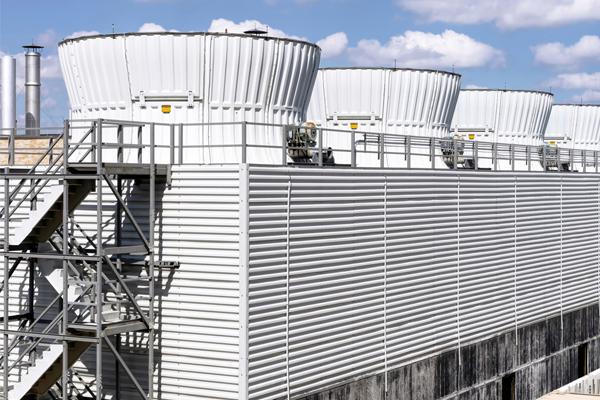
Industrial cooling tower projects may require different capacities, dimensions, airflow arrangements, and component configurations.
Depending on the project and available design options, the selection process may involve reviewing:
Required cooling capacity
Tower dimensions and installation footprint
Counterflow or crossflow configuration
Fan and motor arrangement
Fill media selection
Water distribution design
Material requirements
Access and maintenance arrangements
For replacement projects, matching the existing foundation, pipe connections, and available installation space can be especially important.
Customers should provide technical drawings and operating data whenever possible. This helps the manufacturer evaluate the proposed equipment against the existing system and identify potential installation challenges before delivery.
A successful cooling tower project involves more than manufacturing the main structure.
Technical selection, component configuration, transportation planning, installation preparation, and commissioning all contribute to the final result.
When contacting Mach Industry, explain the application and provide the operating data available. The team can then discuss the project requirements and the appropriate next steps.
To learn more about Mach Cooling and its industrial cooling tower solutions, visit:
Website: https://www.machcooling.com
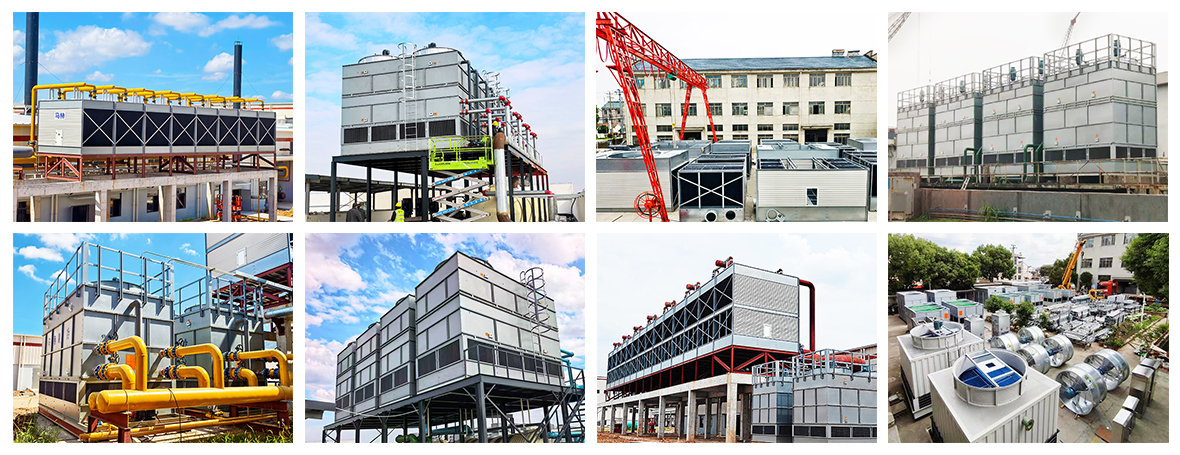
Even a properly selected FRP cooling tower needs regular maintenance.
A consistent inspection routine can help identify small problems before they affect cooling performance or lead to unexpected downtime.
The maintenance schedule should follow the manufacturer's recommendations, site conditions, operating hours, and applicable safety procedures.
Check the casing, supports, access platforms, and other FRP components for cracks, impact damage, loose connections, or visible deterioration.
Pay special attention to areas exposed to sunlight, vibration, and mechanical stress.
Small signs of damage should not be ignored, especially around support points and fasteners.
If structural damage is suspected, arrange an inspection by qualified personnel before continuing operation.
Any repair should use compatible materials and follow the manufacturer's recommendations.
The fan and motor system plays a major role in cooling tower operation.
Inspect fan blades for dirt buildup, visible damage, looseness, and abnormal vibration.
Check the motor condition, bearings, electrical connections, and mounting hardware according to the maintenance schedule.
If the tower uses a gearbox or belt drive, inspect lubrication, alignment, belt tension, and wear as applicable.
Always isolate electrical power and follow proper lockout procedures before maintenance.
Fan balancing and blade-angle adjustments should be performed by trained personnel using the correct procedures.
Cooling water can contain minerals, suspended solids, and biological contaminants.
If these materials accumulate, they may block nozzles, reduce water distribution, or create deposits on fill surfaces and heat-transfer components.
Maintain a suitable water-treatment program based on the source water and operating conditions.
Inspect strainers, basins, nozzles, and fill media regularly. Clean the system when necessary, but avoid aggressive cleaning methods that could damage FRP surfaces or fill materials.
Proper water treatment and regular cleaning help maintain stable cooling performance.
There is no single service-life figure that applies to every fiberglass cooling tower.
Actual service life depends on FRP material quality, resin selection, UV exposure, operating temperature, water treatment, installation quality, structural loading, and maintenance.
A properly specified and maintained tower can provide long-term service. Buyers should follow the manufacturer's inspection and maintenance recommendations to help protect the equipment.
Yes. Depending on the manufacturer's engineering and production capabilities, an FRP cooling tower may be customized for capacity, dimensions, airflow arrangement, fan and motor configuration, fill type, water distribution, materials, and accessories.
The customization process should begin with confirmed operating data and site requirements.
Neither material is universally better.
Fiberglass can offer corrosion resistance and relatively lightweight construction. Steel may be appropriate for applications requiring particular structural properties or where a suitable protective coating system is specified.
The right choice depends on the operating environment, structural loads, temperature, chemical exposure, maintenance plan, and total project cost.
Compare the complete equipment specifications rather than choosing based on material name alone.
At minimum, provide the required cooling capacity, hot-water inlet temperature, cold-water outlet temperature, circulating water flow rate, and local design wet-bulb temperature.
Installation dimensions, water quality, power supply, operating schedule, and special environmental requirements are also useful.
For replacement projects, share the existing cooling tower model and equipment drawings if available.
It may be suitable, depending on the FRP material specification, structural design, and other components used in the tower.
Coastal environments can expose equipment to salt-laden air, high humidity, and stronger corrosion challenges. Buyers should discuss these conditions with the manufacturer and confirm the suitability of the resin system, fasteners, motor protection, and other exposed components.
Yes. Fiberglass construction does not eliminate the need for cooling water treatment.
Scaling, corrosion in other parts of the circulating system, biological growth, and suspended solids can still affect performance and reliability.
A suitable water-treatment program should be developed according to the water source, system materials, operating conditions, and local requirements.
A fiberglass cooling tower is an important part of an industrial cooling system. The right equipment can help maintain process temperatures, support stable production, and simplify certain long-term maintenance challenges.
However, successful selection requires more than comparing prices or choosing a tower based on nominal capacity.
You need to consider heat load, wet-bulb temperature, water quality, site conditions, material compatibility, airflow, and maintenance access. You also need a manufacturer that can understand your project and discuss a suitable equipment configuration.
When comparing fiberglass cooling tower manufacturers, look beyond the product price. Review the technical specifications, material details, manufacturing quality, engineering support, warranty conditions, and spare-parts arrangements.
Mach Industry (Zhejiang) Co.,Ltd welcomes industrial customers who want to explore cooling tower solutions for their facilities.
Whether you are planning a new installation, upgrading an existing cooling system, or evaluating a custom industrial tower, start by sharing your operating conditions and technical requirements.
Visit https://www.machcooling.com to learn more about Mach Cooling and contact the team about your industrial cooling tower project.
The right cooling tower starts with the right design. Make sure your next project is built around the real needs of your process.