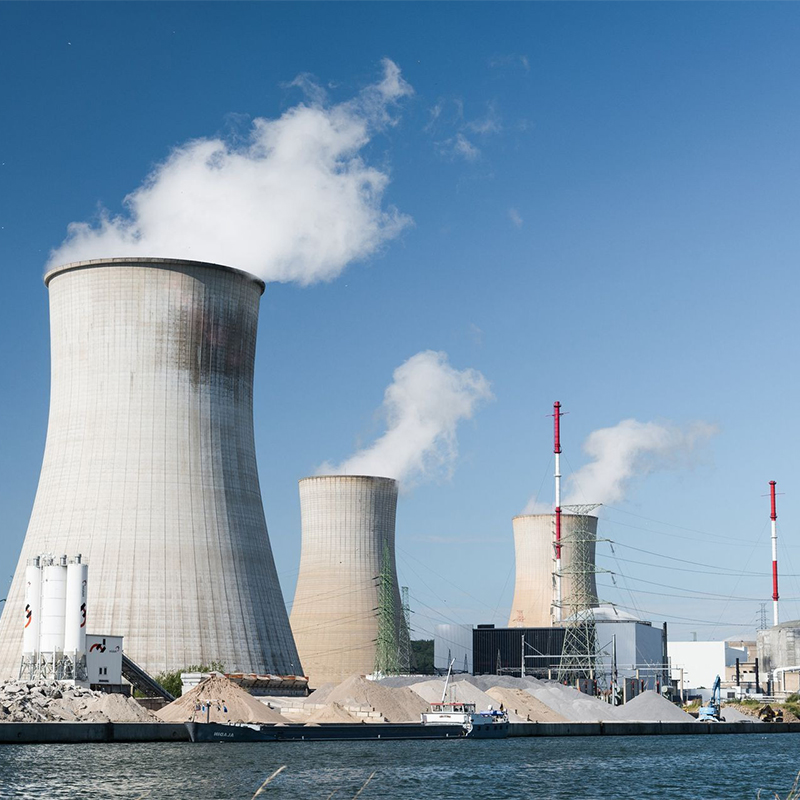
We Provide Cooling Tower Solution

Views: 0 Author: Cindy Publish Time: 2026-11-24 Origin: Site


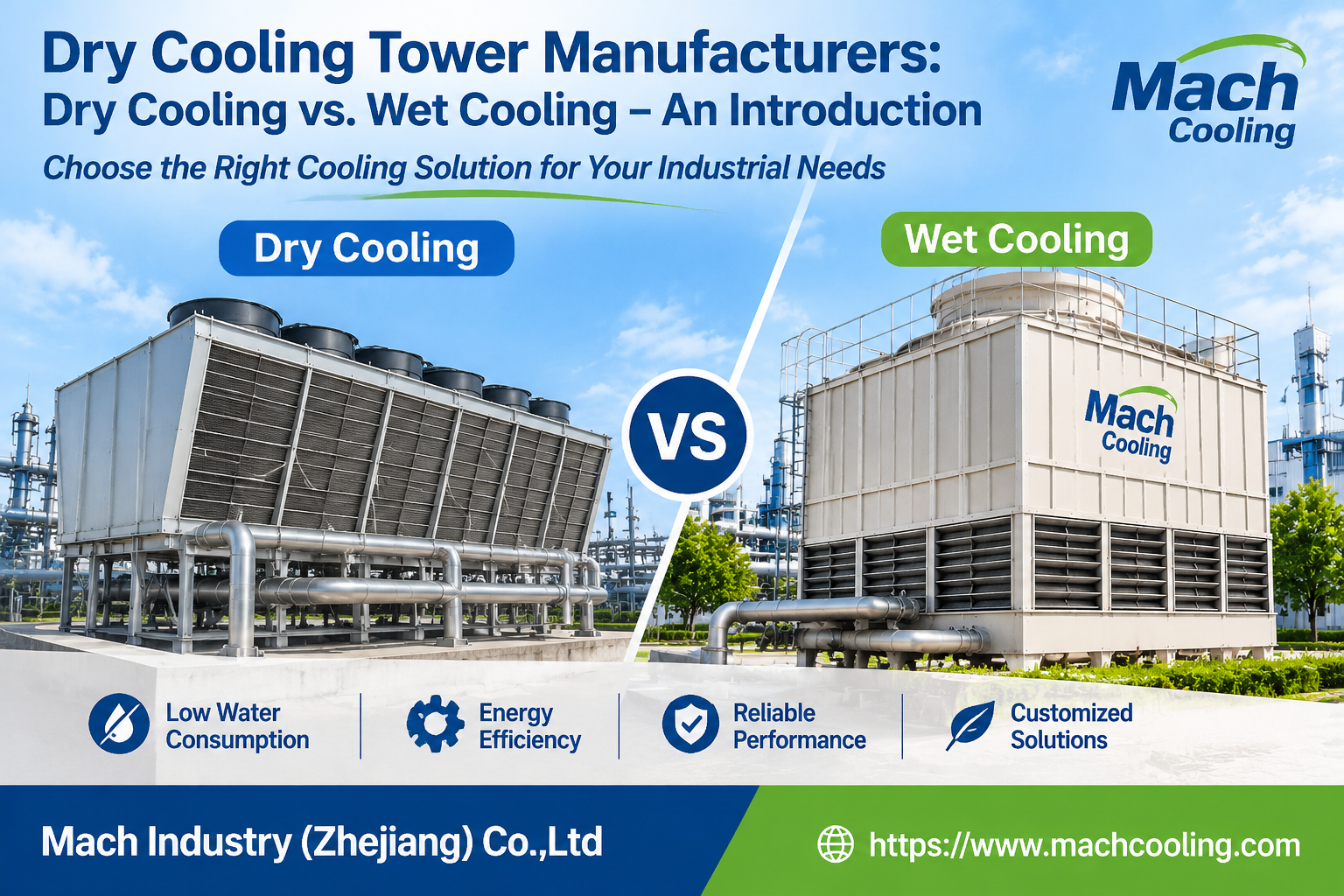
Cooling is an essential part of modern industrial production. Whether a facility operates a power generation unit, chemical processing line, plastic injection molding machine, refrigeration system, or large HVAC installation, heat must be removed safely and continuously.
But how should a business choose the right cooling equipment? Two common options are dry cooling systems and wet cooling towers. Both remove unwanted heat, but they use different methods and have different requirements for water, energy, installation space, and maintenance.
The difference is important. A dry cooling system transfers heat to the surrounding air without relying on evaporation as its main cooling process. A wet cooling tower uses evaporation to remove heat from circulating water. One may be attractive where water is scarce, while the other may offer better cooling performance under certain operating conditions.
For buyers comparing dry cooling tower manufacturers, understanding these differences is a practical first step. It helps you ask better technical questions, compare quotations fairly, and avoid choosing equipment based only on its purchase price.
In this guide, we will explain how dry and wet cooling work, compare their advantages and limitations, and discuss what to look for when selecting an industrial cooling equipment manufacturer.
A dry cooling tower is a cooling system that rejects heat mainly by transferring it from a process fluid to ambient air through a heat exchanger. Unlike a conventional evaporative cooling tower, it does not depend on water evaporation to provide its primary cooling effect.
The term “dry cooling tower” is sometimes used broadly in industrial purchasing. Depending on the project, it may refer to an air-cooled heat exchanger, a closed-loop dry cooler, or a direct air-cooled condenser. These systems are related, but they are not identical. Buyers should confirm the exact equipment type before comparing manufacturers.
A typical closed-loop dry cooler circulates water or a water-glycol mixture through finned tubes. Fans move ambient air across the tube surfaces. Heat passes from the process fluid through the tube walls and fins into the air, which then carries the heat away.
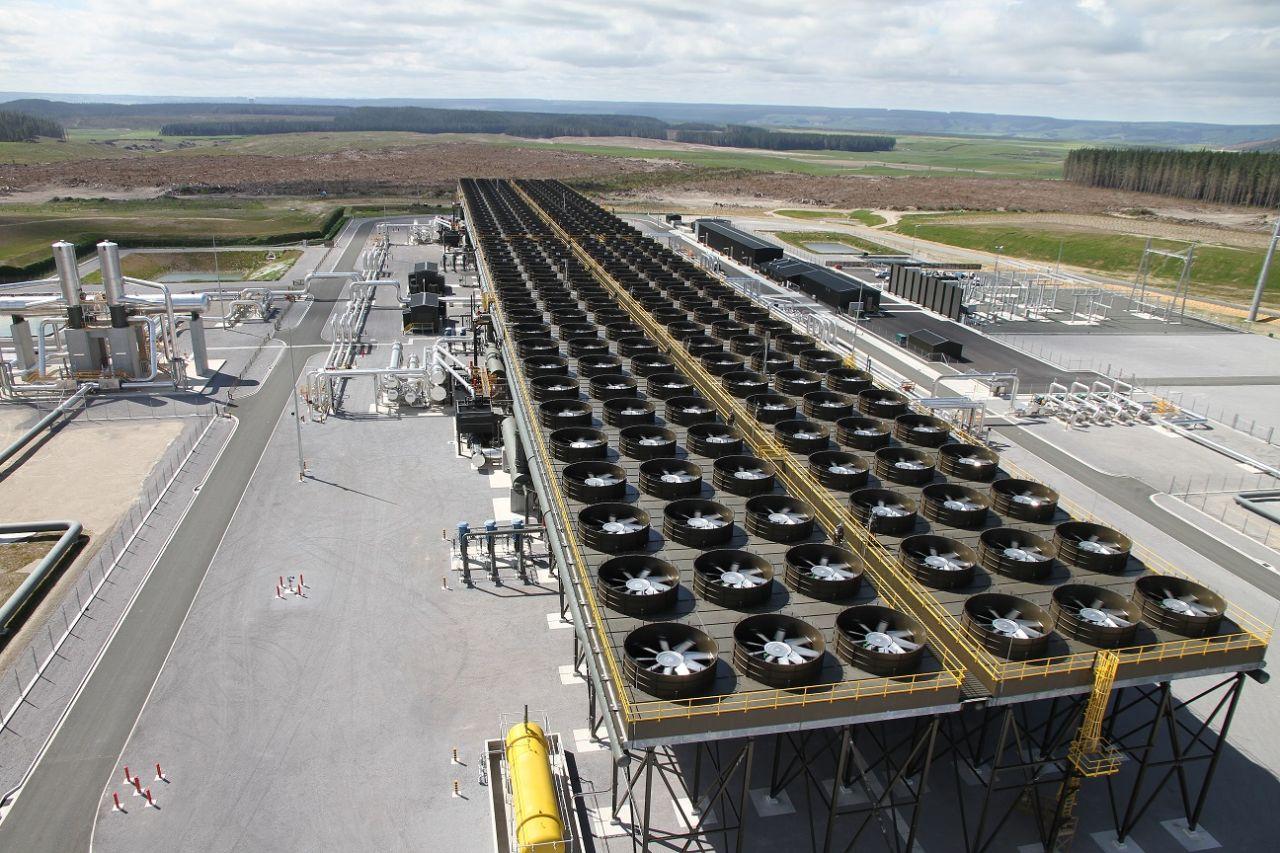
The operating principle is straightforward: hot fluid enters the heat exchanger, transfers heat to the tube surfaces, and returns to the process at a lower temperature.
Fans create airflow across the heat exchanger. The fins increase the surface area available for heat transfer, helping the equipment reject more heat within a practical footprint.
Think of it as a large radiator in an industrial setting. A vehicle radiator releases engine heat into the air; a dry cooler performs a similar function for an industrial process.
However, dry cooling has one important limitation: its performance is closely linked to outdoor air temperature. When the ambient temperature rises, the temperature difference available for heat transfer becomes smaller. The system may then need a larger heat exchanger, more airflow, or a different operating strategy to achieve the required outlet temperature.
A typical industrial dry cooling system may include:
Heat exchanger coils: Tubes and fins transfer heat from the circulating fluid to the air.
Axial fans: Fans move air through the heat exchanger.
Electric motors: Motors drive the fans and may be controlled by variable-frequency drives.
Pumps: Pumps circulate the process fluid through the closed loop.
Support frame: The structure supports the coils, fans, motors, and other equipment.
Controls and sensors: Temperature, pressure, and flow sensors help monitor system operation.
Piping and valves: These components connect the dry cooler to the process system.
The exact configuration depends on the required cooling capacity, fluid type, operating temperature, site conditions, and control strategy.
A wet cooling tower is an evaporative heat-rejection system. It cools circulating water by bringing that water into contact with moving air. A small portion of the water evaporates, and the evaporation removes heat from the remaining water.
Wet cooling towers are widely used in industrial plants, commercial buildings, power stations, and process cooling applications.
Unlike a dry cooler, a conventional wet cooling tower normally uses a water distribution system and fill media to increase contact between air and water. This creates favorable conditions for heat and mass transfer.
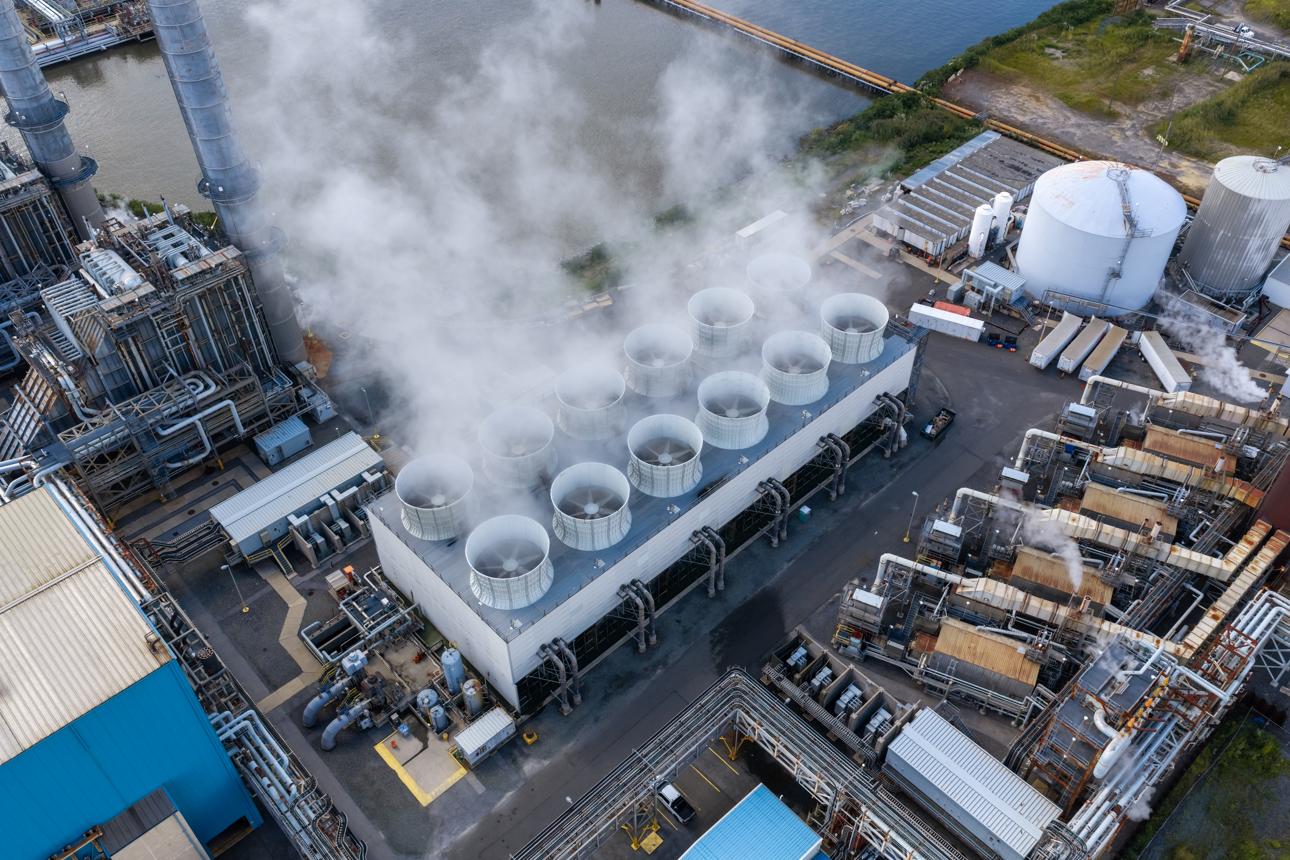
Hot water from the industrial process enters the cooling tower and is distributed over the fill. As the water moves downward, air passes through the tower.
A small amount of water evaporates into the air. The energy needed for evaporation comes from the water itself, reducing the temperature of the remaining circulating water.
The cooled water collects in the cold-water basin and is pumped back to the process. The cycle continues as long as the system operates.
The cooling process depends on several factors, including entering water temperature, required leaving water temperature, water flow rate, airflow, and the local wet-bulb temperature.
This last factor is especially important. The wet-bulb temperature reflects the cooling potential of evaporative air. Under suitable conditions, a wet cooling tower can cool water to a temperature below the ambient dry-bulb temperature. That is one reason evaporative cooling can achieve lower water temperatures than a conventional dry cooler in the same climate.
A typical wet cooling tower includes:
Fill media: Increases the contact area between water and air.
Water distribution system: Spreads hot water evenly over the fill.
Fans and motors: Provide or support airflow through the tower.
Drift eliminators: Reduce the amount of water droplets carried out with exhaust air.
Cold-water basin: Collects cooled water before it returns to the process.
Casing and structure: Enclose and support the tower components.
Piping and pumps: Circulate water between the tower and the process.
Water treatment equipment: Helps control scale, corrosion, and biological growth.
Each component affects system performance. For example, blocked fill can restrict airflow and water distribution, while poorly maintained drift eliminators can increase water carryover.
Dry and wet cooling systems both reject heat, but they do not achieve it in the same way. Understanding the practical differences is more useful than assuming one technology is always better.
The biggest difference is the heat-transfer process.
A dry cooler transfers heat through a heat exchanger into ambient air. Its primary cooling process does not rely on evaporation.
A wet cooling tower uses direct contact between water and air. Evaporation removes heat from the circulating water and helps achieve a lower outlet temperature.
This difference affects equipment design, water demand, operating conditions, and potential cooling performance.
Water consumption is often a major consideration when comparing the two systems.
A closed-loop dry cooler normally has very low routine water consumption after the system has been filled. It may require occasional make-up fluid due to maintenance, leakage, or other system losses, but it does not continuously evaporate large quantities of process water.
A wet cooling tower requires make-up water to replace evaporation, drift, and blowdown. The actual amount depends on cooling duty, operating conditions, water quality, and cycles of concentration.
For facilities located in water-restricted regions, the reduced water demand of dry cooling can be a significant advantage.
It is tempting to assume that a dry cooling system always consumes less energy because it does not evaporate water. In reality, the answer depends on the complete system.
Dry coolers may require substantial fan power, particularly when high heat loads must be rejected during hot weather. Pumping energy also depends on the circuit design and pressure losses.
Wet cooling towers use fan and pump power as well. They may also require energy for water treatment and auxiliary equipment. However, evaporative cooling can provide a favorable heat-transfer effect, which may reduce the workload of connected chillers or other cooling equipment in some applications.
A fair comparison should include fan power, pump power, auxiliary equipment, water treatment, and the energy use of the wider cooling process.
Ambient conditions have a major influence on both technologies.
A dry cooler is strongly affected by the outdoor dry-bulb temperature. As the air becomes hotter, the system has less temperature difference available to remove heat. Maintaining the same outlet-fluid temperature may require more heat-exchanger surface area or airflow.
A wet cooling tower is influenced by the ambient wet-bulb temperature. Because evaporation provides additional cooling, a wet tower can often achieve a lower water temperature than a dry cooler operating in the same environment.
This does not mean wet cooling is always the right answer. The required process temperature, local climate, water supply, and operating schedule must all be considered.
The installation footprint depends on cooling capacity and equipment configuration.
A dry cooler may require a large heat-exchanger surface to achieve a specific outlet temperature, especially in hot climates. Its layout also needs enough clearance for air intake and discharge.
Wet cooling towers require space for the tower structure, water basin, pipework, access platforms, and maintenance activities. The project may also need water treatment equipment and a suitable make-up water supply.
Initial investment should therefore be compared using a complete project scope. A low equipment quotation may not include pumps, piping, electrical systems, foundations, water treatment, controls, or installation.
Dry cooling systems avoid many maintenance tasks associated with evaporative water systems. They generally do not need routine cooling-tower blowdown or the same level of water treatment for an open evaporative circuit.
However, dry coolers are not maintenance-free. Coils can become blocked by dust, leaves, or other airborne debris. Fans, motors, bearings, electrical connections, and pumps also require inspection.
Wet cooling towers need regular attention to water quality, scale, corrosion, biological growth, fill condition, drift eliminators, and water distribution. Maintenance procedures should also follow applicable water-management and workplace safety requirements.
Dry cooling can be a strong option when a facility needs to reduce water demand or avoid evaporative cooling. Its main advantages relate to water use, system configuration, and operating environment.
The most obvious benefit is the low routine water demand of a closed-loop dry cooler.
For facilities facing water restrictions, high water prices, or limited access to reliable water supplies, this can simplify operation and reduce dependence on water infrastructure.
Because a conventional dry cooler does not use an evaporative water-air contact process, it does not generate cooling-tower drift in the same way as a wet tower.
This can be useful where operators want to limit water droplets leaving the cooling equipment. It does not remove every possible environmental or hygiene consideration, but it avoids the normal evaporative drift mechanism.
Dry cooling may be especially attractive for remote industrial sites, facilities in arid regions, and projects where water supply is expensive or difficult to secure.
It can also be considered where the process requires a closed fluid circuit. The system design must still account for freeze protection, fluid expansion, corrosion control, and the outdoor environment.
Wet cooling towers remain a practical choice for many industrial applications because evaporative cooling can provide effective heat rejection.
Evaporation improves the heat-transfer process. This allows wet cooling towers to reject substantial heat within a relatively compact equipment arrangement.
For large industrial processes with continuous cooling demand, this can be an important design advantage.
A wet cooling tower's performance is related to wet-bulb temperature rather than dry-bulb temperature alone.
In many climates, the wet-bulb temperature is lower than the dry-bulb temperature. This gives evaporative cooling an advantage when the process requires relatively cool circulating water.
However, wet-bulb temperature still rises in hot, humid weather, so the design conditions must reflect the actual site climate.
Wet cooling towers are used in chemical plants, manufacturing facilities, power generation, refrigeration systems, and commercial HVAC installations.
They are available in different designs and capacities, including crossflow, counterflow, induced-draft, and forced-draft configurations. The right type depends on the project requirements rather than a single universal rule.
There is no universal winner. Efficiency depends on what the project is trying to optimize.
If the main objective is minimizing water consumption, a dry cooling system may be the better option. If the priority is achieving lower cooling-water temperatures under suitable wet-bulb conditions, a wet cooling tower may offer an advantage.
Energy efficiency also needs a system-level assessment. A dry cooler may use more fan power during hot weather, while a wet cooling tower may require additional water-treatment and make-up water systems. The effect on connected chillers, compressors, or process equipment can be just as important as the power used by the cooling equipment itself.
A useful comparison should include:
Required heat-rejection capacity.
Design entering and leaving fluid temperatures.
Local summer dry-bulb and wet-bulb conditions.
Annual operating hours and seasonal load changes.
Fan and pump power.
Water consumption and water-treatment costs.
Maintenance, replacement, and expected service-life costs.
Rather than asking which technology is more efficient in general, ask which one delivers the required cooling performance at the lowest reasonable lifecycle cost for your site.
Selecting a cooling system is an engineering decision. A good purchasing process starts with operating data, not a product photograph or a low initial price.
Start with the site's design weather conditions.
For a dry cooler, the summer design dry-bulb temperature is especially important. For a wet cooling tower, the design wet-bulb temperature is essential.
Also consider seasonal extremes. A system designed only around average weather may struggle during the hottest days of the year.
Ask how much water the facility can reliably obtain and what it costs.
If water is limited, dry cooling may reduce operating risks. If water is readily available and the process needs low cooling-water temperatures, wet cooling may be more practical.
Water quality matters too. High mineral content, suspended solids, or other contaminants can affect water treatment and maintenance requirements in wet systems.
Cooling capacity should be based on the actual process heat load.
For a water circuit, the heat duty is commonly calculated from mass flow rate, specific heat capacity, and the temperature difference between entering and leaving water.
For a wet cooling tower, buyers should also provide the required range and approach. The range is the difference between hot-water and cold-water temperatures. The approach is the difference between cold-water temperature and the design wet-bulb temperature.
For a dry cooler, provide the fluid type, flow rate, entering temperature, target leaving temperature, and design ambient dry-bulb temperature.
Accurate input data helps manufacturers evaluate the equipment rather than guess at its size.
The initial purchase price is only one part of the investment.
A complete evaluation should consider:
Equipment purchase and installation.
Electrical power for fans and pumps.
Water consumption and treatment, where applicable.
Routine inspections and cleaning.
Spare parts and component replacement.
Downtime and production risks.
Expected operating life and maintenance access.
A system with a higher initial price may offer better value if it reduces long-term operating costs. The reverse can also be true. Compare realistic operating scenarios before making a decision.
Choosing a manufacturer is not just about finding a company that can supply equipment. You need a partner that understands the operating conditions and can help match the equipment to the project.
Ask how the manufacturer evaluates cooling capacity, ambient conditions, fluid characteristics, airflow, and operating temperatures.
A reliable technical proposal should clearly state its design assumptions. It should also identify any conditions that may affect the guaranteed performance.
If you are comparing a dry cooler with a wet cooling tower, make sure both proposals use the same process duty and comparable design conditions. Otherwise, the comparison may be misleading.
Materials should be suitable for the operating environment.
For dry cooling equipment, review the tube and fin materials, corrosion protection, fan construction, structural design, and suitability for outdoor exposure. For wet cooling towers, examine the casing, structural materials, fill media, water distribution components, and drift eliminators.
Coastal environments, chemical exposure, high humidity, and extreme temperatures may require specific material choices. Ask manufacturers to explain the basis for their recommendations.
Cooling equipment is a long-term industrial asset. Access to technical documentation, spare parts, maintenance guidance, and troubleshooting support can make a real difference.
Before placing an order, clarify the scope of supply, delivery schedule, installation responsibilities, commissioning support, warranty conditions, and availability of replacement components.
A clear technical discussion before purchase often prevents expensive misunderstandings later.
Sometimes the best answer is not dry cooling or wet cooling alone. A hybrid system combines dry and evaporative cooling methods to balance water use, energy consumption, and cooling performance.
For example, a hybrid arrangement may use dry cooling during cooler periods and evaporative assistance when ambient temperatures rise. Another design may combine dry heat exchangers with a wet cooling stage.
The exact arrangement depends on the process and control strategy. Hybrid equipment can reduce water consumption compared with a fully wet system in some applications, but it is more complex and may involve a higher initial investment.
If your facility experiences large seasonal temperature changes or has both water and energy constraints, it may be worth asking manufacturers to evaluate a hybrid option.
Both technologies serve a wide range of industrial needs.
Dry cooling systems are often considered for facilities where water conservation is important, including remote sites, certain power applications, manufacturing processes, and closed-loop industrial circuits.
Wet cooling towers are widely used in chemical processing, petrochemical facilities, plastic production, power generation, refrigeration, and central HVAC systems.
The application alone does not determine the right technology. Two factories in the same industry may need different cooling systems because their process temperatures, water availability, local climate, and operating schedules are different.
The most reliable approach is to assess the actual heat load and site conditions before choosing the equipment type.
Selecting an industrial cooling system requires more than comparing catalog specifications. Buyers need to understand the process, evaluate site conditions, and choose equipment that fits their long-term operating requirements.
Mach Industry (Zhejiang) Co.,Ltd focuses on industrial cooling solutions and works with customers to understand their project requirements. When evaluating a cooling project, it is important to clarify the required cooling capacity, operating temperatures, water conditions, installation environment, and expected operating schedule.
If you are comparing dry cooling and wet cooling options, provide your process data and project requirements so the appropriate equipment configuration and scope can be discussed.
A useful manufacturer discussion should cover:
Required cooling capacity and operating temperature.
Local design dry-bulb and wet-bulb temperatures.
Available water supply and water quality.
Preferred cooling arrangement and installation space.
Fan, motor, pump, and control requirements.
Maintenance access and expected operating conditions.
For product information and project enquiries, visit the official website:
Mach Industry (Zhejiang) Co.,Ltd
Website: https://www.machcooling.com
Contact the company with your technical requirements to discuss a suitable industrial cooling solution. Specific dry cooling, wet cooling, or hybrid equipment availability and project scope should be confirmed directly with the manufacturer.
Not in every situation. Dry cooling is attractive when water conservation is a priority. Wet cooling can provide lower cooling-water temperatures under suitable wet-bulb conditions. The better choice depends on the process, climate, water availability, and lifecycle cost.
A closed-loop dry cooler normally uses a circulating fluid, which may be water or a water-glycol mixture. It does not rely on continuous evaporation to reject heat. Small fluid losses may still occur through leakage or maintenance activities.
There is no fixed answer. Dry cooling may reduce water and water-treatment costs, while wet cooling may offer favorable heat-transfer performance in some conditions. Compare fan and pump electricity, water use, maintenance, and the impact on connected process equipment.
Yes. Hybrid systems combine dry and evaporative cooling stages or operating modes. They can help balance water consumption and cooling performance, although their design and controls are more complex.
Provide the required cooling capacity, fluid type, flow rate, entering and target leaving temperatures, local design ambient conditions, operating hours, site location, available installation space, and any water-use restrictions. For an existing system, equipment drawings, photographs, and nameplate information can also help.
Dry cooling and wet cooling both play important roles in industrial heat rejection, but they solve the problem in different ways.
Dry cooling reduces dependence on water and avoids the normal evaporative cooling process. Wet cooling uses evaporation to achieve effective heat rejection and may provide lower cooling-water temperatures under suitable conditions. Hybrid systems offer another option when a project needs to balance water use and cooling performance.
So, which system should you choose? Start with the process heat load, local climate, water availability, required outlet temperature, and total operating cost. Then compare manufacturers based on engineering support, material selection, manufacturing quality, and after-sales service.
For industrial cooling project enquiries, contact Mach Industry (Zhejiang) Co.,Ltd through https://www.machcooling.com to discuss your requirements and identify an appropriate cooling solution.