We Provide Cooling Tower Solution

Views: 0 Author: Cindy Publish Time: 2026-11-26 Origin: Site


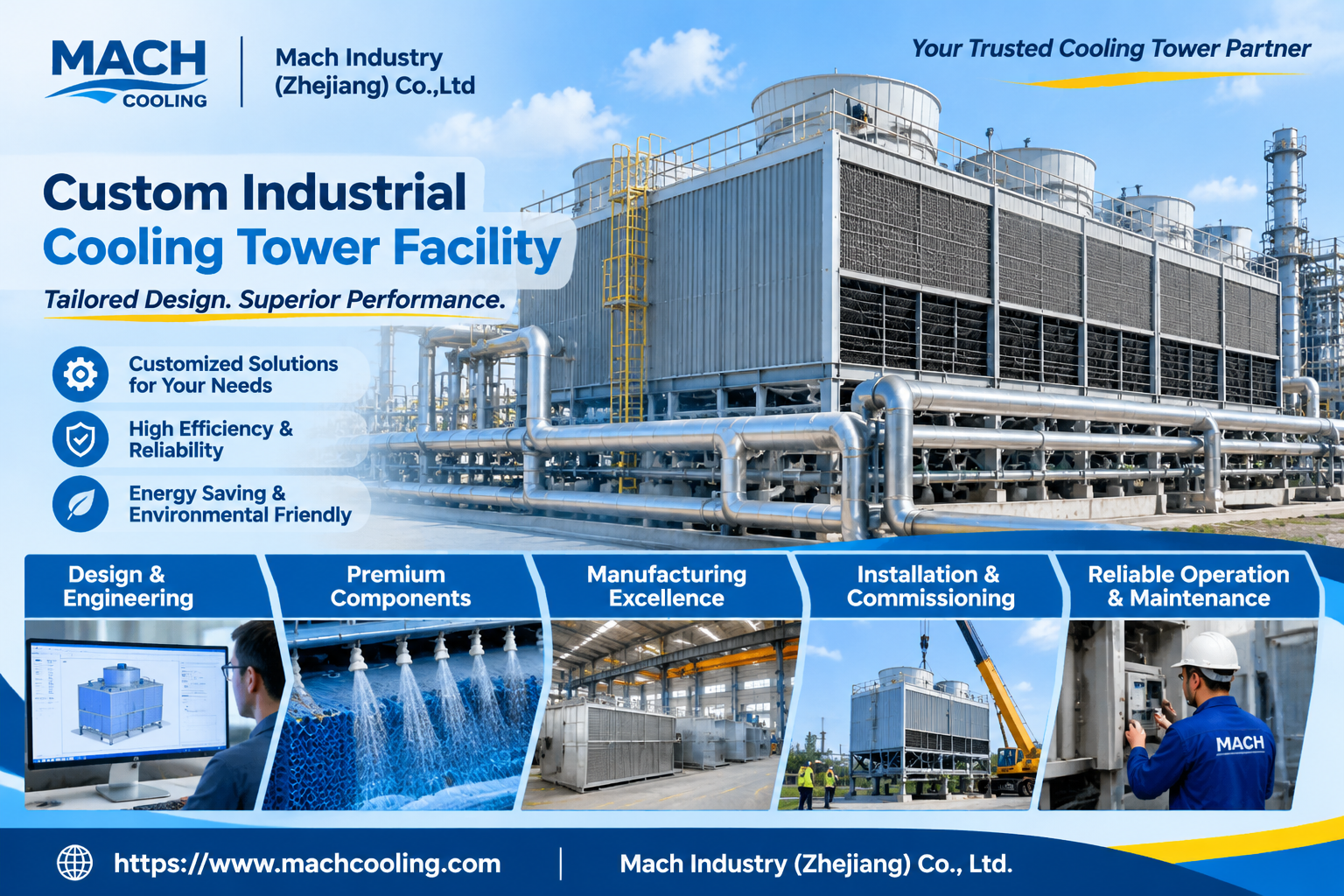
Every industrial facility has a cooling requirement. A chemical plant needs to remove process heat. A steel factory must keep production equipment within safe operating temperatures. A power station needs reliable cooling for its circulating water system. Although these applications have different requirements, they share one common challenge: how can you remove heat efficiently, reliably, and economically?
A standard cooling tower may work well for some projects. But what happens when your factory has limited installation space, unusual water temperatures, high heat loads, aggressive operating conditions, or special water-quality requirements?
This is where a custom industrial cooling tower facility becomes important.
Custom cooling tower solutions are designed around the actual operating conditions of an industrial plant instead of forcing the plant to adapt to standard equipment. From cooling capacity and tower configuration to materials, fans, fill media, and control systems, every major design decision can influence long-term performance.
In this guide, we will explain how custom industrial cooling tower systems work, what factors matter during design, how to select a suitable configuration, and what to consider when choosing a manufacturer.
If you are planning a new industrial facility or upgrading an existing cooling system, this guide will help you make a more informed decision.
A custom industrial cooling tower facility is a cooling installation designed to meet the specific heat-rejection requirements of an industrial site.
Unlike a standard cooling tower selected from a general product catalog, a custom solution considers the complete application. Engineers evaluate the process heat load, water circulation requirements, ambient conditions, installation layout, water chemistry, and operating schedule before recommending the equipment.
The result may be a customized cooling tower, a group of towers operating together, or an integrated cooling water system.
Standard cooling towers are manufactured in predefined configurations and capacities. They can be a practical choice when the operating conditions match the manufacturer's standard specifications.
Custom cooling towers offer greater flexibility.
For example, an industrial facility may require:
A non-standard cooling capacity.
Special hot water and cold water temperatures.
A compact structure for a restricted installation area.
Corrosion-resistant construction materials.
Special fan and motor arrangements.
Multiple cooling cells for operational flexibility.
Integration with existing pumps and piping.
Customized access platforms and maintenance arrangements.
Customization does not necessarily mean that every component must be completely redesigned. Often, a suitable standard tower platform can be adapted to meet the project's requirements.
Why not simply purchase the largest available cooling tower?
Because bigger does not always mean better.
An oversized tower may increase initial investment, footprint, fan power, and maintenance costs. An undersized tower may fail to maintain the required process water temperature during peak production or hot weather.
The goal is to select equipment that matches the real operating duty.
A properly engineered custom cooling tower can help balance thermal performance, energy consumption, installation requirements, and long-term operating costs.
An industrial cooling tower removes heat from circulating water and transfers it to the atmosphere. Most conventional industrial cooling towers use evaporation as the main cooling mechanism.
The process is relatively simple:
Hot water from industrial equipment enters the cooling tower.
A distribution system spreads the water over the fill or heat-transfer surface.
Air moves through the tower and contacts the water.
A small portion of the water evaporates, removing heat from the remaining water.
Cooled water collects in the basin or returns through the system.
The cooled water is pumped back to the industrial process.
The cooling tower continuously repeats this cycle.
Think of the fill media as a surface that gives water and air more opportunities to interact. More effective contact helps the tower transfer heat efficiently.
However, actual performance depends on water distribution, airflow, fill characteristics, ambient wet bulb temperature, and the design conditions.
Industrial cooling towers are commonly divided into open-circuit and closed-circuit designs.
Open-circuit cooling towers
In an open-circuit tower, process or circulating water comes into direct contact with the air. Water is distributed over the fill, cooled through evaporation, and collected in the basin.
This configuration is widely used in industrial cooling systems where direct contact between water and air is acceptable.
Closed-circuit cooling towers
A closed-circuit cooling tower keeps the process fluid inside a coil. Water is sprayed over the outside of the coil while air passes through the equipment.
Heat transfers from the process fluid through the coil wall and into the evaporative cooling environment.
This arrangement helps keep the process fluid separate from the external cooling water, which can be useful when contamination control or fluid cleanliness is important.
The best configuration depends on the process, water quality, maintenance strategy, and project budget.
Different industries produce different heat loads and operate under different environmental conditions. A customized cooling tower can address these differences.
Chemical facilities often operate reactors, condensers, compressors, and heat exchangers that generate significant heat.
Some processes also involve corrosive environments or special water chemistry.
Cooling tower design may need to consider:
Corrosion-resistant materials.
High-temperature water conditions.
Continuous operating schedules.
Process safety requirements.
Water treatment compatibility.
Reliable operation during peak production.
In these facilities, an unexpected cooling interruption can affect the entire production process. Equipment reliability is therefore a major design priority.
Power plants use large quantities of cooling water to remove heat from condensers and auxiliary equipment.
A custom cooling tower project may involve high water flow rates, multiple cooling cells, large fans, and carefully planned water distribution.
Engineers must also consider seasonal wet bulb conditions and the effect of cooling water temperature on overall plant efficiency.
Steel mills and metal-processing facilities use cooling water for furnaces, rolling equipment, hydraulic systems, and other production machinery.
These applications can involve high heat loads and changing production conditions.
A suitable cooling tower must match the required water flow and temperature range while providing enough flexibility for maintenance and production changes.
Food processing and pharmaceutical plants may require stable cooling conditions and careful management of water quality.
Large commercial and industrial HVAC facilities also rely on cooling towers to reject heat from chiller condenser systems.
Depending on the application, designers may prioritize compact dimensions, water hygiene, noise control, energy efficiency, and ease of maintenance.
The most important part of a custom cooling tower project happens before manufacturing begins.
Engineers need accurate operating information to select the correct equipment.
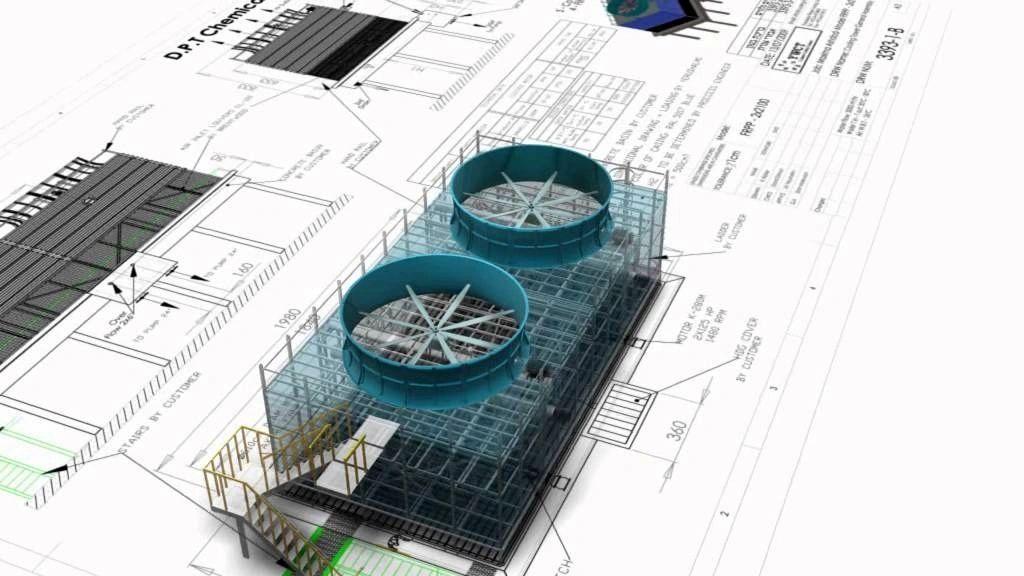
Heat-rejection capacity is the starting point for cooling tower selection.
The required capacity depends on how much heat the process transfers into the circulating water.
It may be expressed in:
Kilowatts (kW).
Megawatts (MW).
British thermal units per hour (BTU/h).
Refrigeration tons or cooling tower nominal tons, depending on the rating convention.
Do not select a tower based only on a general tonnage estimate. Confirm the actual heat-rejection duty and the operating temperatures used for the rating.
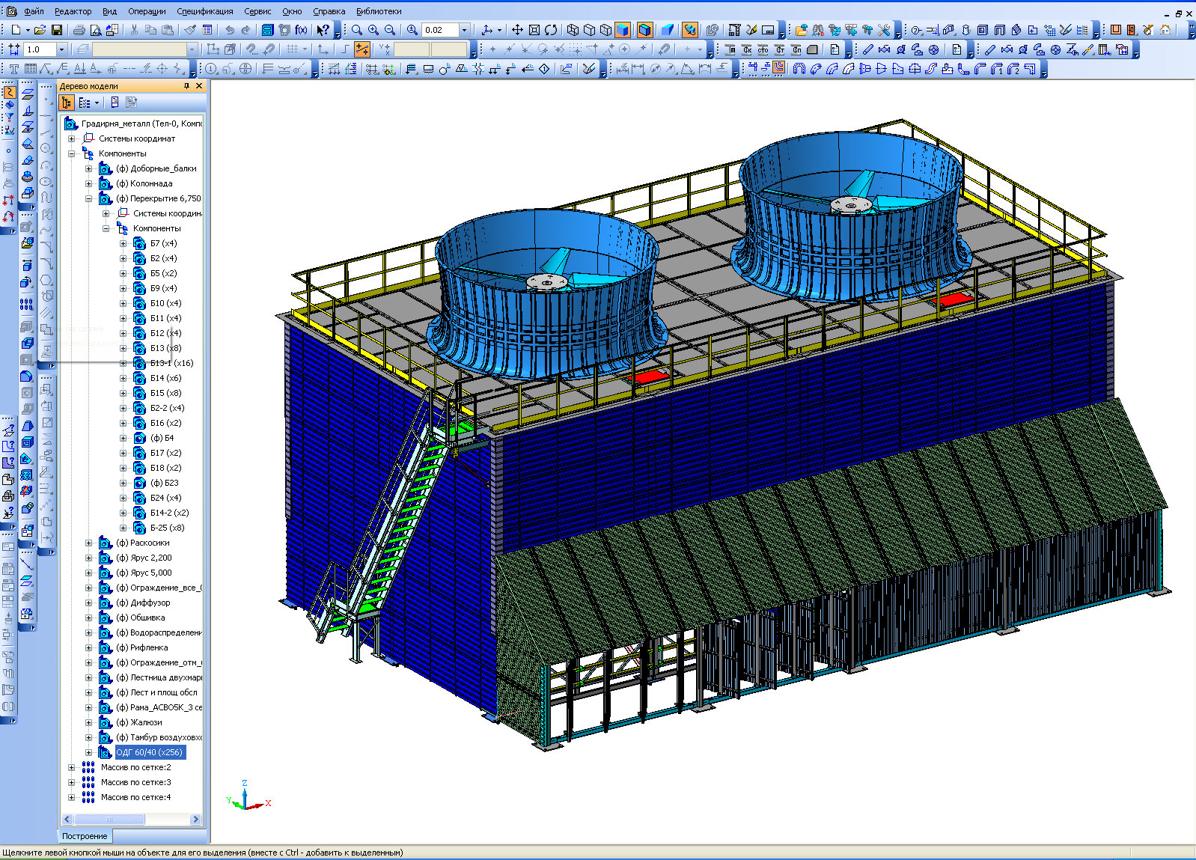
Water flow rate describes how much circulating water passes through the tower over a specific period.
It is usually expressed in cubic meters per hour (m³/h), liters per second (L/s), or gallons per minute (GPM).
The cooling tower range is the difference between the hot water entering the tower and the cold water leaving it.
Range = Hot Water Temperature − Cold Water Temperature
For example:
Hot water temperature: 40°C.
Cold water temperature: 32°C.
Range: 8°C.
This information helps engineers calculate the heat load and evaluate the required thermal performance.
Wet bulb temperature is one of the most important environmental conditions in cooling tower design.
It represents the combined influence of air temperature and humidity on evaporative cooling potential.
A cooling tower operating in a hot, humid location generally faces more demanding cooling conditions than a similar tower operating in a cooler or drier climate.
For accurate selection, the manufacturer needs the design wet bulb temperature for the project location. Using an unrealistically low value can result in insufficient cooling performance during hot weather.
The approach is another important parameter:
Approach = Cold Water Temperature − Entering Air Wet Bulb Temperature
A smaller approach generally requires greater thermal capability.
A cooling tower must fit the available installation area without restricting airflow or creating maintenance difficulties.
Consider:
Available ground area.
Foundation and structural loading.
Tower height restrictions.
Air inlet and discharge clearance.
Nearby buildings and equipment.
Crane access and installation routes.
Pipe connections and electrical access.
Maintenance platforms and inspection space.
Poor installation planning can reduce performance even when the cooling tower itself is correctly selected.
Water quality affects cooling tower materials, fill selection, maintenance frequency, and operating life.
High mineral content can lead to scaling. Suspended solids may cause blockage. Biological growth can reduce heat-transfer efficiency and create hygiene concerns.
For aggressive water conditions, material selection deserves special attention.
Engineers should review pH, chloride concentration, conductivity, suspended solids, treatment chemicals, and operating temperature before finalizing the equipment specification.
Different cooling tower configurations provide different advantages. The right choice depends on the application and site conditions.
<underline>Crossflow cooling towers</underline> allow air to move horizontally across the falling water.
Their water distribution system is often positioned above the fill, making inspection and maintenance relatively accessible.
Potential advantages include:
Accessible water distribution components.
Convenient inspection arrangements.
Suitable configurations for a range of industrial applications.
Flexible multi-cell designs.
Crossflow towers can be a good option when the installation layout and required thermal performance suit this arrangement.
<underline>Counterflow cooling towers</underline> move air upward against the downward flow of water.
This arrangement provides direct contact between air and water in opposite directions.
Potential advantages include:
Compact footprint for some designs.
Efficient heat and mass transfer.
Flexible industrial capacity configurations.
Suitability for applications requiring specific thermal performance.
The actual performance depends on fill selection, airflow, water loading, and the complete tower design.
Open-circuit towers are widely used for industrial process cooling and condenser water systems.
They are generally suitable when direct contact between circulating water and air is acceptable and the system includes appropriate water treatment.
Closed-circuit towers are worth considering when process fluid separation is important.
They can reduce direct exposure of the process fluid to external contaminants, although the external spray water system still requires proper treatment and maintenance.
The service life and reliability of an industrial cooling tower depend heavily on its materials and main components.
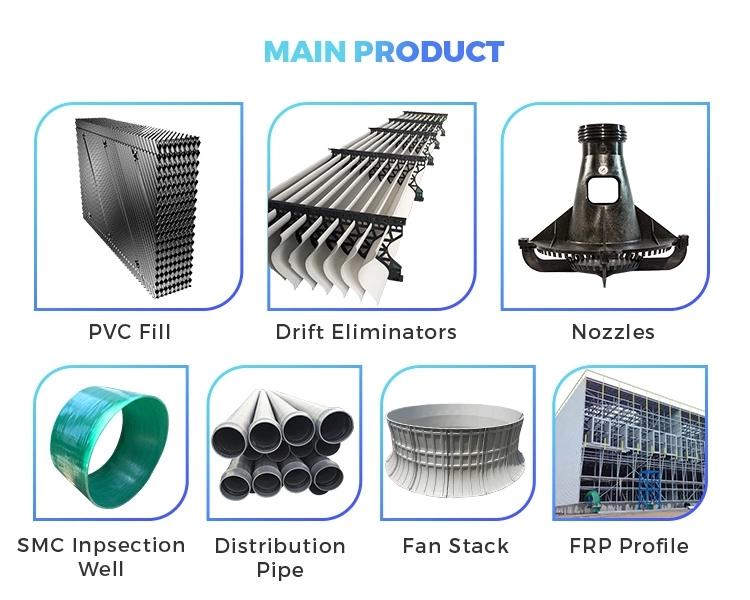
FRP (fiber-reinforced plastic) is widely used in cooling tower construction because of its corrosion resistance and relatively low weight.
Steel structures may be selected for projects requiring particular structural arrangements, mechanical strength, or installation specifications.
The final choice should consider structural loads, environmental exposure, fire requirements, maintenance, and the overall project design.
Cooling tower fill increases the contact area between water and air.
PVC fill is commonly used in many industrial applications. PP fill may be considered for certain higher-temperature or chemically demanding conditions, subject to material compatibility.
The selection should consider:
Operating water temperature.
Water chemistry.
Suspended solids.
Scaling and fouling risk.
Fill geometry.
Airflow resistance.
Required thermal performance.
Choosing the correct fill is important because poor compatibility or unsuitable fill geometry can reduce cooling performance and increase maintenance requirements.
The fan system provides the airflow needed for heat transfer.
Depending on the cooling tower design, the equipment may use axial fans, electric motors, gearboxes, belt drives, or other transmission arrangements.
Important selection factors include:
Required airflow.
Fan diameter and blade design.
Motor power.
Operating speed.
Energy efficiency.
Noise and vibration.
Maintenance accessibility.
A well-matched fan system helps the cooling tower achieve its required performance without unnecessary energy consumption.
The water distribution system spreads hot water across the fill surface.
Poor distribution can create dry areas and uneven cooling. Spray nozzles, distribution pipes, and water pressure should therefore be selected carefully.
Drift eliminators reduce the amount of water droplets carried out of the tower by the exhaust air. Their design can influence water loss, airflow resistance, and maintenance requirements.
Both systems deserve attention during custom design.
A cooling tower's purchase price is only one part of its total cost.
For an industrial facility operating thousands of hours each year, electricity, water consumption, maintenance, and downtime can have a much greater long-term impact.
Fans and pumps are major electrical loads in many cooling water systems.
The goal is to provide the required airflow and water flow without operating equipment harder than necessary.
Correct equipment sizing, efficient motors, suitable fan selection, and optimized piping can all contribute to better energy performance.
Variable frequency drives (VFDs) adjust motor speed according to cooling demand.
For example, during cooler weather or lower production loads, the cooling tower may not need maximum fan speed.
Reducing fan speed can lower electrical consumption. The actual savings depend on the fan system, control strategy, operating conditions, and motor characteristics.
Evaporation is a normal part of wet cooling tower operation. Additional water losses occur through drift and blowdown.
A suitable water treatment program helps control scale, corrosion, and biological growth.
Monitoring conductivity and adjusting blowdown can help manage dissolved solids. Drift eliminators can reduce droplet losses.
Water conservation should be considered alongside thermal performance and water quality—not as a separate issue.
A successful custom industrial cooling tower project requires coordination between the customer, engineering team, and manufacturer.
The process starts with collecting project information.
The customer should provide the required heat load, water flow rate, hot and cold water temperatures, design wet bulb temperature, water quality, installation dimensions, and operating schedule.
Engineers then review the information and identify a suitable tower configuration.
After the basic requirements are confirmed, the manufacturer evaluates the tower's thermal performance.
This step checks whether the proposed equipment can achieve the specified cooling duty under the design conditions.
A proper selection should clearly state the design water flow, hot water temperature, cold water temperature, entering air wet bulb temperature, and other relevant assumptions.
This is more useful than comparing equipment based only on external dimensions or fan motor power.
Once the design is approved, manufacturing can begin.
Depending on the project scope, this may involve structural fabrication, FRP component production, fill installation, fan assembly, motor installation, water distribution components, and electrical controls.
Quality inspection should cover dimensions, materials, assembly quality, mechanical components, and any specified factory tests.
Installation requires a suitable foundation, correct lifting arrangements, proper piping connections, electrical wiring, and adequate maintenance access.
During commissioning, operators should check:
Water flow and distribution.
Fan rotation and operating current.
Vibration and noise.
Water levels and basin operation.
Leakage and drainage.
Control system settings.
Initial thermal performance.
A well-managed commissioning process helps identify installation problems before full production begins.
Even a high-quality custom cooling tower needs regular maintenance.
A practical maintenance program should cover the following areas.
Fill inspection: Check for scaling, clogging, deformation, and biological growth. Clean or replace damaged fill when necessary.
Fan inspection: Check blades, hubs, balance, fasteners, and fan clearance.
Motor and gearbox maintenance: Monitor operating temperature, vibration, lubrication, and abnormal noise.
Water distribution inspection: Check spray nozzles and distribution pipes for blockage or uneven flow.
Basin cleaning: Remove accumulated sediment and debris.
Water treatment: Monitor water quality and maintain an appropriate treatment program.
Maintenance frequency should reflect operating conditions, water quality, and the manufacturer's recommendations.
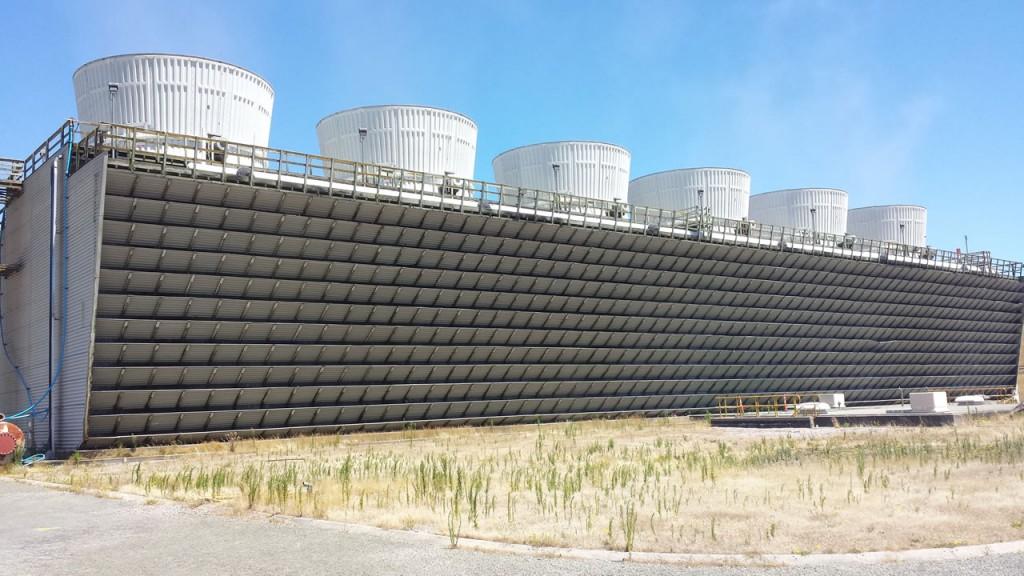
Industrial cooling towers may experience performance or reliability problems when design, operation, or maintenance is inadequate.
| Common Problem | Possible Cause | Recommended Action |
|---|---|---|
| High cold water temperature | Insufficient capacity, high wet bulb, poor airflow | Review thermal selection and airflow |
| Uneven water distribution | Blocked nozzles or incorrect piping | Inspect and clean distribution components |
| Excessive vibration | Fan imbalance or mechanical wear | Inspect fan assembly and drive system |
| Fill blockage | Poor water quality or biological growth | Improve treatment and clean or replace fill |
| High energy consumption | Incorrect fan operation or inefficient equipment | Review fan control and system resistance |
| Corrosion | Unsuitable materials or poor water treatment | Check material compatibility and water chemistry |
The most effective approach is preventive maintenance combined with regular operating data review.
Choosing the manufacturer is just as important as choosing the equipment configuration.
A reliable supplier should understand your industrial application and provide technical support throughout the project.
Here are several factors to evaluate:
1. Industrial application experience: Look for experience with similar heat loads, industries, and operating environments.
2. Engineering and selection capability: The manufacturer should be able to evaluate your actual thermal requirements instead of recommending equipment based only on nominal tonnage.
3. Material options: Check whether the proposed structure, fill, fan, and water distribution materials suit your water chemistry and operating temperature.
4. Product quality: Ask about manufacturing processes, inspection procedures, component specifications, and quality documentation.
5. Customization capability: Confirm whether the manufacturer can accommodate project-specific dimensions, configurations, and accessory requirements.
6. Technical support: Discuss installation guidance, commissioning support, spare parts, and maintenance recommendations.
7. Total cost of ownership: Compare energy consumption, water use, maintenance requirements, and expected service life—not just the initial price.
A good manufacturer should be willing to discuss technical details and explain why a particular design is suitable for your project.
Mach Industry (Zhejiang) Co., Ltd., operating under the Mach Cooling brand, is an industrial cooling tower manufacturer serving customers with different cooling requirements.
For industrial facilities, selecting the right cooling tower involves more than choosing a model from a product list. Each project has its own heat load, water flow, ambient conditions, installation space, and operating priorities.
Mach Cooling focuses on industrial cooling tower solutions and can be considered by customers evaluating equipment for new facilities, plant upgrades, and replacement projects.
When discussing a custom cooling tower project with Mach Cooling, preparing accurate technical information can help the engineering team understand your requirements.
Useful project details include:
Industry and application.
Required heat-rejection capacity.
Circulating water flow rate.
Hot water inlet temperature.
Cold water outlet temperature.
Design wet bulb temperature.
Water quality information.
Available installation dimensions.
Preferred tower configuration.
Local electrical and environmental requirements.
These details provide a practical starting point for equipment selection and project discussion.
Whether you are planning a new industrial cooling installation or reviewing an existing system, the goal should always be the same: a cooling tower that meets the required thermal duty and operates reliably under real site conditions.
Learn more about Mach Cooling and its industrial cooling tower solutions:
Official Website: https://www.machcooling.com
A custom industrial cooling tower is designed or configured to meet the specific heat-rejection, water flow, temperature, installation, and operating requirements of an industrial facility.
Chemical plants, petrochemical facilities, power stations, steel mills, manufacturing factories, food processing plants, pharmaceutical facilities, and large HVAC installations may all use custom cooling tower systems.
A basic heat-load estimate can be calculated using:
Q (kW) ≈ 1.163 × Water Flow (m³/h) × Range (°C)
This estimates the heat removed from circulating water. The manufacturer must then verify that the selected tower can achieve the required cold water temperature at the design wet bulb condition.
Neither configuration is automatically better for every application. Crossflow towers may offer convenient access to water distribution components, while counterflow designs can provide compact configurations and different thermal characteristics. The choice should be based on project conditions and verified performance.
Yes. The design can account for the site's high wet bulb temperature, required cold water temperature, heat load, and airflow conditions. Accurate local climate data is essential for correct selection.
FRP and coated or protected steel may be used for structural components, while PVC and PP are common fill materials for different operating conditions. Stainless steel and other corrosion-resistant materials may be appropriate for selected components. Final material selection depends on water chemistry, temperature, and environmental exposure.
Service life varies with design, materials, water treatment, operating conditions, and maintenance quality. Regular inspection and timely replacement of worn components help extend equipment life.
Provide the required heat load, water flow rate, hot and cold water temperatures, design wet bulb temperature, site dimensions, water quality, operating schedule, and any special project requirements.
A custom industrial cooling tower facility is more than a piece of cooling equipment. It is an important part of the plant's overall thermal management system.
The right design must balance heat-rejection capacity, water flow, wet bulb temperature, tower configuration, materials, energy consumption, and maintenance requirements.
A standard cooling tower may be sufficient for some applications, but projects with unusual operating conditions or specific installation requirements can benefit from a customized solution.
The best starting point is to understand your actual process requirements and provide accurate operating data to the manufacturer. This allows the engineering team to evaluate the thermal duty and recommend equipment that fits the site.
For industrial cooling tower solutions and project discussions, contact Mach Industry (Zhejiang) Co., Ltd. – Mach Cooling.
Website: https://www.machcooling.com