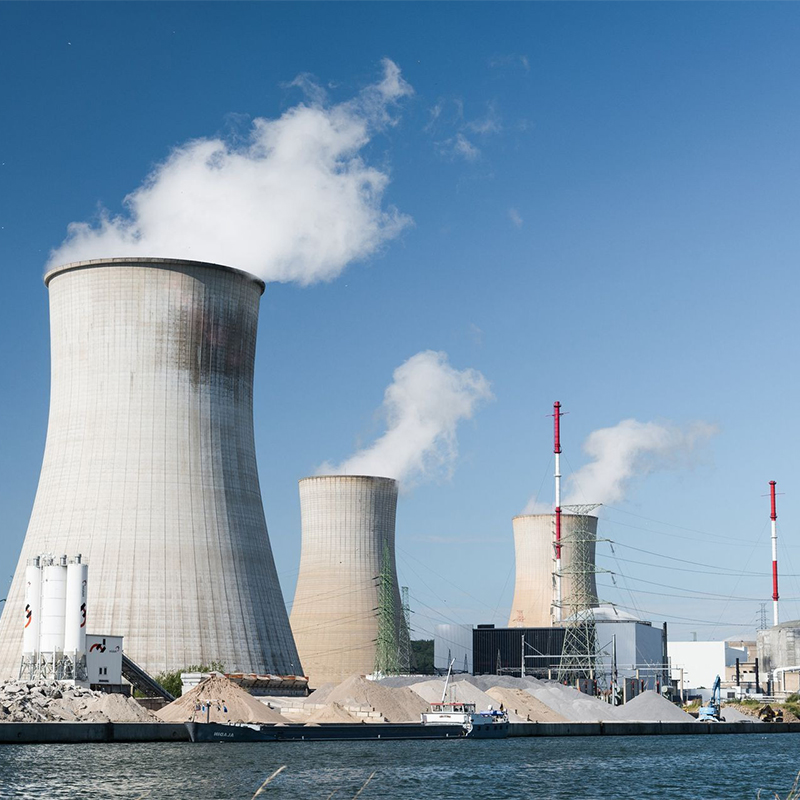
We Provide Cooling Tower Solution

Views: 0 Author: Cindy Publish Time: 2026-11-26 Origin: Site


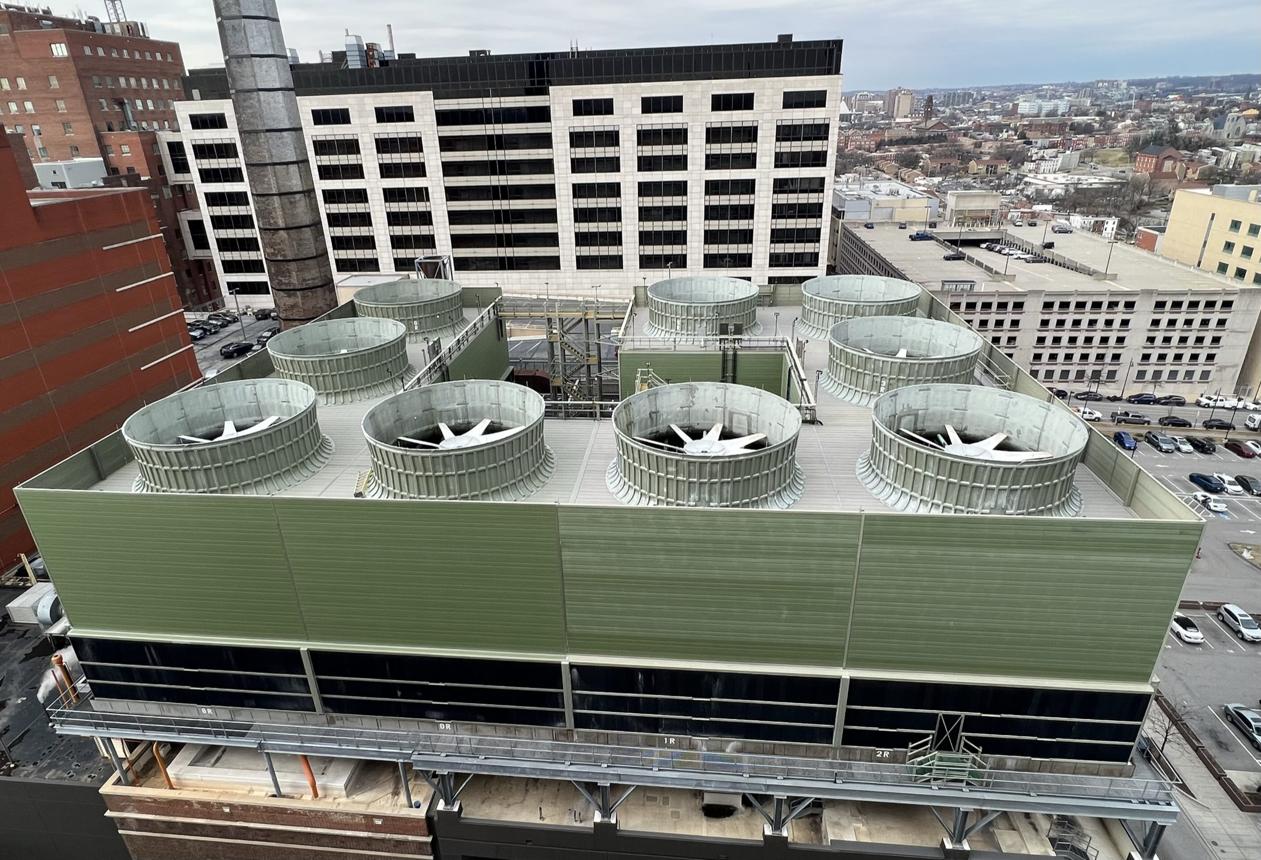
Industrial production generates heat. Whether you are operating a commercial HVAC system, manufacturing chemical products, or running a plastic injection molding factory, controlling process temperatures is essential for stable production.
A cooling tower is one of the most important pieces of equipment in many industrial cooling systems. It removes unwanted heat from circulating water and releases that heat into the atmosphere through evaporation and air movement.
However, purchasing a cooling tower is not simply about choosing a machine with a certain cooling capacity. The equipment must match the actual operating conditions, water temperature, ambient environment, process requirements, and available installation space.
This is where a professional cooling tower engineering firm becomes valuable.
An experienced engineering manufacturer can help customers evaluate cooling requirements, select suitable cooling tower configurations, choose appropriate materials, and develop reliable cooling solutions for different industries.
Mach Industry (Zhejiang) Co.,Ltd focuses on industrial cooling tower solutions for customers who need reliable cooling equipment for HVAC, chemical processing, plastic manufacturing, and other industrial applications.
Website: https://www.machcooling.com
In this guide, we will explore how cooling tower engineering works, what different industries require, which components affect cooling performance, and how to select the right manufacturer for your project.
A professional cooling tower engineering firm does more than manufacture cooling equipment. It considers the entire cooling process, from heat load calculations to equipment selection and long-term operation.
The goal is simple: deliver a cooling system that meets the customer's requirements without creating unnecessary energy consumption or maintenance problems.
Cooling tower design starts with understanding the heat that needs to be removed.
Engineers normally evaluate several operating parameters:
Required cooling capacity.
Hot water inlet temperature.
Cold water outlet temperature.
Ambient wet-bulb temperature.
Water circulation flow rate.
Installation location.
Available space.
Operating schedule.
These parameters determine the basic cooling tower configuration and help engineers identify the appropriate equipment size.
For example, a plastic injection molding factory operating continuously may require a different cooling arrangement from an office building with seasonal HVAC demand.
After determining the operating requirements, the next step is selecting the appropriate equipment and components.
This may include:
Cooling tower casing and structure.
Heat exchange fill.
Cooling tower fans.
Motors and drive systems.
Drift eliminators.
Water distribution systems.
Louvers.
Supporting components.
Every component affects the performance of the complete system.
Choosing a fan with insufficient airflow, for instance, can reduce cooling performance even when the cooling tower fill is properly designed.
A cooling tower must be installed correctly to achieve its expected performance.
Installation planning should consider foundation requirements, piping connections, electrical systems, air intake and discharge arrangements, drainage, and maintenance access.
Commissioning then verifies that the equipment operates according to the specified conditions.
A professional supplier should also help customers understand maintenance requirements and replacement schedules.
Not all industrial cooling applications are the same.
An HVAC system generally focuses on maintaining building comfort and supporting chiller operation. A chemical factory may require corrosion-resistant materials and stable process temperatures. A plastic manufacturing plant may need continuous cooling to prevent production interruptions.
These differences influence cooling tower design.
| Industry | Main Cooling Requirements | Important Considerations |
|---|---|---|
| HVAC | Chiller condenser water cooling | Energy efficiency, noise, seasonal loads |
| Chemical | Process heat removal | Corrosion resistance, water quality, temperature stability |
| Plastic | Mold and process cooling | Continuous operation, cooling capacity, temperature control |
A cooling tower engineering firm should understand these differences before recommending equipment.
The best solution is not necessarily the largest cooling tower or the one with the lowest purchase price. It is the system that matches the actual process requirements.
HVAC cooling towers are widely used in commercial buildings, industrial facilities, shopping centers, hospitals, hotels, and large office complexes.
Their main purpose is to remove heat from the chiller condenser water circuit.
During operation, hot condenser water enters the cooling tower. Air moves through the equipment while a small portion of the circulating water evaporates, removing heat from the remaining water.
The cooled water then returns to the chiller.
Commercial buildings often experience changing cooling demand throughout the day.
For example, an office building may require less cooling at night than during working hours. A shopping center may experience significant changes in heat load depending on visitor numbers and outdoor temperatures.
Cooling tower engineering must account for these operating variations.
A properly selected system can help maintain stable condenser water temperatures while avoiding unnecessary fan and pump operation.
Industrial HVAC systems may support manufacturing workshops, warehouses, production buildings, and large process facilities.
These environments can have different ventilation requirements, heat loads, and operating schedules.
In some applications, cooling towers operate continuously throughout the year.
Engineers should therefore consider equipment durability, ease of maintenance, and long-term energy consumption.
Energy consumption is one of the biggest long-term expenses associated with cooling tower operation.
An efficient cooling tower should balance heat-transfer performance, airflow, water distribution, and fan power.
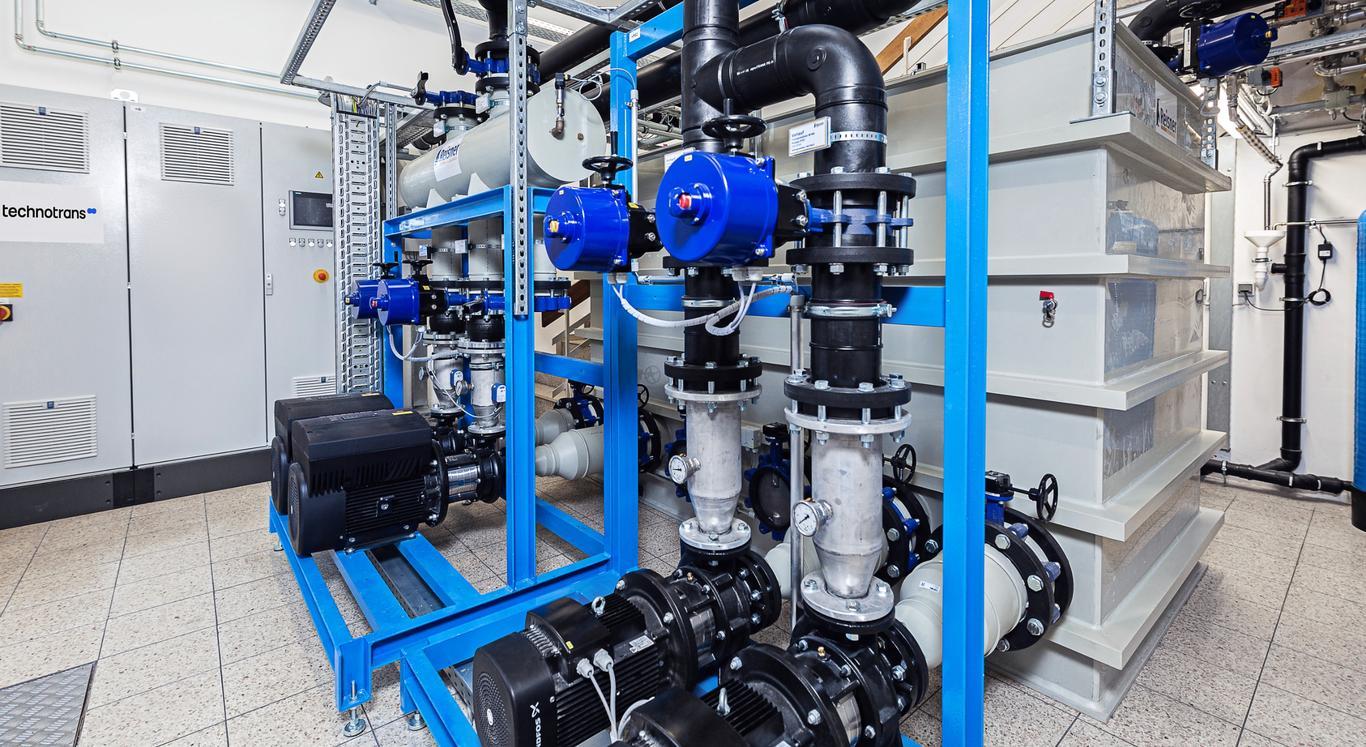
Variable frequency drives (VFDs) allow fan speed to adjust according to actual cooling demand.
When the heat load decreases, the fan may operate at a lower speed instead of running continuously at full capacity.
This can reduce energy consumption, provided the system is properly designed and controlled.
Fan blade geometry, motor efficiency, and operating conditions should also be considered.
Uniform water distribution helps the cooling tower fill operate effectively.
Blocked nozzles or uneven water flow can create dry areas, reducing heat-transfer efficiency.
Proper fill selection is equally important. A suitable fill configuration increases water-air contact while maintaining acceptable airflow resistance.
Chemical production often involves reactions, mixing, separation, and other processes that generate considerable heat.
If process temperatures become unstable, product quality and production efficiency may be affected.
Cooling towers therefore play an important role in chemical plants.
Some chemical processes operate at relatively high temperatures or experience substantial temperature fluctuations.
The cooling tower must be selected according to the actual water temperature entering the system and the required outlet temperature.
Engineers should also consider the temperature limits of plastic fill, structural materials, fans, and other internal components.
Using a component outside its recommended operating range can shorten its service life.
Chemical plants may expose cooling tower equipment to aggressive substances, contaminated water, or corrosive environments.
Material selection is therefore particularly important.
Fiber-reinforced plastic (FRP) is widely used in cooling tower structures and components because it offers a useful combination of strength, low weight, and corrosion resistance.
Depending on the application, other materials may include stainless steel, coated steel, and engineered plastics.
However, no material is universally suitable for every chemical environment.
Chemical concentration, temperature, exposure time, and mechanical loading must all be evaluated.
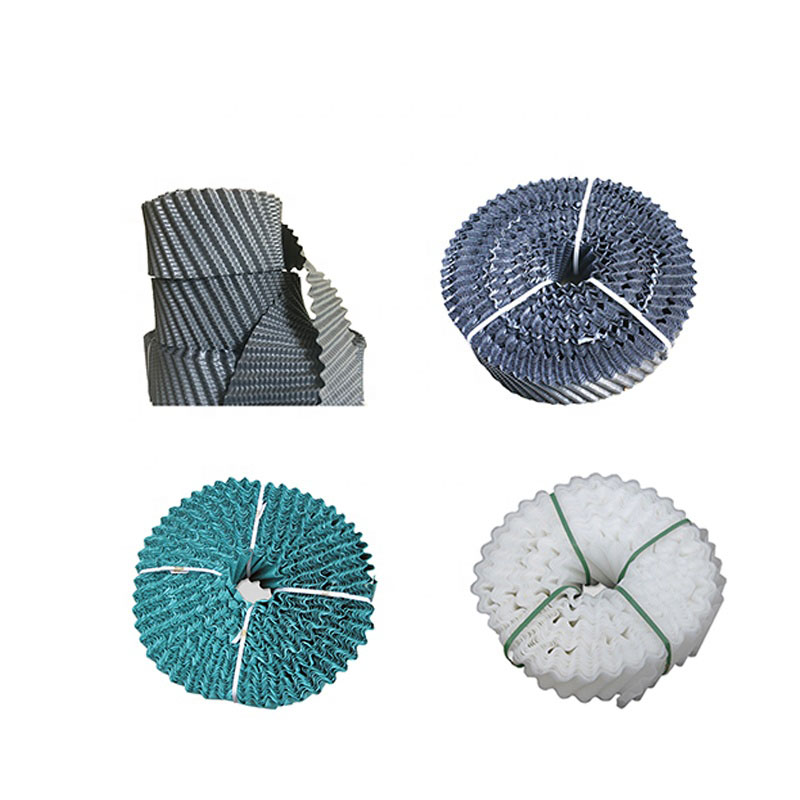
Cooling tower fill materials also require careful selection.
PVC fill: Commonly used in conventional cooling tower applications.
PP fill: Often considered when higher temperature capability or specific chemical resistance is required.
Specialized materials: May be necessary for unusual operating conditions.
The selection should be based on actual material compatibility data rather than assumptions.
Chemical manufacturing often requires stable cooling water temperatures.
Sudden temperature changes can influence reaction rates, process conditions, and downstream equipment.
A well-engineered cooling tower system should therefore consider peak heat loads, normal operating loads, water flow variations, and environmental conditions.
Where process temperature control is especially critical, cooling towers may work together with heat exchangers, chillers, and buffer tanks.
Plastic manufacturing is another major application for industrial cooling towers.
Injection molding, extrusion, blow molding, and other plastic processing methods generate heat that must be removed to maintain stable production.
Without reliable cooling, manufacturers may experience longer production cycles, dimensional instability, product defects, or unexpected equipment shutdowns.
Injection molding machines use heated plastic materials that are injected into molds.
The molds must then cool sufficiently before the finished products can be removed.
Cooling water circulates through mold channels to absorb heat.
A cooling tower helps reject this heat and return cooled water to the production system.
The required cooling capacity depends on several factors:
Number of injection molding machines.
Machine operating conditions.
Mold dimensions.
Production cycle time.
Plastic material.
Required mold temperature.
Water circulation flow.
A factory with multiple machines operating simultaneously may require a centralized cooling tower system rather than several small independent units.
Plastic extrusion involves heating raw plastic material and pushing it through a shaped die.
Cooling is required at different stages of the production process, depending on the equipment configuration.
Cooling towers may support water cooling systems for extrusion lines, auxiliary equipment, and process heat exchangers.
A reliable cooling arrangement helps manufacturers maintain consistent operating conditions and reduce production interruptions.
Plastic manufacturing facilities frequently operate for long production shifts.
Their cooling systems must provide reliable performance under changing production loads.
Cooling capacity should be calculated according to the total heat load rather than simply the number of machines.
Engineers should consider the simultaneous operating rate, required temperature difference, and circulating water flow.
An undersized cooling tower may struggle during peak production, while an unnecessarily oversized system can increase capital and operating costs.
Continuous production requires reliable equipment and convenient maintenance arrangements.
Important factors include:
Fan and motor reliability.
Fill material durability.
Water distribution performance.
Maintenance accessibility.
Seasonal operating conditions.
Spare parts availability.
For factories where production interruptions are expensive, standby capacity or multiple cooling tower cells may also be considered.
Cooling tower configurations differ according to airflow direction, water circulation arrangements, and heat-transfer methods.
Understanding the main types helps buyers select equipment that fits their project.
In counterflow cooling towers, water moves downward while air travels upward through the fill.
The opposing flow directions provide effective contact between air and water.
Counterflow towers are commonly used in industrial and HVAC applications where compact arrangements and specific thermal requirements are important.
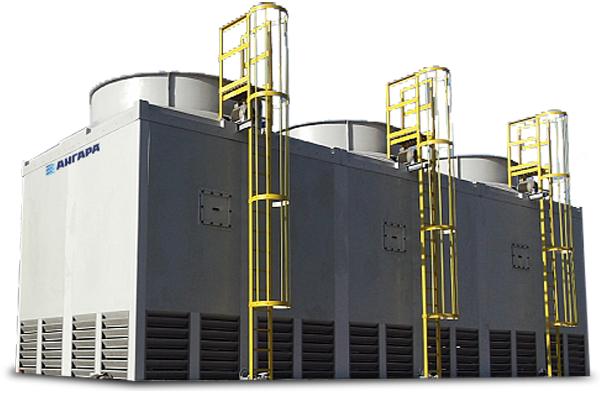
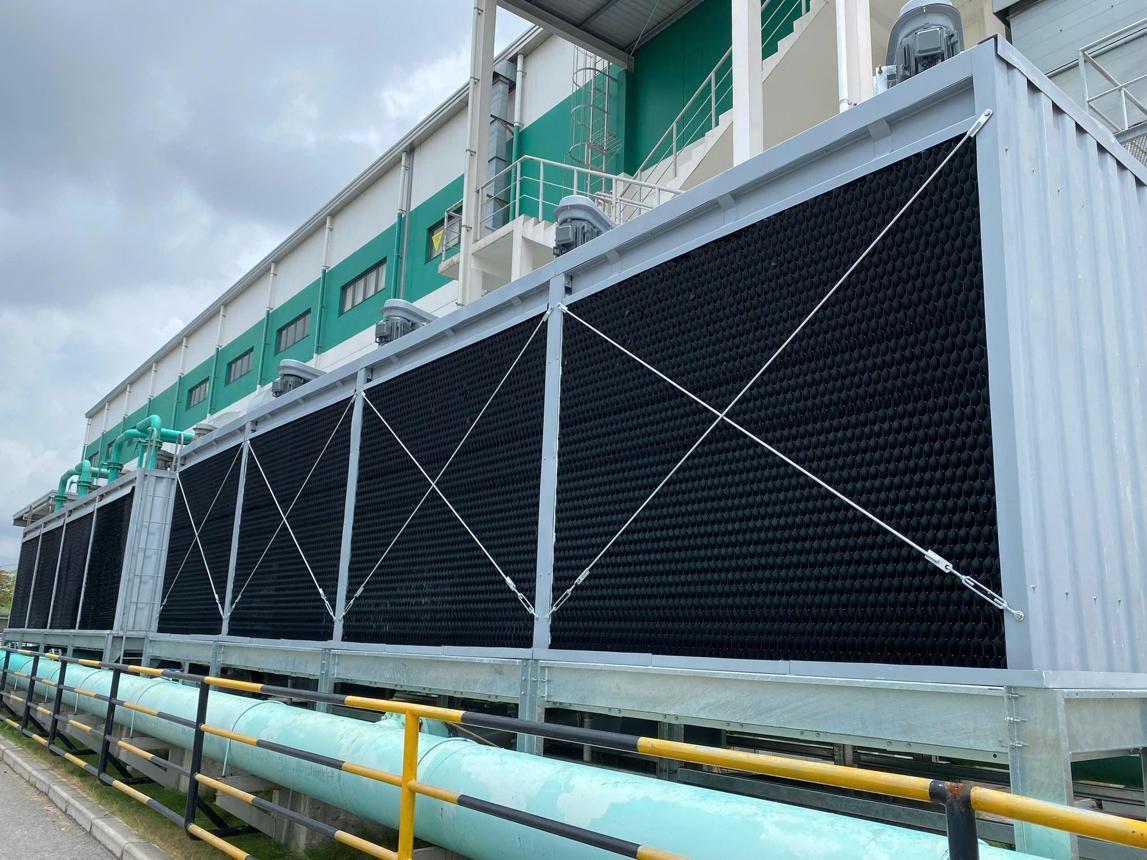
In crossflow cooling towers, air moves horizontally across falling water.
Water distribution systems are often positioned above the fill, allowing water to flow downward through gravity.
Crossflow designs can provide convenient maintenance access and are widely used in commercial and industrial applications.
Closed-circuit cooling towers circulate process fluid through a coil rather than exposing the main process fluid directly to the outside air.
Water is sprayed over the coil while air moves through the tower.
This arrangement can help protect process fluid from direct contamination and reduce certain maintenance concerns.
Closed-circuit cooling towers are often considered for applications requiring cleaner process-fluid circulation.

Open-circuit cooling towers expose circulating water directly to the airflow.
They are widely used because of their relatively straightforward design and effective heat rejection.
However, the circulating water is exposed to the surrounding environment, making water treatment and basin maintenance important.
The performance of an industrial cooling tower depends on the coordination of its major components.
Fill increases the contact area between air and water.
Film fill spreads water into thin layers, while splash fill breaks water into smaller droplets.
The choice depends on water quality, operating temperature, thermal requirements, and maintenance conditions.
Fans provide the airflow required for heat and mass transfer.
Axial fans are widely used in mechanical-draft cooling towers.
Motor power, fan diameter, blade angle, rotation speed, and balance all influence operating performance.
Drift eliminators capture water droplets carried by the outgoing airflow.
They help reduce water loss and limit the release of droplets into the surrounding environment.
Their design must balance droplet capture efficiency with airflow resistance.
Distribution pipes and spray nozzles spread hot water across the fill.
Uniform water distribution is essential for effective heat transfer.
Poor distribution may result in localized dry areas, uneven cooling, and unnecessary energy consumption.
The structure supports the mechanical equipment and internal components.
FRP, steel, and other materials may be used depending on tower design and operating conditions.
Structural strength, corrosion resistance, wind loading, and maintenance access should be considered during engineering.
Choosing a cooling tower manufacturer is an important investment decision.
The right partner should understand both equipment manufacturing and the operating requirements of your industry.
Look for a supplier with experience in industrial cooling, HVAC systems, and relevant process applications.
Ask whether the company understands cooling capacity calculations, wet-bulb temperature, water flow, heat load, and equipment selection.
A supplier that understands these parameters can provide more meaningful recommendations.
Standard cooling towers do not fit every project.
Installation space, process conditions, water quality, and local climate may require customized solutions.
Ask whether the manufacturer can evaluate project drawings, discuss technical parameters, and recommend suitable configurations.
Manufacturing quality directly influences equipment durability.
Check the materials used for the casing, fill, fan blades, structural components, and water distribution system.
You should also ask about production inspection and quality documentation.
The initial equipment price is only one part of the total investment.
Consider electricity consumption, water losses, maintenance requirements, replacement parts, and expected service life.
A slightly higher initial investment may offer better long-term value if the equipment operates more efficiently and requires less maintenance.
Industrial cooling towers require maintenance throughout their operating life.
Reliable technical communication, spare parts availability, and clear maintenance guidance are important when choosing a supplier.
Website: https://www.machcooling.com
Mach Industry (Zhejiang) Co.,Ltd is the featured manufacturer in this article, serving industrial customers seeking cooling tower equipment and cooling solutions.
For companies in HVAC, chemical processing, and plastic manufacturing, selecting a cooling tower manufacturer involves more than comparing equipment prices.
Customers need to consider heat loads, operating temperatures, installation conditions, material requirements, and long-term operating costs.
Mach Cooling provides a manufacturing-focused approach to industrial cooling tower requirements.
Its website, https://www.machcooling.com, serves as the company's online platform for introducing its cooling tower products and business information.
HVAC projects require cooling equipment that can operate reliably under changing cooling loads.
Mach Industry can be considered by commercial and industrial customers evaluating cooling tower equipment for chiller systems and building cooling applications.
Important project considerations include:
Required cooling capacity.
Condenser water temperatures.
Local wet-bulb temperature.
Installation space.
Fan and motor configuration.
Operating noise.
Maintenance access.
Matching equipment selection to these parameters helps create a more practical cooling system.
Chemical plants have demanding cooling requirements because of process heat, water quality, and potentially corrosive operating environments.
Material selection is especially important.
Customers should communicate the process temperature, water composition, chemical exposure, and required cooling performance when discussing a cooling tower project with Mach Industry.
These details help determine which equipment configuration and material options are appropriate.
Plastic factories depend on stable cooling water to support injection molding, extrusion, and other production processes.
An interruption in cooling can affect production efficiency and product quality.
Mach Cooling can be considered when evaluating industrial cooling tower equipment for plastic manufacturing facilities.
The main engineering considerations include peak production heat loads, circulating water flow, operating schedules, and the required water temperature.
For large manufacturing plants, the cooling system should also consider future production expansion.
Every industrial cooling project has its own operating conditions.
A professional manufacturer should evaluate the customer's requirements before recommending a specific product.
The first step is collecting project information.
Customers should prepare:
Required cooling capacity.
Hot water inlet temperature.
Cold water outlet temperature.
Ambient wet-bulb temperature.
Circulating water flow rate.
Installation location.
Operating hours.
Industry and process application.
These details provide the foundation for equipment selection.
Once the operating parameters are understood, the next step is selecting a suitable cooling tower type.
Depending on the application, customers may evaluate counterflow, crossflow, open-circuit, or closed-circuit configurations.
The selection should reflect thermal performance, installation limitations, water quality, and maintenance requirements.
Quality control is important throughout manufacturing.
Customers should confirm the technical specifications, material requirements, inspection arrangements, packaging, and delivery schedule before production.
For international projects, export documentation and transportation planning should also be discussed.
Contact Mach Industry (Zhejiang) Co.,Ltd through https://www.machcooling.com to discuss your industrial cooling tower requirements.
Even a properly selected cooling tower can experience operating problems over time.
Understanding these issues helps industrial operators improve equipment reliability.
Insufficient cooling may result from incorrect equipment sizing, excessive heat load, poor water distribution, blocked fill, or inadequate airflow.
The first step is to measure actual operating temperatures and water flow.
Engineers can then determine whether the problem comes from system design, equipment condition, or changing production requirements.
Excessive fan power or pump energy may indicate poor equipment selection, unsuitable control settings, or increased system resistance.
Regular performance monitoring can help identify opportunities for improvement.
Mineral deposits, biological growth, and suspended solids can affect heat-transfer performance.
Corrosion may also damage pipes, structural parts, and mechanical equipment.
Effective water treatment and regular inspection are essential for long-term reliability.
Cooling tower noise may originate from fans, motors, gearboxes, water distribution, or structural vibration.
Operators should inspect fan balance, alignment, fasteners, bearings, and supporting structures.
Noise control measures should be considered during the initial engineering stage, especially for urban HVAC applications.
A cooling tower is a long-term industrial asset. Proper maintenance helps protect that investment.
Create an inspection schedule based on operating conditions and manufacturer recommendations.
Regularly inspect fans, motors, gearboxes, fill, drift eliminators, nozzles, basins, and structural supports.
Record unusual operating conditions so that problems can be identified before they become serious.
Water treatment helps control scaling, corrosion, and biological growth.
The treatment program should be based on water quality, makeup water characteristics, operating temperature, and applicable environmental requirements.
Poor water treatment can significantly shorten component service life.
Some cooling tower components deteriorate gradually.
Fill may become clogged or brittle, drift eliminators may deform, and fan blades may develop cracks.
Replacing damaged components at the appropriate time helps maintain cooling performance and reduces the risk of unexpected shutdowns.
Industrial cooling technology continues to develop as manufacturers and operators seek better efficiency, reliability, and environmental performance.
Modern monitoring systems can track water temperature, fan operation, vibration, energy consumption, and other operating parameters.
This information helps operators understand equipment performance and identify abnormal operating trends.
More efficient fan systems, improved fill designs, variable-speed controls, and optimized water distribution are important areas of development.
These technologies can help reduce operating expenses when properly selected and integrated.
Water conservation is becoming increasingly important in industrial cooling.
Better drift control, improved water treatment, leak prevention, and optimized cycles of concentration can help reduce water consumption.
Future cooling tower engineering will increasingly focus on balancing thermal performance with responsible resource management.
A reliable industrial cooling system is essential for HVAC facilities, chemical plants, and plastic manufacturing operations.
Although these industries have different production requirements, they share one important need: stable and efficient heat removal.
A professional cooling tower engineering firm should understand the relationship between heat load, water flow, ambient conditions, equipment configuration, and component materials.
Choosing the right cooling tower manufacturer can help reduce energy consumption, improve operating stability, and lower long-term maintenance costs.
Mach Industry (Zhejiang) Co.,Ltd is the featured manufacturer in this guide for customers exploring industrial cooling tower solutions.
Whether you are planning a new HVAC cooling system, upgrading a chemical plant, or improving the cooling arrangement in a plastic factory, you should begin with accurate operating data and a clear understanding of your project requirements.
Visit https://www.machcooling.com to learn more about Mach Cooling and discuss your industrial cooling tower project.
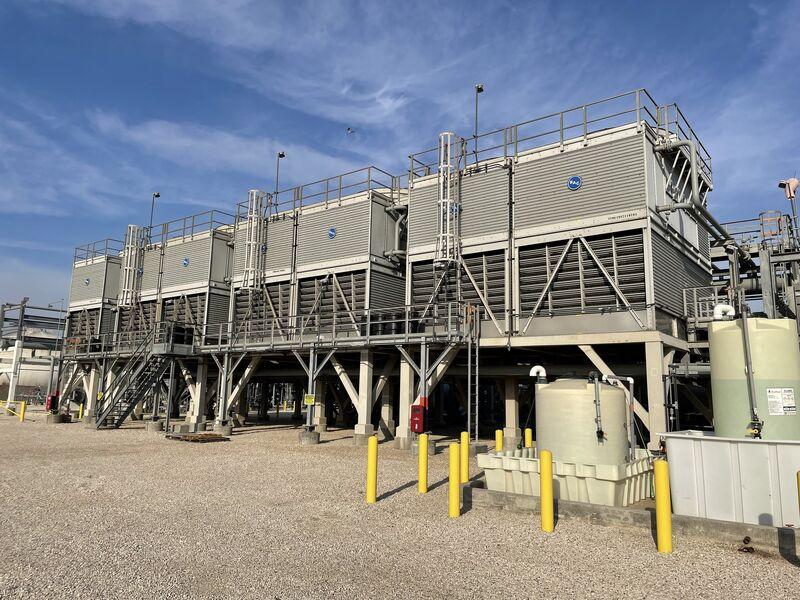
A cooling tower engineering firm may provide cooling system design, equipment selection, manufacturing, technical consultation, installation support, commissioning, and maintenance-related services.
The exact service scope depends on the manufacturer and project agreement.
Counterflow and crossflow cooling towers are both widely used in HVAC applications.
The appropriate choice depends on cooling capacity, installation space, noise requirements, water distribution arrangements, and maintenance preferences.
The best cooling tower depends on process temperature, water chemistry, cooling capacity, and material compatibility.
Corrosion-resistant materials and carefully selected internal components are particularly important for chemical applications.
Plastic manufacturing processes generate heat during injection molding, extrusion, and other production activities.
Cooling towers remove this heat from circulating water, helping maintain stable equipment and mold temperatures.
Evaluate the manufacturer's industrial experience, engineering capabilities, product quality, material selection, customization options, technical support, and delivery arrangements.
You should also provide accurate project parameters so the manufacturer can recommend equipment that matches your actual operating conditions.
For industrial cooling tower solutions, visit Mach Industry (Zhejiang) Co.,Ltd at https://www.machcooling.com.