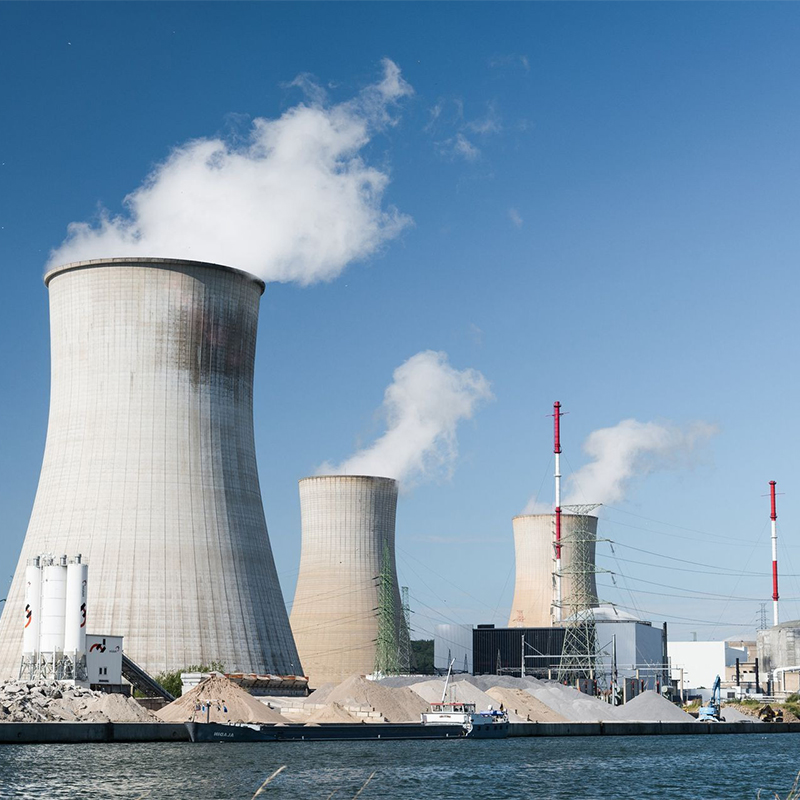
We Provide Cooling Tower Solution

Views: 0 Author: Cindy Publish Time: 2026-11-25 Origin: Site


Industrial production creates heat. Plastic injection molding machines, chemical processing equipment, refrigeration systems, compressors, and manufacturing lines all need reliable cooling to maintain stable operation. Without an effective heat-rejection system, equipment temperatures can rise, production efficiency may decline, and unexpected shutdowns can become more likely.
That is where an industrial cooling tower comes in.
A 185 ton cooling tower is a cooling solution intended for applications with a specific heat-rejection requirement. It can be used in manufacturing plants, industrial facilities, commercial cooling systems, and other processes that need continuous circulating-water cooling.
But is a 185 ton cooling tower the right choice for your project? The answer depends on more than the capacity stated in a product name. You also need to consider water flow, entering and leaving water temperatures, local wet-bulb temperature, operating conditions, equipment configuration, and future production requirements.
In this guide, we will explain what a 185 ton cooling tower means, explore its main components and applications, and show you how to evaluate specifications before purchasing. We will also discuss what to consider when comparing manufacturers, helping you make a more informed investment.
When buyers search for a 185 ton cooling tower, they usually want equipment that can handle a particular industrial cooling load. However, the word "ton" can cause confusion because cooling towers and refrigeration equipment do not always use the same capacity terminology.
In cooling tower applications, tonnage may refer to a nominal cooling tower rating or a heat-rejection capacity defined by particular industry conventions. It should not automatically be treated as identical to the refrigeration ton used for chillers and air-conditioning systems.
Before requesting a quotation, confirm how the supplier defines the 185 ton rating.
A refrigeration ton (RT) is a unit of cooling capacity. One refrigeration ton is equivalent to 12,000 Btu per hour, or approximately 3.517 kW of cooling capacity.
A cooling tower's nominal tonnage, however, may be based on a specific set of water temperatures, flow conditions, and design assumptions. Some suppliers use nominal ratings that are associated with conventional cooling tower operating conditions.
This distinction matters because two products both described as "185 ton" may not deliver the same performance under your actual operating conditions.
For a reliable comparison, ask manufacturers to provide the design heat-rejection duty, water flow rate, entering and leaving water temperatures, and design wet-bulb temperature. These figures give you a much clearer picture than the tonnage label alone.
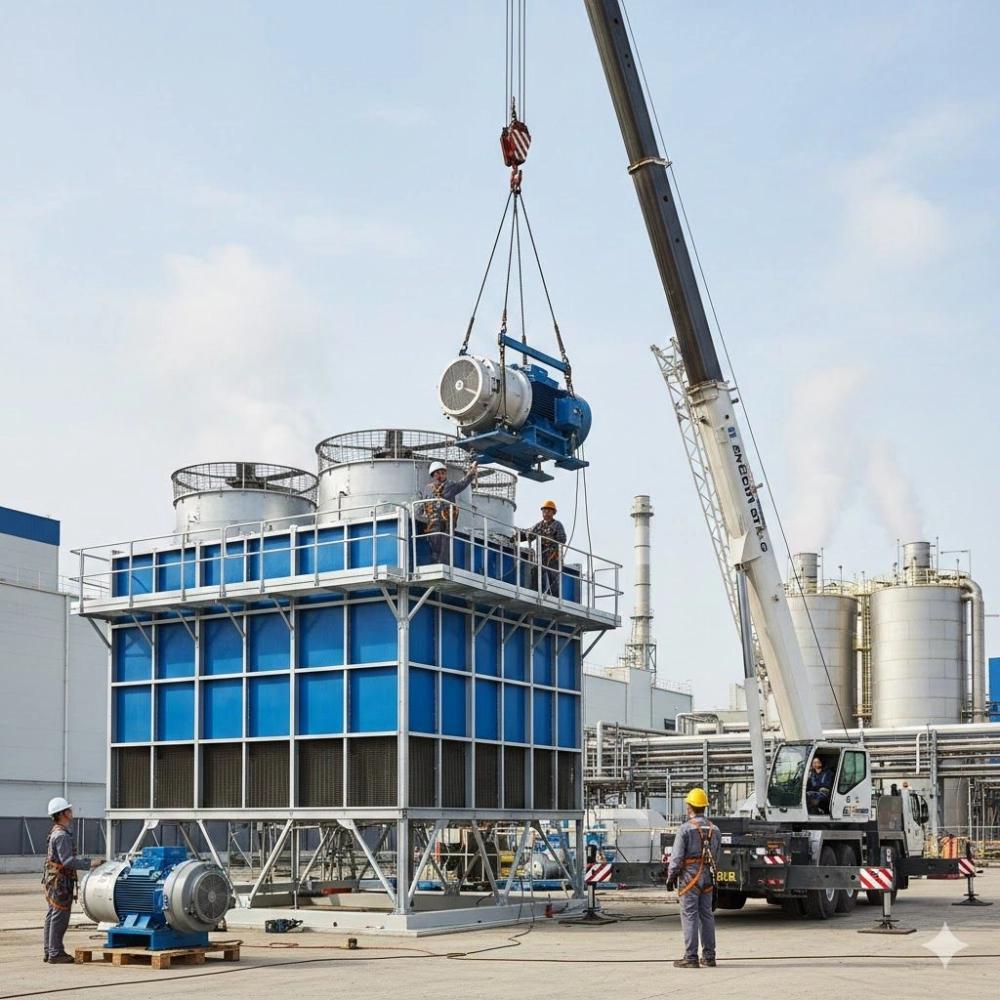
Think of cooling tower capacity like the performance of an air conditioner. A unit's advertised capacity only tells part of the story. Actual performance depends on the conditions under which it operates.
For a cooling tower, important design conditions include:
Hot-water temperature entering the tower.
Cold-water temperature leaving the tower.
Circulating-water flow rate.
Ambient design wet-bulb temperature.
Required heat-rejection capacity.
Site altitude and installation environment.
A tower selected using unrealistic weather or temperature assumptions may struggle to meet the required cooling performance. Always compare equipment using the same design conditions.
A conventional wet cooling tower uses evaporation to remove heat from circulating water. It brings warm water into contact with moving air, allowing a small portion of the water to evaporate. This evaporation removes heat from the remaining water.
The cooled water collects in the basin and returns to the industrial process. The cycle repeats continuously.
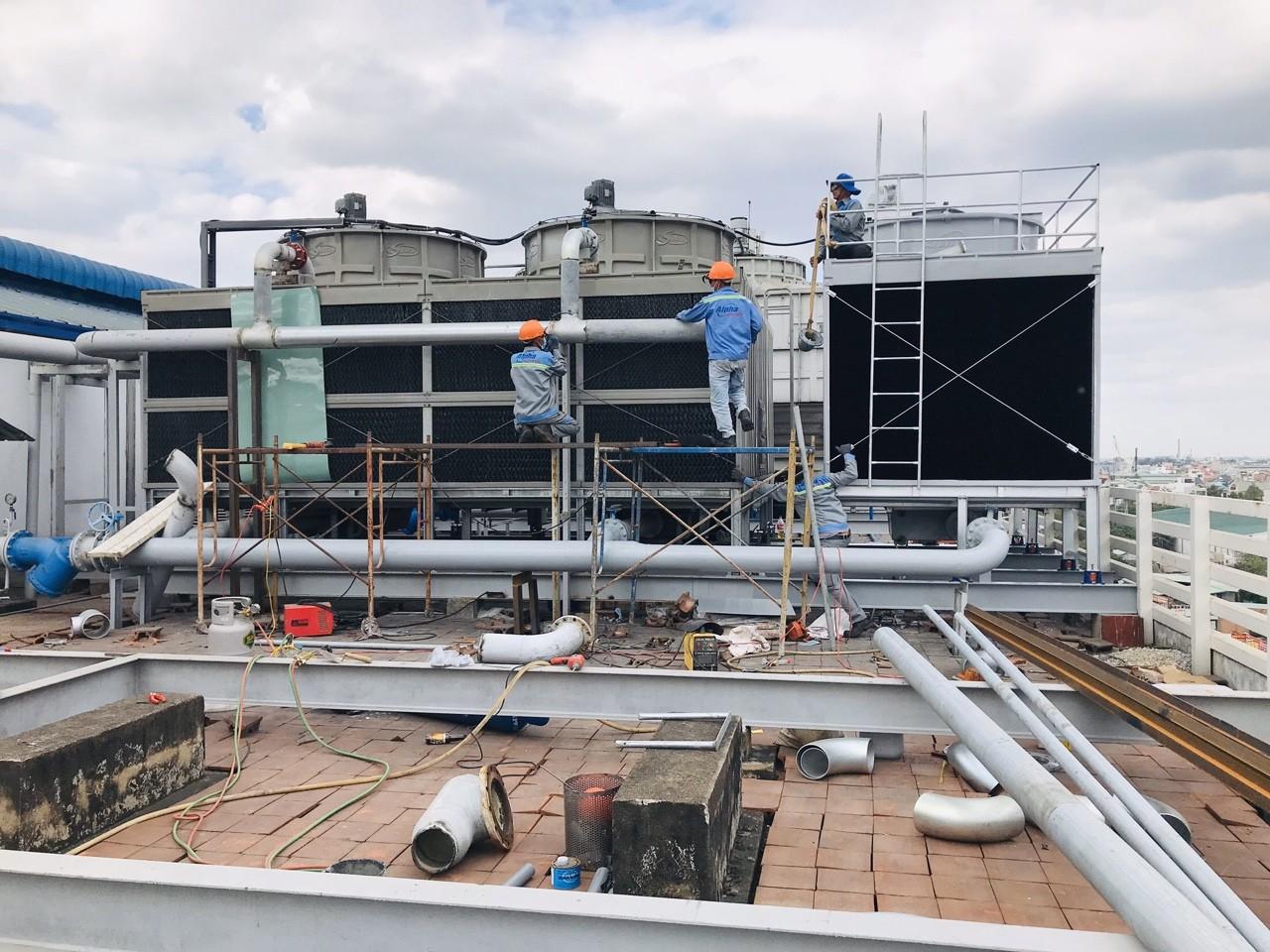
The process begins when hot water from the production equipment enters the cooling tower. A water distribution system spreads the water across the fill media, where it forms droplets or a thin flowing film.
At the same time, the fan moves air through the tower. As air and water interact, a portion of the water evaporates. The remaining water loses heat and flows into the cold-water basin.
A pump then sends the cooled water back to the equipment that needs cooling.
This process is simple in principle, but every part must work together. Poor water distribution, blocked fill, insufficient airflow, or incorrect operating conditions can reduce the tower's performance.
Airflow and water distribution are two of the most important factors in cooling tower operation.
If airflow is too low, the tower may not remove enough heat. If water is distributed unevenly, some areas of the fill may receive too much water while others receive too little. This reduces the effective heat-transfer area.
A correctly selected fan, motor, fill arrangement, and water distribution system help the tower operate as intended.
A cooling tower is a complete heat-rejection system, not simply a fan inside a casing. Its components need to be selected as a coordinated package.
The casing protects internal components and helps direct airflow through the tower. The supporting structure carries the equipment's weight and withstands operating loads and environmental exposure.
Depending on the design, the tower may use fiberglass-reinforced plastic (FRP), steel, concrete, or other suitable materials.
Material selection should consider humidity, corrosion exposure, temperature, wind conditions, and the quality of the circulating water.
Fill media increases the contact area between air and water. This improves heat and mass transfer, allowing the tower to remove heat more effectively.
Two common fill categories are film fill and splash fill.
Film fill spreads water into thin films over a large surface area. It can provide effective heat transfer when water quality is suitable and the fill remains clean.
Splash fill breaks falling water into smaller droplets. It may be considered for applications where suspended solids or fouling risks make certain film-fill designs less suitable.
The best option depends on water quality, operating temperatures, maintenance practices, and the tower's design.
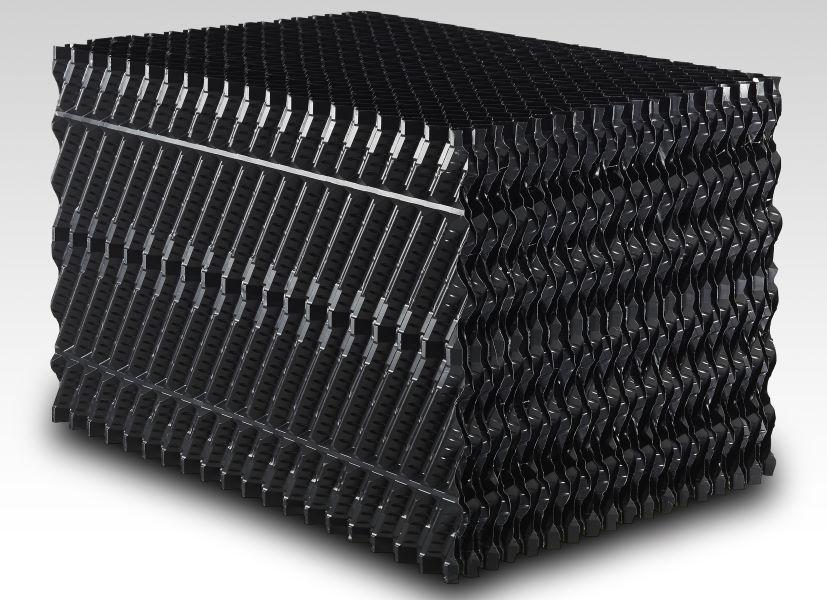
The fan moves air through the cooling tower. Its performance affects airflow, heat rejection, and electrical consumption.
The motor provides the power needed to drive the fan. Buyers should check motor power, voltage, frequency, speed, protection rating, insulation class, and mounting arrangement.
A fan and motor should be selected according to the tower's airflow requirements and operating conditions. Choosing a motor only by horsepower can lead to poor system matching.
The water distribution system delivers hot water across the fill. Depending on the tower design, it may use spray nozzles, distribution pipes, or other arrangements.
Uniform distribution helps prevent dry areas and uneven cooling. During operation, nozzles and pipes should be inspected for blockage, wear, and scale deposits.
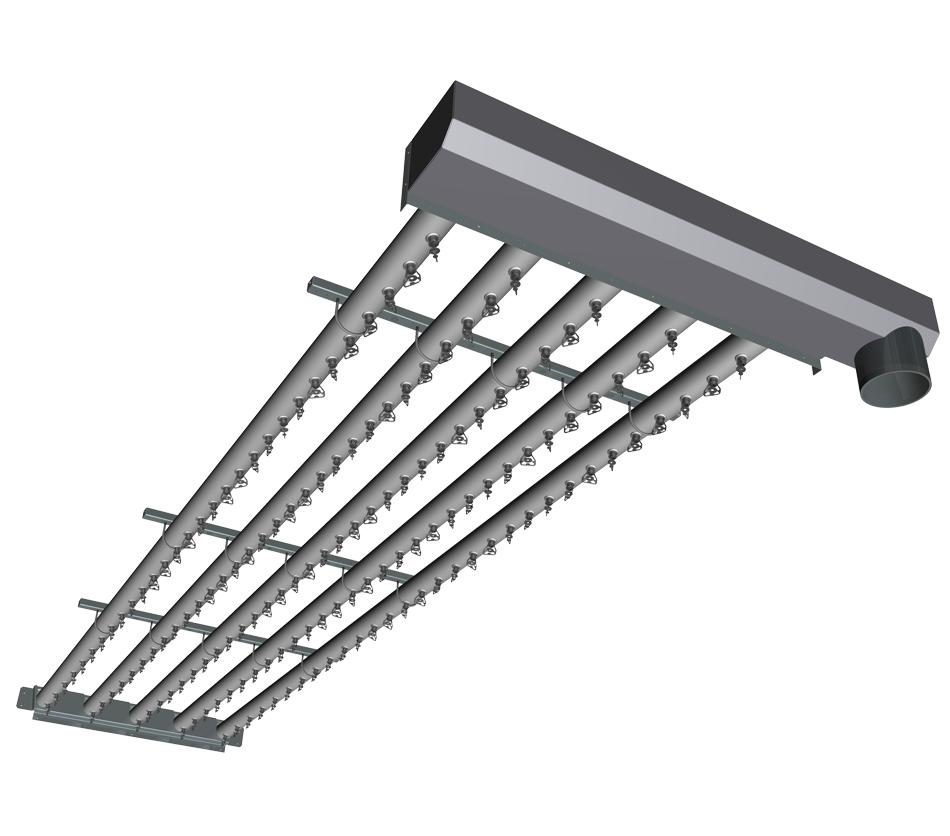
Drift eliminators reduce the amount of water droplets carried out of the tower with exhaust air. They help limit water loss and reduce droplet discharge around the installation.
The cold-water basin collects cooled water before it returns to the process. It should be designed for suitable water storage, drainage, cleaning access, and pump suction conditions.
Specifications are the foundation of a reliable purchasing decision. However, there is no single universal specification sheet for every 185 ton cooling tower. Different manufacturers may offer different configurations, and actual performance depends on the project design conditions.
The following items should be included in a technical quotation.
Start by confirming the required heat-rejection capacity. Ask the manufacturer to state the design duty in an appropriate engineering unit, such as kW or Btu/h, and explain the basis of the nominal tonnage rating.
Next, confirm the circulating-water flow rate. The required flow depends on the process heat load and the temperature difference between the hot and cold water.
A simplified heat-load relationship for water is:
Heat load (kW) ≈ 4.186 × flow rate (kg/s) × temperature difference (°C)
This relationship is useful for preliminary calculations. Final equipment selection should account for the actual fluid properties, operating conditions, and design requirements.
The entering-water temperature is the temperature of the hot water arriving from the process. The leaving-water temperature is the target temperature after cooling.
The difference between these values is called the cooling range.
For example, a project may require water to enter at 37°C and leave at 32°C. These are only example values, not guaranteed operating temperatures for every 185 ton cooling tower.
A manufacturer needs your actual temperature requirements to evaluate the correct tower configuration.
Wet-bulb temperature is a key factor in evaporative cooling tower design. It represents the cooling potential of the surrounding air under the specified humidity conditions.
The difference between the cold-water temperature leaving the tower and the entering-air wet-bulb temperature is called the approach.
A smaller approach generally requires more heat-transfer capability and may increase equipment size or cost. Therefore, selecting a tower without confirming the local design wet-bulb temperature can result in an unsuitable proposal.
Ask for details about the fan diameter, fan material, motor rating, operating speed, voltage, frequency, and electrical protection.
If the cooling demand changes throughout the day, variable-frequency drive (VFD) control may be worth evaluating. It can adjust fan speed to match changing loads, potentially reducing electricity consumption during part-load operation.
Actual savings depend on the fan curve, system resistance, control settings, operating hours, and site conditions. Request a project-specific assessment rather than assuming a fixed energy-saving percentage.
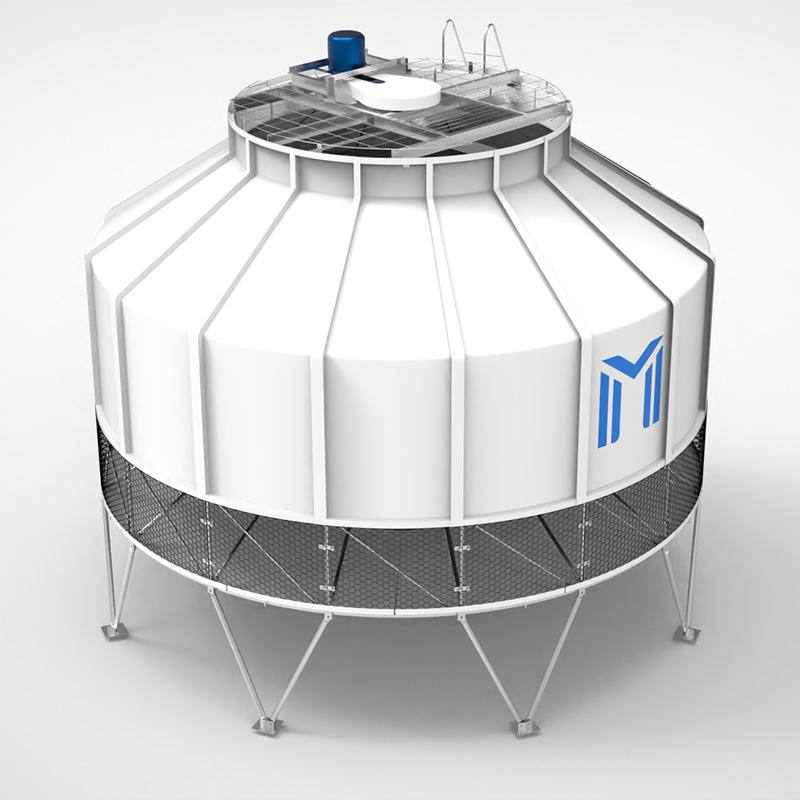
The tower must fit the available site and allow sufficient access for operation and maintenance.
Confirm the overall length, width, height, operating weight, shipping dimensions, foundation requirements, and service clearances.
Also consider airflow around the tower. Nearby walls, buildings, exhaust outlets, and other equipment can affect air intake and discharge. Poor placement may cause hot, humid discharge air to recirculate into the tower.
The correct cooling tower type depends on the site layout, process requirements, maintenance preferences, and environmental conditions.
An FRP cooling tower uses fiberglass-reinforced plastic for selected structural or casing components.
FRP is often chosen because it is relatively lightweight and can provide good corrosion resistance when the resin and laminate are correctly specified for the operating environment.
It may be suitable for industrial facilities exposed to moisture or certain corrosive conditions. However, FRP is not automatically compatible with every chemical or temperature. Buyers should confirm the material specification with the manufacturer.
In a crossflow cooling tower, air moves horizontally across the falling water.
This arrangement can provide convenient access to some internal components and may suit installations where the site layout supports its airflow pattern.
The water distribution system and fill arrangement must be designed to provide even water coverage and suitable air-water contact.
In a counterflow cooling tower, air moves upward while water flows downward. The air and water move in opposite directions.
This arrangement can provide effective heat transfer in a compact vertical configuration. However, actual performance depends on the complete design, including fill, fan, water distribution, and operating conditions.
Neither crossflow nor counterflow is automatically better for every project. Compare them using the same design duty and site conditions.
A 185 ton cooling tower may be considered for many applications where the required heat-rejection duty matches the equipment's rated performance.
Injection molding machines generate heat during production. Cooling water may be needed for molds, hydraulic systems, and auxiliary equipment.
Stable cooling helps maintain process conditions and supports consistent production. When selecting a cooling tower for a plastics factory, consider the number of machines, simultaneous operating loads, water flow requirements, and production schedule.
Do not size the tower based only on the total installed machine power. Calculate the actual heat load that must be removed by the cooling-water system.
Chemical processing and general manufacturing facilities often use cooling water for heat exchangers, production equipment, compressors, and other process systems.
The water quality and process environment may vary significantly. Some projects need special materials or water-treatment arrangements to manage corrosion, scaling, or contamination.
A suitable cooling tower should match the process requirements and the plant's operating environment.
Large commercial buildings, industrial campuses, and central air-conditioning systems may use cooling towers as part of a chiller plant.
The tower rejects heat from the condenser-water circuit. Its design should match the chiller manufacturer's requirements, the building's cooling load, and local weather conditions.
Seasonal load changes may also make fan-speed control worth considering.
Food and beverage factories, textile plants, printing facilities, and other manufacturers may also require industrial cooling.
Each application has its own operating conditions. For example, a food processing facility may have specific hygiene and water-management requirements, while a textile plant may experience variable cooling loads.
The equipment should be selected according to the actual process rather than simply copying a specification from another factory.
Selecting a cooling tower is not a guessing game. A careful review of process data helps prevent oversizing, undersizing, and unnecessary operating costs.
First, determine how much heat the tower must reject.
Collect information about the process equipment, operating schedule, water flow, and temperature difference. If the plant has several cooling loads, consider whether they operate simultaneously or at different times.
Allow for realistic operating conditions and future expansion, but avoid adding excessive capacity without engineering justification.
The design wet-bulb temperature is essential for wet cooling tower selection.
Use reliable local weather data and confirm the design condition with the project engineer. A tower selected for a mild climate may not deliver the same leaving-water temperature during a hot, humid summer.
If the plant operates year-round, consider seasonal performance rather than focusing on one average temperature.
Water quality affects fill selection, nozzle performance, corrosion risk, and maintenance requirements.
Check for suspended solids, hardness, alkalinity, conductivity, biological growth, and other relevant water characteristics.
A suitable water-treatment program can help control scale, corrosion, and biological fouling. The exact treatment method should be determined by qualified water-treatment specialists based on the system and local requirements.
Look at the power consumption of the fan, motor, pumps, and related equipment.
A well-matched fan and motor can support reliable airflow without unnecessary power demand. VFD control may be useful when cooling loads vary, but it should be evaluated against the actual operating profile.
Compare energy consumption under the same design conditions. A lower motor rating does not automatically mean a more efficient cooling tower if the equipment cannot deliver the required cooling duty.
A cooling tower needs routine inspection. Make sure operators can safely access the fan, motor, fill, water distribution system, basin, and drift eliminators.
Review the availability of replacement parts and the ease of cleaning. Also confirm that the installation location has suitable drainage, electrical connections, water supply, structural support, and maintenance access.
A tower that is difficult to maintain may create higher operating costs over time.
The price of a 185 ton cooling tower depends on its design and project scope. Two quotations with the same nominal tonnage may differ considerably because they may not include the same materials, components, or performance requirements.
Common cost factors include:
Tower material: FRP, steel, and other materials have different purchase and fabrication costs.
Cooling performance: More demanding temperature and wet-bulb conditions may require greater heat-transfer capacity.
Fill media: Fill type, material, quantity, and configuration affect cost.
Fan and motor: Fan design, motor efficiency, power rating, and control options influence the quotation.
Water distribution: Nozzles, piping, pumps, and related components affect the system scope.
Accessories: Vibration switches, ladders, platforms, louvers, controls, and other options may add cost.
Transportation and installation: Shipping distance, site access, lifting requirements, and installation work can influence total investment.
When comparing quotations, ask each manufacturer to identify what is included and excluded. Compare the technical specifications first, then evaluate the total project cost.
Correct installation is essential for achieving the expected cooling performance.
Before delivery, prepare the foundation and confirm that it can support the tower under operating conditions. Check the site dimensions, access routes, lifting arrangements, pipe connections, electrical supply, and drainage.
During installation, follow the manufacturer's instructions for assembly, alignment, fastening, piping, and electrical connections.
Before commissioning, inspect the fan rotation, motor connections, water distribution, basin condition, valves, and safety devices. The system should then be started and checked under controlled conditions.
Record important operating data, including water flow, entering and leaving water temperatures, fan current, vibration, and any abnormal noise. These records provide a useful baseline for future maintenance.
Regular maintenance helps a cooling tower operate reliably and makes it easier to identify problems before they cause serious downtime.
A practical maintenance plan should include:
Inspect the fan and motor. Check for unusual vibration, noise, loose fasteners, damaged blades, and signs of overheating.
Clean the fill and water distribution system. Remove deposits and debris according to the manufacturer's instructions. Check nozzles for blockage and uneven spray patterns.
Monitor water quality. Maintain an appropriate water-treatment program and inspect for scale, corrosion, and biological growth.
Check drift eliminators. Look for broken sections, incorrect installation, or excessive deposits.
Clean the cold-water basin. Remove sediment and debris that could affect pump suction or water circulation.
Keep maintenance records. Record inspection dates, repairs, operating temperatures, and unusual performance changes.
Maintenance intervals should reflect the operating environment, water quality, manufacturer's recommendations, and applicable safety requirements.
A cooling tower is a long-term investment. The manufacturer you select can influence not only the equipment quality but also the accuracy of the technical proposal, delivery coordination, and support after purchase.
When evaluating a supplier, consider the following:
Technical understanding: Can the manufacturer review your water flow, temperature requirements, and local wet-bulb conditions?
Product configuration: Can the supplier explain the tower structure, fill, fan, motor, and water distribution arrangement?
Material selection: Are the proposed materials suitable for your operating environment?
Quality control: Can the manufacturer explain its production inspection and testing procedures?
Documentation: Does the quotation include clear specifications, drawings, and scope of supply?
After-sales support: Are spare parts, maintenance guidance, and technical assistance available?
Do not choose a supplier based only on the lowest quotation. A good manufacturer should help you understand what you are buying and whether the proposed equipment matches your actual cooling requirements.
Choosing the right cooling tower starts with understanding the application. A plastic factory, chemical plant, and commercial HVAC project may all need circulating-water cooling, but their operating conditions can be very different.
Mach Industry (Zhejiang) Co.,Ltd is the manufacturer featured in this article. When evaluating a 185 ton cooling tower project, buyers should prepare the required heat load, water flow, entering and leaving water temperatures, local design wet-bulb temperature, installation conditions, and preferred equipment configuration.
These details help establish a clear technical basis for discussing a suitable cooling tower solution.
When contacting Mach, consider preparing the following information:
Required nominal capacity and actual heat-rejection duty.
Hot-water and cold-water design temperatures.
Circulating-water flow rate.
Local design wet-bulb temperature.
Water quality and operating environment.
Preferred tower type and construction material.
Available installation space and site restrictions.
Electrical supply and control requirements.
If you are replacing an existing cooling tower, photographs, equipment nameplate details, piping information, and existing performance records can also help the technical discussion.
For product information and project enquiries, visit the official website:
Mach Industry (Zhejiang) Co.,Ltd
Website: https://www.machcooling.com
Contact Mach with your project details to discuss the required configuration and confirm the available equipment options. Specific 185 ton models, technical specifications, customization scope, and delivery arrangements should be verified directly with the manufacturer.
It may be suitable if its verified heat-rejection capacity matches your factory's actual cooling load under the required design conditions. Confirm water flow, temperature range, wet-bulb temperature, and operating schedule before selecting the model.
Water consumption cannot be determined accurately from the nominal tonnage alone. A wet cooling tower loses water through evaporation, drift, and blowdown. The amount depends on heat load, operating hours, weather, and cycles of concentration.
Ask the manufacturer or water-treatment specialist to estimate make-up water requirements using your project data.
Electricity consumption mainly depends on the fan motor, pumps, operating hours, and control method. The motor's rated power provides a starting point, but actual energy use depends on its load and operating conditions.
Request fan and pump power information and, where possible, an estimated operating profile.
Cooling tower configurations may be adapted to project requirements, depending on the manufacturer's available designs and engineering scope. Options may involve construction material, fan and motor selection, fill type, water distribution, electrical controls, and installation arrangement.
Always confirm which options are available for the specific project.
At a minimum, provide the required cooling capacity, water flow rate, hot-water temperature, target cold-water temperature, design wet-bulb temperature, site location, and installation restrictions.
If you have an existing cooling tower, also provide its model, nameplate information, drawings, and photographs where available.
A 185 ton cooling tower can be an important part of an industrial cooling system, but selecting the right model requires more than matching a nominal capacity.
You need to understand the actual heat load, water flow rate, operating temperatures, local wet-bulb conditions, water quality, fan and motor requirements, installation space, and maintenance needs. These factors determine whether a proposed tower can meet your process requirements.
When comparing manufacturers, look beyond the purchase price. Review the technical design, material selection, component configuration, documentation, and after-sales support.
If you are planning a new cooling system or replacing an existing unit, prepare your operating data and discuss the project with Mach Industry (Zhejiang) Co.,Ltd.
Visit https://www.machcooling.com to learn more and make an enquiry about your industrial cooling tower requirements.