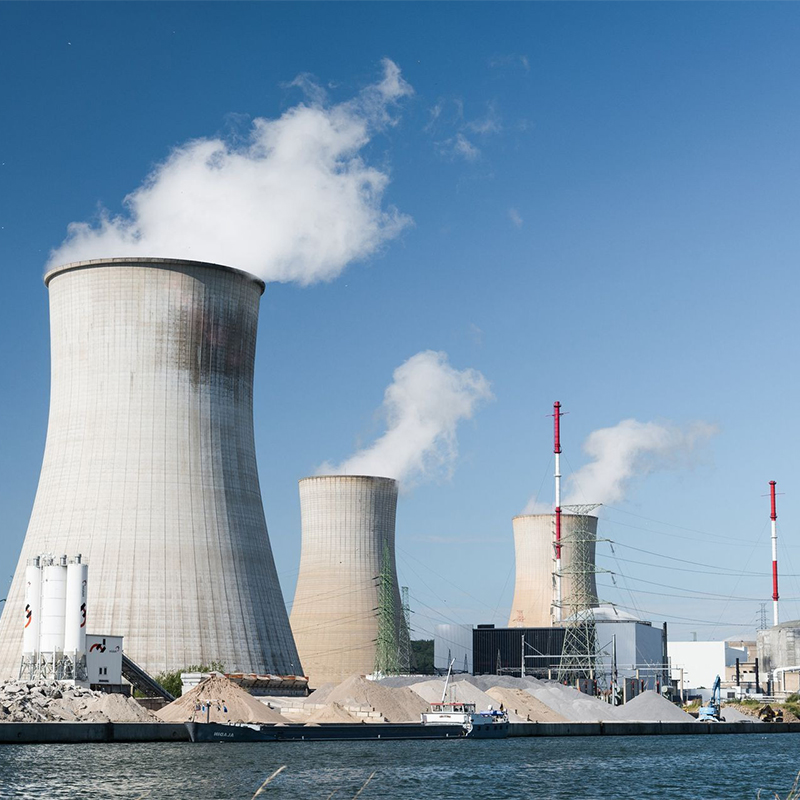
We Provide Cooling Tower Solution

Views: 0 Author: Site Editor Publish Time: 2026-01-04 Origin: Site


When it comes to industrial and commercial cooling, efficiency isn’t just a buzzword—it’s a critical factor that can make or break a project’s budget and performance. Among all cooling technologies, evaporative cooling towers stand out for their ability to deliver higher energy efficiency, lower operational costs, and reliable performance. But what exactly makes them more efficient than other cooling systems? Let’s dive in and explore the principles, design features, and practical benefits that make evaporative cooling towers the preferred choice for industries worldwide.
In today’s energy-conscious world, industries are constantly looking for ways to optimize their cooling systems. Traditional dry cooling methods are reliable but often limited by the ambient air temperature and high energy consumption. Evaporative cooling, on the other hand, leverages the natural process of water evaporation to remove heat, achieving greater efficiency with less energy. This not only reduces electricity bills but also minimizes environmental impact—a win-win for plant operators.
An evaporative cooling tower is a heat rejection device that removes heat from water by evaporating a small portion of it into the air. As water evaporates, it absorbs energy in the form of heat from the remaining liquid, cooling it effectively. The cooled water is then recirculated into the system to maintain optimal operating temperatures.
In simpler terms, think of it like sweating: as moisture evaporates from your skin, your body cools down. That’s exactly what an evaporative cooling tower does for industrial water systems.
Unlike dry coolers, which rely only on air to remove heat, evaporative cooling towers use direct contact between air and water, significantly improving heat transfer. This method allows them to achieve cooling temperatures closer to the wet bulb temperature, which is often much lower than the ambient dry bulb temperature. The result? Higher efficiency and better performance under heavy load conditions.
Efficiency stems from controlled water evaporation. Water flows over fill media, forming thin films that increase surface area. Air passes through the tower and absorbs heat from the water, causing a small portion to evaporate. This phase-change absorbs significant energy, cooling the remaining water at minimal energy cost.
Heat is removed through two main processes:
Sensible heat transfer: Direct cooling of water temperature through air contact.
Latent heat transfer: Energy used during the evaporation of water, which removes a large amount of heat efficiently.
These mechanisms allow evaporative towers to operate closer to the wet bulb temperature, achieving higher cooling performance than conventional systems.
The wet bulb temperature is the theoretical limit for evaporative cooling. Systems designed to operate near this temperature achieve maximum efficiency. Proper design ensures the water temperature is cooled as close to this limit as possible, saving energy and maximizing performance.
Evaporative cooling towers typically use one of two airflow designs:
Counterflow: Air flows opposite to the water. Offers higher thermal efficiency and smaller footprint.
Crossflow: Air flows perpendicular to water. Easier to maintain and ideal for large-scale HVAC applications.
Understanding these airflow patterns is essential for designing a high-efficiency system.
The fill media provides surface area for water to spread and maximize evaporation. Even water distribution ensures uniform cooling, reduces hot spots, and maintains consistent tower performance.
Fans control airflow through the tower. Modern designs often incorporate variable frequency drives (VFDs) to adjust fan speed according to load, reducing energy consumption when full airflow isn’t needed.
Proper basin design minimizes water loss, while drift eliminators capture droplets carried by air, reducing water wastage and improving overall efficiency.
Clean water is critical for efficient operation. Hard water, scale, and algae can clog fill media, reduce evaporation, and compromise cooling efficiency.
Routine water treatment prevents:
Scale formation on heat transfer surfaces
Biofilm growth that reduces heat transfer
Fouling that restricts airflow
By maintaining water quality, towers operate closer to peak efficiency, saving energy and prolonging equipment life.
Evaporative towers reduce the need for high-pressure pumping because the natural evaporation process efficiently removes heat. Lower pump energy translates to significant electricity savings.
By minimizing mechanical energy requirements for heat rejection, operational costs drop compared to dry cooling alternatives. Over time, the cumulative savings are substantial, making evaporative towers an economical choice.
Evaporative towers efficiently handle large heat loads in industries such as chemical processing, refineries, and manufacturing plants, maintaining stable process temperatures critical for production.
Commercial buildings benefit from evaporative cooling towers through energy-efficient climate control, reduced electricity usage, and lower operational costs.
High-density applications like data centers and power plants require reliable cooling. Evaporative towers offer consistent heat rejection, even under heavy load, with a smaller environmental footprint.
MACH Cooling combines advanced manufacturing with cutting-edge design:
High-efficiency fill media
Optimized airflow pathways
Durable construction materials
This ensures maximum cooling with minimal energy consumption, even in demanding industrial applications.
With strategically located depots and worldwide distribution, MACH Cooling provides fast delivery and reliable support, helping projects meet tight timelines without compromising efficiency.
Evaporative cooling towers deliver higher efficiency by harnessing natural evaporation, optimized design, and water management practices. They lower energy consumption, reduce operational costs, and provide dependable cooling across industrial, commercial, and high-density applications.
For engineers, project managers, and plant owners, choosing an evaporative cooling tower from MACH Cooling means more than acquiring equipment—it’s investing in long-term efficiency, reliability, and sustainability