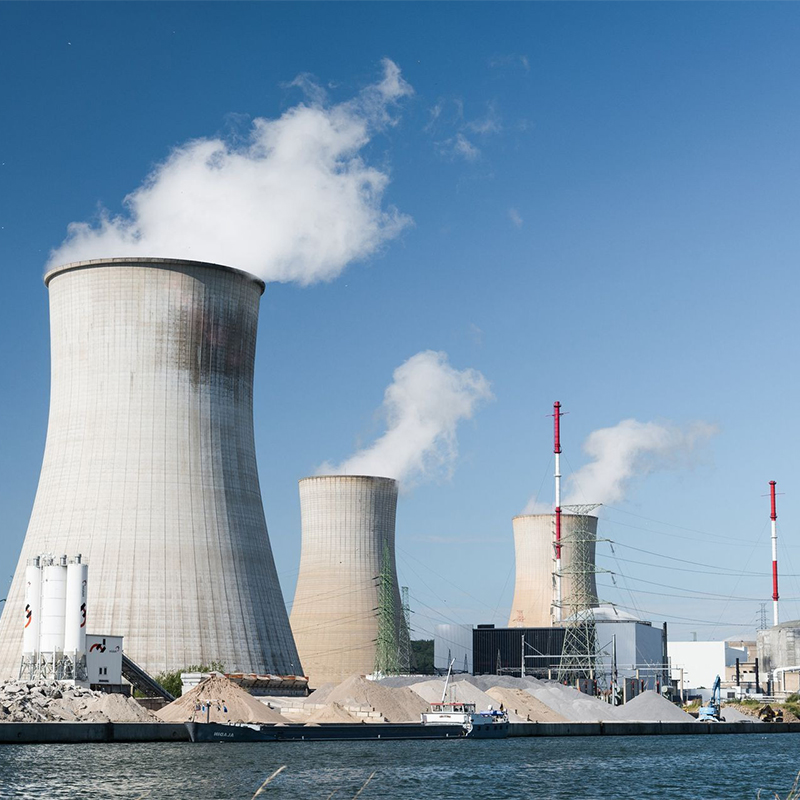
We Provide Cooling Tower Solution

Views: 0 Author: Site Editor Publish Time: 2026-02-02 Origin: Site


Seawater-based cooling towers are essential in coastal industries, power plants, and marine facilities. But here’s the challenge: seawater is aggressive. Salt, minerals, and oxygen can corrode metals quickly if no preventive measures are taken. In this article, we’ll dive into why corrosion happens, how to prevent it, and what solutions Mach Cooling provides for long-lasting, efficient cooling towers.
Cooling towers using seawater are cost-effective and efficient for heat dissipation. However, they face unique challenges due to the high chloride content in seawater, which can accelerate corrosion. Preventing this is crucial to maintain efficiency, safety, and equipment lifespan.
Corroded metal surfaces reduce heat transfer efficiency. The water does not cool as effectively, and the system’s pumps and fans must work harder, wasting energy.
Frequent repairs, replacement of corroded parts, and system downtime lead to high operational costs.
Severe corrosion can compromise the structural integrity of the cooling tower, causing leaks or even collapse, which poses serious safety risks.
Seawater is not just salty—it’s a cocktail of corrosive agents that attack metal aggressively.
Salt ions increase water conductivity, accelerating electrochemical reactions on metal surfaces.
Chloride ions are particularly aggressive, while mineral deposits can create scaling that traps corrosive substances against metal surfaces.
High temperatures and turbulent water flow can enhance oxidation and erosion-corrosion, accelerating material degradation.
Choosing the right materials is the first defense against seawater corrosion.
Stainless steel is highly resistant to chloride attack, making it ideal for structural and piping components.
Fiber-reinforced plastics (FRP) and epoxy coatings can shield metal surfaces from direct seawater contact.
Nickel and titanium alloys provide superior corrosion resistance for high-risk areas, though they come at a higher cost.
Chemical treatment is a key part of corrosion prevention in seawater systems.
Phosphate or molybdate-based inhibitors form protective layers on metal surfaces.
These prevent microbial fouling and mineral scaling, both of which can accelerate corrosion.
Maintaining slightly alkaline water slows the corrosion rate and stabilizes inhibitor performance.
System design also plays a role in corrosion prevention.
Avoiding excessively high water velocity prevents erosion-corrosion, protecting metal surfaces.
Linings and surface coatings act as a barrier, preventing direct contact with corrosive seawater.
Regular inspection and water quality monitoring are critical for early detection and prevention.
Check for pitting, rust, and coating deterioration to catch corrosion before it spreads.
Test for salinity, pH, dissolved oxygen, and other parameters regularly to ensure optimal conditions.
Mach Cooling has successfully implemented seawater-resistant cooling towers in several coastal industrial plants.
In a chemical processing plant, Mach Cooling’s system with FRP and coated stainless steel components has operated for over 5 years with minimal corrosion.
Reduced maintenance costs
Improved heat transfer efficiency
Extended equipment lifespan
Using corrosion inhibitors responsibly ensures minimal environmental impact. Reducing metal waste also lowers the ecological footprint of industrial cooling systems.
Many think seawater towers always corrode quickly. With proper material selection, chemical treatment, and maintenance, corrosion can be effectively controlled.
Preventing corrosion in seawater-based cooling towers requires:
Smart material selection: stainless steel, FRP, and alloys
Chemical treatment: inhibitors, biocides, pH control
Design and mechanical solutions: protective coatings, controlled water velocity
Regular monitoring: inspections and water quality tests
Mach Cooling provides durable, efficient, and low-maintenance solutions for seawater-based systems, ensuring reliability even in harsh coastal environments. Visit Mach Cooling for tailored solutions.