We Provide Cooling Tower Solution

Views: 0 Author: Site Editor Publish Time: 2026-01-31 Origin: Site


Cooling towers are the unsung heroes of industrial facilities, keeping machinery cool and operations running smoothly. But there’s a challenge: noise and maintenance. Excessive noise not only disturbs workers but can also violate regulations. At the same time, maintenance demands can affect operational efficiency and costs. Fortunately, modern designs tackle both challenges effectively.
Companies like Mach Cooling are leading the way in providing cooling towers that are both quieter and easier to maintain.

Excessive noise from cooling towers can disrupt nearby offices, plant floors, or even residential areas. Meanwhile, poorly maintained towers increase downtime, reduce efficiency, and can cause premature equipment failure. Investing in low-noise designs and maintenance-friendly systems pays off with both regulatory compliance and operational savings.
Noise in cooling towers comes from multiple sources:
Fans spinning at high speed
Water hitting the basin or splash bars
Vibrations from motors and gearboxes
Air turbulence through the tower fill
Understanding the source is the first step toward effective noise reduction.
Continuous loud noise can lead to hearing fatigue and reduce productivity. It can also disturb nearby communities, leading to complaints or regulatory scrutiny.
Many countries have strict industrial noise limits. Exceeding these can result in fines, mandated downtime, or even facility redesigns. Compliance is essential.
Crossflow and counterflow fans behave differently acoustically. Blade shape, tip speed, and rotational speed all influence noise.
Variable frequency drives (VFDs) and permanent magnet motors generate less vibration and lower sound levels compared to older motor types.
High-velocity water hitting fill or basins produces splashing noise. Proper fill design reduces splashes while improving heat transfer.
Modern fan blades are designed to minimize turbulence and aerodynamic noise. Mach Cooling, for example, uses optimized blade geometry to lower sound levels without compromising airflow.
Rubber mounts, spring isolators, and damping pads reduce transmission of vibration from fans and motors to the structure.
Installing acoustic panels or partial enclosures around fans and motors can significantly reduce noise reaching the surrounding environment.
Separating towers from noise-sensitive areas, elevating units, or directing airflow away from offices all contribute to quieter operations.
Modern towers are designed for quick access to fans, motors, fill packs, and basins. Modular components allow fast replacement and reduce downtime.
Sensors monitor water levels, vibration, temperature, and chemical balance. Operators can act before small issues become big problems.
Advanced materials and water treatment reduce corrosion, biofilm, and scale buildup, lowering maintenance frequency and extending tower life.
Less vibration and better monitoring contribute to longer-lasting components, from fans and motors to basins and fills.
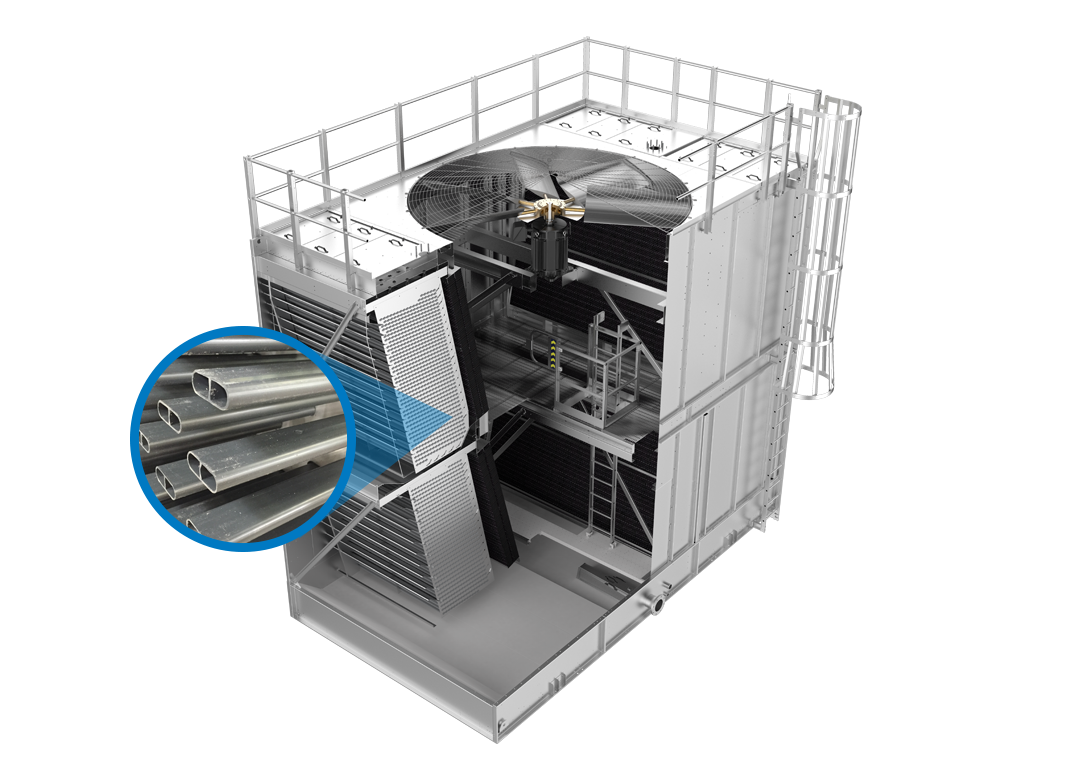
Mach Cooling installed low-noise fans and modular access towers in a large chemical plant. Noise complaints dropped 40%, and maintenance downtime was reduced by 25%.
A data center upgraded to low-vibration, permanent magnet motors. Noise levels decreased by 35 dB near server rooms, and predictive maintenance reduced emergency repairs.
Mach Cooling provides tailored solutions that address both noise and maintenance challenges. Their team evaluates your facility to optimize fan, motor, and tower layout.
From low-noise fan designs to modular fill packs, Mach Cooling ensures each tower meets your operational needs and environmental requirements.
With expert installation and monitoring, Mach Cooling guarantees compliance with local noise regulations while maximizing cooling efficiency.
AI-powered sensors predict component wear, water imbalance, or fan issues, allowing proactive maintenance and reducing both noise and operational risk.
Composite fills, corrosion-resistant metals, and vibration-damping structures reduce noise while extending equipment life.
How often should cooling towers be serviced?
Routine inspection is recommended quarterly, with full maintenance annually for critical components. Smart monitoring can adjust this schedule based on real-time data.
Can older towers be upgraded for noise reduction?
Yes. Fan blades, motors, vibration isolators, and acoustic panels can be retrofitted to existing towers.
What are the cost benefits of modern low-noise towers?
Savings come from lower maintenance, reduced downtime, longer component life, and compliance with regulations that avoid fines or operational limits.
Reducing noise and simplifying maintenance in cooling towers isn’t just about comfort—it’s about efficiency, cost savings, and sustainability. Modern designs, smart monitoring, and strategic retrofits ensure towers operate quietly while minimizing downtime.
With Mach Cooling, facilities gain tailored solutions that balance performance, noise reduction, and maintenance efficiency, ensuring reliable, long-lasting operation.