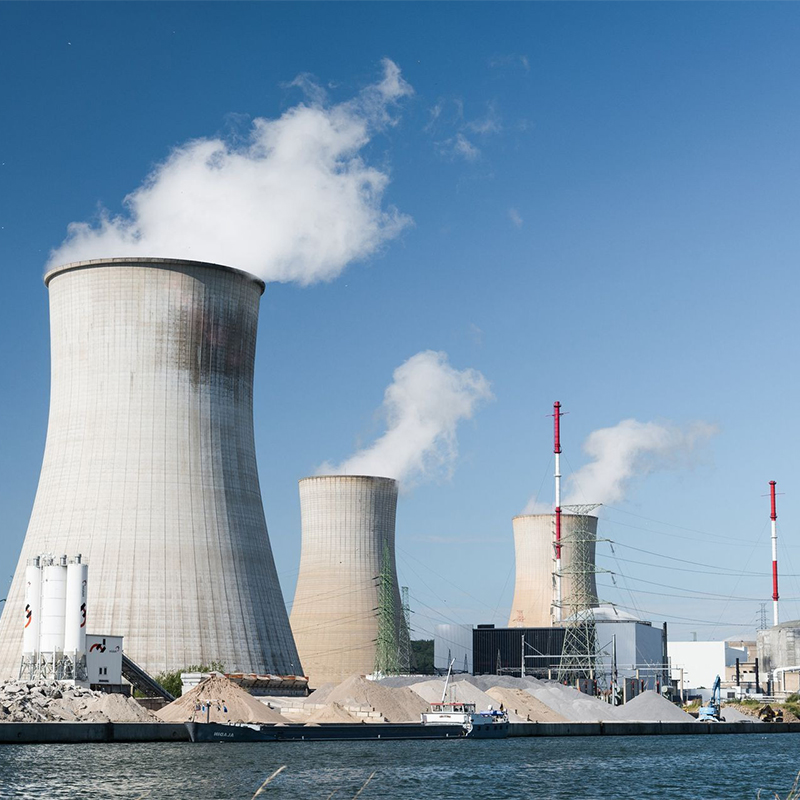
We Provide Cooling Tower Solution

Views: 0 Author: Site Editor Publish Time: 2025-11-14 Origin: Site


According to Delta Cooling:
A cooling tower is a device used for heat exchange, typically employed to dissipate heat from hot water or gas into the atmosphere, thereby lowering its temperature. It is a common heat dissipation device in industrial settings, especially in places that require significant cooling, such as power plants, chemical plants, air conditioning systems, and large industrial cooling systems.
The primary function of a cooling tower is to lower the temperature of process equipment, factories, or systems within buildings by means of evaporation and airflow, preventing overheating and ensuring the efficient operation of equipment. In a cooling tower, hot water flows through fill surfaces inside the tower, where it comes into contact with air for heat exchange. Part of the water evaporates, taking away the heat, and the remaining cooled water is returned via pipes to the equipment for continuous cooling.
In short, the core function of a cooling tower is to provide cooling, ensuring the normal operation of industrial and commercial systems.
The core mechanism of cooling tower operation is evaporation: hot water is sprayed onto the fill material and comes into contact with air. A portion of the water evaporates and absorbs heat, thereby lowering the temperature of the remaining water. SPX Cooling states:
“A small amount of water is evaporated, creating a cooling action.”
Delta Cooling also emphasizes that water and air mix to release latent heat, causing the water to cool.
The typical process is as follows:
Hot water (such as condenser water) from the system is pumped into the cooling tower.
The hot water is distributed over the fill material by spray nozzles or distribution trays.
Fans circulate air through the fill, where it interacts with the water flow.
Evaporation and heat transfer take place, lowering the water temperature.
The cooled water is collected and returned to the system.
Hot, humid air and mist are expelled into the atmosphere.
This series of actions forms the core of the cooling tower’s purpose: heat expulsion → cooling → return.
The actual cooling performance of a cooling tower is affected by several factors, including wet bulb temperature, air flow, water flow, fill material type, spray distribution, drift loss, and blowdown.
For example, when the wet bulb temperature is high, the air’s ability to carry away heat decreases, reducing cooling efficiency.
These factors must be considered in the design process to ensure the cooling tower effectively achieves its purpose.
| Type | Water/Air Flow Direction | Typical Applications | Main Advantages |
|---|---|---|---|
| Crossflow Mechanical Draft (Crossflow) | Water flows vertically, air flows horizontally | Commercial buildings, rooftop HVAC systems | Easy maintenance, simple structure, quick installation |
| Counterflow Mechanical Draft (Counterflow) | Air flows upward, water flows downward opposite to air | Industrial plants, high cooling demand sites | Higher thermal efficiency, compact, better for high loads |
| Natural Draft | Relies on the natural rise of warm air, minimal fan use | Power plants, large-scale cooling for chemical industries | Lowest energy consumption, ideal for large capacity systems |
Cooling towers are widely used in:
Commercial buildings (such as hospitals, office buildings, schools)
Industrial manufacturing, chemical processing, metallurgy, pharmaceuticals
Power plants, refineries, large data centers
From the perspective of Mach Cooling, the selection process should focus on the following key parameters: cooling load, circulation water flow rate and temperature, wet bulb temperature, installation space, noise limits, water quality, etc. Only by properly matching these parameters can the cooling tower truly achieve its purpose.
Image Suggestion: Suggested image showing a “crossflow vs counterflow cooling tower structure comparison,” along with a photo of a real industrial cooling tower installation.
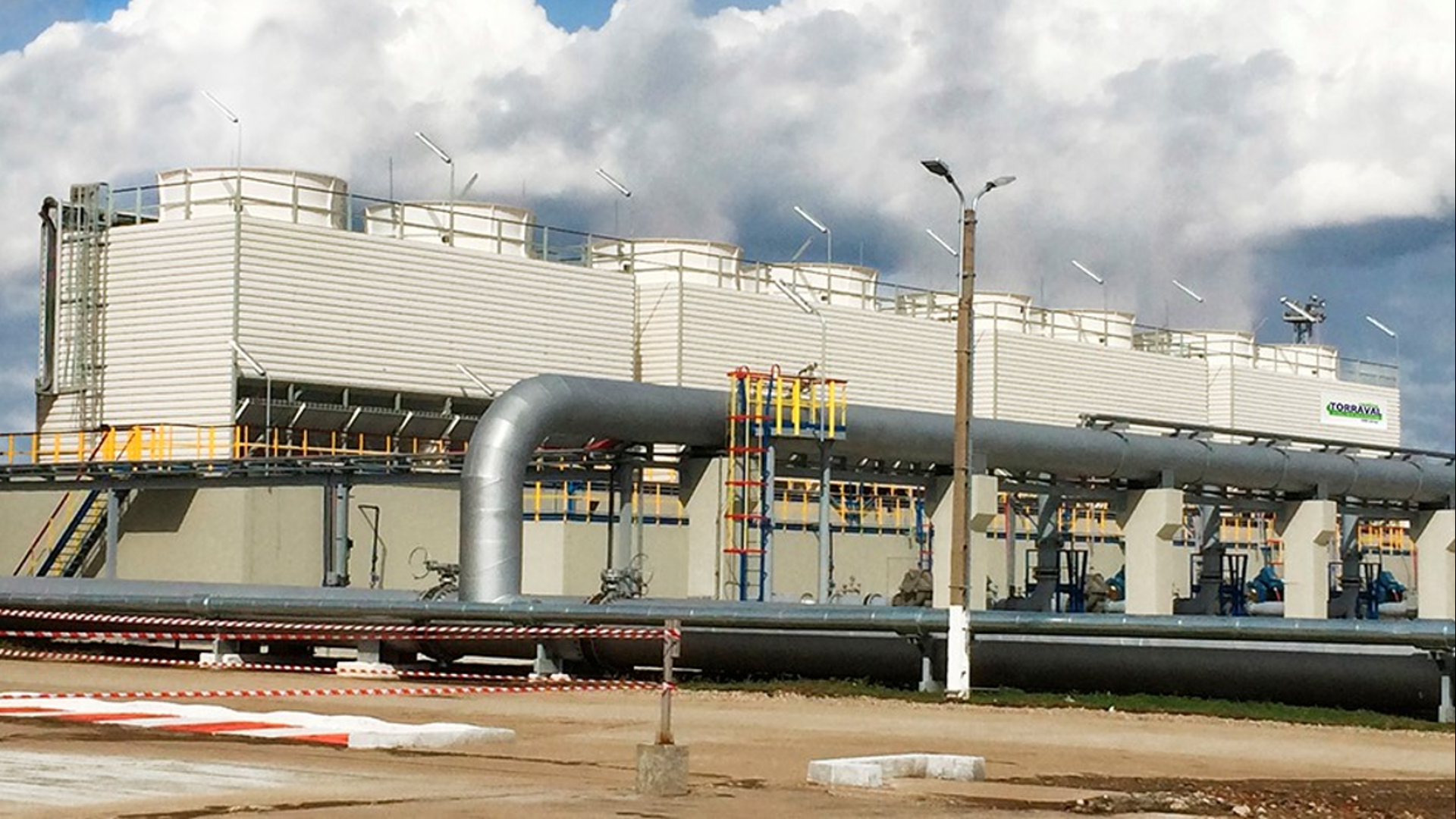
As a manufacturer, Mach Cooling is not just about selling equipment; we focus on the overall thermal balance of the cooling system, circulating water temperature, and system stability. We custom design the cooling tower size, type, fan configuration, and spray system to ensure that the cooling tower truly fulfills its core purpose of “heat expulsion → cold water return.”
We use corrosion-resistant materials (such as fiberglass, polyethylene seamless shells, etc.), and adopt the "seamless integration shell" advantage emphasized by Delta Cooling, which reduces seams and potential failure points.
At the same time, Mach Cooling’s manufacturing process ensures long equipment life, minimal maintenance, and reliable operation.
By optimizing fill material, spray distribution, fan matching, and circulation water management, we help customers reduce operational energy consumption, minimize water loss, and extend system life. Our services include installation guidance, commissioning support, and operational maintenance advice to ensure that the cooling tower achieves its intended value for the long term.
The purpose of a cooling tower is not just to “cool” but to serve as the core component of the entire cooling system. Through water–air heat exchange and evaporative cooling mechanisms, it continuously releases heat, returns cooled water, and ensures the efficient operation of equipment. Based on the technical explanations from Delta Cooling and SPX Cooling, we gain a clearer understanding of its mechanism, types, and applications.
With Mach Cooling’s custom design, high-quality manufacturing, and system services, we ensure that the cooling tower truly fulfills its purpose: stable, efficient, and reliable.