We Provide Cooling Tower Solution

Views: 0 Author: Site Editor Publish Time: 2025-12-24 Origin: Site


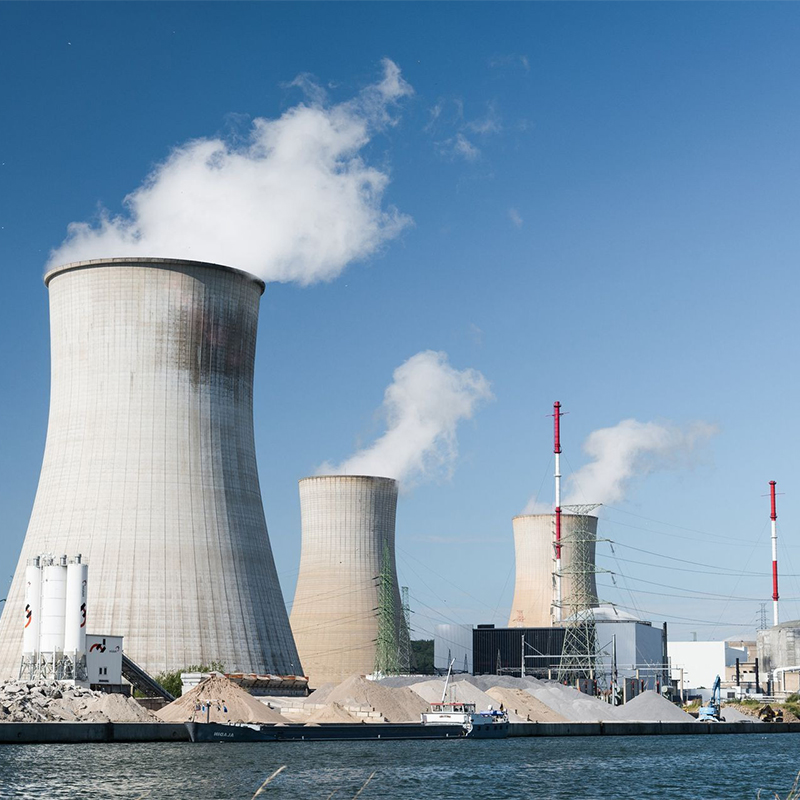
A nuclear cooling tower is one of the most recognizable structures in the power generation industry. Tall, hyperbolic, and often releasing large white plumes into the sky, these towers attract attention and sometimes misunderstanding. Many people associate them directly with radiation or nuclear fuel, but in reality, a nuclear cooling tower is simply a highly efficient heat-rejection device. Its role is essential, practical, and far less mysterious than it appears.
This article provides a complete, clear, and human-friendly explanation of what a nuclear cooling tower is, how it works, why it is needed, and how it fits into the broader nuclear power system.
At the heart of a nuclear power plant, energy is produced through nuclear fission. When atomic nuclei split, they release enormous amounts of heat. This heat is used to produce steam, which spins turbines and generates electricity.
Think of it like a super-powered kettle: the heat is useful, but only if it’s carefully controlled.
After steam passes through the turbine, it must be cooled and condensed back into water so the cycle can continue. Without effective cooling, pressure would build, efficiency would drop, and the system would become unsafe. Cooling systems, including cooling towers, ensure that excess heat is continuously and safely removed.
A nuclear cooling tower is a large heat-exchange structure used to remove waste heat from the cooling water of a nuclear power plant. It does not come into contact with radioactive materials and does not store or release nuclear radiation.
In simple terms, it is a giant heat exhaust system.
The enormous size of nuclear cooling towers is not for show. Their height and shape enhance natural airflow, allowing warm air to rise and escape efficiently. This design improves cooling performance while reducing the need for mechanical energy, making the system both effective and economical.
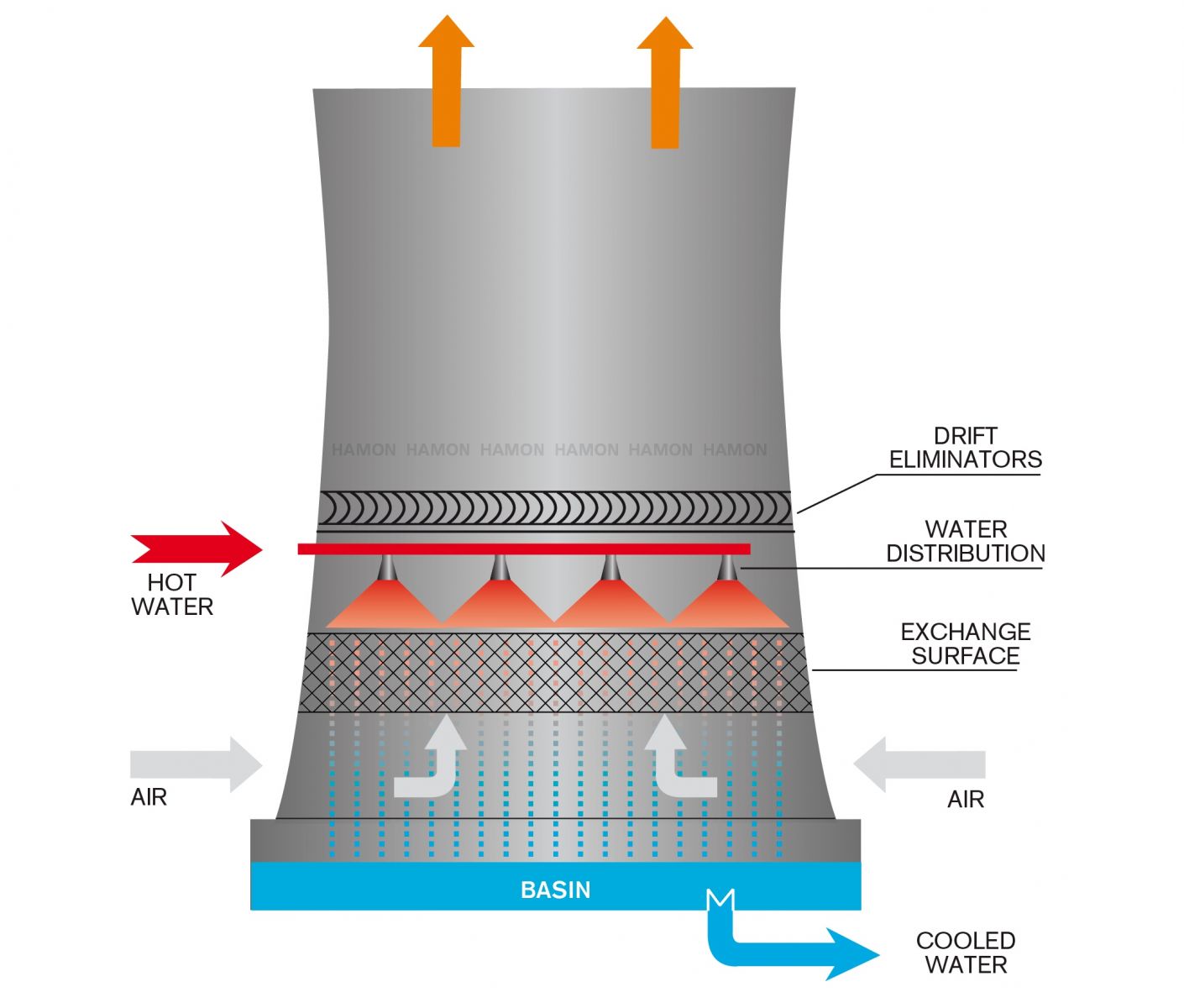
Warm water enters the cooling tower from the condenser.
The water is distributed over internal fill material.
Air moves upward through the tower, either naturally or with fan assistance.
A small portion of the water evaporates, removing heat from the remaining water.
The cooled water collects at the bottom and is reused in the plant.
Cooling towers rely on evaporative cooling, one of the most efficient heat-removal methods in nature. When water evaporates, it absorbs heat energy, lowering the temperature of the remaining liquid.
Only about 1–2% of the water evaporates, yet this small loss removes a large amount of heat. The rest of the water remains in liquid form and continues circulating through the system.
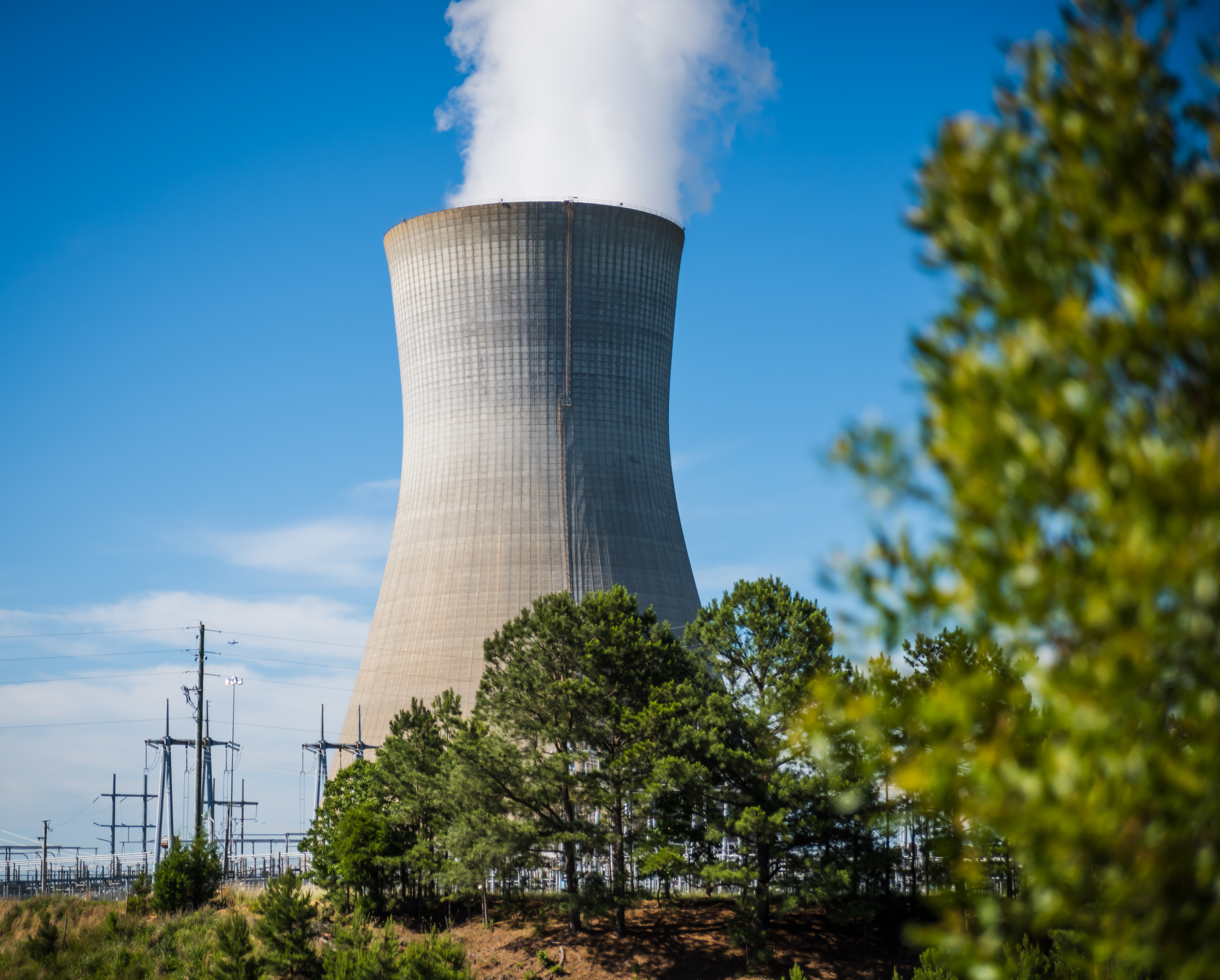
Natural draft cooling towers are the tall, concrete hyperbolic structures most people associate with nuclear power plants. They use buoyancy-driven airflow created by temperature differences between warm internal air and cooler external air.
Advantages:
No fans required
Extremely energy-efficient
Long service life
Mechanical draft towers use large fans to move air through the system. They are smaller and more flexible but require electrical power to operate.
Wet cooling towers use evaporation and are highly efficient.
Dry cooling towers use air-cooled heat exchangers and consume much less water but are less effective in hot climates.

Fill media increases the surface area of water, allowing maximum contact with air. This dramatically improves heat transfer efficiency.
Drift eliminators capture water droplets and prevent them from escaping the tower. This reduces water loss and protects nearby structures and the environment.
Louvers regulate airflow into the tower while blocking sunlight, debris, and crosswinds that could reduce performance.
The white cloud rising from a nuclear cooling tower is called a plume. It forms when warm, moisture-rich air exits the tower and meets cooler ambient air, causing condensation—just like seeing your breath on a cold day.
No. The plume is pure water vapor. It contains no radioactive material, no smoke, and no chemical pollution. The water used in the cooling tower is part of a separate, non-radioactive loop.
Nuclear cooling towers never come into contact with radioactive fuel or reactor water. Multiple closed-loop systems separate radioactive materials from cooling water, ensuring complete isolation.
Cooling towers in nuclear plants are designed, inspected, and maintained under some of the strictest engineering and safety standards in the world, often exceeding those applied to conventional power plants.
Cooling towers do consume water due to evaporation. However, nuclear power plants typically use less water per unit of electricity generated than coal-fired plants.
Plumes may affect visibility or aesthetics in certain weather conditions, but they do not alter weather patterns or contribute to climate change.
| Feature | Nuclear Cooling Tower | Industrial Cooling Tower |
|---|---|---|
| Typical Size | Very large | Small to medium |
| Regulation Level | Extremely strict | Industry standard |
| Heat Load | Continuous, high | Variable |
| Safety Design | Multi-layer protection | Standard protection |
While the operating principle is similar, nuclear cooling towers are engineered for higher reliability, redundancy, and long-term operation.
Extremely efficient heat rejection
Proven, reliable technology
Low operational energy consumption
Minimal environmental emissions
Long service life
They are a perfect example of how simple physical principles can solve complex engineering challenges.
They release radiation – False
They are nuclear reactors – False
They produce smoke – False
They are dangerous to live near – False
Most concerns stem from visual impact rather than scientific reality.
As nuclear technology evolves, cooling systems are becoming more advanced. Hybrid cooling towers, plume-abatement designs, and water-saving technologies are shaping the next generation of nuclear power plants, improving sustainability and public acceptance.
A nuclear cooling tower is not a symbol of danger—it is a symbol of control, efficiency, and safety. Its sole purpose is to remove excess heat and keep the power generation cycle running smoothly. By understanding how nuclear cooling towers work, we replace fear with facts and recognize them for what they truly are: essential components of clean, reliable energy production.
If you would like this article adapted for industrial SEO, manufacturer branding, or technical marketing use, I can optimize it further for your exact needs.