We Provide Cooling Tower Solution

Views: 0 Author: Site Editor Publish Time: 2026-02-03 Origin: Site


When it comes to industrial or commercial facility cooling, two of the most common systems that come up are cooling towers and chillers. Both serve a crucial function in temperature regulation but in vastly different ways. If you’re wondering which one is right for your facility, it’s essential to understand how each system works, their benefits, and how they compare in terms of efficiency, costs, and installation.
In this article, we’ll break down the key differences, benefits, and real-life applications of both cooling towers and chillers. We’ll help you determine which system is the best fit for your specific needs.

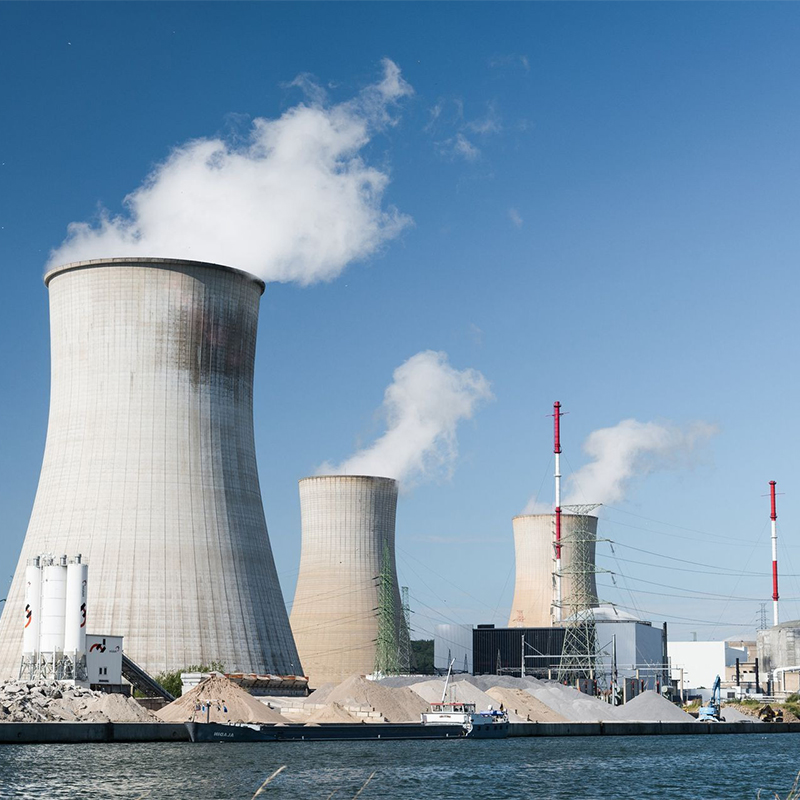
A cooling tower is a device that removes heat from a building or industrial process by transferring it to the atmosphere. It works on the principle of evaporation, using water to absorb heat from a facility and expel it through evaporation. Cooling towers are widely used in power plants, HVAC systems, and large industrial facilities where substantial heat is produced.
Cooling towers come in two primary types: open-circuit cooling towers and closed-circuit cooling towers. The former directly exposes the cooling water to the air, while the latter uses a heat exchanger to transfer heat without direct contact with the air.
A chiller, on the other hand, is a mechanical refrigeration device that cools water or another liquid. This chilled liquid is then used to lower the temperature of a process or air in a building. Chillers are highly effective in precise temperature control, making them ideal for cooling sensitive equipment or environments that require exact temperature regulation.
There are several types of chillers, including air-cooled chillers and water-cooled chillers. Water-cooled chillers generally have a higher cooling capacity and efficiency, but they require a cooling tower to reject heat, whereas air-cooled chillers rely on the ambient air for heat rejection.
In a cooling tower, hot water from the facility is pumped through a series of pipes, where it meets a flow of air. As the water moves downward, a portion of it evaporates, carrying the heat away. The cooled water is then cycled back to the facility to absorb more heat, and the process repeats.
Chillers, by contrast, use a compressor, condenser, and evaporator system to lower the temperature of a refrigerant. The refrigerant absorbs heat from the facility and is cooled in the condenser before circulating back to the facility for further cooling.
When comparing energy efficiency, cooling towers tend to be more energy-efficient for larger systems that need to reject large amounts of heat. Chillers, on the other hand, are typically more energy-intensive and are suited for applications where precise temperature control is needed.
While the initial cost of a chiller system might be higher, the operational costs depend on the system's size and use. Cooling towers generally have lower operational costs over time but can require more space and maintenance. The choice largely depends on the scale of cooling needed and the available budget.
Cooling towers typically require more space than chillers due to their design and the need for airflow. Chillers, especially water-cooled ones, need a water source and might require additional equipment like cooling towers. Air-cooled chillers, however, require minimal space for installation.
Cooling towers tend to have a lower environmental impact when it comes to energy use, but they can require significant water consumption, depending on the location and system design. Chillers, however, use refrigerants, which can have a more significant environmental footprint depending on the refrigerant type.
Cooling towers are ideal for large facilities where significant amounts of heat need to be dissipated. Their ability to handle large volumes of heat transfer efficiently makes them a cost-effective choice for power plants and industrial sites.
As cooling towers primarily rely on evaporation and air movement, they tend to be more sustainable in the long term, especially if designed properly with low environmental impact in mind.
Chillers offer superior temperature control, making them ideal for industries like pharmaceuticals, food processing, or electronics, where maintaining a specific temperature is crucial.
Chillers can be used in a wider range of applications, from large industrial sites to smaller commercial buildings. They can cool air or water and can handle both high and low-temperature needs.
To determine which system is best for your facility, you need to consider factors like the size of your operation, the type of processes being cooled, the available space, and your budget. Cooling towers are better for large-scale cooling, while chillers are suited for precision cooling in smaller spaces.
One example is in large power plants where cooling towers are used to cool the water used in power generation. The continuous evaporation process keeps the temperature in check, allowing for efficient power production.
In an office building where precise temperature control is crucial for comfort and equipment performance, chillers are often the preferred choice. The use of chilled water ensures consistent and accurate temperature regulation.
Choosing between a cooling tower and a chiller depends largely on your facility’s needs. If you require large-scale cooling and cost efficiency, a cooling tower might be the better option. However, if precision and flexibility are more important, a chiller system may be your best bet.
By understanding the differences and benefits of each system, you can make an informed decision that will optimize your cooling process, save energy, and reduce operational costs.