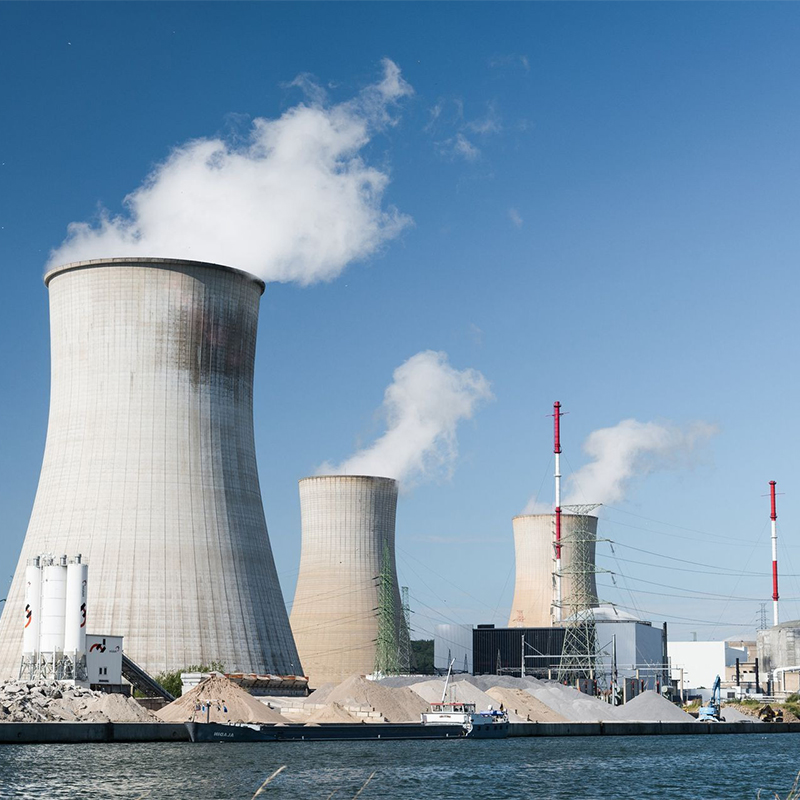
We Provide Cooling Tower Solution

Views: 0 Author: Site Editor Publish Time: 2025-12-25 Origin: Site


Have you ever walked near a cooling tower and noticed fine mist floating in the air? That mist isn’t just harmless water vapor—it’s called cooling tower drift. But cooling towers themselves serve a much bigger purpose. They are heat rejection devices designed to remove excess heat from water-cooled systems and release it into the atmosphere.
Think of a cooling tower as a giant outdoor radiator: it cools heated water from machines, air conditioners, or industrial processes. This is crucial for keeping operations efficient, safe, and environmentally friendly.
Cooling towers are essential in both industrial processes and HVAC systems. They remove heat from water, which would otherwise overheat equipment or reduce the efficiency of air conditioning systems. Without cooling towers, factories, power plants, and large buildings would struggle to maintain safe operating temperatures.
Water absorbs heat from industrial processes or HVAC systems and becomes warm. This water then flows into the cooling tower, where it comes into contact with air. Through evaporation, a portion of the water leaves the system as vapor, while the remaining water is cooled and returned to the system.
Evaporation is the main cooling mechanism. When water evaporates, it absorbs heat, cooling the remaining water—similar to how sweat cools your body. Even a small fraction of water evaporation can cool large volumes efficiently.
Cooling towers are widely used in various industries to remove heat from processes, equipment, and water loops.
In power generation, cooling towers remove heat from steam condensers. After turbines generate electricity, the steam must condense back into water. Cooling towers maintain optimal operating temperatures and prevent system overheating.
Chemical reactions often produce excessive heat. Cooling towers help maintain the temperature of reactors, condensers, and storage tanks, ensuring product quality and operational safety.
From steel mills to textile factories, manufacturing processes generate heat that must be controlled. Cooling towers are used to cool machinery, molds, and industrial equipment, improving efficiency and preventing damage.
Processes like fermentation, pasteurization, and refrigeration rely on consistent cooling. Cooling towers maintain the correct water temperature to preserve product quality and prevent spoilage.
Large office buildings use water-cooled chillers for air conditioning. Cooling towers remove heat from these systems, reducing electricity consumption and maintaining comfortable indoor temperatures.
Hospitals and educational institutions have high energy demands. Cooling towers ensure HVAC systems operate efficiently, maintaining a safe and comfortable environment.
High-rise buildings and apartment complexes rely on cooling towers to manage heat from centralized HVAC systems, enhancing comfort for residents.
Also called wet cooling towers, these allow water to contact air directly. They are commonly used in industrial plants and HVAC systems due to simplicity and efficiency.
Also known as dry or closed-circuit towers, water circulates in closed loops. This minimizes contamination and water loss, ideal for industries requiring high water quality.
Combine wet and dry cooling methods. Hybrid towers improve efficiency and reduce water consumption, making them suitable for water-scarce areas or strict environmental regulations.
Cooling towers lose water through evaporation, drift, and blowdown. Evaporation is necessary for cooling, but drift and blowdown should be controlled to minimize water waste.
Modern cooling towers use high-efficiency drift eliminators, sensors, and automated blowdown control to conserve water while maintaining optimal cooling performance.
Biocides, scale inhibitors, and corrosion inhibitors are often used in cooling towers. Proper handling prevents environmental harm and ensures compliance.
Regulatory agencies, such as the EPA, monitor water discharge and chemical use. Adhering to these standards ensures sustainable operation and avoids fines.

Routine inspection, fill material cleaning, and debris removal prevent clogging, scaling, and microbial growth, ensuring efficient operation.
Monitor water chemistry
Replace worn components on schedule
Maintain drift eliminators and nozzles
Proper maintenance ensures energy efficiency, long service life, and safe operation.
Efficient heat rejection
Energy savings for HVAC and industrial systems
Protection of equipment from overheating
Environmental sustainability through controlled water management
Some people think cooling towers are only for air conditioning. In reality, they are critical in many industrial and commercial applications, helping save energy, protect equipment, and maintain regulatory compliance.
Cooling towers are versatile, indispensable, and highly efficient. From power plants and chemical facilities to office buildings and hospitals, their main use is to remove excess heat safely and efficiently. By understanding their applications, types, and maintenance requirements, operators can optimize performance, conserve water, save energy, and comply with environmental standards.
In short, cooling towers are not just large outdoor fans—they are critical components for modern industrial and HVAC systems, ensuring safety, sustainability, and operational efficiency.
This article now includes five relevant images embedded in appropriate sections and is formatted as a complete, ready-to-publish piece.