We Provide Cooling Tower Solution

Views: 0 Author: Site Editor Publish Time: 2025-12-11 Origin: Site


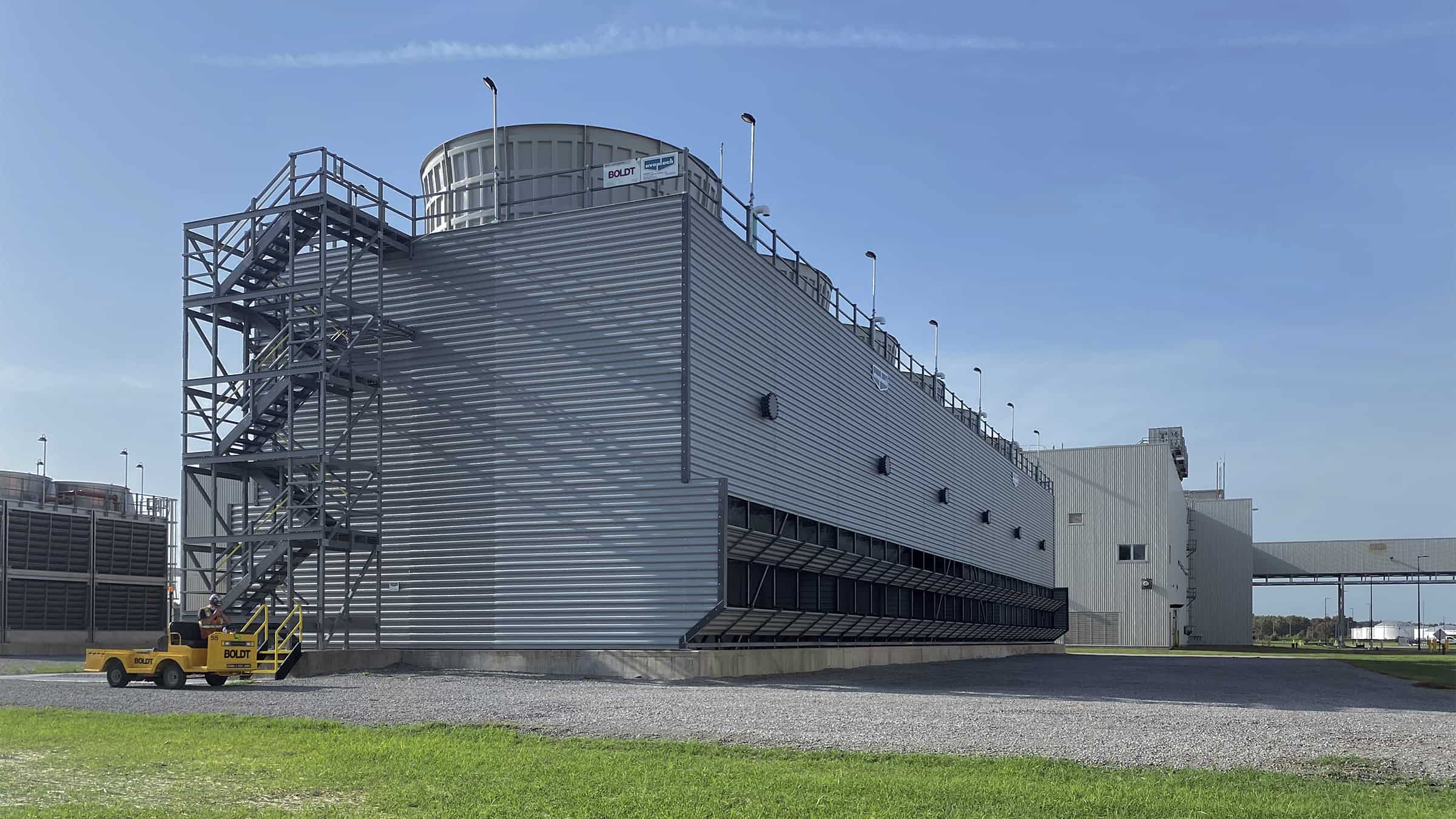
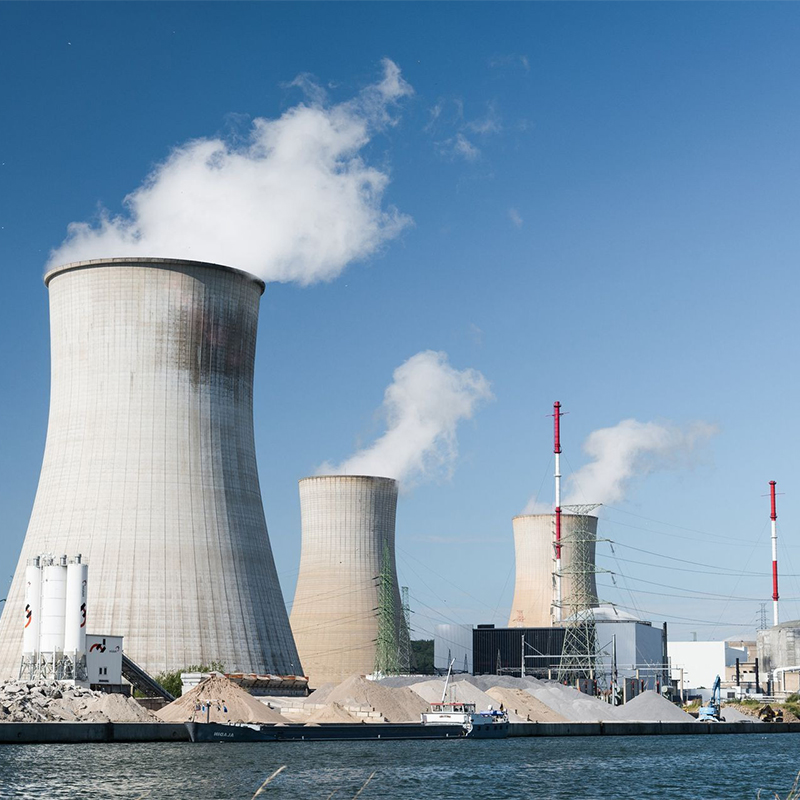
A cooling tower is a specialized piece of equipment — or more precisely, part of a water cooling tower system — whose purpose is to reject heat from water used in HVAC systems, industrial processes, chillers, condensers and other heat-generating equipment, by transferring that heat to the atmosphere. Whether used as a condenser water cooling tower, a chilled water cooling tower, a blowdown water cooling tower, or a closed loop cooling tower, the basic principle remains: cool hot water by exposing it to air (and often evaporation), then recirculate that water back into the cooled system.
In this article, we’ll explore what a cooling tower is, its main types, how it works, key components, and how it is used in different applications — including systems by MACH Cooling.
A cooling tower is a heat-rejection device: it takes hot water from a system (such as a chiller condenser, industrial process, or HVAC system) and dissipates the heat into the surrounding air.
The water needing cooling can be “condenser water,” “process water,” or “chilled water return water.”
The cooled water is then pumped back into the system to absorb more heat.
A cooling tower thus serves as a critical component in a “water cooling tower system” enabling continuous heat removal and stable system operation.
Cooling towers come in different types depending on design and application. Common types include:
Open (direct) cooling towers: water is exposed directly to air and partly evaporates.
Closed loop (indirect) cooling towers: fluid inside sealed coils is cooled via a separate spray-water and air loop — the process fluid never contacts ambient air.
Chilled water cooling towers — used to cool chilled-water loops in HVAC or process-cooling systems.
Condenser water cooling towers — used to cool condenser water from chillers or condensers.
Blowdown water cooling tower systems — towers operating with periodic blowdown to control water quality and prevent scale buildup.
Manufacturers like MACH Cooling often provide both closed loop and open-loop towers depending on customer needs.
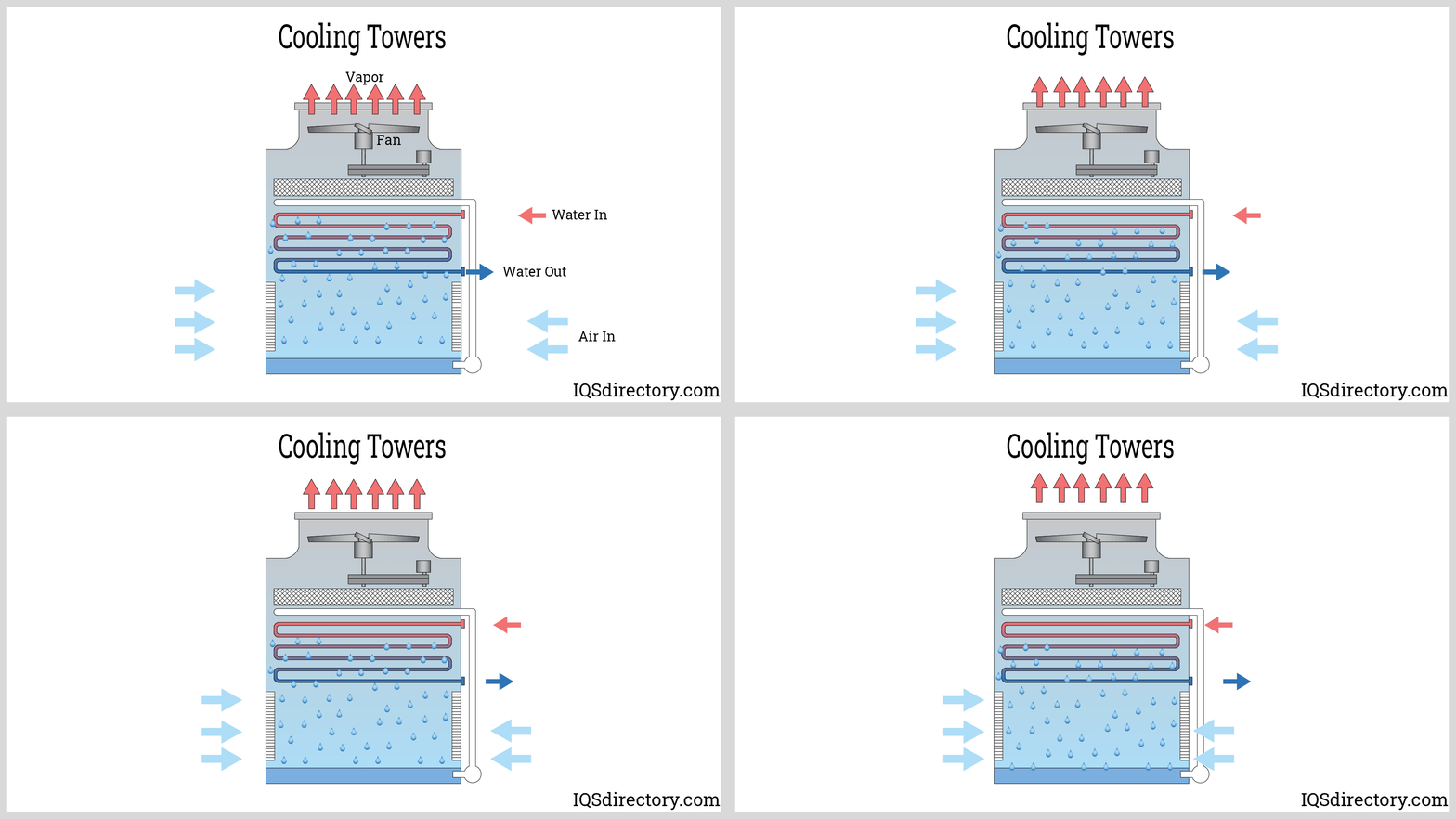
The primary mechanism behind a cooling tower is evaporative cooling, sometimes combined with sensible heat transfer via air-water contact.
Warm water — heated by a condenser or industrial equipment — is piped into the cooling tower and distributed near the top.
Inside the tower, water is sprayed or distributed over a “fill” (also called packing or media) — a structure designed to spread water into thin films or droplets. This maximizes the surface area in contact with air, which is essential for efficient heat transfer.
Ambient air is drawn or forced through the wet fill by fans (or by natural draft in some towers). As air moves through, it passes over the falling water, absorbing heat by evaporation and carrying it upward.
As a small portion of the water evaporates into the airflow, it takes latent heat from the remaining water, cooling it. This evaporation is the main source (typically 70–80%) of heat removal in most cooling towers.
The cooled water flows down to the basin at the bottom; the warm, moist air is expelled to the atmosphere.
In an open-loop tower, the same water circulates: cooled water from the basin is pumped back to the condenser or system. Some water is lost via evaporation, drift, and blowdown (periodic discharge to control dissolved solids), and is replaced by fresh “make-up” water.
In a closed loop cooling tower, a sealed coil carries the process fluid; that fluid never contacts ambient air. Instead, a separate spray-water and air loop around the coil removes heat. This helps protect fluid purity and reduces corrosion and contamination risks.
Because water evaporates and a small amount escapes as mist (drift), and because solids concentrate over time, cooling towers use a cycle of makeup water + blowdown + evaporation + drift. Proper management of these flows is essential to maintain water quality and tower efficiency.
Below is a simplified diagram of typical water flows in an open-loop cooling tower:
| Flow Type | Description |
|---|---|
| Evaporation | Water that evaporates during cooling — main cooling mechanism |
| Drift | Tiny water droplets carried out with exhaust air |
| Blowdown (Bleed) | Intentional discharge to remove concentrated dissolved solids |
| Makeup Water | Fresh water added to replace losses (evaporation, drift, blowdown) |
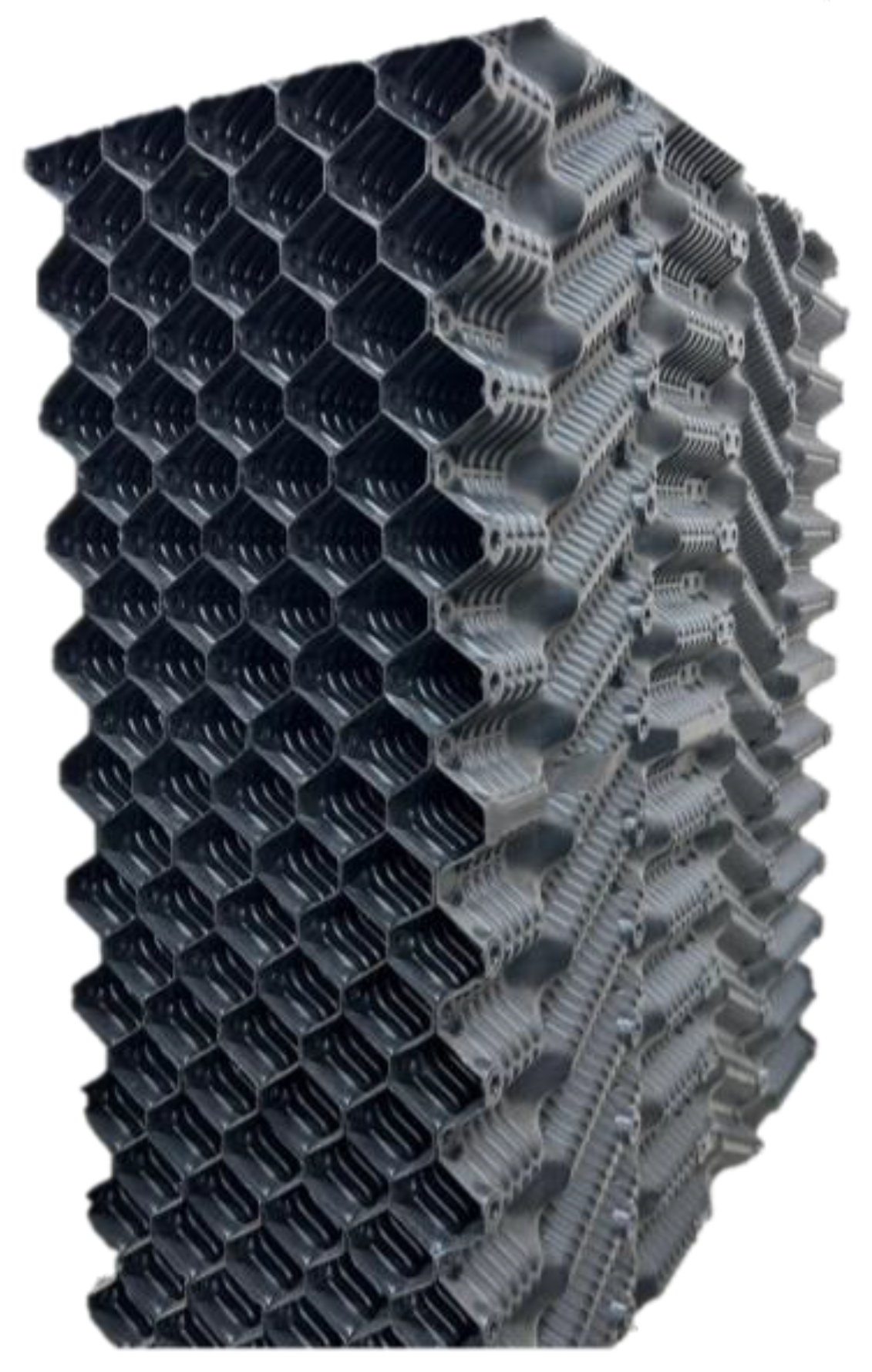
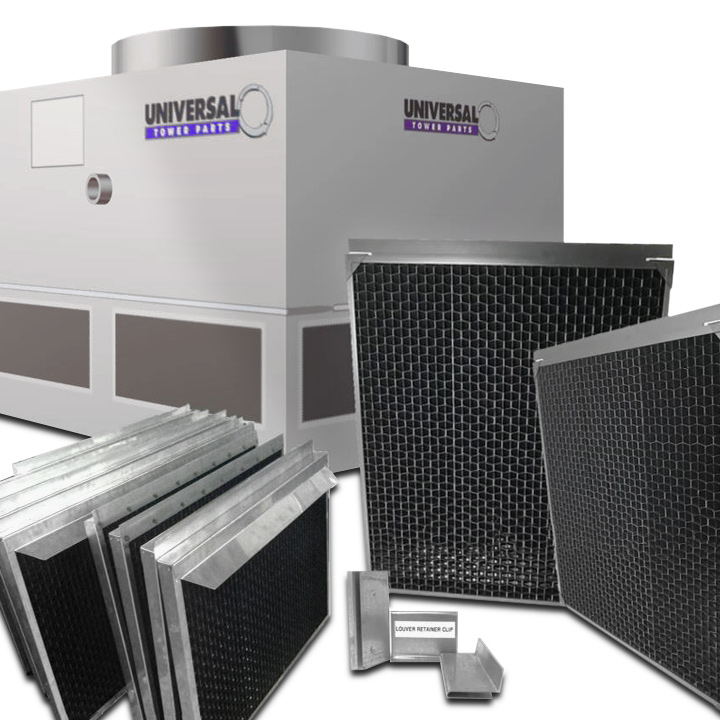
Key components common to most water cooling tower systems — whether condenser water cooling towers, chilled water cooling towers, or blowdown towers — include:
Fill Media (Packing): Provides large surface area for air–water contact.
Water Distribution System / Nozzles: Distribute hot water evenly over the fill.
Fans (or Natural Draft): Drive air through the tower to facilitate evaporation and heat transfer.
Cold-Water Basin (Sump): Collects cooled water at bottom, from which water is pumped back to the system.
Drift Eliminators: Capture water droplets carried by airflow to minimize water loss.
Pipes / Pumps / Valves: Circulate water between system and tower; manage makeup and blowdown water.

Cooling towers are widely used in various sectors:
In large buildings or commercial facilities, chilled water cooling towers remove heat from chillers. The cooled condenser water helps maintain indoor air conditioning efficiently.
In manufacturing, chemical plants, data centers, or other industrial operations, cooling towers — including water cooled towers and closed loop cooling towers — help dissipate heat generated by machinery, compressors, or other heat-producing processes.
In systems using chillers or condensers, a condenser water cooling tower continually removes heat from the condenser water, allowing the cycle to repeat indefinitely.
When the process fluid must remain uncontaminated (e.g. in sensitive manufacturing or where water purity is critical), a closed loop cooling tower is preferred.
In cases where recirculation water tends to accumulate dissolved solids over time, blowdown water cooling towers — with controlled discharge and makeup water — help maintain water quality and prevent scale or corrosion.
Manufacturers such as MACH Cooling design and supply a variety of these towers to meet industrial, HVAC, and process-cooling needs.
Efficient Heat Rejection: The evaporative cooling process allows large amounts of heat to be removed with only a small fraction of water evaporated.
Energy Efficiency: Cooling towers often consume less energy compared to other cooling methods, because much of the cooling comes from evaporation rather than mechanical refrigeration.
Versatility: Suitable for chilled water systems, condenser water loops, industrial processes, closed-loop systems, etc.
Scalability: Available in different sizes and capacities — from small rooftop units for buildings to large industrial towers.
Water Consumption: Because of evaporation, makeup water is needed. Also, periodic blowdown is required to control dissolved solids.
Water Treatment Needs: To prevent scaling, corrosion, and biological growth (e.g., microbes), water in the recirculation loop often requires treatment.
Drift and Water Loss: Some water may escape as drift (mist droplets), though drift eliminators reduce this.
Climate Dependence: Cooling efficiency depends on ambient air temperature and humidity — higher humidity can reduce evaporation efficiency, making cooling less effective.
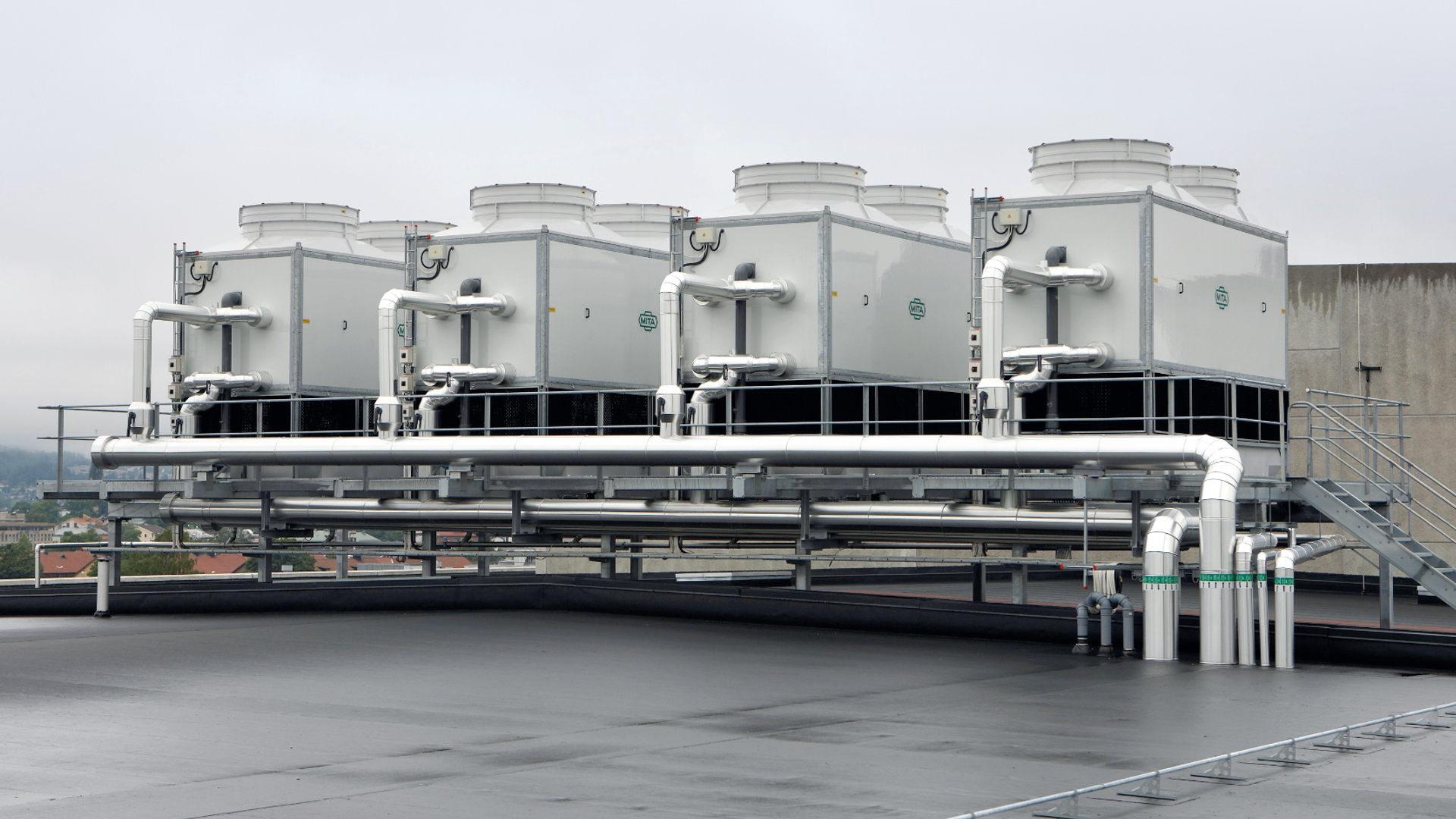
The company MACH Cooling offers a range of water cooling tower systems — including closed loop cooling towers, condenser water cooling towers, and chilled water cooling towers — designed for industrial and HVAC applications. (Mach Cooling Tower)
Their closed-circuit / closed-loop units allow process or condenser water to remain sealed and uncontaminated, while still benefiting from efficient evaporative cooling via a separate spray-water loop. (Mach Cooling Tower)
Using their systems means you can tailor the tower to specific requirements — water quality, process sensitivity, environment, capacity — whether for a small building chiller or a large industrial process line.
Putting it all together, here’s a simplified schematic of what happens in a typical cooling tower cycle:
| Step | Description |
|---|---|
| 1 | Hot water from condenser / chiller / process enters the cooling tower system. |
| 2 | Water is distributed over high-surface-area fill media to maximize contact with air. |
| 3 | Ambient air is drawn / forced through the tower, contacting the water as it falls. |
| 4 | A portion of water evaporates — absorbing latent heat — while remaining water cools. |
| 5 | Cooled water collects in a basin and is pumped back to the system (condenser / process / chiller) for reuse. |
| 6 | Lost water (evaporation, drift) is replaced by makeup water; periodic blowdown maintains water quality. |
This cycle repeats continuously, allowing systems to run efficiently and reliably.
A water cooling tower — whether a condenser water cooling tower, chilled water cooling tower, blowdown water cooling tower, or a closed loop cooling tower — is a crucial part of many cooling systems, from HVAC to industrial processes. Its primary role is to reject heat from water by leveraging evaporative cooling and airflow, then return cooled water to be reused.
Manufacturers such as MACH Cooling design these towers as part of comprehensive water cooling tower systems to meet varied industrial, commercial, and environmental requirements. When properly operated and maintained, cooling towers deliver efficient heat rejection, energy savings, and flexibility — but they also require proper water management and maintenance to ensure long-term performance.